ทวีตที่ปักหมุด

#AlexanderTheGreat and #Achilles
Examining the uncanny similarities...in a series of tweets (See below),
English
Travis Jackson
242.5K posts

@travisdon1981
Minister, future author, master of useless information, and... #autistic









@PixelBibleBytes Your entire premise collapses under basic Jewish calendrical logic and Gospel chronology. You're parroting a theory without understanding basic Jewish calendrical structure, how Sabbaths rotate through the week, or how the Gospels actually portray the timeline.
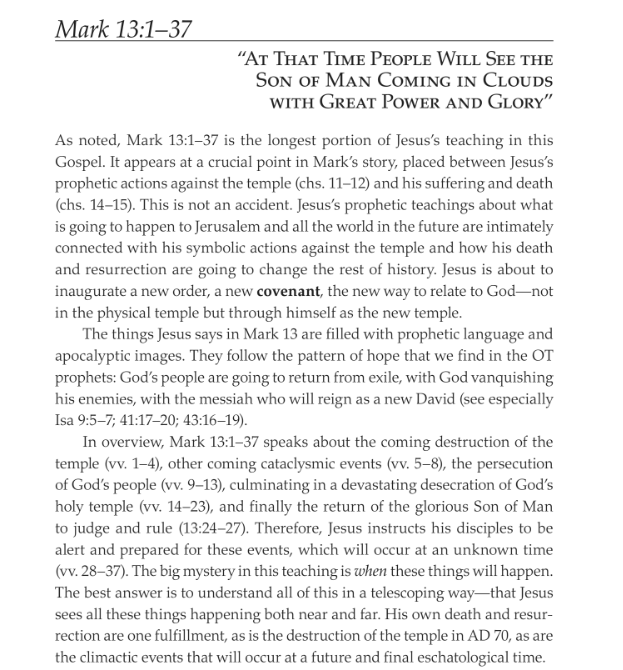


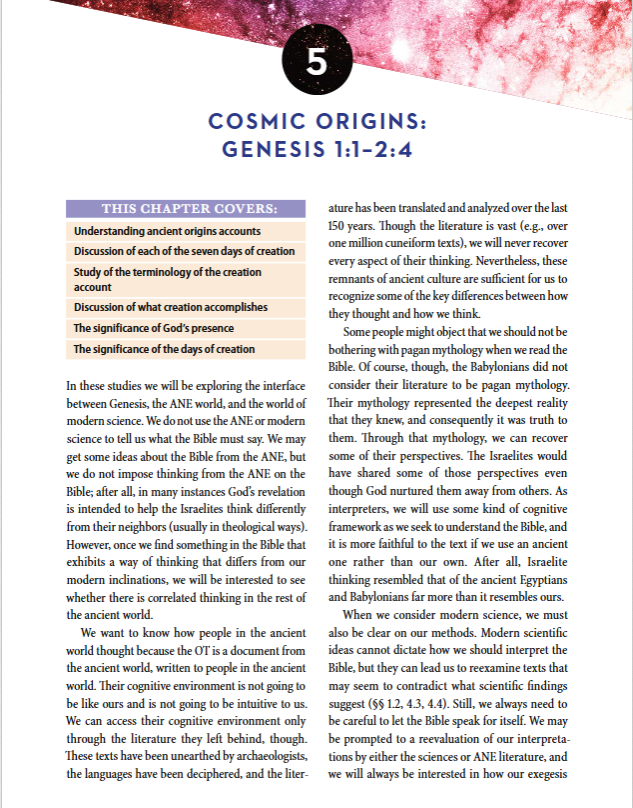
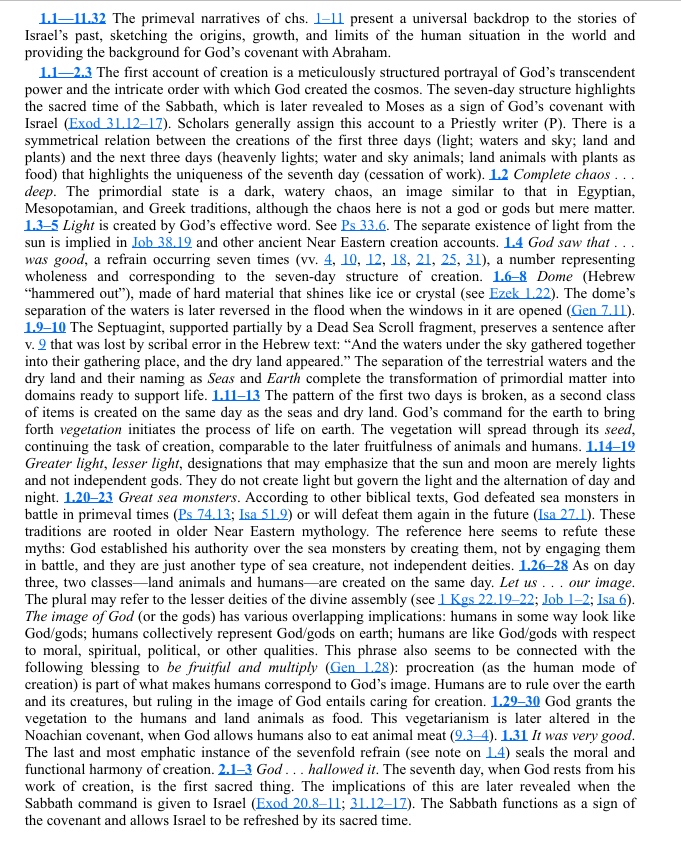
True. Supported by Exodus 20:11 that they are literal days.



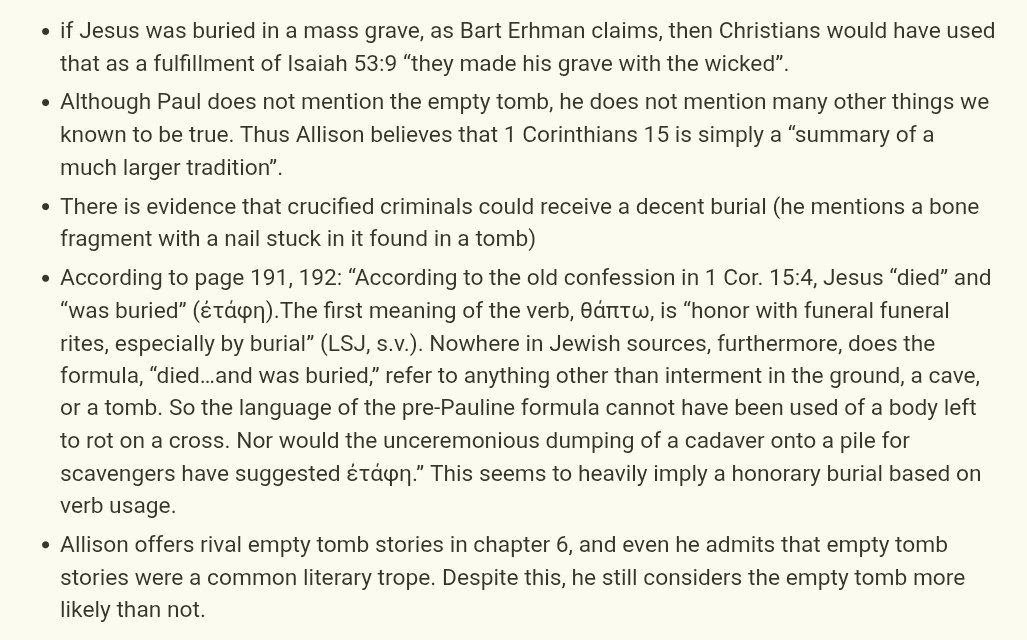

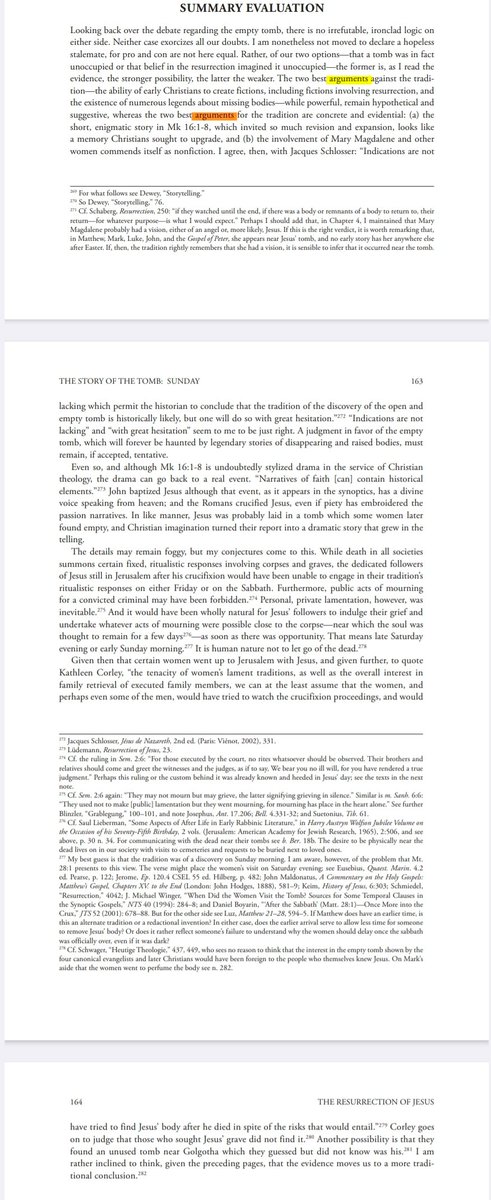
✍️ Ten Arguments for the Reliability of the Discovery of the Empty Tomb. While the gospels are generally reliable and based on eyewitness testimony, these arguments go beyond demonstrating that broad (though important and relevant) conclusion. Here I argue specifically for the reliability of the empty tomb story. I think all of these points are weighty, this list generally goes from (what I think are) most to least weighty. 1. Visions of the recently deceased, even concrete seeming ones, were well-known in antiquity and today, and in no known case has such an experience alone resulted in the belief that the recently deceased beloved rose bodily from their grave. N.T. Wright writes: "Sightings of an apparently alive Jesus, by themselves, would have been classified as visions or hallucinations, which were well enough known in the ancient world" (RSG, p. 686). If the disciples did not know that Jesus' tomb was empty, then visions or appearances would not been enough to convince the disciples that Jesus rose bodily from the dead. Indeed, ancient people were aware of the difference between ocular seeing, and non-ocular seeing (seeing that did not correspond to waking/earthly reality). For example, Peter in Acts 12:9 distinguishes between ὅραμα (vision) and ἀληθές (truth). In Cicero's On Divination (2.58.120), he says "we are to put no trust in such apparitions of the waking man." 2. The disciples claimed that Jesus' death and resurrection fulfilled or inaugurated eschatological promises in the OT. Paul's letters for example are suffused with this belief. The earliest followers of Jesus thus believed that in His death and resurrection, He destroyed the power of death, began the restoration of the cosmos, etc. This was an enormous paradigm shift in ancient Judaism, not at all conceivable in the Judaism of Jesus’ time without the discovery of an empty tomb and the physical appearances of Christ. The nature of Jewish belief in the resurrection further supports this conclusion; apocalyptic Jews expected the deceased to leave their grave at the resurrection (e.g., 2 Esdras 2:16). 3. Most ancient Jews and Greco-Romans saw women, broadly speaking, as gullible, dishonest, unintelligent, etc. Women testimony was thus often disparaged or seen as far less weighty. “But let not the testimony of women be admitted, on account of the levity and boldness of their sex" (Josephus, Antiquities, 4.8.15). "Women are excluded from all civil and public offices; as a result, they cannot sit on juries, perform the duties of magistrates, bring actions in court, be guarantors for others, or act as advocates" (Ulpian in Digest, 50.17.2). "The great mass of women and common people, cannot be induced by mere force of reason to devote themselves to piety, virtue, and honesty; superstition must therefore be employed" (Strabo, Geography, 1.2.8). "There are some who declare that wherever a competent witness came first, even a hundred women are regarded as equal to one witness” (Talmud, b.Mas. Sotah 31b). We see this argument in action with Celsus, a critic of Christianity (175 AD). He rejected the resurrection because it began with "a half-frantic woman" (Contra Celsum, 2.59). It makes little sense for an ancient Christian to invent the empty tomb story with women as its primary witnesses given the widespread dismissiveness of female testimony in the ancient world. 4. The belief in an empty, proper Jewish burial place can be traced back to the 30s AD. For Paul in 1 Cor. 15:3-7 cites an earlier formula that dates within five years of Jesus' death and that says that Jesus was "buried" (15:4) with *thapto*, which always refers to a proper and known Jewish burial spot in ancient Jewish sources written in Greek (Dale Allison, *Resurrection of Jesus, Apologetics, Polemics, and History*, p. 108; Craig Evans, "Jewish Burial Traditions," p. 248; Sandnes and Henriksen, *Resurrection*, pp. 94-96). The word also normally refers to an ornate burial spot, though not always. Then the formula says that Jesus was "raised" with *egeiro*, which primarily meant to stand up from a supine position and always did in resurrection contexts. The term egeiro has a narrower semantic range than the English word "raised." The Greek term never referred to ascending to heaven or the sky in ancient Greek literature. When used in reference to dead bodies rising, it always refers to a physical resurrection. Source = James Ware, "The Resurrection of Jesus in the Pre-Pauline Formula of 1 Cor 15.3–5," NTS (2014): 492-497. But the formula's affirmation that Jesus rose bodily from the burial place and that He appeared to people implies that He left that burial place. 5. The empty tomb stories contain details beyond the women witnesses that are hard to explain as an invention. For example, in Mark 16 and Luke 23-24, the women come to anoint' Jesus' body, which implies that they did not expect Jesus' resurrection. In John 20, even after Mary, Peter, and John see Jesus' empty tomb, they do not believe in the resurrection (20:9-15). In Luke 24:10-11, most of the male disciples disbelieve the women's report that Jesus' tomb was found empty. These details are hard to explain as a Christian invention, because doubt and disbelief was viewed very negatively in ancient Christianity, including in the four gospel authors. Another striking detail that is hard to explain as an invention is that after Mary and the other women see the empty tomb, they thought that "they" took Jesus' body "out of the tomb" (John 20:2). Later in John 20:14-15, Mary thinks that the "gardener" moved Jesus' body (John 20:15). These details in John 20:2 and 14-15 is striking they bring up a possible naturalistic explanation to the empty tomb: that someone simply moved the body! And yet the empty tomb is presented as one of the pieces of evidence for the resurrection! Of course, in John, the supposed gardener is actually Jesus, but an ancient audience could easily reject that as a vision or the delusions of a woman, like Celsus did. In a word, it is hard to believe that John or someone before him would invent the suggestion thar Jesus' body was moved (in John 20:2 and 20:15). 6. It was custom to check on the tomb of the deceased for three days. False burial was an issue an antiquity, and so it was custom to visit and enter into the tomb to check on the body. For example, Semahot 8:1 says: "One may go out to the cemetery for three days to inspect the dead for a sign of life, without fear that this smacks of heathen practice." The third day was the last day to check on the body in case the person was still alive; it was believed that decomposition begins after the third day. Another custom was to weep by the tomb. Thus, it is expected, based on the background evidence, that his followers would have visited Jesus' burial place. Yet, if Jesus' burial place was not empty, then the followers of Jesus would have known about it, and the resurrection belief probably would not have arisen. 7. The gospel accounts of the empty tomb have incidental and accurate background details. For example, Jewish customs concerning the burial of Jesus are accurately presented, as is the description of the tomb itself. Said details serve no purpose, theological or otherwise, to the overall narrative, and so are incidental. This points to historical intent. Moreover, some of them are very specific. An example is that in gLuke and gJohn, Peter and Mary had to "stoop" or "bend over" to look into and enter the tomb. This reflects the low entrance of Jesus' tomb. Jewish tombs created, especially those created during Roman hegemony, have been found to have low entrances, in contrast to tombs in other areas. See Joan Taylor, “Golgotha: A Reconsideration of the Evidence for the Sites of Jesus' Crucifixion and Burial,” NTS 44(1998): 200.' 8. The ancient Jewish response to the resurrection. Ancient Jews claimed that the body was stolen by the disciples or someone else. This implies that ancient Jews thought that the tomb was empty. The evidence for this ancient Jewish response is Toledot Yeshu, a late Jewish work that is however based on sources as early as the second century, as well as counter-responses in Matthew 28 (75-90 AD), Justin Martyr, Dialogue 108 (~150 AD), and Tertullian, On The Shows 30 (190s AD). 9. The empty tomb story in Mark (and to a lesser extent Luke and John) is jejune, lacks OT citations or verbal allusions, and is hardly theological, which is unexpected if the story were an invention. For example, story in Mark and Luke lacks theological expansion beyond the bare assertion by the angel that the empty tomb meant that Jesus had risen. John actually lacks this element. All four gospels lack scriptural citations in the empty tomb account. Moreover, the empty tomb story in Mark especially is simple. Another striking element if that in all four gospels, the resurrection itself is not narrated. It is only inferred from the empty tomb and appearances. "This characterization of Mark 16:1–8 is certainly accurate. This account is strikingly simple, and it is indeed devoid of apologetic interests, which are detectable in the later gospels." Lidija Novakovic, Resurrection: A Guide for the Perplexed, Guides for the Perplexed (Bloomsbury T&T Clark, 2016), p. 133. 10. Jesus' Jewish followers did not venerate Jesus' tomb. The fact that Jesus was not venerated at his tomb speaks well to it having been empty. Ancient Jews didn't venerate objects like tombs merely based on their association with a person. Rather, they venerated the righteous person at their tomb because they thought their body laid in the tomb! In other words, an essential reason why ancient Jews venerated the tombs of the righteous was that they thought the righteous person's body laid there. As such, the best explanation to the lack of Jewish veneration at Jesus' tomb is that his body simply wasn't there to be venerated.




“Children don’t make you happy” - The Daily Mail I'm no researcher, but I downloaded the dataset and looked for myself. The study's numbers say the EXACT OPPOSITE of the headline 👇🏻