
ทวีตที่ปักหมุด


English
whoisroot
9.5K posts

@who1sroot
Left-wing InfoSec 'professional' who just want to ̶m̶a̶k̶e̶ watch the world burn. infosec․exchange/@whoisroot






🚨🇧🇷 Serasa database allegedly up for sale Serasa is a Brazilian credit bureau and financial information company used for credit analysis, identity, and consumer risk data. A threat actor claims to be selling a 2.5TB Serasa database allegedly containing data on 250M+ Brazilians. Alleged exposed data includes: • CPF numbers • Full names • Dates of birth • Mother’s names • Emails • Phone records • Addresses • Credit and income-related datasets • LGPD opt-out / marketing fields Details: • Target: Serasa • Country: Brazil • Sector: Credit / Financial data • Size: 2.5TB • Claimed volume: 250M+ Brazilians • Price: $2,000 Claim is unverified. Brazilian users and organizations should monitor for identity fraud, phishing, and misuse of CPF-linked personal data.

Did the world really think this tech is for fireworks displays only?

This is my second mutual that has been suspended this week. What's up with X really

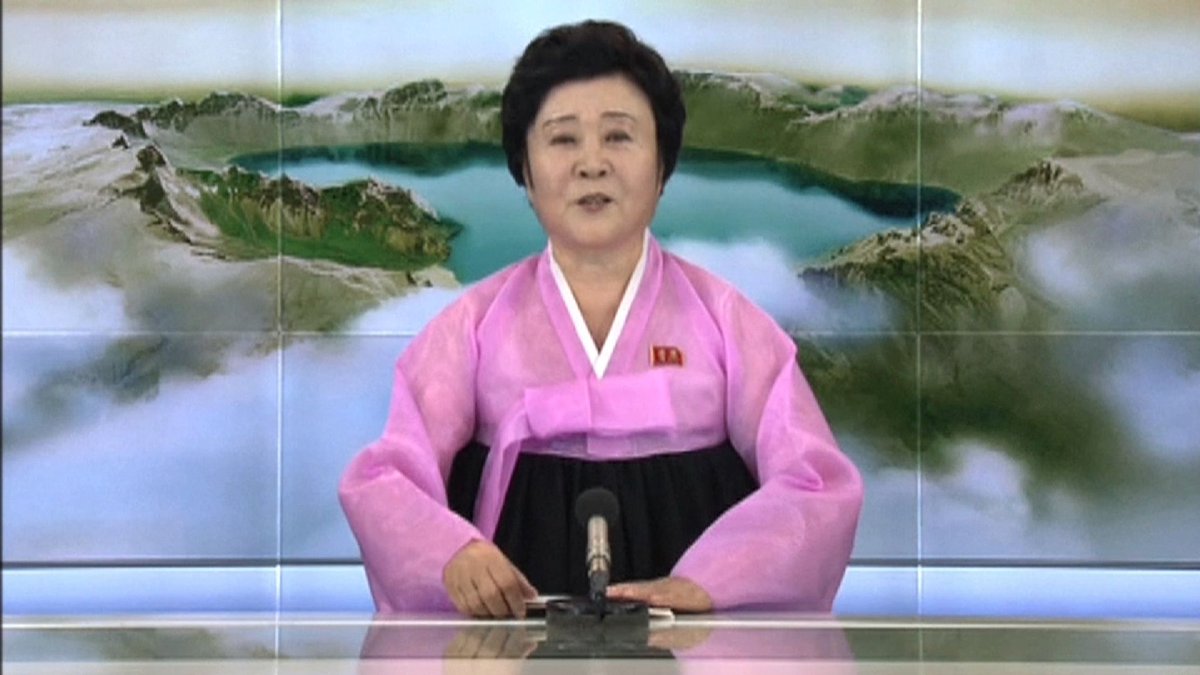
European football fans visiting America are discovering the mass affluence of the country’s suburbs. The wealth enticing holidaymakers troubles European elites. America, once a peer, seems to be racing ahead economist.com/finance-and-ec…
I often like Ray Dalio's takes on China but he gets quite a lot demonstrably wrong in this FT article on the "tribute system." China's ancient tribute system - called 朝贡 (cháogòng) in Chinese - is typically very misunderstood in the West: we typically think it involved tributary states paying some form of "tribute" to China in exchange for protection - the way medieval vassals would pay fealty to a lord in Europe. In reality, it had little to do with that. In fact, it was almost the opposite: in the Chaogong system, it was actually China paying the "tributary states." The system was basically a quid-pro-quo where China would get "得名" (dé míng, literally "getting name/prestige") while tributary states would get "得实" (dé shí, literally "getting substance/material benefit") in exchange. It was about China paying huge amounts of money and other material benefits for the recognition of its centrality. That's what makes it so alien to the Western framework, where tributary states are paying UP to the center, and security is enforced through military presence. The Chaogong system was almost exactly the inverse on both counts: China was paying DOWN and regional order was maintained not through the military but through generosity. The core guiding principle of the system was established by the Hongwu emperor, the founding emperor of the Ming dynasty (incidentally one of the most interesting emperors in Chinese history since he is the only founder of a major dynasty who started off in life as a wandering beggar). The principle he set in place was 厚往薄来 (hòu wǎng bó lái) - literally "generous outflow, modest inflow": giving out much more than you take in. This wasn't a byproduct of the system - it WAS the system. The entire architecture of Chaogong was built on this principle of asymmetric generosity. Very concretely the way it worked is that tributary states would pay largely symbolic tribute to China (like local specialties and curiosities, the system codified that tribute should be "easy to obtain and not costly", 必易得而不贵) and they would in exchange receive 3 layers of economic benefits: 1) Immediate payback in the form of money and expensive goods (silk, brocade, porcelain, tea, silver, etc.), which value was typically dozens of times the value of the tribute received by the emperor 2) The right to trade during their tribute visit: the envoys' entourage could trade with specially licensed Chinese merchants at the Huitongguan (the official guesthouse in the capital) 3) Most importantly, and that's where the real money was, they would be granted the right to trade at Chinese ports. Under the Ming maritime prohibition, tributary status was the only legal entry point into the Chinese economy China being China, this gave rise to some pretty funny hustles. The deal was so good that people started inventing entirely fictitious countries just to get in on it. There are several documented cases of people fabricating countries and showing up as "envoys" at the imperial court just to claim the privileges (rujiazg.com/article/19243). Another funny one is that there are several cases of Fujian merchants who would sail to Southeast Asia, get themselves appointed as minor officials by local rulers, then sail right back to China as "foreign envoys" - carrying huge commercial cargoes. In 1438, three members of Java's tribute delegation turned out to be guys from Fujian (zhihu.com/question/63313…). The scam got so widespread that the Ming had to invent a credential system (勘合, kānhé) specifically to verify that tribute envoys were who they claimed to be and that the countries they came from were real. More seriously though, the Chaogong system also led to big domestic tensions in some of China's neighboring countries, notably Japan which was permitted only one tribute mission per decade. The stakes were so high that the 2 most powerful feudal clans at the time (the Ōuchi and the Hosokawa) fought a shadow war over who controlled the trade license. This culminated in the Ningbo Incident of 1523 (en.wikipedia.org/wiki/Ningbo_in…): two Japanese delegations from both rival clans arrived at the port of Ningbo and got into a dispute over whose credentials were legitimate, which ended up in a pitched battle on Chinese soil. They ended up rampaging through the city, killing Ming military officers, and altogether terrorizing the local population - all over who got to trade with China. The aftermath of the Ningbo Incident led to the total breakdown of Japan-China trade. If that sounds familiar, it should... Which brings back to today and Ray Dalio's description of China's tribute system, as well as his claim that we're facing some sort of modern revival of it in Asia. First of all, some parts of his article are correct: there is indeed a significant power shift happening in Asia, with countries hedging by building closer ties with Beijing, and the US progressively withdrawing and altogether losing ground. He is also completely right that Chinese strategic culture genuinely differs from Western strategic culture: as he writes they indeed play Go (WeiQi) and not chess. He is however wrong to describe the tribute system as one based on pressure and intimidation. As we've just seen, it was pretty much the opposite: the basic idea was to be so generous that everyone wants in (to the extent that countries would literally fight to be tributaries), not so threatening that nobody dares leave. He also - weirdly - seems to conflate the tribute system with the Art of War, treating them as two faces of the same Chinese playbook, when they've got strictly nothing to do with each others. They're not even from the same school of thought: the Chaogong system is fundamentally Confucian (以德服人, "winning people through virtue") whereas Sun Tzu is from an entirely different Chinese intellectual tradition - the Strategist school (兵家) - which is about as far removed from Confucian thinking as Machiavelli is from the Bible. Mashing them together reads like someone who has picked up a handful of Chinese cliché references and treats them as interchangeable ingredients in a single "Chinese strategic culture" soup. All in all, he makes the error WAY too many Western commentators do with Chinese concepts: he uses them as exotic wrapping paper for a fundamentally Western analysis. Strip away the Chinese terminology and his argument is actually pure Western thinking: what he is claiming is that China, as a rising power, is using its growing economic and military weight to reshape the regional order, weaker states are bandwagoning, and the declining hegemon can't stop it. He is essentially taking Graham Allison's "Thucydides Trap," awkwardly draping it in misunderstood Chinese concepts, and presenting it as if it were Chinese thinking. That being said, he is ironically correct - I think - that there is some form of revival of a tribute-like system but not in the way he understands it: China will (and does) use trade - its "generosity" - as a gravitational force to pull countries into its orbit. Not by threatening to cut them off, but by making the relationship too valuable to walk away from. THAT is much closer to how the actual Chaogong system worked. It doesn't mean that the system is purely benevolent. The flipside of generosity is the absence of it: in the original tribute system, you could be cut off the way Japan was after the Ningbo Incident in the 16th century. And it's also what's happening - to some extent - to Japan today: after PM Takaichi declared that Japan would go to war with China over Taiwan, China has systematically restricted trade with Japan. Same story with what happened, for instance, to Australia in 2020 over PM Morrison's declarations on Covid. The pattern is the same: the reward for participation is trade, and the punishment for hostility is its withdrawal. Essentially in the tribute system there is no stick, just a carrot: the stick is taking the carrot away. Which, incidentally, is why you can be extremely confident that China will go to enormous lengths to develop its internal market, and why the current situation where China runs huge trade surpluses is facing mounting pressure to change from within China itself. If countries don't feel they're benefiting enough from trade with China, the entire logic collapses. That's why developing domestic demand isn't some target China sets itself to assuage Western demands, as some claim: it's genuinely a strategic imperative. It's also why it's ironic that the West is so keen on pushing China to boost domestic consumption: in effect, it means we're already in a de-facto Chaogong-like system and they're asking that the carrot be bigger. ----- I also wrote a Substack version of this post, which you can find here: open.substack.com/pub/arnaudbert…



Achei o tal do Márcio


Is anyone else my age bothered by Claude Code being called CC because it’s actually a C compiler?


