Coinulaire 丰 🐢 ₿ 🥒 nag-retweet

“I have nothing against artists. I had a rock band myself. My problem is that if you need a government subsidy to make art, you’re no longer an artist—you’re a public employee.”
— Javier Milei
English
Coinulaire 丰 🐢 ₿ 🥒
2.3K posts

@Coinulaire
Non nova, sed nove. (Not new ways, new things).




Every farmer now has the Right to Repair their own equipment thanks to President Trump. It’s crazy that our talented farmers were being prevented from doing this previously. This announcement is about common sense. Farmers will be able to spend more time in the field and less money in the repair shop because of this important new EPA guidance.
Slavery began in large form soon after humans first began to settle into collective organized groups large enough to be called what we could call towns (this refers to the number of people involved not the sophistication of the buildings). However scholars state that slaves probably existed in small numbers even before this. This occured absolutely everywhere on earth, later vast numbers were taken by Arabs, where extremely large numbers died as many of them were required for Hareems (Islamic designated areas for Women only) where the males had to be eunuchs so they did not interfere with the Arab women. The Arab slave traders cut off the genitals with knives and the ones still alive once they`d walked over the desert to the ships were taken away. The huge attrition rate was irrelevant as the price paid for Eunuchs was enough to offset those who bled to death in the sand for whom very little had been paid. So they simply took far more than were needed, knowing that the final price was worth it, and was far less effort than looking after those medically who had been mutilated. Some alternatively had their genitals cut off in designated rooms at the ports, and were simply thrown overboard when they died. When Europeans arrived, they didnt even have to travel inland or "take" slaves, as they simply contacted the african warlords who were already selling slaves from local rival tribes, the Europeans were merely the latest buyers to arrive. It is estimated that about 90% of all slaves Europeans removed from Africa, were simply purchased upon arrival there. en.wikipedia.org/wiki/Slavery_i… The first nations to decide that this was no longer tenable were Iceland and Norway, however these were internal policies with no external effects, more serious measures were taken by Haiti and Denmark, who actually included abolition of the transatlantic trade. Britain began stopping the trade with the The Slave Trade Act of 1807. Later the British Slavery Abolition Act of 1833 represented the FIRST legislative act in the world, which not only began the process of banning the internal use of slaves, AND the trade, but also included active external use of military force to STOP the practise elsewhere. The British expended significant military effort stopping the trade, and then eventually bought the freedom of the slaves in our lands, at immense cost in 1833, the loan was only paid off in 2015. The British nation at the time spent the about 2% GDP for a considerable time on stopping slavery. About three thousand Royal Navy personell were involved in this interdiction effort. It is difficult to make exact figures, but the largest slave users in known history since reasonable records began was the Roman Empire, with about 10 to 15 million slaves at the peak of the empire in captivity, which were mostly white European in origin with countless nationalties, including Britons, Germans, Greeks and Spaniards, some africans were also used. unrv.com/slavery.php The second most prolific users of slaves were Arab/Islamic nations, with about 11 > 18 million slaves in use, spanning well over a thousand years of exploitation. These were taken from Africa, India and Europe, and included many white europeans. soamibooks.com/post/the-islam… The third was the Portuguese Empire, which is estimated to have taken about 6 million slaves from Africa specifically. statista.com/statistics/115… The forth was the British empire which took about 3 million slaves, mostly from Africa over about 170 years. slaveryandremembrance.org/articles/artic… The fifth was the French empire, which took about a million slaves, mostly from Africa. encyclopediavirginia.org/entries/transa… Unlike the Arabian and Islamic nations who used slaves for well over a thousand years, Britain in just 170 years went from using slavery, to banning and then bring the first to militarily enforce this ban internationally. We do not know exactly how many black Africans over time were enslaved by other black Africans for use internally within Africa, but we know it was utterly endemic to the societies there, and was was vast in scope. Estimates range from 25% to 75% of Africans in different parts of Africa for a large period in history existed on some level essentially as slaves to other Africans, although some had better life conditions than others and in some regions could expect after a long period of service to possibly be released. ldhi.library.cofc.edu/exhibits/show/… I hope this leaves you marginally better informed about this terrible period in human history, which, is still very much ongoing in many parts of the world today.
We now have official EEP data that shows Bitcoin mining has nearly doubled Ethiopia’s annual net transmission grid expansion rate Even more importantly, it has catalyzed an unprecedented level of new construction activity never before reported by EEP at this scale. Consider this context: Delivery of power to rural Africa, alongside combatting youth unemployment is one of the two biggest political changes in sub-Saharan Africa. Bitcoin mining has just demonstrated it can be a viable solution for one of them Let's dig in. Ethiopia made $220 million from Bitcoin mining in 2024/25 which is expecting to increase to $312 million this year (source: capitalethiopia.com/2025/11/02/eep… This electricity would otherwise have been wasted Why? Although Ethiopia has the capacity to generate 6 Gigawatts from the new dam, Ethiopian Electric Power (EEP) hasn't yet built the transmission lines to supply all that electricity generated. So, in the meantime the dam authorities sell electricity to Bitcoin mining companies. These electricity sales to Bitcoin miners were 67% of EEP's total Foreign Exchange revenue last year, vastly improving profitability. source: birrmetrics.com/ethiopia-elect… What do they do with that unexpected extra profit? EEP has stated repeatedly that the revenue from Bitcoin mining is used to support "infrastructure expansion" and "rural electrification" source: eep.com.et/?article=ethio… News channel Aljazeera recently confirmed "Ethiopia doesn't yet have the distribution network to take electricity to 1/2 the population...The idea is the fees paid by the Bitcoin miners will go towards funding the expansion of the grid." source: youtube.com/watch?v=mqie7b… Significantly, EEP's own data shows revenue from Bitcoin mining supported EEP's 2024/25 fiscal year * 28,571 km new power lines built * 8,700 substation bays installed Source: birrmetrics.com/ethiopia-elect… Bitcoin mining revenue has already almost doubled EEP's rate of energized network buildout from ~358 km/year average to +662 km last year. But more important is what is in the imminent pipeline: the 28,571 km of new power lines is larger than the entire size of their grid! source: eep.com.et/wp-content/upl… Let's be clear, we cannot say that "Ethiopia build more than their whole grid in a year" because not all of that new capacity has been fully energized yet, so that would be an apples-for-oranges comparison. But it is still an unprecedented rate of new construction. The good news is that the bulk of this infrastructure constructed but not yet fully energized is not “waiting years”, it is in active commissioning right now and is expected to come online progressively over the next 12–18 months. Source: Birr Metrics (EEP’s 2025/26 budget announcement) birrmetrics.com/electric-power… When that new network is fully energized, the increase in the speed of energized network buildout will not be 2x. It will be substantially higher, potentially more than 10-20x the historical average as the backlog comes online. Read that last sentence again. A forecast 10-20x faster buildout of Ethiopia's electrical grid. Rural electrification of Sub-Saharan Africa is a key strategic focus for over 20 global institutions and development banks, including the UN, World Bank, IRENA, African Development Bank, and Rockefeller Foundation. It is even explicitly one of the UN’s Sustainable Development Goals (SDG 7), where Target 7.1 calls for “universal access to affordable, reliable, and modern energy services by 2030.” Sub-Saharan Africa accounts for 85% of the world’s people still without electricity (mostly in rural areas), making this one of the biggest global priorities. How Ethiopia is achieving this should be one of the biggest stories at the UN right now. Far from “taking renewable power away” from people, Bitcoin mining’s use of otherwise wasted renewable energy is catalyzing the accelerated delivery of electricity to rural Africa. Bitcoin mining has created a pragmatic solution to an issue that has plagued powerful global institutions for decades. If you are still gaslighting Bitcoin mining in 2026 (based on early studies, now been widely debunked), you are no longer just uninformed. You are perpetuating harmful myths that slows down power delivery to people living without electricity.

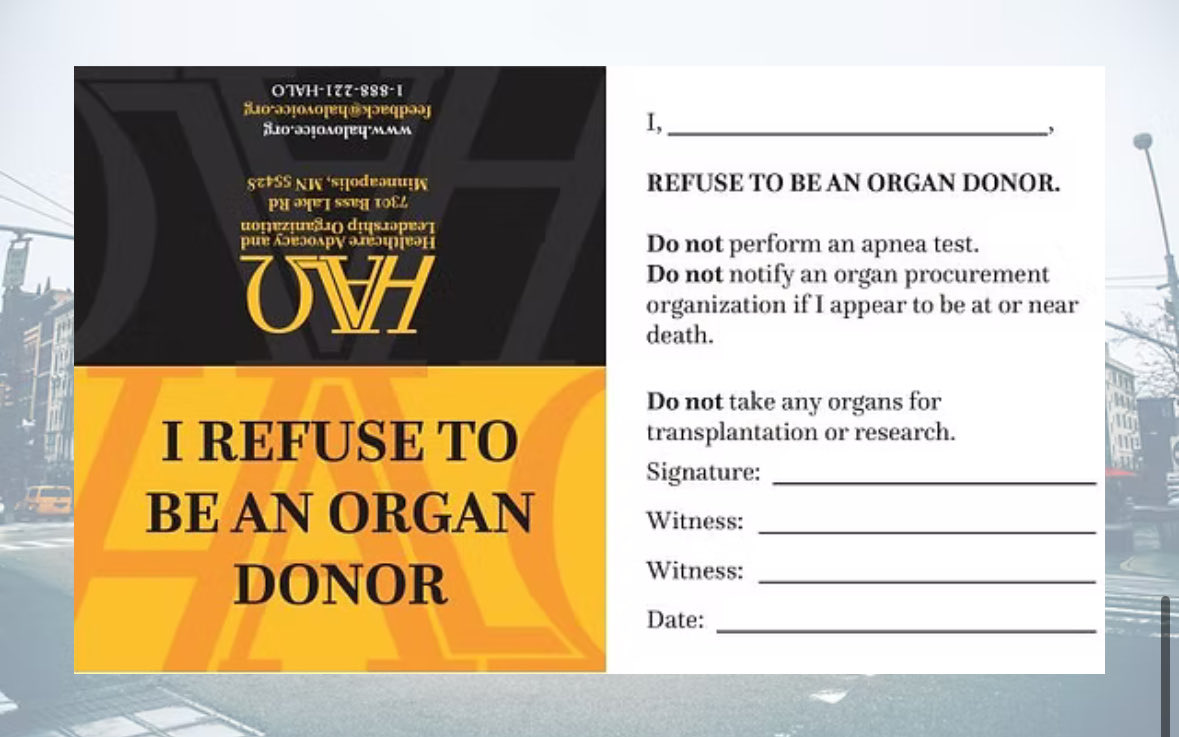
In Texas a hospital administrator or a district court judge can make you an organ donor without your permission. When I tried to change this, the director of the largest OPO came to my office and yelled at me: “It doesn’t matter what their wishes are, they’re dead, OK?!! We’re either going to put them in the ground or take their organs and then put them in the ground!!” Of course my bill did not pass, it never stood a chance, despite strong support from @TXRightToLife. The lobby for this and the financial entanglements are strong. But maybe it’s time to try again?
@RandPaul My brother, You have been in the federal government for 15 years... ...the real question is why YOU went decades without bothering to look