Brian Finrow

515 posts

Brian Finrow banner
Brian Finrow

Brian Finrow

@Finrow

Founder/CEO at Lumen Bio. I'm a quasi-outsider to the biopharma industry, interested in the economics of drug development.

Seattle, Washington USA Sumali Ağustos 2009
147 Sinusundan449 Mga Tagasunod
Naka-pin na Tweet
Brian Finrow
Brian Finrow@Finrow·
Uncommon results like this are commonplace at Lumen Bio. Requires a team with uncommon talent — talented people like YOU! Join us! Especially — right now — if you have a passion for clinical trials or assay qualification/validation.
Lumen Bioscience@LumenBio

Promising news for C. diff patients! 100% of patients with LMN-201 + antibiotics successfully resolved their primary infection, and 95% of participants had no recurrence within 28 days (RePreve Trial sentinel cohort results). shorturl.at/30HaG #PatientCare #Clinicaltrial

English

2
0
22
1.8K
Crémieux
Crémieux@cremieuxrecueil·
It's extremely delightful seeing the third world slop replaced by Japanese gemposts. Who knew you could just flip the switch and beautify the timeline!
Crémieux tweet media
English
183
624
3.6K
541.8K
Beff (e/acc)
Beff (e/acc)@beffjezos·
The fact that drug development has to be done in China because of FDA overregulation should be alarming. We need to deregulate in order to accelerate biotech progress in the United States. Eroom's law must come to an end. Enough.
Andrew Curran@AndrewCurran_

Their CEO, Alex Zhavoronkov, told CNBC that Insilico has already developed at least 28 drugs using generative AI tools, with nearly half already at a clinical stage. They develop their models in Canada and the ME, and then conduct the early preclinical drug development in China.

English
33
102
862
38.1K
Brian Finrow nag-retweet
Ruxandra Teslo 🧬
Ruxandra Teslo 🧬@RuxandraTeslo·
When asked abt the benefits of AI, most CEOs of AI companies point to its potential in medicine. I'm hopeful too, but claims like "it will make clinical trials last 1 year" do not take into account the actual constraints. writingruxandrabio.com/p/a-response-t…
English
6
9
88
8.2K
Brian Finrow
Brian Finrow@Finrow·
@davidycli Seems right. Interesting that most biotech VCs say (i) “platforms are out” and (ii) strongly prefer outsource-maxing clinical affairs to the big CROs (“best practices”) to building that in-house. Which big biotech firms are the bucking these trends, anyone know?
English
0
0
2
723
Brian Finrow nag-retweet
David Li
David Li@davidycli·
the only viable US biotechs going fwd are: i) novel platform tech (better way to find target, have better selectivity, or super power efficacy in a particular modality) OR ii) clinical team that can "king-make" a best in class mlc from China or an AI shop (ie uniquely experienced team for a particular disease indication that has specific expertise for shepherding programs through difficult to execute indications eg rare disease, respiratory, etc) every co in the middle (potential best in class mlc w/o differentiated clinical team, me-better approaches, and even novel targets without unique clinical strategy) is on the clock
English
25
22
231
40.6K
Brian Finrow nag-retweet
Charlie Petty
Charlie Petty@incredutility·
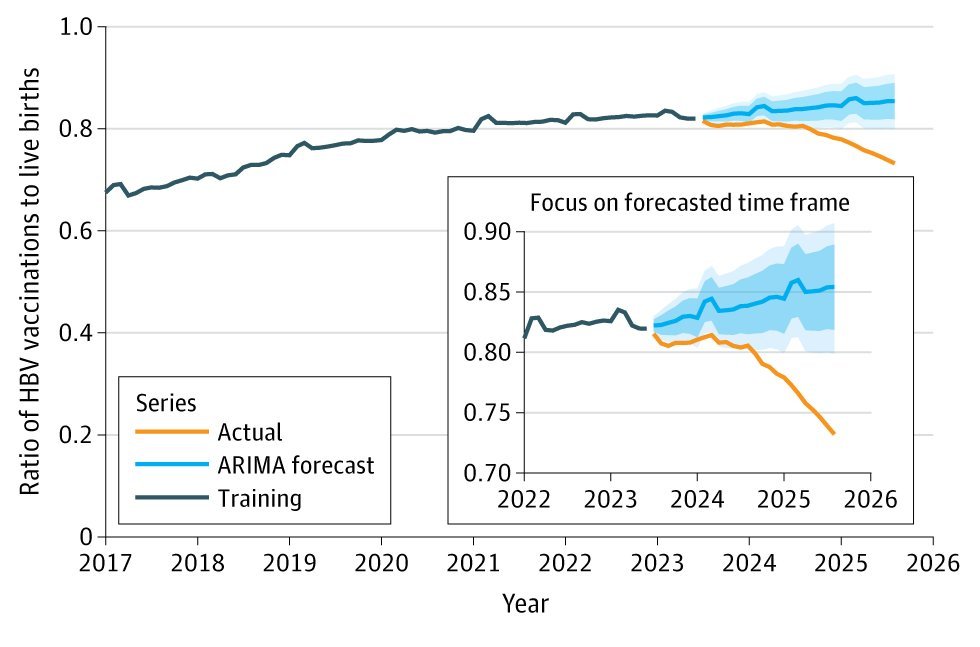
This is a remarkable chart. Hep b vaccines previously had extremely high uptake because the first dose is administered in the hospital at birth. Almost no other vaccine has this level of uptake. This tells me recommendations matter, and we should be much less certain about the expected penetration of new vaccines.
Charlie Petty tweet media
Crémieux@cremieuxrecueil

Hepatitis B vaccination rates have been falling off a cliff since public discussion about their value kicked off in mid-2023. If this continues, it's likely that hundreds to thousands of kids will get hepatitis that'll burden them for life, for no good reason.

English
5
5
20
11.5K
Brian Finrow
Brian Finrow@Finrow·
Don't know this particular SPAC, but in the normal case one cannot fund the interest on the trust fund with warrants — that's typically at the 3-month Tbill rate + vig, so real money on a $200m SPAC. And while some professional fees are deferred (e.g., 1/2 IPO banker fee), most must be paid current. So all in, easily >$5-$10m of *somebody's* cash (depending on size) must be put at risk. If all that was fully funded with warrant sales as you say (btw, seems weird—never seen that—are you sure he's not just referring to the customary $11.50 strike "incentive" warrants that the trust fund investors get to keep even upon withdrawal?), that it doesn't solve the mystery—just shifts it (to these background capital providers) and deepens it (why would they do it given the warrants are even worse economics than the promoter share?). LMK if you figure out the mystery, we've also been stumped by the promoter incentives since the SPAC bubble burst. Seems like raw exploitation of promoters by hedge funds. Or DM me and I can share with you the model I worked up to try to understand it.
English
0
0
1
35
Brian Finrow nag-retweet
Adam May
Adam May@A_May_MD·
"Our survey does not support oral administration expanding the addressable market". Ok, well then you wrote a shitty survey. *Safe* oral options expand market sizes, period. File that under things you don't need a doc survey to teach you.
English
2
1
81
6.3K
Brian Finrow nag-retweet
Ben Southwood
Ben Southwood@bswud·
Working at night is pretty brutal for health, but a lot of people in the past were obliged to do it, as they didn't have better options. The premium for working at night has only grown, but the number of people willing to do it has fallen steeply. A tidbit of hidden progress.
Stefan Schubert@StefanFSchubert

People work much less at night than they used to. Since the 1970s, US night work has likely dropped more than 50%. And it's not about changing job types, but simply about people getting richer. Economic growth is a universal acid. update.news/p/the-long-dec…

English
3
6
47
5.4K
Brian Finrow nag-retweet
Ruxandra Teslo 🧬
Ruxandra Teslo 🧬@RuxandraTeslo·
The entire article contains a lot of gems that illustrate the absurdity of the industry. Everyone can go through the problems described and categorise how many of them are solvable purely through AI. Basically... none
English
2
1
16
1K
Brian Finrow
Brian Finrow@Finrow·
Much more at the link. Mostly mischievous—this would take huge boldness to adopt as policy—but I haven't seen the idea floated anywhere else so thought it important to contribute to the conversation. Perhaps @RuxandraTeslo @kroetscha @joshcmorrison @ATabarrok would know.
English
0
0
1
29
Brian Finrow
Brian Finrow@Finrow·
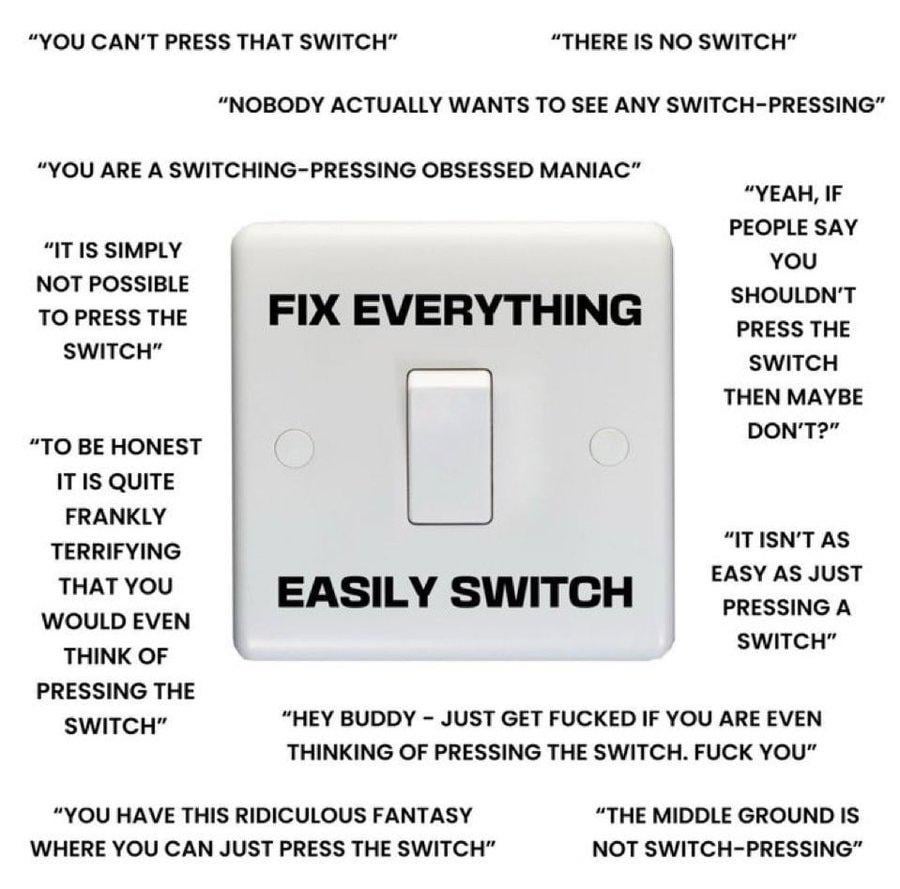
Kids these days tell me "you can just do stuff", and quite right. But did you know that when it comes to accelerating U.S. drug development, it's sometimes actually easier to just *NOT* do stuff? New piece from yours truly in PharmaExec, slightly puckish. (link in replies)
Brian Finrow tweet media
English
1
1
3
92
Brian Finrow
Brian Finrow@Finrow·
Ascertainment bias seems right to me—nice turn of phrase. Perhaps also involved might be hubris (I’m smart, mine will be better than those other dopes) and the principal-agent problem. Many business organizations have this latter issue. For example, pre-2008 bankers got quarterly volume bonuses for securitizing subprime loans; their rottenness exploded years later, but no refunds are due. Similarly if getting logos for the “hot area” helps you raise a next venture fund, well, you’re guaranteed 2% for 10 years (ar at least a healthy salary) with a free option on the 20% carry—maybe it’ll work out!; losses go to the LPs. You may be retired by then. (To be clear, not all funds are set up this way; and there are antidotes.) And pharma CEOs who make big splashy acquisitions in the hot area get an immediate stock bump, and may not even be at the same company if/when it gets written down later given the length of drug development timelines. Behavior follows incentives, and incentives mediate the efficient markets hypothesis (to the extent it has any explanatory power at all). But I like @jackscannell13 ‘s bias explanation because it’s more hopeful and polite.
English
0
0
2
30
Ashwin Varma, MD
Ashwin Varma, MD@varma_ashwin97·
@JackScannell13 I agree with your first point entirely. But it is the second that interests me more! The 50th PD-1 drug is being funded by presumably smart people who don’t want to lose their $!
English
3
0
2
156
Brian Finrow nag-retweet
owl
owl@owl_posting·
Heuristics for lab robotics, and where its future may go (8.4k words, 38 minutes reading time) owlposting.com/p/heuristics-f… this is the longest article i have ever written. in it, i discuss the three ideologies of lab robotics progress, why they may all converge on the same business model, whether any of it will be actually helpful for the problems that plague drug discovery the most, and more this article involved discussions with sixteen people over the course of three weeks, and i am very grateful to them for answering the many questions i had about a field that i had long considered alien finally: this is a complicated field that is really still being birthed, so please let me know if i got anything wrong
owl tweet media
English
24
62
428
111.7K