Object Zero

24K posts

Object Zero banner
Object Zero

Object Zero

@Object_Zero_

Doer of the difficult. Champion for talent. Inventor of things. Builder of Machines. North Sea O&G, Nuclear Power, Subsea, Heavy Manufacturing.

UK Sumali Aralık 2021
955 Sinusundan33K Mga Tagasunod
Naka-pin na Tweet
Object Zero
Object Zero@Object_Zero_·
Civilisation's Thermodynamic Corridor Below is the full series of articles, very happy to post this on a Friday. There are 5 parts: The Arena The Machine The Trajectory The Viability Problem The Implications This is a framework for how to survive and grow a civilisation living on the thermodynamic gradient between a stellar object and deep space (where we live). It is based on first principle axioms of physics, such as the laws of thermodynamics. It is grounded in geometric algebra and mathematical rigour. This is not sci-fi, this is the actual human condition. It is utterly fascinating when view through this framework. There is also a results register which I will attach below. Executive Summary x.com/Object_Zero_/s… Nomenclature x.com/Object_Zero_/s… Part 1 - The Arena 1.1 The Cosmological Reference Frame x.com/Object_Zero_/s… 1.2 System Boundaries x.com/Object_Zero_/s… Part 2 - The Machine 2.1 Civilisation as Assembled Matter x.com/Object_Zero_/s… 2.2 The Maintenance Requirement x.com/Object_Zero_/s… 2.3 The Waste Heat Ceiling x.com/Object_Zero_/s… 2.4 Information Entropy and the Landauer Floor x.com/Object_Zero_/s… Part 3 - The Trajectory 3.1 Maximum Power and the Evolutionary Ratchet x.com/Object_Zero_/s… 3.2 Inertia and the Integral x.com/Object_Zero_/s… 3.3 The Amplifiers: Money, Debt, and Governance x.com/Object_Zero_/s… Part 4 - The Viability Problem 4.1 The Temporal Hierarchy of Constraints x.com/Object_Zero_/s… 4.2 Viability Theory x.com/Object_Zero_/s… 4.3 Competitive Viability x.com/Object_Zero_/s… Part 5 - Implications 5.1 Fermi's Paradox and the Great Filter x.com/Object_Zero_/s… 5.2 The Problem in Manifold Space x.com/Object_Zero_/s… 5.3 The Choice x.com/Object_Zero_/s… 5.4 Our Corridor Out x.com/Object_Zero_/s…
Object Zero tweet media
English
7
18
66
15.6K
Object Zero
Object Zero@Object_Zero_·
Energy Policy Outlook Renewables don’t really compete with oil, but they do compete with gas. Gas is not priced internationally, it’s priced locally. Transporting it far destroys a large fraction of it, so it’s only shipped when large arbitrage exists. Oil is priced internationally and is easy to transport huge volumes in a stable manner. Energy is a complex space, which is why there are so many conspiracies and poor understanding of the basics. Lots of complexity and nuance for strong hyperlocalised opinions to form and stick. Many countries have laypeople with strong political opinions on the matter, and in democratic countries that introduces policies that are usually counterproductive to the economy and the environment. The best energy policy is to have some sort of social cost enforced to represent the environmental cost to wider society, where environmental burdens exist, and then to have a free and open market on top of that. Pretty standard regulated market stuff. The challenge is that it has so far been too difficult for the international community to reach any sort of mutually enforced environmental cost structure, consensus is necessary as the environmental sink for this industry is not local but is the shared atmosphere of Earth. Anyone adopting such a cost structure locally/unilaterally quickly destroys their own competitiveness and fades their economy toward irrelevance. It’s a prisoner’s dilemma. Humanity is very unlikely to reach a collaborative outcome, so the optimal strategy for any sovereign entity is to outcompete everyone else in a race condition. This is what is happening in the world. Lots of countries who can’t do strategy are doing random, bad, self defeating unilateral things, and a few strategic sovereigns are racing away. Pretty obvious who is who. What the world needs isn’t a political or market solution, those have already failed. China escaped. What we need is a technology solution, and that’s going to be a residential fabric of PV + BESS and high density industrial node of deep nuclear concentration. Oil and gas will only get more expensive as they deplete, the solution is to race the 21st century technologies to the cross over point as fast as possible, so that the switch is economic (competitive) and not political (collaborative). This is the system strategy approach that is going to unfold. But it’s not what is currently underway.
Object Zero tweet media
English
1
0
12
516
Object Zero
Object Zero@Object_Zero_·
@LEGS223 @BenGrahamUK @Lalcmac Yes, people turn a blind eye whenever their pockets are picked like this. They’re OK with it. Most people here don’t actually want any savings or wealth, it’s too complicated to think about so they would rather be robbed via these sophisticated schemes.
English
0
0
0
12
LEGS
LEGS@LEGS223·
@Object_Zero_ @BenGrahamUK @Lalcmac Its absolutely encouraged, the system works for itself we can agree there. I just don't think the public are largely aware of it or give a shit. Most just vote red or blue whatever.
English
1
0
0
8
Ben Graham
Ben Graham@BenGrahamUK·
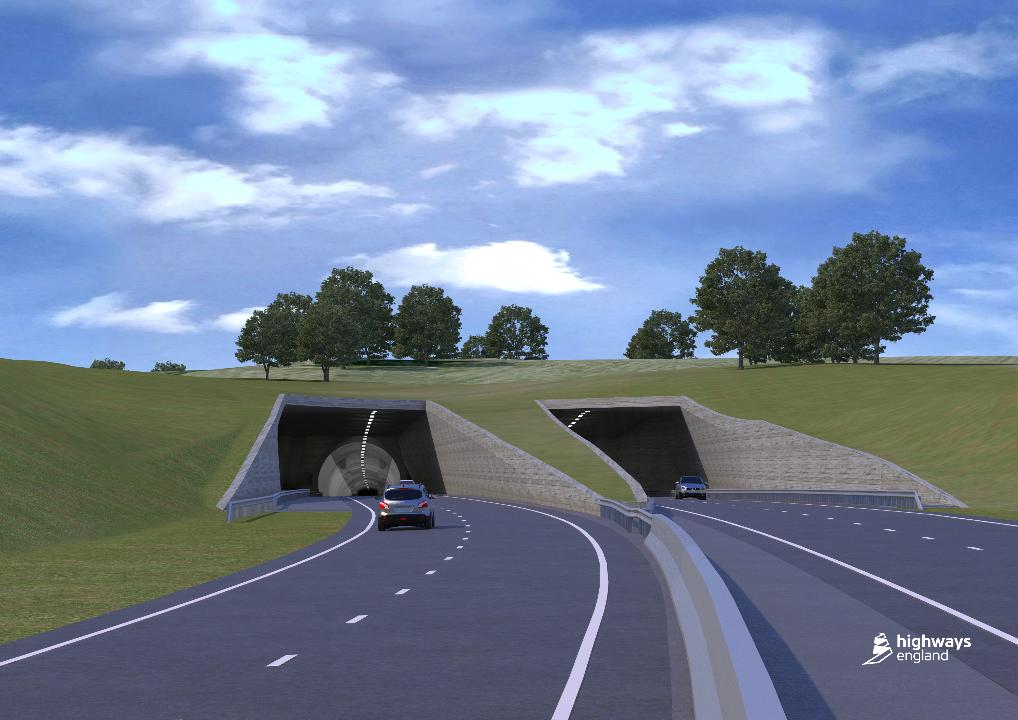
Most people don’t realise where the £180 million actually went at the A303 Stonehenge tunnel project. It wasn’t construction. It was years of: • Environmental impact assessments • Heritage & archaeological studies • Legal challenges and consultations • Design, engineering and traffic modelling • Public inquiries and revisions All before a single shovel hit the ground. This is the real problem in Britain: We don’t just waste money, we build systems that guarantee it. £180 million to build nothing.
Ben Graham tweet media
Ben Graham@BenGrahamUK

The A303 Stonehenge tunnel has been scrapped after years of planning. £180 million. Gone. Not a single mile built. Not a single benefit delivered. Just taxpayer money burned. Who is actually held accountable for this?

English
227
732
2.7K
113.3K
Object Zero
Object Zero@Object_Zero_·
@LEGS223 @BenGrahamUK @Lalcmac If they didn’t like it they wouldn’t pay for it. They would try to prosecute someone, or at the bare minimum have someone sacked and forced to change job, maybe spending a month or two looking for work. But no. Nothing. It’s actually encouraged to gouge the system.
English
1
0
1
18
Jan Rosenow
Jan Rosenow@janrosenow·
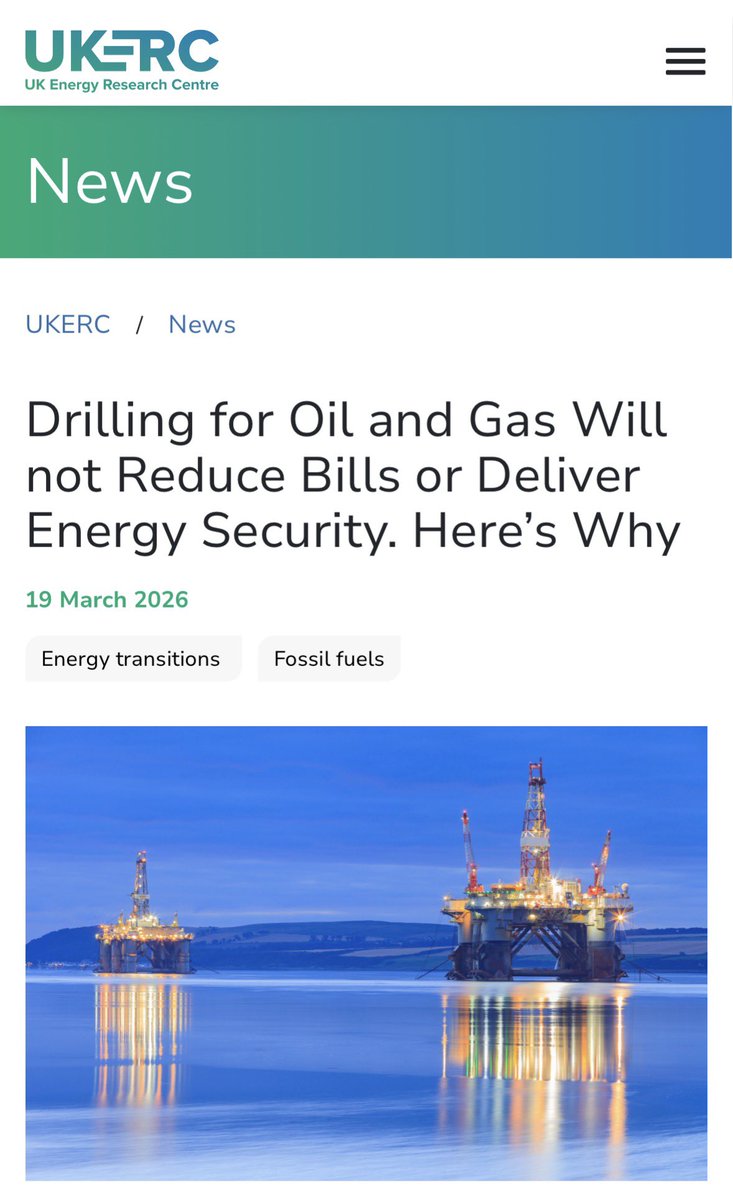
Every time there’s a fuel price shock, the same calls emerge: drill the North Sea. New @UKERCHQ analysis cuts through the noise and explains why this argument doesn’t hold up. ukerc.ac.uk/news/drilling-…
Jan Rosenow tweet media
English
18
40
91
2.9K
Object Zero
Object Zero@Object_Zero_·
@ajcdeane British people are poorer as a result of this fake project, and that is what they want. Once you realise that a lot of Brits want to be poor, and want their neighbours to be poor too… then British politics suddenly makes a lot of sense. It’s actually a very effective system.
English
1
1
19
1.2K
Alex Deane
Alex Deane@ajcdeane·
We have spent £180m on plans for a tunnel under Stonehenge. The project is now scrapped. You can be for a tunnel & think spending is a good idea (even if you think the cost of planning is silly). You can be against a tunnel & think spending is a bad idea. But *nobody* can be for spending on this scale with zero result. And yet that is a peculiarly British outcome. Nobody will be reprimanded. Nobody will see their career affected. But that’s £180m of taxpayer money just wazzed up the wall. Totally without repercussions. Multiply this by airport expansions & train route plans and Thames crossings and power stations and other examples you can think of yourself, and… soon you’re talking serious money.
English
260
725
3.9K
607.7K
Matt Loszak
Matt Loszak@MattLoszak·
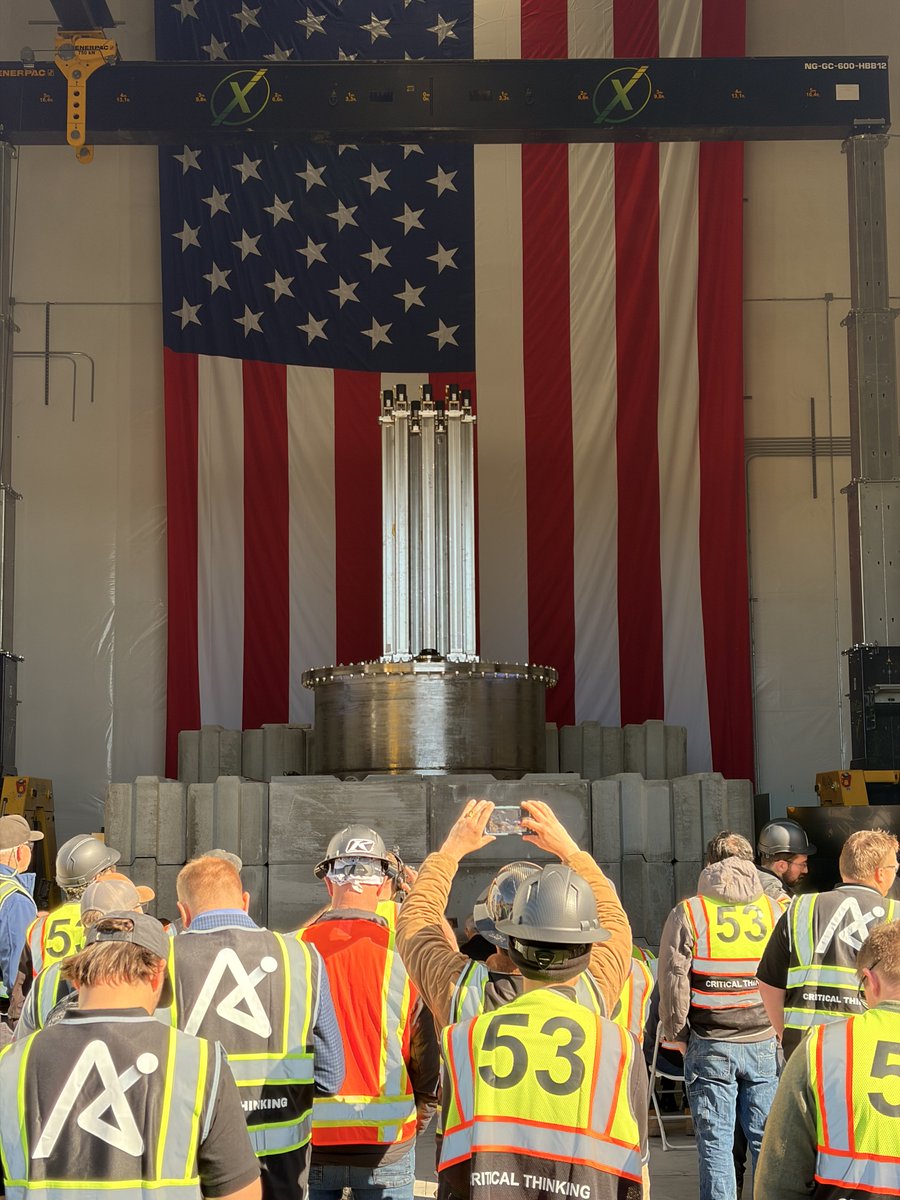
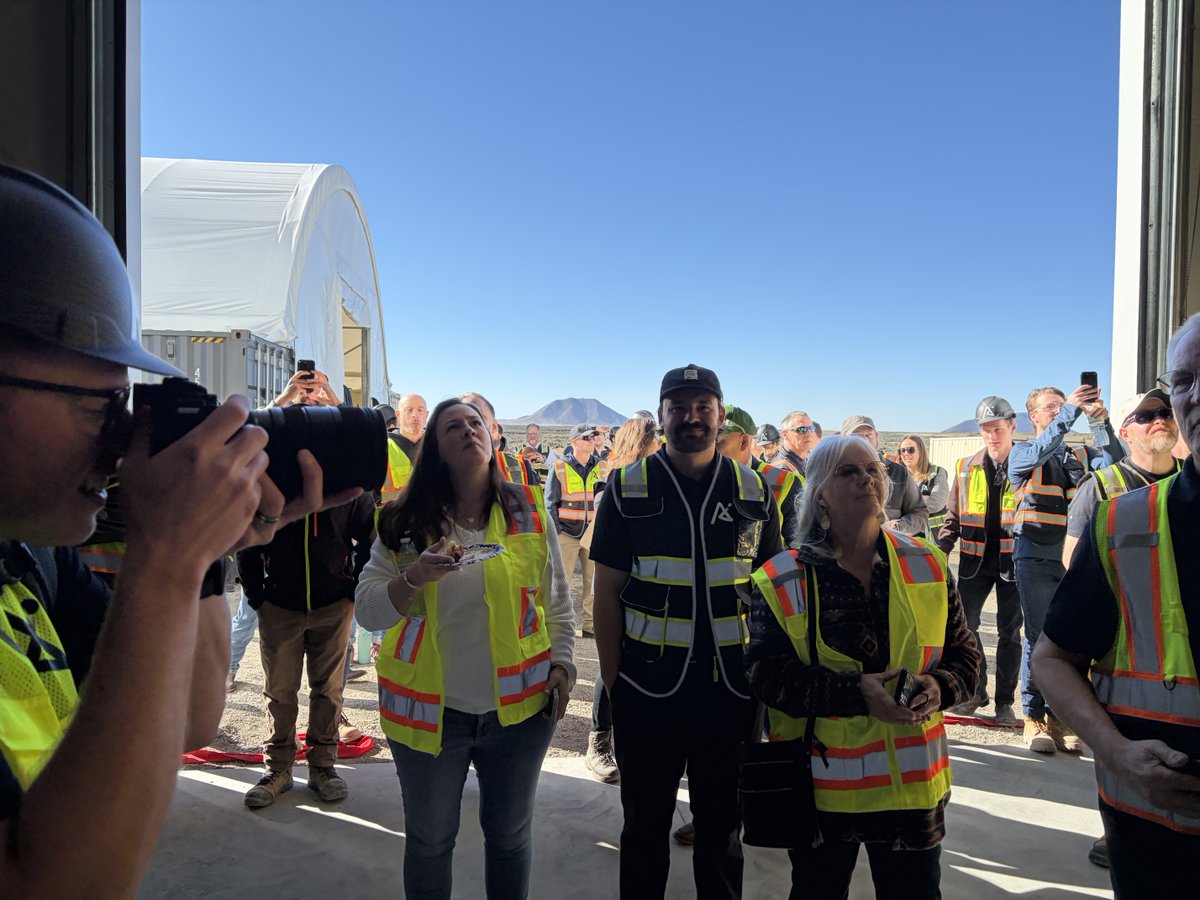
Today, we unveiled our completed Critical Test Reactor facility. We will be turning this reactor on (a “zero power criticality”) well before July 4th! This is a commercial-scale system with enough fuel to produce 10 MW of electricity, and will someday soon power a co-located data center from one of our partners. Here’s what people saw today at our ribbon cutting: ✅ Reactor vessel ✅ Graphite as moderator ✅ Instrumentation and control ✅ Concrete shielding ✅ Building with crane ✅ Control room All designed and built by Aalo. And the nuclear fuel will be arriving any day now. One last step remains: the final DOE approval to turn the reactor on, which we expect to receive soon. DOE has been an incredible partner in this 2.5 year journey, working hard to support a number of companies pushing to advance US nuclear energy. Follow us to be the first to know when we turn this reactor on!
Matt Loszak tweet mediaMatt Loszak tweet mediaMatt Loszak tweet mediaMatt Loszak tweet media
English
42
78
608
95.4K
Object Zero
Object Zero@Object_Zero_·
This means that around 3.5 - 4.0% of the world’s LNG supply was destroyed last night, in a single attack on a single site. It’s not the only site that has been attacked this week, and the attacks are ongoing and in both directions. You can see how just 6 or 7 missile strikes in this part of the world, can cripple the global economy for half a decade.
Javier Blas@JavierBlas

QatarEnergy CEO says the Iranian attack overnight damaged ~17% of its LNG production capacity, and it would take 3-5 years to repair the damage. reuters.com/business/energ…

English
9
33
309
31.6K
Ben Graham
Ben Graham@BenGrahamUK·
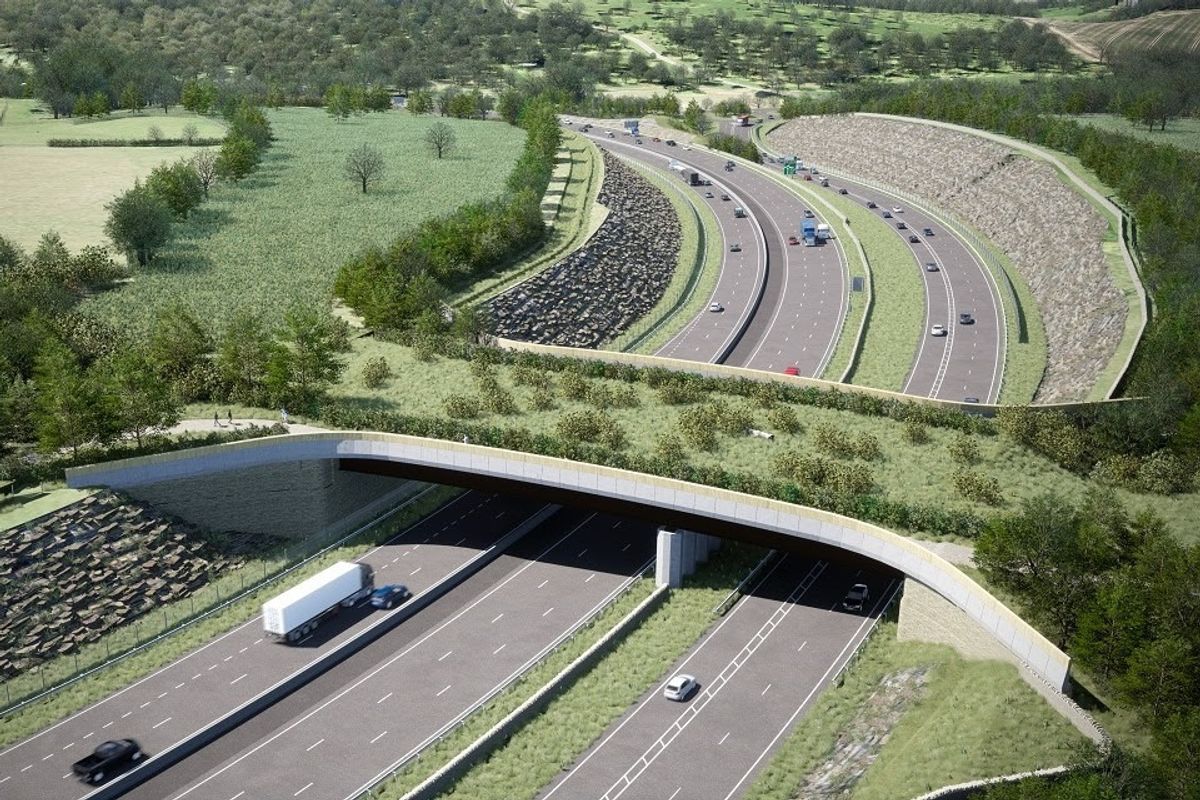
Britain is spending £460 million building a 60 metre wildlife bridge over the A417 dual carriageway in Gloucestershire, for animals to cross. That’s a £7.6 million per metre deer crossing. It would be funny if it wasn't our tax payer money being wasted, meanwhile real problems remain unfunded.
Ben Graham tweet media
English
267
134
922
138.5K
Alastair
Alastair@quasistable·
Wait, we genuinely think that the damage caused by wildlife crossings on the motorway adds up to £0.5 BILLION over its lifespan? And on top of that, even if it does ‘pay for itself’ we believe that that’s the best use of a marginal £460 million, that there aren’t other uses we could put it to that would return the investment in terms of lives saved etc many more times over? Astonished if that’s actually true.
English
1
0
1
92
Object Zero
Object Zero@Object_Zero_·
@Cernovich The world doesn’t even have the steel supplies to rebuild this stuff quickly. It’s not regular steel. It’s all superduplex etc. This isn’t a virus, there’s no V shaped recovery from destroying global energy infrastructure.
English
4
38
288
51.1K
Cernovich
Cernovich@Cernovich·
Let’s hope this isn’t accurate.
Arnaud Bertrand@RnaudBertrand

I hate to be the bearer of bad news but if infrastructure like this 👇 gets blown up, as of this moment it will take at least a decade to recover from this war - and the truth is that the world's energy picture is probably changed forever. This single facility 👇produced roughly 20% of global LNG supply (aljazeera.com/news/2026/3/18…) and, as of 2011, had taken $70 billion to build (energyintel.com/0000017b-a7be-…). What makes this even worse is that Iran's strike on this was retaliation after Israel attacked their South Pars gas field which draws from the same natural gas reservoir, which is the world's largest by far (9,700 km² - about the size of Qatar itself). Heck, on the list of the 25 largest natural gas fields (en.wikipedia.org/wiki/List_of_n…) this single reservoir holds roughly 40% of their combined recoverable reserves - and is nearly 6 times bigger than the 2nd biggest field in the world. And, unlike many of the others on the list, it's only at 10% depletion (meaning 90% of the gas is still there). Which means that, probably for many years, a huge share of the gas from the world's largest reservoir simply won't be extractable, as infrastructure on both sides - Qatar's and Iran's - has now been blown up. From a global energy supply perspective, we're deep into worst-case scenario territory.

English
85
65
942
262K
Object Zero
Object Zero@Object_Zero_·
@dlogosxyz @dwarkesh_sp It takes 10 years to create an engineer with 10 years experience. Nine women can’t produce a baby in a month.
English
0
0
0
33
dLogos
dLogos@dlogosxyz·
@dwarkesh_sp Fewer than a thousand people at Carl Zeiss are a bottleneck for the entire AI industry. Does that feel like a solvable recruiting problem or something structurally different?
English
2
0
2
1K
Dwarkesh Patel
Dwarkesh Patel@dwarkesh_sp·
EUV machines are the most complicated tools humans make. Their supply chain has over 10,000 individual suppliers, and any one of them not scaling fast enough can bottleneck the entire AI industry. An EUV tool fires lasers at a tiny tin droplet three times in precise sequence, blasting it hard enough to emit EUV light. That light bounces off 18 multilayer mirrors onto the wafer. Meanwhile, the two platforms inside the machine - one holding the stencil, one holding the chip - are flying back and forth at 9Gs in opposite directions. The successive passes have to land on top of each other to within 3 nanometers. If any part of this is off, yield goes to zero. Take just one component. The mirrors are mostly supplied by Carl Zeiss, who have probably fewer than a thousand people working on them. In turn, Carl Zeiss rely on machines from Switzerland to deposit each of the layers, and use a coating process co-developed with a different German company. None of these companies have woken up. They’re gradually increasing production, but nowhere near the levels necessary for what the labs want by the end of the decade. @dylan522p predicts production can't scale beyond about 100 EUV machines per year by 2030, no matter how much money gets thrown at the problem. In the medium term this is the key bottleneck on scaling.
English
51
118
988
142.4K
Object Zero
Object Zero@Object_Zero_·
@RokoMijic TLDR, an AI fast take off is severely throttled by the European working time directive.
English
1
0
12
439
Roko 🐉
Roko 🐉@RokoMijic·
In a sense, we have nanotechnology. It just isn't Drexlerian. It's precise, wild and mechanical. "An EUV tool fires lasers at a tiny tin droplet three times in precise sequence, blasting it hard enough to emit EUV light. That light bounces off 18 multilayer mirrors onto the wafer. Meanwhile, the two platforms inside the machine - one holding the stencil, one holding the chip - are flying back and forth at 9Gs in opposite directions. The successive passes have to land on top of each other to within 3 nanometers. If any part of this is off, yield goes to zero."
Dwarkesh Patel@dwarkesh_sp

EUV machines are the most complicated tools humans make. Their supply chain has over 10,000 individual suppliers, and any one of them not scaling fast enough can bottleneck the entire AI industry. An EUV tool fires lasers at a tiny tin droplet three times in precise sequence, blasting it hard enough to emit EUV light. That light bounces off 18 multilayer mirrors onto the wafer. Meanwhile, the two platforms inside the machine - one holding the stencil, one holding the chip - are flying back and forth at 9Gs in opposite directions. The successive passes have to land on top of each other to within 3 nanometers. If any part of this is off, yield goes to zero. Take just one component. The mirrors are mostly supplied by Carl Zeiss, who have probably fewer than a thousand people working on them. In turn, Carl Zeiss rely on machines from Switzerland to deposit each of the layers, and use a coating process co-developed with a different German company. None of these companies have woken up. They’re gradually increasing production, but nowhere near the levels necessary for what the labs want by the end of the decade. @dylan522p predicts production can't scale beyond about 100 EUV machines per year by 2030, no matter how much money gets thrown at the problem. In the medium term this is the key bottleneck on scaling.

English
3
3
39
4.1K
Object Zero
Object Zero@Object_Zero_·
@californiacoms @mmjukic Step 1: Assassinate the top religious leader of a 300 million strong branch of Islam that believes in martyrdom and declarations of jihad. Step 2: Negotiate.
GIF
English
1
0
0
26
Marko Jukic
Marko Jukic@mmjukic·
There are only three options to reopen the Strait of Hormuz: (1) Sudden inexplicable rapid regime change with no civil war (2) Completely conquering every square inch of Iran with the U.S. military with no years-long insurgency (3) Massive air-naval drone reindustrialization
Macro Polo@themacropolo

@mmjukic Absolutely correct. I have yet to hear a single coherent plan on how to reopen the strait

English
42
18
371
52.7K
Object Zero
Object Zero@Object_Zero_·
Naval Construction It’s increasingly likely we’re going to see an increase in naval construction as a means of delivering large swarms to a given theatre. It’s quite possible to build warships with 100,000 tonnes of displacement. It’s easy for such a vehicle to transport 10 million drones. Drones are superior to guns (on precision) and superior to missiles (on economics). Drones combine the economics of shells, with the precision of missiles. The challenge with drones is delivery into range. Naval construction is how this will be solved for many militaries. Someone is going to build the first swarm carrier and it might be a submarine version, an SSND. Increasingly what is going to matter is who has the tightest iteration cycles. Who can incorporate new technologies and platforms the fastest?
Object Zero tweet media
English
12
22
152
8.8K
Object Zero
Object Zero@Object_Zero_·
Any time you apply continental means (averages) to a strategy as nuanced as selecting industrial winners, you are just super-doomed to fail. You can start a company in the UK via the Companies House website, for £12, and it takes less than 10 minutes. Smart people haven’t stopped doing it. As soon as the government changes in 2029, a tonne of companies are going go from £50m valuations to £1bn valuations within a week. “Oh but I have a theory on ‘Europe-as-whole’, I detect cultural differences from 7,000 miles away.” No. The European scene is just capital starved, because of temporary government idiocy. Voters across the continent are pissed off. It’s a bargain window, and there’s 2 years left. If you think the UK suddenly can’t invent things, and doesn’t have new ideas, then you are just too far away to see the ground. Risk taking is sky high, everyone has their bags packed and their wealth liquid, because they anticipate extreme volatility, this is why everything is capital starved. It’s a tinder box. Whether this is released productively or destructively is yet to be seen, but “low risk culture” is just a total misdiagnosis that belongs in pre-2020.
English
4
1
32
1.1K
a16z
a16z@a16z·
Jacob Helberg says one of Europe’s biggest challenges to building companies is cultural: they’re just not risk-takers like Americans are. "It's really hard for Europe to put those pieces together because the culture in Europe has not been favorable to encouraging risk-taking, which is necessary—it's the lifeblood of starting a business." "You need to have a risk-taking culture—and then they have the unit economics problem where it's just really expensive to build stuff in Europe because your energy bills are really high. You have to spend a ton of money on legal fees before you even start." "It's not that starting things in Europe will be impossible, but they have major headwinds." "We have invested a lot of effort into having truthful, candid conversations with our friends in Europe to actually share our concerns." "When you actually care about someone, you can actually be candid with them. Clear is kind." "We care about Europe. We want them to be strong, and so we are trying to draw their attention to policy issues that we think are serious headwinds for them." @jacobhelberg with @eriktorenberg
English
18
20
77
17.8K
Object Zero
Object Zero@Object_Zero_·
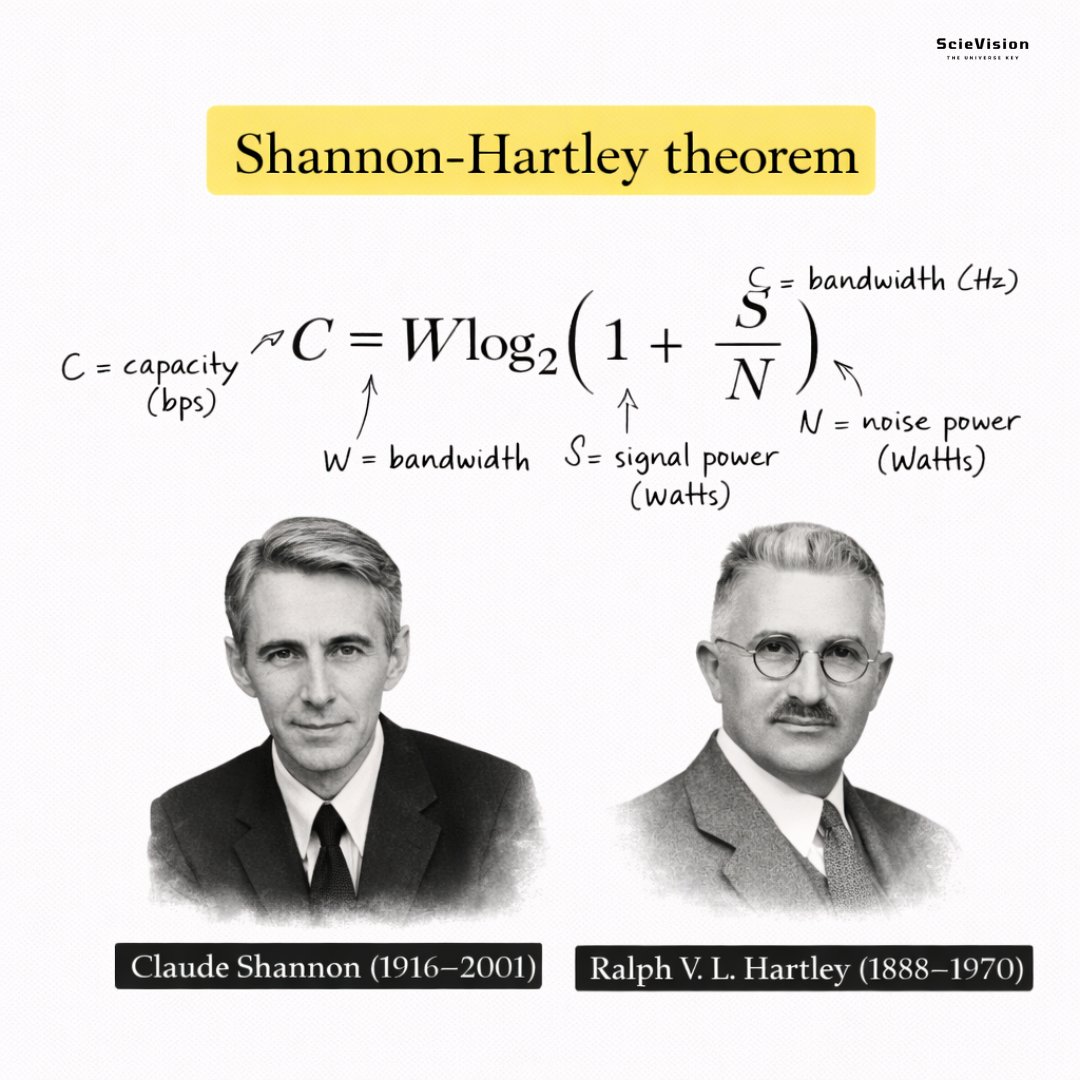
@scievision369 @KersevanRoberto It also explains why HFT trading accesses a higher signal to noise ratio, and thus is more profitable than trading the same strategy at a lower bandwidth. But that’s a secret that a lot of the largest hedge funds depend on staying a secret. So you won’t ever find out about it.
English
1
1
5
495
ScieVision
ScieVision@scievision369·
The Shannon-Hartley theorem ✍️ This theory sets a strict limit on how fast we can send information through any noisy channel, like Wi-Fi, phone signals, or radio links. It states that there is a maximum amount of data we can reliably transmit per second without errors, regardless of how advanced our technology becomes. This limit relies on two simple factors: the channel's width, or bandwidth, which is like the size of a pipe carrying the data (a wider pipe allows for faster speeds), and the clarity of the signal compared to background noise, known as the signal-to-noise ratio (a strong signal in a quiet environment lets more data come through without errors). A wider channel directly increases speed; however, enhancing the signal's strength compared to noise is beneficial initially but leads to diminishing returns. This concept, introduced by Claude Shannon in 1948, explains why engineers strive to expand bandwidth and reduce noise in various systems, from 5G networks to satellite communications. It defines how quickly digital data can travel reliably in the real world.
ScieVision tweet media
English
14
59
262
6.6K
Object Zero
Object Zero@Object_Zero_·
Co-ordination isn’t impossible. It’s not tier 1 (laws of physics and math). The issue is that the mechanics of competition are rooted in Lotka which is tier 2, whereas human co-ordination is tier 3. So it’s not that no coordination is a physical fact, just that it’s extremely difficult to address tier 2 from a tier 3 control. In the defaults conditions of ignorance or apathy, tier 2 will dominate.
English
0
0
1
21
Spencer
Spencer@sqburl·
@Object_Zero_ feels like A8 + “no coordination between agents” is underpinning most of this? why should gradient access be monotone in Σ under price/queue/regulatory allocation? and what prevents coordination equilibria that leave slack (as we’ve seen in fixing ozone, whaling, acid rain)?
English
1
0
1
46