best feeling coming downstairs to presents under the xmas tree when I was 6.
almost as excited at 26 coming home and the dirt cheap electronics i bought on aliexpress finally arrived from china!!
A Qubit costs ~$5,260.
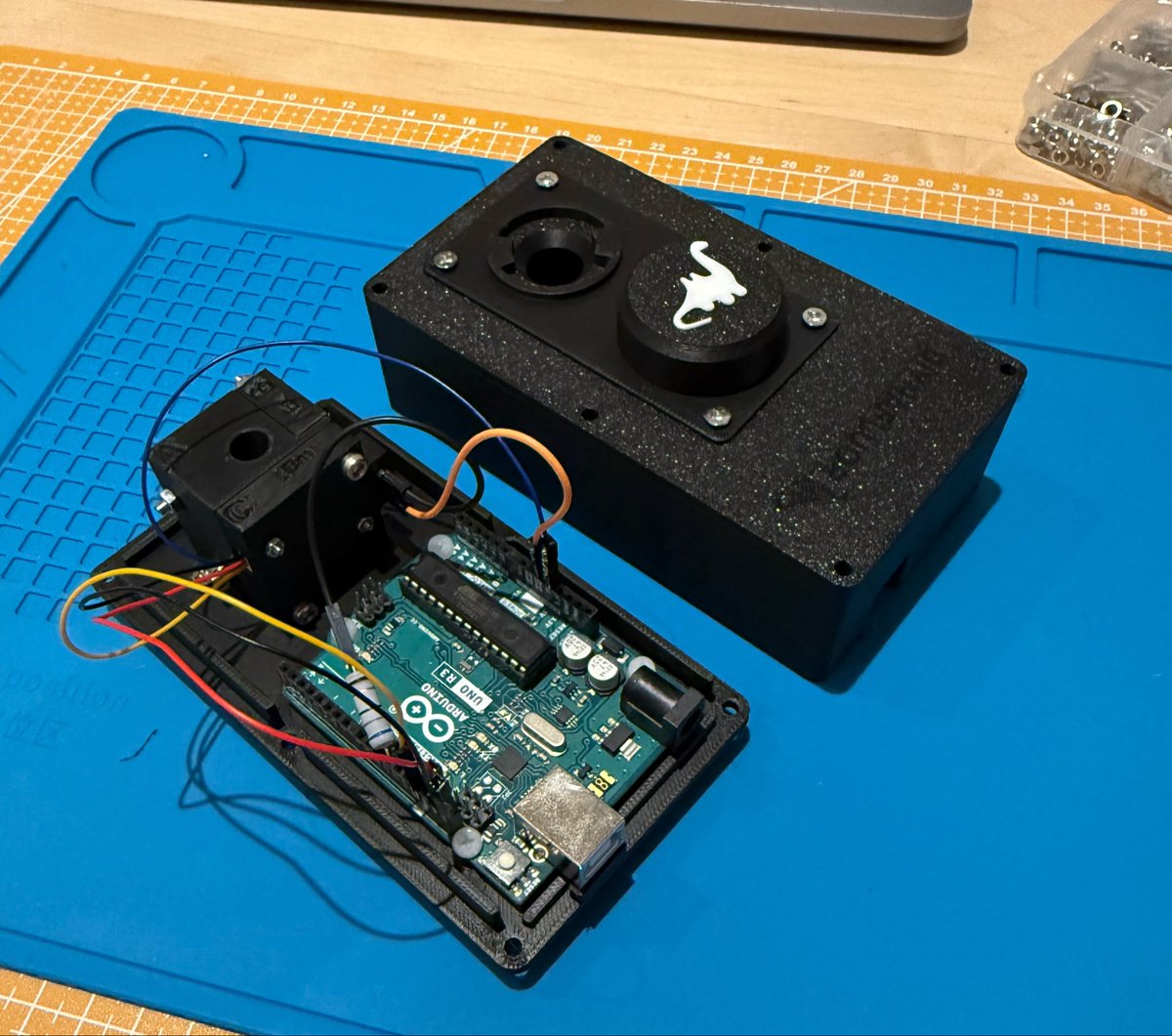
I built one for $39.
Not a toy version. A fully working DNA fluorometer: the device you use to measure how much DNA there is in a sample.
This mattered because my first sequencing run underperformed partly because I didn’t know exactly how much DNA I was loading.
For nanopore sequencing, input DNA quality matters a lot. Too little and the pores are underutilised. Too much and flow cell longevity is compromised.
The underlying device is not complicated.
A DNA fluorometer works by adding a dye that binds to DNA, shining light at the sample, and measuring the fluorescence.
The BOM is basically:
> $23 optics + sensor
> $8 Arduino/electronics
> $6 screws/nuts
> $2 enclosure plastic
Biotech especially is full of equipment with insane idiot indexes. With AI you don't really have an excuse not to 1) work out what that the index for a piece of equipment is and 2) build your own version if it's irrationally high.
THINK BEFORE YOU BUY.
I love lab robotics. I also hate AI in bio that has ZERO validation. Wouldn’t it be cool if we could use robots to autonomously do REAL experiments?
Im makin a cloud lab that doesn’t suck. Low capex, starting small, but making it god damn useful and god damn programmable
@chr1sa@SynBioBeta@huggingface Fascinating! And a munch needed post today to cheer me up. After a pretty shabby day of experiments gone wrong in the lab. Thanks!
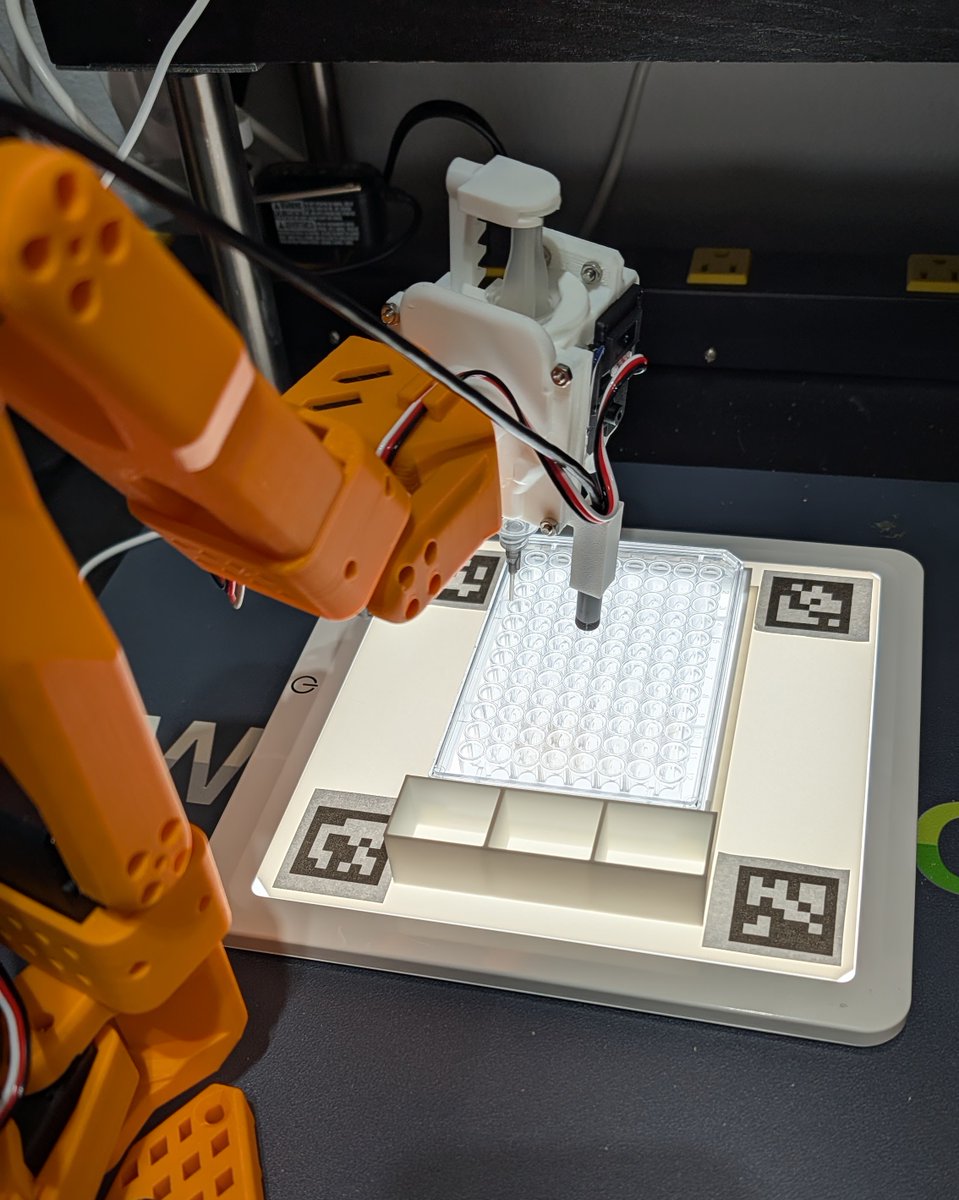
Bio/Chem is the new Maker Movement, thanks to the AI Scientist revolution. I'm going to be demonstrating DIY "self-driving lab" gear (all open source and makeable for <$150) at @SynBioBeta in San Jose, May 4-7.
Here's just a glimpse of a @HuggingFace LeRobot arm with an autosyringe that can autonomously "discover" color theory in minutes.
CC @johncumbers
Trying to make an understated logo for my terminal plasmid editor. Gonna make it accurately handed and grooves spaced properly, lest I be pilloried by @mbeisen et al. This is just a test, lol.
I just built a free online tool for plant genomics search!
You can easily query: gene sequences, gene location, description, etc
ybiohub.com/%E7%94%9F%E7%8…
Completely FREE and will keep improving.
If useful, please follow me & RT.😁😁
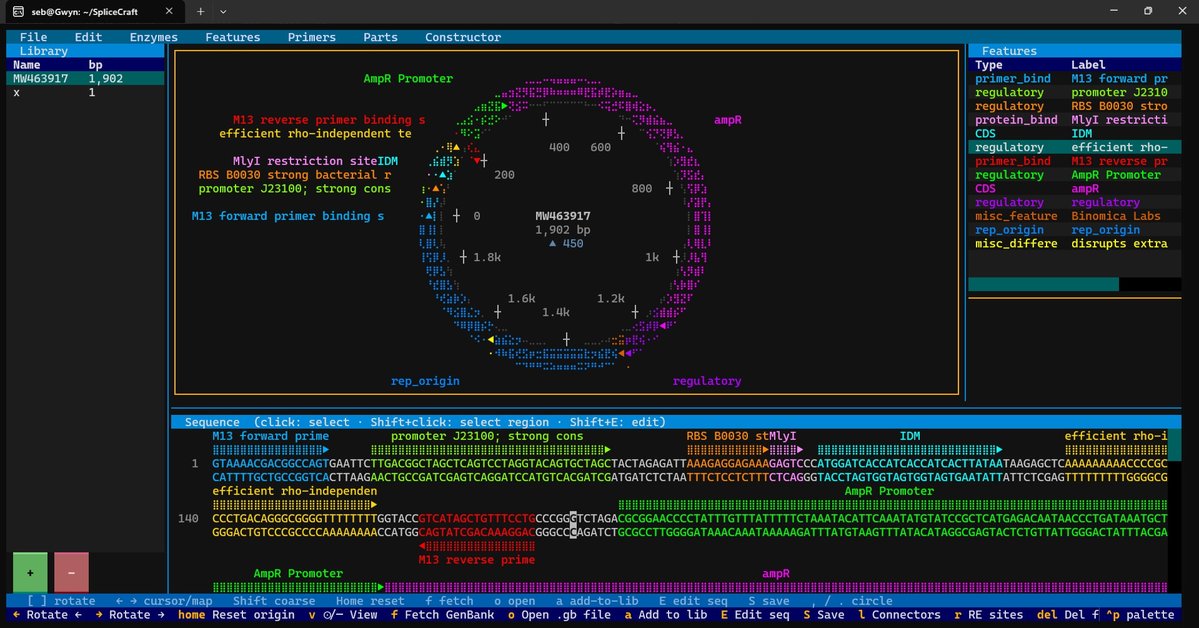
If any1 wants to try my very unpolished and unfinished TUI plasmid editor in its very pre-alpha form, I reserved a slot on the ol pip bandwagon. Just type in:
pip install splicecraft
and I recommend runnin this often to update:
pip install --upgrade splicecraft
It's a WIP 💚
Fun Fact Friday: 🌿 Did you know some algae can almost photosynthesize in the dark? Trachydiscus minutus captures far-red light by clustering regular chlorophyll, letting it thrive in low-light, shady waters. Read more: hubs.ly/Q04bhzJL0
New Essay: How to Build a Strep A Vaccine
Strep A is "one of the most important, neglected, and tractable pathogens to work on," says @JacobTref. Its disease burden rivals HIV/AIDS, yet annual funding is just $14M (vs. $1.5B for HIV).
How can we finally make a vaccine?
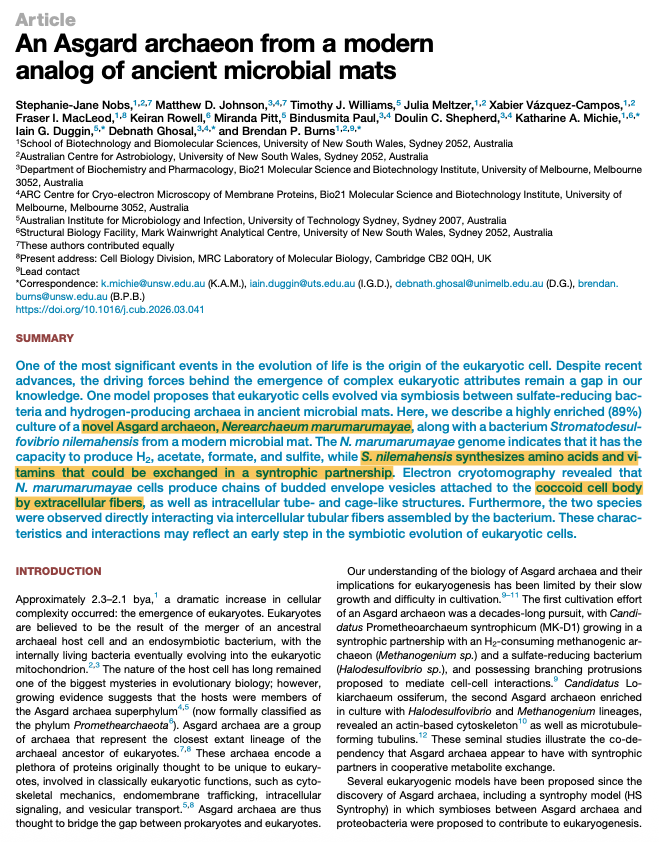
New Asgard paper dropped yesterday. This is only the third Asgard archaeon to be cultured in the laboratory (the first took 10+ years of work.)
Many microbiologists think that the Asgard archaea are the closest living relatives of the ancestor that gave rise to eukaryotic cells. They have cellular features that "bridge" bacterial and eukaryotic cells. And this new Asgard species, found off the coast of Western Australia, is interesting for a couple reasons:
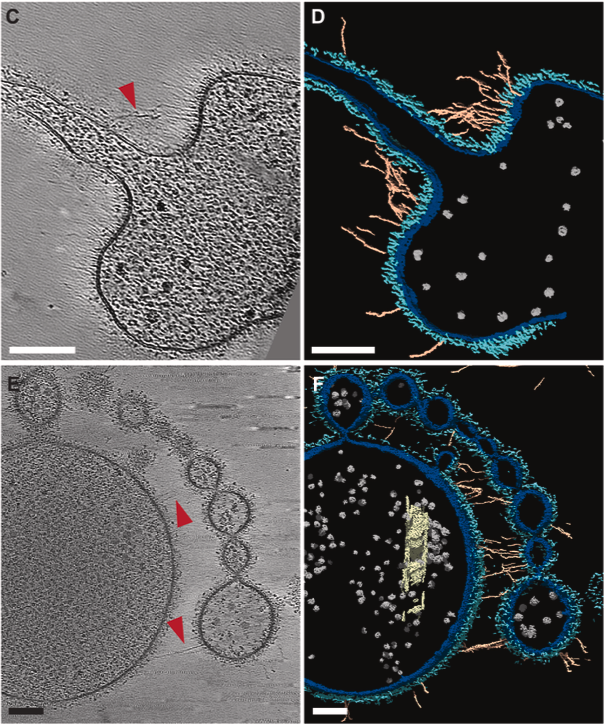
1. The Asgard buds off extracellular vesicles, like many other organisms. But these vesicles remain "tethered" to the main cell via a thin fiber. You can see this clearly in the cryotomography images below. I've never seen other examples of this (but maybe microbiologists on Twitter have.)
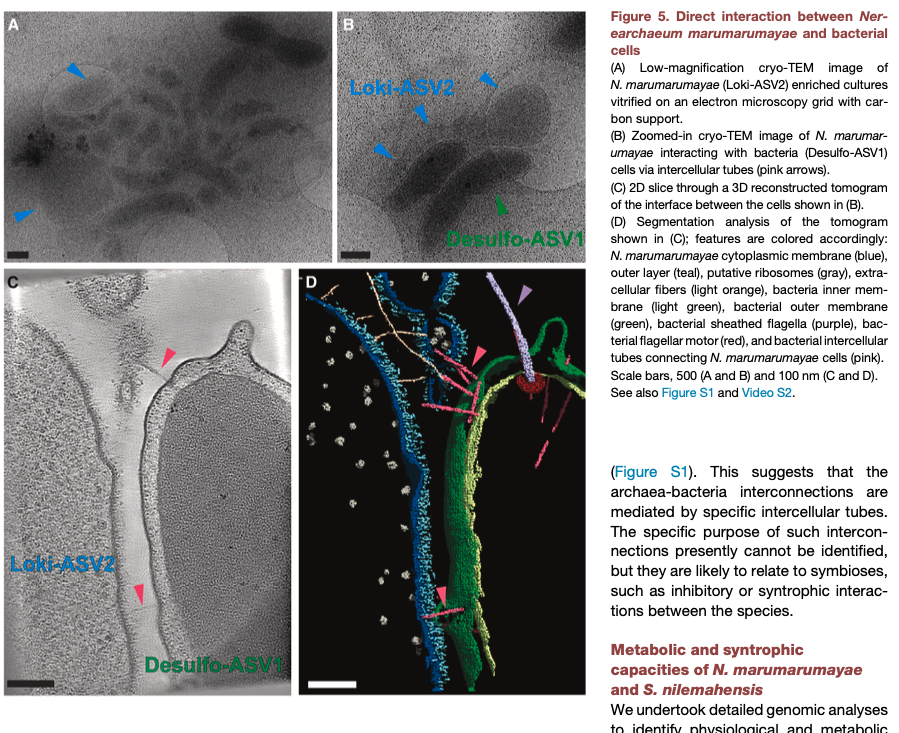
2. Asgards cannot be cultured on their own. All of the species cultured thus far can only be grown in the presence of a syntroph. This Asgard can only be cultured with a microbe, called S. nilemahensis. The Asgard makes acetate, formate, and lactate for the bacterium; the bacterium, in exchange, makes amino acids and vitamins for the Asgard. (The archaeon seems to entirely lack metabolic pathways for arginine, proline, phenylalanine, and tryptophan.) These nutrients are exchanged via hollow tubes that physically context the Asgard --> bacterium. (See the images below.)
🎓 La doctoranda Alba López Laguna defiende el 7 de abril su tesis titulada "Oligonucleotide-based technologies for the sustainable control of Botrytis cinerea", bajo la dirección de los investigadores Dolores Fernández Ortuño y Alejandro Pérez
@tallphil Not sure if this twitter's algorithm at work. But this is the 5th really cool Rust thing in my feed in 2 days. Now I just want to vibe-code Rust things.
Super excited to be launching two things today: #RustQC 🦀🧬 and rewrites.bio 🚀
I used AI to rewrite 15 RNA-seq QC tools into a single Rust binary (I've never written any Rust). It ended up being over 60x faster. Here's the story 🧵
seqeralabs.github.io/RustQC/