Trita Parsi search. ..@tparsi
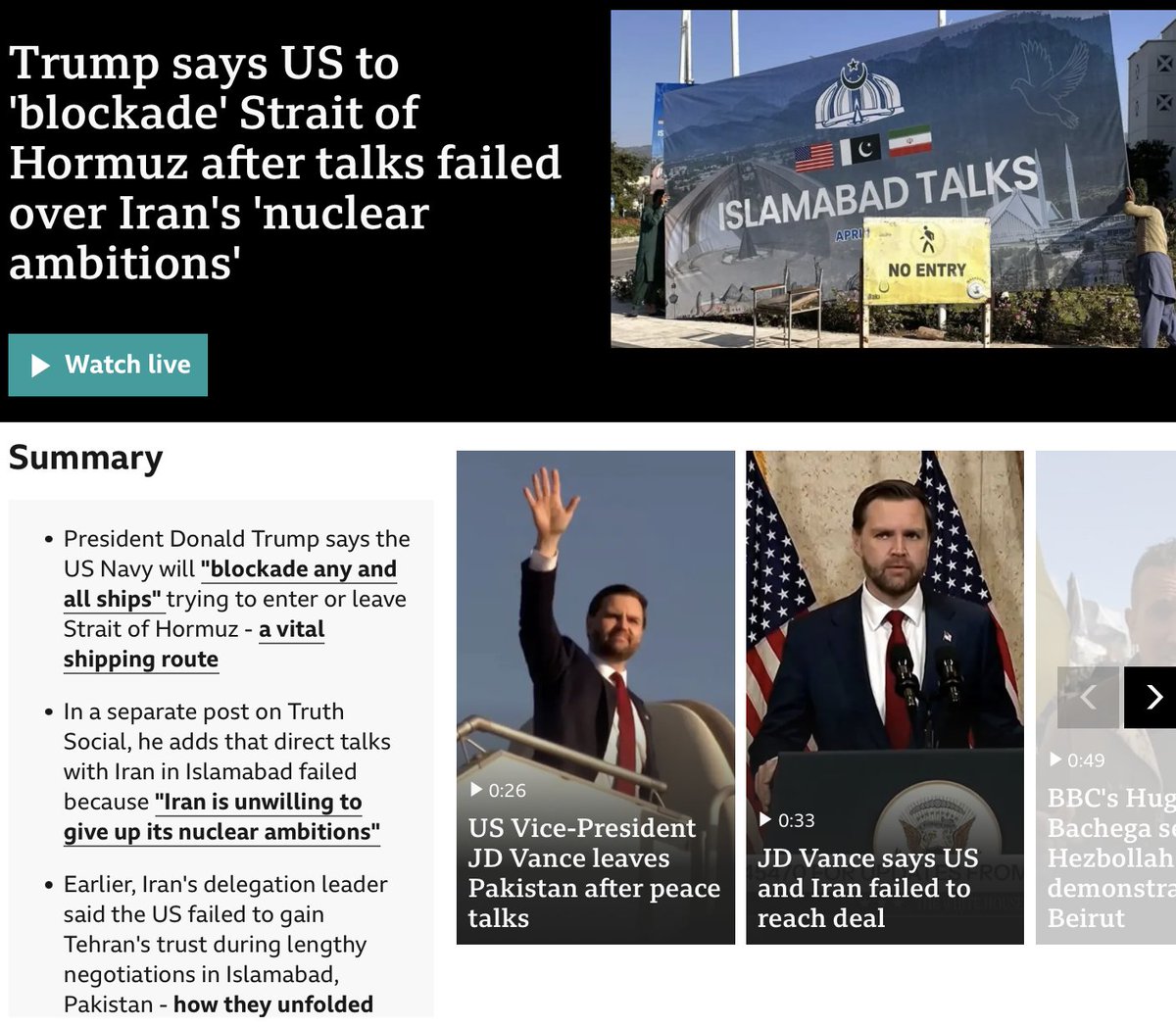
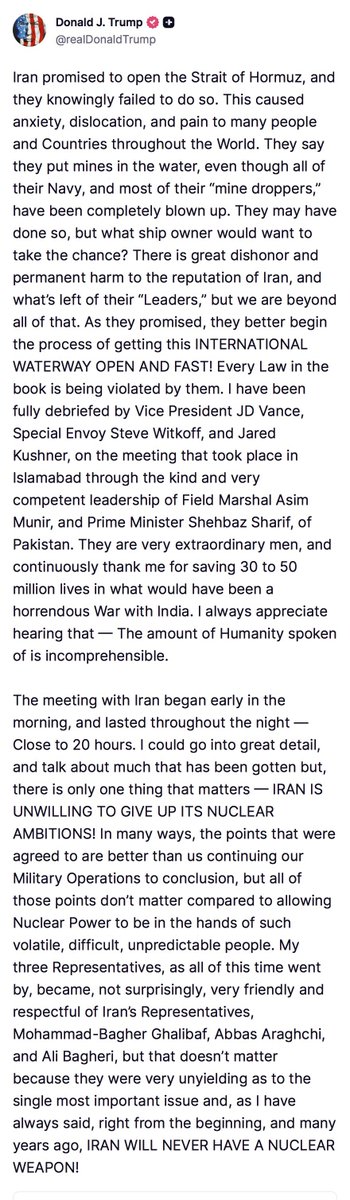
Regarding Trump's threat/decision to impose a naval blockade on Iran, color me a skeptic.
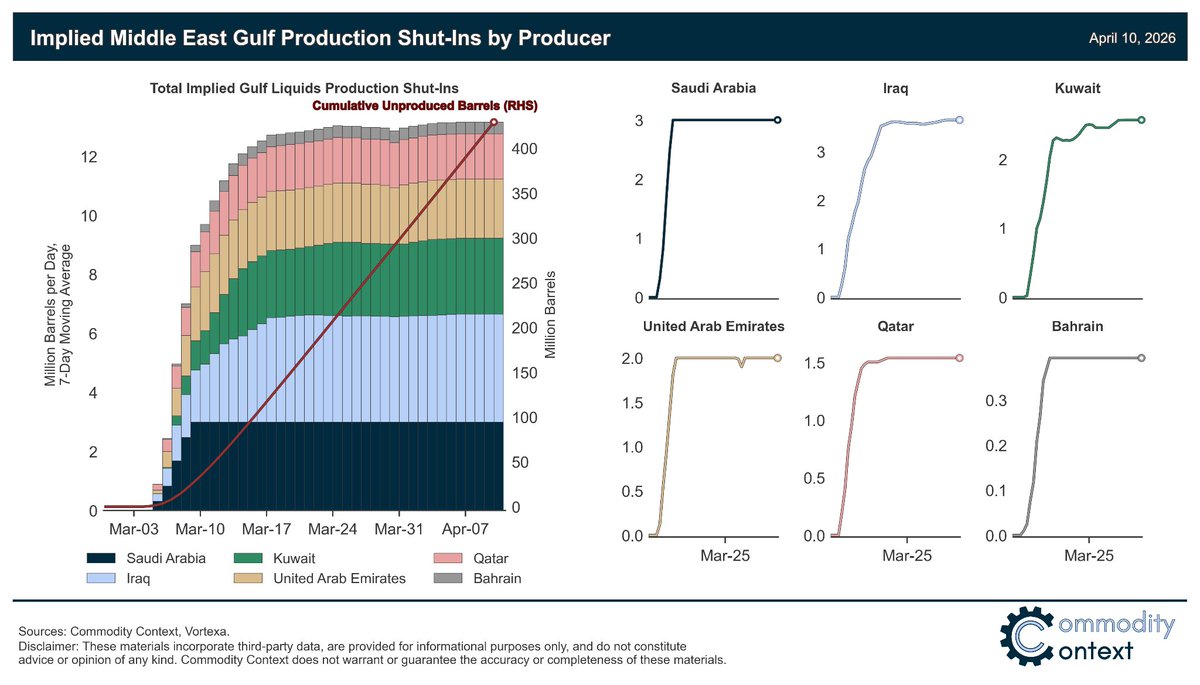
1. Taking more oil off the market, particularly the only oil that is now getting out from the Persian Gulf, will drive oil prices further up, and the paper price of oil will get closer to the actual price, which should be around $150 per barrel. A dramatic increase in inflation in the US will ensue. Avoiding this is precisely why Trump was stuck in a position where he had no escalatory options out of this conflict before the ceasefire. He still doesn't.
2. Stopping tankers carrying Iranian oil wouldn't just be an escalation vis-à-vis Iran, but also against the countries that are buying Iranian oil, which includes China, India, and other Asian countries. I doubt Trump is ready for that escalation, particularly given the upcoming summit in Beijing.
3. This is also true for punishing countries that have negotiated a toll with Iran for the Straits. That includes Pakistan, which hosted the negotiations.
4. The naval blockade escalation will make the closing of the Red Sea more likely by the Houthis. That would take another 12% of global oil flow off the market. We would now be looking at oil around $200 per barrel.
There are nine or so days left of the ceasefire. Since neither side has explicitly stated that talks won't resume, or that the ceasefire is dead and over with, all these moves should be treated as tactics and threats within the negotiations.
It wouldn't be surprising if these threats are walked back soon (perhaps before markets open on Monday) and a new round is announced.
HOWEVER, there is a time for brinkmanship, and there is a time for serious negotiations.
If the US truly was insisting on zero enrichment in Islamabad, which was not Trump's red line at first but rather Israel's, then the next talks will be rendered a failure - just as the talks in May 2025 were killed by Trump shifting to the Israeli red line.
Still, I don't think that necessarily will lead to a return to war. A more likely scenario is a new non-negotiated status quo in which Tehran retains control over the Straits but doesn't get any sanctions relief, while the US pulls out of the war, and the question becomes whether Israel will continue the war on its own.