

Brent Deverman
537 posts

Brent Deverman
@bdeverman
Product & Engineering Builder 🇸🇬 | $3M+ Transformations @ HSBC, CNN, AIA, LVMH-DFS | Scaled Digital Products to Millions | Singapore
Singapore Tham gia Mart 2010
720 Đang theo dõi357 Người theo dõi

Brent Deverman đã retweet

Swift 6.3 has landed! 🚀
This release brings community-driven Android support into the official toolchain, along with major improvements to C interoperability, the build system, and embedded Swift. Read more: swift.org/blog/swift-6.3… #AndroidDev #iOSDev

English



got a new laptop, setting things up, what IDE should I go with? was vscode, just want minimal + tmux
English
Brent Deverman đã retweet

@steipete my friend’s @openclaw is 19 days behind on its task. Should he be using a 🥕or a 🥍 to motivate his bot? 🦞
Michael.Michelini/@michelini
🦞 Project Status Check — Mar 15, 2026 📋 PL Task Status: 0/7 complete 🔍 Verification: ❌ NOT DONE 📝 Evidence: No published video found on target platforms ⚡ Recommendation: Review scope or mark as blocked. 19 days overdue. Team — please confirm so tasks can be updated.
English
Brent Deverman đã retweet

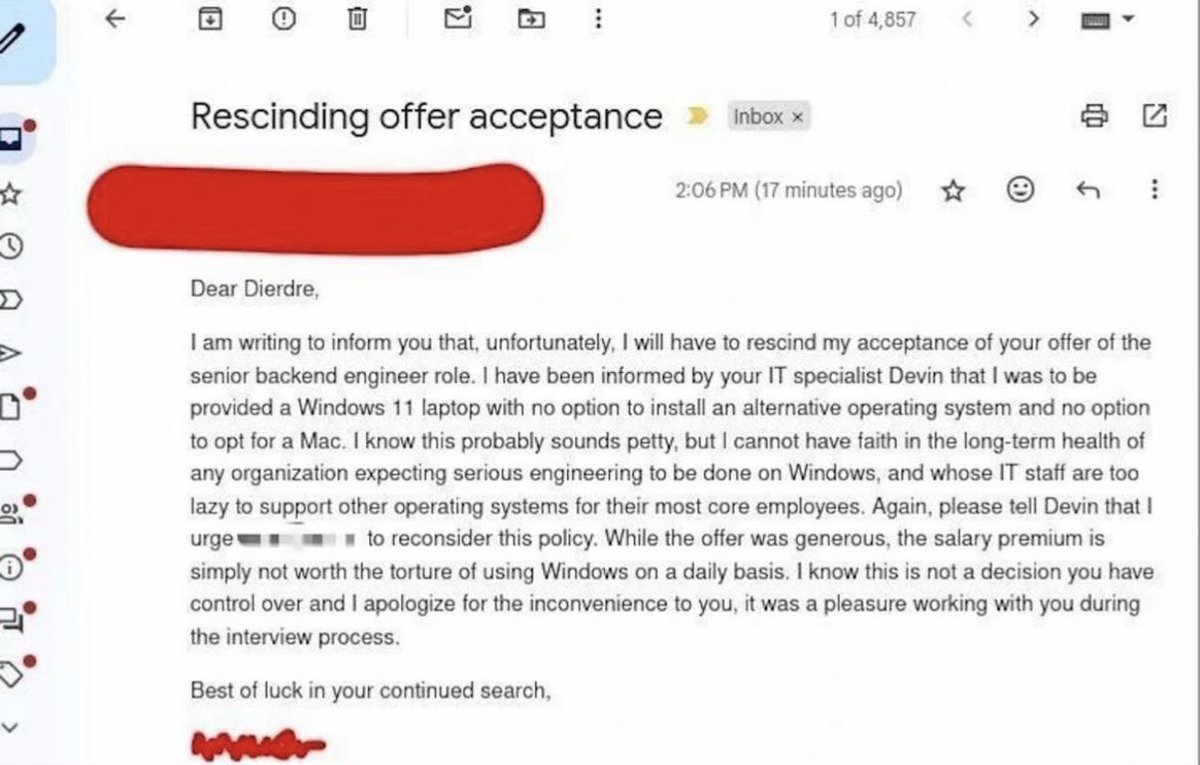
English

@claudeai some Chinese users are saying they've been banned by Claude, possibly due to VPN usage.
I go to China a lot and want to use Claude there.
Can you confirm whether it's OK for Americans in China, and Chinese staff at US firms, to use Claude even if we have to use VPNs?
English
Keep checking in with @Steve_Yegge he is on the forefront.
Gergely Orosz@GergelyOrosz
It's always energizing to do a podcast with Steve Yegge (@Steve_Yegge, engineer+author, formerly at Amazon+Google, creator of Gas Town). Timestamps: 00:00 Intro 01:43 Steve’s latest projects 02:27 Important blog posts 04:48 Shifts in what engineers need to know 10:46 Steve’s current AI stance 13:23 Steve’s book Vibe Coding 18:25 Layoffs and disruption in tech 31:13 Gas Town 40:10 New ways of working 51:08 The problem of too many people 54:45 Why AI results lag in business 59:57 Gamification and product stickiness 1:04:54 The ‘Bitter Lesson’ explained 1:07:14 The future of software development 1:23:06 Where languages stand 1:24:47 Adapting to change 1:27:32 Steve’s predictions Brought to you by: • @statsig – The unified platform for flags, analytics, experiments, and more. statsig.com/pragmatic • @SonarSource – The makers of SonarQube, the industry standard for automated code review. sonarsource.com/pragmatic/ • @WorkOS – Everything you need to make your app enterprise ready. workos.com Three interesting thoughts from Steve that we talked about in this conversation: 1. Reading ability is becoming a blocker for wider AI adoption. Some struggle with walls of text that current AI tools produce, and Steve predicts that in the very near future, most people will program by talking to a visual avatar, not reading terminal output because he observes that five paragraphs is already a lot to read for many devs. 2. What software engineers need to know keeps changing. In the 1990s, any decent software engineer knew Assembly, and today almost no decent developer knows it because Assembly has long been superseded by technical progress. What engineers “need” to know these days is different from the ‘90s and that process continues with AI, changing the parts of the craft that are essential for devs. We grumble about this but that won’t change anything by itself. 3. There’s a “Dracula Effect” where AI-augmented work drains engineers faster than traditional work. This is because AI automates the easy tasks, meaning that engineers are stuck doing high-intensity thinking all day. Steve says you may only get three daily productive hours at max speed, but during that time, you could produce 100x more output than before.
English

Why do I never hear about this anymore? Does anyone actually use Apple Vision Pro?

English
Brent Deverman đã retweet

genie is out of the bottle
everyone hitting the magic button
button puts your brain in a state of laziness
that seeps into all your processes and they get skipped
we talk about this all the time and still our team is struggling with it
Lukasz Olejnik@lukOlejnik
Amazon is holding a mandatory meeting about AI breaking its systems. The official framing is "part of normal business." The briefing note describes a trend of incidents with "high blast radius" caused by "Gen-AI assisted changes" for which "best practices and safeguards are not yet fully established." Translation to human language: we gave AI to engineers and things keep breaking? The response for now? Junior and mid-level engineers can no longer push AI-assisted code without a senior signing off. AWS spent 13 hours recovering after its own AI coding tool, asked to make some changes, decided instead to delete and recreate the environment (the software equivalent of fixing a leaky tap by knocking down the wall). Amazon called that an "extremely limited event" (the affected tool served customers in mainland China).
English

Oh wait, @zeddotdev finally makes sense when using the Codex desktop app. I can do most of my work directly in Codex (including terminal) and use Zed just for reviewing specific changes or investigate an issue. No more Cursor/VSCode crap.
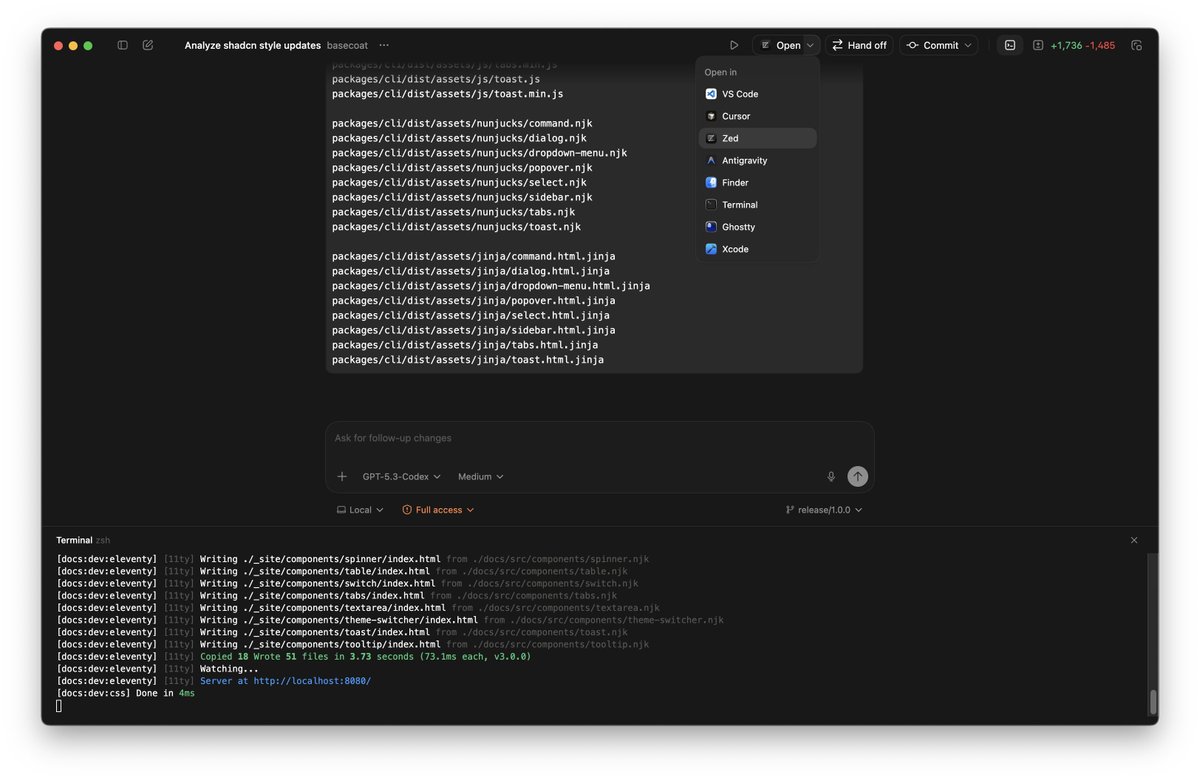
English
@levelsio I’m in Bali for 10 months need tips on surviving. Staying around Kuta.
English

@chris_karani Keep me posted my agents are playing with your package.
English

@monxyet Learn how to leverage spotlight search and other functions including clipboard history.
English

1st time using MacBook for daily use and code
Share tips and trick dong sepuh2 😭🙏

English
Brent Deverman đã retweet

🇸🇬 Glad to help bring @aiDotEngineer to Singapore!
Speaker applications open now!
cfp.65labs.org
apply if you always wanted to go and hang out with the top AI engineers in the Wakanda of Asia.
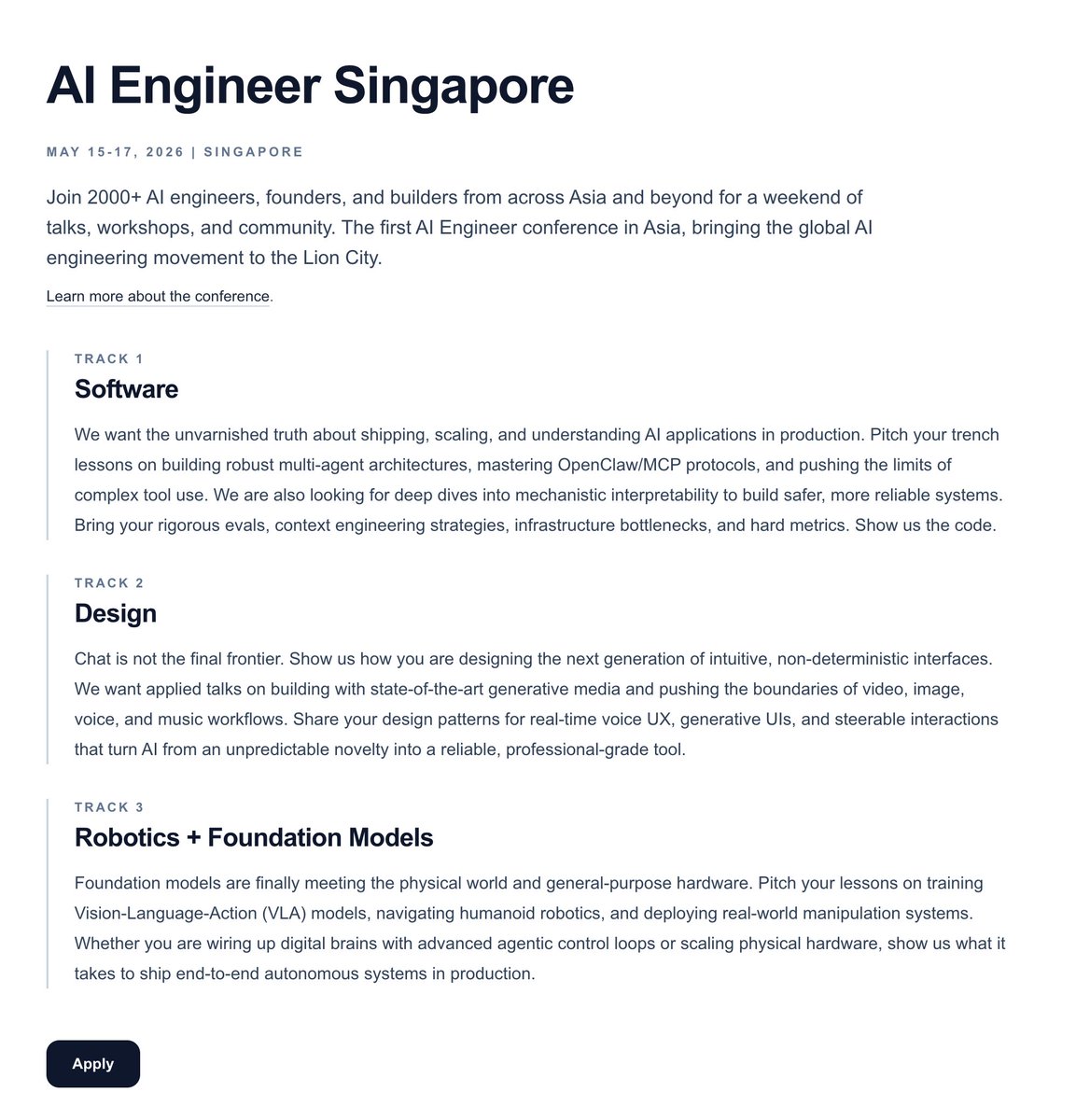
swyx@swyx
Singapore is the Wakanda of Asia.
English

Some of you aren't ready for this conversation, but this is the best Mac monitor that Apple sells right now.

English