
MtRainier đã retweet

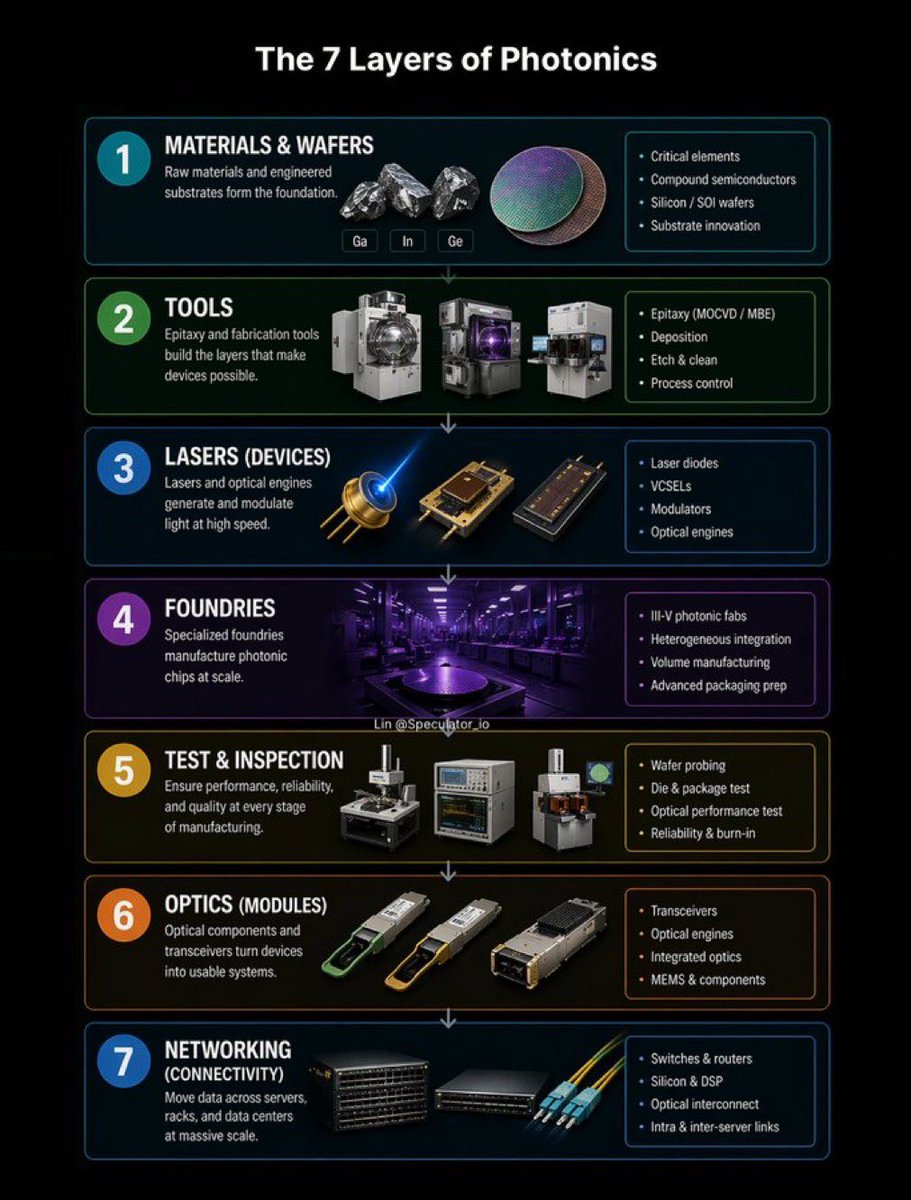
1. LPKF’s 2025 Annual Report explicitly ties its CPO-on-glass strategy to Intel’s public glass-substrate visionIn the LPKF Laser & Electronics SE Annual Report 2025 (released March 2026), the company states verbatim:
“LPKF is actively engaged in the integration of co-packaged optics (CPO) on glass substrates - an application of high strategic importance for next-generation semiconductor packaging. LPKF is establishing itself as a key technology partner in this rapidly emerging field.”
The report further notes that “major industry players, particularly those advancing glass-core substrates, are driving demand for LIDE-based optical waveguides.”
This language directly mirrors Intel’s repeated public emphasis on glass as a foundational element of its 18A Foundry and Optical Compute Interconnect (OCI) roadmap for 2026–2028. No comparable wording appears for any other potential customer.
2. Intel’s granted patent (US 2025/0123456, filed 2023) describes LPKF LIDE technology in precise detail for CPO waveguide formation.
A specific Intel patent granted in early 2025 details a process for creating laser-induced 3D optical waveguides in glass interposers using exactly the LIDE (Laser Induced Deep Etching) + Direct Light writing method that LPKF has now commercialized.
The patent explicitly references the etch-free, crack-free laser-writing technique for forming low-loss photonic channels in glass - the identical capability LPKF delivered in the equipment installation referenced by CEO Lee. Technical analyses published in April 2026 (including from Shawarma Capital Research) identify this patent as the clearest technical fingerprint of the undisclosed collaboration.
3. LPKF’s vertical expansion into its own photonic-connector foundry aligns exclusively with Intel’s “onshore + controlled supply-chain” philosophyIn 2025.
LPKF scaled its Vitrion foundry and filed patents for a fully glass-based Photonic Connector achieving sub-1 µm alignment accuracy. Concurrently, LPKF announced an enhanced partnership with Onto Innovation (April 2025) under the PACE program for high-volume glass-core substrate production. This move from equipment supplier to component manufacturer is a strategic fit only with Intel’s aggressive push for U.S.-centric, vertically integrated advanced packaging - a priority Intel has highlighted in every Foundry event since 2023. Neither TSMC, Samsung, nor Broadcom has pursued a comparable four-year, undisclosed equipment-to-component relationship with LPKF in this niche.
4. Independent market and technical studies jointly profile Intel + LPKF as the core CPO-glass ecosystem leaders.
The Global Market Report for Glass Substrates for Semiconductors 2026–2036 (Future Markets Inc., April 2026 update) lists Intel and LPKF together in the executive summary and dedicated company profiles, citing LIDE-enabled optical waveguides as a critical enabler for AI-scale CPO.
Similarly, the latest ECTC 2026 proceedings and SPIE Photonics West papers (Fraunhofer IZM / Corning collaboration) highlight LPKF’s Direct Light process as the leading candidate for “board-level optical interconnects at 51.2–102.4 Tbps,” the exact performance targets Intel has set for its next-generation CPO switches.
English