rplust

2.8K posts

rplust banner
rplust

rplust

@robplust

Protocol Specialist at @ratedw3b (acquired by @Figment_io) | Just means I go down rabbit holes 🐰

Tham gia Ağustos 2021
612 Đang theo dõi713 Người theo dõi
rplust đã retweet
Tempo
Tempo@tempo·
Tempo Mainnet is live! Starting today, anyone can build on Tempo through our public RPC endpoints. Alongside mainnet, we’re introducing the Machine Payments Protocol, an open standard for machine payments.
English
281
324
2.4K
627.4K
rplust đã retweet
Figment
Figment@Figment_io·
Stablecoins took a step closer to embedded infrastructure with @tempo's announcement. Figment is proud to support @Tempo, bringing our compliance, security, and reliability to stablecoin infrastructure. Congratulations to the @Tempo team. The work continues.
Tempo@tempo

Tempo Mainnet is live! Starting today, anyone can build on Tempo through our public RPC endpoints. Alongside mainnet, we’re introducing the Machine Payments Protocol, an open standard for machine payments.


English
0
3
10
760
rplust đã retweet
RYAN SΞAN ADAMS - rsa.eth 🦄
THEY DID IT. The SEC and CFTC just dropped a landmark document that officially classifies crypto assets. They're actually telling us which crypto assets are securities and which ones aren't - by name! THIS IS SOMETHING GENSLER REFUSED TO DO (he focused on prosecuting crypto out of existence) This rule doc gives crypto many of the benefits of the clarity bill - it lifts us out of the gray market - it gives every asset a path. It's almost like the Clarity act just passed by way of regulator. (of course, the actual clarity act will harden all this into legislation and make it irreversible in the event we get another Gensler, we still want it) This rule says there's 5 categories for crypto assets: 1) Digital Commodities - assets tied to a functional, decentralized crypto system (e.g., BTC, ETH, SOL, XRP, ADA, DOGE). Not securities. (yes, they name them on page 14) 2) Digital Collectibles - NFTs, meme coins, artwork tokens, in-game items. Not securities (fractionalized collectibles may be an exception). 3) Digital Tools - membership tokens, credentials, domain names (e.g., ENS). Not securities. 4) Stablecoins - payment stablecoins under the GENIUS Act are not securities. Other stablecoins, it depends. 5) Digital Securities - tokenized versions of traditional securities. Like tokenized stocks. Always securities. Amazing! This makes so much sense I can't believe it's coming from a regulator. No more enforcement threats to Ethereum developers and crypto exchanges. How about the Howey test? More common sense! If an issuer makes specific promises of managerial efforts from which buyers expect profits, the offering is a security until those promises are fulfilled. Then it's a commodity. The asset itself was never the security, the deal around it was. (E.g. XRP was a security pre launch, became a commodity after). How about stuff like staking and mining? Mining? Not a securities transaction. Staking? Also not a securities transaction, that includes custodial and liquid staking even with LSTs! How about wrapping BTC? Not a securities transaction. Airdrops? NOT SECURITIES. NO MORE GEO BANS PROTECTING AMERICANS from free airdrops. Remember this is a joint doc from the SEC and CFTC, They're actually cooperating on this, no internal strife, this is binding to both. SEC regulates $80-100 trillion assets CFTC regulates $5-10 trillion assets Both of the world's largest capital markets are showing us that crypto assets are here to stay and they're welcome alongside traditional assets. Every country will follow. This is the biggest move toward legitimacy I've seen in all my time in crypto. Maybe bigger than the genius act since is covers all crypto assets. Well done @MichaelSelig and @SECPaulSAtkins. And especially well done to the indefatigable @HesterPeirce. Her fingerprints are all over this, couldn't have happened without her eight years of principles-based curiosity.
RYAN SΞAN ADAMS - rsa.eth 🦄 tweet mediaRYAN SΞAN ADAMS - rsa.eth 🦄 tweet media
English
201
833
4.3K
380.2K
rplust đã retweet
Lido
Lido@LidoFinance·
Staked ETH is Mega Bridge your staked ETH to @MegaETH with just a few clicks to access liquid Ethereum staking rewards across the MegaETH ecosystem. ↓
English
9
11
81
4.2K
rplust đã retweet
@bertcmiller ⚡️🤖
@bertcmiller ⚡️🤖@bertcmiller·
Of course that's your contention. You just got finished running autoresearch. You're gonna be convinced we can climb any hill this way 'til next month when you get to AlphaEvolve, and then you're gonna be talkin' about evolutionary harnesses...
@bertcmiller ⚡️🤖 tweet media
English
4
1
17
1.6K
rplust đã retweet
DoubleZero
DoubleZero@doublezero·
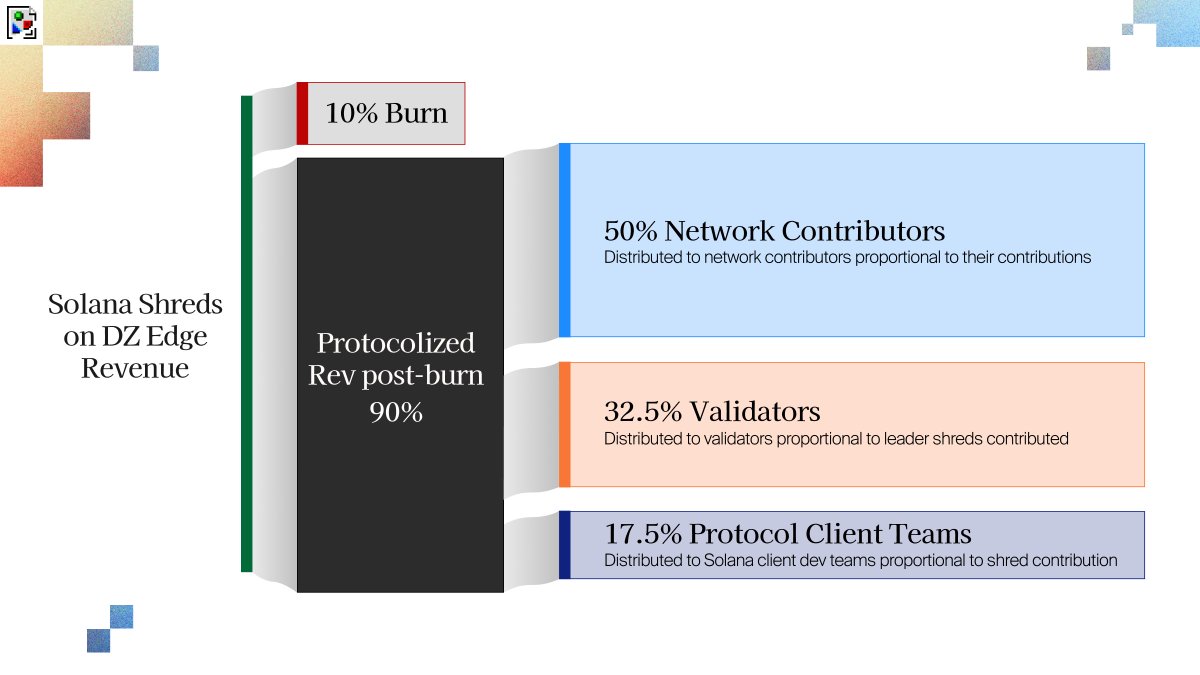
2/ First: Zero fees. The 5% block reward fee is gone for every existing and new DoubleZero-connected validator, effective as of Epoch 939. Now carrying ~46% of Solana’s network stake, DoubleZero is maturing from a bootstrap protocol into an economic engine for Solana. Validators are not paying fees anymore. You’re getting paid, through the protocol. Read on…
DoubleZero tweet media
English
2
9
70
13.1K
rplust đã retweet
DoubleZero
DoubleZero@doublezero·
5/ The flywheel begins: Traders pay for fast data. Revenue flows to validators who publish. More validators connect. More shreds get published. Data gets faster. Better markets for everyone on Solana. A rare win/win situation for virtually everyone involved. Every participant in the ecosystem benefits from increased economic activity. Solana becomes an even more powerful venue for trading. And validators are the reason why.
English
2
3
53
10.5K
rplust đã retweet
DoubleZero
DoubleZero@doublezero·
3/ A new revenue stream for validators is on the way. DoubleZero Edge rewards participating validators for their shreds, meaning the shred data you already produce becomes added revenue. Learn more: doublezero.xyz/journal/expand…
DoubleZero tweet media
English
1
4
58
7.6K
rplust đã retweet
hanniabu.eth (Ξ, α)
hanniabu.eth (Ξ, α)@hanni_abu·
It's great to see a call to action for app development and innovative ideas!
vitalik.eth@VitalikButerin

I think it's healthy for us in the Ethereum world to have a more bold and open mindset to many things, particularly on the application layer and on how we see ourselves in the world. We should not compromise on core properties: censorship resistance, open source, privacy, security (CROPS). We should not have "open mindedness" of the type that leaves people with no confidence of what security properties the L1 will still have one year from now. We should not ask ourselves questions like "do we really need light clients to be able to trustlessly verify correctness of the chain?". But especially on the layer of applications and Ethereum's interface to the world, we should be more willing to radically rethink various concepts and step outside our comfort zone. This includes issues of technological direction, eg. "what if AI basically means that wallets as browser extensions and mobile extensions are dead within a year?" One example last year was the shift to thinking about privacy as a first-class consideration, something we value equally to the other types of security. This implies a radically different Ethereum application stack, because the entire stack so far has not been built around privacy. Great, let's build a radically different Ethereum application stack! An example this year is the growing work on the networking side of privacy, both inside the EF and outside. It includes application-layer issues, eg. "what if the rest of defi is basically just universal futures markets on top of a good decentralized oracle and letting users self-organize on top of that?", and "what if the ideal decentralized oracle is just a SNARK over M-of-N small LLMs over zk-TLSes of some major news sites?" (BTW this is interrelated with the AI issue: one consequence of AI is that it moves "applications" away from being discrete categories of behavior with discrete UIs, and more toward being a continuous space, so "build fewer apps and rely on users to self-organize around them" should inevitably expand as a pattern) One example this year is rethinking from zero the role of L2s, and what kind of L2s are actually most synergistic and additive to Ethereum. It also includes culture. This is a big part of "the whole milady thing" for myself, @AyaMiyagotchi and others. Yes, it's a silly meme. Yes, I find the political takes of some milady partisans cringe and sometimes outright bootlickerish (though other milady partisans are quite the opposite). But the core underlying subtext, the message behind the message, is: rip off the suit and tie. If you have your suit and tie on, be willing to grab the nearest wine glass and spill it all over your suit and tie, so you have no choice but to rip it off and reclaim your body's full flexibility and freedom. Actually imagine yourself doing this the next time you get invited to a richpeopleslop formal gala dinner. Take the preconception that you are "respectable", write it down on a piece of paper, crumble it up and burn it. The psychological baptism of doing this leads to the intellectual baptism of unlocking greater creativity and expanding overton windows. For too long, our algorithm in Ethereum has been: we have this existing ecosystem, what's the logical next step to make it one step better? Now, our algorithm should be: we have this L1 that is amazing and will become more amazing, we have a growing array of tools, both those built within our ecosystem and outside it, what are the most valuable things to build, knowing what we know now? If YOU had to write the section of the 2014 Ethereum whitepaper that talked about applications, and take a first-principles perspective of what makes sense in defi, decentralized social, identity, and elsewhere, what would you write? At least take the step of marking all path-dependence concerns down to zero, pretend for a brief moment that the Ethereum chain today has exactly zero usage and you're the one suggesting or building the first apps, and see what comes out. Do this even if you're the one building today's existing apps. This is how Ethereum can grow back stronger.


English
0
1
18
844
rplust đã retweet
Max Resnick
Max Resnick@MaxResnick·
First they came for the programmers and I said nothing because I was not a programmer. Then they came for the Excel monkeys and I said nothing because I was not an Excel monkeys. Then they came for the mathematicians and I said nothing because I was not a mathematician. Then they came for the mechanism designers and there was nobody left to stand up for us.
English
15
8
128
17.8K
rplust đã retweet
Lex Sokolin | Generative Ventures
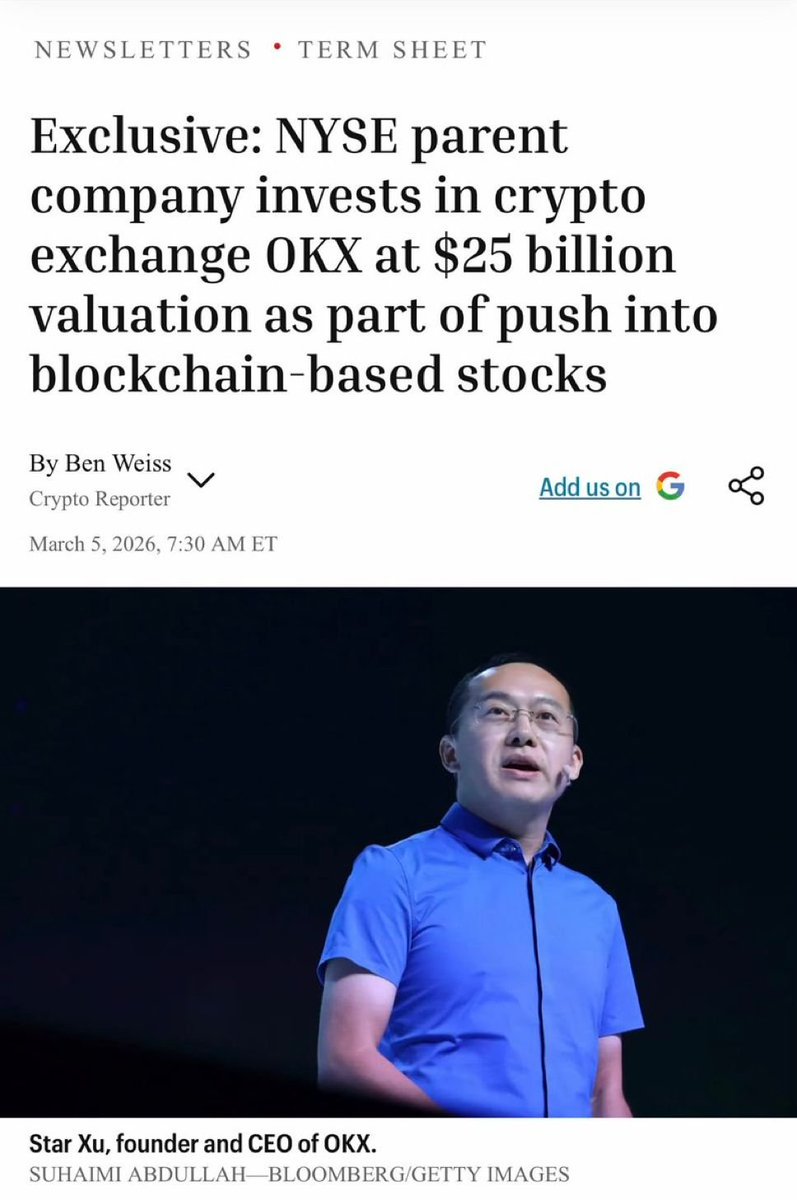
@fintechfrank A crypto exchange with a Fed master account. Direct access to payment rails without a bank intermediary. That's what the banking lobby spent years trying to prevent. "Deeply concerned" is the polite version of "our gatekeeping advantage just disappeared."
English
0
1
2
89
rplust đã retweet
Simon Taylor
Simon Taylor@sytaylor·
Yeah I did NOT see this one coming.
Simon Taylor tweet media
San Francisco, CA 🇺🇸 English
5
2
27
3.3K
rplust đã retweet
vitalik.eth
vitalik.eth@VitalikButerin·
Finally, the block building pipeline. In Glamsterdam, Ethereum is getting ePBS, which lets proposers outsource to a free permissionless market of block builders. This ensures that block builder centralization does not creep into staking centralization, but it leaves the question: what do we do about block builder centralization? And what are the _other_ problems in the block building pipeline that need to be addressed, and how? This has both in-protocol and extra-protocol components. ## FOCIL FOCIL is the first step into in-protocol multi-participant block building. FOCIL lets 16 randomly-selected attesters each choose a few transactions, which *must* be included somewhere in the block (the block gets rejected otherwise). This means that even if 100% of block building is taken over by one hostile actor, they cannot prevent transactions from being included, because the FOCILers will push them in. ## "Big FOCIL" This is more speculative, but has been discussed as a possible next step. The idea is to make the FOCILs bigger, so they can include all of the transactions in the block. We avoid duplication by having the i'th FOCIL'er by default only include (i) txs whose sender address's first hex char is i, and (ii) txs that were around but not included in the previous slot. So at the cost of one slot delay, only censored txs risk duplication. Taking this to its logical conclusion, the builder's role could become reduced to ONLY including "MEV-relevant" transactions (eg. DEX arbitrage), and computing the state transition. ## Encrypted mempools Encrypted mempools are one solution being explored to solve "toxic MEV": attacks such as sandwiching and frontrunning, which are exploitative against users. If a transaction is encrypted until it's included, no one gets the opportunity to "wrap" it in a hostile way. The technical challenge is: how to guarantee validity in a mempool-friendly and inclusion-friendly way that is efficient, and what technique to use to guarantee that the transaction will actually get decrypted once the block is made (and not before). ## The transaction ingress layer One thing often ignored in discussions of MEV, privacy, and other issues is the network layer: what happens in between a user sending out a transaction, and that transaction making it into a block? There are many risks if a hostile actor sees a tx "in the clear" inflight: * If it's a defi trade or otherwise MEV-relevant, they can sandwich it * In many applications, they can prepend some other action which invalidates it, not stealing money, but "griefing" you, causing you to waste time and gas fees * If you are sending a sensitive tx through a privacy protocol, even if it's all private onchain, if you send it through an RPC, the RPC can see what you did, if you send it through the public mempool, any analytics agency that runs many nodes will see what you did There has recently been increasing work on network-layer anonymization for transactions: exploring using Tor for routing transactions, ideas around building a custom ethereum-focused mixnet, non-mixnet designs that are more latency-minimized (but bandwidth-heavier, which is ok for transactions as they are tiny) like Flashnet, etc. This is an open design space, I expect the kohaku initiative @ncsgy will be interested in integrating pluggable support for such protocols, like it is for onchain privacy protocols. There is also room for doing (benign, pro-user) things to transactions before including them onchain; this is very relevant for defi. Basically, we want ideal order-matching, as a passive feature of the network layer without dependence on servers. Of course enabling good uses of this without enabling sandwiching involves cryptography or other security, some important challenges there. ## Long-term distributed block building There is a dream, that we can make Ethereum truly like BitTorrent: able to process far more transactions than any single server needs to ever coalesce locally. The challenge with this vision is that Ethereum has (and indeed a core value proposition is) synchronous shared state, so any tx could in principle depend on any other tx. This centralizes block building. "Big FOCIL" handles this partially, and it could be done extra-protocol too, but you still need one central actor to put everything in order and execute it. We could come up with designs that address this. One idea is to do the same thing that we want to do for state: acknowledge that >95% of Ethereum's activity doesn't really _need_ full globalness, though the 5% that does is often high-value, and create new categories of txs that are less global, and so friendly to fully distributed building, and make them much cheaper, while leaving the current tx types in place but (relatively) more expensive. This is also an open and exciting long-term future design space. firefly.social/post/lens/8144…
English
287
214
1.5K
258.2K
rplust đã retweet
Daniel
Daniel@DanielGKuhn·
Pump brings on non-native assets, saying "users increasingly want to trade & hold more without having to leave the app" theblock.co/post/391855/pu…
English
2
3
9
3.5K
rplust đã retweet
Joachim Neu
Joachim Neu@jneu_net·
I maintain this website of upcoming deadlines for academic venues relevant to blockchain research: blockchain-deadlines.github.io About a year ago, I started using a Python script and the OpenAI API to keep the site up to date. x.com/i/status/18689… Today ... 🧵
Joachim Neu@jneu_net

Want to know about upcoming deadlines to publish your blockchain research? 🧑‍🔬 Check out blockchain-deadlines.github.io ! Contributions welcome! github.com/blockchain-dea… 🧑‍💻 The latest update was done automatically with AI (and human inspection to avoid errors) -- here is how! 👉🧵

English
1
3
19
2.4K
rplust đã retweet
DEGEN NEWS
DEGEN NEWS@DegenerateNews·
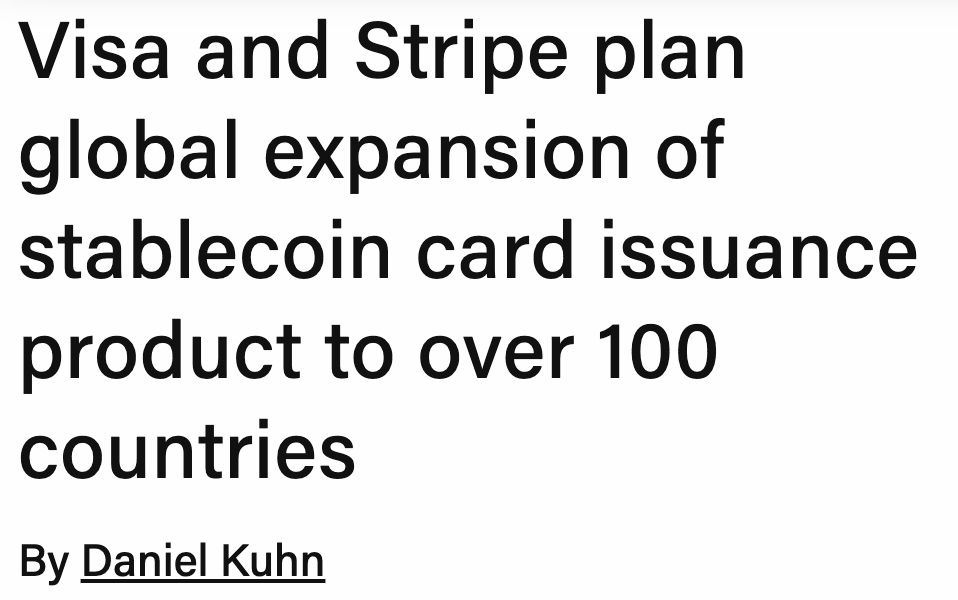
NEW: VISA AND STRIPE PLAN GLOBAL EXPANSION OF STABLECOIN CARD ISSUANCE PRODUCT TO OVER 100 COUNTRIES - THE BLOCK SOURCE: theblock.co/post/392019/vi…
DEGEN NEWS tweet media
English
33
12
166
19K