Tweet ghim
Nick Manteris
227 posts

Nick Manteris
@thecostofwork
Why a regular paycheck used to cover a regular life and doesn't anymore. Restaurant server. Reader. Writing about what the economic debate keeps leaving out.

Texas Tham gia Nisan 2026
58 Đang theo dõi34 Người theo dõi

@unusual_whales Warsh names the symptom. The mechanism is upstream: new money enters through the financial sector and reaches wages last.
The regressivity is not a side effect of inflation. It is what producing inflation does.
English

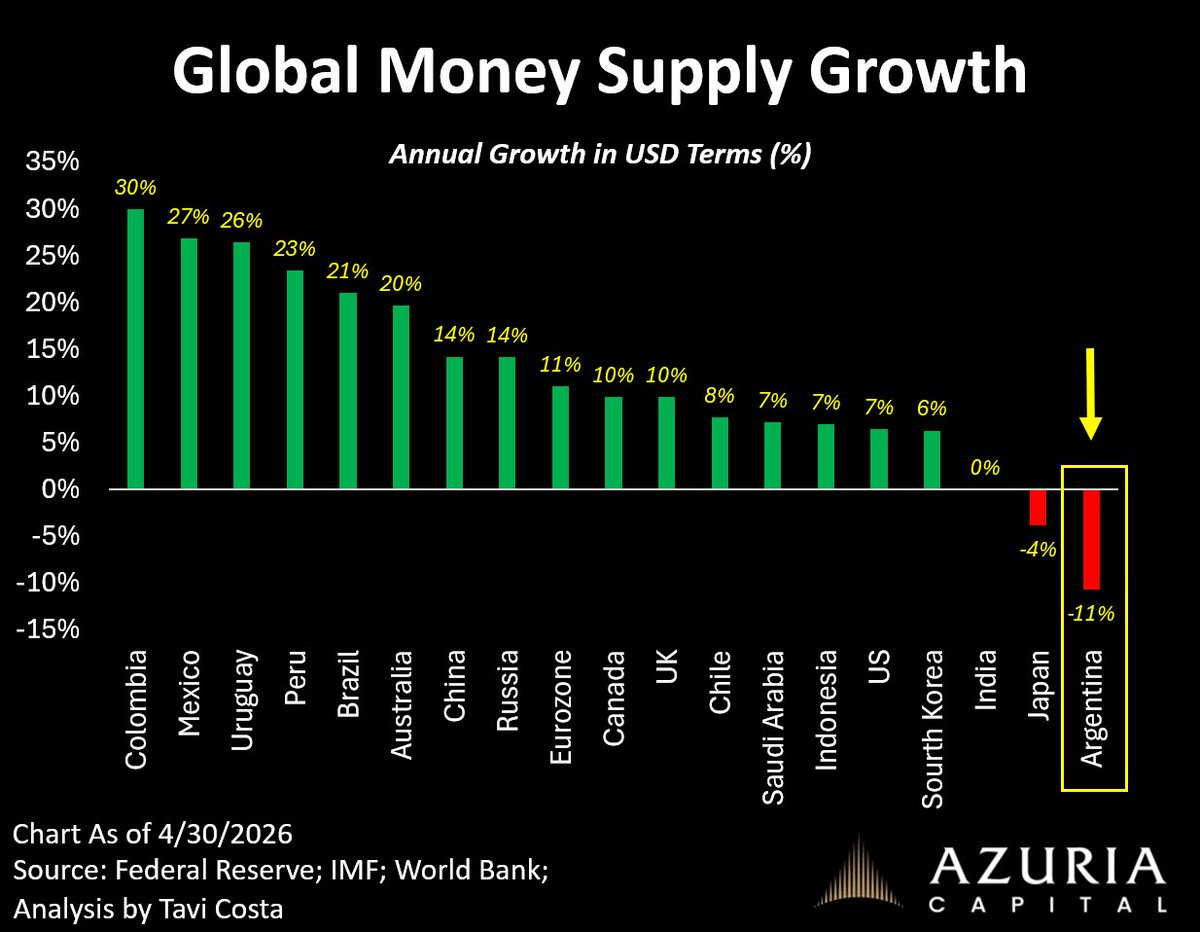
@Geenimetsuri @TaviCosta Nominal peso supply still grew about 11%. The chart shows dollar-denominated supply, so it combines money-supply growth and currency devaluation in one number.
Real contraction depends on whether inflation outran 11%. Under Milei it almost certainly did.
English

@thecostofwork @TaviCosta The currency has devalued 20 percent over the year.
When the drop in USD value has been 11 percent, what does that mean has happened to the actual money supply?

English

Argentina is the only country where money supply is contracting at a double-digit rate.
Meanwhile, the rest of the world continues to expand credit with little to no monetary discipline.
None of us own enough hard assets.
tavicosta.substack.com/p/macro-update

English

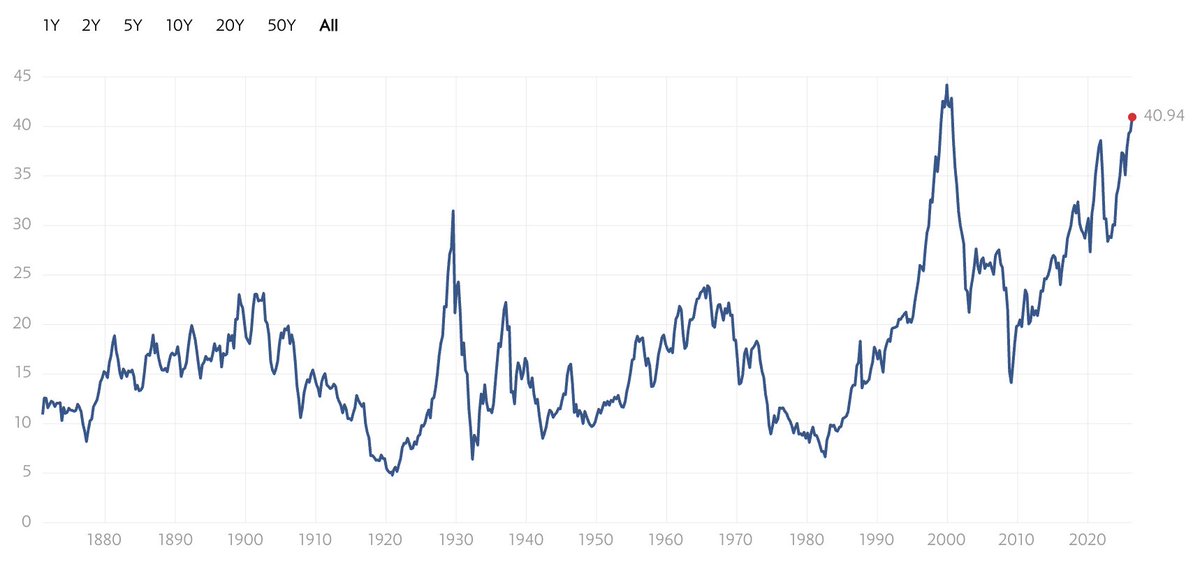
@Barchart Financial assets and GDP measure the same economy at two points. The first receives new money. The second adjusts later.
6.7x is the distance between them. The two prior peaks (2000, 2007) closed quickly into recession. The QE-era peak has been opening for 17 years.
English

Wall Street and Main Street aren't in competition. They measure the same economy at two points: the financial sector receives new money first, GDP adjusts later.
6.7x is the lag. The two prior peaks (2000, 2007) closed into recession. This peak has been opening for 17 years.
Barchart@Barchart
Wall Street outgrowing Main Street at the fastest pace in history 🚨🚨
English

@Hedgeye Fertilizer priced in dollars on global commodity markets. Crops priced in negotiations with four downstream firms. The farmer absorbs both ends. 78% is what that math produces.
Same pattern compressing wages elsewhere. Different industry, same math.
English

🚜 Farms in the south are struggling:
78% of Southern farmers say they can’t afford all required fertilizer this year, the highest of any region. 
The South is exposed for two reasons: crop mix and pre-booking behavior.
Just 19% of Southern producers pre-booked fertilizer ahead of the season, vs. 30% in the Northeast, 31% in the West, and 67% in the Midwest. 
Cotton, rice, and peanut growers, largely concentrated in the South, barely locked anything in before fertilizer prices skyrocketed.
Only 13% of cotton growers and 9% of peanut growers pre-booked. 
Those are also the most fertilizer-intensive crops on the board.
Rice runs $1,308/acre to produce, peanuts $1,166, and cotton $943 vs. $658 for soybeans and $396 for wheat.
U.S. farm sector losses have exceeded $50 billion across the past three crop years.
Nearly all (94%) farmers say their financial situation has worsened or stayed the same vs. last year.
Farms are getting squeezed.

English

@thecostofwork/note/c-253216636" target="_blank" rel="nofollow noopener">substack.com/@thecostofwork…
ZXX

On Substack, Stoller explains why Spirit Airlines died.
Antitrust, fuel, the legacy carriers lobbying against a rescue they once accepted. What the analysis doesn't ask: why two airline classes existed at all.
Spirit was what wages could still afford. The fuel shock didn't just kill an airline. It killed access.
English

@EPBResearch This chart removes government transfers and measures what work alone pays. It hasn't grown in 15 months. The headline income numbers look better because they include stimulus and tax credits. Strip those out and the trend is falling. The transfers covered it. The work didn't.
English

New essay on The Cost of Work: thecostofwork.substack.com/p/the-house-th…
English

The economists are right. Rent control doesn't work.
But the survey skips the prior question: what made rents unaffordable enough that rent control became politically necessary? Rents rose from 2.4x income to over 5x across twenty countries with different housing policies. Rent control is the wrong answer to a real problem.
The survey measures the answer. Nobody is asking about the cause.
English

There are few things economists agree on more than opposing rent control.
A survey of top economists found almost universal agreement that rent control:
1. Wouldn't make middle-income Americans better off
2. Would reduce apartment supply
3. Wouldn't reduce income inequality

Nathan J Robinson@NathanJRobinson
an economist explains how rent control is actually fine and good currentaffairs.org/news/rent-cont…

English

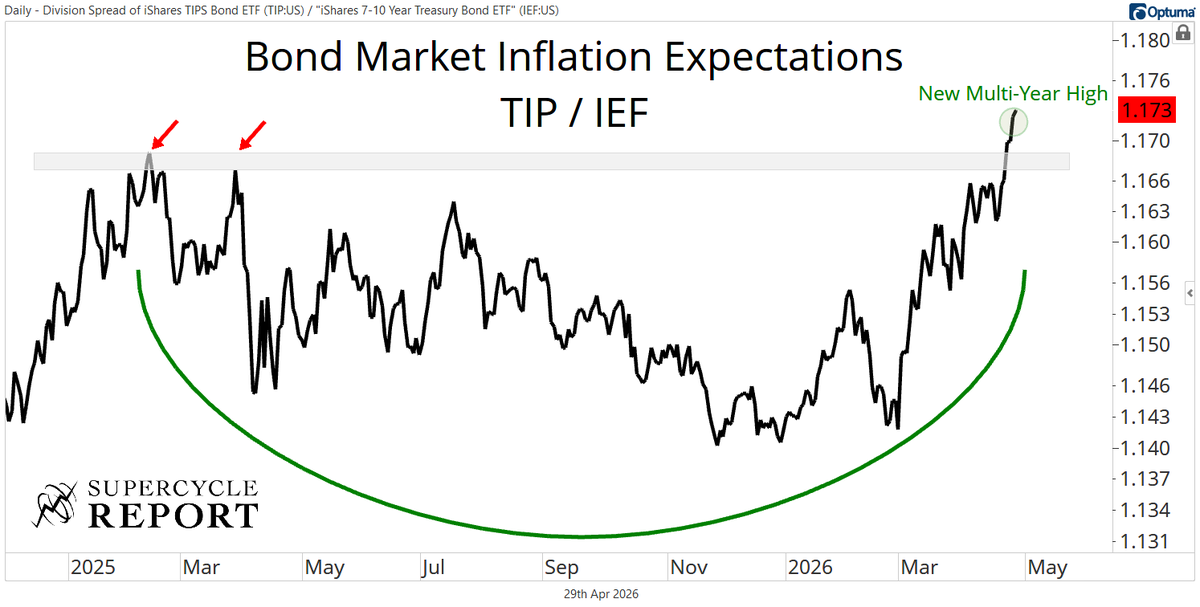
@Barchart The bond market isn't predicting a spike. It's pricing in what the Fed's own history suggests: the target is 2%, the average since 1971 is 3.8%, and the gap between promise and delivery has run in the same direction for fifty years. The market is reading the pattern.
English

Inflation about to take off according to the Bond Market 🚨🚨

Sam Gatlin@sam_gatlin
The bond market is yelling from the rooftops that inflation is about to soar. And you're betting on the Fed remaining dovish?? Think again!
English

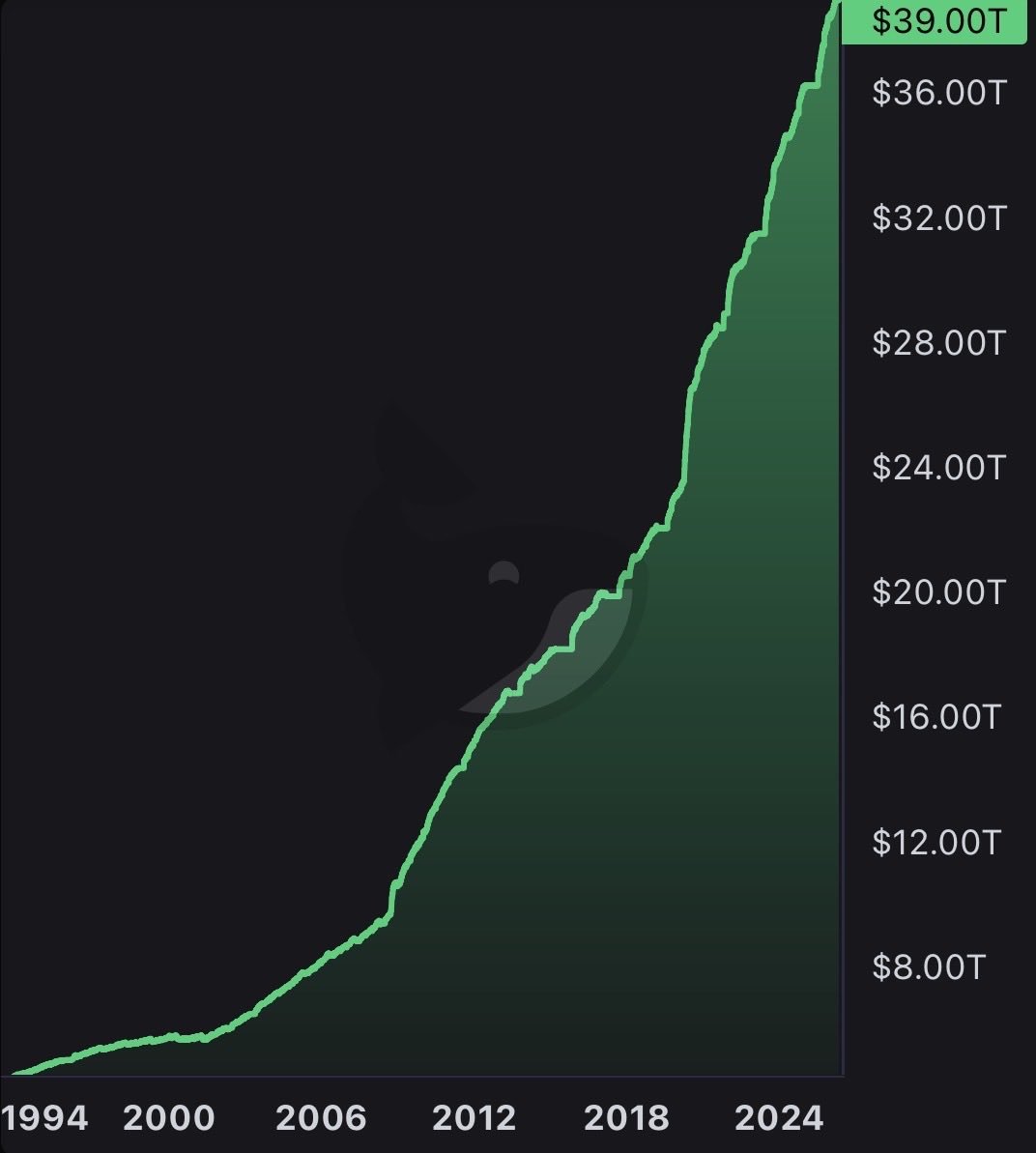
The post lists three ways to pay the debt. None of them is the way it's actually being paid. The fourth option (create the money and let the purchasing power loss cover it) is the one that's been running since 1971. No confiscation required. No vote either. $7.2 billion a day, funded by everyone who holds dollars.
English

🇺🇸 Here's what $39 trillion in debt really means:
If we confiscated every dollar of U.S. corporate profit ($3.8T/year), it would take over 10 years to pay off.
Sell every ounce of gold ever mined: $32 trillion. Still $7 trillion short.
Liquidate every Bitcoin in existence on top of that: $33.5 trillion. Still $5.5 trillion short.
If we confiscated every dollar of federal tax revenue ($5.3T/year), it would take over 7 years to pay off, assuming zero spending.
The debt is 71% of every home in America, or 30% of every publicly traded company on Earth.
The debt grows by $7.2 billion a day, or $84,000 a second.
This is a problem.

English

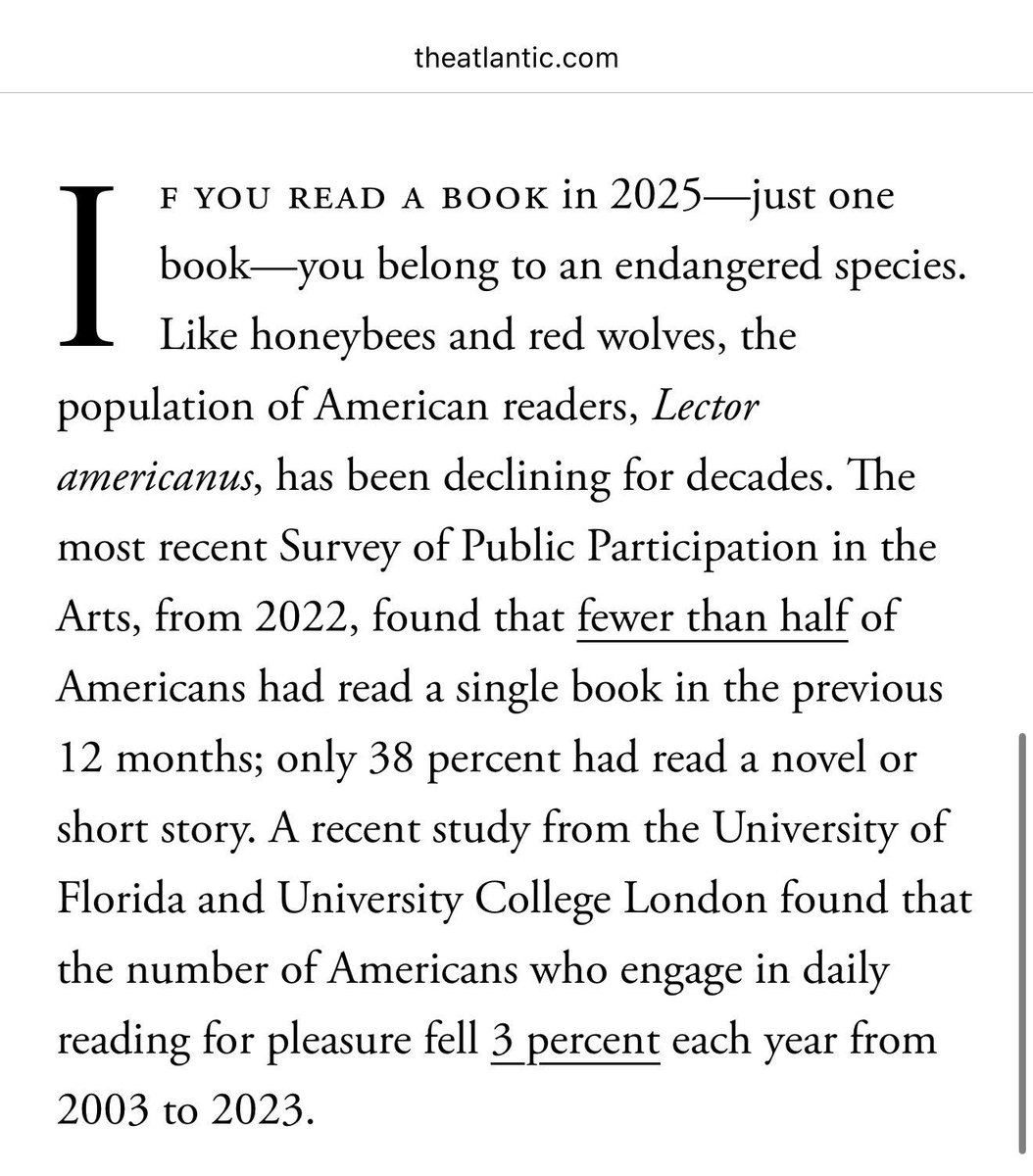
@athenaeumbc I'm doing my best to pick up the slack. I've read 4 this month
English

@esaagar AI capex is part of it. The larger pattern: aggregate numbers have been diverging from household experience for fifty years. GDP measures total output. It doesn't measure who receives it. The sentiment isn't wrong. It's measuring something the GDP wasn't built to see.
English

@jasminewsun Technology has been generating abundance for fifty years. The median household received less of it every decade. AI will be the same pattern on a larger scale.
The underclass won't be permanent because of AI. It'll be permanent because of where the gains go.
English

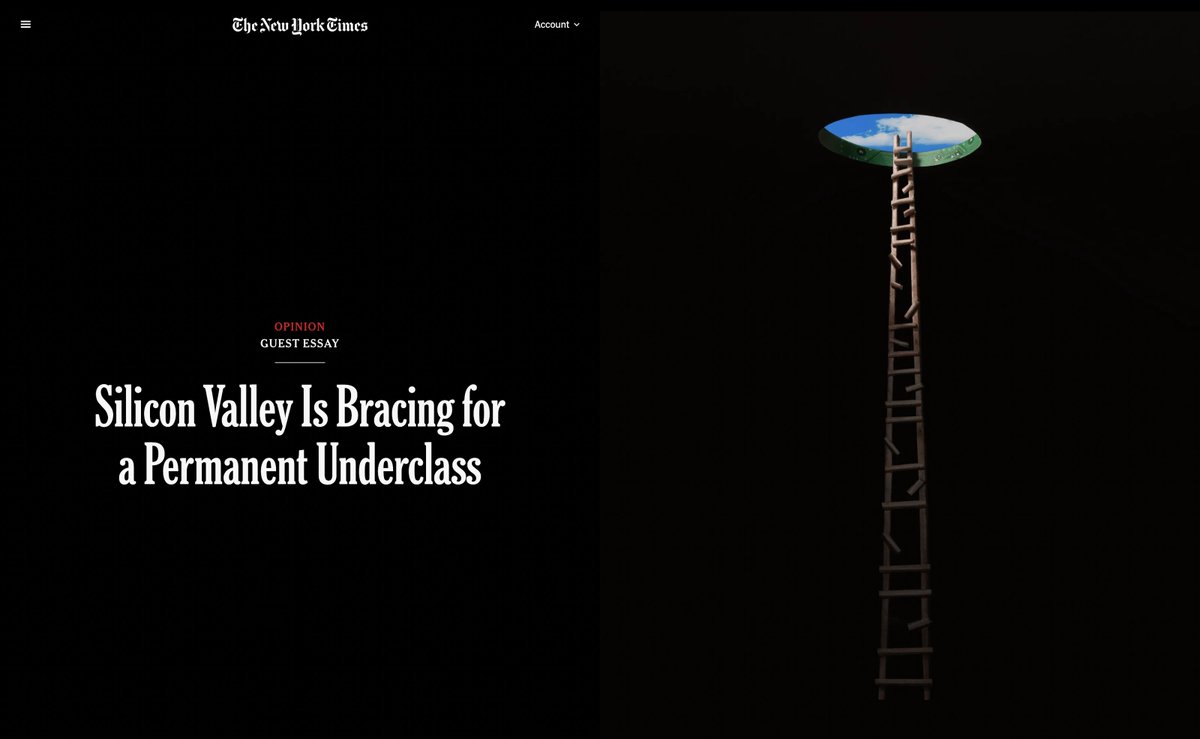
Most people I know in AI think the median person is screwed, and they have no idea what to do about it.
I spent the last 3 months talking to dozens of researchers, economists, and policy experts about AI's impact on work; including reps from every frontier lab and several Congressional offices. Unfortunately, I was not reassured.
The AI industry is raising the alarm, but can't change course. These companies' core business model relies on the disruption they are warning about: their faith in full automation only makes them go faster.
Policymakers are waking up, but still paralyzed by data and debates. Econ wonks disagree on plenty, but even the limited scenario looks like a "painful transition" that will disempower millions of workers.
But an "underclass" is not inevitable, but rather a societal choice — and one we can and should stop. Instead of waiting for impact, we should start planning now to support workers through AI disruption. Whether policymakers can assuage concerns about economic security may determine if we get to reap AI's gains at all.
New from me for @NYTOpinion. I put a ton into researching what I think may be the biggest topic of the year, so hope you read it (gift link here!) nytimes.com/2026/04/30/opi…

English

@byHeatherLong Zoom the chart out to 1971. The savings rate was 12%. The decline to 3.6% isn't a post-COVID squeeze. It's a fifty-year trend. Saving loses purchasing power every year. Assets outrun the erosion. The rational response to that incentive is to stop saving. That's what happened.
English

Important: The US savings rate fell to 3.6% in March. That's the lowest since fall 2022 (the "revenge spend" era). And it's frankly one of the lower readings of all time.
American households are getting squeezed.
Many are not able to save right now as they face ongoing high costs for gas, electricity, and healthcare.
Bottom line: There's less cushion if a downturn or economic slowdown occurs.

English