Devraj Basu, MD, PhD, FACS

445 posts

Devraj Basu, MD, PhD, FACS banner
Devraj Basu, MD, PhD, FACS

Devraj Basu, MD, PhD, FACS

@BasuLab1

Cancer surgeon-scientist @PennMedicine. Our lab advances therapy for #headandneckcancer #HPV #hnscm. Opinions my own. Patient appointments 2156626972

Philadelphia 加入时间 Mayıs 2019
1.5K 关注835 粉丝
置顶推文
Devraj Basu, MD, PhD, FACS
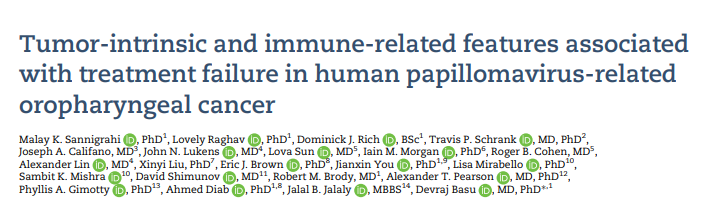
@JNCI_Now We defined the gene expression profiles distinguishing HPV+ OPSCCs that are prone to recur after TORS-based therapy. These the tumor-intrinsic and immune-related traits were tightly interrelated and generalizeable to nonsurgical cases as well. academic.oup.com/jnci/advance-a…
Devraj Basu, MD, PhD, FACS tweet media
English
3
4
26
2.4K
Devraj Basu, MD, PhD, FACS
Our new study on the controversial role of confirmatory HPV testing in p16+ OPCs found 6% RNAScope false negatives but no true negatives, supporting only selective, CAP guideline-based use of confirmatory tests when pre-test probability of HPV-relatedness is high. ascopubs.org/doi/10.1200/PO…
English
0
0
1
16
Devraj Basu, MD, PhD, FACS 已转推
David Sher
David Sher@DavidSherMD·
@Jdcramer has made a critical point below about KEYNOTE-689. The EFS rules in KN-689 require careful review to interpret these results.  A protocol-specific event was determined by blind independent central review (BICR), but if growth in the pre-surgical CT was perceived to be a “flare” (i.e. potential progression), surgery was supposed to proceed unless unresectable (protocol quote below). In order to be considered an event, repeat imaging was required 4-8 weeks later, and obviously if the tumor was still resectable the patient would go to surgery before then. This definition means it was extremely difficult to have an event before surgery, even if the tumor grew and the surgery was more extensive than initially anticipated. Thus some patients may have been harmed by neoadjuvant treatment, but we would not see that in the event data. Thus there is this important disconnect: 82 patients in the pembro arm stopped the drug due to progression (by the investigator, as shown in the CONSORT diagram), even though there were only 69 progression events (by BICR, used for endpoint analyses). Is perioperative immunotherapy doing something favorable and important in a subset of these patients? Yes, and hopefully we can refine its use to the right population and with the right regimen (adding neoadjuvant chemo or RT?). Is it distinctly possible/probable that some patients are progressing on neoadjuvant pembro, leading to a worse outcome in some domain, but we cannot see that in these data? Yes, unfortunately, also true.
David Sher tweet media
John Cramer, MD@Jdcramer

Question for those who’ve dug into KEYNOTE-689: If 43 pts had early ‘clinical progression’ (Table S2B), why isn’t there an early drop in EFS with neoadjuvant pembro? How do you reconcile this?

English
3
11
27
7.4K
Devraj Basu, MD, PhD, FACS 已转推
Oscar Tahuahua
Oscar Tahuahua@OscarTahuahua·
What REALLY makes a good oncologist? in @JCO_ASCO After 10 years and 203 JCO essays, one thing became clear: expertise alone isn’t enough. Patient-centered care. Clear, authentic communication. Emotional intelligence. And the harder work Showing up again and again. Openness to uncertainty. Carrying the burden of cancer care. Continuous growth. Clinical competence is expected Human connection makes the difference. Science treats disease. Presence treats fear. ascopubs.org/doi/pdf/10.120… @OncoAlert
Oscar Tahuahua tweet media
English
5
85
249
21.6K
The Prasad Parody
The Prasad Parody@VpwndF·
@BenMazer FALSE. Marty just told me last week they want me back full-time at UCSF immediately so that I could continue my important trust-building operations
English
1
0
6
404
Benjamin Mazer
Benjamin Mazer@BenMazer·
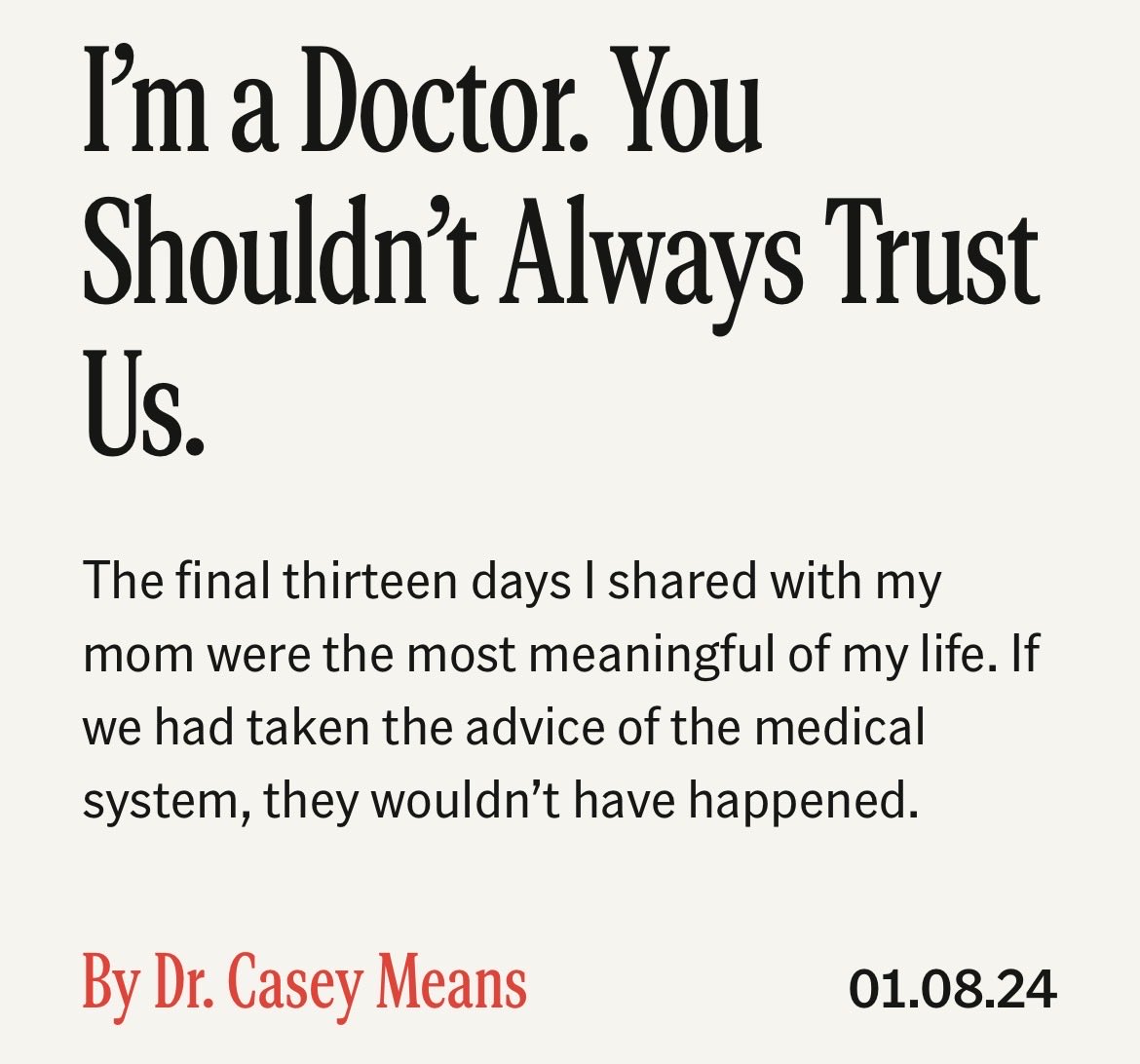
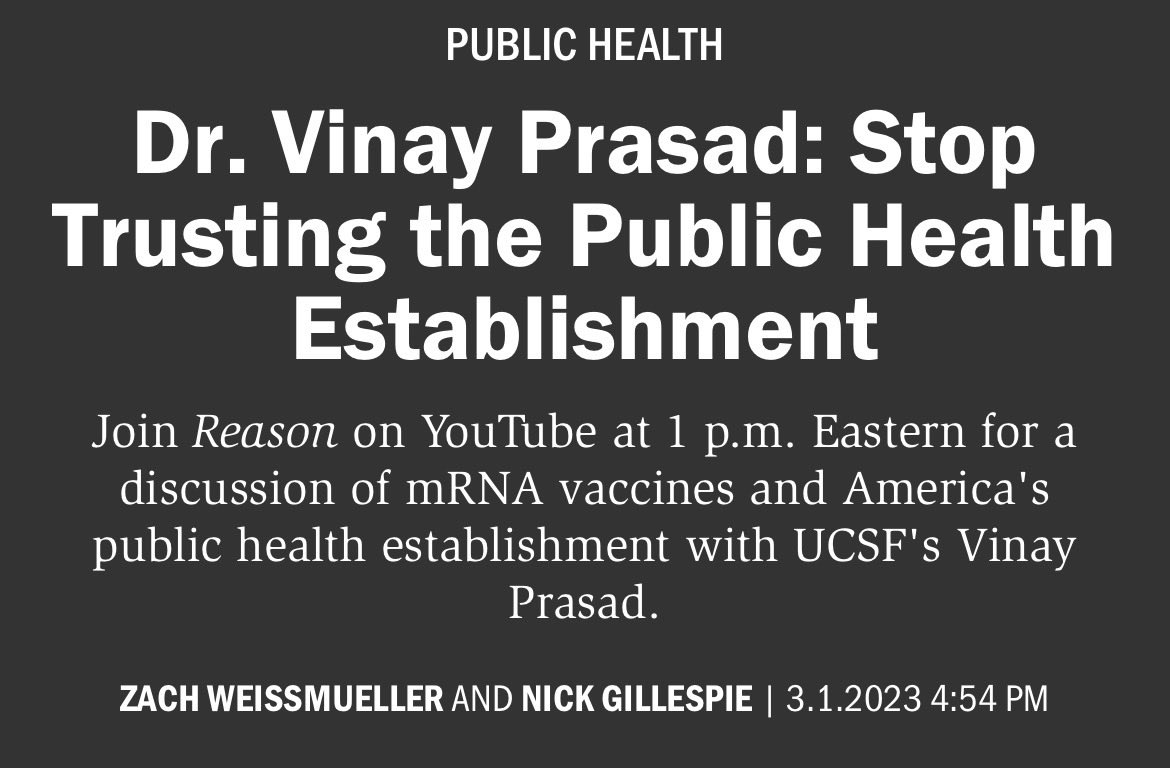
My most unconventional view is that I think people who wrote stuff like this hold a sliver of blame for the loss of public trust.
Benjamin Mazer tweet mediaBenjamin Mazer tweet media
English
5
7
46
3.3K
Devraj Basu, MD, PhD, FACS 已转推
Denis Wirtz
Denis Wirtz@deniswirtz·
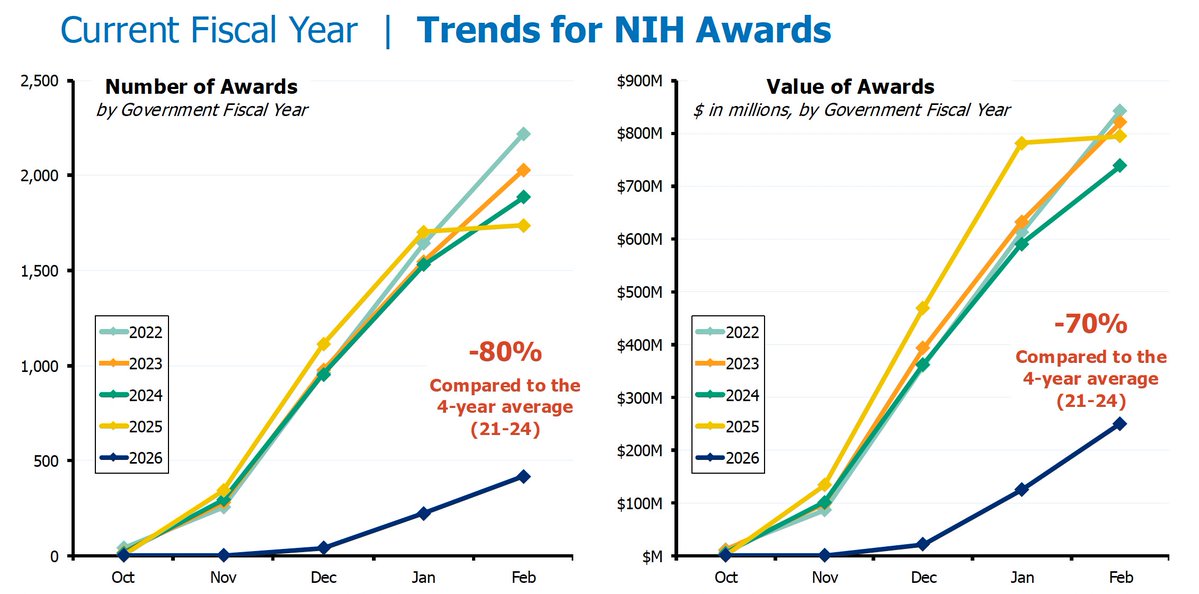
Federal funding for US biomedical research is moribund. Since October 1 2025, NIH is -80% in new grants and -70% in values (total dollars). Labs are closing down and researchers are leaving science. To what end?
Denis Wirtz tweet media
English
43
346
737
175.7K
Devraj Basu, MD, PhD, FACS 已转推
Arthur Schopenhauer
Arthur Schopenhauer@SchopenhauerNow·
Arthur Schopenhauer tweet media
ZXX
0
13
86
3.4K
Devraj Basu, MD, PhD, FACS 已转推
David Sher
David Sher@DavidSherMD·
The field is understandably desperate to improve outcomes in this high-risk population of HPV-negative HNSCC. However, we also have to be cautious in interpreting phase II studies. This sub-100 patient trial led to a truly immense amount of additional work (and money) that ultimately led nowhere. Sometimes, that will happen, despite the best intentions (as in this case). A few final thoughts: 1. Choose endpoints wisely, and make them meaningful for clinical inference and the follow-up trial. It is atypical to use alive with locoregional control (with a chi-squared test) as a primary endpoint, especially for a systemic drug with a variety of other activities (good or bad). 2. Power the study with sufficient numbers to ask the relevant question. It was quite small, with baseline imbalances in a critical clinical characteristics, with unfortunate, random deaths further compromising interpretation. Smaller trials are cheaper and faster (and the preference for efficiency is understandable), but they can lead to this exact scenario. 3. When transitioning from a phase II to III, don’t change the experimental arm unless there are real data supporting it. I doubt the addition of the 3 extra cycles did anything – the study was bound to be negative – but there was no reason to do it, and patients may have been hurt if it increased the metastatic potential of the tumor. 4. Ensure there are safety guardrails. The interim analysis was performed after 65% of total events. Many trials use 50%, and that would have saved time (and maybe patient enrollment) here. Given the small phase II study, the group should have looked at the results sooner, before enrolling 700+ patients. 5. I deeply share the impatience with wanting to improve outcomes, but more caution is needed in interpreting phase II outcomes, especially when there are intrinsic limitations to the study itself. 6. It is an imperative to deploy more creative phase II (and phase III) designs to more quickly and accurately identify novel, successful therapies.
English
1
6
20
1.6K
Devraj Basu, MD, PhD, FACS 已转推
David Sher
David Sher@DavidSherMD·
The optimal management of oligometastatic HNSCC is a debated and important question. How can we improve *overall survival* in this more favorable population? EA3211 is a phase III randomized trial studying this exact issue. Enrollment is even more streamlined with the most recently activated amendment: - Patients may be enrolled 3 months after completing the first course of radiotherapy - Patients may be enrolled after starting a compliant chemoimmunotherapy regimen (chemo dose prior to enrollment at discretion of physician) - Timelines for imaging more flexible given logistical challenges of work-up Please contact me with any questions! We are always looking to expand enrollment!
ECOG-ACRIN Cancer Research Group@eaonc

#ClinicalTrial EA3211, led by @DavidSherMD of @utswcancer, aims to improve results for patients with #HeadAndNeckCancer that has spread to a limited number of places. Learn more: bit.ly/ea3211-study

English
0
10
37
3.6K
Matt Dancho (Business Science)
K-means is one of the most powerful algorithms for data scientists. But it's confusing for beginners. Let's fix that:
Matt Dancho (Business Science) tweet media
English
7
89
643
29.8K
David Sher
David Sher@DavidSherMD·
I think we need to reserve judgement and final analysis until seeing all of the papers from these trials…. … but are these results really so different? - In the US trial, more IMRT patients (40% vs. 27% = 13% difference) received g-tubes. - In the UK trial, more IMRT patients (58% vs. 45% = 13% difference) received g-tubes (with less weight loss). - Tube placement is a very patient and MD-specific decision; nearly impossible to interpret whether it was beam or dream (that protons will protect against high-grade dysphagia). - In the US trial, 3% of IMRT and 0% IMPT patients were tube-dependent at 1 year; no difference. - In the UK trial, 1.7% of IMRT and IMPT patients were tube-dependent at 1 year; no difference. - There were no differences in mucositis, dermatitis, or pain between IMRT and IMPT in the US trial. There was more weight loss in the UK but not US IMPT arm. - Any differences in PRO's in the UK trial were very modest and transient. - We do not know the PRO results from the US trial: can’t wait to see those those data, but they will be confounded due to crossover. - There were no statistical differences in disease control between the arms in either study. - One interesting note from TORPEDO: there were 9 LRF events in IMPT and only 2 LRF in IMRT, more skewed than expected. It is far too early to see a survival difference in the UK trial. The results are far less conflicting than the messages, which are diametrically opposed. If the US trial didn’t show an inexplicable OS difference (and hard to further comment until we see the final paper; much more discussion needed when that is published), we would have two trials that showed a bit more acute dysphagia with IMRT but no obvious long-term differences, supporting IMRT as the established, high-value standard. TORPEDO was an extremely clean, elegant study that that shows superb long-term outcomes with both modalities. I see no reason to deviate from IMRT as the standard-of-care. Whether insurance companies want to cover IMPT at the same or increased rates is up to them, but this study makes it extremely hard to justify. Perhaps the most important message is that we CANNOT REST. Patients did very well, but radiotherapy can still do much better in the short- and long-term. Novel paradigms for BOTH volume and dose reduction are under active investigation and are far more likely to improve patient outcomes than particles. @rweichselbaum @DrSpratticus @CJTsaiMDPhD
English
6
24
67
7.1K
Devraj Basu, MD, PhD, FACS 已转推
David Sher
David Sher@DavidSherMD·
It was such a pleasure to read the results of this juicy and terrific randomized trial of postop RT dose de-escalation for HPV+ OPSCC from @DanielMaMD and colleagues at @MayoRadOnc. The field has been waiting for the formal results, and this paper does not disappoint. thelancet.com/journals/lanon…
English
9
15
50
7.7K
Devraj Basu, MD, PhD, FACS 已转推
David Sher
David Sher@DavidSherMD·
This paper is a nice addition to the literature on the successful use of carboplatin-paclitaxel as a radiation sensitizer. The favorable results clearly motivate larger prospective trials on the use of carbo-pac as a radiation sensitizer in HNSCC. The most commonly delivered dose here was carbo AUC 2 and paclitaxel 45 mg/m2, with a median total pac dose of 270 mg/m2 (i.e. 6 cycles), which is quite high. I'm not surprised by the positive outcomes, given prior data (incl Michigan prospective trial in OPC with much lower doses), but the toxicity results should be a warning. There was more high-grade leukopenia, anemia, dermatitis (80% versus 50%), feeding tubes (80% versus 69%... both are high), blood transfusions (13% versus 2%), and hospitalizations (48% versus 26%) with the use of carbo/pac. These toxicity rates are extremely high. This doublet is very much not a freebie!! Somehow there were more treatment interruptions with cisplatin, but given these toxicity differences, my take is that there are more "hard-stops" with cisplatin (e.g. hearing loss/tinnitus, nephrotoxicity) than carbo/pac (mucositis/dermatitis). While the carbo/pac patients were more frail and had other disease factors against them, more of them had protons rather than IMRT/VMAT (22% versus 9%), whatever that means in terms of unknown confounder imbalance. My own experience is that the acute mucositis and dermatitis with carbo/pac are underappreciated, and they translate to chronic effects. I would not expect a retrospective study to capture such information, but in longer-term follow-up I can often tell the concurrent agent by endoscopy and chronic dermatitis. Carbo-pac has been used for years as a concurrent agent in HNSCC, and it's surprising/disappointing that more dose-finding studies haven't been completed. Every institution has its own special sauce, with carbo ranging from AUC 1-2 and paclitaxel 30 mg/m2 to 50 mg/m2 (here, even up to 60 mg/m2!). Unfortunately we just don't know the scheme with the optimal therapeutic ratio. I'm looking forward to more prospective data with this doublet, especially as the field has doubts about cetuximab in cisplatin-INELIGIBLE patients, despite its clear wins over RT alone (Bonner) and durva (HN004).
JAMA Otolaryngology – Head & Neck Surgery@JAMAOto

In patients with SCCHN receiving radiation with C/P vs cisplatin, there were no differences in locoregional recurrence-free survival, progression-free survival, distant metastasis-free survival, and overall survival. ja.ma/47t0I24 @DRNabilSaba @NikkiSchmittMD

English
4
6
22
3.3K
Devraj Basu, MD, PhD, FACS 已转推
Adela
Adela@adelapoite·
Xevinapant or Placebo Plus Platinum-Based Chemoradiotherapy in Unresected Locally Advanced Squamous Cell Carcinoma of the Head and Neck (TrilynX): A Randomized, Phase III Study | Journal of Clinical Oncology ascopubs.org/doi/10.1200/JC…
English
0
2
5
1.7K