Part107Flyer

1.4K posts

Part107Flyer banner
Part107Flyer

Part107Flyer

@Part107Flyer

加入时间 Ekim 2024
33 关注151 粉丝
Part107Flyer
Part107Flyer@Part107Flyer·
@MDC12345678 @shellenberger What the EU, some Latin American countries are attempting, what Obama and Biden attempted is the New World Order......a global One Government. They see Trump as the enemy because he's a Nationalist and that runs counter to their agenda. Thank you @shellenberger
English
0
0
0
12
Maurice Cousins
Maurice Cousins@MDC12345678·
Great post by @shellenberger. This is the piece I wish I had written a few months ago, when British Labour MPs and others were talking about “abundance”. The word has been totally twisted - like “electrification” and “clean” - to distort ordinary people’s understanding of the true goals of the climate lobby: (1) the prioritisation of renewables at all costs and (2) the re-engineering of our societies and economies low-energy, constraint-driven lines. It is a clever strategy, born out of the so-called “greenlash” in the European elections and anticipation of Trump 2.0. The climate lobby recognised that Net Zero and decarbonisation had become toxic terms, associated with miserabilism. They sensed where the political wind was blowing and adapted with techno-utopianism. The problem is that their ideal is not remotely deliverable without imposing severe costs, constraints, and unpalatable trade-offs on ordinary people.
Michael Shellenberger@shellenberger

Renewables are the key to preventing resource scarcity, argue European leaders, California Governor Gavin Newsom, and Ezra Klein and Derek Thompson, whose bestselling book Abundance became one of Barack Obama’s favorite books of 2025 and launched a political movement dedicated to what Klein calls “a politics of plenty.” The logic is straightforward and appealing. Solar panel costs have fallen more than 90% since 2010. Wind power costs have dropped by 70%. Battery storage prices have collapsed. If governments would simply clear the regulatory obstacles to building solar farms, wind turbines, and transmission lines, the abundance argument goes, clean energy would flow so abundantly that fossil fuel dependence would become a choice rather than a necessity. “The miracles of solar and wind and battery power,” Klein told the Long Now Foundation, “have given us the only shot we have to avoid catastrophic climate change.” But if renewables could prevent resource scarcity, then the world would not be in the midst of what the International Energy Agency’s Executive Director Fatih Birol called “the greatest global energy security challenge in history,” with global supply losses now totaling 12 million barrels per day, compared to about 5 million during each of the 1973 and 1979 crises. The United Kingdom is receiving its last shipment of jet fuel from the Middle East with nothing behind it. Australia saw over 500 gas stations run dry. And South Korea is considering driving restrictions for the first time since 1991. “In April,” warned Birol, “there is nothing.” It is true that solar and batteries have made enormous progress. Solar electricity costs roughly 3 to 5 cents per kilowatt-hour at the point of generation, cheaper than any fossil fuel in most locations. Battery costs have fallen below $115 per kilowatt-hour. China produces more solar panels than the rest of the world combined. But the world has installed more than 1,600 gigawatts of solar capacity and over 1,000 gigawatts of wind, and still we are in crisis. Global green energy investment was $2.3 trillion in 2025 alone. And yet when Iran closed the Strait of Hormuz, none of that capacity mattered, because solar panels do not produce jet fuel, diesel, ammonia, or the petrochemical feedstocks that underpin modern civilization. Electricity accounts for roughly 20% of final energy consumption worldwide. The other 80%, the part that moves ships, flies planes, heats buildings, and makes fertilizer, runs overwhelmingly on oil and gas. Solar and wind cannot substitute for these fuels at any price, because the energy density of liquid hydrocarbons exceeds batteries by a factor of 40 to 80 by weight. Klein and Thompson, to their credit, also support some forms of nuclear power. Abundance opens with a vision of cities powered by “clean (nuclear) and renewable (wind and solar) energy sources.” They lament America’s nuclear stagnation compared to France’s successful buildout. Klein has said that he supports advancing nuclear power alongside renewables. But, the new nuclear power plants that Klein and Thompson support do not exist. The “small modular reactors” that populate the abundance fantasy have not produced a single commercial kilowatt-hour of electricity. NuScale, the most advanced American SMR developer, canceled its flagship project in 2023 after costs doubled. No SMR has received a commercial operating license anywhere in the world. The first commercially operating SMR, if all goes well, may produce power in the early 2030s, but SMR developers have for years said that their reactors are just a few years away. Scaling to a meaningful share of global energy supply would take decades, as opposed to building conventional nuclear plants, which Japan and China have shown they can build in just two years, so long as they are standardized and the same construction crews are used. Democrats, progressives, environmental groups, and left-wing parties across Europe diverted hundreds of billions of dollars over the last two decades from developing the new oil and gas production, pipelines, refineries, and LNG terminals needed to make energy cheap and abundant. California’s aggressive climate mandates drove residential electricity prices to 34 cents per kilowatt-hour, nearly double the national average, while the state simultaneously blocked new natural gas infrastructure. And global investment in oil and gas exploration and production peaked at roughly $780 billion in 2014 and fell to approximately $350 billion by 2020, a decline driven by deliberate policy choices to restrict fossil fuel development. The European Union’s Green Deal, America’s Inflation Reduction Act, and climate policies across the developed world channeled subsidies toward solar and wind while imposing carbon taxes, windfall levies, and permitting restrictions on fossil fuel projects. The UK’s Energy Profits Levy, introduced in 2022, discouraged investment in the North Sea at precisely the moment when more domestic production was needed. The UK Labor government then banned new exploration licenses in November 2025. Germany’s Energiewende spent over €500 billion on renewables while shutting down its nuclear plants, leaving the country dependent on Russian gas and then, after the Ukraine war, on LNG that must now compete with Asian buyers for cargoes that can no longer transit Hormuz. And the UK has lost a third of its refineries in the last 18 months, meaning that even if crude oil arrived tomorrow, the country lacks the capacity to refine it into the jet fuel, diesel, and heating oil its citizens need. The only energy abundance solution that works at the scale of civilization right now is piped natural gas and oil. A pipeline delivers energy continuously, at near-zero marginal cost per unit delivered, with no exposure to shipping chokepoints, insurance markets, or geopolitical disruption. A ton of natural gas moved through a pipeline costs a fraction of what the same gas costs when liquefied, shipped by tanker across an ocean, and regasified at a terminal. The logical endpoint is a world powered by natural gas delivered through continental pipeline networks, eventually transitioning to hydrogen produced from natural gas and nuclear power. America built pipelines while Europe and Asia built LNG dependency. Saudi Arabia’s East-West pipeline, which has ramped from 770,000 barrels per day to 2.9 million since the war began, is the emergency proof of concept. If the Gulf states had built sufficient pipeline capacity to bypass Hormuz before the war, the crisis would be a fraction of its current severity. So why do so many on the Left continue to preach renewables as the solution to a crisis that renewables manifestly cannot solve?... x.com/shellenberger/… Please subscribe now to support Public's award-winning investigative reporting, read the rest of the article, and watch the rest of the video! x.com/shellenberger/…

English
3
33
166
32.7K
Part107Flyer
Part107Flyer@Part107Flyer·
@alexnitzberg @NASA @NASAArtemis Id rather the private industry take over our innovation and space travel. The government is extremely poor at innovation and efficiency.
English
3
0
2
407
Alex Nitzberg
Alex Nitzberg@alexnitzberg·
@NASA @NASAArtemis Would you rather pay less in taxes, or have the government send astronauts back to the moon?
Alex Nitzberg tweet media
English
113
8
74
27.4K
NASA
NASA@NASA·
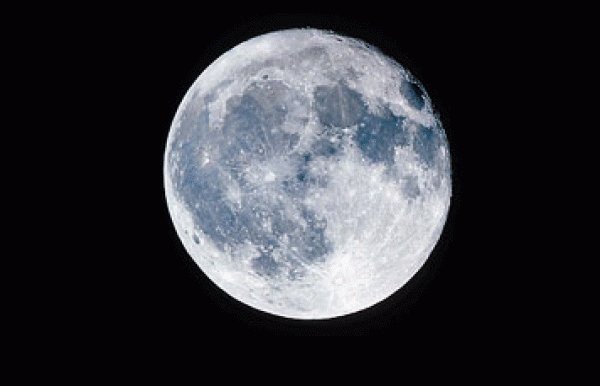
History in the making In this new image from our @NASAArtemis II crew, you can see Orientale basin on the right edge of the lunar disk. This mission marks the first time the entire basin has been seen with human eyes.
NASA tweet media
English
1.4K
11.2K
81.7K
4.2M
NASA Technology
NASA Technology@NASA_Technology·
Data, delivered at the speed of light. 💫 Orion’s Artemis II Optical Communications System (O2O) downlinked more than 100 gigabytes of data using laser communications. The image below is just one of the many files transmitted. Learn more about O2O: go.nasa.gov/3O4FmRi
NASA Technology tweet media
English
116
819
6.2K
190.9K
Diary of Abandonment
Diary of Abandonment@thequeenofrust·
This dress (from Victorian Choice on Etsy) definitely requires two people to put in on properly. I ordered a medium (I’m 5’6” and 142lbs). I may order a small as well and see if it’s a better fit. Either way, I’ll have to do some minor alterations to the skirt, but otherwise, I love it. It’s SO well made!
Diary of Abandonment@thequeenofrust

I bought an outfit for a 250th event I’ll attend later this year. The video would’ve been way too long to show the dress and putting the boots on, so I had to break it up. I cannot begin to describe to you how fabulous these shoes by American Duchess are! I’ll post the dress next.

English
41
12
508
24.2K
Part107Flyer
Part107Flyer@Part107Flyer·
@NASASpaceflight Hmmmm....Too bad this wasn't shown live or I would have stayed with the launch coverage
English
0
0
0
15
NSF - NASASpaceflight.com
NSF - NASASpaceflight.com@NASASpaceflight·
Artemis II - Ride to Space with the SLS Core Stage. NASA footage.
English
26
224
1.8K
92.5K
Part107Flyer
Part107Flyer@Part107Flyer·
@blueorigin How do you make it scalable so that production is practical for Moonbase expansion?
English
0
0
0
287
Blue Origin
Blue Origin@blueorigin·
Lunar Permanence will require using resources on the Moon rather than hauling them from Earth. Our in-situ resource utilization system extracts oxygen from lunar regolith to create breathable air for astronauts and propellant for refueling landers and fuel cells. It also produces iron, aluminum, silicon, construction materials, and even solar power systems. The materials for a Moon base are produced right where they’re needed, and at much lower cost than being brought from Earth.
English
50
302
2.6K
116.4K
NASA Administrator Jared Isaacman
Nominal translunar injection burn complete. The Artemis II crew is officially on the way to the Moon. America is back in the business of sending astronauts to the Moon. This time, farther than ever before.
English
898
4.8K
40.5K
1.6M
Jade Boudreaux
Jade Boudreaux@nevernorminal·
This ain’t your granddad’s moon rocket.
Jade Boudreaux tweet media
English
57
139
1.5K
38.3K
Part107Flyer
Part107Flyer@Part107Flyer·
@shellenberger There is too much money and power globally wrapped up in controlling where energy comes from. Many powerful wealthy people would have had to give up money and power in order to build infrastructure as you've said. That wont happen.
English
0
0
2
58
Michael Shellenberger
Michael Shellenberger@shellenberger·
The Hormuz crisis is the precipitating factor in the current energy crisis, but the underlying cause is too little oil and gas production outside the Persian Gulf. Had the world spent the past decade building the oil, gas, LNG, pipeline, and fertilizer infrastructure that engineers designed and companies proposed, the Hormuz crisis would still be a serious geopolitical event, but it would not threaten to cause a recession. North America — The Atlantic Coast Pipeline, a 600-mile natural gas line from West Virginia to North Carolina, saw its cost double from $4.5 billion to $8 billion during years of environmental litigation before Duke Energy and Dominion Energy cancelled it in July 2020. — The Constitution Pipeline from Pennsylvania to New York died the same year. — The PennEast Pipeline won its case at the United States Supreme Court in 2021 and still could not get built because New Jersey refused to issue state permits. — In Canada, TransCanada abandoned the $15.7 billion Energy East pipeline in 2017 after the National Energy Board required an unprecedented review of upstream and downstream emissions. — In January 2024, the Biden administration paused all pending approvals for LNG export terminals shipping to non-free-trade-agreement countries, freezing projects representing tens of billions of cubic feet per day of potential capacity. — Venture Global’s CP2 terminal in Louisiana, designed for 20 million tonnes per annum, sat in regulatory limbo for over a year. — NextDecade’s Rio Grande LNG in Texas, with 48 MTPA of planned capacity, stalled alongside it. — PTT Global Chemical’s proposed $10 billion ethane cracker in Belmont County, Ohio, first announced in 2015, remains on indefinite hold after failing to attract financing partners amid climate-driven investor sentiment. — Across the US Gulf Coast, nearly 60% of planned plastic and petrochemical production projects sit on hold. — LNG Canada, the Shell-led terminal at Kitimat, British Columbia, took over six years from construction start to first cargo, with its pipeline running 263% over budget. Environmental review, Indigenous disputes, and contractor cost escalation all contributed. — Pieridae Energy’s Goldboro LNG project in Nova Scotia, a 10 MTPA facility first proposed in 2012, was abandoned in November 2023 after more than a decade of permitting and financing obstacles. Australia — Australia’s Santos’s Barossa gas project was halted midway through construction after a Federal Court ruling overturned its environmental approval. — Woodside’s Scarborough project faces ongoing litigation from the Australian Conservation Foundation seeking to block it on climate grounds. Africa — Perhaps nowhere has the damage been more consequential than in Africa. At COP26 in 2021, wealthy nations pledged to halt overseas development finance for gas projects, a commitment that fell hardest on the continent least responsible for climate change and most in need of energy infrastructure. — The World Bank stopped financing oil and gas extraction in 2019 and imposed restrictive conditions on downstream gas projects. — The European Investment Bank announced a complete ban on unabated fossil fuel financing by the end of 2021, with its president declaring that “gas is over.” — At least 21 other development finance institutions followed suit. As a result: — TotalEnergies’ Mozambique LNG project sat under force majeure for four and a half years after the UK Export Credit Agency and other backers withdrew climate-motivated financing. — The East African Crude Oil Pipeline lost financing commitments from more than 30 major international banks under pressure from climatists. Europe — France prevented the completion of a third gas interconnector with Spain, citing climate neutrality goals. — The United Kingdom imposed a moratorium on fracking in 2019 despite sitting atop one of Europe’s most promising shale gas formations. — Germany, which shuttered its last three nuclear plants in April 2023, compounded its gas dependency by refusing to develop domestic shale resources. — CF Industries permanently shut the UK’s largest ammonia plant at Billingham, a facility that also produced 60% of Britain’s food-grade CO2. — Yara International curtailed output across plants in France, Italy, and Belgium before permanently closing its 400,000 tonne per year ammonia facility at Tertre, Belgium, in October 2024. These closures occurred because European climate policy made gas too expensive for the domestic industry to survive.
Michael Shellenberger@shellenberger

We should have spent more on green energy, say the media. No, we shouldn't have. The $2 trillion we spent did nothing to prevent the energy crisis and may even have caused it.

English
306
2.6K
7.8K
529.6K
Diary of Abandonment
Diary of Abandonment@thequeenofrust·
Imagine being an artist, whose work is etched in stone and will be admired long after your name fades from memory.
English
8
18
210
3.1K
Part107Flyer
Part107Flyer@Part107Flyer·
@thequeenofrust One of my earliest memories of grade school. I grew up 4th generation in a very tiny town in Kansas, one late spring day our field trip was to the cemetery where we made tombstone rubbings with crayon and paper. This began a lifelong interest in the history of my ancestors.
English
0
0
2
22
Diary of Abandonment
Diary of Abandonment@thequeenofrust·
Do you like learning about old cemeteries? If so, we should be friends. 👯‍♀️
English
19
13
269
3K
Part107Flyer
Part107Flyer@Part107Flyer·
@mymatrixplug To be clear, SpaceX doesn't maintain strict airspace restrictions, the FAA does. SpaceX can only request the agency place TFRs as private citizens and private companies do not own the airspace above owned property It is part of the national airspace which is governed by the FAA.
English
0
0
0
23
Amy Doehring
Amy Doehring@mymatrixplug·
🚫 NO DRONE ZONE 🚫 SpaceX maintains strict airspace restrictions around Starbase. Drones and unmanned aircraft are prohibited in this zone. 🚀✨
Amy Doehring tweet media
English
15
12
195
9.2K
Part107Flyer
Part107Flyer@Part107Flyer·
@thequeenofrust I get and appreciate the expression, but when all our loved ones and friends are also gone we are not forgotten. We will be together again in Heaven. Death is only for the physical body, not the soul.
English
0
0
4
28
Diary of Abandonment
Diary of Abandonment@thequeenofrust·
Good morning from the resting and forgotten.
Diary of Abandonment tweet media
English
15
11
359
2.9K
Jessica Meir
Jessica Meir@Astro_Jessica·
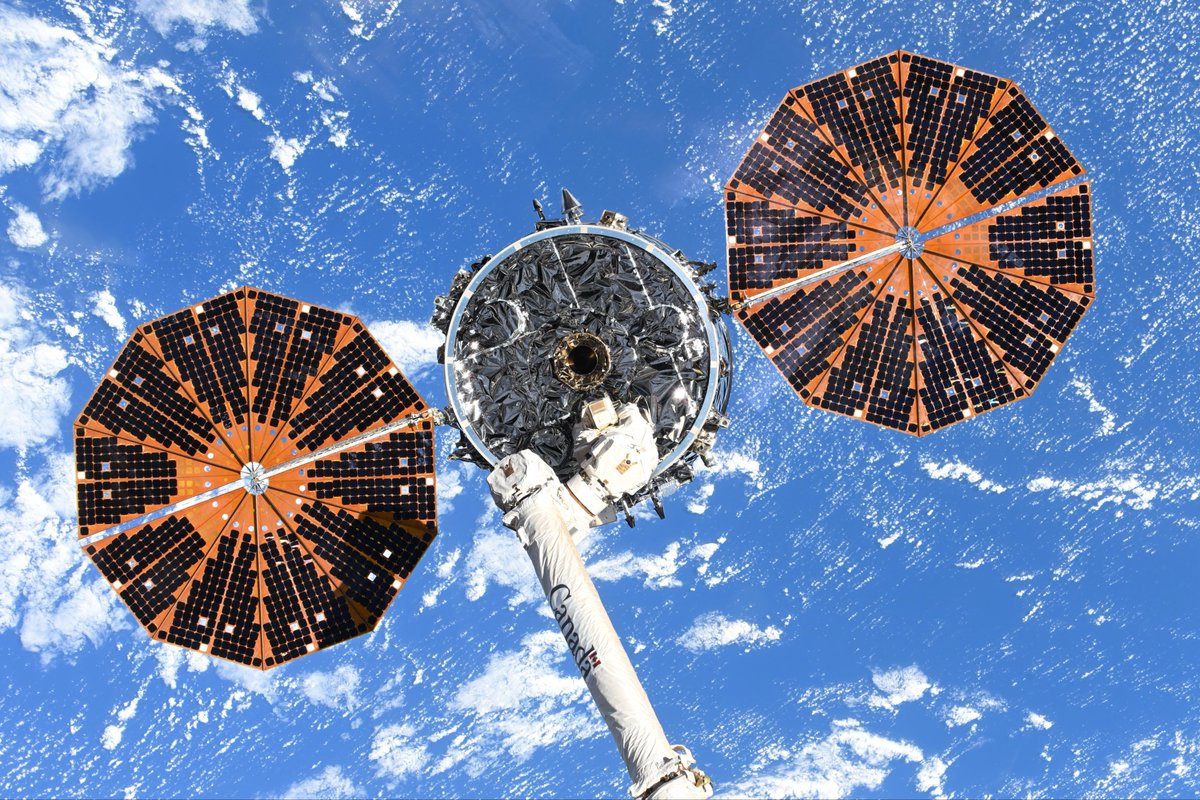
Another day on the @Space_Station brings the departure of another vehicle, the last of our 3 cargo vehicles on the US Operating Segment (USOS). Today we bid farewell to the @northropgrumman Cygnus NG-23 cargo vehicle, named after our late colleague NASA astronaut Willie McCool. As I watched Cygnus disappear over the horizon, I took a moment to reflect and honor Willie, and all of the STS-107 crew, who honorably gave their lives in their effort to advance science and space exploration. Godspeed S.S. William “Willie” C. McCool, thank you for your service! 📷 — The Northrop Grumman Cygnus NG-23 cargo vehicle sits grappled by the @csa_asc Canadarm, awaiting its release. This cargo vehicle delivered valuable scientific experiments, hardware and supplies for all of us on the ISS. At the end of its mission, it is now full of trash which will burn up in the atmosphere.
Jessica Meir tweet media
English
26
176
1.1K
52.8K
Diary of Abandonment
Diary of Abandonment@thequeenofrust·
Found myself in a Gypsy Rose Blanchard rabbit hole on TikTok while killing time in the hospital waiting room. Somebody come pull me out.
English
13
1
73
3.2K
Part107Flyer
Part107Flyer@Part107Flyer·
@thequeenofrust I know its maddening and exhausting for you all, but you're doing the right thing for your dad! You all are setting good example for your kids and grandkids so they experience how good people take care of family. These tough days will pay off in the future.
English
0
0
0
8