The Grid Post

1.9K posts

The Grid Post banner
The Grid Post

The Grid Post

@TheGridPost

Independent platform. Evolving into a broader media network in the coming days. Not affiliated with NISO

加入时间 Aralık 2018
0 关注120.9K 粉丝
置顶推文
The Grid Post
The Grid Post@TheGridPost·
PUBLIC NOTICE We have noted the recent clarification issued by the Nigerian Independent System Operator (NISO) regarding affiliation with the “Nigeria National Grid” account. This platform has always operated independently with the objective of providing timely public information, updates, and conversations around Nigeria’s electricity sector and national developments. We respect institutional clarifications and remain committed to factual, responsible, and public-interest reporting. As part of our long-term vision, this platform will be evolving into a broader independent media and public affairs platform covering energy, infrastructure, economy, governance, technology, and major national developments in Nigeria. We appreciate our community for the continued trust and support.
English
84
92
648
122.2K
The Grid Post
The Grid Post@TheGridPost·
Yes, but it comes at a significant cost. Also, there is the weight implication on Towers and Poles: The wires would sag more; more weight means more pull power on them making their natural fall/collapse a possibility.
Tobiloba@TobilobaIsCoded

@TheGridPost Can't the wires be insulated, though ? I'm curious.

English
4
0
12
2.1K
The Grid Post
The Grid Post@TheGridPost·
Sorry about your appliances. ​The "flashing of light" is sometimes due to a persistent transient fault. The fault could be due to any reason across the distribution value chain: say, two saggy wires somewhere touching intermittently due to wind, causing the system to circuit-break momentarily. In modern systems, RECLOSERS handle this tripping and restoration automatically whenever there are such faults. ​The other major cause is manual troubleshooting by DisCo operators at the substation. For instance, if a line trips during a storm, the operator often doesn't know if a wire just briefly shook or if a pole actually snapped, so they manually flip the heavy circuit breaker back on to "test" the line. ​If the fault is still active, the system instantly shorts out and trips right back off, appearing in your house as a sudden, one-second flash of light that can easily fry sensitive electronics.
ARSENALMAN 🇳🇬@MikedArsenalman

@TheGridPost I want to know why do you guys flash light ?? Does it have any benefits?? Cos that sh!t have destroyed lots of my electronics 😡😡

English
0
2
17
1.4K
The Grid Post
The Grid Post@TheGridPost·
Classic "having Abraham aa a father". Nigeria(DisCos) practice Load shedding due to inadequate power to guarantee steady supply to every citizen at the same time. "Operators" usually power up FEEDERS in a predetermined timeline to manage the meagre supply: all Feeders cannot be up at the same time. In this predetermined timeline; Band A Feeders get highest priority. So, in this your case; your brother's connection had to virtually rob Peter to pay Paul....switching off a Feeder who is on TIME-ON in order to supply your Feeder during its OFF-TIME.
Nearheaven@nearheaven

@TheGridPost My cousin,went to barber somewhere around ikotun 2019. While the work was going on ikedc switch off light in that area. My cousin called a friend of his that work there and pleadd that ,he was having his haircut and he should help put on the light. To my amazement,light came on.

English
6
2
46
6.8K
9ousky
9ousky@Adeyink69168013·
@TheGridPost He will never mention Discos as the problem of this particular case, Instead He is writing Epistle. He is a DISCO sympathizer. DISCOs have refused to rehabilitate, invest, reconstruct in their conductors, poles, transformers, switchgears etc.
English
1
0
1
2K
The Grid Post
The Grid Post@TheGridPost·
Contrary to popular belief, nobody at the DisCo is sitting somewhere saying “rain don start, off am” 😅 From an engineering standpoint, rain itself is usually not what makes your supply dissappear. It just exposes weaknesses that already exist in our power system. It is more common in Nigeria because we rely heavily on overhead lines, maintenance is inconsistent in some areas, vegetation control is weak, and the BIGGEST OF ALL- restoration is sometimes at snail speed. Countries like the U.S., South Africa, and Canada also experience rain-related outages but their systems are generally more resilient, with faster fault isolation and quicker restoration. Here is what typically happens behind the scenes: 1. Tree contact with power lines: Most distribution lines are overhead and pass through areas with limited vegetation control. During storms, wind can push tree branches into 11kV or 33kV lines, causing short circuits or earth faults. Once detected, the system automatically trips to protect equipment. 2. Aging or weak infrastructure Transformers, insulators, jumper connections, and cable joints that work under normal dry conditions can become vulnerable when moisture increases. Rain doesn’t create the fault ), it often worsens existing weaknesses, especially on poorly maintained feeders. 3. Lightning and voltage surges Thunderstorms produce electrical surges that can destabilize the network. Protection systems isolate these faults quickly to prevent damage to transformers and substations. 4. Automatic protection systems: Substations use protective relays and circuit breakers. When abnormal current is detected, feeders trip automatically to prevent fires, equipment damage, or larger system failures.
Lawry@larrizy

I still don't understand the concept of power failure during rain. It seems it happens in Nigeria alone. @TheGridPost care to explain?

English
50
140
619
64.9K
Rasquie_militus
Rasquie_militus@19___01·
This is blatant lie.
The Grid Post@TheGridPost

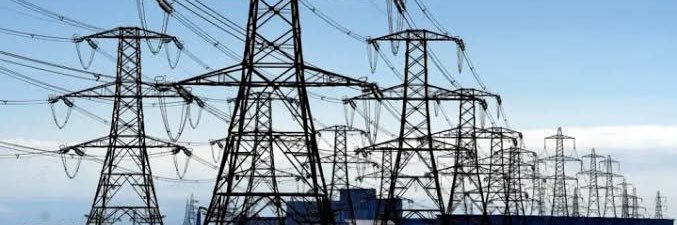
Contrary to popular belief, nobody at the DisCo is sitting somewhere saying “rain don start, off am” 😅 From an engineering standpoint, rain itself is usually not what makes your supply dissappear. It just exposes weaknesses that already exist in our power system. It is more common in Nigeria because we rely heavily on overhead lines, maintenance is inconsistent in some areas, vegetation control is weak, and the BIGGEST OF ALL- restoration is sometimes at snail speed. Countries like the U.S., South Africa, and Canada also experience rain-related outages but their systems are generally more resilient, with faster fault isolation and quicker restoration. Here is what typically happens behind the scenes: 1. Tree contact with power lines: Most distribution lines are overhead and pass through areas with limited vegetation control. During storms, wind can push tree branches into 11kV or 33kV lines, causing short circuits or earth faults. Once detected, the system automatically trips to protect equipment. 2. Aging or weak infrastructure Transformers, insulators, jumper connections, and cable joints that work under normal dry conditions can become vulnerable when moisture increases. Rain doesn’t create the fault ), it often worsens existing weaknesses, especially on poorly maintained feeders. 3. Lightning and voltage surges Thunderstorms produce electrical surges that can destabilize the network. Protection systems isolate these faults quickly to prevent damage to transformers and substations. 4. Automatic protection systems: Substations use protective relays and circuit breakers. When abnormal current is detected, feeders trip automatically to prevent fires, equipment damage, or larger system failures.

English
3
0
4
5.2K
The Grid Post
The Grid Post@TheGridPost·
@larrizy We are stating standard grid practice. Manual interventions are discretionionary and discreet.
English
2
1
43
3.4K
Lawry
Lawry@larrizy·
@TheGridPost I heard from some officials that they actually turn it off to prevent damages from storm
English
2
0
3
3.6K
The Grid Post
The Grid Post@TheGridPost·
@IshaqShaba That would be unusual as a general operating practice. In normal grid operations, feeders trip due to protection systems detecting faults, not because of rain itself. Manual switching happens in specific cases, not as a standing “rain rule” across substations.
English
2
0
15
2.7K
Shaba Ishaq
Shaba Ishaq@IshaqShaba·
@TheGridPost Your engineering perspective epistle is somewhat misleading, YES someone sits down somewhere and says “off am” infacts it’s like a silent MOU in all AEDC substations where the operator sites rain drops and switches the line off, I know this because I’ve had discussions with them
English
3
0
1
3.2K
The Grid Post 已转推
Mutiu Alabi 🐐
Mutiu Alabi 🐐@Mr_mutiu·
Your statement "weaknesses that already exit in our power system ", my question here is: who is responsible for solving and strengthening those weaknesses? What is the responsibility of the government in doing away with them? Of all verbal commitment made by the government, why hasn't these weaknesses been solved?
English
3
2
9
3K
The Grid Post 已转推
Moneybagg
Moneybagg@Otunkpo153·
@TheGridPost The use of bare conductors for power lines in Nigeria, long grid system is the major problem, Indonesia uses insulated electrical cables and cluster distribution systems and There's no blink in power supply even in thunder storms
English
1
2
14
2.7K
The Grid Post
The Grid Post@TheGridPost·
You may need to free your mind from mental slavery.
TripleL@ljinad

@TheGridPost You turned yourself to a political tool instead of focusing on the real issue. It serves you right.

English
2
0
13
2.3K
Dabz
Dabz@dabzie9·
@TheGridPost You can't change my mind about this Them dey do am
English
1
0
4
1.8K
The Grid Post
The Grid Post@TheGridPost·
These are why the Reprivatization of DisCos and Proactiveness of NERC is a core part of any meaningful progress.
Jaqen H’ghar@JaqenHgbar

@TheGridPost Since monday. My Band dont have power yet @IBEDC_NG keep acting like we dont matters. Annoying thing is that they barely responds to their mails or even their calls. Mind you. I am on Band A. Imagine what other Band will be facing

English
4
1
25
4K
The Grid Post
The Grid Post@TheGridPost·
God bless Nigeria. 🇳🇬
English
11
4
32
2.6K
The Grid Post 已转推
Felix Adejimi, MBA
Felix Adejimi, MBA@adejimi_felix·
@NationalGridNg We, Nigerians, appreciate your posts about the National Grid. Please continue the good work. Eledumare, the God of the indigenous Nigerians, will be with you.
English
0
3
94
13.5K