Tim Xiao
314 posts

@TimZXiao
PhD student in Machine Learning @ University of Tübingen · IMPRS-IS scholar


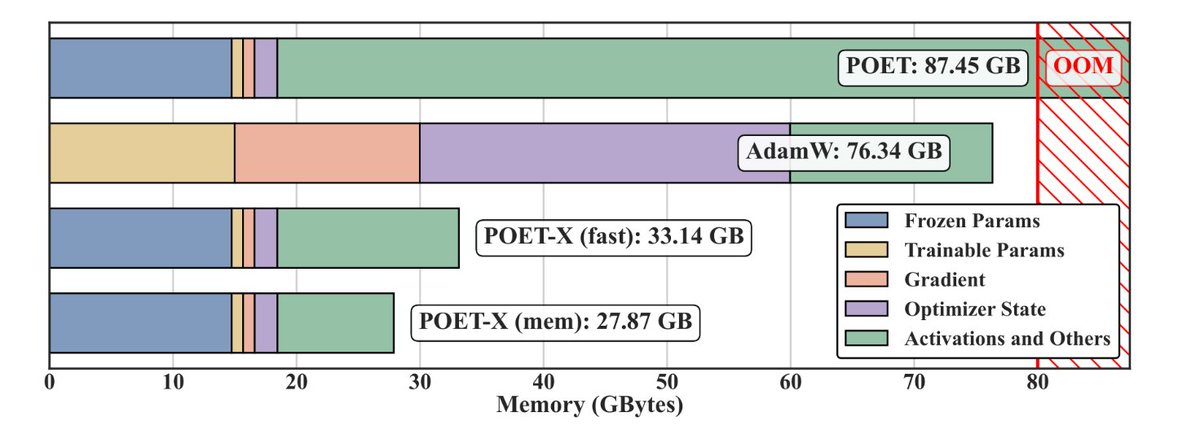
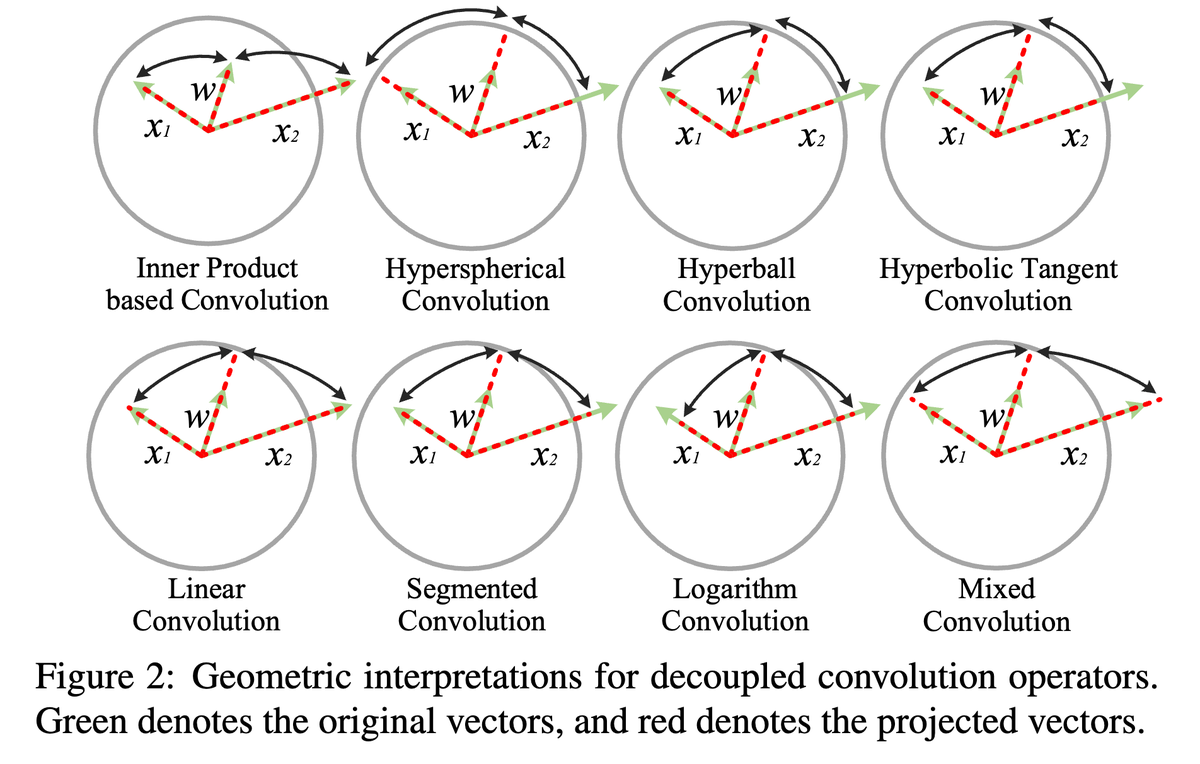
(1/n) Introducing Hyperball — an optimizer wrapper that keeps weight & update norm constant and lets you control the effective (angular) step size directly. Result: sustained speedups across scales + strong hyperparameter transfer.

📢The second edition of ✨GRaM workshop✨ is here this time at #ICLR26. 🌟Submit your exciting works in Geometry-grounded representations. We welcome submissions in multiple tracks i.e. 📄 Proceedings 📝extended abstract 👩🏫Tutorial/blogpost as well as an exciting challenge!


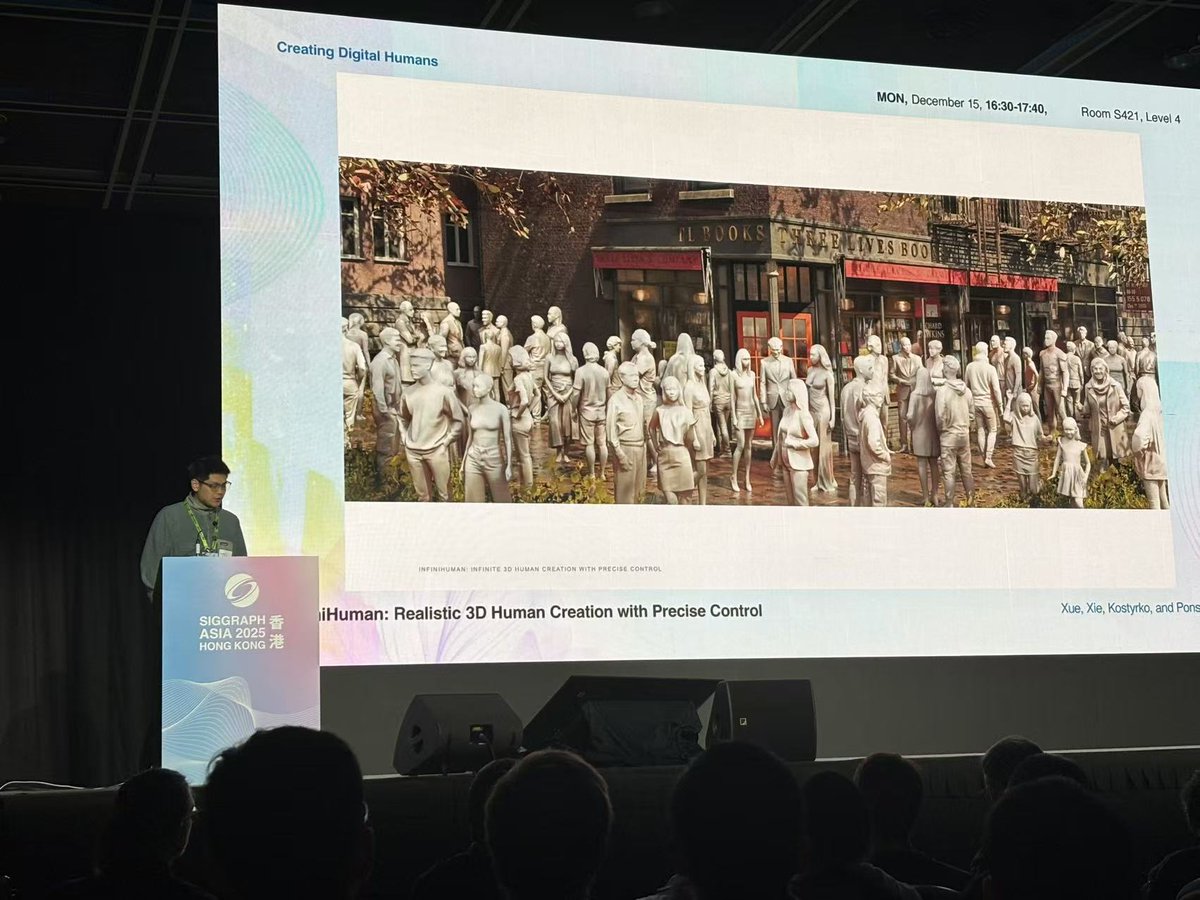
#InfiniHuman: Infinite 3D Human Generation with Precise Control How do you want to generate a 3D avatar? From text description? With clothing images? Or some desired body shape? All can be done at once with InfiniHuman! 🔗Page: yuxuan-xue.com/infini-human/ #SIGGRAPHAsia2025 #AI


🚀Introducing Lumine, a generalist AI agent trained within Genshin Impact that can perceive, reason, and act in real time, completing hours-long missions and following diverse instructions within complex 3D open-world environments.🎮 Website: lumine-ai.org 1/6


Verbalized Machine Learning (VML) moves machine learning into natural language space, where one learns a model parameterized by natural language using LLMs. How does VML connect LLMs with: Universal function approximator? von Neumann architecture? Interpretable learning? How well does VML perform in classical machine learning tasks? Let’s dive into the details! 🔗arxiv.org/abs/2406.04344

MLFFs 🤝 Polymers — SimPoly works! Our team at @MSFTResearch AI for Science is proud to present SimPoly (SIM-puh-lee) — a deep learning solution for polymer simulation. Polymeric materials are foundational to modern life—found in everything from the clothes we wear and the food we consume to high-performance materials in aerospace, electronics, and medicine. Today, we introduce a new way to simulate them. We built a machine learning force field (MLFF) to predict macroscopic properties across a broad range of polymers—trained only on quantum-chemical data, with no experimental fitting. Specifically, we accurately compute polymer densities via large-scale MD simulations, achieving higher accuracy than classical force fields. We also capture second-order phase transitions, enabling prediction of glass transition temperatures. These two properties are fundamental to processing and application design. Finally, we created a benchmark based on experimental data for 130 polymers plus an accompanying quantum-chemical dataset—laying the foundation for a fully in silico design pipeline for next-generation polymeric materials. The incredible team: Jean Helie, @temporaer, Yicheng Chen, Guillem Simeon, @a_kzna, @ErnestoCheco, @erunzzz, Gabriele Tocci, @chc273, @yatao_li, @SherryLixueC, @zunwang_msr, Bichlien H. Nguyen, Jake A. Smith, and Lixin Sun. 📄 Preprint: arxiv.org/abs/2510.13696 ⚙️ Data and code release: in progress⏳ #MLFFs #Polymers #AIforScience #DeepLearning #SimPoly #ScientificML #Microsoft #MicrosoftResearch #MicrosoftQuantum


Can LLMs design real machines — from 🚗 cars to 🏹 catapults? Can they engineer through both 🧠 agentic workflows and 🌀 reinforcement learning (RL) — learning from physical simulation instead of text alone? We treat machine design as “machine code writing”, where LLMs assemble mechanisms from standard parts. To explore this, we built 🧩 BesiegeField — a real-time, physics-based sandbox where LLMs can build, test, and evolve machines through agentic planning or RL-based self-improvement. Our findings: 1️⃣ Even top LLMs fail to build working catapults — easy for humans but highly dynamic ⚙️ and nonlinear. 2️⃣ RL helps — working designs emerge through interaction. 3️⃣ Aligning reasoning 🧩 with construction 🔩 remains a key challenge. This marks the first step toward LLMs that learn to design through action — bridging reasoning, physics, and embodiment. 🛠️🤖 🌐 Project Website: besiegefield.github.io 💻 GitHub (RL & Agentic Workflow): github.com/Godheritage/Be… 👥 Joint work w/ @Besteuler & Wenqian Zhang

Can LLMs design real machines — from 🚗 cars to 🏹 catapults? Can they engineer through both 🧠 agentic workflows and 🌀 reinforcement learning (RL) — learning from physical simulation instead of text alone? We treat machine design as “machine code writing”, where LLMs assemble mechanisms from standard parts. To explore this, we built 🧩 BesiegeField — a real-time, physics-based sandbox where LLMs can build, test, and evolve machines through agentic planning or RL-based self-improvement. Our findings: 1️⃣ Even top LLMs fail to build working catapults — easy for humans but highly dynamic ⚙️ and nonlinear. 2️⃣ RL helps — working designs emerge through interaction. 3️⃣ Aligning reasoning 🧩 with construction 🔩 remains a key challenge. This marks the first step toward LLMs that learn to design through action — bridging reasoning, physics, and embodiment. 🛠️🤖 🌐 Project Website: besiegefield.github.io 💻 GitHub (RL & Agentic Workflow): github.com/Godheritage/Be… 👥 Joint work w/ @Besteuler & Wenqian Zhang


Human history is marked by the machines we created: from the Antikythera mechanism of ancient Greece, to the imaginations of the Renaissance, to the engines of the steam era. We wonder: can LLMs, like humans, build sophisticated machines to achieve purposeful functionality?

Human history is marked by the machines we created: from the Antikythera mechanism of ancient Greece, to the imaginations of the Renaissance, to the engines of the steam era. We wonder: can LLMs, like humans, build sophisticated machines to achieve purposeful functionality?