
Liam Butler-Lawrence 已转推
Liam Butler-Lawrence
4.2K posts

Liam Butler-Lawrence
@liam_apps
Co-founder & CEO of Candle Finance (@6andle).
CDMX 加入时间 Şubat 2011
867 关注228 粉丝
Liam Butler-Lawrence 已转推

Liam Butler-Lawrence 已转推

👉🏻🚨 Ni arte, ni cultura... ES TORTURA.
#NoALasCorridasDeToros
#MaltratoAnimal
#PlazaDeToros
#CDMX
#TodaVidaVale

Español
Liam Butler-Lawrence 已转推

Two months ago we announced a new direction for Candle. Today I'm excited to share our SDK is in early preview!
Learn more:
🌐 candle.fi
📚 docs.candle.fi
If you're building agents or applications that need programmatic access to internet services, please reach out to me or @liam_apps for a demo.
More to share & demo soon.
Gary@f6ary
Today, we’re starting something new at @6andle. We’re shifting our focus from an app to building an SDK. Our vision: the only SDK developers need to programmatically connect to any internet service—no clunky browser automation, no security trade-offs. Just a simple, reliable API that works seamlessly across platforms. By solving the infrastructure side first, we believe it will empower developers like ourselves—and countless other teams—to build the next generation of apps and agents. We'll have more to share soon. If you'd like early access or want to learn more: candle.fi
English
The only question left is whether Assad can still execute his escape plan... will Iran or Russia take him or will they leave him to be executed when Damascus falls?
English
Today, we’re starting something new at @6andle. We’re shifting our focus from an app to building an SDK.
Our vision: the only SDK developers need to programmatically connect to any internet service—no clunky browser automation, no security trade-offs. Just a simple, reliable API that works seamlessly across platforms.
By solving the infrastructure side first, we believe it will empower developers like ourselves—and countless other teams—to build the next generation of apps and agents.
We'll have more to share soon. If you'd like early access or want to learn more: candle.fi
English
I wish I could say I’m surprised.
This was yet another short-sighted decision caused by a lot of selfish, foolish people prioritizing their own (perceived) interests above the good of the nation and human rights everywhere.
English
Liam Butler-Lawrence 已转推

This week, we're excited to announce that you can now connect your Apple Savings, Cash, and Card accounts to Candle!
What's new:
• New connection: As mentioned, we've added Apple Wallet to our lineup of connections.
• Redesign: We've tweaked the app's design by moving account activity to a separate tab, and Wallet now has a new card-based interface.
• Orders and transfers: The action menu lets you make stock or crypto orders and transfers without switching between apps.
• Performance: We made some performance improvements to the app, so it should run smoother than ever, and we are working on more improvements.
You can download the latest version of Candle (v2.6.17) now from the App Store: candle.fi/beta.

English
Biden needs to go. We cannot allow the damage Trump will cause to our country, our democracy, and the world.
If Biden doesn’t bow out gracefully, he will be remembered not as a great president, but as the man whose ego let Trump win.
English
Liam Butler-Lawrence 已转推
Liam Butler-Lawrence 已转推
@aheze0 Would love to get TF access, this looks amazing.
English

Just uploaded the 1st beta build. There's definitely going to be bugs so please DM me if you find any.
Would appreciate any feedback. Thanks for testing!!
English
@bananachain_ @f6ary @CandleFinance Actually all our connections are 100% on-device (creds/tokens stored locally in keychain). So there’s no server to hack :)
English

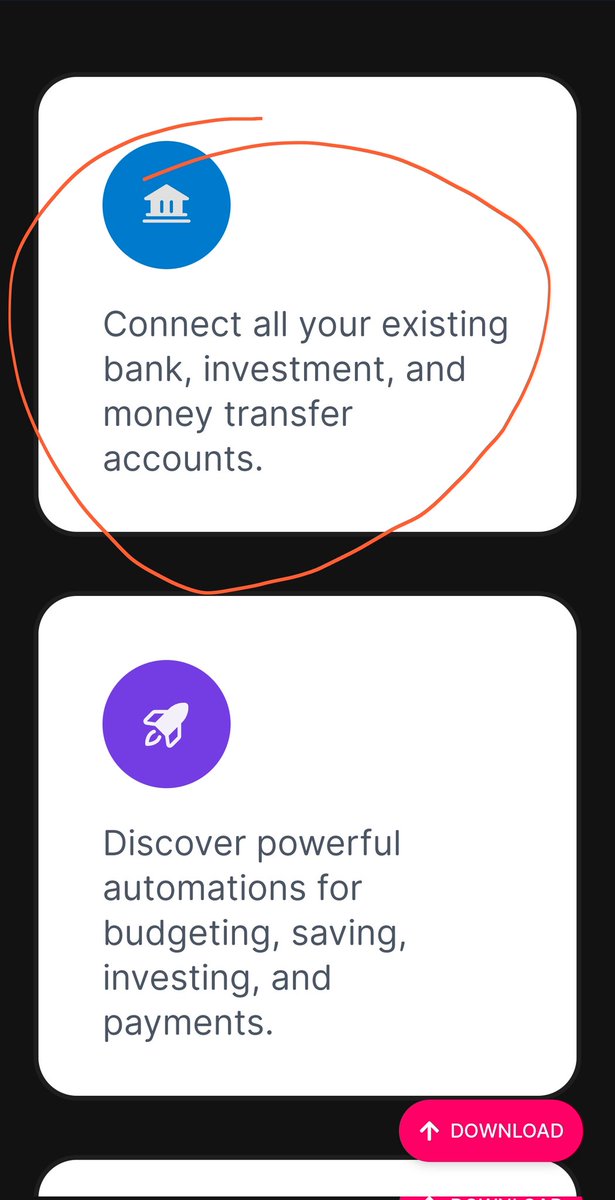
@f6ary @CandleFinance Is it possible for your greatest feature to be the greatest single point of failure in case of a hack 🤔
English
Liam Butler-Lawrence 已转推
5/6 of the metrics listed are US-specific, and the last one is just blatantly wrong. How can any conclusions be drawn about “the world” from that?

𝐓𝐡𝐞 𝐀𝐫𝐭 𝐨𝐟 𝐏𝐮𝐫𝐩𝐨𝐬𝐞 🇺🇸@creation247
3 years ago the world was a better place... Agree or disagree?
English
An example of the free market working as it should: the incentives to sell/license this breakthrough tech are higher than incentive to keep it proprietary. Huge win for society if true.
Steve Stewart-Williams@SteveStuWill
“Toyota claimed it had made a ‘technological breakthrough’… that would allow an electric vehicle powered by a solid-state battery to have a range of 1,200km and charging time of 10 minutes or less.” ft.com/content/87cb8e…
English
👌 I make this utility in all my projects! Although I call it fatalError as a nod to Swift. Also works great in fp-ts.
Matt Pocock@mattpocockuk
Tired of writing if statements every time you need to check if something's defined? Make a little 'raise' function to throw an error, and inline it with a nullish coalescing operator. Thanks to @heyImMapleLeaf for this one.
English
This is why “export all my user data as JSON”, although crude from a UX perspective, is so important for every SaaS to support.
kepano@kepano
File over app File over app is a philosophy: if you want to create digital artifacts that last, they must be files you can control, in formats that are easy to retrieve and read. Use tools that give you this freedom. File over app is an appeal to tool makers: accept that all software is ephemeral, and give people ownership over their data. In the fullness of time, the files you create are more important than the tools you use to create them. Apps are ephemeral, but your files have a chance to last. The pyramids of Egypt contain hieroglyphs that were chiseled in stone thousands of years ago. The ideas hieroglyphs convey are more important than the type of chisel that was used to carve them. The world is filled with ideas from generations past, transmitted through many mediums, from clay tablets to manuscripts, paintings, sculptures, and tapestries. These artifacts are objects that you can touch, hold, own, store, preserve, and look at. To read something written on paper all you need is eyeballs. Today, we are creating innumerable digital artifacts, but most of these artifacts are out of our control. They are stored on servers, in databases, gated behind an internet connection, and login to a cloud service. Even the files on your hard drive use proprietary formats that make them incompatible with older systems. Paraphrasing something I wrote recently: > If you want your writing to still be readable on a computer from the 2060s or 2160s, it’s important that your notes can be read on a computer from the 1960s. You should want the files you create to be durable, not only for posterity, but also for your future self. You never know when you might want to go back to something you created years or decades ago. Don’t lock your data into a format you can’t retrieve. These days I write using an app I help make called Obsidian (@obsdmd), but it’s a delusion to think it will last forever. The app will eventually become obsolete. It’s the plain text files I create that are designed to last. Who knows if anyone will want to read them besides me, but future me is enough of an audience to make it worthwhile.
English
@SandroMaglione @EffectTS_ Need to make this move for our Node/RN library that’s 95% pure fp-ts. Looking forward to the post!
English

Completed the migration from fp-ts to @EffectTS_ of my blog...
...and new article coming on how it went, step by step 🚶
Work in progress, coming soon 💎🔜

English
@BlvdSubway @oltmannd @the_transit_guy @MARTAtransit Only in theory… the vast majority of traffic along that section of I-85 (only 5 miles from downtown) has ends nowhere near the (very few) suburban MARTA stops, not to mention most suburban dwellers would never set foot on MARTA for illusions of safety.
English

English
