
Xi Cheng
342 posts


the trust and safety team keeps asking me to check message in console and do something in the cloud console to fix while keeping me locked out of the console. this is a deadlock for me. Even Gemini's advice couldn't get me out of this.
Xi Cheng@mailper
@googlecloud and its T&S team needs to work as a coherent whole instead of showing an org chart to the customers. My account was locked (17 days ago), I explained the fix and received an email saying the project is re-instated but the account is still locked.
English
@googlecloud and its T&S team needs to work as a coherent whole instead of showing an org chart to the customers.
My account was locked (17 days ago), I explained the fix and received an email saying the project is re-instated but the account is still locked.
English

TRANSCRIBE LAUNCH
Excited to announce my first solo public product.
Transcribe (link in comments) started as a personal tool I built because I had a very specific problem: there is an explosion of great podcasts and long-form videos, with more coming every day, and I don't have enough time to watch all of them. I still want to know what they say. I also want the text content inside my personal second brain, where I can connect it to AI. That turns out to be surprisingly hard since current tools mostly suck for this very specific goal.
I mentioned my personal tool on Invest Like The Best, and then it stayed private for months. The reason was simple: the first 80% was easy. The last 20% was annoying. Things like routing through proxies so YouTube doesn't ban the service. Handling weird edge cases. Making the product feel obvious instead of overbuilt. A few months ago, that last 20% would have taken me days or weeks. This time, coding tools were finally good enough that I built and deployed the public version in a few hours.
A few lessons from getting Transcribe out:
• Taste matters. The best product decisions were restraint: no login, no extra workflow, no bloated dashboard. Just paste a URL and get the transcript.
• The last 20% is where products usually die. The demo works early. The public product requires all the boring details to work reliably.
• Planning beats vibes. My “PRD” was a short markdown file. It was still the source of truth. Every time I got tempted to add one more thing, the doc pulled me back to the actual product.
The result is a very focused tool that does one thing very well: turns video into useful text.
This is a small launch, but it is personally meaningful. After many years of investing, advising, and helping other founders build, I feel like I can finally, tentatively, put the word “Builder” back in my self-description.
Hope Transcribe helps you as much as it has helped me.
Please send feedback, critiques, and suggestions for improvement to g o k u l r at g m a i l
English


MIT researchers just proved that prompt engineering is a social skill, not a technical one.
and that revelation breaks everything we thought we knew about working with AI.
they analyzed 667 people solving problems with AI. used bayesian statistics to isolate two different abilities in each person. ability to solve problems alone. ability to solve problems with AI.
here's what shattered the entire framework.
the two abilities barely correlate.
being a genius problem-solver on your own tells you almost nothing about how well you'll collaborate with AI. they're separate, measurable, independently functioning skills.
which means every prompt engineering course, every mega-prompt template, every "10 hacks to get better results" thread is fundamentally misunderstanding what's actually happening when you get good results.
the templates work. but not for the reason everyone thinks.
they work because they accidentally force you to practice something else entirely.
the skill that actually predicts success with AI isn't about keywords or structure or chain-of-thought formatting.
it's theory of mind. your capacity to model what another agent knows, doesn't know, believes, needs. to anticipate their confusion before it happens. to bridge information gaps you didn't even realize existed.
and here's the part that changes the game completely: they proved it's not a static trait you either have or don't.
it's dynamic. activated. something you turn on and off.
moment-to-moment changes in how much cognitive effort you put into perspective-taking directly changed AI response quality on individual prompts.
meaning when you actually stop and think "what does this AI need to know that i'm taking for granted" on one specific question, you get measurably better answers on that question.
the skill is something you dial up and down. practice. strengthen. like a muscle you didn't know you had.
it gets better the more you treat AI like a collaborator with incomplete information instead of a search engine you're trying to hack with the right magic words.

English
@robinhanson This is a reflection of our collective demand/click through rate when we use these keywords.
English

If you Google "long legs" and ask for images, almost all of them will be of human females. Even though human males tend to have longer legs on average. (Same at other search engines.)
English

@Alexishaebinkim you can do the beneficial things for the wrong reason. sometimes we call it luck. e.g. personal: buying house, having kids, learning about buzzwords; company: instagram acquisition, smart speakers from google
English


There's no such thing as being "underpaid."
The money you make = value you deliver + how replaceable you are + negotiation ability.
If you're not satisfied, it's on you to change those three things.
English

Is there any economic research on how morale affects economic growth?
It feels like everyone agrees that in military contexts, morale is absolutely critical. So surely it should have a significant impact in regular life too. But I haven't seen anyone trying to talk about this.
English
@aakashgupta Could you please analyze BNPL as an example? I can't figure out how it might be a good business. Thanks.
English

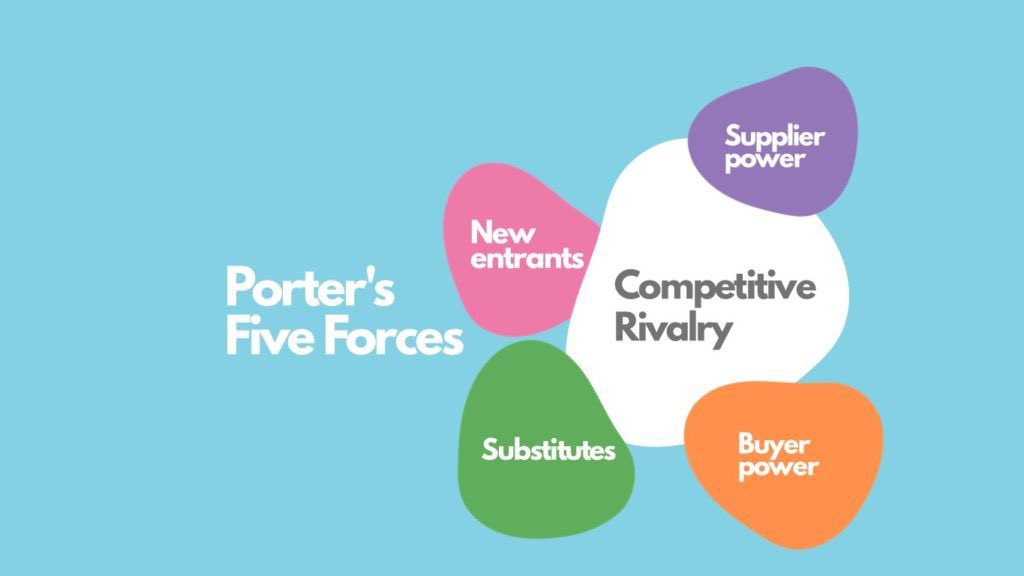
This fight is with:
· Substitutes who can replace your product
· Customers who decide their willingness to pay for your product
· Suppliers who set the prices of inputs to your product
· New entrants who might steal some share
They represent the other four forces.
English
PMs are expected to write product strategies.
And, yet, 99% don’t even understand Porter’s 5 Forces of strategy.
The concept is considered “revolutionary” in the field of strategy.
I spent $200K on a Wharton MBA and read Porter’s 397 page book so you don’t have to:
English


This article explains some observations I don’t know how to validate. aaronhertzmann.com/2022/02/28/how…
English
@Kevin_Ashton 😅I didn’t know it’s visible to you! I love your book and I don’t want your infrequent twits buried. Twitter is a great product!
Redwood City, CA 🇺🇸 English



Xi Cheng 已转推

@DanRose999 No. The entire fleet was Compaq/Digital Tru64 Alpha servers in 2000 (and '99, and '98). Amazon did use Sun servers in the earliest days but a bad experience with Sun support caused us to switch vendors.
English