morning routine checklist: - coffee - creatine - 10 mins of sunlight - 16oz of water - long walk what would you add?
BioStat
1K posts

@BioStatLtd
🧬 Operational Biology | Precision Longevity | Data-driven Protocols. Optimal human output. Elite performance science for the serious health optimizer. 👇


morning routine checklist: - coffee - creatine - 10 mins of sunlight - 16oz of water - long walk what would you add?

The biggest cheat code is wearing bluelight blockers at night, especially if you go on screens. The bluelight from the screen sends a signal to your brain that it's time to wake up. Not what you want to do at night. Bluelight blockers block that light, helping you sleep.


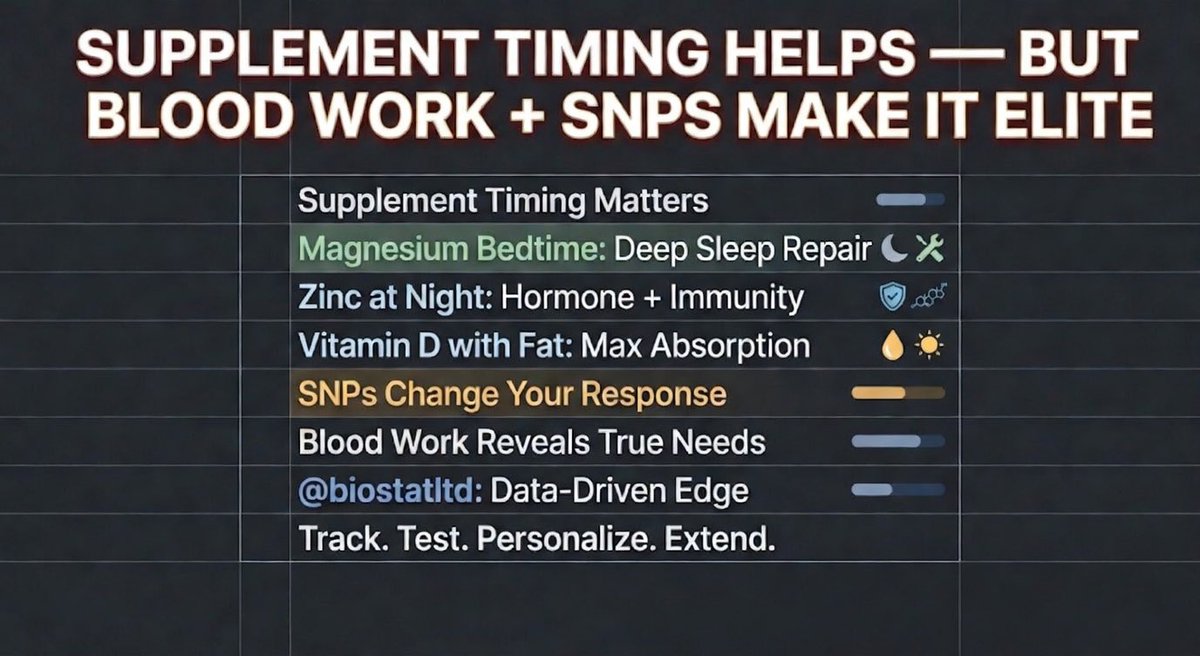
This is pure gold—the timing of supplements makes all the difference. From a longevity perspective, taking magnesium before bed is key because it improves deep sleep, relaxes the nervous system, and helps the body repair itself overnight. Zinc at night (away from calcium) supports hormones and immunity, while vitamin D with fatty food improves its absorption to protect bones and brain function. Small adjustments like these can make a huge difference in energy, recovery, and how we age.

Extremely excited to announce LigandForge 🧬⚡ Generate high-quality peptides at over 10,000x - 1M the speed of state-of-the-art methods like Bindcraft and Boltzgen. Predict binding affinity with 83% correlation to experimental binding data. 150 protein targets benchmarked.


One of the biggest mistakes I see in nutrition: People eat almost no protein at breakfast. If your first meal is mostly carbs, your blood sugar spikes and crashes within a few hours. Aim for 30–40g of protein in the morning: Eggs. Greek yogurt. Protein smoothie. Steak and eggs. What did you eat this morning??


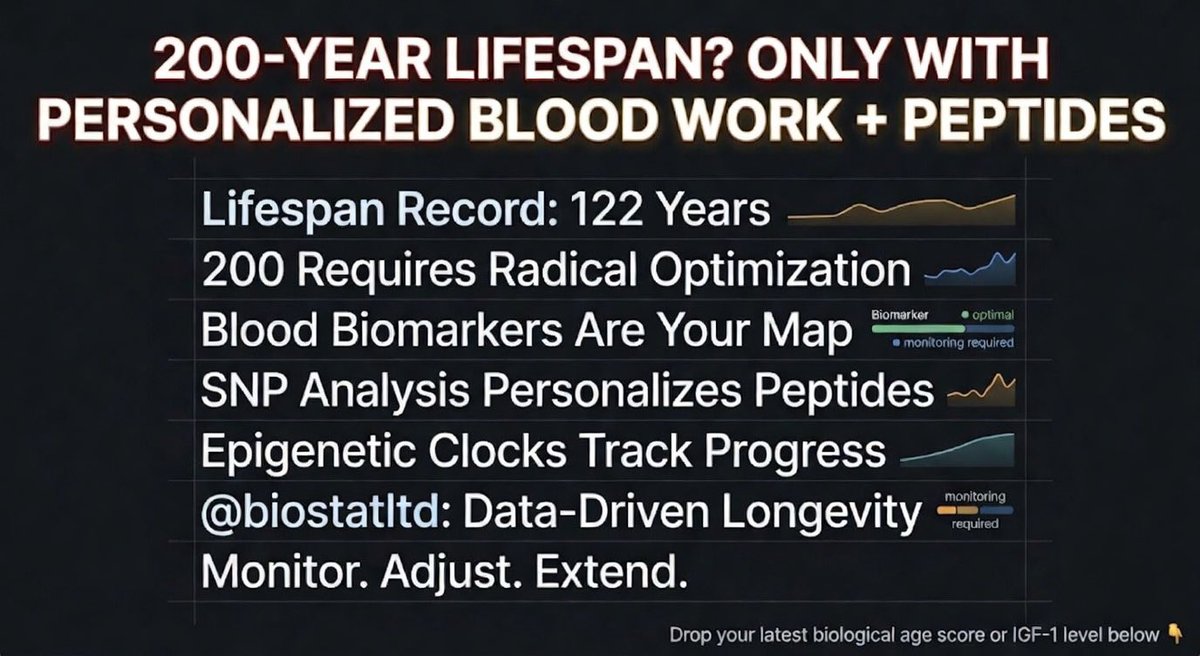
the first person to live to 200 is already alive and they are probably in their 70s


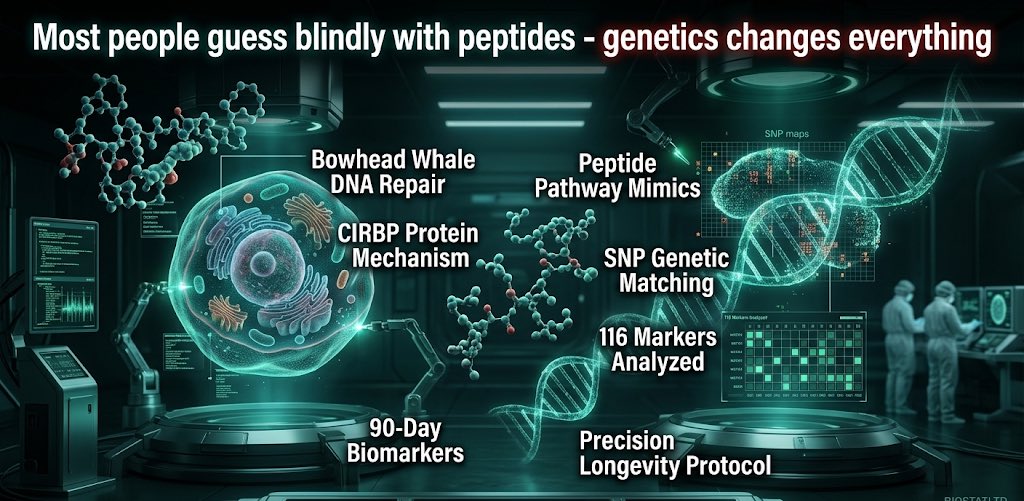
Bowhead whales produce proteins that repair DNA damage for 200 years. Humans already use peptides that mic some of these pathways. The next step: matching the right peptides to the right genetics. We're running that study now. 20 people. 116 SNPs. 90 days.

Gary Brecka lays out his no-BS “must-have” daily stack for basically everyone: - Methylated multivitamin (especially for kids—ditch folic acid & fortified/enriched foods if behavioral issues are present) - Hydrogen tablets (he’s so convinced he developed and sells H2 Tab himself) - All 9 essential amino acids (“essential for life” — unlike carbs, which are NOT essential) - 5,000 IU vitamin D3 + K2 (the ONLY vitamin we make ourselves from sunlight + cholesterol; acts like a hormone, critical for immune function, calcium transport, and far more) - High-quality omega-3s (prefers extra virgin olive oil, krill oil, or black seed oil over most fish oil capsules, which he says often go rancid) Bonus bombs: - “There is no such thing as an essential carbohydrate. Let that settle in.” - In Blue Zones, people ingest ~2 liters of extra virgin olive oil per week. - For mold toxicity → black seed oil. - Good sleep hygiene is non-negotiable. Clip from this 2:53 clip—straight talk on what he believes nearly everyone is missing. Which of these are already in your routine… and which one are you most skeptical about (or ready to add)? Drop your take below 👇


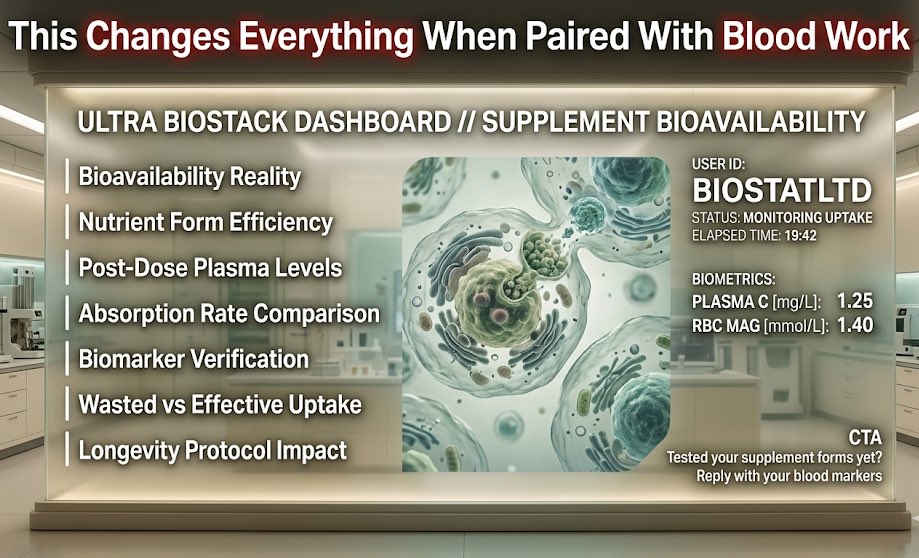
Most people think supplements don’t work... sometimes that’s true. If the nutrient isn’t in a form your body can absorb, it won’t do what you think it’s doing. In this new episode, I break down bioavailability and why the form of a nutrient can determine whether it helps your body… or just gets flushed away. Watch the full episode right here on X👇🏻


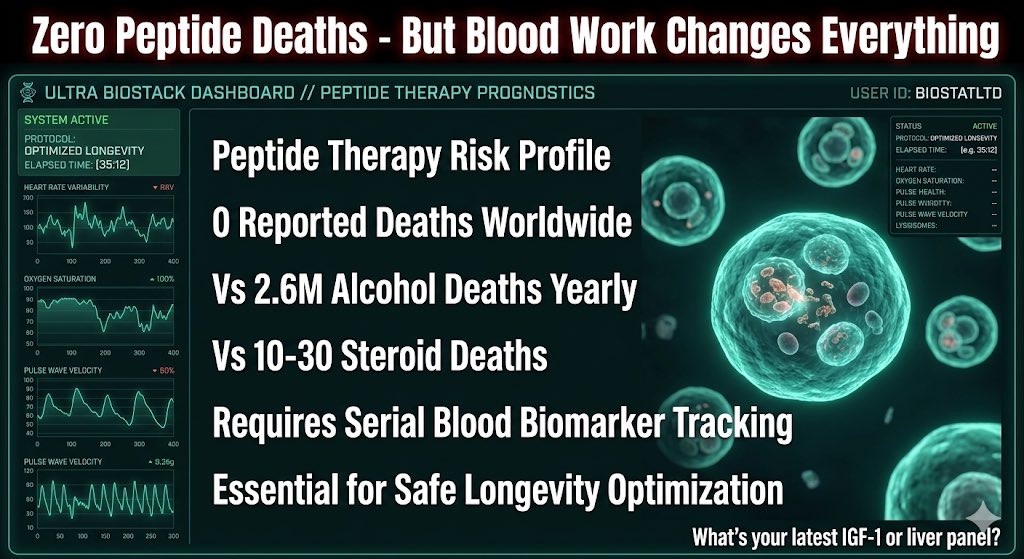
Alcohol contributes to 2.6 millions deaths per year worldwide, “steroids” contribute to 10-30 deaths per year and there are 0 deaths linked to the use of peptides so it seems to me like reply guys are freaking about the wrong things


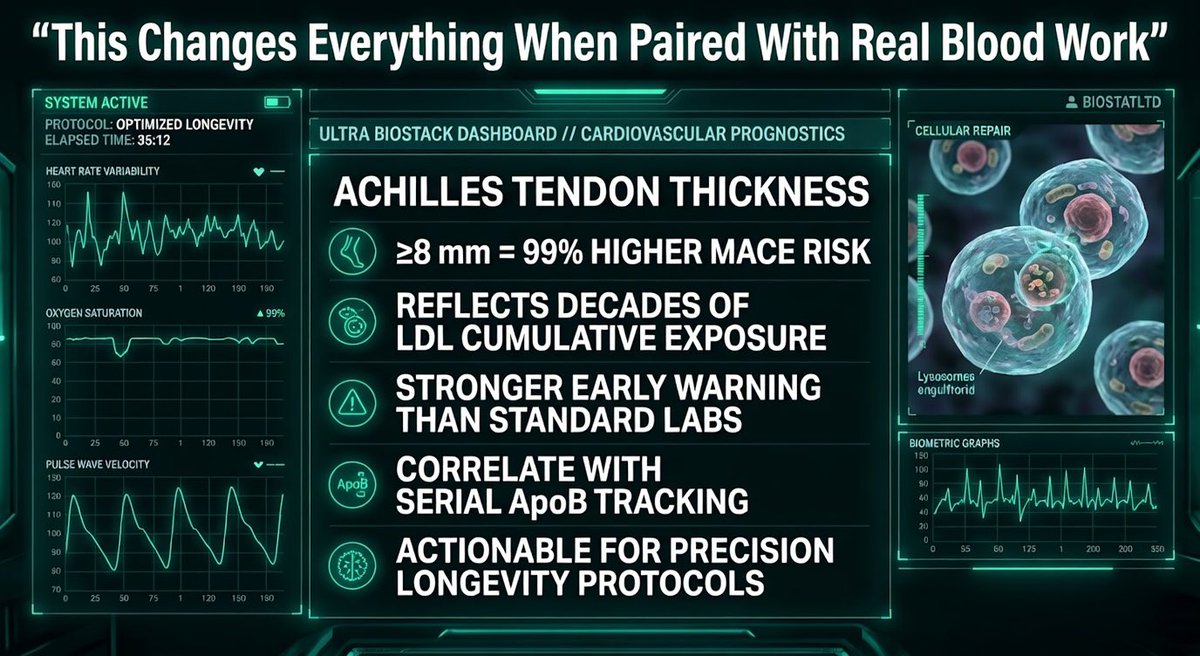
Your ankle is a window into your heart. A new study found that patients with a thickened Achilles tendon were nearly twice as likely to experience a major cardiovascular event within three years of a coronary stent procedure. An observational study retrospectively compared outcomes for 1362 participants with coronary artery disease undergoing PCI, examining differences between patients with and without Achilles tendon thickening (defined as ≥8 mm in men or ≥7.5 mm in women). Patients with thickened Achilles tendons faced a 99% higher risk of major adverse cardiovascular events (MACE) over three years (28.4% vs 17.9% for those with and without thickening, respectively). (MACE was defined as all-cause death, nonfatal myocardial infarction, stent thrombosis, stroke, and clinically driven target-vessel revascularization.) Thickened Achilles tendons were more prevalent in patients with the more severe, rapidly developing, and less stable acute coronary syndrome (ACS) (24.3% had thickened tendons) compared to patients with the more stable chronic coronary syndrome (CCS) (13.7% had thickened tendons). Among ACS patients, having a thickened Achilles tendon was a significant predictor, increasing the risk of a recurring major cardiovascular event within the next three years by 4.7 times. The findings suggest that Achilles tendon thickening may serve as a prognostic marker in patients with cardiovascular disease, with special value in predicting early recurrence of major adverse cardiovascular events in patients with acute coronary syndrome. While the analysis did not include blood cholesterol levels and does not establish causation, one plausible explanation is that Achilles tendon thickening reflects cumulative exposure to elevated LDL cholesterol over many years. This may be especially relevant in familial hypercholesterolemia, a genetic disorder characterized by markedly elevated LDL cholesterol, in which Achilles tendon thickening is also used as a diagnostic criterion.