Warren Stephens

698 posts

Warren Stephens

Warren Stephens

@WarrenTStephens

Software Developer — Interests: machine learning, complex systems. Career: Neural networks in commodity futures (100% proprietary code, 0% public libraries).


North Carolina, USA انضم Ağustos 2013
227 يتبع90 المتابعون
Warren Stephens
Warren Stephens@WarrenTStephens·
@CXCarroll @StatisticUrban It’s insane to me that the metric system did not use English units as a base — kilo-feet, centi-pound, or whatever. Seems like that would have given comprehension some traction.
English
0
0
0
16
CXCarroll
CXCarroll@CXCarroll·
@StatisticUrban There's two types of countries: those that have put a man on the moon and those that use the Metric System.
English
1
0
7
206
Hunter📈🌈📊
Hunter📈🌈📊@StatisticUrban·
It's insane to me that most Americans can't even comprehend metric units and Celsius without converting. I understand it's not the system used, but it IS the international system, used in all scientific fields and ~every other country. Useful to at least instill the basics.
English
86
2
228
26K
Warren Stephens
Warren Stephens@WarrenTStephens·
@MerrynSW Re AI coding tools, as told by Sr. Software engineer, the outcome: Task 1: helpful, saved time Task 2: helpful, saved time Task 3: helpful, saved time Task 4: seemed helpful but wasted enormous time Ratio of 1..3 to 4 is the benefit or frustration. cc @Dr_Gingerballs
English
0
0
0
16
Merryn Somerset Webb
What if the whole LLM thing is a false start? If the flaws are inherent systemic problems - if the compounding of hallucinations/errors can't be sorted out? If the capex build out is one of the biggest misallocations of capital ever? Then what? bloomberg.com/news/newslette…
English
142
86
444
148.2K
Warren Stephens
Warren Stephens@WarrenTStephens·
@Thewhitesmoke @FreightAlley > “strategic buildout to fully monetize” So the strategy is to consume and export our nat gas as fast as humanly possible in order to just get rich??? Or is there a secondary strategy? One with a longer term timeframe? i.e. When the gas output starts to fall off?
English
0
0
1
37
Rob Carpenter
Rob Carpenter@Thewhitesmoke·
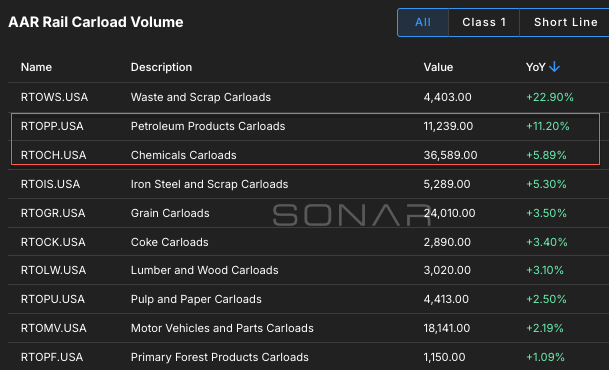
One thing many supply chain people have missed is that U.S. energy dominance has been constrained not by a lack of gas, but by a lack of takeaway capacity, infrastructure, and LNG export capacity. The Permian is the best example. We’ve had the resource. We just havent always had the downstream capacity and strategic buildout to fully monetize it. The same applies to petrochemicals, polyethylene resins, and the cracker capacity tied to them. There are areas where we missed the boat on fully leveraging that advantage.
English
3
5
30
3.3K
Warren Stephens
Warren Stephens@WarrenTStephens·
@FreightAlley Dow cut their dividend in half and lost money, Chinese were underpricing them apparently. Same story with LyondellBasell. (See Barron’s article) Dow said recently (I think) that they won’t be able to immediately benefit from the new situation.
English
0
0
0
40
Craig Fuller 🛩🚛🚂⚓️
US natural gas prices have dropped by 30% over the past year, even as global natural gas prices have increased substantially in wake of the war in Iran. Why? We have an abundance. 80% of American made plastics and 80-90% of our petrochemicals come from natural gas. This gives the U.S. a strategic advantage over global competitors in manufacturing of plastics and petrochemicals, plus will tame inflation in many parts of our industrial economy. This is one of the many reasons to be bullish on American manufacturing/industrials over the next decade. Table: Rail shipments by commodity. Source: SONAR, AAR
Craig Fuller 🛩🚛🚂⚓️ tweet media
English
16
67
285
29.9K
Warren Stephens
Warren Stephens@WarrenTStephens·
@FreightAlley @media_quit > “not because of Iran” Maybe the other war? Ukraine blowing up stuff in Russia, and hurting European chems based on nat gas, would affect both grains and chemicals?
English
0
0
0
29
Craig Fuller 🛩🚛🚂⚓️
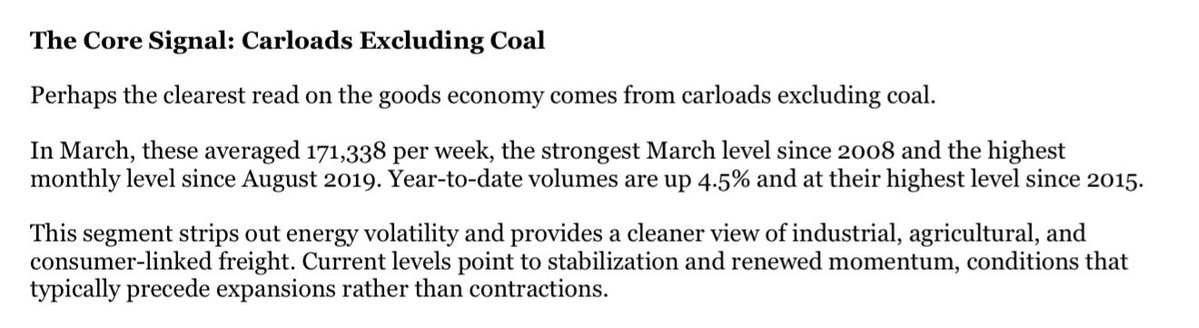
Why isn’t anyone talking about this? The railroads, the backbone of American industrials, just reported that volume excluding coal, had the highest volume March since 2008! Chemicals +5.5% YoY - highest ever Grains - highest volume since 1993! There is so much noise in the economy, but the signal says that American industry is doing fantastic.
Craig Fuller 🛩🚛🚂⚓️ tweet media
English
130
555
2.6K
237.6K
Warren Stephens
Warren Stephens@WarrenTStephens·
@TheStalwart > “all kinds of businesses” Do an episode! I once saw data on the insane amount of retail square footage per person there is in the U.S. — compared to everywhere else. Would love the see that broken down by business types.
English
0
0
1
449
Warren Stephens
Warren Stephens@WarrenTStephens·
@RichardJMurphy @ProfSteveKeen Agree it’s a “Galileo” period in economics because the accounting truths of MMT lead folks in a politically left-wing direction, and politics is as important as religion these days! The current war leads us to “industrial policy w/below-market rate lending” w/o that left shift.
English
0
0
0
22
Warren Stephens
Warren Stephens@WarrenTStephens·
@BobEUnlimited > “broader economic hit” Apparently 1/3rd of helium supply is offline for years, which will reduce output in: computer chips, space launches, medical MRI, and even rare earth metal processing — which cascades supply problems into other areas. (2 Bloomberg interviews on this)
English
0
0
1
88
Bob Elliott
Bob Elliott@BobEUnlimited·
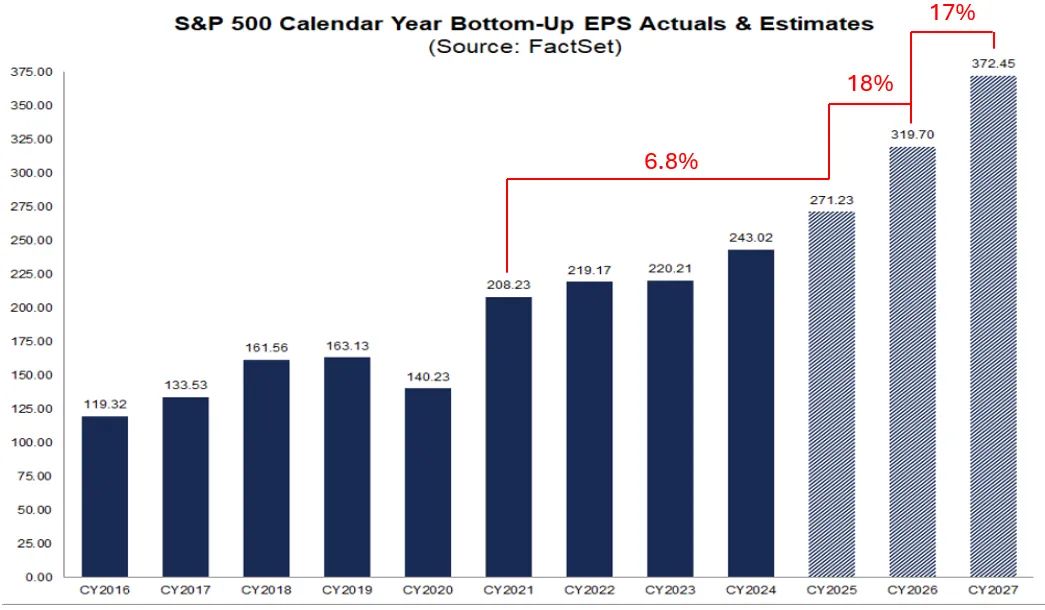
Equity Analyst Delusions Surging expectations driving sharply falling PEs reflect an impossible mix of sky high energy gains with no broader economic hit, suggesting the strong growth vs. falling prices narrative is nonsense. bobeunlimited.substack.com/p/equity-analy…
Bob Elliott tweet media
English
8
11
84
34.1K
Warren Stephens
Warren Stephens@WarrenTStephens·
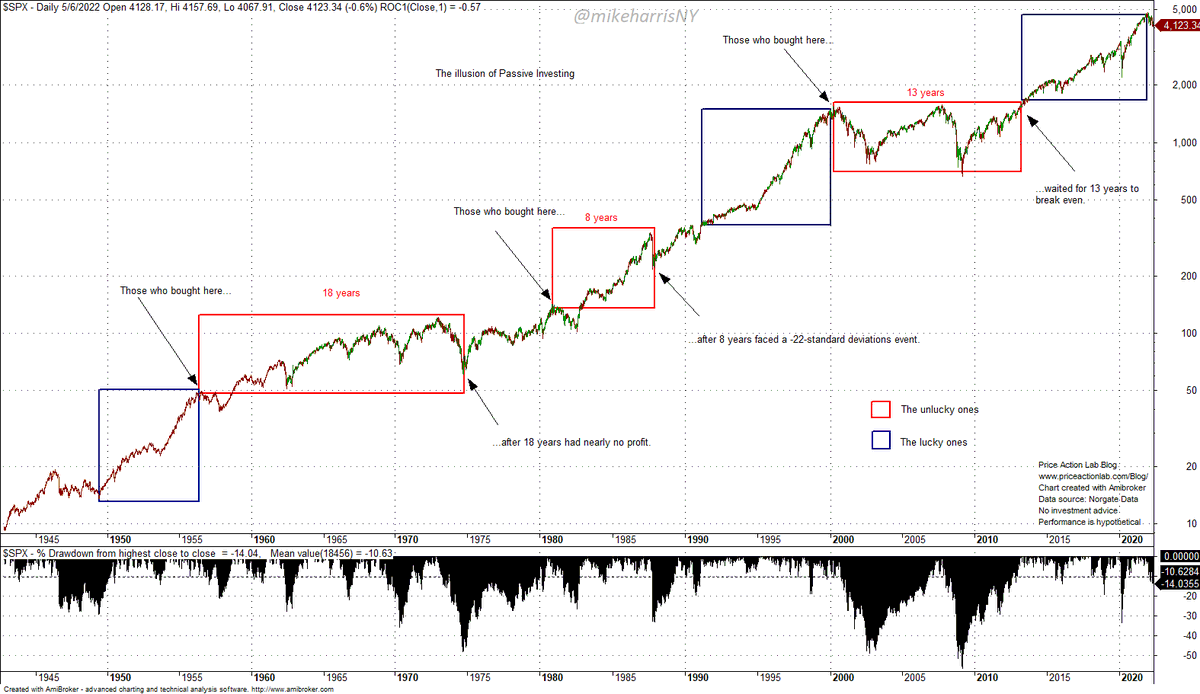
@BobEUnlimited @mikeharrisNY Aren’t passive investors more likely to buy periodically throughout these timeframes? Do you have model outcomes for that behavior?
English
0
0
0
51
Michael Harris🛡️∀p(p→◊Kp)
In a recent post, @BobEUnlimited included a nice $SPX chart with drawdown durations. I wrote an article in May 2022 about lucky passive investors who avoid uncle point and I had this chart in it, with more information. Link to article in reply below 👇
Michael Harris🛡️∀p(p→◊Kp) tweet media
English
4
1
29
3.4K
Warren Stephens
Warren Stephens@WarrenTStephens·
@adamtaggart The “100% self made” crowd should read a few Nassim Taleb books and think of all the bad things that did not happen that could have derailed their success — natural disasters, illnesses (or worse), econ crashes, 9-11 type events… endless list. They had a plan for everything???
English
0
0
0
9
Warren Stephens
Warren Stephens@WarrenTStephens·
@adamtaggart *Everyone* that succeeds has had a lot of help due to the socio-economic-political system which exists in the U.S.
English
3
0
3
509
Adam Taggart
Adam Taggart@adamtaggart·
When I graduated from Stanford Business School, I had no savings & $40k in student loans The net worth I've built since then has been 100% self-made, which I'm proud of But I'd have accepted help along the way (e.g., inheritance) had any come along Which best describes you?
English
88
1
34
41.3K
Warren Stephens
Warren Stephens@WarrenTStephens·
@adamtaggart Yes, we are all fortunate to live in America. But I suspect that the people who quickly answered “100% self made” are overstating by a noticeable amount. Even “luck” should drop the number by a few points.
English
1
0
1
45
Adam Taggart
Adam Taggart@adamtaggart·
@WarrenTStephens If you're saying we're fortunate to live in America, I agree with you If you're saying to the self-made "You're not responsible for your own success", then I don't
English
2
0
8
452
Warren Stephens
Warren Stephens@WarrenTStephens·
@_pragmatik_ @JavierBlas 1) Bloomberg article said recently South Korean tech has been 97% effective at intercepting, 2) layer Ukrainian tech onto that, 3) Oman tells Iran “we are moving our ships to our ports using our water” and “we will remember what happens forever” Somewhat plausible maybe.
English
1
0
0
61
Javier Blas
Javier Blas@JavierBlas·
Confirmed: the two VLCC oil tankers made it to the other side of the Strait of Hormuz (one carrying ~2 million of Saudi crude; the other with 2 million of Emirate crude). Of course, the key is whether this is a one-off. An third vessel, a LNG carrier, also crossed.
Javier Blas@JavierBlas

Everything suggests that at least ~4 million barrels of crude exited the Strait of Hormuz today. Largest outflow since the 1st day of the Third Gulf War. (... And yes, that's a fraction of the 20 million barrels a day that typically left the SoH on any given day pre-war...)

English
46
307
1.5K
380.1K
Warren Stephens
Warren Stephens@WarrenTStephens·
@MatthewW_eacc @KyleTrainEmoji @ProfHall1955 FWIW, my experience: 1) long ago conservatives and libertarians argued against “communism”, 2) communism went away, 3) so they started arguing against “socialism”, 4) definition of “socialism” now has things that were formerly “communism”!? To me Europe is still “socialism”! 😜
English
1
0
1
13
Warren Stephens
Warren Stephens@WarrenTStephens·
@dampedspring @BobEUnlimited @super_macro Oaktree has been warning about the credit environment for some time. They did *not* gate recently, and it would not surprise me if they raised leverage (from none to some) in order to supply the requested withdrawals.
English
0
0
1
25
Andy Constan
Andy Constan@dampedspring·
Lying to investors and promising liquidity is bad Gates and limits on redemptions that are well disclosed and understood by investors is literally the value proposition. If an investment vehicle is subject to instantaneous full redemptions that limits its ability to harvest real world liquidity premium. Many many real world assets pay a liquidity premium and that premium can be very sizable and have a worthwhile fully risk adjusted return. Investment vehicles that can harvest that return are a great thing for investors Pre-disclosed gates, scheduled fractional redemption policies, heck even capital calls, are the requirement for investment vehicles that harvest liquidity premium. Corporations who issue long term debt plus equity have identical "gates". They allow investors to buy illiquid assets (businesses) with NO ability for early redemptions. For a long term investor buying investment vehicles with "gates" with a portion of their AUM allows investors to access liquidity premium returns which can be quite favorable and though typically far from an ideal diversifier vs long public equities does provide some small diversification benefit. Buying these investment vehicles is a perfectly reasonable idea at a small portion of AUM of an investor. Small enough so that they can NOT redeem when things are bad and ride out multiple decades of liquidity premium collection That said Lying and deceiving investors is Bad.
English
4
0
8
1.9K
Bob Elliott
Bob Elliott@BobEUnlimited·
Maybe they shouldn't have systematically misled buyers about the liquidity profile of their products. But hey, at least they got rich from all the fees they earned... x.com/wolf_vukovic/s…
Vuk Vukovic@wolf_vukovic

I feel their pain. 40% redemptions is beyond breaking point for a private credit firm. But gating your investors? In the long run, probably even worse. Private credit funds lend to middle-market companies (in Blue Owl's case, mostly software and SaaS). These are illiquid, multi-year term loans. They can't be sold overnight on an exchange. There is no bid. Now imagine 40% of your investors want out. You have two options: A) Honor the redemptions. To raise cash, you have to sell loans at a steep discount, or worse, call them in early. But your borrowers don't have the cash sitting around either. They took term debt because they needed time. Force-selling a multi-billion loan book at 70-80c on the $ doesn't just hurt your returning investors - it destroys value for everyone who stays. B) Gate redemptions. Which is exactly what Blue Owl did. Cap withdrawals at 5% per quarter. Protect the remaining LPs. Protect the borrowers. But now you've confirmed every investor's worst fear: your money is locked and you can't get it back when you need it. This is the fundamental tension in private credit: you're offering quarterly liquidity on assets that have none. It works beautifully in calm markets. In stress, the math breaks. And here's the part nobody talks about - the borrowers. If a fund were forced to liquidate, those SaaS companies with 3-5 year term loans would face early repayment demands, covenant pressure, or their debt getting transferred to a distressed buyer at punitive terms. The very companies the fund was supposed to support become collateral damage. Blue Owl is in survival mode, so they chose the second option. Which doesn't mean they won't have to go with option A as well, and very soon. But the real question for the industry: should interval fund structures be used for assets this illiquid in the first place?


English
27
11
173
64.3K
Warren Stephens
Warren Stephens@WarrenTStephens·
@ProfSteveKeen @YouTube One last idea: imagine for every dollar that a bank created by loan that the bank obtained a serial number for that dollar (from the Federal Reserve or Treasury)! i.e. *NOT* getting money, just serial numbers! Would that help people better understand the creation of money?
English
0
0
1
8
Warren Stephens
Warren Stephens@WarrenTStephens·
@ProfSteveKeen @YouTube A short video, without using the word “equity”, but using instead “net worth” or something, for layman could be useful. Also could touch on the “weird” idea that loans create deposits in banks, and that is, say, a unique privilege of banks, unconnected to existing money.
English
1
0
1
11