BakerB (criminalised nicotine consumer)

13.7K posts

BakerB (criminalised nicotine consumer)

BakerB (criminalised nicotine consumer)

@bakerbee1

We need non-medicalised legal access for smokers to vaping in Australia not misinformation, junk science, prejudice, ideological bias and unscientific concerns.

Straya ! انضم Kasım 2014
982 يتبع1K المتابعون
Alan CMA
Alan CMA@Algore09algor·
@jamomartin @drjoesDIYhealth @caphraorg @MarewaGlover @Anne_Ruston What stands out from the submissions isn’t diversity of thinking, it’s uniformity. Across law enforcement bodies, health organisations, councils, and advocacy groups, the same prescription keeps getting repeated: more policing, tougher rules, higher pressure. It doesn’t seem to matter that these are the very approaches that have already led to exploding illicit markets, loss of control, and worsening outcomes. There’s almost no sense of reflection. No serious engagement with what’s actually happening on the ground. Just a doubling down on enforcement, as if repeating the same strategy louder will somehow produce a different result. What’s more concerning is how broad this alignment is. When groups with very different roles all converge on the same narrow solution, it stops looking like independent analysis and starts looking like groupthink. And that’s the real problem. Because when everyone is focused on tightening control, no one is asking whether the approach itself is flawed. No one is seriously considering alternatives that might actually reduce harm rather than just attempt to suppress behaviour. The result is a policy environment that feels less like it’s responding to reality, and more like it’s trying to force reality to comply with a predetermined view. • Northern Territory Police Association • Austrac • Illicit Tobacco and e-Cigarette Commission • Royal Australian College of General Practitioners • City of Stonnington • Australian Criminal Intelligence Commission • Cignall • Simon Chapman • Cancer Council (Queensland, WA, NSW, Victoria, Tasmania, South Australia, and Australia) • Australian Small Business and Family Enterprise Ombudsman • Freight and Trade Alliance • Aboriginal Health Organisation • Bega Valley Shire Council • Lung Foundation Australia • Australian Taxation Office • Michelle Jongenelis • Tobacco Free • Shopping Centre Council • Master Grocers Australia • National Heart Foundation • Australian Medical Association • The Matilda Centre • Australian Council on Smoking and Health
English
3
5
16
277
Dale Staten
Dale Staten@Dstat_THR·
@_DaveCross_ @bakerbee1 And probably held focus groups about which messaging would deter the respondents the most, whether true or not.
GIF
English
1
0
0
11
BakerB (criminalised nicotine consumer)
@JulianHillMP Prohibit drastically less harmful nicotine alternatives and extort tax money from smokers. Sounds like a winner set of policies. Australia is a basket-case and it's 'world leading' tobacco control and public health industries are to blame.
English
0
0
2
25
Julian Hill MP
Julian Hill MP@JulianHillMP·
Going after these criminals, to save the lives of Australians.
English
86
9
49
3.6K
kimba
kimba@kimber792·
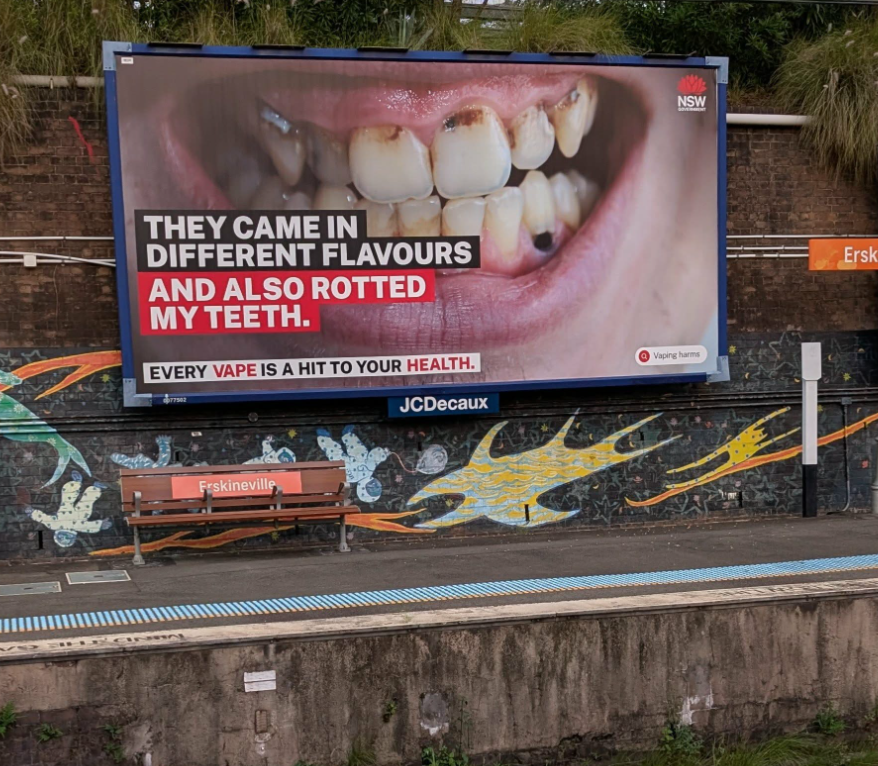
@bakerbee1 So, brushing your teeth isn’t an easy solution to prevent tooth decay and gum disease? Vaping might cause this, but drinking and eating crap food and not cleaning your teeth is the most likely culprit.
English
1
0
2
29
Alan CMA
Alan CMA@Algore09algor·
At first glance, Simon Chapman's submission acknowledges something important: cheap illicit tobacco is now widespread, highly accessible, and eroding the price barrier that once discouraged smoking. But rather than follow that logic to its obvious conclusion that extreme taxation has created the conditions for this market, he instead bends over backwards to deny the role price plays in driving it. This is the central contradiction in his argument. Chapman repeatedly states that price is a “universally acknowledged” driver of smoking behaviour. Yet when that same principle applies to illicit markets where a $7 pack competes against a $40–$60 legal product, he suddenly dismisses price as irrelevant. You can’t have it both ways. If price reduces consumption, then extreme price gaps will inevitably redirect consumption. That’s not ideology, that’s basic economics. His attempt to argue that illicit trade exists everywhere, regardless of tax levels, is another sleight of hand. Of course, illicit markets exist globally, but the scale, visibility, and violence attached to Australia’s market are what make it exceptional. Open, shopfront sales. Delivery services advertised on trees and social media. Firebombings. Turf wars. That’s not business-as-usual, it’s a market supercharged by unprecedented margins. And this is where Chapman’s dismissal of James Martin becomes particularly telling. Martin’s work doesn’t rely on rhetoric - it reflects well-established criminological principles: when profit margins are extreme, organised crime will enter and expand. Australia has effectively engineered one of the most lucrative black markets in the world through policy settings that pushed legal prices far beyond what enforcement alone can control. Ignoring that doesn’t make it untrue, it just avoids the uncomfortable implication that policy has backfired. Chapman’s arithmetic argument that even large tax cuts wouldn’t undercut illicit prices is also overly simplistic. Illicit markets don’t operate in a vacuum. They respond to risk, enforcement pressure, and margins. Narrow the gap, and you reduce the incentive structure. Leave a 500–800% margin in place, and no amount of policing will keep pace. Perhaps most concerning is his continued defence of the pharmacy-only vape model. In theory, it mirrors tightly controlled systems like pharmaceuticals. In reality, it has failed. Consumers didn’t migrate to pharmacies; they migrated to the black market. The result? Less regulated access, not more. More illicit supply, not less. And, increasingly, evidence that some users are shifting back to smoking as legal alternatives become harder to access. Instead of acknowledging this, Chapman frames the issue almost entirely as a failure of enforcement and compliance. But enforcement cannot overcome economics at this scale. When the reward is enormous, and the risk historically has been low, criminal participation isn’t an anomaly. It’s predictable. There’s also a broader tone throughout the submission that’s hard to ignore. Critics are caricatured as “economically illiterate” or industry-aligned, rather than engaged with seriously. That might work rhetorically, but it doesn’t address the substance of the argument. And increasingly, that argument is being made not just by commentators, but by criminologists, economists, and even policymakers who are starting to acknowledge that the current approach is unsustainable. In the end, Chapman is right about one thing: Australia is facing a serious illicit tobacco crisis. But his refusal to recognise the role that extreme pricing and restrictive policy settings have played in creating that crisis means his proposed solutions are more enforcement, harsher penalties, and tighter controls, which risk doubling down on the very conditions that allowed it to emerge in the first place. When policy creates a market this profitable, ignoring the economic drivers doesn’t solve the problem. It entrenches it.
English
10
10
32
1.1K
Grove Mitchell
Grove Mitchell@grove_mitchell·
This new bogus study attempting to tie vaping to cancer really drags out the soulless bags of flesh giddy to hear such great news; that their long time suspicions are finally proving to be true; that cancer can finally be added to their list of admonishments. It’s disgusting.
English
5
4
25
316
Ben Fordham Live
Ben Fordham Live@BenFordhamLive·
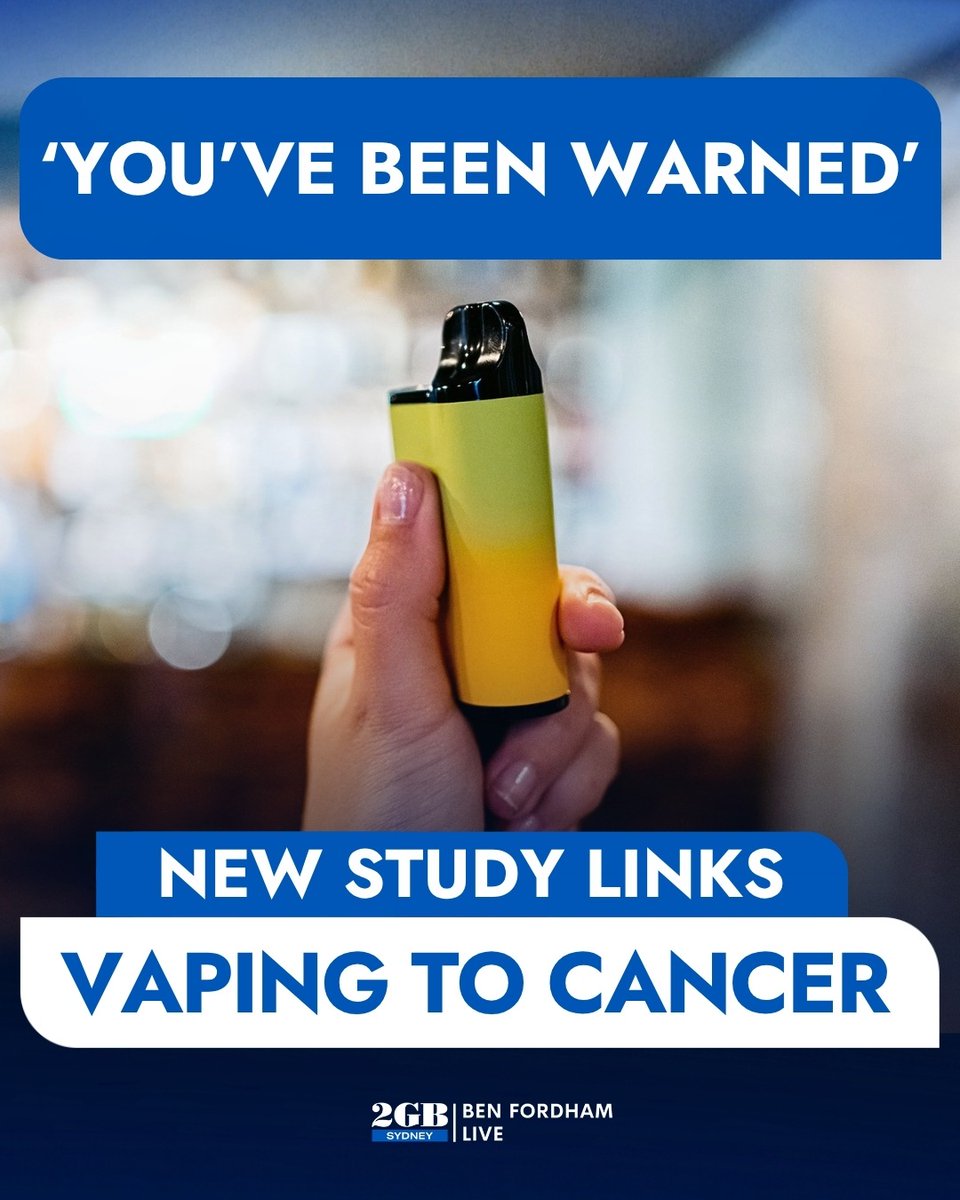
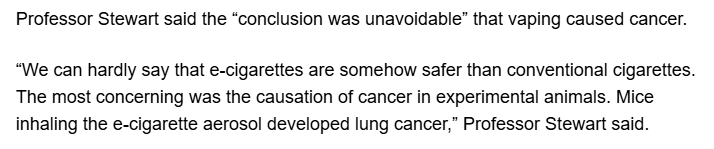
A new study has found vaping is "likely" to cause cancer. Professor Bernard Stewart says “we can’t say vaping is safer than smoking.” Listen to his full conversation with Ben HERE. 🎧omny.fm/shows/ben-ford…🎧
Ben Fordham Live tweet media
English
38
2
4
8.7K
Alan CMA
Alan CMA@Algore09algor·
The latest study out of Australia is a perfect example of the “scientists” who GOT THE MEMO. Not because it is uniquely flawed, but because it is so completely, almost effortlessly, aligned with expectation. It doesn’t challenge. It doesn’t disrupt. It fits. It reads like work produced within a system that already knows what conclusions are acceptable and how to reach them without ever appearing to try. That’s what it means to get the memo.
English
1
7
27
317
BakerB (criminalised nicotine consumer) أُعيد تغريده
Alan CMA
Alan CMA@Algore09algor·
More and more experts who never got the memo are coming forward to debunk the so called “study” Robert Beaglehole newstalkzb.co.nz/on-air/heather…
English
2
13
37
735
Eric Crampton
Eric Crampton@EricCrampton·
@brentwheeler @dpfdpf The SMC piece was released 30 March in the UK, so would have been available to check before syndicating the ABC piece.
English
1
0
7
416
Eric Crampton
Eric Crampton@EricCrampton·
This morning, Radio NZ played a long ABC piece on a new Australian study on vaping. Shame that neither RNZ nor the ABC checked the Science Media Centre's review of that study. Let's have a look at what the SMC's experts had to say.
English
4
20
100
11.5K
DraganDeeWhy
DraganDeeWhy@DraganDeeWhy·
@bakerbee1 @newscomauHQ The damage has been done. It is all over MSM and no one looks any further then the headlines and a short summary.
English
1
0
0
5
Alan CMA
Alan CMA@Algore09algor·
After digging into the Carcinogenesis bgag015 study, one thing becomes very clear: It talks a lot about what’s present, but almost nothing about how much. The paper highlights chemicals linked to carcinogenic pathways, metals, oxidative stress, DNA damage. Sounds alarming. But where are the actual exposure levels? Where are the real-world quantities? Where are the comparisons to smoking? They’re largely missing. And that’s not a small detail, it’s the entire point. In toxicology, dose is everything. You can’t assess risk just by detecting a substance. Many of the same compounds mentioned in the study are found in everyday environments, air pollution, cooking fumes, even normal biological processes. The difference between harmless and harmful isn’t presence, it’s concentration and exposure over time. Instead, the study leans heavily on: lab-based cell experiments animal models with artificial exposure mechanistic pathways All useful for generating hypotheses, but not for determining real-world cancer risk. Without quantifying exposure, the argument effectively becomes: “We found substances that can be harmful under certain conditions.” That’s not risk assessment. That’s possibility. What’s also missing is context. There’s little meaningful comparison to cigarette smoke, where carcinogen levels are orders of magnitude higher. Without that, readers are left with a distorted picture, where a lower-risk alternative is evaluated in isolation. In the end, this isn’t a paper that measures risk. It’s a paper that implies risk without scaling it. And without scale, you don’t have evidence of harm, you have speculation that sounds scientific.
English
1
3
7
85
7NEWS Queensland
7NEWS Queensland@7NewsBrisbane·
A lethal link between e-cigarettes and cancer has been uncovered in new research by Australian scientists. The study found vapes are just as harmful as conventional cigarettes as their popularity continues to soar.
English
6
6
11
1.9K
Ben Fordham Live
Ben Fordham Live@BenFordhamLive·
A new study has found vaping is "likely" to cause cancer. Professor Bernard Stewart says “we can’t say vaping is safer than smoking.” Listen to his full conversation with Ben HERE. 2gb.com/youve-been-war…
English
18
1
13
11.6K