existentialgoof

8.7K posts

existentialgoof

existentialgoof

@existentialgoof

Professional doom-monger. Author of https://t.co/dH0lZUnl9f blog, Redditor (u/existentialgoof).

انضم Eylül 2021
127 يتبع512 المتابعون
existentialgoof
existentialgoof@existentialgoof·
@IsleOfNate @theashtraymaze @Cyn1calCrusader High humidity does indeed make high temperatures worse. But we don't have high humidity in the UK when temperatures are high. Daytime humidity during this hot spell hasn't gotten out of the 40s, as far as I can tell.
English
1
0
2
98
Nate
Nate@IsleOfNate·
@existentialgoof @theashtraymaze @Cyn1calCrusader High humidity not only makes high temps more uncomfortable, it makes cold temps worse too. The lack of AC in homes is the main part of it, but the humidity making it worse is absolutely not a myth.
English
1
0
2
92
The Cynical Crusader
The Cynical Crusader@Cyn1calCrusader·
So, jokes aside, to understand why the heat is worse in the UK than say Arizona for example, the answer is quite long... First it's the Humidity, it's far higher here. The UK's island location and prevailing south-westerly winds bring moist sea air, so heatwaves are often humid rather than dry. In contrast, many of the hottest US states (e.g., Arizona, Nevada, New Mexico) have dry desert heat where sweat evaporates quickly, so you actually feel cooler despite higher temperatures. Even humid US regions (like the Southeast) usually have widespread air conditioning to offset it. Second, the buildings and Infrastructure that we have all are designed to Trap Heat, not Release It. UK homes are built for cold, damp winters: thick brick/stone walls, heavy insulation, small windows, and designs that retain warmth. During a heatwave, they turn into ovens, solar gain through windows builds up, and there is poor ventilation or passive cooling features like overhangs, shutters, or light-coloured roofs. Plus, poor air conditioning: Only about 5% of UK homes have AC (vs. ~90% in the US). It's not standard because it's rarely needed most of the year, but during spikes it's a nightmare. Also, retrofitting is expensive and tricky in old terraced houses or listed buildings. This extended to public transport, schools, offices, and even hospitals as they often lack cooling. Finally, most importantly, we have zero acclimatisation. Meaning it's just as hot at night as it is during the day. Britons aren't physiologically or culturally used to sustained heat. We're properly white! So, a sudden jump from typical UK summer temps feels extreme, and the body struggles more without gradual adaptation. Heatwaves often bring "tropical nights" (temps staying above 20 °C), so homes don't cool down overnight. You can't sleep, recover, or anything which just compounds fatigue, dehydration, etc. Drier US heat often cools significantly at night. That is all topped up with the fact that we have longer summer daylight at the UK's higher latitude meaning more hours of solar heating. Hope this long explanation that no one wanted clears this right up...
NewsWire@NewsWire_US

UK Heatwave Ignites Calls for Widespread Air Conditioning – Government Urged to End Resistance

English
598
1.1K
10K
2M
existentialgoof
existentialgoof@existentialgoof·
@theashtraymaze @Cyn1calCrusader My mistake, it's low 30s here. I was looking at the daily minimum. But that's still low humidity. If you look at places that are more accustomed to these temperatures, the humidity is often higher. The claim that warm weather feels hotter here because of high humidity is a myth.
English
3
0
1
284
existentialgoof
existentialgoof@existentialgoof·
@globeandmail TL;DR/paywalled The article is about a man whose sister is a Catholic and doesn't think people should have the right to end their lives, because anyone who disagrees with her religious convictions lacks the mental capacity to make their own choices.
English
0
0
2
62
existentialgoof
existentialgoof@existentialgoof·
Denying someone the right to even an unassisted suicide (e.g. simply removing the restrictions on accessing reliable and humane methods) isn't passively denying someone a positive right. It's actively violating the negative rights of the individual and is an act of exploitation and abuse. Even if those fears had merit, it doesn't warrant an unprovoked violation of negative liberty rights to the extent that you have to treat other people like slaves.
English
0
1
1
21
Rado9910
Rado9910@Rado9910·
@LateoRT Their arguments seem to revolve around the idea that it will be used against disabled people. This is a legitimate fear, especially when you are disabled yourself. I am in favor of voluntary euthanasia, but there should be some strong safeguards to avoid this outcome.
English
2
0
1
25
LateoRT
LateoRT@LateoRT·
Pro abortion cuz autonomy even if abortion required radical hysterectomy but not pro voluntary euthanasia (except when they have dependents) people are mysterious to me
English
2
0
4
145
existentialgoof
existentialgoof@existentialgoof·
It makes absolutely no sense to claim that being required to carry an abortion to term (which more often than not is the consequence of a risk that was knowingly taken by the mother), but the idea of not being forced to live through several decades of a miserable, unwanted life (which is the consequence of the actions of other people) is beyond the pale. I've tried to ask them about the contradiction many times. Usually they simply deny that the person who would choose suicide has any agency over their choices.
English
0
1
2
42
David Martin
David Martin@DavidMarti15168·
Another fair question that will be difficult for Dignity in Dying to answer. Members of the public will draw their own conclusions after asking themselves why Dignity in Dying seems to be so terrified of a small community of disabled people. What has Dignity in Dying got to hide? The public has a right to know.
BuDS Disability Service@BuDs_UK

Ask yourself why a multimillion pound lobbyist and campaign group is so scared of a small community of disabled people that they have to block them. So much for an open dialogue with the people most affected by legalising assisted suicide.

English
2
19
54
1.4K
David Martin
David Martin@DavidMarti15168·
The fact that Dignity in Dying won't answer will make the public more suspicious than they already are. Silence will not benefit them. Secrecy will frighten their supporters and increase the number of people who actively oppose assisted dying.
Gordon B-P #FBPE #Vets4EU@GordonFbpe

@DavidMarti15168 Well they just won't answer. I think we should be told who's funding them.

English
2
4
8
202
existentialgoof
existentialgoof@existentialgoof·
@philipnitschke I hope you're right about this! Sodium nitrite was readily available and is still widely used in food production, but the nanny state went ahead and banned it for private sale.
English
1
0
3
265
Philip Nitschke
Philip Nitschke@philipnitschke·
@existentialgoof All items used in construction are readily available, and any restriction is impossible
English
1
0
8
456
Philip Nitschke
Philip Nitschke@philipnitschke·
I’ll demonstrate the new Kairos collar Mk#4 showing its role in providing a fast, reliable, (and importantly un-bannable) elective death, in Amsterdam (31st May) and then London (5th Sept)…Note, Kairos makes the UK parliamentary block on assisted suicide law irrelevant.. exitinternational.net/meetings/exit-…
Philip Nitschke tweet media
English
9
8
30
8.3K
existentialgoof
existentialgoof@existentialgoof·
@nmdacosta People and groups that are ideologically opposed to allowing people to hasten their deaths are never going to agree that it is ever "safe" to do so.
English
0
1
2
30
Nikki da Costa
Nikki da Costa@nmdacosta·
Who says the Bill is unsafe? A Lords Select Committee took evidence from the relevant Royal Colleges, professional bodies, the Equality and Human Rights Commission, mental health and domestic abuse charities, and ministers. None would confirm that the Bill is safe, and neither would Government ministers when the Committee asked them to do so Royal College of Physicians: “...people [will make] these choices because of the lack of provision around good palliative care...it feels really wrong... where the disadvantaged populations are, there is service under provision and then that inequity and gap is just going to get wider and wider.” Royal College of Psychiatrists: “Currently, needs can be identified but not necessarily met. Somebody could proceed where they may have made a different decision had those needs been met.” Association for Palliative Medicine / CLADD Group:multidisciplinary involvement comes “too late... with the wrong people... and in the wrong form”. British Association of Social Workers: the Bill “does not interface with adult safeguarding”, creating “significant problems”. Standing Together Against Domestic Abuse:safeguards are “not sufficient to support those who are being coerced, particularly those who will be at their most vulnerable” Royal College of Pathologists: medical examiners are “not trained to identify” concerns around domestic abuse and “it is entirely possible” they would miss them under the Bill as drafted. Mind: “the safeguards described in the current Bill are not adequate ... we feel we cannot support it in its current form”. British Geriatrics Society: “There are inadequate safeguards within the Bill to protect older people, and there are no specific safeguards focussed on older people.” National Down Syndrome Policy Group: “The Bill presumes the best, rather than legislates for the worst. That is the real risk with the Bill.” Equality and Human Rights Commission: the Bill “does not really engage with the broader trends or cultural issues” around coercion. A legal challenge to the six-month limit will “almost certainly” be made, and “it cannot be guaranteed that, whatever Parliament says, it will not be expanded by the courts”. Delegated Powers and Regulatory Reform Committee: a “fundamentally flawed approach to delegated powers”, with “sweeping, unspecified and unjustified” powers and “unknowably broad” provisions. It allows any government to change any aspect of the NHS, including rewrite the foundational purposes of the NHS first inscribed in law by the Attlee Government.
Nikki da Costa tweet media
English
2
24
61
741
Nikki da Costa
Nikki da Costa@nmdacosta·
I've been given a copy of a briefing from Labour MPs 🧵. Campaigners want Lauren Edwards or Andrew George to insist an identically flawed and widely criticised bill should become law using powers designed for, and only ever used by, an elected government. Text: The Parliament Acts plan: Members are being asked to force an unsafe bill into law When it comes to enabling the state and doctors to help end vulnerable people’s lives, Parliament must be confident that any law it passes is safe. This Bill has already failed once because of its inadequacies. Assisted dying campaigners want MPs to demand that the Parliament Acts are used on a Private Member’s Bill for the first time ever: to insist an identically flawed and widely criticised bill should become law using powers designed for, and only ever used by, an elected government. This plan would mean entrenching in law known risks to vulnerable people – and to the NHS – that have been identified by experts including the Royal Colleges and the Equality and Human Rights Commission. Even the Bill’s sponsor has accepted that changes are needed in at least eleven areas. Throughout, politicians on both sides have expressed strong support for palliative care, including hospices. Yet over the period this Bill has been debated, the availability of that care has shrunk. Hospices are cutting services, closing beds, and struggling to meet rising demand. Choice cannot be theoretical. The Parliament Acts plan asks MPs to close their eyes and pretend the law is fit for purpose and no changes are needed.
Nikki da Costa tweet media
English
14
139
212
11.5K
existentialgoof
existentialgoof@existentialgoof·
@historykev @chenphilosophy @roseveniceallan Why don't you explain how death can ever be bad for someone? A dead human is as impervious to suffering or regret or thwarted desire as a rock or a chair. The only reason we prevent suicide is to satisfy the selfish, crab mentality of those who want to live.
English
0
1
2
34
existentialgoof
existentialgoof@existentialgoof·
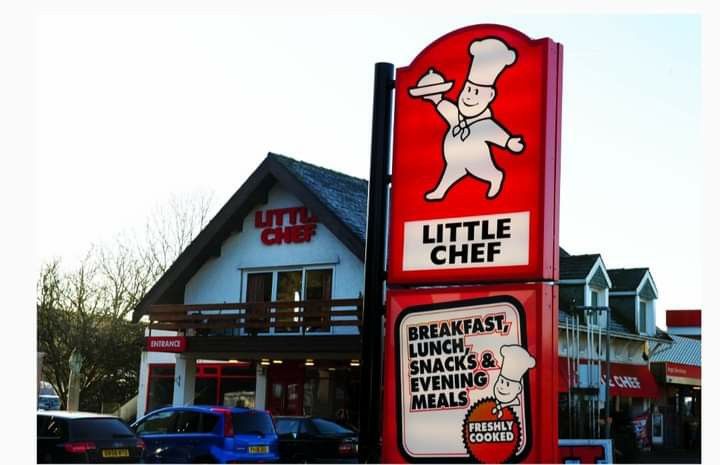
@YesterdaysBrit1 Used to always get the (mediocre) veggie burger from the Little Chef on the A69 between Carlisle and Newcastle on family trips down to see my grandparents. Those burgers were very underwhelming at the time, but I miss them now.
English
0
0
1
70
existentialgoof
existentialgoof@existentialgoof·
The article seems to be rehashing the fallacy that choice is only ever genuine and autonomous when it is occurring within a perfect, blissful utopia. In which case, it's not just choosing to die early that would be disqualified as an autonomous choice, but also abortion (which the author hypocritically supports on the grounds of autonomy), and just about every other choice. In the scenario provided, if the mother would prefer to die rather than continue to burden her children with the demands of her care, then that should be her choice. It shouldn't be overriden by someone who isn't involved in that scenario at all. And forcing her to live under conditions that are unacceptable to her and causing her great anguish is doing her no favour. Society shouldn't be 'sending signals' that other people get to decide which lives people should be forced to live. Each individual carries their own burden, and it isn't for anyone else to decide that it's a burden worth carrying.
English
1
1
8
95
Prof Katherine Sleeman
I understand support for the principle of assisted dying. I don’t understand support for this flawed Bill. Either @JohnSlinger is not aware that none of these organisations support the Bill Or He knows something that these 10 organisations / experts don’t Or He doesn’t care ?
English
2
8
32
792
John Slinger MP
John Slinger MP@JohnSlinger·
Good to be at the @dignityindying reception last night & hear inspiring words from my friend & colleague @kimleadbeater All the speeches were compassionate & strong. We’ll introduce the Bill again - we’ll win this time & give dignity & choice to people when they need it most
John Slinger MP tweet mediaJohn Slinger MP tweet mediaJohn Slinger MP tweet mediaJohn Slinger MP tweet media
English
45
12
43
16.5K
existentialgoof
existentialgoof@existentialgoof·
People have the choice to continue living, even in great pain, if there is no assisted dying. If there's no assisted dying and also no palliative care, then the only legally available option they're left with is the suffering. They may be able to attempt suicide, but without legal access to a reliable method, that isn't a guarantee, and will be a very painful and undignified experience if they do go ahead. If your argument is that, in the absence of palliative care, the person will choose assisted dying out of sheer desperation because their pain is so bad... Then I don't understand how you feel that you would be helping that person by depriving them of the only way to end their suffering. I can only see why that would make you feel better, because then the individual would be suffering out of sight and out of mind, without the right wing media fomenting a massive moral panic over it.
English
1
1
2
62