Jacob Trefethen

1.9K posts

Jacob Trefethen

Jacob Trefethen

@JacobTref

Managing director @coeff_giving, science

San Francisco, CA Beigetreten Haziran 2015
999 Folgt3.1K Follower
Angehefteter Tweet
Jacob Trefethen retweetet
Saloni
Saloni@salonium·
Today, new guidelines have expanded recommendations to take cholesterol-reducing medicines early! If you missed it, I'd highly recommend our episode on it: Experts generally agree that the earlier you take cholesterol-reducing medicines the better, and the lower you reduce cholesterol the better.
Saloni@salonium

New episode of HARD DRUGS! Should everyone be taking statins? Statins have revolutionised heart disease and they're one of many reasons for the long-term decline in cardiovascular mortality. Clinical trials suggest that the more you reduce LDL cholesterol levels, the more you reduce the risks of heart attacks and strokes, with no signal of harms even at the lowest levels. So scientists recommend the earlier they're taken the better, and the lower LDL levels you reach the better. Statins do have some rare side effects – such as muscle weakness and muscle loss in rare cases – but meta-analyses of RCTs find that most other side effects listed on statins' labels do not actually have higher risks than placebo. In this episode, @JacobTref and I chat about all this and much more! - Why it took almost a century for scientists to come to consensus on "the lipid hypothesis": that higher levels of plasma LDL cholesterol causes higher risks of heart disease and that reducing it saves lives. - Drugs that effectively reduce cholesterol levels beyond the effect of statins, such as PCSK9 inhibitors, most of which are monoclonal antibodies, as well as newer siRNA drugs and the macrocyclic peptide enlicitide, which recently completed phase 3 trials, and Lp(a) drugs. - What the future holds for cholesterol drugs Timestamps: 0:00:00 Introduction 13:35 The decline in heart disease mortality 31:02 Surprising cholesterol trivia 55:40 The lipid hypothesis: 7 lines of evidence for the harms of LDL cholesterol 1:22:15 How cholesterol works 1:30:40 The discovery of statins 1:48:44 Should everyone be on statins? 1:57:10 PCSK9 drugs and beyond 2:22:56 Summary: how we got here and the future of cholesterol drugs Watch, listen, or read wherever you get your podcasts. Spotify: open.spotify.com/episode/0vIXXO… Apple: podcasts.apple.com/gb/podcast/sho… YouTube: youtu.be/qieKVGF8r-Y Transcript: harddrugs.worksinprogress.co/episodes/shoul…

English
6
17
123
24K
Jacob Trefethen retweetet
George McGowan
George McGowan@GjMcGowan·
Come for the statins, stay for the singalong
Saloni@salonium

New episode of HARD DRUGS! Should everyone be taking statins? Statins have revolutionised heart disease and they're one of many reasons for the long-term decline in cardiovascular mortality. Clinical trials suggest that the more you reduce LDL cholesterol levels, the more you reduce the risks of heart attacks and strokes, with no signal of harms even at the lowest levels. So scientists recommend the earlier they're taken the better, and the lower LDL levels you reach the better. Statins do have some rare side effects – such as muscle weakness and muscle loss in rare cases – but meta-analyses of RCTs find that most other side effects listed on statins' labels do not actually have higher risks than placebo. In this episode, @JacobTref and I chat about all this and much more! - Why it took almost a century for scientists to come to consensus on "the lipid hypothesis": that higher levels of plasma LDL cholesterol causes higher risks of heart disease and that reducing it saves lives. - Drugs that effectively reduce cholesterol levels beyond the effect of statins, such as PCSK9 inhibitors, most of which are monoclonal antibodies, as well as newer siRNA drugs and the macrocyclic peptide enlicitide, which recently completed phase 3 trials, and Lp(a) drugs. - What the future holds for cholesterol drugs Timestamps: 0:00:00 Introduction 13:35 The decline in heart disease mortality 31:02 Surprising cholesterol trivia 55:40 The lipid hypothesis: 7 lines of evidence for the harms of LDL cholesterol 1:22:15 How cholesterol works 1:30:40 The discovery of statins 1:48:44 Should everyone be on statins? 1:57:10 PCSK9 drugs and beyond 2:22:56 Summary: how we got here and the future of cholesterol drugs Watch, listen, or read wherever you get your podcasts. Spotify: open.spotify.com/episode/0vIXXO… Apple: podcasts.apple.com/gb/podcast/sho… YouTube: youtu.be/qieKVGF8r-Y Transcript: harddrugs.worksinprogress.co/episodes/shoul…

English
1
2
9
1.1K
Jacob Trefethen retweetet
Saloni
Saloni@salonium·
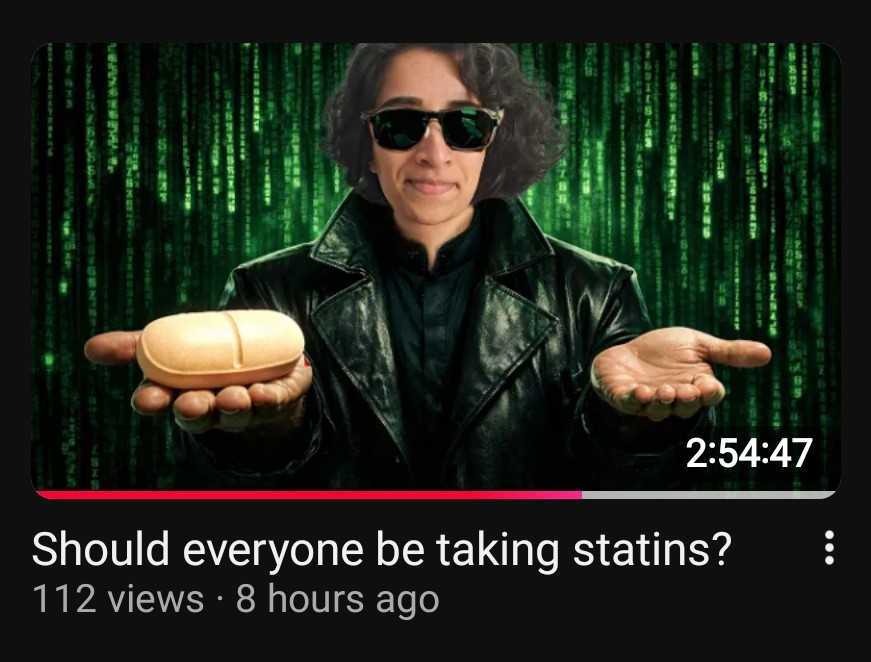
Please appreciate our YouTube thumbnail. Thank you.
Saloni tweet media
English
5
3
89
4.3K
Jacob Trefethen retweetet
Oscar Sykes
Oscar Sykes@OscarSykes7·
Cardiovascular disease is the leading cause of death worldwide, responsible for roughly a third of all global deaths. But I think in the coming decades we could see it shrink dramatically. We're seeing encouraging progress against essentially all the major risk factors High LDL cholesterol: Statins have massively reduced heart disease mortality. PCSK9 inhibitors can reduce LDL even further High Lp(a): Lp(a) is a genetic risk factor affecting about 20% of people globally. Levels are ~90% genetically determined, and until recently there was basically nothing you could do about it. Lifestyle changes don't work. But now there are five drugs in clinical trials showing 80-95% reductions in Lp(a). Phase 3 results expected this year and next High blood pressure: Already well-treated with existing drug classes (ACE inhibitors, ARBs, diuretics). New drugs like baxdrostat and lorundrostat are showing promise for resistant hypertension specifically Type 2 diabetes and obesity: In addition to established treatments like metformin and insulin, we now have GLP-1 receptor agonists (semaglutide, tirzepatide) and SGLT2 inhibitors Smoking: Global tobacco use has fallen from 1 in 3 adults in 2000 to 1 in 5 in 2024 Probably the most important thing now is expanding access, as some of these drugs are kind of expensive
Saloni@salonium

New episode of HARD DRUGS! Should everyone be taking statins? Statins have revolutionised heart disease and they're one of many reasons for the long-term decline in cardiovascular mortality. Clinical trials suggest that the more you reduce LDL cholesterol levels, the more you reduce the risks of heart attacks and strokes, with no signal of harms even at the lowest levels. So scientists recommend the earlier they're taken the better, and the lower LDL levels you reach the better. Statins do have some rare side effects – such as muscle weakness and muscle loss in rare cases – but meta-analyses of RCTs find that most other side effects listed on statins' labels do not actually have higher risks than placebo. In this episode, @JacobTref and I chat about all this and much more! - Why it took almost a century for scientists to come to consensus on "the lipid hypothesis": that higher levels of plasma LDL cholesterol causes higher risks of heart disease and that reducing it saves lives. - Drugs that effectively reduce cholesterol levels beyond the effect of statins, such as PCSK9 inhibitors, most of which are monoclonal antibodies, as well as newer siRNA drugs and the macrocyclic peptide enlicitide, which recently completed phase 3 trials, and Lp(a) drugs. - What the future holds for cholesterol drugs Timestamps: 0:00:00 Introduction 13:35 The decline in heart disease mortality 31:02 Surprising cholesterol trivia 55:40 The lipid hypothesis: 7 lines of evidence for the harms of LDL cholesterol 1:22:15 How cholesterol works 1:30:40 The discovery of statins 1:48:44 Should everyone be on statins? 1:57:10 PCSK9 drugs and beyond 2:22:56 Summary: how we got here and the future of cholesterol drugs Watch, listen, or read wherever you get your podcasts. Spotify: open.spotify.com/episode/0vIXXO… Apple: podcasts.apple.com/gb/podcast/sho… YouTube: youtu.be/qieKVGF8r-Y Transcript: harddrugs.worksinprogress.co/episodes/shoul…

English
0
2
14
5.7K
Jacob Trefethen retweetet
Leah Pierson
Leah Pierson@leah_pierson·
@JacobTref @salonium hahaha love being part of causal intellectual history!!!! But yeah, I know a lot of young doctors with normal lipid levels who take statins for long-term risk reduction, which I think says a lot about how well these drugs work. Glad you guys are talking about them!!
English
0
1
6
610
Jacob Trefethen
Jacob Trefethen@JacobTref·
@leah_pierson @salonium I remember hearing that from you a few years ago. You are probably in the causal intellectual history of this episode, uncited!
English
1
0
2
146
Leah Pierson
Leah Pierson@leah_pierson·
@salonium Excited to listen to this!!! I have thought for a while that people are sleeping on statins as a global health intervention—they massively reduce CVD risk, have rare side effects, involve relatively little monitoring, and are cheap.
English
2
0
4
740
Saloni
Saloni@salonium·
New episode of HARD DRUGS! Should everyone be taking statins? Statins have revolutionised heart disease and they're one of many reasons for the long-term decline in cardiovascular mortality. Clinical trials suggest that the more you reduce LDL cholesterol levels, the more you reduce the risks of heart attacks and strokes, with no signal of harms even at the lowest levels. So scientists recommend the earlier they're taken the better, and the lower LDL levels you reach the better. Statins do have some rare side effects – such as muscle weakness and muscle loss in rare cases – but meta-analyses of RCTs find that most other side effects listed on statins' labels do not actually have higher risks than placebo. In this episode, @JacobTref and I chat about all this and much more! - Why it took almost a century for scientists to come to consensus on "the lipid hypothesis": that higher levels of plasma LDL cholesterol causes higher risks of heart disease and that reducing it saves lives. - Drugs that effectively reduce cholesterol levels beyond the effect of statins, such as PCSK9 inhibitors, most of which are monoclonal antibodies, as well as newer siRNA drugs and the macrocyclic peptide enlicitide, which recently completed phase 3 trials, and Lp(a) drugs. - What the future holds for cholesterol drugs Timestamps: 0:00:00 Introduction 13:35 The decline in heart disease mortality 31:02 Surprising cholesterol trivia 55:40 The lipid hypothesis: 7 lines of evidence for the harms of LDL cholesterol 1:22:15 How cholesterol works 1:30:40 The discovery of statins 1:48:44 Should everyone be on statins? 1:57:10 PCSK9 drugs and beyond 2:22:56 Summary: how we got here and the future of cholesterol drugs Watch, listen, or read wherever you get your podcasts. Spotify: open.spotify.com/episode/0vIXXO… Apple: podcasts.apple.com/gb/podcast/sho… YouTube: youtu.be/qieKVGF8r-Y Transcript: harddrugs.worksinprogress.co/episodes/shoul…
YouTube video
YouTube
English
19
31
202
720.6K
Jacob Trefethen
Jacob Trefethen@JacobTref·
Heart disease is the leading cause of death worldwide, but it’s also one of medicine’s biggest success stories It took 100 years to build consensus on the lipid hypothesis, with many separate lines of inquiry What other life or death theories lie in wait of better evidence…?
Saloni@salonium

New episode of HARD DRUGS! Should everyone be taking statins? Statins have revolutionised heart disease and they're one of many reasons for the long-term decline in cardiovascular mortality. Clinical trials suggest that the more you reduce LDL cholesterol levels, the more you reduce the risks of heart attacks and strokes, with no signal of harms even at the lowest levels. So scientists recommend the earlier they're taken the better, and the lower LDL levels you reach the better. Statins do have some rare side effects – such as muscle weakness and muscle loss in rare cases – but meta-analyses of RCTs find that most other side effects listed on statins' labels do not actually have higher risks than placebo. In this episode, @JacobTref and I chat about all this and much more! - Why it took almost a century for scientists to come to consensus on "the lipid hypothesis": that higher levels of plasma LDL cholesterol causes higher risks of heart disease and that reducing it saves lives. - Drugs that effectively reduce cholesterol levels beyond the effect of statins, such as PCSK9 inhibitors, most of which are monoclonal antibodies, as well as newer siRNA drugs and the macrocyclic peptide enlicitide, which recently completed phase 3 trials, and Lp(a) drugs. - What the future holds for cholesterol drugs Timestamps: 0:00:00 Introduction 13:35 The decline in heart disease mortality 31:02 Surprising cholesterol trivia 55:40 The lipid hypothesis: 7 lines of evidence for the harms of LDL cholesterol 1:22:15 How cholesterol works 1:30:40 The discovery of statins 1:48:44 Should everyone be on statins? 1:57:10 PCSK9 drugs and beyond 2:22:56 Summary: how we got here and the future of cholesterol drugs Watch, listen, or read wherever you get your podcasts. Spotify: open.spotify.com/episode/0vIXXO… Apple: podcasts.apple.com/gb/podcast/sho… YouTube: youtu.be/qieKVGF8r-Y Transcript: harddrugs.worksinprogress.co/episodes/shoul…

English
1
1
9
2.1K
Jacob Trefethen retweetet
Alex Kesin
Alex Kesin@alexkesin·
Starting something new: Approved, a biotech podcast I'm co-hosting with Matthew Pech. Our first episode covers Amylin Pharmaceuticals: the pioneers of the GLP-1 drug class.
Alex Kesin tweet media
English
21
23
182
39.8K
Jacob Trefethen
Jacob Trefethen@JacobTref·
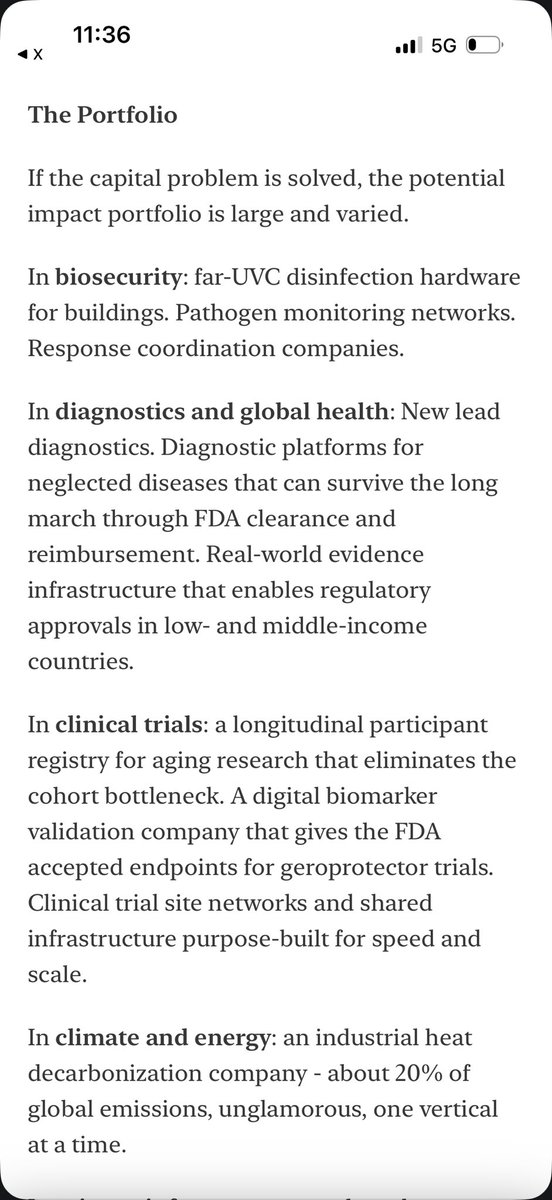
Worth reading in full for the example GMs, problems to work on, and principles behind the GM idea. Full stack blog post. The example of Henderson and smallpox eradication stressed me out. What other societal problems are solvable today, with more ambition and better management?
Jacob Trefethen tweet media
Nan Ransohoff@nanransohoff

New blog post: There should be ‘general managers’ for more of the world’s important problems There’s a surprisingly big category of problems that are ‘orphaned.’ By ‘orphaned’ I mean: you can’t point to a specific person or organization who thinks it’s their responsibility to deliver the outcome in its entirety. Lots of people talk about the problem, and often many work on slices of it. But if you asked: ‘is there a hyper-competent person waking up every day feeling accountable for making sure this gets solved?’—the answer is very often, ‘no.’ These problems exist across domains and at a variety of ‘altitudes.’ Indeed, some are perhaps better described as ‘things we want to be true’ rather than ‘problems.’ In any event, a few examples that have been on my mind recently: (1) Can we prevent infection from all respiratory pathogens (including the common cold)? (2) Can we make every new building in SF both serve its function and be beautiful? (3) Can we permanently fix the American west’s water problem? (4) Can we halve X risk? (5) Can we eliminate single-use plastic globally without making convenience trade-offs? (6) Can we make childcare costs so low that they’re a non-factor in deciding whether to have kids? In my opinion, there should be ‘general managers’—GMs—for problems like these. These are founder-types who feel personally responsible for delivering a specific outcome (vs field-building generally); hyper-competent leaders who will pull whatever levers necessary to achieve the defined outcome. Most companies wouldn’t let an important initiative go unmanned or without a ‘directly responsible individual’ — why are we OK not having GMs for even more wide-reaching problems? (Link to full post in reply)

English
0
2
11
2.3K
Jacob Trefethen retweetet
Saloni
Saloni@salonium·
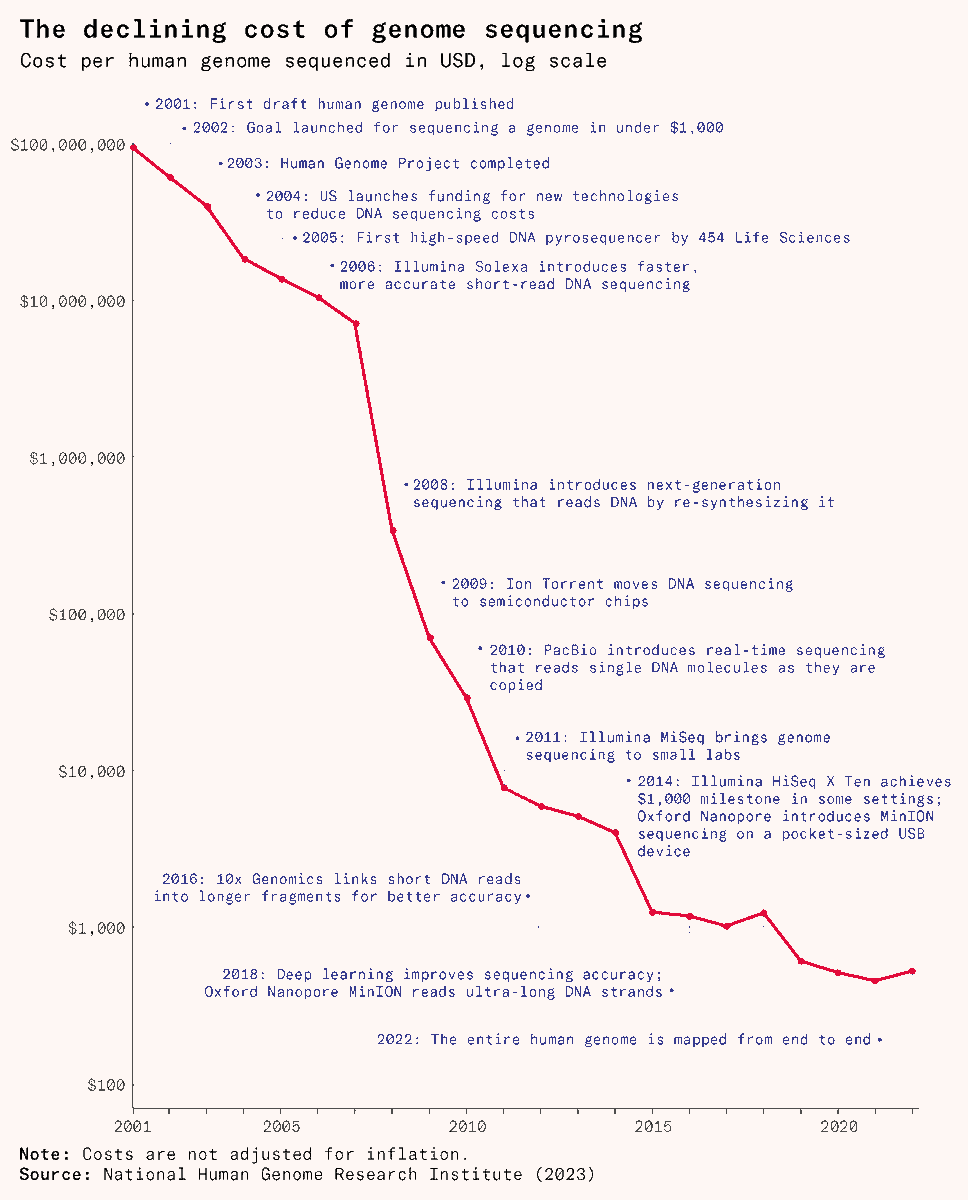
The cost of sequencing a human genome has fallen over 100,000 fold in nominal terms since 2001. In a new visualization, I've added some of the key advances in sequencing during that timeline:
Saloni tweet media
English
23
165
744
41.6K
Jacob Trefethen
Jacob Trefethen@JacobTref·
Here's some holiday listening, for those traveling this week. Episode 8 of Hard Drugs, and with that we're signing off for 2025.✌️ This is the episode I personally learned the most from while recording. A lot of midcentury American science, some big characters. Hope you enjoy!
Saloni@salonium

Hepatitis B is a tiny virus with just 4 genes. But it kills hundreds of thousands globally per year, mostly by infecting babies and causing liver disease or cancer over the following decades. In a new episode of HARD DRUGS, we tell the story of the hepatitis B vaccine, which became the first of many milestones: It was the first viral protein subunit vaccine, the first recombinant vaccine, and the first vaccine to prevent a type of cancer. Key stats: • Hepatitis B virus has just 4 genes, some of which overlap, making it one of the most genetically compact human pathogens • It has a very unusual life cycle for a DNA virus: it forms a stable mini-chromosome (cccDNA) inside liver cell nuclei, and uses reverse transcription, similar to HIV. • It integrates itself into your liver cells' DNA, causes repeated cycles of cell damage and repair, and inflammation that eventually leads to cancer. • During infection, the virus produces ~500 quadrillion (5 x 10¹⁷) copies of its surface antigen in the bloodstream. They act as decoys, soaking up our antibodies and helping the virus evade immunity, and it sticks around in our cells for decades. Over time, it causes one of the most common and deadliest liver diseases and cancers: ~300 million people worldwide are living with chronic hepatitis B ~600,000 people die from hepatitis B each year, mostly from cirrhosis and liver cancer While only ~5–10% of adults infected develop chronic infection, ~90% of infants infected at birth do. Around a third of those infants will eventually die from liver failure, cirrhosis, or liver cancer. But there's a vaccine against it: the hepatitis B vaccine. It is so efficient that it helps us block the virus by training us to recognize just one protein (the surface antigen) quickly, before it can overwhelm us. The first hepatitis B vaccine (1981) was made from human plasma, through multiple brutal inactivation steps that kill other microbes and contaminants. The second hepatitis B vaccine (1986) was the first recombinant DNA vaccine ever, made by factories of yeast cells churning out the antigen in bulk. The payoff has been enormous. Large cluster randomized trials have shown that hepatitis B vaccination reduces liver cancer rates by 85% and deaths by 70%. Universal vaccination of newborns has led to massive drops in hepatitis cases, liver failure, and liver cancer in younger generations. As the first viral protein subunit vaccine, it was built upon a series of breakthroughs in immunology, advances in virology and vaccinology. In this episode, we trace the discovery of hepatitis, hepatitis B virus, the development of vaccines, and their impact. And we explore how we even got to subunit vaccines at all: the great battle of immunology, the discovery of antibodies and their incredible diversity, and how that understanding could be used to test, study, and build better vaccines. If you want to understand how modern vaccines actually came to be, or why hepatitis B vaccination still matters today, this one’s for you. Timestamps: 0:00:00 Introducing the hepatitis B vaccine 0:15:46 The mysterious trail of jaundice outbreaks and the search for an invisible liver pathogen 0:28:03 How a tiny virus causes cirrhosis and liver cancer, and the struggle to identify it 0:53:19 How Maurice Hilleman developed the safest, purest vaccine in history 1:17:36 Turning the hep B vaccine recombinant 1:29:14 The impact of hep B vaccination 1:39:27 How we got here: the 19th century battle for the soul of immunology 2:01:34 How the body builds an infinite library of defenses 2:19:25 Why scientists thought immunology was solved in the 1960s 2:30:57 How better immunology led to precise subunit vaccines 2:45:33 Conclusion

English
0
2
10
2.4K
Jacob Trefethen retweetet
Caleb Watney
Caleb Watney@calebwatney·
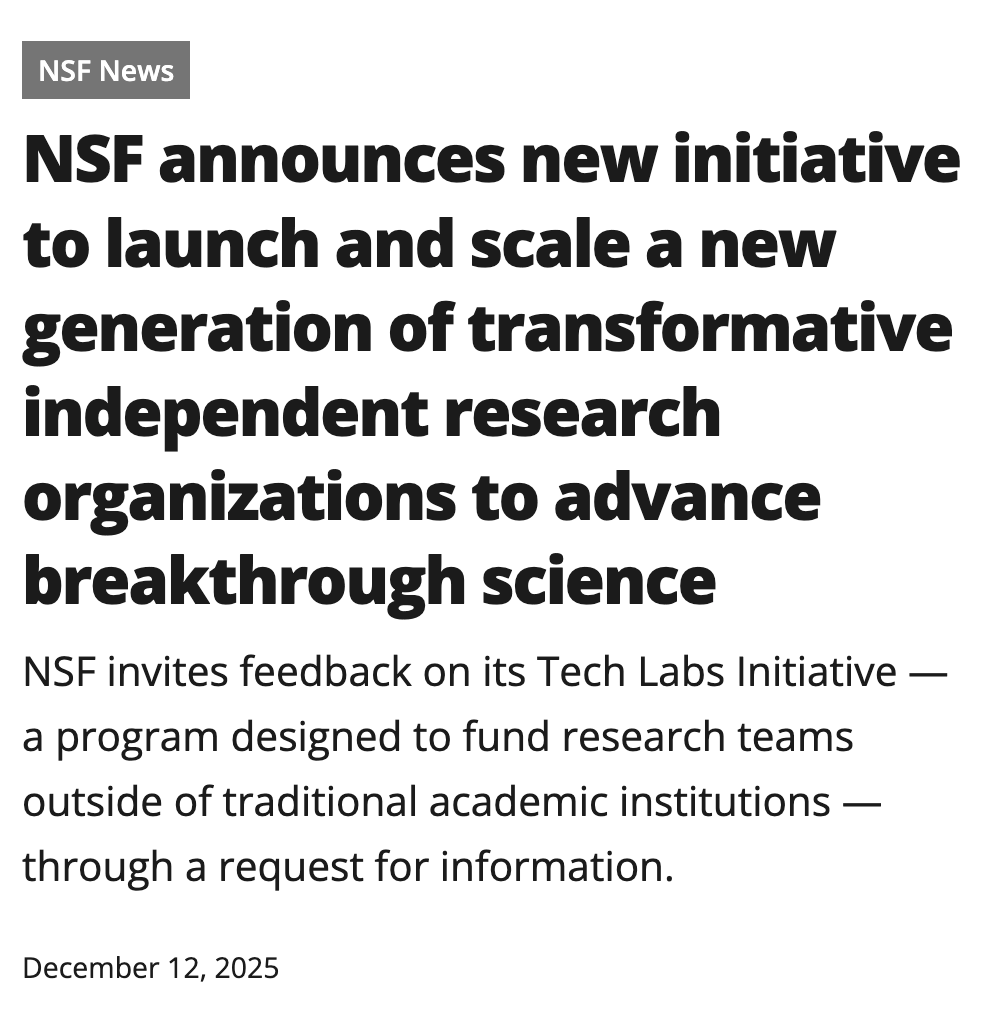
NSF is launching one of the most ambitious experiments in federal science funding in 75 years. The program is called Tech Labs, and the goal is to invest ~$1 billion to seed new institutions of science and technology for the 21st century. Instead of funding projects, the NSF will fund teams. I’m in the @WSJ today with a piece on why this matters (gift link): wsj.com/opinion/scienc… Here’s the basic case: 1) Most federal science funding takes the form of small, incremental, project-based grants to individual scientists at universities. 2) The typical NSF grant is ~$250k/year to a professor with a couple of grad students and modest equipment over a few years. This is a perfectly reasonable way to fund some science, but it's not the only way. 3) A healthy portfolio needs more than one instrument. Project-based grants are like bonds: low-risk, steady, safe. But no one trying to maximize long-run returns would put 70% of their portfolio in bonds. 4) Yet that's basically what our civilian science funding portfolio looks like. Around 3/4ths of NSF and NIH grant funding is project-based. 5) Tech Labs is NSF's attempt to diversify that portfolio. The Tech Labs program is aiming for: - $10-50 million/year awards per team - 5+ year commitments - Measuring impact through advancement up the Tech Readiness Level scale rather than papers published - Up to ~$1 billion for the program - Supporting research orgs outside traditional university structures 6) Scientific production looks very different than it did when the NSF launched 75 years ago. The lone genius at the chalkboard can only do so much. Frontier science + tech today is increasingly team-based, interdisciplinary, and infrastructure-intensive. 7) The team behind AlphaFold just won the Nobel Prize in Chemistry. It came from DeepMind, an AI lab with sustained institutional funding and full-time research teams. It would be near-impossible to fund this kind of work on a 3-year academic grant. 8) Same pattern at the @arcinstitute (8-year appointments, cross-cutting technical support teams) and @HHMIJanelia (massive infrastructure investments to map the complete fly brain). Ambitious science increasingly needs core institutional support, not a series of project grants stapled together. 9) Similarly, Focused Research Organizations (@Convergent_FROs) have showcased a new model supporting teams with concrete missions and predefined milestones to unlock new funding. 10) There’s a whole ecosystem of philanthropically-supported centers doing amazing research, like the Institute for Protein Design, the Allen Institute, the Flatiron Institute, the Whitehead Institute, the Wyss Institute, the Broad — the list goes on. 11) But philanthropy can’t reshape American science alone. The federal government spends close to $200 billion each year on research and development, an order of magnitude more than even the largest foundations. 12) If we want to change how science gets done at scale, federal funding has to evolve. And the NSF and NIH don’t have dedicated funding mechanisms to support or seed these sorts of organizations. 13) Earlier this year, I started working on a related framework called “X-Labs” that built on all this exciting institutional experimentation that’s been happening within the private and philanthropic sectors. It’s time for the federal government to step into the arena: rebuilding.tech/posts/launchin… 14) Traditional university grants are still important for training the next generation of scientists and for certain kinds of curiosity-driven work. But after 75 years of putting nearly everything into one model, we should try something different. 15) And key program details are still being developed! You can reply to the Request for Information with suggestions or feedback on how to design this program here: nsf.gov/news/nsf-annou… 16) Science is supposed to be about experimentation. Science funding should be too.
Caleb Watney tweet media
English
77
374
1.4K
698.6K
Jacob Trefethen retweetet
Lauren Gilbert
Lauren Gilbert@notanastronomer·
.@indevmag's first call for pitches is up! Tell us a compelling story about how something works — or fails to work — in the developing world. 2k-4k words, rolling review through Jan. 12
English
8
32
67
28.1K
Jacob Trefethen retweetet
seemay chou
seemay chou@seemaychou·
Excited to finally share about Astera Neuro, our new neuroscience research program @AsteraInstitute with the amazing @doristsao taking the leap to lead it. We’re seeking to understand how the brain constructs conscious experience and what those principles could teach us about building intelligence. @JedMcCaleb and I are all-in on this effort. The neuro field is exploding at the interface of many disciplines. And it has a chance to make real world impact that affects everyone's lives in really fundamental ways. Lots of new people and POVs are joining this ecosystem, which is especially exciting to me personally as a scientist wanting to see change in our scientific institutions. It creates a opportunity to build new innovative science practices, from funding to publishing to collaboration, rather than fighting around the edges of status quo. Huge technological tailwind for all of this too. This is going to be an amazing playground for experimentation and innovation at all levels, and I feel so lucky to be able to support @doristsao as she and @JedMcCaleb expand this effort. LFG
Astera Institute@AsteraInstitute

We’re launching Astera Neuro, a new neuroscience research effort led by @doristsao as Chief Scientist. Our aim is to unravel a profound scientific mystery: how the brain transforms sensory inputs into conscious experience. Advancing this work could illuminate the computational principles that drive perception and cognition and inspire approaches for neuroscience-informed AI research, potentially generating new pathways to AGI. Astera will support this work with $600M+ over the next decade. Read more: astera.org/neuroscientist…

English
12
13
122
24.9K
Jacob Trefethen retweetet
Coefficient Giving
Coefficient Giving@coeff_giving·
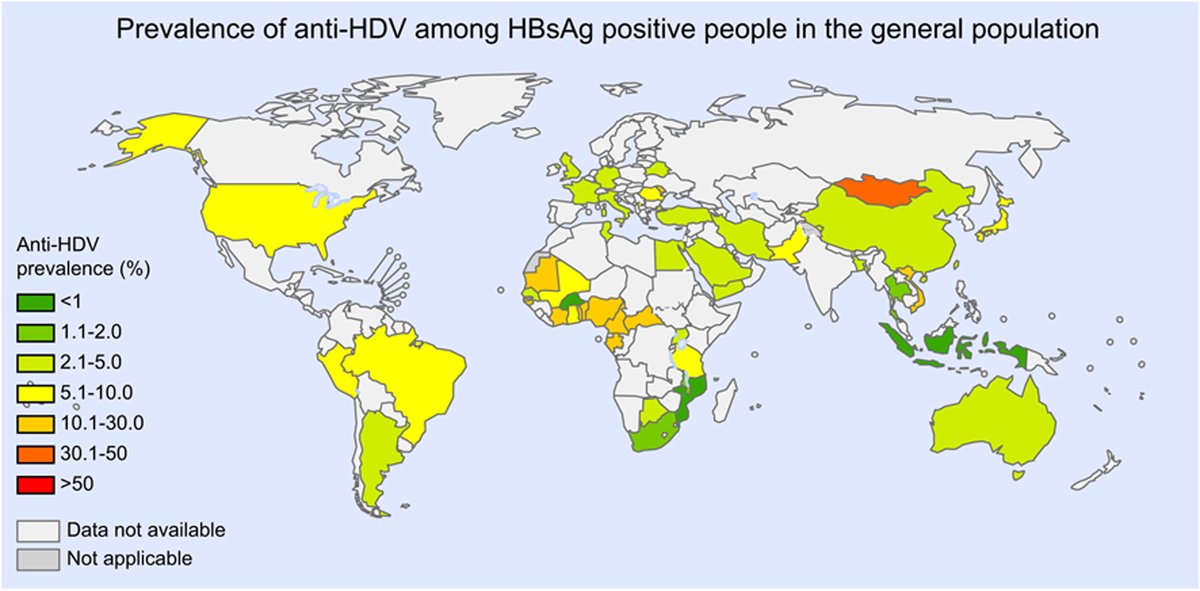
Hepatitis Delta is a sorely neglected health condition, even relative to other hepatitis variants. But are there good ways for funders to make progress? Douglas Chukwu Junior investigated the issue, and shares his findings in a new shallow investigation (link in thread).
Coefficient Giving tweet media
English
1
3
10
1.5K