Doris Tsao

1.2K posts

Doris Tsao banner
Doris Tsao

Doris Tsao

@doristsao

cortical geometer

Berkeley, CA Katılım Ekim 2016
462 Takip Edilen9.6K Takipçiler
Sabitlenmiş Tweet
Doris Tsao
Doris Tsao@doristsao·
I am deeply excited to share that I will be joining @AsteraInstitute to start a new effort to understand how the brain generates consciousness and intelligence.
Astera Institute@AsteraInstitute

We’re launching Astera Neuro, a new neuroscience research effort led by @doristsao as Chief Scientist. Our aim is to unravel a profound scientific mystery: how the brain transforms sensory inputs into conscious experience. Advancing this work could illuminate the computational principles that drive perception and cognition and inspire approaches for neuroscience-informed AI research, potentially generating new pathways to AGI. Astera will support this work with $600M+ over the next decade. Read more: astera.org/neuroscientist…

English
67
67
570
155.2K
Doris Tsao
Doris Tsao@doristsao·
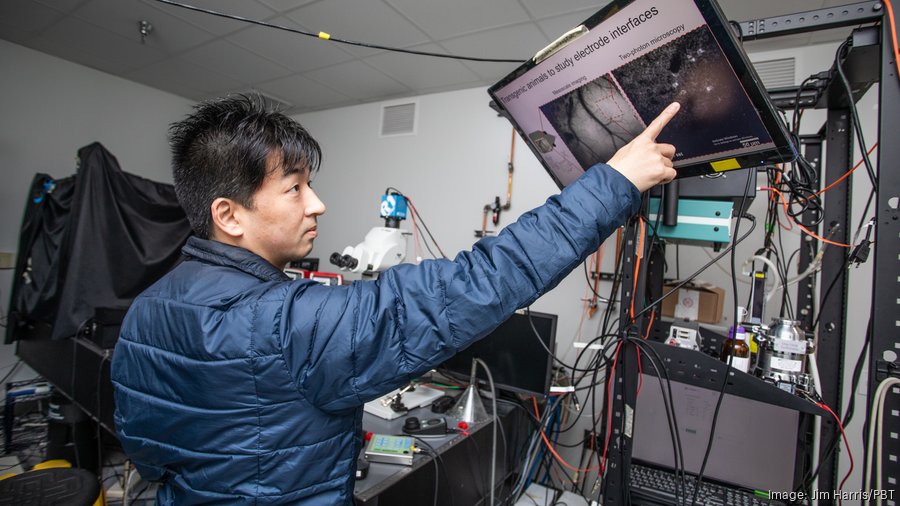
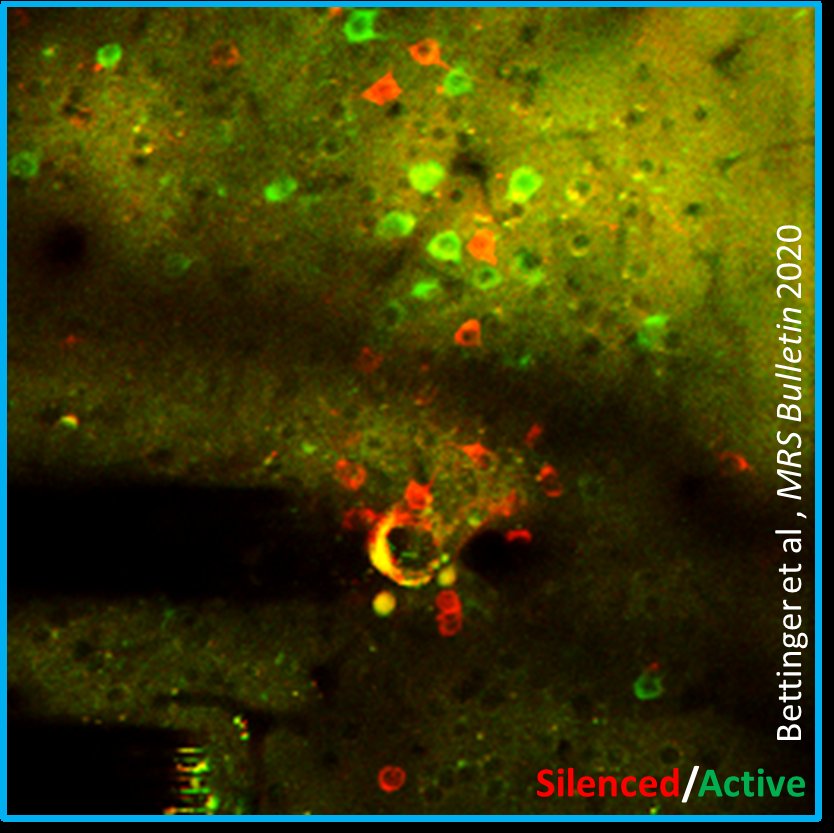
Huge gratitude to Valentina Emiliani @EmilianiLab, Eirini Papagiakoumou, and the incredible lecturers and TAs of the course on “All-Optical control of brain functioning with Optogenetics and multi-photon microscopy” here in Paris. The class took us on a deep dive into 2p imaging and holography--starting from the basics of how a lens works (I did not know a lens computes a fourier transform!), and progressing to advanced methods including 3d holography with temporal focusing, voltage imaging, tricks to minimize heating, etc. We got hands-on experience though an amazing set of labs (including closed loop feedback holographic stimulation through a GRIN lens in a freely moving mouse). The entire experience was incredible, and I highly recommend for anyone interested in this frontier of neurotechnology. It was so much fun to be a student again!
Doris Tsao tweet mediaDoris Tsao tweet media
English
1
2
34
3K
Doris Tsao retweetledi
Sebastian Seung
Sebastian Seung@SebastianSeung·
TL;DR: “A lie can travel half way around the world while the truth is putting on its shoes.” 😊
Kenneth Hayworth@KennethHayworth

So, some people are asking me why this EON fly video doesn’t show real ‘uploading’ since it does simulate a real connectome. The most important reason is that the functional parameters that define the dynamic behavior of individual neuron and synapse types in the connectome are unknown. Instead, they used an existing model (nature.com/articles/s4158…) which substitutes these with guessed parameters and grossly simplified dynamics. As made clear in that older paper, these are not sufficient to recreate the activity patterns that would be seen in the real fly. The simplified dynamics would not, for example, be able to choreograph the timing of leg muscles during walking or grooming, or the dynamics of the compass neurons encoding the fly’s heading direction, or the myriad other neuronal dynamics that make up the fly ‘mind’. So not an ‘upload’ by any reasonable definition. In fact, the simplified dynamics they used have only been demonstrated to approximate gross correlations along major sensory-motor pathways for a handful of neurons. For example: activating a sugar sensing neuron causes gross downstream activation that elevates the activity of feeding neurons. It is this handful of very, very crude and basic correlations in the simulated connectome that are being used to drive the EON simulated fly. If they had said that from the start, then I would have had no issue. But instead, they made the bold claim that they had “uploaded a fly” and presented a video of said fly walking over a landscape with highly articulate legs, visually navigating through the terrain to a food source, grooming its antenna with eerily fly-like leg motions, etc. Any reasonable layperson would assume that these visually exciting articulations are the ones being controlled by the simulated brain’s dynamics instead of being faked by computational add-on routines. There are now many secondary reports of this on YouTube and all of them seem to make this reasonable assumption (e.g. youtube.com/shorts/Z7NNP1Z…). And who could blame them? Many neuroscientists also made that assumption before EON started to spell out what was really behind the video millions of views and over a day later. To make clearer just how misleading EON Systems’ video is and how outlandishly laughable their ‘uploading’ claim is, below is an imagined back-and-forth discussion between a [Reasonable Layperson] and a [Neuroscientist] trying to explain to them what is really behind the video: [Reasonable Layperson] “Look at the complicated leg motions as the fly walks… the timing of all those dozens of individual muscles being controlled by the dynamics of the simulated neurons… and they say that they used no reinforcement learning to tune parameters, just the connectome… that is really impressive!” [Neuroscientist] “Well actually no… those leg movements are actually coming from a program unrelated to the connectome. The connectome used didn’t even include the central pattern generator circuits in the ventral nerve cord responsible for controlling leg muscles.” [Reasonable Layperson] “Oh… so in what sense is the simulated connectome controlling walking?” [Neuroscientist] “It looks like they just found a few neurons in the brain connectome that are correlated with right/left/forward motion and used these to ‘steer’ the pretend walking routine.” [Reasonable Layperson] “Oh… But the activations of those ‘steering’ neurons are reflecting the complicated dynamics of tens of thousands of simulated neurons in the fly visual system as it moves through the virtual world, avoiding objects and heading toward its visual goal, right?” [Neuroscientist] “Well actually no … The visual system and virtual world are essentially ‘decoration’… the flashing dynamic neural responses as the fly moves through the virtual environment are designed to give the viewer the impression that the simulated fly is actually seeing the world and making walking decisions based on those visual responses. But, in fact, they could turn off the lights and the fly would behave identically.” [Reasonable Layperson] “Oh… so how does the fly walk toward the food then?” [Neuroscientist] “Well… it looks like they simply imposed an odor gradient in the virtual environment that is centered on the virtual food. The fly has two sets of odor receptors (right and left) that sense this gradient and the activation of these in the connectome is correlated with the activation of the ‘steering’ neurons. So if the left odor neuron activates more than the right then the fly steers left.” [Reasonable Layperson] “Oh… so it is like one of those toy cars that moves toward a light because it has right and left light sensors cross-connected to right and left motors… Gee, I thought a fly was more complicated than that.” [Neuroscientist] “Well actually a real fly is. Real flies have dozens of behavioral states that allow intelligent behavior in a complicated visual and sensory environment. In fact, a real fly contains a set of neurons which act as an internal compass updated by the visual environment and the fly’s walking.” [Reasonable Layperson] “Oh… and their connectome has those internal compass neurons?” [Neuroscientist] “Yes. They used the full brain connectome that contains those compass neurons.” [Reasonable Layperson] “...And their compass neuron activations are tracking the visual environment just like in the real fly?” [Neuroscientist] “Oh sweet summer child… those compass neurons exist in their connectome simulation, but no one knows enough about their functional parameters (synaptic weights, time constants, etc.) to simulate them accurately. They light up in pretty patterns totally unrelated to how they would in a real fly walking through that visual world.” [Reasonable Layperson] “Oh… and the complicated leg movements it shows during antenna grooming… is that also just a faked recording?” [Neuroscientist] “Yes. All the complicated leg motions shown during grooming are faked by a hard-coded program. But they turn that fake routine on or off by looking at some neurons in the connectome that are correlated with actual grooming behavior triggered by dust accumulation on the antenna… well really they fake the dust too by just activating a set of neurons after a delay.” [Reasonable Layperson] “And what did EON Systems do? Did they acquire the connectome? Did they determine the neurotransmitter types? Did they do the calcium imaging experiments to determine the steering and grooming neurons? Did they make the mechanical fly model?” [Neuroscientist] “No. Those were all done by real labs who were kind enough to carefully write up their results in open journals and to post their results and code openly online…. It looks like Eon Systems just took their code and put it together with a virtual environment designed specifically to trick viewers by triggering behaviors in misleading ways.”

English
1
8
70
8.5K
Doris Tsao retweetledi
seemay chou
seemay chou@seemaychou·
I'm personally v excited about this competition. Hope it amplifies critical dialogue among scientists into a more open and constructive space that funders/policy makers help enable experimentation around. Metascience should involve more scientists! asterainstitute.substack.com/p/identifying-…
Astera Institute@AsteraInstitute

And finally scientists -- share your hypotheses for structural or systemic bottlenecks that we could run experiments on. New essay competition dropping today to give you a voice: asterainstitute.substack.com/p/identifying-…

English
1
8
38
7K
Doris Tsao
Doris Tsao@doristsao·
Are you saying it may be impossible to understand the brain? It's way too early to concede this, no?Even two layer transformers have beautiful mathematical properties that we are just scratching the surface of (as I learned from mind-blowing recent talk by @cashewmake2 on grokking). My basic reason for believing the brain is understandable is the fundamental compositionality of perception and thought. This is also why I think it's better to go broad first rather than deep. I bet there is a lot of repetitive structure (essentially, columns) where we just need one. But we need to understand the logic of the whole first.
English
1
0
17
1.3K
Kording Lab 🦖
Kording Lab 🦖@KordingLab·
I think the key pushback on this logic - as much as I love it coming from a normative angle - is that it will only work if the algorithm implemented in the brain is "simple", if it is human understandable. Imaging-to-simulation neither requires understandability nor promises it.
Doris Tsao@doristsao

My thoughts on connectomics and upload: 1) there is zero question connectomes are invaluable, and we need to get them for mouse, monkey, and human 2) the human, or even monkey, connectome seems a long ways off given costs (roughly $1/neuron). The projectome (map of all the axons) seems eminently reachable and should be a top priority imho 3) but even having the full connectome would only tell you numbers of synapses, not actual synaptic weights, and the two can be hugely divergent (eg only 5% of synapses onto V1 layer 4 neurons come from thalamus, even though this is the major driving input) 4) given #2 & #3, I think we can get to upload in the sense of building a functionally equivalent organism much faster through understanding the algorithms of the primate brain than through blind copying 5) in putting together something as complex as the human brain we would definitely want to check that the various pieces work as we go, which we can only do if we understand these pieces 6) I don't think upload in the sense of blindly creating a digital copy is the path to the abundant transhumanist future--actual understanding of brain structures so we can intelligently interface with them, and emulate their function in code without copying all the details, is. All to say, we need functional understanding to go hand in hand with anatomical mapping!

English
5
6
58
11.2K
Doris Tsao
Doris Tsao@doristsao·
As efforts get underway to map the mouse, monkey and human connectomes, backed by private capital, I just want to shout out how important it will be for this information to be open and freely available to all. Companies can use it in their own ways, but the map doesn't belong to any person, company, or country. It's our collective inheritance from Mother Nature.
Adam Marblestone@AdamMarblestone

To accelerate progress, the field should obviously proceed (at least in the early pre-competitive phases) with replicable science with methods and codes documented and explained, not just videos / teasers. Last October, @E11BIO (led by @Andrew_C_Payne) released open methods for a family of optical connectomics approaches called PRISM, which have the potential to massively reduce the cost of acquiring connectomics data x.com/Andrew_C_Payne… PRISM will integrate with AI driven methods to further reduce the cost of proofreading with AI, e.g. PATHFINDER (Januszewski, Viren Jain @stardazed0, and colleagues): biorxiv.org/content/10.110…

English
3
21
123
14.7K
Doris Tsao retweetledi
Surya Ganguli
Surya Ganguli@SuryaGanguli·
@doristsao Definitely - if you seek to understand function, study function.
English
0
4
27
4.9K
Doris Tsao
Doris Tsao@doristsao·
My thoughts on connectomics and upload: 1) there is zero question connectomes are invaluable, and we need to get them for mouse, monkey, and human 2) the human, or even monkey, connectome seems a long ways off given costs (roughly $1/neuron). The projectome (map of all the axons) seems eminently reachable and should be a top priority imho 3) but even having the full connectome would only tell you numbers of synapses, not actual synaptic weights, and the two can be hugely divergent (eg only 5% of synapses onto V1 layer 4 neurons come from thalamus, even though this is the major driving input) 4) given #2 & #3, I think we can get to upload in the sense of building a functionally equivalent organism much faster through understanding the algorithms of the primate brain than through blind copying 5) in putting together something as complex as the human brain we would definitely want to check that the various pieces work as we go, which we can only do if we understand these pieces 6) I don't think upload in the sense of blindly creating a digital copy is the path to the abundant transhumanist future--actual understanding of brain structures so we can intelligently interface with them, and emulate their function in code without copying all the details, is. All to say, we need functional understanding to go hand in hand with anatomical mapping!
Adam Marblestone@AdamMarblestone

You may have noticed some "holy $%@#" tweets on fly brain emulation. So is this a game-changer or a nothing-burger? Read on to find out...

English
23
48
304
58.4K
Doris Tsao retweetledi
Michael Andregg
Michael Andregg@michaelandregg·
We've uploaded a fruit fly. We took the @FlyWireNews connectome of the fruit fly brain, applied a simple neuron model (@Philip_Shiu Nature 2024) and used it to control a MuJoCo physics-simulated body, closing the loop from neural activation to action. A few things I want to say about what this means and where we're going at @eonsys. 🧵
English
332
1.3K
8K
1.7M
Doris Tsao retweetledi
James Fickel
James Fickel@jamesfickel·
The Foundations of Tomorrow The transition to AGI needs to go well. We’ve deployed $350M+ to neuroAI, longevity, and more with the belief that the brain is the key to better, safer AGI. This is the first of many overview posts on our thinking. blog.amaranth.foundation/p/the-foundati…
English
23
58
491
157.7K
Doris Tsao retweetledi
Jed McCaleb
Jed McCaleb@JedMcCaleb·
Very excited to bring Dileep onto the team as our Head of AI. With him and Doris, we have two incredible minds going after both sides of the same question: how does intelligence arise in the brain, and can we use that to build safe AGI? If you want to investigate what's missing from current approaches and help build something better - we're hiring: astera.org/careers/
Astera Institute@AsteraInstitute

1/ We’re excited that @dileeplearning is joining @Astera as Head of AI, leading our AGI research division. With decades of neuroscience-informed AI experience, the team will ask whether brain-inspired architectures enable safer, more efficient AGI.

English
9
34
246
23.5K
Doris Tsao retweetledi
Astera Institute
Astera Institute@AsteraInstitute·
1/ We’re excited that @dileeplearning is joining @Astera as Head of AI, leading our AGI research division. With decades of neuroscience-informed AI experience, the team will ask whether brain-inspired architectures enable safer, more efficient AGI.
English
1
8
75
32.5K
Doris Tsao
Doris Tsao@doristsao·
I’m truly excited about today’s announcement that @dileeplearning is joining @AsteraInstitute to lead the AGI research program. I feel incredibly lucky that I’ll get to work alongside him and his team on the shared quest to understand intelligence and consciousness, with AGI and neuroscience advancing side by side. As he writes in his blog post, there is no shortcut. Only through deep, humble engagement with core structures of intelligence, including object binding, knowledge schemas, learning, memory, columnar architecture, will we understand the brain’s solution and move closer to human level AGI. I encourage everyone to read the post. If these ideas resonate with you, experimentally or computationally, please reach out.
Dileep George@dileeplearning

x.com/i/article/2026…

English
5
28
205
16K
Doris Tsao
Doris Tsao@doristsao·
Come be my colleague! Apply to the Astera Fellows program! You will get a great salary AND very generous resources to start your own independent research program. A core area of interest is neuroscience & AI. Please RT
seemay chou@seemaychou

Also! ☝️Apps for our new residency cohort (salary AND research budgets included) are now live astera.org/residency/ -- technical innovators, check it out to see if we might be a great home for your ideas/work

English
4
27
125
22.3K
Doris Tsao
Doris Tsao@doristsao·
Seemay Chou and Jed McCaleb explain why they’re focusing @AsteraInstitute's mission on Intelligence and AI-enabled life science. I feel so lucky to work with these visionaries--totally committed and truly in the trenches. As they say, “We engage directly with technical details, which allows us to embrace more uncertainty.” @seemaychou @JedMcCaleb
seemay chou@seemaychou

We're rolling out a new chapter of @AsteraInstitute and excited to finally share about some new folks/efforts over the next few weeks. Some rationale from me and @JedMcCaleb on why we're revamping our philanthropy: astera.org/sharpening-ast…

English
1
2
33
4.3K
Doris Tsao
Doris Tsao@doristsao·
including yours truly
English
2
0
46
3.6K