John Cramer, MD

262 posts

John Cramer, MD

John Cramer, MD

@Jdcramer

Assistant Professor at Wayne State University. Head & Neck Oncologic Surgeon. Health services, quality improvement & outcomes researcher. All opinions my own.

Detroit, MI Beigetreten Haziran 2009
195 Folgt283 Follower
John Cramer, MD
John Cramer, MD@Jdcramer·
PFS ≠ OS. ORR ≠ OS. No validated surrogate for OS exists in R/M HNSCC. LEAP-010: if lenvatinib had been submitted for accelerated approval on ORR or PFS, we'd be in trouble. OS must be the primary endpoint in HNSCC IO trials.
English
0
0
0
36
John Cramer, MD
John Cramer, MD@Jdcramer·
LEAP-010 results are in: lenvatinib + pembrolizumab improved ORR (+20%) and PFS (HR 0.64) vs pembro alone in R/M HNSCC — but OS was numerically worse (HR 1.15). A cautionary tale about surrogate endpoints. ascopubs.org/doi/10.1200/JC…
English
1
0
1
101
John Cramer, MD retweetet
Anastasios Maniakas, MD, PhD, FRCSC
🚨 JAMA flags admin and access delays as safety hazards in care. In #headandneckcancer, this can derail trials & immunotherapy starts, likely worsening outcomes. Insightful viewpoint by Drs. Hassid and Kaafarani #JAMA #OncologySafety #Oncology #PatientSafety @MDAndersonnews
JAMA@JAMA_current

💬 Viewpoint: Administrative delays and access failures introduce patient safety risks but are rarely treated as safety events in health systems. ja.ma/4ljWHSu

English
1
1
3
308
John Cramer, MD retweetet
Melvin LK CHUA | FRCR, PhD, FASCO
7y in the making!!! As I always spoke about this, the field of #NasopharyngealCarcinoma leads the way in driving individualised treatment in #HeadNeckCancer When we published our initial idea of stratifying patients by their early treatment response using #EBVDNA back then in 2018, we decided to test our idea formally with a trial, and kudos to a very talented #biostats and willing collaborators, we came up with EP-STAR Very glad to see it finally published today in @Nature 🍸 nature.com/articles/s4158…
English
5
27
70
5.3K
John Cramer, MD retweetet
Chris Childers
Chris Childers@cchildersmd·
In 2024 we showed that Modifier 22 doesn't actually pay more for complex cases owing to higher denial rates. The @AmCollSurgeons GSCRC committee has been working on this issue ever since... see our summary of what we have tried to do and what's next: jamanetwork.com/journals/jamas…
English
5
3
23
4.1K
John Cramer, MD
John Cramer, MD@Jdcramer·
My take: The study’s strongest message isn’t “surrogate endpoint solved.” It’s “a 24-month checkpoint powerfully separates trajectories.” Use it to detect signal earlier—not to declare victory or stop measuring late harms.
English
0
0
0
39
John Cramer, MD
John Cramer, MD@Jdcramer·
Surrogate endpoints can speed answers—but they can also blind us. In HPV+ OPSCC, does being progression-free 24 months after RT mean we’re basically “done,” or are we missing the real story: late toxicity and non-cancer mortality? pubmed.ncbi.nlm.nih.gov/41643696/
English
1
0
0
77
John Cramer, MD
John Cramer, MD@Jdcramer·
@DrScottFortune @smithnephew Really interesting discussion. Most of the intracapsular data I’ve seen is pediatric-heavy—how confident are you that the bleeding/recovery benefits generalize to adults?
English
1
0
0
16
John Cramer, MD retweetet
Hannah Abrams, MD
Hannah Abrams, MD@HannahRAbrams·
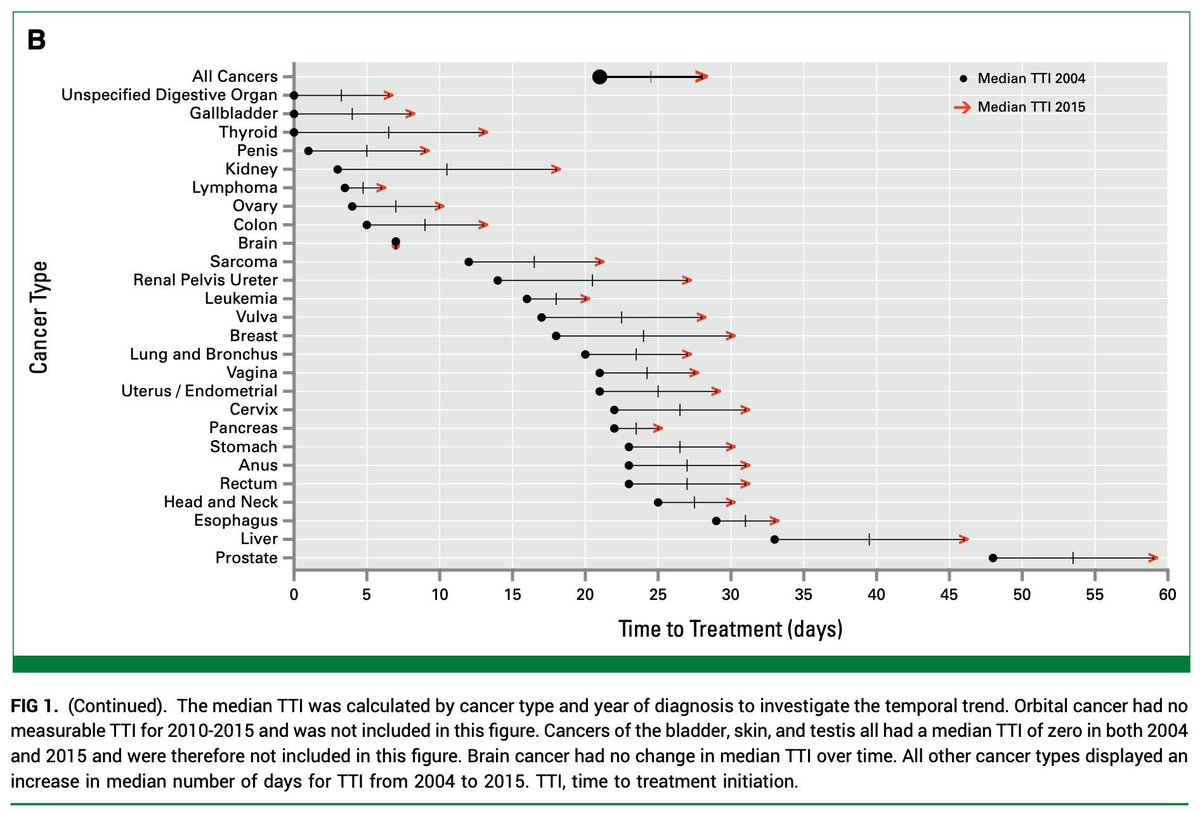
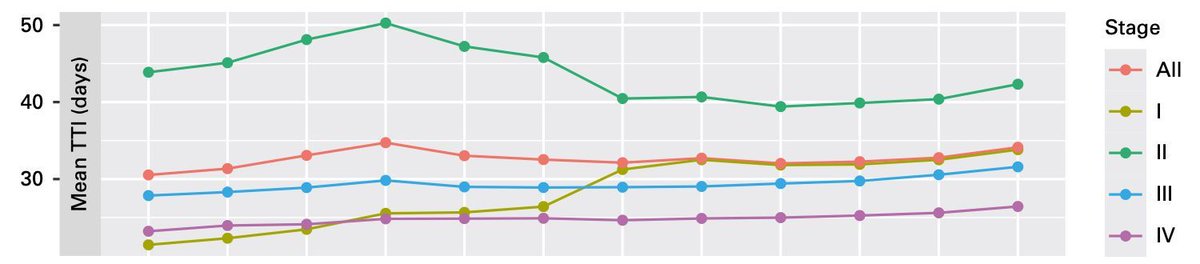
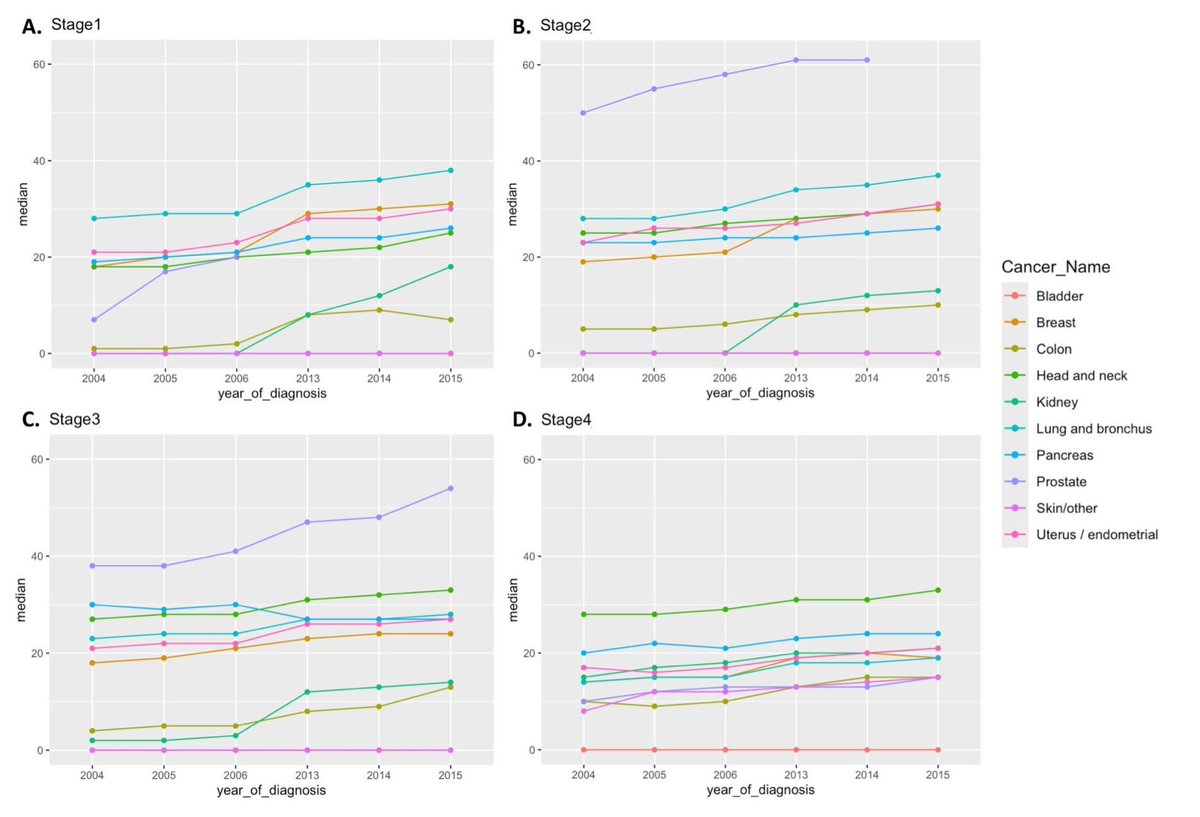
Time from cancer diagnosis → treatment is rising: 21 days in 2004 → 28 days in 2015. Much is ⬆️ in stage 1 & may reflect some good - ie careful shared-decision making/planning. But how to support people during the (often) anxious wait? @NicholasZaorsky ascopubs.org/doi/full/10.12…
Hannah Abrams, MD tweet mediaHannah Abrams, MD tweet mediaHannah Abrams, MD tweet media
English
1
2
13
1.3K
John Cramer, MD
John Cramer, MD@Jdcramer·
@DavidSherMD My read is similar: This really highlights the gap between investigator-reported progressive disease and protocol-defined EFS events. A pt can come off study for ‘progressive disease’ undergo a more extensive operation, and still not trigger an EFS event.
English
0
1
5
248
David Sher
David Sher@DavidSherMD·
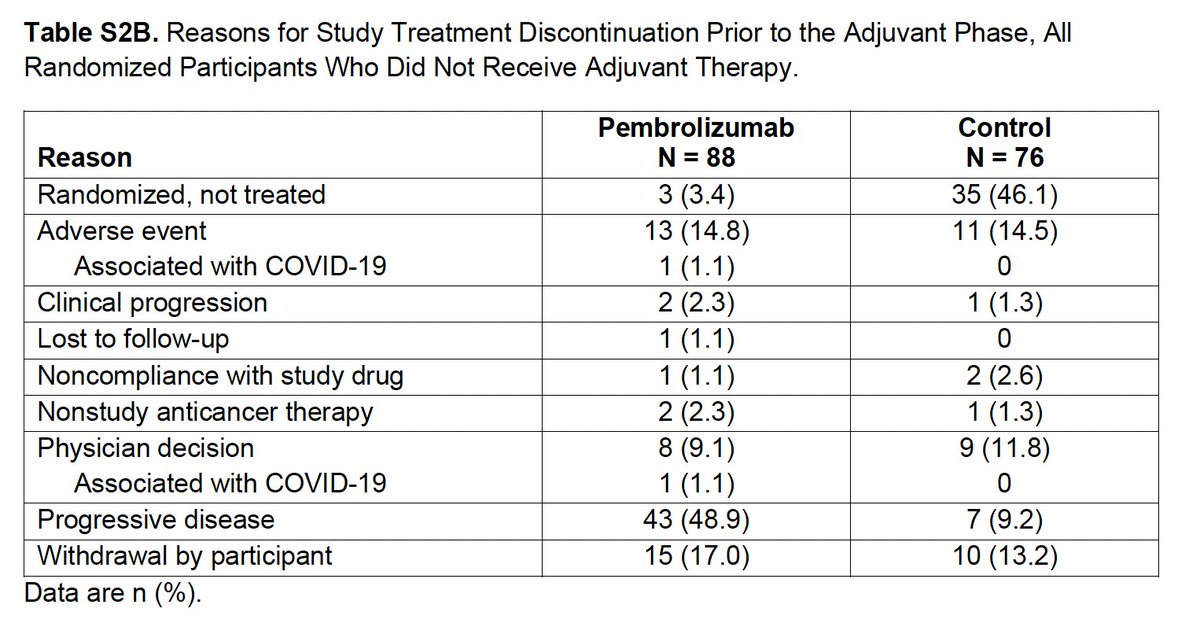
@Jdcramer has made a critical point below about KEYNOTE-689. The EFS rules in KN-689 require careful review to interpret these results.  A protocol-specific event was determined by blind independent central review (BICR), but if growth in the pre-surgical CT was perceived to be a “flare” (i.e. potential progression), surgery was supposed to proceed unless unresectable (protocol quote below). In order to be considered an event, repeat imaging was required 4-8 weeks later, and obviously if the tumor was still resectable the patient would go to surgery before then. This definition means it was extremely difficult to have an event before surgery, even if the tumor grew and the surgery was more extensive than initially anticipated. Thus some patients may have been harmed by neoadjuvant treatment, but we would not see that in the event data. Thus there is this important disconnect: 82 patients in the pembro arm stopped the drug due to progression (by the investigator, as shown in the CONSORT diagram), even though there were only 69 progression events (by BICR, used for endpoint analyses). Is perioperative immunotherapy doing something favorable and important in a subset of these patients? Yes, and hopefully we can refine its use to the right population and with the right regimen (adding neoadjuvant chemo or RT?). Is it distinctly possible/probable that some patients are progressing on neoadjuvant pembro, leading to a worse outcome in some domain, but we cannot see that in these data? Yes, unfortunately, also true.
David Sher tweet media
John Cramer, MD@Jdcramer

Question for those who’ve dug into KEYNOTE-689: If 43 pts had early ‘clinical progression’ (Table S2B), why isn’t there an early drop in EFS with neoadjuvant pembro? How do you reconcile this?
English
3
11
27
7.4K
John Cramer, MD
John Cramer, MD@Jdcramer·
Question for those who’ve dug into KEYNOTE-689: If 43 pts had early ‘clinical progression’ (Table S2B), why isn’t there an early drop in EFS with neoadjuvant pembro? How do you reconcile this?
John Cramer, MD tweet media
English
0
1
5
3.7K
John Cramer, MD retweetet
David Sher
David Sher@DavidSherMD·
The linked paper is a nice document and summary product, but let's emphasize a few highlights: 1. Statement 16, strong consensus: ctHPVDNA should supplement conventional surveillance tools, rather than reducing or replacing them. Natural corollary: if it is not reducing or replacing surveillance, what is the point? 2. Statement 9, strong consensus: Detectable ctHPVDNA without clinical or radiographic evidence of disease often increases patient distress. 3. Statement 5, strong consensus: Large-scale, prospective randomized controlled trials are necessary to validate ctHPVDNA's role in HPV+ oropharyngeal cancer management. I would change that statement from validate to determine. Validate assumes it has a role today, but as the document states, it doesn't reduce or replace any currently established surveillance tools. There are so many exciting ways that ctHPVDNA may influence care (screening/diagnosis, de-escalation, non-imaging-based surveillance) but these strategies need to be established in prospective randomized trials.
Naveris, Inc.@Naveris_inc

The California Head & Neck Consortium released the first multidisciplinary consensus recommendations on the use of circulating tumor HPV DNA in HPV+ oropharyngeal carcinoma. The panel of 33 experts representing 15 institutions reached strong consensus that a tool like the NavDx® test should be incorporated into routine surveillance. The consensus recommendations also included: Using an option like the NavDx test improves time to recurrence detection vs. conventional surveillance tools, but should supplement these methods, not reduce or replace them. The recommended time for a patient’s first post-treatment test is 3 months. Serial testing should be performed in conjunction with conventional surveillance every 3 months in the first 2 years post-treatment and every 6 months in years 3-5. For patients with a single positive post-treatment test where no clinical or radiographic evidence of disease is present, the best time to repeat the test is in one month. Earlier molecular detection of locoregional or oligometastatic disease should improve outcomes. These recommendations reinforce real-world clinical validation and value of new technologies like the NavDx test in earlier detection of molecular residual disease and recurrence of HPV+ oropharyngeal cancer. Access the full publication here: bit.ly/3MrPgeG  #ctHPVDNA #HeadAndNeckCancer #Oncology #MRD #NavDx #CancerSurveillance #hncancer

English
5
5
18
4.7K
John Cramer, MD
John Cramer, MD@Jdcramer·
@DavidSherMD 2/2 Also worth noting biology may cut the other way: a 2025 Nature paper links perineural invasion/cancer-induced nerve injury to resistance (not sensitivity) to anti–PD-1 across several tumors. Makes me cautious about over-reading the PNI subgroup. nature.com/articles/s4158…
English
0
1
1
309
John Cramer, MD
John Cramer, MD@Jdcramer·
@DavidSherMD 1/2 Agree these are hypothesis-generating. On PNI: because PNI is a locoregional failure risk factor, a regimen that mainly improves locoregional control can look “more effective” in PNI+ pts via risk enrichment—without implying nerve-specific PD-1 sensitivity.
English
1
0
0
57
David Sher
David Sher@DavidSherMD·
December has been an important and exciting month for head and neck cancer publications: NIVOPOST-OP is out! With the crucial exception of KEYNOTE-689 (perioperative pembro for resectable HNSCC), randomized trials of local therapy +/- immunotherapy have been repeatedly unsuccessful in non-metastatic HNSCC. There have been a host of proposed reasons to explain these negative trials, most of which were in patients who did not undergo surgery. Invoke010 (adjuvant atezo after primary therapy) did include a small cohort of resected patients, without any obvious improvement. Then KN-689 came along, in which patients received 2 cycles of neoadjuvant pembro followed by surgery, adjuvant therapy and more pembro, leading to an improvement in EFS. One burning question (among many…) is whether the neoadjuvant delivery was critical to the success of the paradigm, or if the delivery of any anti-PD1 immunotherapy would be sufficient. Enter NIVOPOST-OP from GORTEC to help answer this question. sciencedirect.com/science/articl…
English
1
11
33
2.8K
John Cramer, MD
John Cramer, MD@Jdcramer·
8/8 My tumor board takeaway: periop pembro is my default when eligible (KEYNOTE-689 EFS HR 0.73). For pts not eligible for neoadjuvant pembro but needing post-op cis-RT, I’d consider adjuvant nivo if coverage is feasible
English
0
0
0
110
John Cramer, MD
John Cramer, MD@Jdcramer·
7/8 Bigger pattern: perioperative PD-1 + surgery has now hit positive phase 3 signals (KEYNOTE-689; NIVOPOST-OP), while adding PD-1/PD-L1 to definitive CRT has repeatedly struggled (e.g., KEYNOTE-412; JAVELIN HN100). Timing/context may be everything.
English
1
0
0
125
John Cramer, MD
John Cramer, MD@Jdcramer·
1/8 NIVOPOST-OP (GORTEC 2018-01): first phase 3 showing statistically significant DFS benefit adding PD-1 blockade to standard post-op cisplatin-RT in resected high-risk LA-SCCHN (DFS HR 0.76, 95% CI 0.60–0.98). thelancet.com/journals/lance…
English
1
0
0
104