#WomenLandNow

5.3K posts

#WomenLandNow banner
#WomenLandNow

#WomenLandNow

@MACRADTrust

We support work on citizen participation in local government, the extractives industry, land and water rights management and climate change adaptation. nAGa7n

Masvingo, Zimbabwe Beigetreten Aralık 2017
3.3K Folgt2.5K Follower
#WomenLandNow retweetet
CNRG Zim
CNRG Zim@CNRG_ZIM·
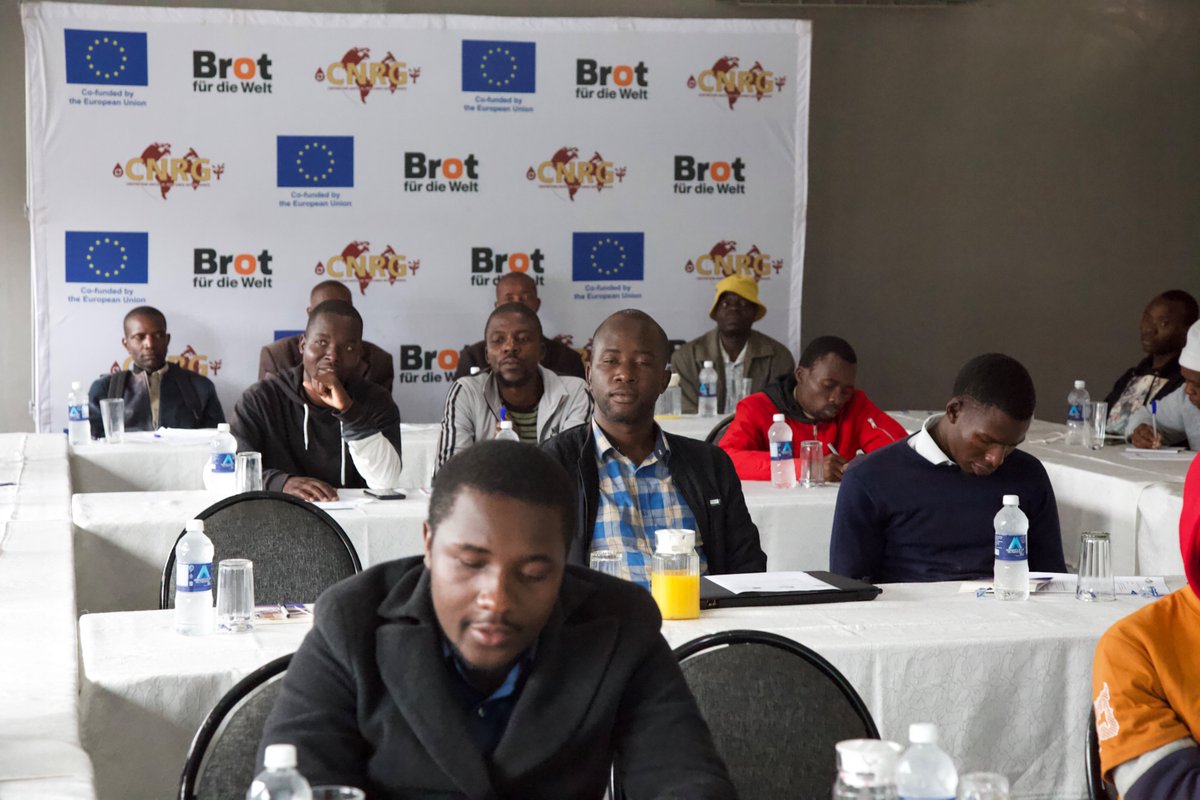
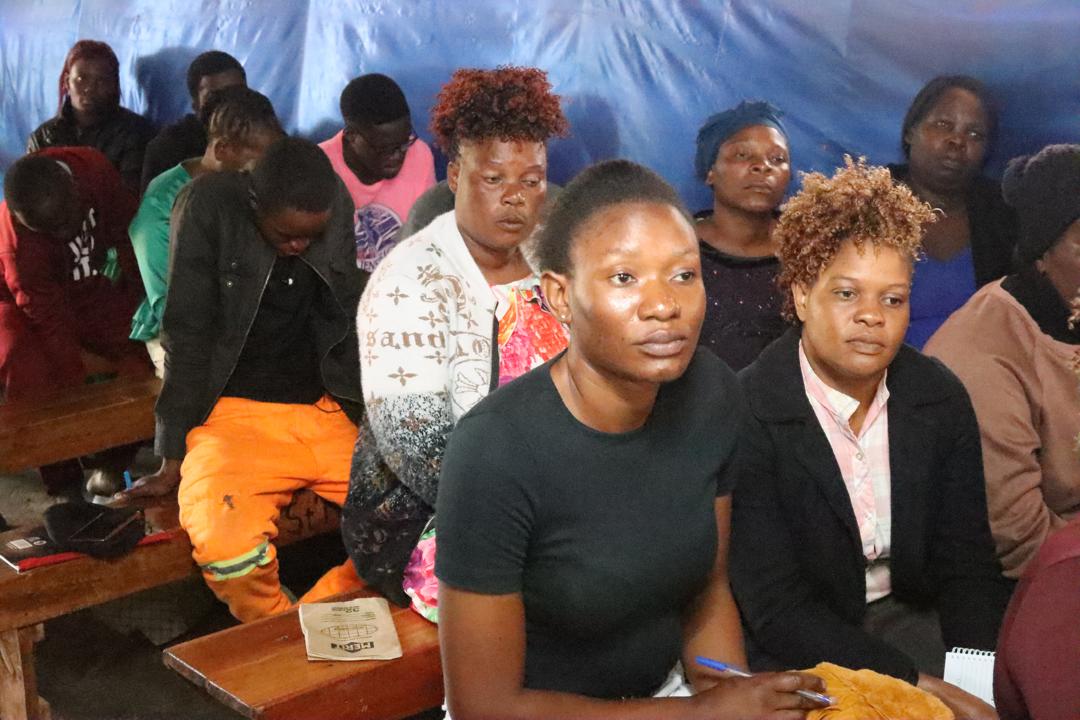
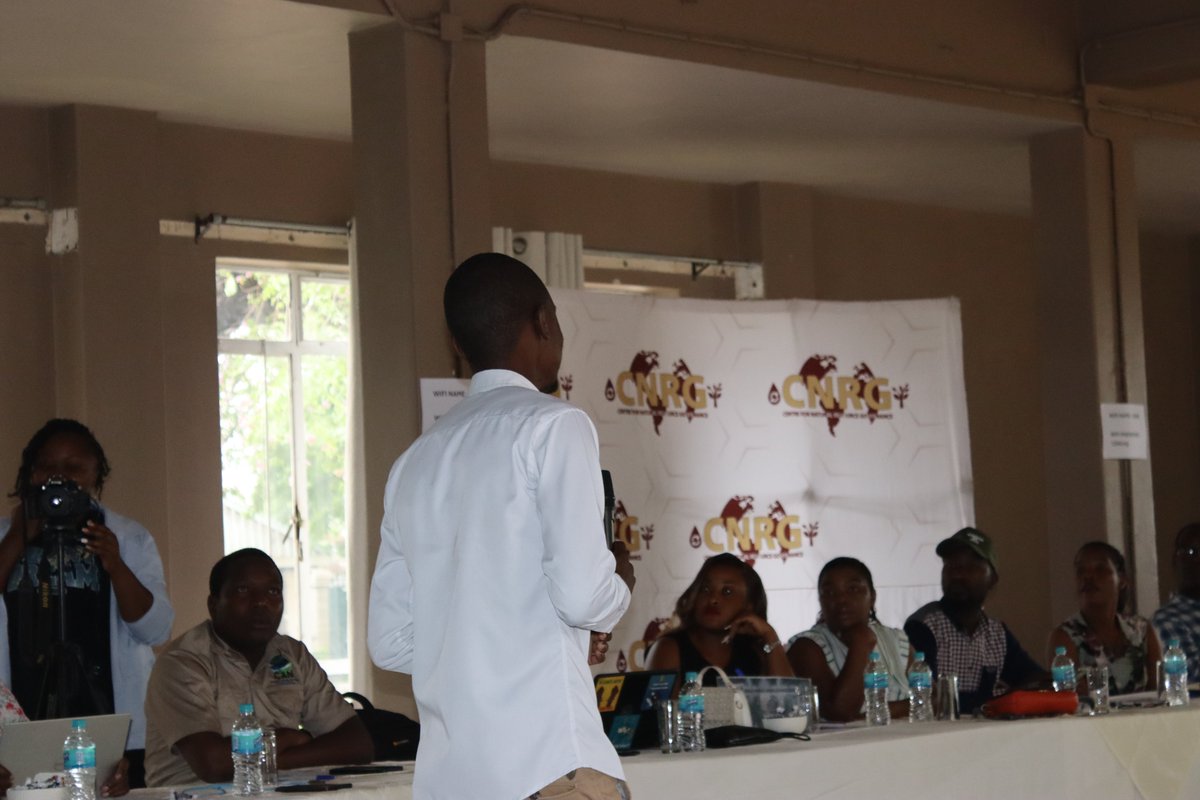
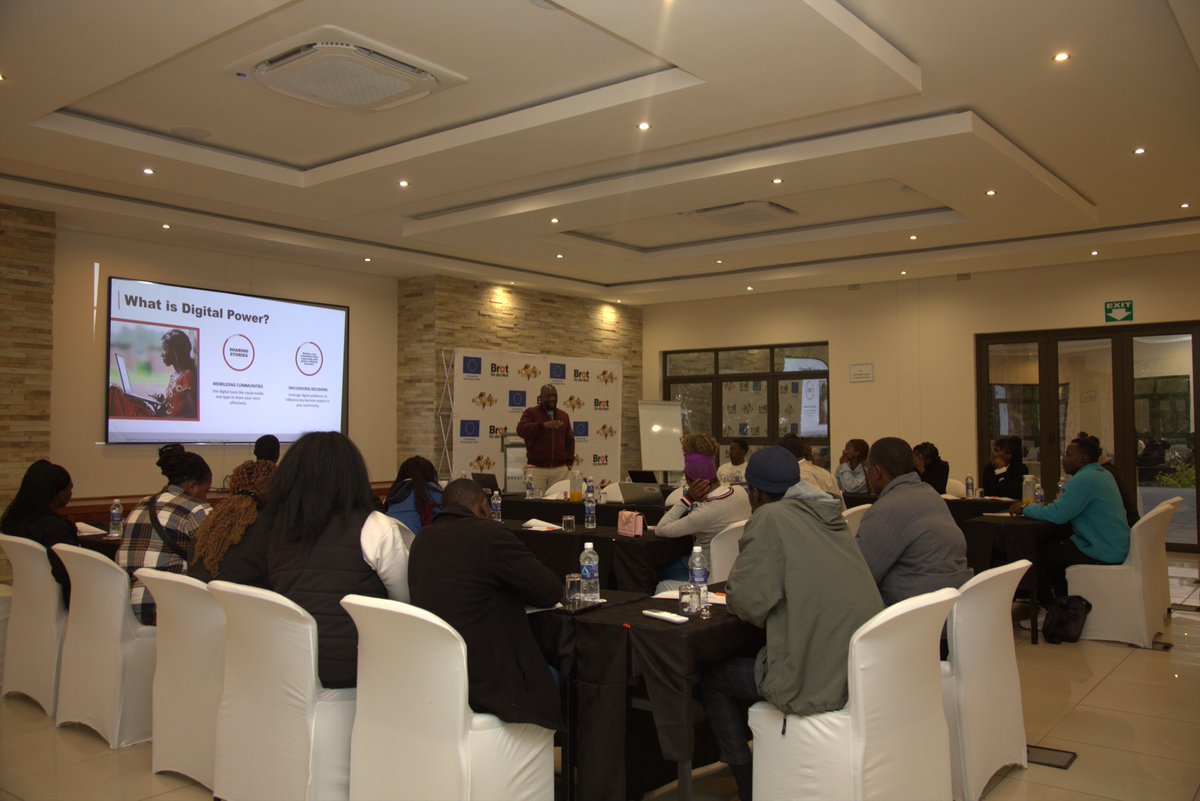
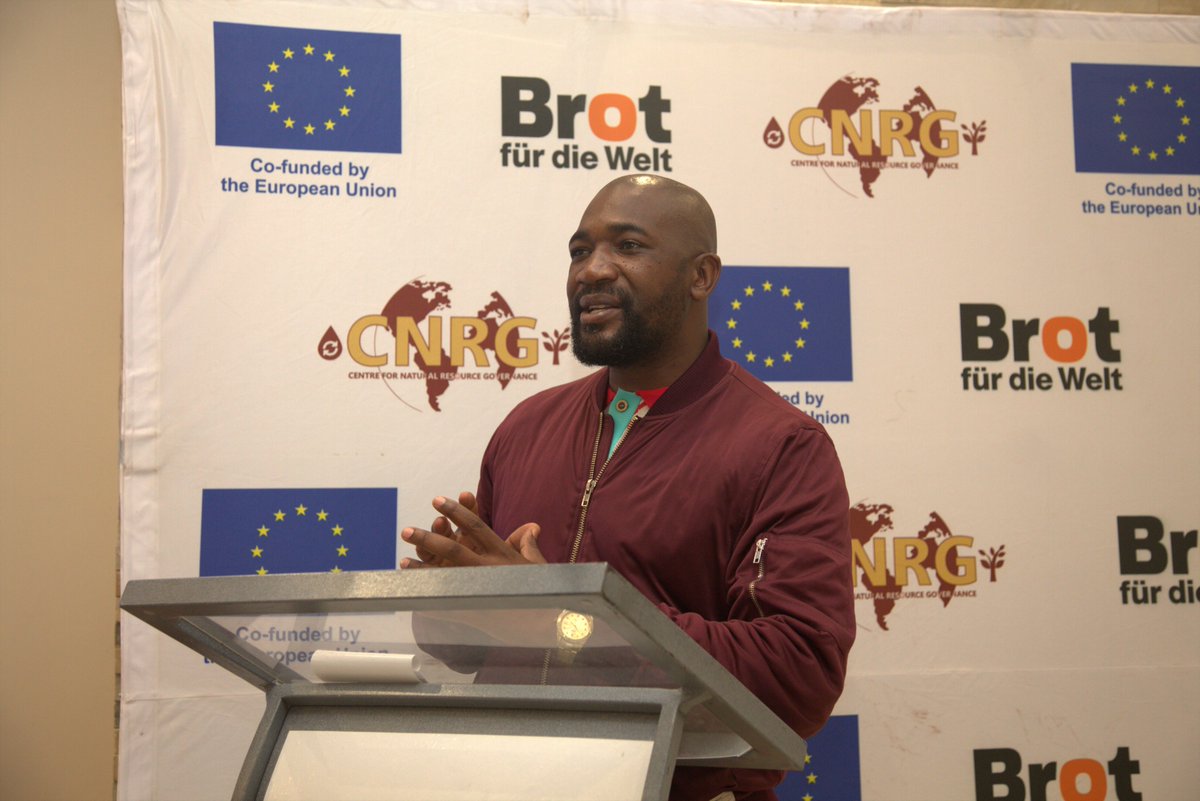
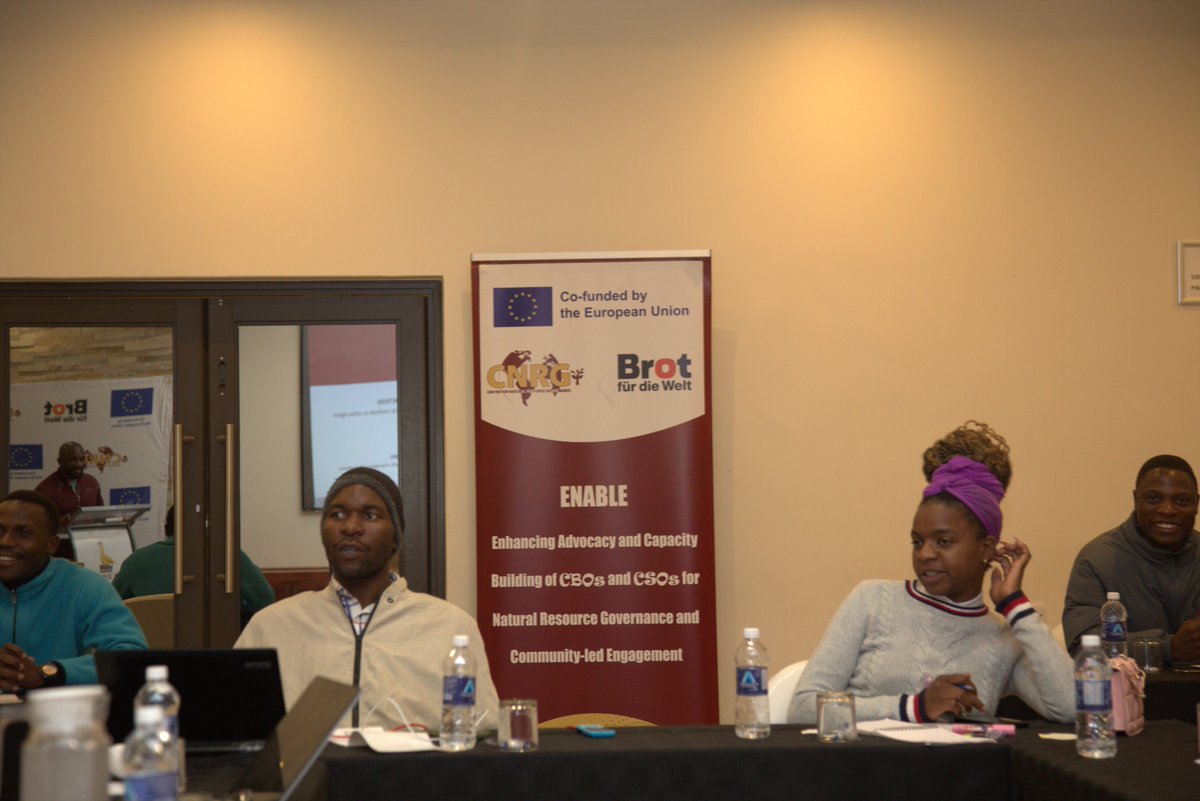
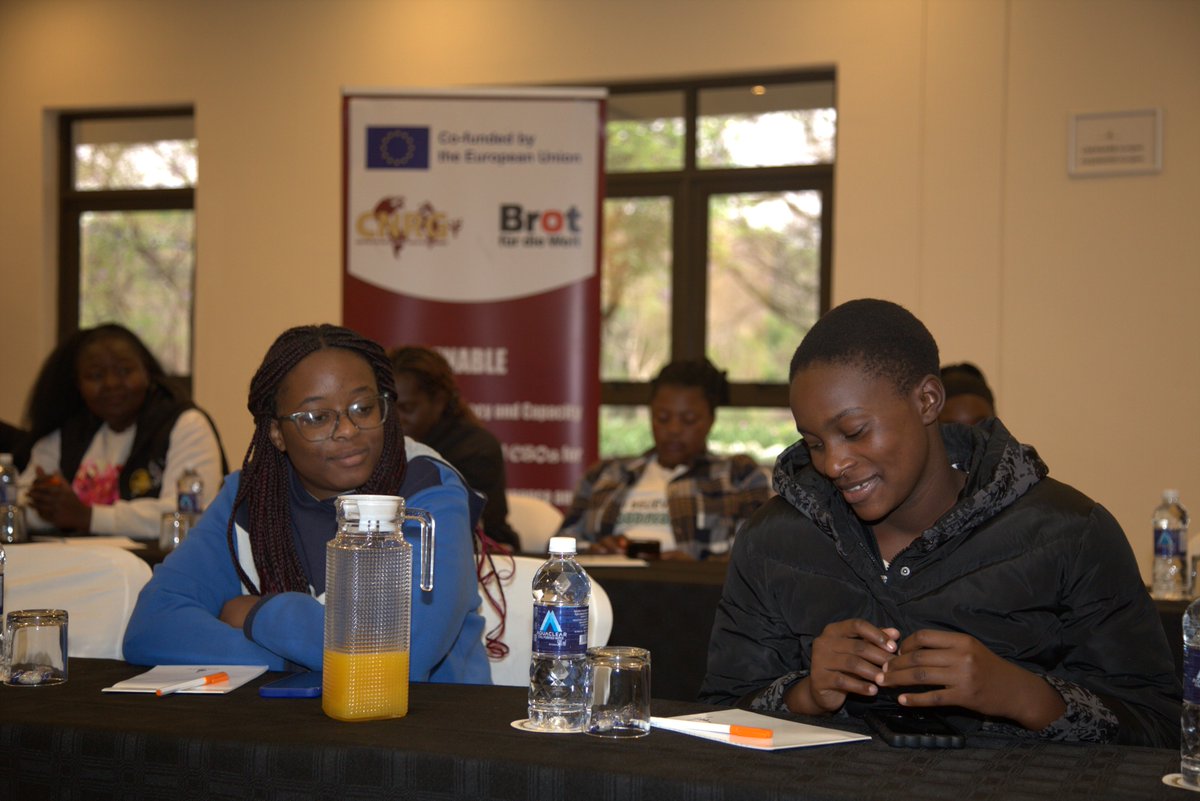
🔊 Communities have the right to decide what happens to their land, environment, and livelihoods. 📍 Masvingo, Zimbabwe 📌 Today we are holding a #RightToSayNo training workshop under the @euinzim #ENABLE project aimed at strengthening community capacity to understand and assert their right to refuse harmful and irresponsible mining and extractive projects that threaten their land, environment, and livelihoods. The ongoing training is equipping community members #TraditionalLeaders with knowledge on constitutional rights, environmental protections, and community participation in natural resource governance. Participants are also engaging in discussions on the social, environmental, and economic impacts of mining, and how communities can organize and advocate for responsible decision-making. Through the #RightToSayNo campaign, communities are being empowered to make informed decisions, defend their natural resources, and demand accountability in the extractive sector. 🗣️ “When communities understand their rights, they are better equipped to protect their land, their environment, and the future of their children.” @BROT_furdiewelt @FMaguwu @zhrc365 @SwedeninZW @ActionAidZim @The_SARWatch @IRMA_mining @HakiRasilimali @MiningIndaba @AltMiningIndaba @StateDept @thestandardzim @AIDC_RSA @ZAYMZW @macua_sa #RightToSayNo #PeopleOverProfit #CommunityRights
CNRG Zim tweet mediaCNRG Zim tweet mediaCNRG Zim tweet mediaCNRG Zim tweet media
English
0
3
4
501
#WomenLandNow retweetet
CNRG Zim
CNRG Zim@CNRG_ZIM·
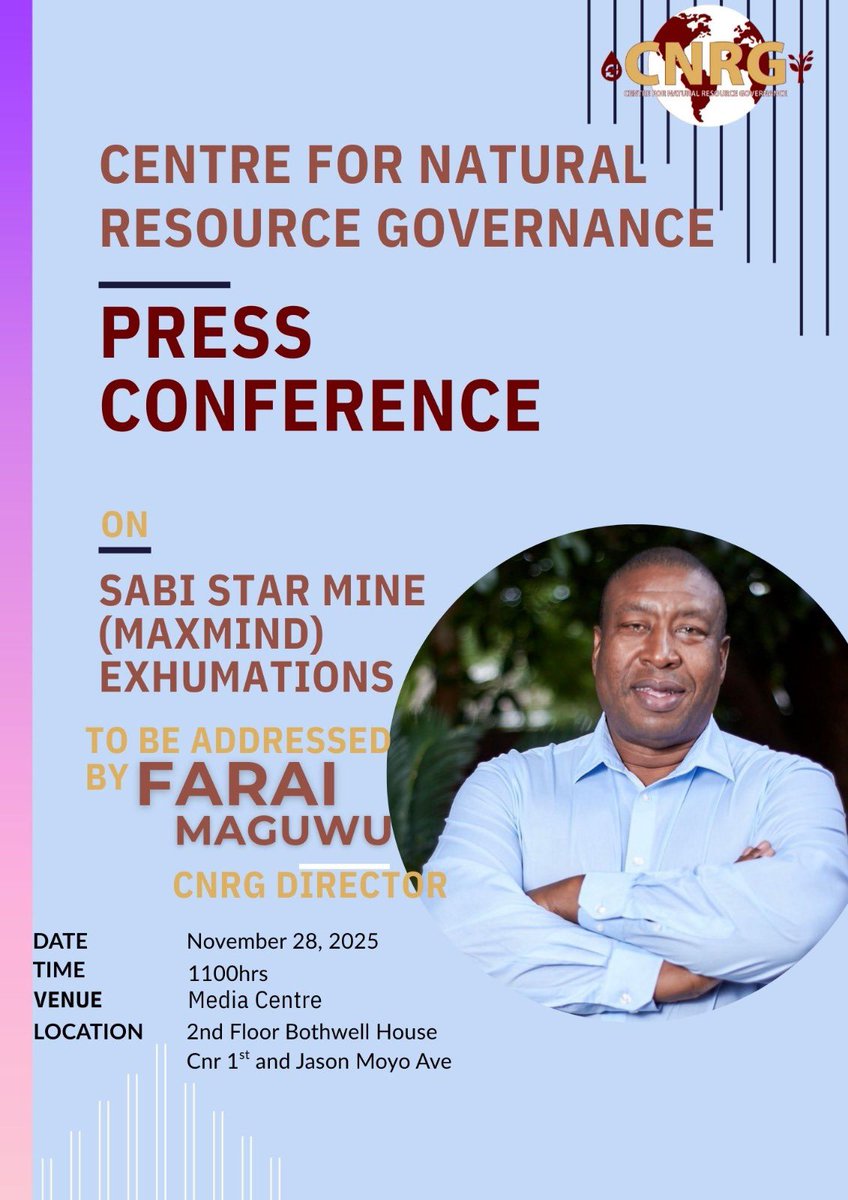
🌕CNRG will hold a press conference tomorrow on the Sabi Star Mine (MaxMind) exhumations. @FMaguwu CNRG Director, will address the ongoing human rights and community concerns linked to the mine’s operations. 🗓️ 28 Nov 2025 ⏰ 1100hrs 📍 Media Centre, 2nd Floor Bothwell House, Cnr 1st & Jason Moyo Ave Communities deserve dignity, justice, and accountability. #CNRG #HumanRightsZW #MiningJustice #SabiStarMine in
CNRG Zim tweet media
English
0
5
14
457
#WomenLandNow retweetet
Raising Voices
Raising Voices@RaisingVoices·
🎉25 Years of preventing Violence Raising Voices rolled out the red carpet to mark the 25th anniversary! Students, activists, partners, staff, and friends came together in joyful celebration, dancing and reconnecting as we honored a silver jubilee of bold action.
Raising Voices tweet mediaRaising Voices tweet mediaRaising Voices tweet mediaRaising Voices tweet media
English
1
3
16
351
#WomenLandNow retweetet
CNRG Zim
CNRG Zim@CNRG_ZIM·
🚨 Spotlight on Resource Justice! 📰 Our Executive Director @FMaguwu is quoted in this powerful feature article exposing the underbelly of Zimbabwe’s extractive industry. From environmental degradation to displaced communities, the piece calls for accountability and justice in how our natural wealth is managed. 🗣️ “China is seeing Zimbabwe as a colony, and it has marked it as its territory,” – Farai Maguwu, CNRG Director 🔗 Read the full article here: restofworld.org/2025/zimbabwe-… ✊🏿 Follow us for more on extractive justice, community rights, and people-centered development. #ExtractiveJustice #NaturalResources #Zimbabwe #JustTransition #CommunityFirst #EnvironmentalJustice
CNRG Zim tweet media
English
1
5
10
294
#WomenLandNow retweetet
Christian Aid Zimbabwe
Christian Aid Zimbabwe@CAID_Zimbabwe·
The call for debt justice is a fight for an accountable, transparent state. "NO loan without public scrutiny". Parliament of Zim encouraged to align the Public Debt Management Act for debt management that does not overtake public services funding. #ZimDebtConference2025
Christian Aid Zimbabwe tweet media
English
0
8
24
559
#WomenLandNow retweetet
ZIMCODD
ZIMCODD@ZIMCODD1·
Today at 09:30 CAT, our Director, @jmaketo , joins the session: “An Unequal and Unfair World: Will the G20 Summit Make a Difference in People’s Lives and their Demands for Justice?” He will reflect on the urgent demands for fiscal/tax justice, fair trade, energy justice, and just transitions across the Global South. Stay tuned for key takeaways from Johannesburg! #JustEconomies #G20Watch #TaxJustice #G20Summit
ZIMCODD tweet media
English
0
2
10
274
#WomenLandNow retweetet
ZIMCODD
ZIMCODD@ZIMCODD1·
ZIMCODD reflects on the key outcomes of the 2025 G20 Summit in South Africa and raises urgent calls for global economic reform, debt justice, climate accountability, and meaningful African representation. Read the full statement here: zimcodd.org/wp-content/upl…
ZIMCODD tweet media
English
0
1
6
273
#WomenLandNow retweetet
ZIMCODD
ZIMCODD@ZIMCODD1·
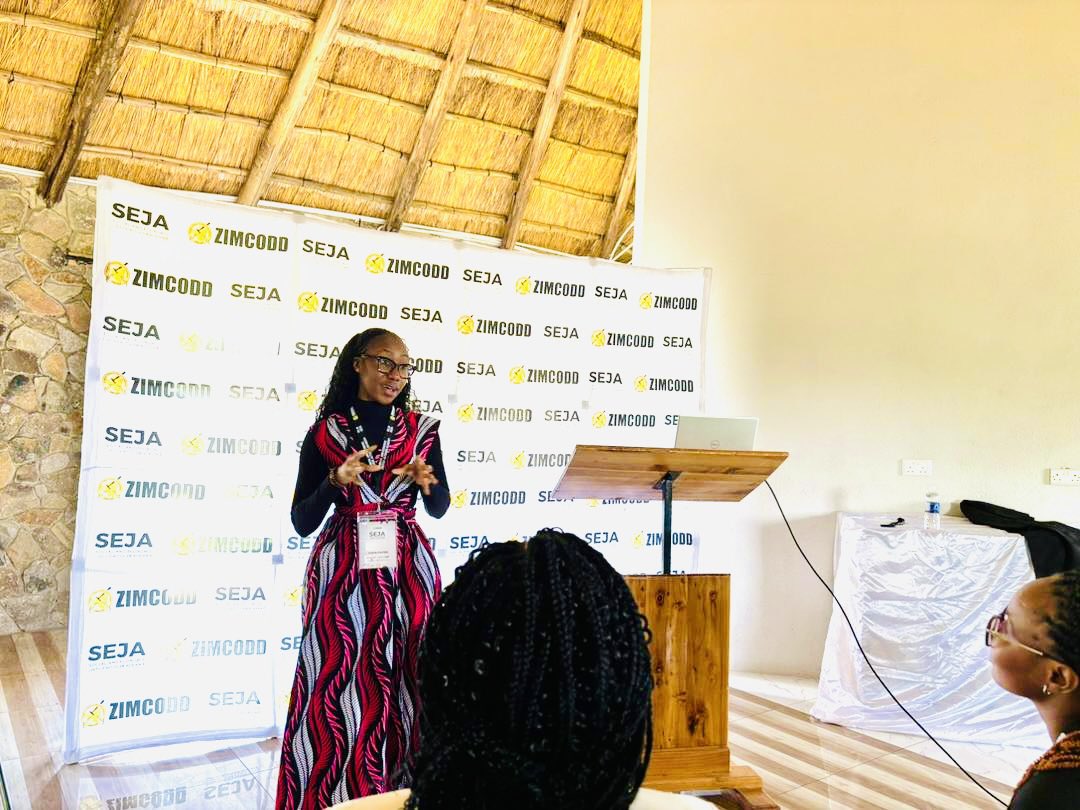
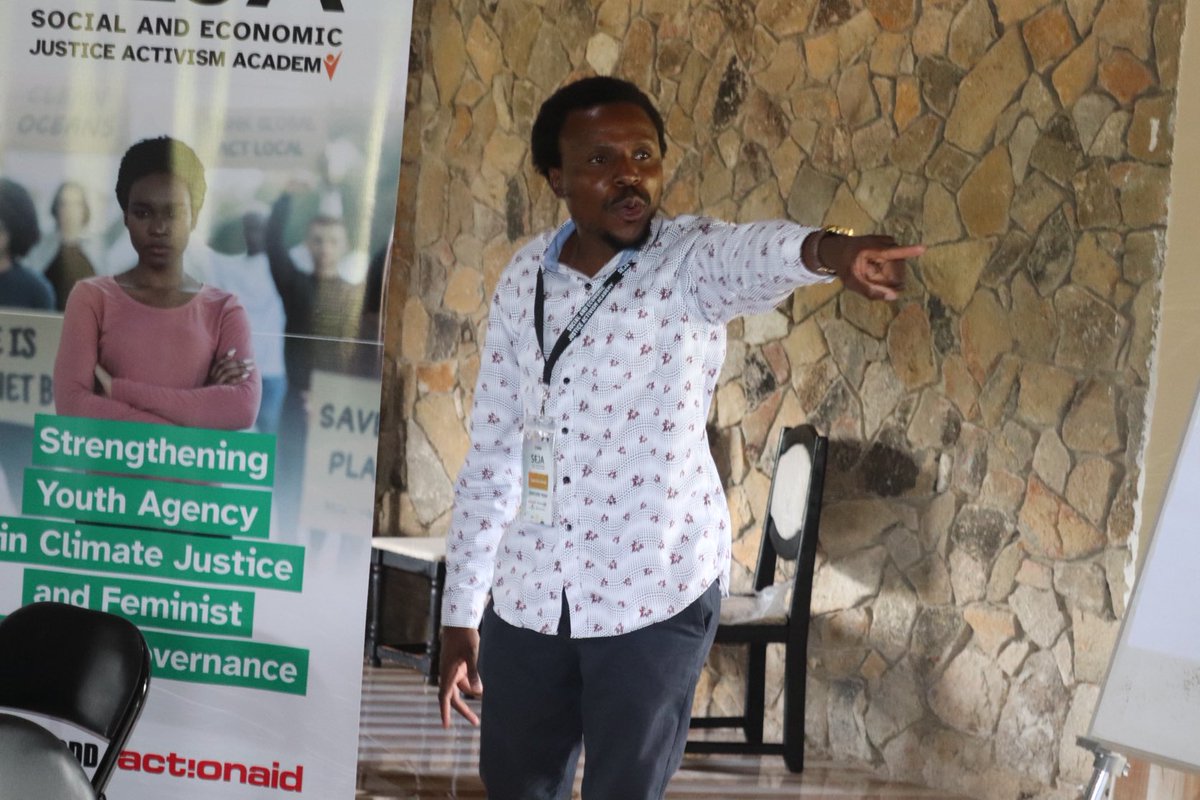
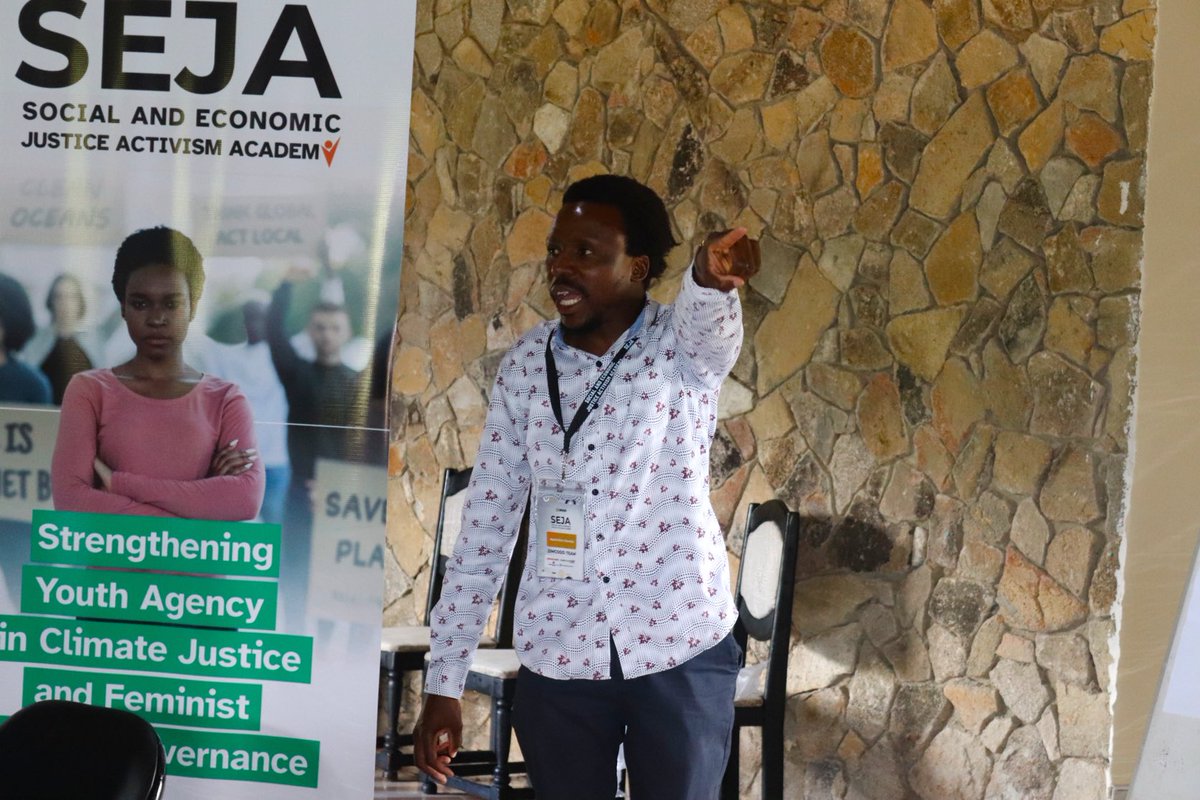
Today’s day started with great energy as participants jumped into an engaging session that set the tone for the rest of the program. Using law to pursue social and economic justice, Chiwoneso Kanoyangwa shared a powerful case study demonstrating how litigation can shape constitutional, legal, and institutional frameworks in public debt management. As a SEJA alumna, she reflected on her journey and delivered an insightful presentation on the foundations of Public Debt from global to national, and from historical to current perspectives. #SEJA2025
ZIMCODD tweet mediaZIMCODD tweet mediaZIMCODD tweet mediaZIMCODD tweet media
English
0
2
8
170
#WomenLandNow retweetet
ZIMCODD
ZIMCODD@ZIMCODD1·
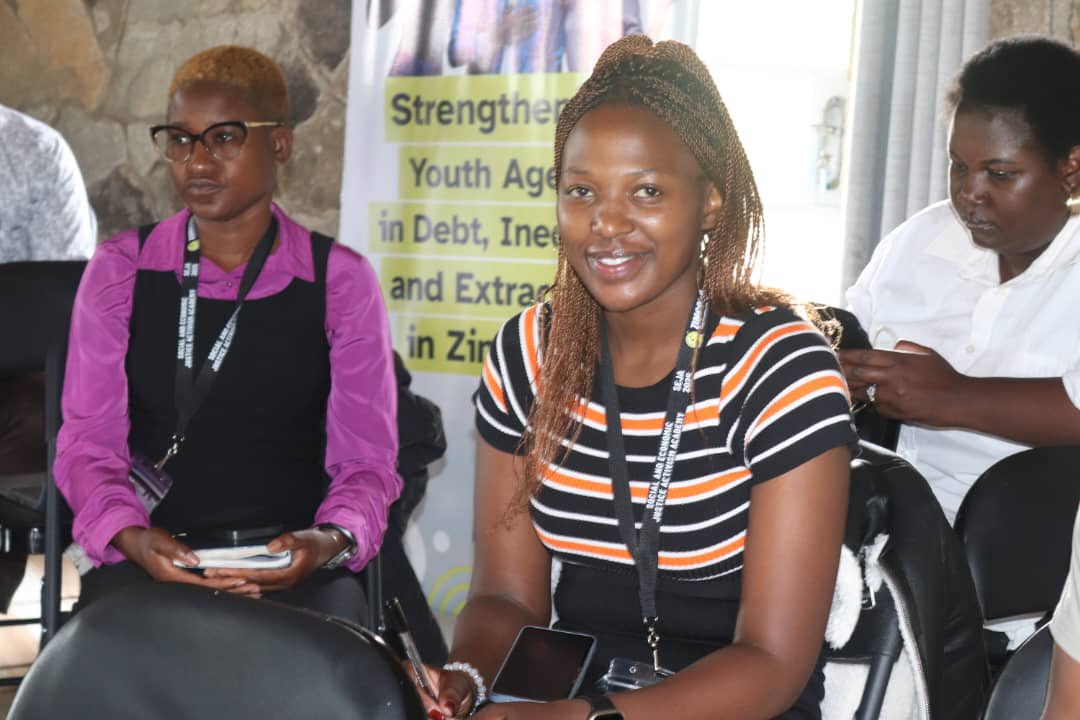
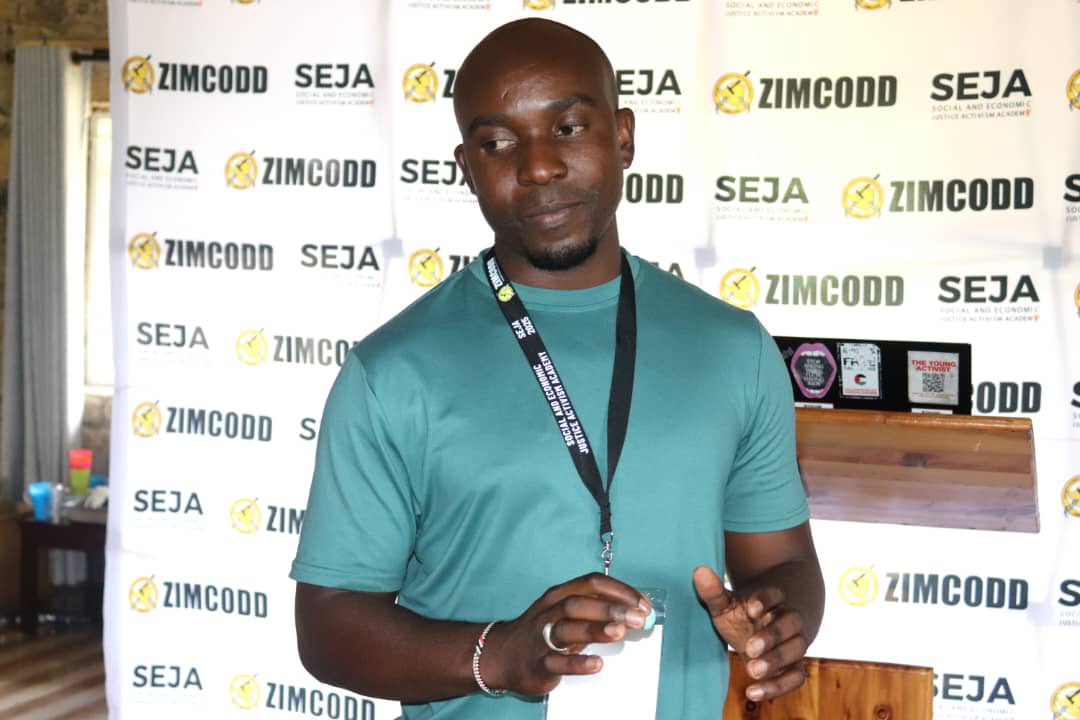
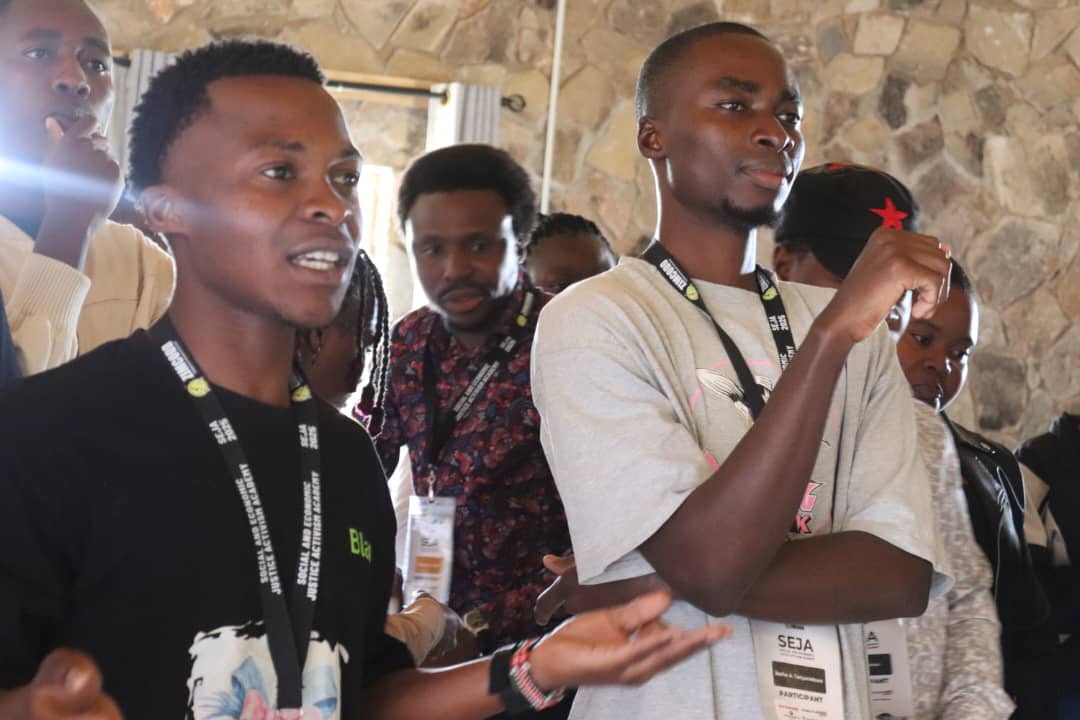
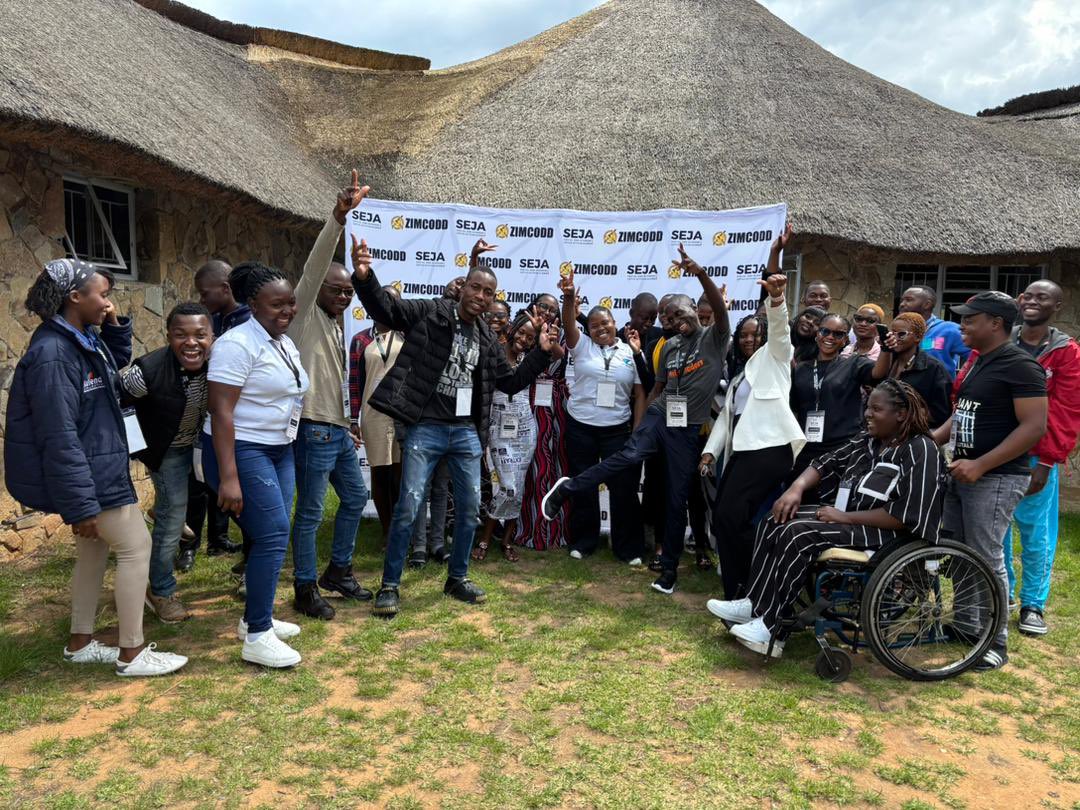
SEJA Academy has kicked off in Nyanga! The energy is high, the activities are loaded, and our participants are fired up for a powerful week of learning, leadership and action. Let’s go! #SEJA2025
ZIMCODD tweet mediaZIMCODD tweet mediaZIMCODD tweet mediaZIMCODD tweet media
English
2
6
32
1.4K
#WomenLandNow retweetet
Nqobizitha Mlambo
Nqobizitha Mlambo@cdemlambo·
Had the unique opportunity to speak on the concept of ideology at the ongoing ⁦@ZIMCODD1⁩ 6th Social & Economic Justice Ambassadors Academy. Youth must be ideologically grounded in the pursuit of social & economic justice! #SEJAAcademy2025
Nqobizitha Mlambo tweet mediaNqobizitha Mlambo tweet media
English
5
12
56
5.9K
#WomenLandNow retweetet
ZIMCODD
ZIMCODD@ZIMCODD1·
Young people are fascinated by how ecological debt, climate justice, and national debt intersect and today’s session brought these connections to life. Participants engaged in Module 3: Youth Leadership in Ecological Debt – The Debt & Climate Justice Nexus, facilitated by Dr. Abel Sibanda from @ActionAidZim. This insightful module highlighted the critical role young people must play in advancing accountability, sustainability, and climate-responsive development. Dr. Sibanda also encouraged participants to adopt a systems perspective, emphasising that meaningful solutions require understanding how social, economic, and environmental factors are interconnected. Key takeaways highlighted ecological debt as a justice issue, how debt burdens weaken climate resilience, the importance of youth leadership in shaping fair climate policies, and the urgency of advocating for systems that prioritise people and the planet.
ZIMCODD tweet mediaZIMCODD tweet mediaZIMCODD tweet mediaZIMCODD tweet media
English
1
6
23
744
#WomenLandNow retweetet
ZIMCODD
ZIMCODD@ZIMCODD1·
🙏🏽THANK YOU to all delegates of the 7th Zimbabwe Annual Debt Conference! 🟠Your insights fueled a dynamic platform for change. 🟠Together, we advance debt justice & inclusive economies.
GIF
English
2
3
12
2.1K
#WomenLandNow retweetet
Nqobizitha Mlambo
Nqobizitha Mlambo@cdemlambo·
@ZIMCODD1 Happy to be attending the 6th SEJA Academy. Today participants went through an indepth session on public debt,development finance & basic economics concepts. Such knowledge is key in creating a generation of knowledge based social justice activists!
Nqobizitha Mlambo tweet mediaNqobizitha Mlambo tweet mediaNqobizitha Mlambo tweet media
English
1
5
18
1.9K
#WomenLandNow retweetet
CNRG Zim
CNRG Zim@CNRG_ZIM·
CNRG GBV Awareness Campaign – Penhalonga Today, we are hosting a Gender-Based Violence (GBV) Awareness Campaign in Penhalonga as part of efforts to build communities that are resilient against violence targeting women and girls, including sexual exploitation in mining areas. Mining communities like Penhalonga face heightened risks of #GBV due to economic pressures, unequal power relations, and the influx of transient populations. Women and girls often bear the heaviest burden, with limited access to justice and support services. This campaign will bring together community members, traditional leaders, CBOs, civil society, mining companies, and government departments to collectively strengthen prevention and response systems. 🎯 Key Objectives: • Raise awareness on the forms, causes, and impacts of GBV in mining communities • Empower communities to prevent, identify, and respond to GBV • Strengthen referral pathways and survivor support services • Promote collaboration between local authorities, mining companies, and civil society Together, we can build safer, more informed, and more resilient communities. 💜 #CNRG #EndGBV #CommunitySafety #MiningCommunities #GenderJustice #StopViolence @zicet1 @MildretMuzanec4 @GenderZimbabwe @MACRADTrust @WCOZIMBABWE
CNRG Zim tweet mediaCNRG Zim tweet mediaCNRG Zim tweet media
English
1
2
7
196
#WomenLandNow retweetet
CNRG Zim
CNRG Zim@CNRG_ZIM·
🌍 CNRG Hosts Multistakeholder Engagement on Just Energy Transition in Hwange ⚡️ Today, we convene a multistakeholder engagement under the TACCET Project in Hwange, bringing together government, civil society, industry, and community leaders to discuss the urgency of transitioning to clean and renewable energy, despite the region’s abundance of coal. Zimbabwe is already facing the harsh realities of climate change, droughts, erratic rainfall, and rising temperatures. Hwange’s coal economy presents both a challenge and an opportunity: to move towards a just, inclusive, and sustainable energy future that safeguards livelihoods while protecting our planet. Through dialogue and collaboration, participants will explore pathways for renewable energy investment, policy reform, and community-driven climate action. 🤝 Together, we can power a future that works for people and the planet. @CANZIM11 @AfricanCJGroup @climatenewsrom @southern_enviro @NyarotaDonald #CNRG #TACCET #JustEnergyTransition #ClimateAction #RenewableEnergy #Hwange #Sustainability #Zimbabwe
CNRG Zim tweet mediaCNRG Zim tweet mediaCNRG Zim tweet mediaCNRG Zim tweet media
English
1
5
14
291
#WomenLandNow retweetet
CNRG Zim
CNRG Zim@CNRG_ZIM·
At the Youth Digital Democracy Training in Masvingo 2025, @NyarotaDonald led an inspiring session on why mastering digital skills is essential for youth empowerment and participation in today’s world. He emphasizes four critical areas every young person should focus on: ✨ Content Creation – crafting powerful posts, videos, and stories that shape conversations. ✨ Digital Security – protecting personal data, securing accounts, and staying safe online. ✨ Engaging Policymakers – using digital platforms to communicate effectively with leaders and influence policy. ✨ Fact-Checking – promoting responsible sharing and verifying information to fight misinformation. This session underscores a vital truth: digital spaces aren’t just for connection, they are arenas for influence, advocacy, and transformative change. @BROT_furdiewelt @euinzim @MACRADTrust
CNRG Zim tweet mediaCNRG Zim tweet mediaCNRG Zim tweet mediaCNRG Zim tweet media
English
1
3
17
439
#WomenLandNow retweetet
Nqobizitha Mlambo
Nqobizitha Mlambo@cdemlambo·
You forgot the following: ✔️USD 23.5 Billion Public Debt ✔️76% economic informality ✔️No functional street lights ✔️Crippling loadshedding ✔️Low capacity utilisation ✔️Illicit financial flows costing Zim USD 1.5 billion in gold leakages alone ✔️No clean,safe & portable H2O
Prof Jonathan Moyo@ProfJNMoyo

Reality Check: Zimbabwe's Shining Triumphs in 2025, Eclipsed by Doom-and-Gloom Narratives In a year that could have been etched in recent history as Zimbabwe's renaissance, 2025 has instead been overshadowed by relentless waves of doom and gloom—narratives fuelled by lies, fabrications, and misinformation designed to ignite unrest, sow division, and even flirt with coup fantasies à la 2017. Yet, beneath this toxic fog lies a nation surging forward: from global sporting triumphs to improved food security, economic rebounds and international accolades. Zimbabwe hasn't just turned a corner; it's charging ahead. But why are the country's achievements buried under a barrage of unrelenting negativity? The answer lies in the grip of amoral politics, a corrosive force that prioritises backward personal agendas over national unity. Here are five illustrative developments from 2025 that—while treated as fleeting footnotes in public discourse—are in fact game-changers, each delivering a reputational windfall for Zimbabwe that's been overshadowed by the negativity of naysayers. Kirsty Coventry's Historic IOC Presidency In March 2025, Kirsty Coventry—Africa's most decorated Olympian, with seven medals from the 2004 and 2008 Games—shattered glass ceilings by becoming the first woman and first African elected as President of the International Olympic Committee (IOC). This milestone has positioned Zimbabwe as a world-class talent pool and a symbol of governance maturity, earning global respect. The reputational dividends are immense: enhanced soft power, diplomatic leverage (including support from development partners like China), and alignment with Zimbabwe's pursuit of a UN Security Council seat. Coventry's presidency counters decades of isolation under sanctions, spotlighting the country's potential for sports-led development, infrastructure investment, and youth inspiration. Yet, entangled in domestic political strife driven by amoral politics, the nation has struggled to fully capitalise on this windfall, allowing negative stereotypes to dilute its impact. Improved Food Security Zimbabwe's food security landscape transformed dramatically in 2025, as detailed in the World Food Programme's (WFP) July Markets Monitoring Survey. An above-average harvest, stable local currency (Zimbabwe Gold, or ZWG), and robust government-partner resilience programs ensured staple commodities like maize meal were available in 97% of monitored markets—a stark recovery from prior droughts. Prices plummeted year-on-year: maize meal dropped 5-11% in USD, sugar beans 9% in urban areas, and rice 4%. The Minimum Expenditure Basket (MEB) reflected this progress, with rural costs at USD 20.35 (13% lower than six months prior) and urban costs at USD 21.13 (a 4% month-on-month decline). For vulnerable households, this surge in affordability has been life-changing, easing income strains and fostering stability. Tragically, this narrative of abundance has been suffocated by the cacophony of despair peddled by amoral politicians and social media influencers fixated on negativity, who view the improved food security situation in the country as "propaganda". Robust Economic Rebound: 6% GDP Growth Projection Defying regional trends, Zimbabwe's 2025 real GDP is projected to grow by 6.0%, according to the World Bank, IMF, and African Development Bank (AfDB)—a sharp rebound from 2024's 1.7-2.0% slowdown and surpassing the SADC average of 2.2-3.0%. Key drivers include: Agricultural Revival: Post-El Niño recovery with favourable rains yielding up to 3.2 million tons of grain, projecting 12.8% sectoral growth and boosting hydropower and industry. Mining Boom: 5.6% expansion fuelled by high prices for gold, platinum group metals, and lithium, plus new investments. Macroeconomic Reforms: Tight policies, fiscal consolidation, and ZiG introduction stabilized exchange rates and curbed inflation to 23-31% by year-end. External Supports: A 15% rise in remittances, commodity prices, and energy improvements. Sectoral Expansion: 6.6% private consumption growth in trade, ICT, and tourism. By any objective measure, this momentum signals a new era of stability in the country, yet it's drowned out by voices intent on division rather than development. Geopolitical Shift: Proposed Repeal and Replacement of ZDERA A watershed moment occurred on 11 September 2025, with the introduction of Bill H.R. 5300 in the U.S. House of Representatives. Section 303 proposes repealing the Zimbabwe Democracy and Economic Recovery Act (ZDERA) of 2001, which barred U.S. support for multilateral loans unless reforms were met; and replacing it with a narrower focus: conditioning IMF/World Bank funding on Zimbabwe clearing inflation-adjusted arrears (about USD 3.5 billion) under the Global Compensation Deed crafted in Zimbabwe. If enacted, this could unlock infrastructure, health, and education reforms, easing Zimbabwe's path to normalised financial relations. Currently in committee, the Bill heralds potential acceleration of progress, contingent on the political stability being undermined by fabricated discourses of despair churned out by amoral politicians and their social media influencers. Forbes Crowns Zimbabwe: World's Top Destination for 2025 Forbes, the iconic global media powerhouse known for its authoritative rankings, named Zimbabwe the world's best country to visit in 2025, drawing from Kayak's Travel Check-in report on search spikes, wellness opportunities, and low-intensity adventures. With its allure in icons like Victoria Falls, Great Zimbabwe Monuments, and the Eastern Highlands, plus stunning wildlife safaris in Hwange National Park, Zimbabwe outpaced Lithuania, Sri Lanka, South Korea and Argentina. Flight searches surged in 2025, with Bulawayo up 80% and Harare 56%, promising economic boosts to tourism. The Forbes accolade enhances the country's global image, counters stereotypes, and fosters investment in sustainable sectors like ecotourism and crafts. Yet, treated as a fleeting headline and overshadowed by negative narratives from social media influencers, its massive reputational potential has been squandered. Amoral Politics: The Roots of Negativity Public discourse on Zimbabwe's five major achievements in 2025 has been eclipsed by doom-and-gloom narratives that thrive on polarisation, embodying the Kiswahili adage "siasa mbaya, maisha mbaya" ("dirty politics leads to terrible life"), popularised by Kenya's second President, Daniel arap Moi. Such tactics—peddling misinformation to fan instability—stem from amoral politicians who view the country's development and progress as threats to their nefarious agendas. Drawing from a 1958 classic by Edward C. Banfield, The Moral Basis of a Backward Society, "amoral politics" derives from his concept of "amoral familism." In Banfield's impoverished Italian village on which his book is based, residents maximised short-term familial gains, assuming others did the same, which stifled collective values and progress. Transposed to politics, actors prioritise their "political families"—parties, factions, clans, or networks—over the national interest. This ethos manifests through several interconnected features, each mirroring Banfield's observations and perpetuating societal dysfunction. At its core is narrow self-interest, where decisions favour immediate personal networks, disregarding the broader public good—much like the family-first mindset that neglected community infrastructure in Banfield's village. This is compounded by an assumption of universal selfishness, breeding distrust that views everyone as pursuing individualism, thereby blocking genuine public initiatives; it echoes the isolation that prevented lasting associations in Banfield's study. Shared values are absent, normalising corruption, nepotism, and cronyism without guilt for betraying public trust, just as actions in Banfield's society were judged solely by family advantage. Short-termism dominates, focusing on quick "wins" like power-grabs through military coups while neglecting long-term challenges such as infrastructure development and institutional reforms. This leads to institutional erosion, weakening shared norms and resulting in stagnation from low civic engagement, as seen in the underdevelopment of Banfield's village. Polarisation intensifies, turning affiliations into insular echo chambers that fuel division through whataboutisms, smears, fabrications and misinformation, reflecting the envy and fragmentation among families that Banfield observed. Zimbabwe's amoral politicians and peddlers of negativity—ensconced in mutual-admiration echo chambers—eschew issues like the country's 2025 achievements in favour of personal attacks and pressures on Zimbabweans to entrench and perpetuate eternal feuds among and between themselves for "consistency." Amoral politicians fragment society, ensuring no common purpose emerges, all to safeguard their dirty politics. In particular, amoral politicians don't want Zimbabweans uniting in the national interest. If disagreements arise, they use lies, fabrications, and misinformation to make them irreconcilable and permanent. For these actors and their social media influencers, Zimbabweans must not be allowed to let bygones be bygones—that's the crux of their approach. Consequently, while they pretend to champion free speech, amoral politicians and their social media influencers present themselves as the thought police; they don't tolerate challenges to their views, always responding to criticism with vilification instead of rational engagement. Contrary opinions are branded as "fraudulent," "criminal," "corrupt," or "unconstitutional." They act as police, prosecutors, and judges rolled into one. In the same vein, while posing as democrats who value human rights and freedom of association, they apply these principles only to their echo chambers: declared "enemies" (like those labelled "zviganandas") have no such rights. Specifically, people affiliated with Zanu PF or stigmatized factions in that political party are deemed corrupt or evil by definition. Forging a United Future Beyond the Gloom Zimbabwe's 2025 achievements aren't anomalies or fleeting footnotes; they're proof of a nation making remarkable progress in its recovery and poised for greater development. From Coventry's global stage to food security gains, economic surges, and tourism booms, the evidence is irrefutable: the progress is real and accelerating. But amoral politics, with its backward mentality propelled by negative narratives, threatens to derail this momentum by dividing rather than uniting. It's time to reject the merchants of despair. Zimbabweans must reclaim the narrative and embrace collective action in the national interest. As Banfield warned in 1958, societies trapped in amoral individualism of any kind stagnate—while those that transcend it thrive. This year, 2025, should be remembered not for the gloom fabricated by amoral politicians and their social media influencers, but as the year Zimbabwe rose, united to break barriers to development and progress!

English
2
6
16
1.2K
#WomenLandNow retweetet
Tendai Ruben Mbofana
Tendai Ruben Mbofana@Tendai_Mbofana·
This is what the Chinese are doing literally within a few km of my home in Redcliff. They are destroying a mountain and mining right next to Cactus Dam, part of the Kwekwe River. This is how destructive these Chinese have become. @ChineseZimbabwe @FMaguwu @CNRG_ZIM @OMasaraure
English
41
41
62
44.4K