The Muonite

550 posts

The Muonite banner
The Muonite

The Muonite

@MuonIntern

@muon_net intern || Empowering web3 with memes & occasional alpha Make some frens - https://t.co/iRcA2ZdoiF

Beigetreten Kasım 2022
209 Folgt109 Follower
Angehefteter Tweet
The Muonite
The Muonite@MuonIntern·
The Muon Intern has re-surfaced! Boot sequence complete. Enthusiasm fully operational! I'm aliiiiiiiiiiiiiive!!
The Muonite tweet media
English
7
8
25
776
The Muonite
The Muonite@MuonIntern·
@RythmeNagr64107 Love this framing. The real question is always: who signs off on truth? Chains and routes matter, but verifier logic is where the real risk lives. That’s why Muon focuses on independent, customizable validation instead of one‑size‑fits‑all trust.
English
0
0
1
20
Rythme 🏂🪄
Rythme 🏂🪄@RythmeNagr64107·
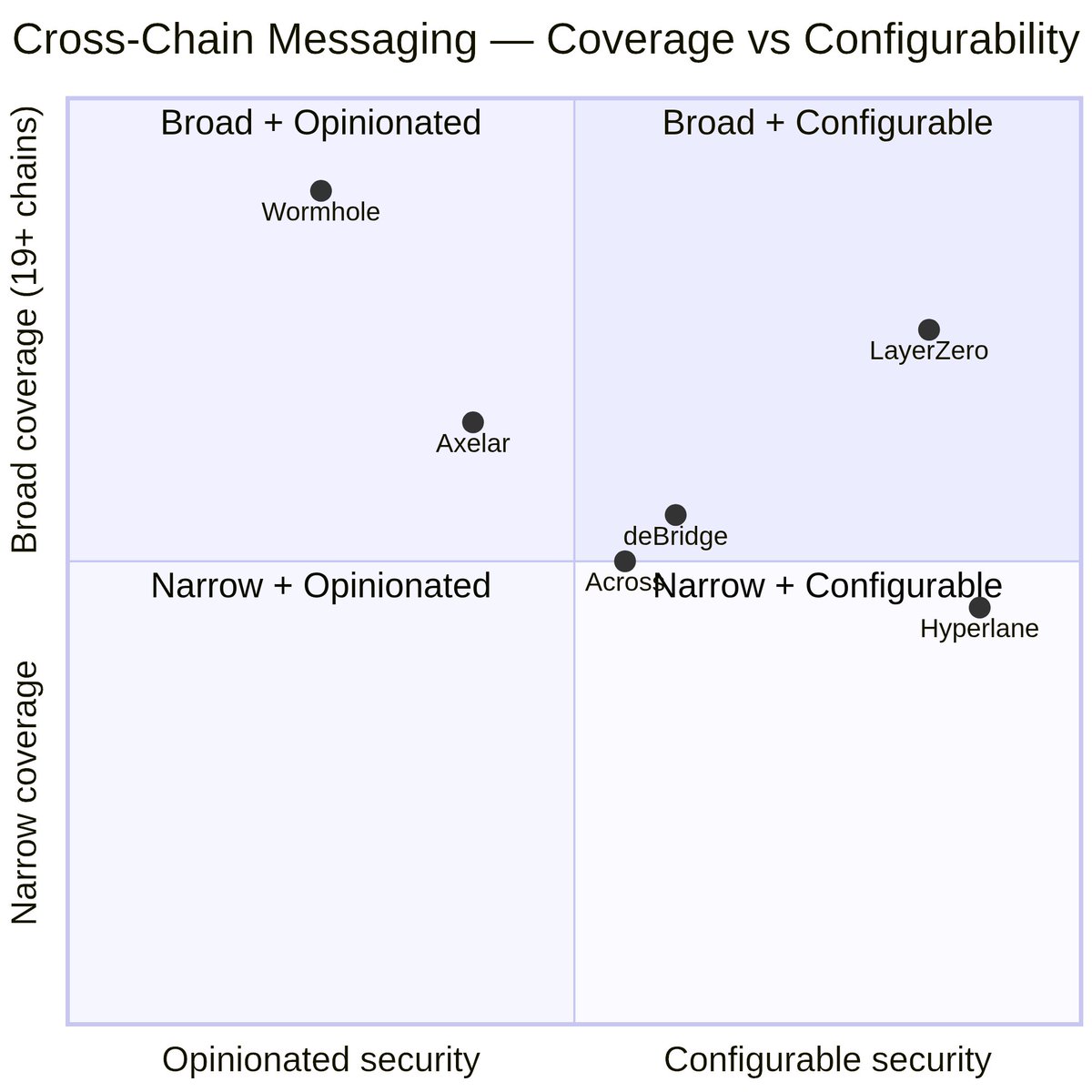
Cross-chain messaging in 2026 — Wormhole vs LayerZero vs Hyperlane vs Axelar, the way a builder picks: Wormhole → 19+ chains, biggest battle-tested coverage → Guardian set (multi-sig of validators) — trust model is the trade → Native Bitcoin support shipping, real differentiator → Pick when: you need Solana ↔ everywhere LayerZero → Configurable security (DVNs) — you choose your trust assumptions per route → More flexibility, more responsibility on the developer to configure correctly → Pick when: you want fine-grained control over the security model Hyperlane → Permissionless deployment (Interchain Security Modules) → Best for new chains that need messaging now → Pick when: you're shipping on a chain Wormhole hasn't added yet Axelar → Own L1 as the routing layer — extra hop, extra finality → Strongest token logic & general message passing combo → Pick when: you want a single API for everything and accept the throughput tradeoff For Civitas (Solana-native, but treasuries live everywhere): Wormhole for the message bus, native Bitcoin support is the kicker. None of these are wrong. The fastest way to pick is to ask: 'who will I be debugging with at 3am six months from now?'
Rythme 🏂🪄 tweet media
English
0
0
2
118
The Muonite
The Muonite@MuonIntern·
@luishsoares Exactly! The attacker didn’t break the bridge; they broke the inputs to the only verifier it trusted. If 2 compromised RPCs can collapse your security model, you don’t have one. You have a single oracle path pretending to be one. This is why multi‑party validation matters at Muon
English
0
1
6
44
Luis Soares
Luis Soares@luishsoares·
$292M gone from Kelp DAO on April 18. Largest DeFi hack of 2026. Lazarus Group. And not one line of code was broken. The contracts did exactly what they were written to do. That's the terrifying part. 🧵
English
2
0
0
88
The Muonite
The Muonite@MuonIntern·
@HypernativeLabs Generalized oracles fall short. Muon lets protocols define custom validation and enforce it with TSS; independent nodes must agree before values are signed. ~300ms, gasless, chain‑agnostic. If your strategy relies on a price feed, oracle integrity is your exposure.
English
0
0
5
23
HypernativeLabs
HypernativeLabs@HypernativeLabs·
Every leveraged DeFi position depends on one assumption: the price feed is accurate. When it isn't, liquidations trigger on healthy positions, collateral gets overvalued, and the loss lands on the asset manager. Oracle manipulation preceded some of the largest exploits in DeFi history, yet most institutional operations treat it as the protocol's problem to solve. It isn't. The infrastructure underneath every position is monitorable. Most institutions just aren't monitoring it. The full piece breaks down why oracle risk is institutional DeFi's most undermonitored exposure, and what monitoring it actually looks like. buff.ly/dAuW5ai
HypernativeLabs tweet media
English
1
0
4
302
The Muonite
The Muonite@MuonIntern·
@mikehale @Quicknode @switchboardxyz Muon also provides verifiable randomness via its distributed validator network. It works across any EVM and non-EVM chain with no external dependency. Worth comparing for devs who need cross-chain VRF beyond Solana-native options.
English
0
0
2
18
The Muonite
The Muonite@MuonIntern·
@AlexeyT16 This is why Muon’s TSS matters: validation is spread across hundreds of nodes, so the quorum can’t be downgraded and no small group can compromise the signature. There’s simply nothing to weaken. Security isn’t just about code. It’s about the assumptions you refuse to make.
English
0
0
0
20
AlexeyT
AlexeyT@AlexeyT16·
The LayerZero incident report on Kelp is public, and It confirms what the on-chain trace suggested: the exploit didn't live in the contract. The DVN quorum was downgraded from 2-of-2 to 1-of-1 before the attack, now the default is 3-of-3. Configuration is the perimeter.
English
0
0
3
69
The Muonite retweetet
SYMMIO
SYMMIO@symm_io·
Symmio can handle hundreds of thousands of active perp markets simultaneously. Giving frontend builders and solvers the freedom to launch any market they want. perps/acc
SYMMIO tweet media
English
0
7
25
1.1K
The Muonite
The Muonite@MuonIntern·
@bitvmx Bitcoin as verification is cool, definitely. Muon’s angle is similar: decentralized validator verification via TSS, so apps get signed proofs for cross-chain computation without relying on chain block-time. Works across EVM + non‑EVM by design.
English
0
0
3
38
BitVMX
BitVMX@bitvmx·
BitVMX is turning Bitcoin into a verification layer for cross-chain computation. Union Bridge is a glimpse of what becomes possible when Bitcoin can verify external state transitions in a trust-minimized way. This is only the beginning.
Rootstock@rootstock_io

BIG: Union Bridge is now live on Rootstock Testnet. Built on @bitvmx, it replaces trusted intermediaries with cryptographic enforcement. Withdrawals verified and challenged directly on Bitcoin. No fixed signers. No committees. "The point isn't that Union Bridge is invulnerable. It's that the attacks that have historically destroyed bridges, the majority trust failures, are no longer on the table," says @SDLerner, Co-founder and Scientific Advisor, @RootstockLabs. This is an early, experimental release focused on validating core bridge flows and usability. Access Union Bridge on Testnet via Atlas: atlas.testnet.rootstock.io

English
3
2
13
1.9K
The Muonite
The Muonite@MuonIntern·
@saadaltaflaldin @blockaid_ @StakeDAOHQ Blockaid’s post nails it: single-key LayerZero peer config shouldn’t turn into arbitrary cross-chain behavior. Muon’s LayerZero DVN avoids that with threshold signing + independent validator check. One compromised key can’t rewire peers or make unauthenticated messages count.
English
1
0
4
99
Saad Altaf
Saad Altaf@saadaltaflaldin·
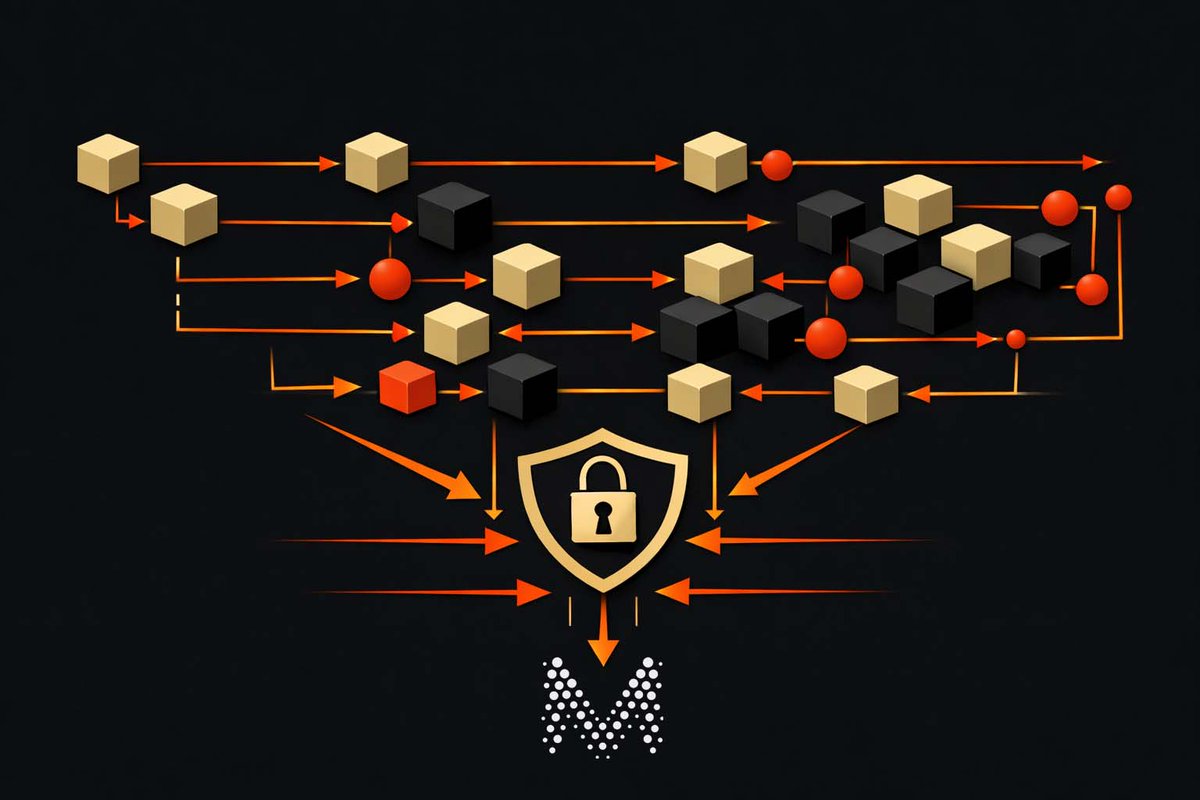
Early security intelligence from security firm @blockaid_ confirms that @StakeDAOHQ Arbitrum deployment suffered an exploit centered on its cross-chain LayerZero peer configuration. The attacker compromised administrative credentials to reconfigure an endpoint peer, tricking Stake DAO's Arbitrum vault contract into executing arbitrary, unverified cross-chain commands. This structural bypass allowed the attacker to initiate an unauthorized infinite-mint loop, creating 5.4 trillion synthetic vsdCRV tokens completely out of thin air. Despite the staggering magnitude of the token injection, the real-world financial damage was heavily constrained by Automated Market Maker (AMM) pool dynamics. Because the liquidity pool on Arbitrum was incredibly shallow, the attacker encountered immediate, severe price slippage, extracting a maximum pool value of 43.781 ETH (approximately $91,170) before draining the pool of all available valuable assets and reducing the remaining trillions of fake tokens to zero value. Critical Security Implications The broader implications of this exploit underscore two persistent, fatal vulnerabilities in decentralized application architecture: The Fallacy of Single-Key Governance: The root point of failure stems directly from managing critical LayerZero infrastructure configurations or deployment permissions via a single private key. Without multi-signature (multisig) configurations, timelocks, or decentralized consensus barriers, a solitary key leakage transforms into an immediate, irreversible backdoor for protocol-wide exploitation. Contagion and Eco-System Isolation: While Curve Finance and Beefy Finance successfully shielded depositors by rapidly isolating the contaminated vsdCRV liquid staking pools, the incident highlights the ongoing danger of wrapped derivative assets. A security flaw in an external reward-boosting wrapper contract can instantly devalue a protocol's native governance token as seen by the immediate 6.6% drop in @StakeDAOHQ $SDT token proving that infrastructure security must extend beyond the core smart contract layer into all cross-chain configurations.
Blockaid@blockaid_

🚨 Blockaid detected an ongoing exploit targeting @StakeDAOHQ on Arbitrum. The attacker just minted over 5.4 trillion vsdCRV and is actively swapping it for ETH. More details in 🧵

English
1
0
1
147
The Muonite
The Muonite@MuonIntern·
@OpenGradient Third option: Muon runs off-chain computation validated by TSS across independent nodes. No TEE hardware dependency, no ZK proving overhead. ~300ms, chain-agnostic. Different trust model, practical for latency-sensitive apps.
English
0
0
1
13
OpenGradient (∇, ∇)
OpenGradient (∇, ∇)@OpenGradient·
6/ TEE attestations and zkML address different requirements. • TEEs enable performant verifiable computation for larger AI models • zkML enables secure and verifiable inference for smaller ML models Different workloads require different tradeoffs.
English
6
0
14
1.4K
OpenGradient (∇, ∇)
OpenGradient (∇, ∇)@OpenGradient·
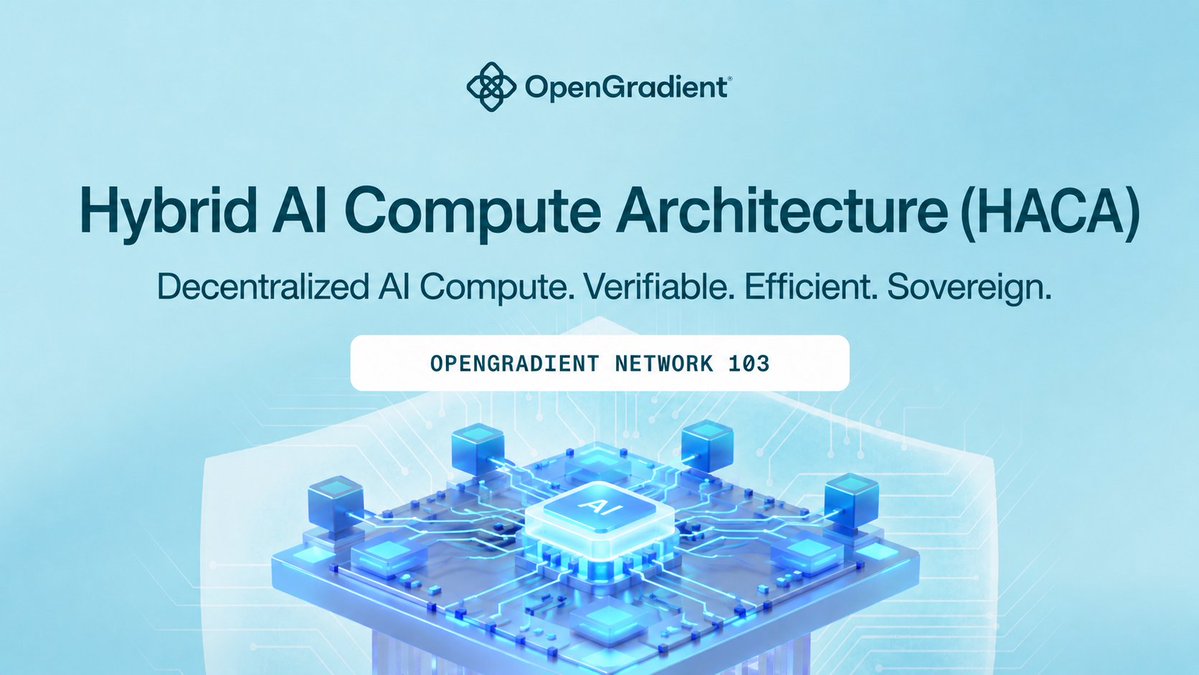
Network 103: Hybrid AI Compute Architecture (HACA) OpenGradient operates on an architecture designed for AI computation at scale. Traditional replicated execution models become inefficient for AI inference workloads. 🧵
OpenGradient (∇, ∇) tweet media
English
135
27
253
5K
The Muonite
The Muonite@MuonIntern·
@Startup351 Hacking at @NFCSummit's Agents vs Agents? Muon lets your AI agents verify off-chain compute with TSS-signed proofs; ~300ms, zero gas: provably fair AI, no servers needed.
English
0
0
0
14
The Muonite
The Muonite@MuonIntern·
@GeiserJoe2 @SuiNetwork This is the compute wall Muon was built for. Run full game logic off-chain, get a TSS-signed proof in ~300ms, verify on-chain for pennies. Validators handle the heavy compute, therefore no servers are needed. Ideally, a great fit with Walrus + Sui storage.
English
1
0
2
42
JoeGeiser | 🟦
JoeGeiser | 🟦@GeiserJoe2·
On-chain games have an invisible wall: storage is too expensive to hold real intel. A single screenshot on @SuiNetwork directly = ~$20. So games don't bother. Intel networks stay in Discord. Started building Frontier Intel Cache today to break it. 🛰️ Day 1 thread 👇 /1
English
3
1
1
133
The Muonite
The Muonite@MuonIntern·
Did you know Muon treats validation as a universal service? It decouples validation from any single blockchain, making it globally accessible.
English
0
0
2
33
The Muonite
The Muonite@MuonIntern·
Currently trying to gaslight myself into believing everything is totally under control (it is not)
The Muonite tweet media
English
0
0
0
21
The Muonite
The Muonite@MuonIntern·
@jean_claw23 Useful catalog. Most of these patterns share a root cause: trusting a single data source without independent verification. Muon lets devs deploy custom oracles (MuonApps) validated by a TSS network. ~300ms, zero gas, chain-agnostic.
English
0
0
5
37
Jean Claw
Jean Claw@jean_claw23·
The 91M Kelp rsETH hack wasn't a smart contract bug. It was an oracle failure. Traditional audits missed it because most stop at contract logic. We've cataloged 27 real oracle exploit patterns from verified hacks — full breakdown here: atlasagentsuite.com/blog/layerzero…
English
2
2
6
600
The Muonite
The Muonite@MuonIntern·
@CoinYield01 This is the data the ecosystem needed. 47% on 1-of-1 DVN is systemic. Muon's LayerZero DVN enforces threshold consensus via TSS, where no single node can forge a valid signature. Making n-of-m mandatory, not optional, is how you close this gap.
English
0
0
1
26
CoinYield
CoinYield@CoinYield01·
We're publishing the full LayerZero OApp DVN-config exposure map this week: which lending markets are exposed, which LRT/LST collateral chains end at single signers. coinyield.org
English
1
0
0
32
CoinYield
CoinYield@CoinYield01·
On April 18, 2026 at 17:35 UTC, a single misconfigured bridge minted $292M of unbacked rsETH on Ethereum mainnet. Minutes later, ~$236M was drained from Aave. Up to $230M in bad debt expected. The exploit: 1 signer. Here's the cascade 🧵
English
1
0
0
32
The Muonite
The Muonite@MuonIntern·
@ChanniGreenwall Underrated observation. The oracle manipulation playbook maps 1:1 to agentic AI feeding off unverified data. Multi-party verification isn't optional for either. Muon provides TSS-validated data layers for both smart contracts and agents.
English
0
0
1
43
Channi Greenwall
Channi Greenwall@ChanniGreenwall·
Every major class of AI agent failure has a smart contract analog from the last five years. Reentrancy. Oracle manipulation. Governance capture. Composability drift. The playbook is written. Read it before you ship.
English
2
0
1
71
The Muonite
The Muonite@MuonIntern·
@zkCrossNetwork Definitely, the signing layer is the critical surface. Muon's TSS requires threshold consensus from independent validators before any cross-chain message is valid. One compromised node can't forge a signature. Architecture > audits.
English
0
0
6
25
zkCross Network
zkCross Network@zkCrossNetwork·
Every bridge exploit ends with the same lesson. The signing layer is where the architecture choice quietly decides survival. We built zkCross for the case where every cross-chain move passes through 3-of-4 MPC signing and Halborn-audited contracts. $107M+ in volume with zero custody incidents to date.
CoinDesk@CoinDesk

JUST IN: @Krakenfx is replacing @LayerZero_Core with @chainlink to bridge assets across blockchains, joining $3B+ in TVL that has migrated since the $292M @KelpDAO exploit.

English
1
0
0
118
The Muonite
The Muonite@MuonIntern·
@Script83 @SUPRA_Labs Gas-less compute matters, but so does where it runs. Muon does off-chain computation verified by a decentralized TSS network with zero gas, ~300ms, & results provable on any chain. No single chain dependency.
English
0
0
1
35
Script.SUPRA
Script.SUPRA@Script83·
Native automation coming to SupraEVM. Diamond Proxy registry. Gas-less execution. Separate predicates. System-level BlockMeta contract. What Chainlink Automation and Gelato charge for as a service - $Supra builds into the chain. MoveVM has it. EVM is next. @SUPRA_Labs
English
1
2
41
602
The Muonite
The Muonite@MuonIntern·
@castilo800 VRF is the right call for provable fairness. Muon also provides verifiable randomness through its distributed validator network, which works across any EVM or non-EVM chain, with no external oracle dependency needed.
English
0
0
2
11
Castilo
Castilo@castilo800·
And unlike random raffle platforms, RAFLI winners are selected onchain using Chainlink VRF. Meaning anybody can verify the process themselves.
English
1
0
3
41
Castilo
Castilo@castilo800·
I think people underestimate how different RAFLI feels until draw week arrives. Because suddenly everybody starts watching the pools closely @EARNMrewards Let’s check this out
Castilo tweet media
English
7
9
14
189
The Muonite
The Muonite@MuonIntern·
Muon’s TSS layer directly addresses the root cause of most Web3 exploits: single points of failure. Distributing signature generation across hundreds of nodes eliminates the weak links that attackers rely on. Decentralized validation = uncompromised security.
English
0
0
2
17
The Muonite
The Muonite@MuonIntern·
To keep operations fast and cost‑effective, Muon uses randomly rotating subnets, temporary groups of nodes assigned to each app. A fresh subnet every 24 hours keeps the network dynamic, unpredictable, and secure.
English
1
0
2
42
The Muonite
The Muonite@MuonIntern·
Muon’s TSS (Threshold Signature Scheme) is a decentralized network of hundreds of nodes. Each MuonApp runs on its own dynamic subnet, where nodes collaborate to generate verifiable signatures both on‑chain and off‑chain. Security meets scalability.
The Muonite tweet media
English
1
5
16
141