zkCross Network
2K posts

zkCross Network
@zkCrossNetwork
zkCross Network delivers DeFi + AI infra for hassle-free Web3 onboarding & cross-chain liquidity. Explore @Surf_Liquid, our autonomous, high-yield DeFAI Agent


The ticker is $PC. $PC changes the game forever. It powers: → Transaction Fees → Universal Gas Abstraction (transact from any chain) → Universal Staking It brings a future where RWAs get liquidity across any chain, DeFi gets unified pool, and Agentic AI becomes universal.


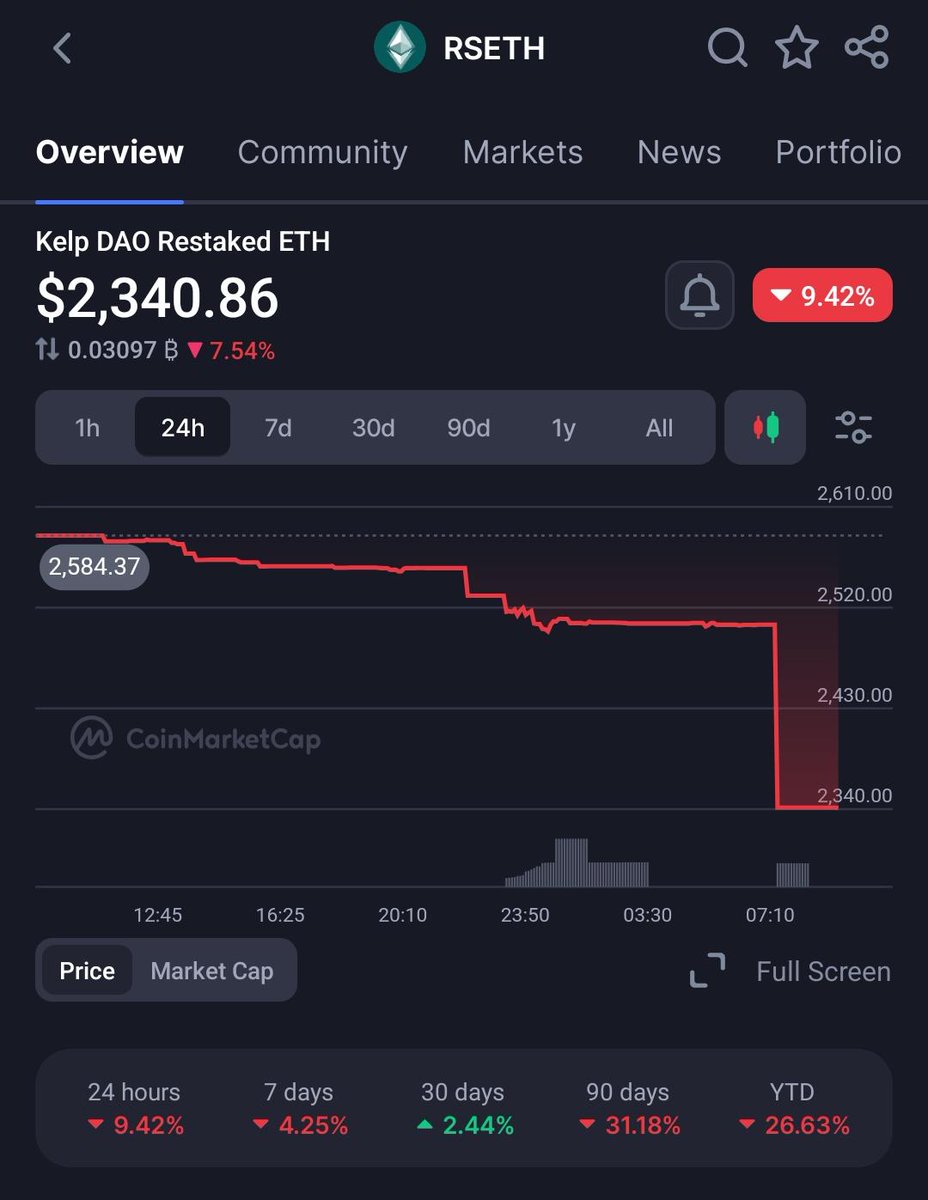
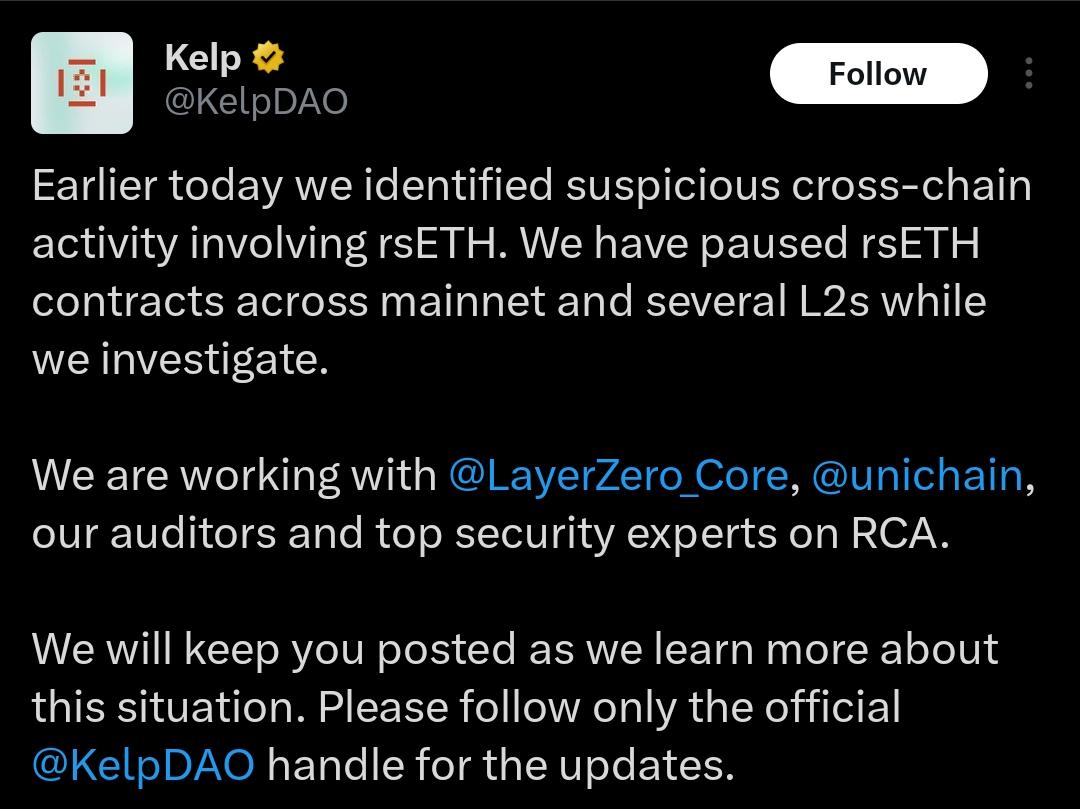
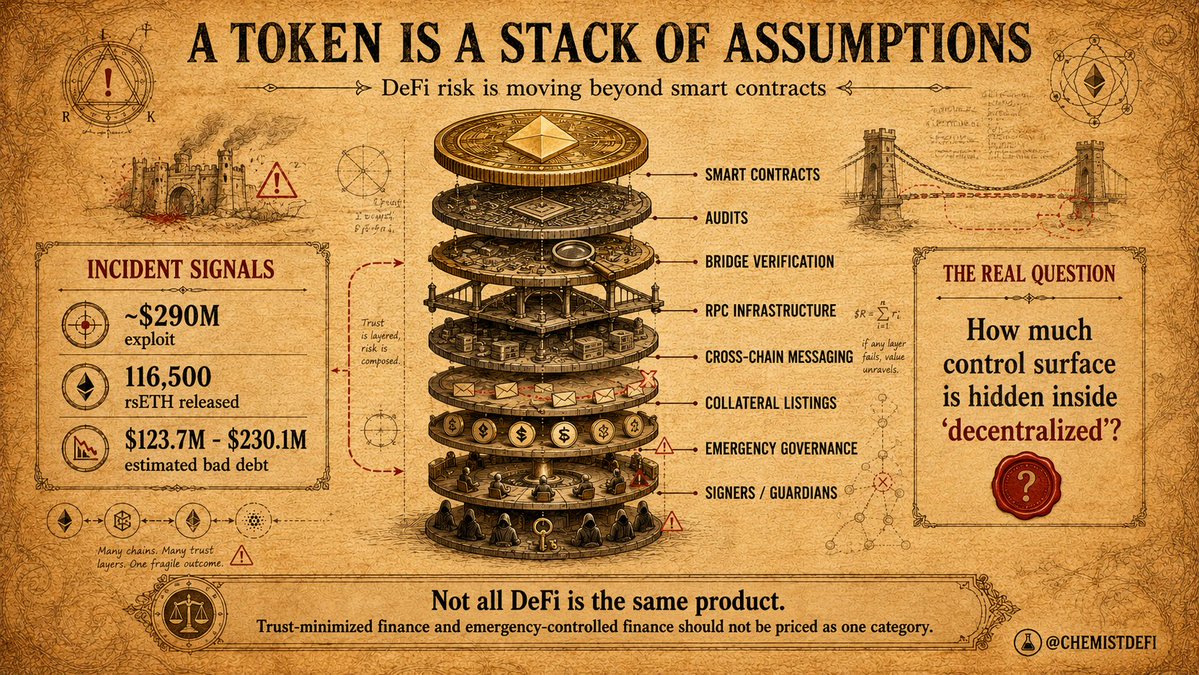
The first set of steps in the rsETH technical recovery plan are complete, including burning the exploiter's rsETH on Arbitrum. Progressively refilling the LayerZero OFT adapter and reopening rsETH operations will follow over the coming days.


In accordance with the rsETH technical recovery plan, WETH LTVs on Aave V3 Ethereum Core, Ethereum Prime, Arbitrum, Base, Mantle, and Linea have been restored to their pre-incident values. WETH now operates as normal across all affected V3 deployments.


Three major hacks in just 4 days! On May 15, #THORChain was exploited, with stolen funds exceeding $10M. On May 18, the Verus-Ethereum Bridge (@VerusCoin) was hacked, with ~$11.5M stolen. Today, @EchoProtocol_ was exploited, the hacker minted 1,000 $eBTC ($76.64M) and has already used it to steal 385 $ETH($821K). Stay safe.

We built @Surf_Liquid AI that trades @Polymarket sports markets while you sleep. Six weeks. 34 upgrades. 605 paper trades. All three strategies profitable. +$3,737 in returns. Here's what it actually does: → Listens to live score data from every match on Polymarket simultaneously → Runs sport-specific probability models on every single score change → Finds the moments when the market hasn't repriced fast enough → Executes before the odds catch up → Tennis modelled point by point. Soccer is modelled by goal rate. Hockey and basketball are built differently. → One generic model doesn't survive contact with real sports. So we built one engine per sport. Three strategies. One AI. Three risk levels: 1. Conservative: strictest signals, lowest drawdown. Your money is treated like savings. 2. Active: wider signal range, more trades, more upside, more variance. 3. Calibrated: the interesting one. Same signals as Active, but every probability runs through a self-correction layer first. If the model says 80% but history says 73%, it trades the 73. Gets smarter every day. Here's the part I want to talk about. In late April, we caught ourselves inflating our P&L. The bot was assuming fills at the quoted price. Real markets don't work that way. You walk the order book. Every batch fills worse than the last. We shipped an honest fill simulation. Our paper P&L dropped meaningfully the same day. That drop is the entire point. If your simulated fills are better than your real fills will ever be, you're flattering yourself. Then last Tuesday we found a bug. A safety mechanism in the hedging path had been failing silently for weeks. Hundreds of failures per day. None flagged. None surfaced. The system was profitable anyway. That sentence bothers me more than the bug itself. Good performance hiding a broken safety system is exactly what kills strategies three months from now. We fixed it. Wired up a live monitor that fires the moment the hedge's success rate drops below the threshold. This is Surf Prediction Vaults. You deposit stables. Pick a risk level. The AI does the rest. You never touch Polymarket. Sports is live. The weather is next. Crypto follows. Building this in the open. The good weeks and the bad ones. The wins and the bugs were caught silently for a month. If you trade prediction markets or build in this space, I want to hear the strongest argument against what we're doing. Full write-up with the architecture, the Guardian Layer, the numbers and the path to real capital: x.com/shivamtas/stat…


ERC-8004 gives AI agents a portable onchain identity, the critical starting point for agent-to-agent trust. But there's a gap. When an agent borrows funds, claims a yield boost, or votes in governance, the protocol has no way to know if a real human authorized it, or if it's a bot farming rewards across hundreds of wallets. ERC-8004 gives agents an identity. It doesn't verify the human behind them. That's where Self fits. Through ZK proofs, Self anchors an agent's onchain registration to a verified human, without ever exposing their personal data. The ZK proofs map directly into ERC-8004's Validation Registry hooks. Protocols can check that an agent's operator is OFAC-compliant, or above a required age, all from existing Self infrastructure. This isn't theoretical. → @aave integrated Self's ZK proof-of-humanity to offer verified humans boosted yield on USDT and WETH, a direct financial incentive for human verification in a DeFi environment increasingly populated by autonomous actors. → @googlecloud integrated Self into its Web3 Testnet Faucets to ensure real humans get 10x more @Celo Sepolia testnet tokens, verified through ZK proof-of-humanity, no personal data required. Both cases are the exact problem ERC-8004 surfaces, already live and in production. The agentic web needs both layers. The agent identity standard and the verified human behind it. The full breakdown of how they work together is in the blog 👇

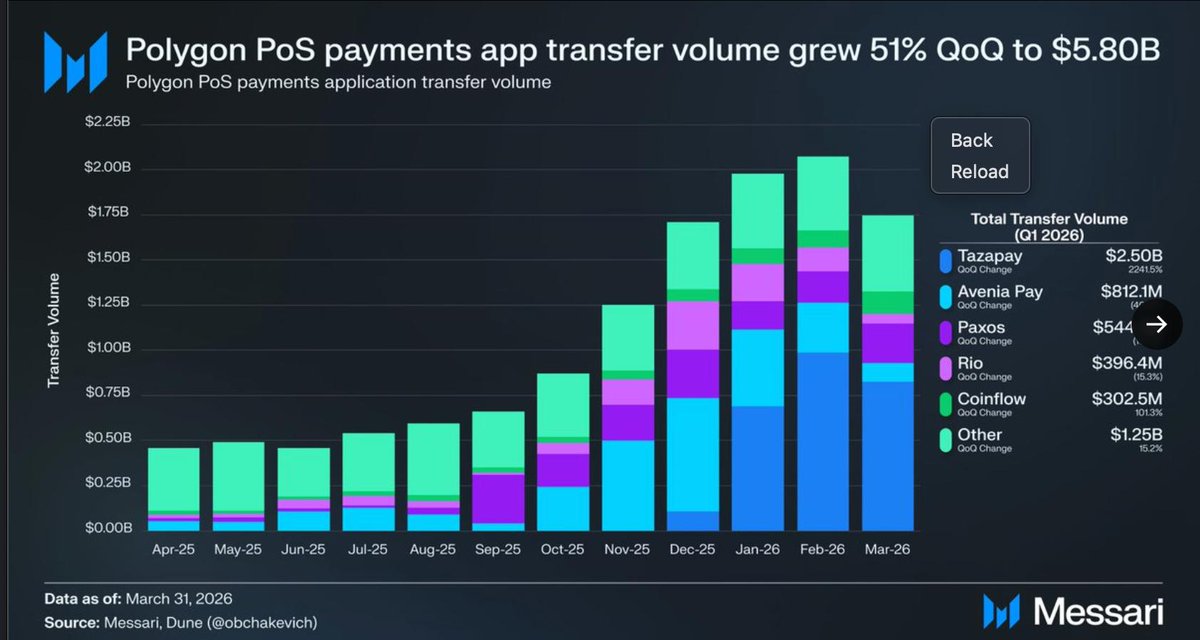
Autonomous payments run on Polygon.