
Josh Landen
1.7K posts
Josh Landen
@WhatJoshTweeted
Tweets liked by Jim Gaffigan, Alton Brown, Gary Gulman, Karen Swallow Prior, Rick Steves, and Joe Lockhart.
Florida Beigetreten Şubat 2010
501 Folgt194 Follower

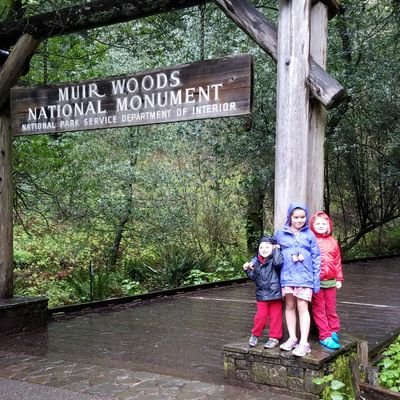
My sons, watching Artemis II launch from their front yard in Orlando.

English

Ethanol mandates are in direct conflict with feeding the world, have no impact on American energy security, and are at best neutral for climate (probably negative). Kill them with fire. Sink them with the Jones Act.
Nicholas Decker@captgouda24
About five percent of the total caloric production of the world goes to making ethanol, which doesn’t even reduce emission! Learn why we should get rid of the Renewable Fuel Standard here: nicholasdecker.substack.com/p/get-rid-of-t…
English


@drantbradley So hard to watch, but even harder to ignore
English

I’ve been saying for years that the reason most blacks are Democrats today is that conservatives in the 1970s resisted integration. Had they taken a more libertarian position, America would look very different today. A missed opportunity. 1970s conservatism equaled pro–Jim Crow.
English
@morallawwithin Dyslexic me read this three times and was wondering why she was talking about pyramid schemes.
English


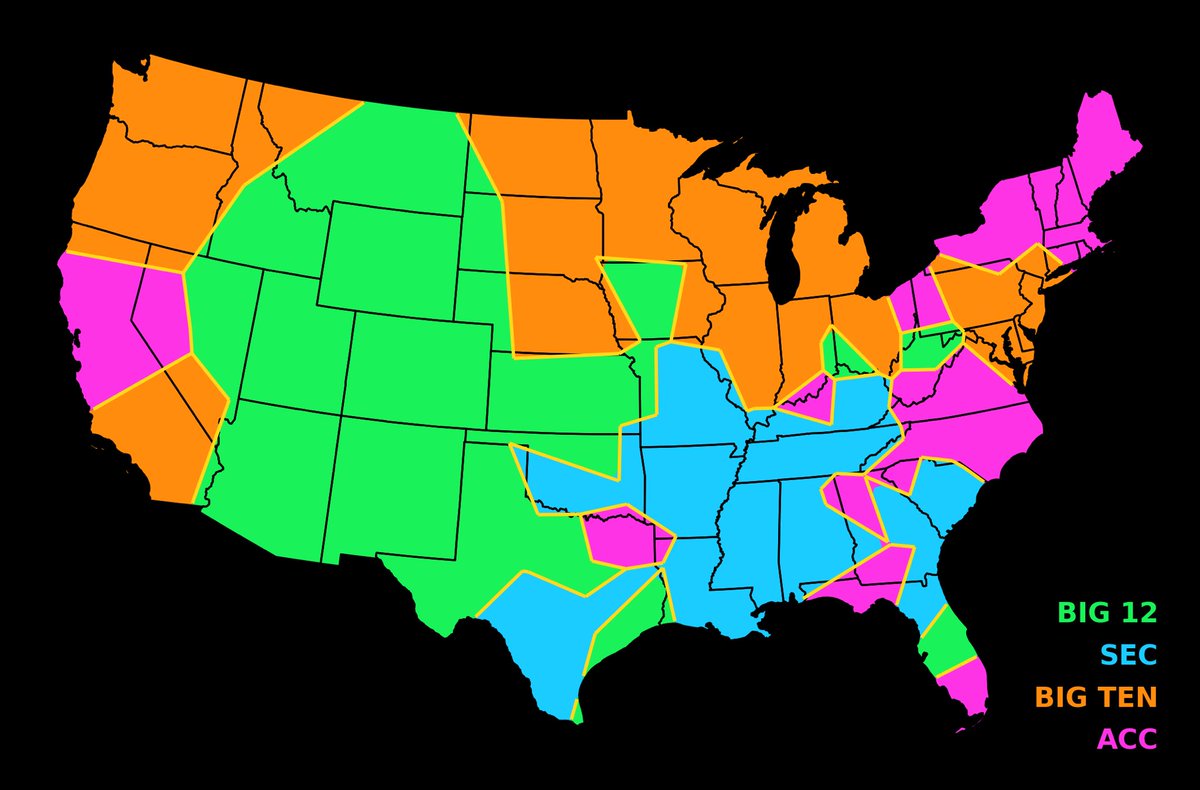
@RedditCFB I say with utmost certainty you've overstated GT's and FSU's geographic influence in the state of Georgia.
English

And this is just P4 🤪
Vintage Maps@vintagemapstore
How Major Sports Teams Divide the United States
English

On the one hand, I know Gen Z is generally struggling with a reading comprehension issue, but on this point, they seem to be doing the reading
Weltgeist@WeltgeistYT
"Jesus appears to have a God complex" is an amazing sentence
English
@revchadbrooks @lukedsimmons Thank you for a thoughtful response. I have this book recommended to me a dozen times, but I haven't read it. I still may, but I have observed a lot of what you describe in 1/2/3. Again, thanks.
English

I'd imagine I would say much of what @lukedsimmons would. There are many parts of the book I enjoy, but in my experience, it can cause a false-justification for a lack of work, especially in a staff role.
Comer wrote this as the pastor of a large church and was entering middle age. While burnout is real, and I've personally experienced it myself in 2021-2022, I've found some people lean into this book rather than building up the necessary resilience that comes with pastoral ministry, especially when they are new to full-time ministry.
1. Your 20's are the prime time to learn how to work hard. To learn to experiment, iterate, and build up core vocational capacity. Figure out your weak spots, find a mentor, and learn how to not let those weak spots be drag nets for the rest of your life.
2. Leadership trust is directly related to your being trusted by those you are leading. If some basic skills and practices (such as communication, organization, and the other busy work young leaders struggle with) gets dropped, especially in the name of sabbath, folks are going to not trust you. I've directly experienced this happening with staff and church members.
3. Many of those who I have seen drawn to this book want to experience and do big things in life. That's awesome. But, with that comes a level of hard work.
There are folks who have leaned into JMM, work hard, and sabbath hard. @treyvancamp is a fantastic example. Trey has done amazing and innovative ministry.
I also say this as someone who typically likes and agrees with JMM. I just think his work and Scazaaro might not be the best thing for the situation @lukedsimmons described in his original post.
English

“Any advice for me?,” asked the new 23 year-old pastoral resident.
“Yes,” I said. “Don’t read The Ruthless Elimination of Hurry for at least 15 years.”
English
@revchadbrooks @lukedsimmons Can you say more about this, Chad? I always value your insights.
English
@revruck @tsfine I think these 3 things are reasonable and expected in a connectional system and, in my exp., much less onerous in the GMC than the other. Having denom. sub-HQ (gen. agency) offices and 100s of employees in Nashville, Chicago, Atlanta, NYC, and Washington is altogether different.
English

@tsfine What’s your paperwork level at now compared to the UMC?
Charge Conference? ✅
Pastor Evaluations? ✅
Annual Audit? ✅
If you really look at it, they just copied the forms of the UMC and changed the letterhead.
Now they are forming committees. 🙄
English
It’s inevitable, some of my friends in the GMC are already beginning to see denominational bloat creeping up.
Networks are the future, but I do wonder about the accountability piece of networks.
How do you have accountability in independent networks?
Evan Sustar@EvanSus96
Very interesting. People care less and less about denominations. Local churches are king right now. I wonder if we’ll see the rise of smaller denominations/networks?
English
@believebetter1 @revchadbrooks @kevinwatson 's book is the standard popular book on the class meeting's history and place in Methodist revitalization.
English

@revchadbrooks Tell us more about the history of the class meeting. It seems that a modern revival of the class meeting could do amazing things. Substack post?
English
UMC decline is a result of praxis, not theology.
I'll be standing on this hill even more now.
I've been researching the history of the Class Meeting, how it created polity and drove our entire organizational design.
Losing this created denominational instability.
English
@revchadbrooks @smccann24 Can you please say more about what you describe as "modern operating practices" adopted among in growing conservative churches? What does that look like(what are they?), and how would you compare them to other Methodist practices generally/historically?
English
The praxis shift from 1870 - 1935 or so (not requiring or counting the class meeting/discipleship structure) created an environment where many things COULD change.
It shifted much of our reporting structure from discipleship effectiveness to institutional stability. Every unique point of Methodist reporting originally stemmed from measuring discipleship making.
This was the move from Methodism as a movement to Methodism as an institution. Two major denominational mergers in 1939 and 1968 created an even more complicated theological spectrum.
I work at the Annual Conference level (and have access to plenty of historical data), and even before the 2023 disaffiliation season, I can find no statistical support for the claim that known conservative churches are larger or healthier than known centrist or progressive churches. The one thing in common is the larger operational design.
Systemic problems are larger than theology.
Antecedonally, the conservative churches (who left or didn't leave) that are growing have adopted much more modern operating practices as typically seen in growing Evangelical churches.
Add in the aged population of the UMC (per @ryanburge), the loss of the doctrine of Christian Perfection (what Wesley called "the grand deposit of Methodism), and the change in reporting structure/vision, I think I can build a case for decline as a systemic operating failure rather than theology.
I call this the mainline conundrum.
English

Working in my library, I just unpacked the edition of Moby-Dick I had in college (which I didn’t finish, tbh). My book mark was the meal slip for my break at the restaurant where I worked. I’ve always been as voracious an eater as a reader. 😂

English

When I say "nutcase" who's the first athlete that comes to your mind?
English
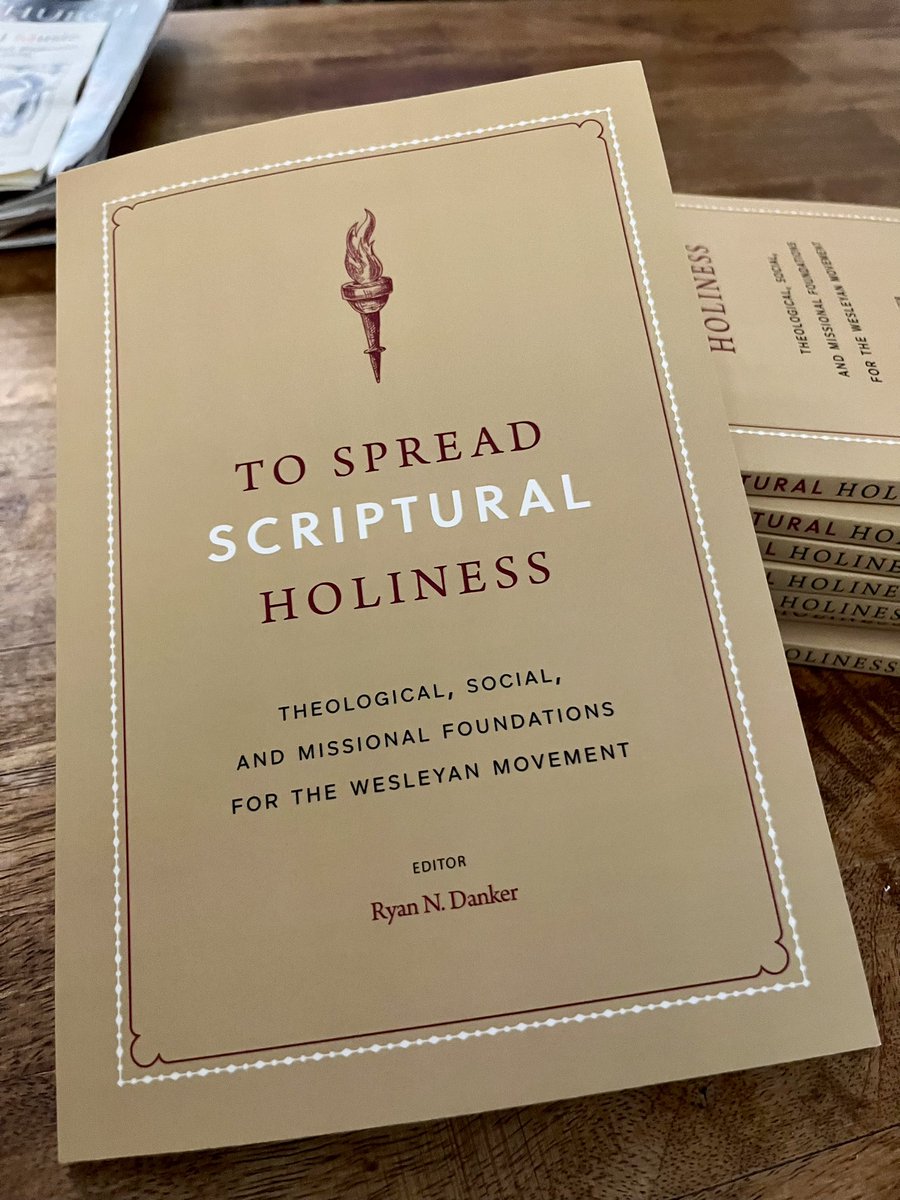
@RyanNDanker I don't see this in the Seedbed store. When will it be released?
English

@danielrgriswold @markdtooley If only a large influx of recent cash was available.
Or if only one had a (the?) prime location in the District to utilize.
We may never know.
English

@markdtooley That’s interesting. Washington DC is split in two by Northeast and Virginia Conferences. Is there a solid mother church that could plant a daughter in the city from either conference, I wonder? A parachute would take quite some time and expense so would be a major undertaking.
English
Over 2 yrs I've found no interest by Wesleyan world in planting church in DC. Unlike Reformed/Baptists/Anglicans, Wesleyans haven't trained urban church planters. & collapsing interest in denominations/traditions hinders deep interest in planting particular tradition in arguably world’s most influential city. But we press on!
English
@RyanNDanker Like you, I grew up in the Nazarene church (Georgia), and we never had a Christmas Eve service. If it was a Sunday, we'd still have morning worship but cancel evening services. Same for Ash Wednesday and Holy Week.
English
Talked to my dad about growing up in an evangelical church. No Christmas Eve/Day services. Now his church has Christmas Eve. No Christmas Day. Baby steps.
English
@NPWhite717 Not the same, but similar: I had an OT professor in seminary who said he preached took a year to preach through Zechariah once.
English

Every time I preach from Isaiah, I find that I simply do not have the time to preach it as it deserves.
If I ever did a series straight through it, it might take ten years.
English
@secnumbersguy Not so fast, my friend: within the conference, SEC schools are at an exactly .500 winning percentage.
Not as dominating as your stats might suggest.
English

SEC Record versus Each Conference:
-Big Ten: 2-1
-Big 12: 3-0
-ACC: 6-4
Total: 11-5
Unsurprisingly, the SEC had a winning record against EVERY other conference.
It just means more in the SEC!
English