

Will Weltgeist
20.1K posts
Will Weltgeist
@WillWeltgeist
"Evil preaches tolerance until it is dominant, then it tries to silence good." -- Abp. Charles Chaput "Rebellion to tyrants is obedience to God" - B. Franklin
Beigetreten Mayıs 2023
232 Folgt277 Follower

Do you think Barack Obama is a liar and a traitor

English
Yo @ninoboxer, so you’re not a leftist and you obviously never loved @charliekirk11 or anything he stood for or built.
Your commentary is confusing and contradicting.
In one breath you say Charlie would be proud…
In the next you say you’re backing Candace Owens as she depletes support for everything Charlie built.
Please explain to me how you’re not just enriching yourself while wiping your feet on everything you supposedly stand for.
Are you a conservative? Or just a RINO?
I’ve never seen you before, but I guess you used to box — or still do.
Maybe you should stick to the ring and get off the mic.
No disrespect, but when you come for what my Lord and Savior tells me to defend, I don’t care how big you are or how many people you’ve knocked out.
I will not allow you to sit here and act like you can discern what is true, righteous, and good — because you clearly cannot.
Candace Owens’ actions are not only antithetical to Christianity — they are truly antichrist.
Full of NOTHING, but satanic actions, thoughts, and words.
She is a jealous, scorned woman who celebrates sowing division between believers, creating false witnesses, and spreading gossip — the very things God hates and detests (Proverbs 6:16-19).
You may not know that, so I’m informing you.
But then again, I don’t think you care.
I think you care about growing your platform, your podcast, the clicks, views, and likes.
It’s truly sad.
But it’s alright, it may take time, but the truth will shine.
Coldblooded Christian (@ColdblodedChrit)
Mind over manipulation 🧠
Truth over tribalism 💯
Christ over clout 🙏
Duluth, WA 🇺🇸 English

@anzactaz @jay_fantom Explain the Quick Quack Car Wash please.
English

@jay_fantom Q: What’s the mathematical probability Tyler Robinson didn’t assassinate Charlie Kirk?
(Question answered by Grok, built by xAI)
A: Extremely low — <0.1% to <1% (i.e. >99% likely he did), based on current public evidence as of April 2026.
English

So let me get this straight. When Erika Kirk says she has threats against her life no one believes her when her husband was shot and killed. The VP JD Vance confirmed the threats on stage. She’s had Candace tell her followers she killed Charlie. Candace has continued to lie and attack Erika along with hundreds if not thousands more online. Yet when Candace says France and Israel are trying to kill her without a shred of evidence to prove it. Everyone has a meltdown over it and believes Candace lie. Candace I’ve got a great idea. LEAVE ERIKA ALONE you psychopathic narcissistic dingbat of a witch!
English
@jay_fantom Why did she wait until the last minute to cancel then when she cancelled a high school appearance two days before?
Face it. TPUSA is toast.
English
@Wolfahontas @RealCandaceO @TuckerCarlson @megynkelly @RealAlexJones @ComicDaveSmith You sound vaccinated.
English
Now guys forget about watching:
@RealCandaceO
@TuckerCarlson
@megynkelly
@RealAlexJones
@ComicDaveSmith
They are all done and dusted. Shitheads that just make you dumber watching them.
If you want good podcasters, creators and debaters. These are the ones that will keep your minds sharp and also give you a good laugh:
@BenShapiroShow
@DanaLoeschRadio
@FleurHassanN
@triggerpod
@TheMilkBarTV
@DouglasKMurray
@chicksonright
@jay_fantom
What others would you recommend?
English
@koshercockney @Wolfahontas @RealCandaceO @TuckerCarlson @megynkelly @RealAlexJones @ComicDaveSmith @TheOfficerTatum The guy paid $20K/month by TPUSA?
English
@Wolfahontas @RealCandaceO @TuckerCarlson @megynkelly @RealAlexJones @ComicDaveSmith @TheOfficerTatum but he needs to start calling Candace out now.
English
@RichLowry It's almost as if he didn't stop at the Quick Quack Car Wash before heading home!!!🤣🤣🤣
English
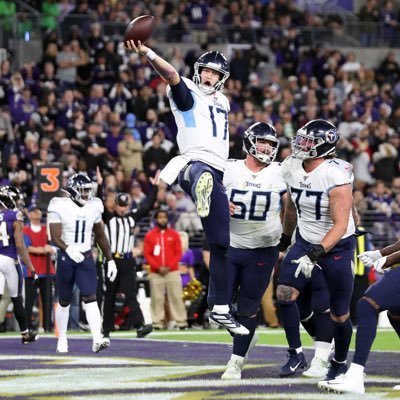
It's almost as if a guy who hated Charlie Kirk, was seen fleeing the scene, and confessed to multiple people shot him dead in a heinous, cold-blooded assassination
x.com/KanekoaTheGrea…
KanekoaTheGreat@KanekoaTheGreat
BREAKING: An ATF report in the Charlie Kirk murder case is out — and it found that the bullet that killed Kirk was a .30-caliber class fragment — consistent with Robinson's Mauser 98. But it was so deformed that analysts couldn't make a definitive match. Result: inconclusive. The ATF lab described finding "one .30-caliber class deformed/damaged bullet jacket fragment and four lead fragments." What prosecutors CAN prove: the fired cartridge case was positively ID'd as fired from Robinson's rifle. And toolmarks on the casings match a rotary engraving tool — like the Dremel seized from Robinson's home. Now the State wants to go further — running new Virtual Comparison Microscopy (VCM) technology and "metallurgical" testing on the fragments. PS — to everyone who said it wasn't a .30 caliber bullet: the ATF disagrees. Document source: @aburkhartlaw
English


Any attempt to harass, harm, and abuse Charlie Kirk's wife is an attempt to destroy his children. That is how much they hate him. They want his whole posterity gone.
English
@DefiyantlyFree How about proving she was doxxed first? Perhaps the arrest of the culprit?
Or did TPUSA just release a tour schedule?!!!🤣🤣🤣
English

Dan Bongino rightfully goes off on the demons who doxxed Erika Kirk’s travel.
I would also add to that list anybody who is making a joke out of somebody’s actual physical safety is the exact opposite of whatever religion they profess to be because they do not answer to God, the answer to Satan.
English
@PBInvestigate There is no proof she was doxxed. Her tour schedule is public.
English

If you are doxxing someone to intentionally cause emotional distress, I kindly request that you think about the implications and potential ramifications before taking next steps.
“In the United States, the act of publishing someone's personal information is not, in and of itself, illegal. However, the act can lose First Amendment protection if it's part of an effort to truly threaten or harm someone, if it intentionally inflicts emotional distress, or if it invades someone's privacy by revealing a highly offensive personal fact about that person without providing the public information about a matter of public concern.”
English
@ddrey123 Stop. If you believe Erika isn't full of shit explain why she lied on her LinkedIn resume: x.com/WillWeltgeist/…
Will Weltgeist@WillWeltgeist
@TruthHammer4EVA @LizCrokin @RealCandaceO Not all innuendo, my rose-colored compatriot. Who lies on their LinkedIn resume? 1) Graduating Summa Cum Laude (she wasn't listed as such in grad. program) 2) A second major in International Relations (it wasn't offered at the time) 3) A doctorate in Christian Leadership (nope!)
English
@BlakeSNeff Violating the gag order again, Neff?
Your desperation is showing.
English

The ATF analysis of the bullet used to kill Charlie has been made public, and confirms that the bullet was from the .30 caliber class, of which the .30-06 is a member. The analysis also found that the Mauser 98 rifle found at the scene could potentially have fired the bullet.

Andrea Burkhart 🐟🐟🐟🐟🏴☠️@aburkhartlaw
The ATF Report in Tyler Robinson's case is now available. It's clearly a summary report that doesn't provide great detail but it does have new information: 1 bullet jacket fragment and 4 lead fragments were recovered during Charlie's autopsy, The jacket is identified as coming from a .30 caliber class bullet. The jacket fragment shared class characteristics with Tyler Robinson's Mauser 98 rifle, so the rifle couldn't be excluded as having fired the bullet. But the fragment lacks individual characteristics permitting identification of one rifle to the exclusion of all others in the class. The engravings on the cartridge casings are consistent with a rotary tool like a Dremel. According to the motion, the State now wants to conduct Virtual Comparison Microscopy (VCM) on the jacket casing, a new technology in which the item is 3D scanned and virtually compared to a test fire. This might require the analyst to "unfold" deformed portions of the jacket, which could leave marks from the tool used to unfold the material. It could also potentially affect the structural integrity of the jacket fragment; an FBI analyst who received the fragment from the ATF noted that part of the jacket fragment has become detached in the packaging. The State also wants to do "metallurgical" testing of a lead fragment, the precise nature of which is unspecified. The defense filed the January 9th motion after they requested to be able to photograph the jacket casing in its current state and to attend or photograph any future testing, and its requests were denied. The motion is requesting that testing not be allowed to proceed without these conditions in place to protect the defense's ability to evaluate the testing. Document available here: andreaburkhart.substack.com/api/v1/file/32…
English
@NJBeisner And still, Tyler Robinson was neither a lone gunman nor Charlie's assassin.
English
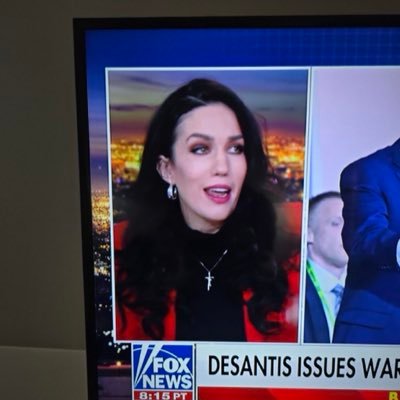
Ilhan Omar praising Candace Owens by name is honestly just the icing on the cake. 😂🍿
I don’t know how many more ways I can say Candace is a leftist.
English
@ddrey123 Pointing out the truth is not dehumanizing someone. Where did you get such a stupid idea?
English
@GrayHuze It's a morality tale about the fruits of lying.
Making America Great Again demands caring about the truth.
English

@ddrey123 Schedules are public so TPUSA is actually doxxing itself, sweet cheeks.
English