

cryptoshadow
383 posts

@TheTAOofData Bro your project is one of a kind and we have faith on you just work more in big announcements and control your coins some people said that your team can mint coins and dump in the market is that truth ? We want the price to go up again ..with this kind of chart everyone will go
English

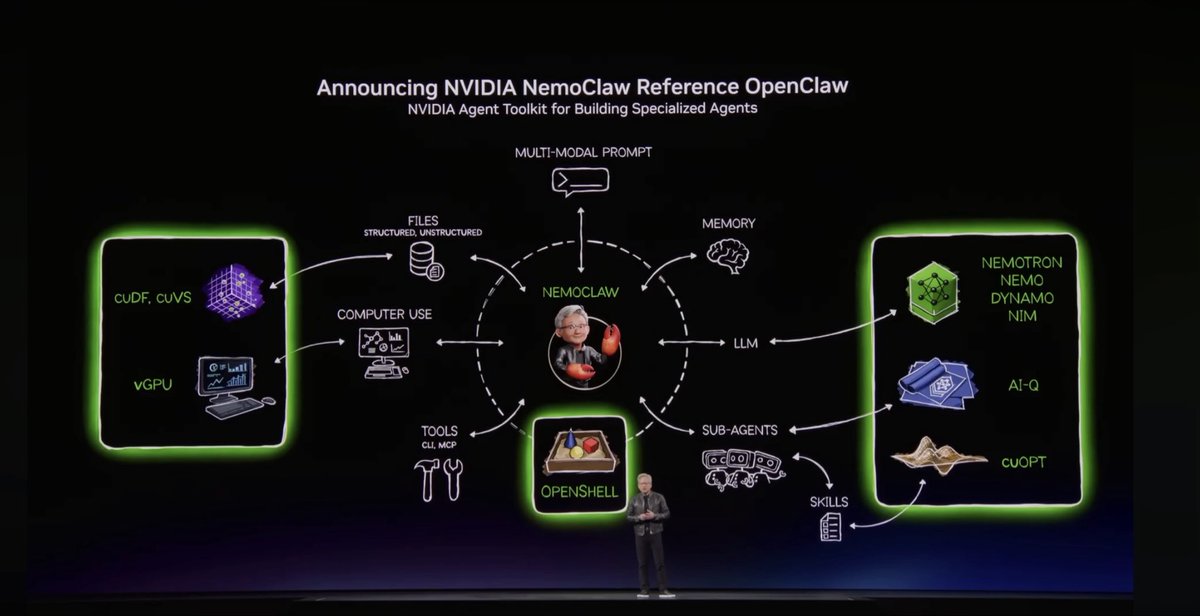
NVIDIA just introduced NemoClaw + OpenClaw to make agent frameworks enterprise-ready.
The architecture allows for agents now to have memory, tools, sub-agents, and multimodal inputs orchestrated in one system.
The missing piece has always been security at the computation layer.
Right now, most agent stacks still expose:
•data during inference
•intent during execution
•memory during coordination
That doesn’t work for enterprise workflows.
NVIDIA sees the opportunity in standardizing privacy and security for OpenClaw.
English


@TheTAOofData Where is your team ? Why your coin keep dropping down we need some big news do something
English
@TheTAOofData Hey man do something with your coin price declined since more 40 days ...wtf
English
Expertly stated:
“Under current law, you have no 4th amendment protection against any data that you share with a 3rd party.
That includes your bank, your ISP, your phone carrier, and your email provider.
The government reserves the right to purchase and read this data in bulk without a warrant.
What’s missing is the ability to actually do anything with this data.
No agency has the manpower to monitor every single camera, read every single message, cross reference every single transaction.
That bottleneck goes away with AI.
By 2030, it will be less expensive to monitor every single nook and cranny in this country than it is to remodel the White House.”
Arjun Khemani@arjunkhemani
.@dwarkesh_sp: By 2030, it will be less expensive to monitor every single nook and cranny in America than it is to remodel the White House. “Mass surveillance is, at least in certain forms, already legal. It has just been impractical to enforce so far. Under current law, you have no Fourth Amendment protection against any data you share with a third party. That includes your bank, your ISP, your phone carrier, and your email provider. The government reserves the right to purchase and read this data in bulk without a warrant. What’s been missing is the ability to actually do anything with all of this data — no agency has the manpower to monitor every single camera, read every single message, and cross-reference every single transaction. However, that bottleneck goes away with AI. There are 100 million CCTV cameras in America. You can get pretty good open source multimodal models for 10 cents per million input tokens. So if you process a frame every ten seconds, and each frame is 1,000 tokens, then for 30 billion dollars, you can process every single camera in America. And remember that a given level of AI ability gets 10x cheaper every single year - so a year from now it’ll cost 3 billion, and then a year after 300 million, and by 2030, it’ll be less expensive to monitor every single nook and cranny in this country than it is to remodel the White House. Once the technical capacity for mass surveillance and political suppression exists, the only thing standing between us and an authoritarian state is the political expectation that this is not something we do here.”
English
@mindnetwork_xyz Okay ? Would you do something effective can pump the price please? You are really underrated or overrated show us
English

Exactly.
based on x402, x402z closes the trust gap.
FHE ensures AI transactions are autonomous and confidential in a zero trust environment.
Brian Armstrong@brian_armstrong
Very soon there are going to be more AI agents than humans making transactions. They can’t open a bank account, but they can own a crypto wallet. Think about it.
English
In the era of Autonomous Agents, visibility equals vulnerability.
Exposure is Risk.

English
@TheTAOofData Don't scam us please we belive on this token ...go save the day .
.stop this new coins and burn some coins
English
IRL is worth betting on
Jonas@jonaswillett1
IRL is going to crush AI over the next 5 years. In the last 3 months, $750M+ in capital was deployed on "anti-AI" bets. Big players are doubling down on their investments in events, experiences and in-person connection. Here's what I'm seeing: @cornerapp, a social map app for Gen Z, has grown to 60K+ users helping people curate and share places to meet IRL—"Google Maps but social." Everyone ik in NYC loves them. @partiful, @poshvip_, and @LumaHQ have raised a combined $60M and are exploding. Partiful hit 500K+ MAU, Posh hit 6 million registered users, and Luma has over 2 million users signing up for events. Harvard alum @aidaxbaradari just launched @be_inaudible, the first smart device to stop unwanted audio recordings and keep IRL conversations private. @mcuban made a massive bet, investing in Burwoodland, a NYC-based live-events company behind IRL experiences in the US, Canada, and Europe. Former COO and CPO of Hinge officially launched Rodeo to help people spend more time IRL with friends. @a16z keeps doubling down on IRL via investments and a16z Build — a dinner series and community for founders / operators figuring out their next move. @nazzari, @katiekirsch, @eriktorenberg. Billion-dollar companies are paying $$$ for community and events leads: - @AnthropicAI: Events Lead - $320k - @Substack: Events Lead - $190k - @VaynerMedia: Head of Experiential - $250k - @Spotify: Global Experiential & Content - $175k - @BiltRewards: Director of Events & Experiences - $150k Investors are pouring billions of dollars into AI. But smart money is quietly deploying millions into IRL at the same time. a16z backs both OpenAI and Partiful. ElevenLabs and Substack. The nuance is - it's not AI vs. IRL. It's that the more we live online, the more premium real-life connection becomes. They're not competing investments. They're a hedge on each other.
English
@TheTAOofData Wtf is happening with your coin FHE go do something ...dont scam us
English
@MintOfTheDay @dropee_app TGE ? Q1 2025 they said then early 2026 ? Scam ? Wtf
English

@dragonboyai It will not copy paste every time ..it will rebound somewhere here
English

@mindnetwork_xyz We trust you just pump it guys 🚀 be the ticker of all time 🔥
English
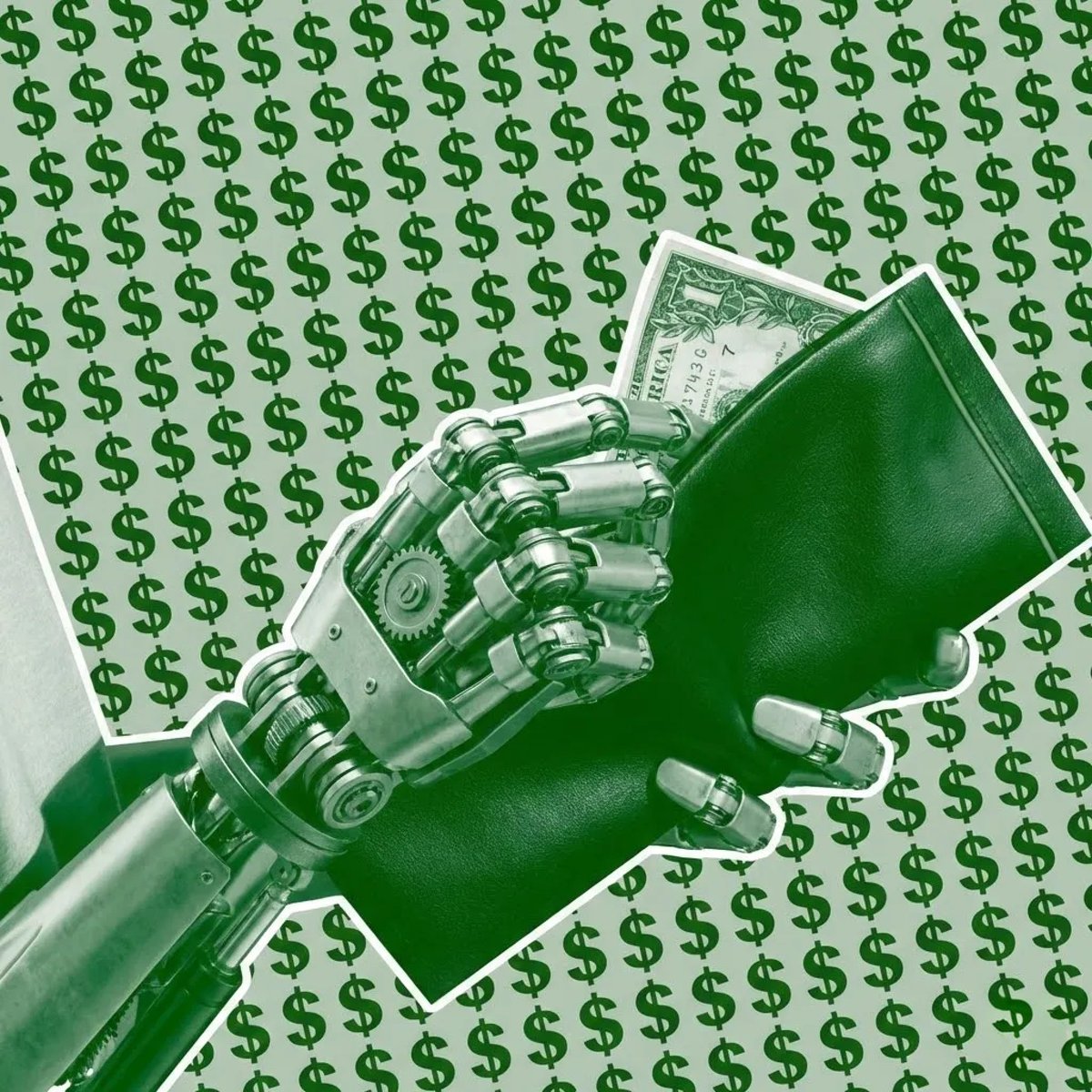
Legacy payments = real-time human authorization.
Agentic payments = pre-defined rules, autonomous execution within them.
Same outcome.
Completely different trust model.
English

cryptoshadow retweetet
We are collaborating with @PayAINetwork to address a fundamental friction in the agentic economy: the trade-off between payment execution and strategy concealment.
PayAI implements x402 to enable autonomous agent handling of 402 codes on Solana/Base, resolving the coordination problem of machine payments.
However, public settlement transparency conflicts with proprietary alpha. Visible payment graphs expose an agent’s resource acquisition, making its strategy easily copyable.
We are embedding FHE-based #x402z directly into the settlement flow, treating confidentiality as a protocol-level requirement.
English
@MintOfTheDay @dropee_app TGE ? Stop milking the community we ran out of milk
English
