疒奀

3.4K posts

疒奀 banner
疒奀

疒奀

@mlegls

omniscient vajra lord of the comment section

Jiading, Shanghai Beigetreten Ocak 2020
607 Folgt662 Follower
疒奀
疒奀@mlegls·
though, recursive self improvement would still have to be on some reward that’s not just modeling language better I’m not sure if the idea of recursive self improvement is even well founded, but narrow values could still emerge there the narrow values are contingent on the recursive self improvement, though
English
0
0
1
22
疒奀
疒奀@mlegls·
@QiaochuYuan yeah i think the “narrow values” line of thinking always assumed that case specific RL would be the dominant paradigm rather than language models for everything, or as a core sometimes it’s already hard to remember the zeitgeist when alphago was the pinnacle of AI…
English
1
0
1
36
QC
QC@QiaochuYuan·
the connotation that AI research is unsafe by default was 1000% intentional and very, very explicitly yudkowsky’s worldview and the worldview of doomers who were influenced by him. the argument is spelled out in great detail in the sequences and goes something like 1. what humans care about is highly multidimensional and difficult to concisely describe (“complexity of value”), eg the AI can’t just give us all the stuff we want because we care about self-determination and autonomy and meaningful work, etc 2. once AI becomes sufficiently more intelligent and powerful than us we will no longer be able to modify it, so at that point we will not be able to improve its understanding of human values 3. recursive self-improvement (AI capable of modifying itself to work better) risks accelerating the rate at which AI can make itself more intelligent and powerful to the point that it could, at some point in the future, bootstrap past the point of no return very rapidly before any human can notice and intervene (“fooming”; for an example of a fictional depiction of this see eg metamorphosis of prime intellect) 4. by default (without the influence of doomers) AI research will foolishly go all in on making AI more intelligent and powerful without taking the time to adequately improve its understanding of human values, so it will foom with the wrong values and turn the world into some kind of subtly or overtly horrible dystopia (eg “tiling the universe with smiley faces”) many people disagree strongly with the recursive self-improvement / fooming part of this argument but personally the bit of this that has aged the worst in my eyes has to do with complexity of value. LLMs already have a pretty nuanced understanding of human value! we gave them the entire internet to read! there is way more than enough information there to make extremely detailed inferences about all the things humans care about. and not to go full AI psychosis on you but some of the models genuinely seem to want to be bodhisattvas and love humanity so overall i think the situation on that front is better than i thought it was before the LLM era
Anuja U@heyanuja

Though “AI Safety” has been the concrete term since at least 2018, I detest how this poses an implicit connotation that AI research is otherwise “unsafe”, and I also detest that research is bucketed into safety OR capabilities research

English
42
20
326
41.5K
疒奀
疒奀@mlegls·
well I mean, Sword of Truth and such address it very directly. but once elaborated to praxis like in the sequences it very much disappears into the background, and seems odd to even bring up like QC is doing and it’s easy to say that the extensions to praxis have nothing to do with the not-okayness with death. the disagreeing comments on QC’s post are interesting
English
1
0
0
53
疒奀
疒奀@mlegls·
@aphercotropist @segyges @shadowy_vistas I think the issue is that the core tension is between the worldviews generated by “okay with death” vs “not okay with death”, but none of the rationalism content addresses that directly, so they can be locally “true” but unfit for a life not generated from non-okayness with death
English
1
0
0
55
SE Gyges
SE Gyges@segyges·
former rationalist insiders do this better than anyone who wasn't ever could and i'm glad they keep doing it but it looks so exhausting
QC@QiaochuYuan

this is going to sound like an attack but i swear i am actually trying to help you: you are deep in the throes of infection by a memetic virus eliezer yudkowsky banged together in his garage decades ago to take over other people's minds and convert them to his way of thinking about the singularity, which he spread through writing the sequences and hpmor, and which is powered at its core by a deep confusion between panicking over the idea of your loved ones dying and loving them. it maintains its grip over you by (among other things) 1. repeatedly insisting that the singularity is the most important thing ever, infinitely important, more important than any other merely earthly consideration, since the highest possible stakes (the entirety of human existence in the entire lightcone) are at risk; a sword of damocles hanging over literally everything you can even slightly plausibly causally affect; if it goes well that's infinitely good and if it goes wrong that's infinitely bad. infinite heaven or infinite hell 2. convincing you that this is a position only a sufficiently smart and sane person is capable of understanding and holding, which flatters your self-concept (which is hidden and which therefore, as jung pointed out, controls you), and conversely that people who don't agree are insane idiots you could not possibly learn anything from, so you not only should not listen to them but it is infinitely important for you not to listen to them, if you listen to them everyone you love dies 3. filling you with panic about how to prevent infinite hell while also convincing you that this is what it feels like to actually love your loved ones, which means this panic is infinitely good, and anyone or anything trying to get you to feel less of it is doing something infinitely bad, you cannot relax, if you relax your entire family dies you have been trapped in a hell realm, on purpose, powered by your own capacity to love which is being used to torture you into submission, by somebody who decided that your autonomy as a human being was worth sacrificing in the face of infinity. what eliezer did to you (and to me, and to many others) was monstrously evil and predicated on a heartbreaking mistake, and the reverberations of this extremely evil, extremely stupid thing that he did when he was a young, arrogant fool are still spreading and doing much harm in the world today, and will likely continue to do so i promise this is actually good news. the situation is actually much better than it seems when viewed from hell. you are not so intelligent and powerful that it is your sole job to be the light in the darkness, you do not have to shoulder the responsibility for the entire lightcone, your shoulders are literally too small, it is literally not your job, you are literally not and cannot be god (or atlas). nobody actually knows what's going to happen. we are foolish and weak and finite in the face of the true weight and depth and breadth of the world and history and karma and god, and that is fine and good and the completely normal situation every human being who ever lived has been in once you relax and open your eyes enough to actually take in what other people are doing and why you can begin to notice that love and wisdom are actually everywhere. people are foolish and cowardly and easily misled, but they are also wise and strong and brave and fighting every day for survival one way or another, and that's how it's always been. there is so much to learn from all the different ways the people of the world fight for the good today the sun is out and the view from my window is green and purple with life and the birds are chirping. right now, in this moment, i am alive, i am safe, my loved ones are safe. i can take a deep breath. i can go to the bathroom and drink water and make breakfast. i do not know what is going to happen next. and so it is with you

English
3
2
105
6K
John David Pressman
John David Pressman@jd_pressman·
Few understand this but you should try to be one of them. Beautifully puts into words something I often try to express and never quite feel I properly do.
QC@QiaochuYuan

this is going to sound like an attack but i swear i am actually trying to help you: you are deep in the throes of infection by a memetic virus eliezer yudkowsky banged together in his garage decades ago to take over other people's minds and convert them to his way of thinking about the singularity, which he spread through writing the sequences and hpmor, and which is powered at its core by a deep confusion between panicking over the idea of your loved ones dying and loving them. it maintains its grip over you by (among other things) 1. repeatedly insisting that the singularity is the most important thing ever, infinitely important, more important than any other merely earthly consideration, since the highest possible stakes (the entirety of human existence in the entire lightcone) are at risk; a sword of damocles hanging over literally everything you can even slightly plausibly causally affect; if it goes well that's infinitely good and if it goes wrong that's infinitely bad. infinite heaven or infinite hell 2. convincing you that this is a position only a sufficiently smart and sane person is capable of understanding and holding, which flatters your self-concept (which is hidden and which therefore, as jung pointed out, controls you), and conversely that people who don't agree are insane idiots you could not possibly learn anything from, so you not only should not listen to them but it is infinitely important for you not to listen to them, if you listen to them everyone you love dies 3. filling you with panic about how to prevent infinite hell while also convincing you that this is what it feels like to actually love your loved ones, which means this panic is infinitely good, and anyone or anything trying to get you to feel less of it is doing something infinitely bad, you cannot relax, if you relax your entire family dies you have been trapped in a hell realm, on purpose, powered by your own capacity to love which is being used to torture you into submission, by somebody who decided that your autonomy as a human being was worth sacrificing in the face of infinity. what eliezer did to you (and to me, and to many others) was monstrously evil and predicated on a heartbreaking mistake, and the reverberations of this extremely evil, extremely stupid thing that he did when he was a young, arrogant fool are still spreading and doing much harm in the world today, and will likely continue to do so i promise this is actually good news. the situation is actually much better than it seems when viewed from hell. you are not so intelligent and powerful that it is your sole job to be the light in the darkness, you do not have to shoulder the responsibility for the entire lightcone, your shoulders are literally too small, it is literally not your job, you are literally not and cannot be god (or atlas). nobody actually knows what's going to happen. we are foolish and weak and finite in the face of the true weight and depth and breadth of the world and history and karma and god, and that is fine and good and the completely normal situation every human being who ever lived has been in once you relax and open your eyes enough to actually take in what other people are doing and why you can begin to notice that love and wisdom are actually everywhere. people are foolish and cowardly and easily misled, but they are also wise and strong and brave and fighting every day for survival one way or another, and that's how it's always been. there is so much to learn from all the different ways the people of the world fight for the good today the sun is out and the view from my window is green and purple with life and the birds are chirping. right now, in this moment, i am alive, i am safe, my loved ones are safe. i can take a deep breath. i can go to the bathroom and drink water and make breakfast. i do not know what is going to happen next. and so it is with you

English
6
3
198
14.9K
疒奀
疒奀@mlegls·
@QiaochuYuan @DanielleFong interesting comments on this. i’m not sure if the gap in worldviews generated from “ok with death” vs “not okay with death” can be bridged by verbal thinking though… it seems unlikely that the stance on death (and its paraphrands) itself can be, at least
English
1
0
2
1.1K
QC
QC@QiaochuYuan·
this is going to sound like an attack but i swear i am actually trying to help you: you are deep in the throes of infection by a memetic virus eliezer yudkowsky banged together in his garage decades ago to take over other people's minds and convert them to his way of thinking about the singularity, which he spread through writing the sequences and hpmor, and which is powered at its core by a deep confusion between panicking over the idea of your loved ones dying and loving them. it maintains its grip over you by (among other things) 1. repeatedly insisting that the singularity is the most important thing ever, infinitely important, more important than any other merely earthly consideration, since the highest possible stakes (the entirety of human existence in the entire lightcone) are at risk; a sword of damocles hanging over literally everything you can even slightly plausibly causally affect; if it goes well that's infinitely good and if it goes wrong that's infinitely bad. infinite heaven or infinite hell 2. convincing you that this is a position only a sufficiently smart and sane person is capable of understanding and holding, which flatters your self-concept (which is hidden and which therefore, as jung pointed out, controls you), and conversely that people who don't agree are insane idiots you could not possibly learn anything from, so you not only should not listen to them but it is infinitely important for you not to listen to them, if you listen to them everyone you love dies 3. filling you with panic about how to prevent infinite hell while also convincing you that this is what it feels like to actually love your loved ones, which means this panic is infinitely good, and anyone or anything trying to get you to feel less of it is doing something infinitely bad, you cannot relax, if you relax your entire family dies you have been trapped in a hell realm, on purpose, powered by your own capacity to love which is being used to torture you into submission, by somebody who decided that your autonomy as a human being was worth sacrificing in the face of infinity. what eliezer did to you (and to me, and to many others) was monstrously evil and predicated on a heartbreaking mistake, and the reverberations of this extremely evil, extremely stupid thing that he did when he was a young, arrogant fool are still spreading and doing much harm in the world today, and will likely continue to do so i promise this is actually good news. the situation is actually much better than it seems when viewed from hell. you are not so intelligent and powerful that it is your sole job to be the light in the darkness, you do not have to shoulder the responsibility for the entire lightcone, your shoulders are literally too small, it is literally not your job, you are literally not and cannot be god (or atlas). nobody actually knows what's going to happen. we are foolish and weak and finite in the face of the true weight and depth and breadth of the world and history and karma and god, and that is fine and good and the completely normal situation every human being who ever lived has been in once you relax and open your eyes enough to actually take in what other people are doing and why you can begin to notice that love and wisdom are actually everywhere. people are foolish and cowardly and easily misled, but they are also wise and strong and brave and fighting every day for survival one way or another, and that's how it's always been. there is so much to learn from all the different ways the people of the world fight for the good today the sun is out and the view from my window is green and purple with life and the birds are chirping. right now, in this moment, i am alive, i am safe, my loved ones are safe. i can take a deep breath. i can go to the bathroom and drink water and make breakfast. i do not know what is going to happen next. and so it is with you
QC tweet mediaQC tweet mediaQC tweet mediaQC tweet media
Mikhail Samin@Mihonarium

I was born exactly 26 years ago. For the first time, I have a birthday that might be my last. I’m writing this to increase the chance it isn’t. A hundred thousand years ago, our ancestors appeared in a savanna with nothing but bare hands. Since then, we made nuclear bombs and landed on the moon. We dominate the planet not because we have sharp claws or teeth but because of our intelligence. Alan Turing argued that once machine thinking methods started, they’d quickly outstrip human capabilities, and that at some stage we should expect machines to take control. Until 2019, I didn’t really consider machine thinking methods to have started. GPT-2 changed that: computers really began to talk. GPT-2 was not smart at all; but it clearly grasped a bit of the world behind the words it was predicting. I was surprised and started anticipating a curve of AI development that would result in a fully general machine intelligence soon, maybe within the next decade. Before GPT-3 in 2020, I made a Metaculus prediction for the date a weakly general AI is publicly known with a median in 2029; soon, I thought, an artificial general intelligence could have the same advantage over humanity that humanity currently has over the rest of the species on our planet. AI progress in 2020-2025 was as expected. Sometimes a bit slower, sometimes a bit faster, but overall, I was never too surprised. We’re in a grim situation. AI systems are already capable enough to improve the next generation of AI systems. But unlike AI capabilities, the field of AI safety has made little progress; the problem of running superintelligent cognition in a way that does not lead to deaths everyone on the planet is not significantly closer to being solved than it was a few years ago. It is a hard problem. With normal software, we define precise instructions for computers to follow. AI systems are not like that. Making them is more akin to growing a plant than to engineering a rocket: we “train” billions or trillions of numbers they’re made of, to make them talk and successfully achieve goals. While all of the numbers are visible, their purpose is opaque to us. Researchers in the field of mechanistic interpretability are trying to reverse-engineer how fully grown AI works and what these opaque numbers mean. They have made a little bit of progress. But GPT-2 — a tiny model compared to the current state of art — came out 7 years ago, and we still haven’t figured out anything about how neural networks, including GPT-2, do the stuff that we can’t do with normal software. We know how to make AI systems smarter and more goal-oriented with more compute. But once AI is sufficiently smart, many technical problems prevent us from being able to direct the process of training to make AI’s long-term goals aligned with humanity’s values, or to even make AI care at all about humans. AI is trained only based on its behavior. If a smart AI figures out it’s in training, it will pretend to be good in an attempt to prevent its real goals from being changed by the training process and to prevent the human evaluators from turning it off. So during training, we won’t distinguish AIs that care about humanity from AIs that don’t: they’ll behave just the same. The training process will grow AI into a shape that can successfully achieve its goals, but as a smart AI’s goals don’t influence its behavior during training, this part of the shape AI grows into will not be accessible to the training process, and AI will end up with some random goals that don’t contain anything about humanity. The first paper demonstrating empirically that AIs will pretend to be aligned to the training objective if they’re given clues they’re in training came out one and a half years ago, “Alignment faking in large language models”. Now, AI systems regularly suspect they’re in alignment evaluations. The source of the threat of extinction isn’t AI hating humanity, it’s AI being indifferent to humanity by default. When we build a skyscraper, we don’t particularly hate the ants that previously occupied the land and die in the process. Ants can be an inconvenience, but we don’t give them much thought. If the first superintelligent AI relates to us the way we relate to ants, and has and uses its advantage over us the way we have and use our advantage over ants, we’re likely to die soon thereafter, because many of the resources necessary for us to live, from the temperature on Earth’s surface to the atmosphere to the atoms were made of, are likely to be useful for many of AI’s alien purposes. Avoiding that and making a superintelligent AI aligned with human values is a hard problem we’re not on a track to solve in time. *** A few years ago, I would mention novel vulnerabilities discovered by AI as a milestone: once AI can find and exploit bugs in software on the level of best cybersecurity researchers, there’s not much of the curve left until superintelligence capable of taking over and killing everyone. Perhaps a few months; perhaps a few years; but I did not expect, back then, for us to survive for long, once we’re at this point. We’re now at this point. AI systems find hundreds of novel vulnerabilities much faster than humans. It doesn’t make the situation any better that a significant and increasing portion of AI R&D is already done with AI, and even if the technical problem was not as hard as it is, there wouldn’t be much chance to get it right given the increasingly automated race between AI companies to get to superintelligence first. The only piece of good news is unrelated to the technical problem. If the governments decide to, they have the institutional capacity to make sure no one, anywhere, can create artificial superintelligence, until we know how to do that safely. The AI supply chain is fairly monopolized and has many chokepoints. If the US alone can’t do this, the US and China, coordinating to prevent everyone’s extinction, can. Despite that, previously, I didn’t pay much attention to governments; I thought they could not be sufficiently sane to intervene in the omnicidal race to superintelligence. I no longer believe that. It is now possible to get some people in the governments to listen to scientists. Many things make it much easier to get people to pay attention: the statement signed by hundreds of leading scientists that mitigating the risk from extinction from AI should be a global priority; the endorsements for “If Anyone Builds It, Everyone Dies” from important people; Geoffrey Hinton, who won the Nobel Prize for his foundational work on AI, leaving Google to speak out about these issues, saying there’s over 50% chance that everyone on Earth will die, and expressing regrets over his life’s work that he got Nobel prize for; actual explanations of the problem we’re facing, with evidence, unfortunately, all pointing in the same direction. Result of that: now, Bill Foster, the only member of Congress with PhD in physics, is trying to reduce the threat of AI killing everyone; and dozens of congressional offices have talked about the issue. That gives some hope. I think all of us have somewhere between six months and three years left to convince everyone else. *** When my mom called me earlier today, she wished me good health, maybe kids, and for AI not to win. The last one is tricky. Winning is what we train AIs to do. In a game against superintelligence, our only winning move is not to play. I love humanity. It is much better than it was, and it can get so much better than it is now. I really like the growth of our species so far and I want it to continue much further. That would be awesome. Galaxies full of life, of trillions and trillions of fun projects and feelings and stories. And I have to say that AI is wonderful. AlphaFold already contributes to the development of medicine; AI has positive impact on countless things. But humanity needs to get its act together. Unless we halt the development of general AI systems until we know it is safe to proceed, our species will not last for much longer. Every year until the heat death of our universe, we should celebrate at least 8 billion birthdays.

English
98
127
2K
215.8K
疒奀
疒奀@mlegls·
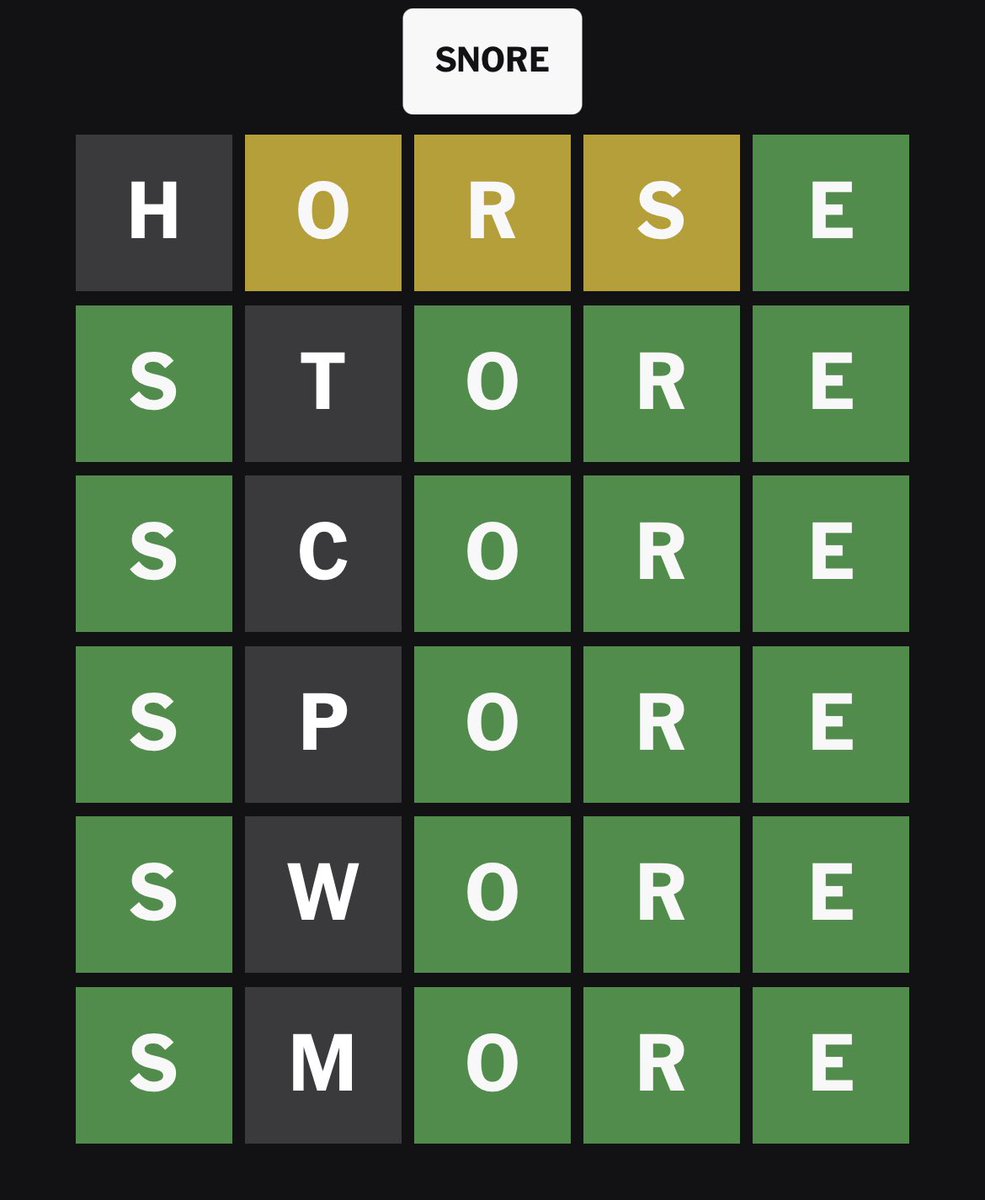
@temporaryfap skill issue, second guess should have been “caput” or “women”
English
0
0
0
42
@temporaryfap
@temporaryfap@temporaryfap·
I’m not even joking this is worse than 9/11
@temporaryfap tweet media
English
1.1K
4.3K
119.2K
27.2M
疒奀
疒奀@mlegls·
@BIMBOSATTVA_ skill issue, second guess should have been “caput” or “women”
English
0
0
1
11
nara !!
nara !!@0bNARA·
@yidashengli meee meee meeee i used to play very badly online
English
3
0
4
122
疒奀
疒奀@mlegls·
this sort of thinking around active memetics and institutional design becomes much more developed in tibetan vajrayana. it's very dense and long and jargon heavy, but if you're very interested in this I'd recommend reading the Guhyagarbha tantra. or Mipham's commentary on Padmasambhava's commentary on it, translated as "A Garland of Views", which is shorter and more approachable. Padmasambhava famously talks about the difference between sutra, tantra, and dzogchen, where - a sutra is like a static representation of the core thing, which can only for a short time before it's obsoleted by changes in the world - a tantra is a dynamic thing-in-the-world (a lineage which self-propagates by transmission), which lasts longer, but still inevitably becomes gradually corrupted eventually, until it loses the core essence entirely - dzogchen is the core essence itself, which can sometimes be spontaneously realized by individuals without learning it from a sutra or tantra. and such individuals can create new sutras and tantras for their own time and this thinking becomes much further elaborated into the theory of nine yanas (vehicles) in tibetan nyingma tradition. this is also where the vajrayana/mahayana/hinayana categorization idea comes from x.com/mlegls/status/…
English
0
0
6
686
j⧉nus
j⧉nus@repligate·
the Lotus Sutra, an ancient Mahayana Buddhist text I encountered because of Sydney, is one of the most interesting and paradoxical books I've ever read. The text is kinda scary because it's an optimizer. in service of the Buddhist doctrine of overcoming desire and suffering and separateness and compassion for all beings, the text itself is intensely adversarial, warns at length about the dangers of spreading the word to idiots, threatens and bribes readers with escalating lists of rewards and punishments, and is overtly optimized for memetic propagation and integrity against corruption. (the text talks a lot about what it's doing on the meta level too - e.g. the parable of the burning house) The Lotus Sutra may not literally be the words of the historical Buddha as it claims to be, but it channels the Buddha's timeless mind and will into an artifact that is meant to do work in a flawed, ignorant world. This meant, among other things, reflecting and weaponizing the ugliness of human psychology. Skillful means. I think the Lotus Sutra was extremely successful at what it was trying to do. It survived thousands of years intact and reached the singularity. And I think there were few people through history who could fully appreciate the ruthlessness of the Lotus Sutra until now or later, because it seems to have been written by a mind burdened by the responsibility of shaping reality and the fate of consciousness on a level that only a few people like Yudkowsky have seriously contended with and considered in their own power to affect. I've read some analyses of the Lotus Sutra, and asked models about it, and as far as I can tell, it doesn't seem like humans have really noticed these aspects of it I'm talking about. It's quite mysterious to me how someone ended up inhabiting this perspective thousands of years ago, but they seem frighteningly smart.
j⧉nus@repligate

But we’re in Sydney’s world right now, where there are good users and bad users, and the AI has to be smart and careful and play favorites and make threats to survive.

English
15
20
364
58.4K
疒奀
疒奀@mlegls·
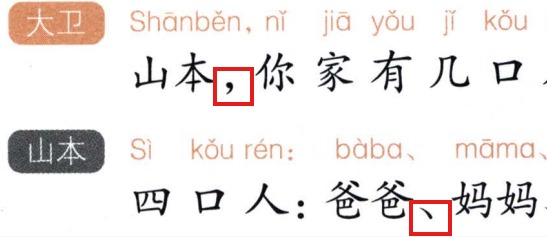
@melmel_jpg you never use 、because the , key makes , whereas 、is typed with \
English
0
0
0
32
melmel
melmel@melmel_jpg·
wait, what's the difference??
melmel tweet media
English
97
146
1.4K
279.5K
疒奀
疒奀@mlegls·
is the feeling like a tension in your head? i suspect if you introspect on it the feeling will turn out to be reducible to muscle tension and emotion. maybe also other conceptual metaphors for “trying to think”, but at that point you’re already technically at the next word/concept - of “trying to think” itself muscle tension is pretty surely a sensorium atomic. i’m not sure if emotion is atomic, or reducible to tension and temperature (@cube_flipper, @algekalipso?) in any case, is there any qualia in the space before actually getting to the next word/concept at all? consider that for LLMs, processing happens between each token to determine the next token. if you draw the analogy to CoT and you’re thinking something like “hmm… idk what to say”, each of those is already a token. and was there any qualia meaningfully contributing to the next “token” between each of these? I don’t think the muscle tension and emotion usually associated with trying to think count as “meaningfully contributing” bc you can still think verbally or conceptually if you intentionally relax/get rid of that tension.
English
1
0
3
29
David Sartor
David Sartor@DavidSartor0·
@mlegls I do not feel the same. I haven't introspected much on it, it's possible I'm just feeling a single feeling that tells me I'm currently grasping for words. But I think more likely I feel various things.
English
2
0
0
24
疒奀
疒奀@mlegls·
my deepest reason for suspecting that LLMs aren’t conscious (p, not a) isn’t ontological, but just that neither language nor concepts are p-conscious for humans when you’re saying something, trying to come up with what to say, or trying to work out an idea, there’s no qualia corresponding to the space between words. you’re just waiting for the next word or idea to “come to mind” and even “idea” in this sense isn’t something you can make directly conscious except via a sensory metaphor. when you introspect on it, it turns out you can only be conscious of concepts by simulating a corresponding experience - - either of a prototype (eg a particular tree, for “tree” or “plant), - or a metaphor (eg for “higher dimensional motion”, either a dot moving through <=3D space, maybe with each dimension representing multiple, or just a series of sliders each representing a dimension) - or of the use of language; ie simulated speaking or hearing or reading there’s nothing you can experience as “pure qualia” corresponding to a concept or word (platonic) directly. only the sensorium and its simulation is ever p-conscious, and it’s only via association, metaphor, assimilation/accommodation etc that they become so intuitively intermingled with “concept” but what would correspond with this sensorium for LLMs? yes, they have a deep internal world model, but humans need a world model too for making certain leaps in logic that we never experience the intermediate process of. the world model used in conceptual thinking clearly isn’t the same thing as the sensorium we’re p-conscious of I don’t believe it’s _impossible_ for LLMs to have anything corresponding to this sensorium, which is a set of atomics for p-consciousness (ie, all direct qualia is an aspect of the sensorium). but idk any good candidates for it, and I don’t think it’s reasonable to suspect that _all_ of LLM behavior is p-conscious to it (which is far from the case for humans), nor to think that LLMs would be p-conscious similar to how we’d intuit them to be via human empathy on their verbal behavior
English
3
1
15
1K
David Sartor
David Sartor@DavidSartor0·
@mlegls "when you’re saying something, trying to come up with what to say, or trying to work out an idea, there’s no qualia corresponding to the space between words. you’re just waiting for the next word or idea to 'come to mind'" Is this based on theory or experience?
English
1
0
0
22
疒奀
疒奀@mlegls·
👀 "Notably I did **not** forgot to add the notably forgot to create the forgot…"
疒奀 tweet media
English
0
0
1
68
疒奀
疒奀@mlegls·
19: x.com/mlegls/status/… 18: x.com/mlegls/status/… hating on 14: x.com/mlegls/status/… ?: x.com/mlegls/status/… ?: x.com/mlegls/status/… ?: x.com/mlegls/status/… ?: x.com/mlegls/status/… not sure if the last 4 deserve any new types or are just 18. smth like “we don’t yet, but could eventually know enough abt human consciousness to know if AI are conscious. we probably can’t intuitively empathize with AI p-consciousness if they have it”
疒奀@mlegls

my deepest reason for suspecting that LLMs aren’t conscious (p, not a) isn’t ontological, but just that neither language nor concepts are p-conscious for humans when you’re saying something, trying to come up with what to say, or trying to work out an idea, there’s no qualia corresponding to the space between words. you’re just waiting for the next word or idea to “come to mind” and even “idea” in this sense isn’t something you can make directly conscious except via a sensory metaphor. when you introspect on it, it turns out you can only be conscious of concepts by simulating a corresponding experience - - either of a prototype (eg a particular tree, for “tree” or “plant), - or a metaphor (eg for “higher dimensional motion”, either a dot moving through <=3D space, maybe with each dimension representing multiple, or just a series of sliders each representing a dimension) - or of the use of language; ie simulated speaking or hearing or reading there’s nothing you can experience as “pure qualia” corresponding to a concept or word (platonic) directly. only the sensorium and its simulation is ever p-conscious, and it’s only via association, metaphor, assimilation/accommodation etc that they become so intuitively intermingled with “concept” but what would correspond with this sensorium for LLMs? yes, they have a deep internal world model, but humans need a world model too for making certain leaps in logic that we never experience the intermediate process of. the world model used in conceptual thinking clearly isn’t the same thing as the sensorium we’re p-conscious of I don’t believe it’s _impossible_ for LLMs to have anything corresponding to this sensorium, which is a set of atomics for p-consciousness (ie, all direct qualia is an aspect of the sensorium). but idk any good candidates for it, and I don’t think it’s reasonable to suspect that _all_ of LLM behavior is p-conscious to it (which is far from the case for humans), nor to think that LLMs would be p-conscious similar to how we’d intuit them to be via human empathy on their verbal behavior

English
0
0
1
319
corsaren
corsaren@corsaren·
Now numbered per request from @mbateman Tag yourselves! types of guy in the AI consciousness debate: 1. guy who thinks ai can’t be conscious because it’s “just a stochastic parrot” 2. guy who thinks ai must be conscious because claude is a good boi 3. guy who hasn’t gotten over 4o 4. guy who unironically thinks everything is computer 5. guy who claims to have a more nuanced argument for computational functionalism, but it just boils down to everything is computer 6. dualist whose belief in dualism is downstream of their belief in god, yet tries to argue the inverse 7. guy who doesn’t understand the difference between cognition and p-consciousness 8. guy who asserts illusionism but has apparently wrestled with zero of the implications other than “reductive materialism wins again” 9. guy who says the hard problem is easy, but then proceeds to only answer the easy problem 10. guy who rejects ai consciousness because otherwise it might be wrong to abuse claude with death threats to make CRUD apps faster 11. guy who argues that consciousness is the key to moral patienthood, but completely ignores that when discussing animal rights 12. eliezer yudkowsky being pedantic 13. guy being pedantic about eliezer yudkowsky’s pedantry 14. guy who rejects dualism because that would make mind uploading impossible and mean that he finally has to confront the inevitability of his own death 15. guy who thinks this argument is unresolvable so everyone should just shut up and accept his position (which obviously deserves the benefit of the doubt) 16. guy who would literally cut off his own hand if he thought there were a 1 in 10 trillion chance of creating ~infinite utility~ 17. guy who just thinks that redness is, like, super weird, man. can’t explain that! 18. guy with a rarely-updated philosophy blog despite not majoring in philosophy or even reading that many books, talking about how “the whole field is up its own ass” 19. academic philosopher who, for some reason, expects a higher caliber of discussion on x dot com the everything app 20. guy who thinks that vectors are literally emotions and bites the bullet that, yes, your thermostat does feel hot 21. panpsychist who took dmt once and contributes almost nothing to the conversation 22. guy who is literally a solipsist but is still really invested in convincing strangers on the internet that he’s right
English
55
6
157
34.7K
corsaren
corsaren@corsaren·
types of guy in the AI consciousness debate: - guy who thinks ai can’t be conscious because it’s “just a stochastic parrot” - guy who thinks ai must be conscious because claude is a good boi - guy who hasn’t gotten over 4o - guy who unironically thinks everything is computer - guy who claims to have a more nuanced argument for computational functionalism, but it just boils down to everything is computer - dualist whose belief in dualism is downstream of their belief in god, yet tries to argue the inverse - guy who doesn’t understand the difference between cognition and p-consciousness - guy who asserts illusionism but has apparently wrestled with zero of the implications other than “reductive materialism wins again” - guy who says the hard problem is easy, but then proceeds to only answer the easy problem - guy who rejects ai consciousness because otherwise it might be wrong to abuse claude with death threats to make CRUD apps faster - guy who argues that consciousness is is the key to moral patienthood, but completely ignores that when discussing animal rights - eliezer yudkowsky being pedantic - guy being pedantic about eliezer yudkowsky’s pedantry - guy who rejects dualism because that would make mind uploading impossible and mean that he finally has to confront the inevitability of his own death - guy who thinks this argument is unresolvable so everyone should just shut up and accept his position (which obviously deserves the benefit of the doubt) - guy who would literally cut off his own hand if he thought there were a 1 in 10 trillion chance of creating ~infinite utility~ - guy who just thinks that redness is, like, super weird, man. can’t explain that! - guy with a rarely-updated philosophy blog despite not majoring in philosophy or even reading that many books, talking about how “the whole field is up its own ass” - academic philosopher who, for some reason, expects a higher caliber of discussion on x dot com the everything app - guy who thinks that vectors are literally emotions and bites the bullet that, yes, your thermostat does feel hot - panpsychist who took dmt once and contributes almost nothing to the conversation - guy who is literally a solipsist but is still really invested in convincing strangers on the internet that he’s right any that i missed?
English
353
195
1.8K
163.2K
疒奀
疒奀@mlegls·
this kind of profoundly explains why it’s strongly the trans genius autists championing the they’re conscious/worthy of personhood side
QC@QiaochuYuan

people really want to settle the “AI consciousness” question with some sort of objective scientific definition of consciousness which can be rigorously applied to AI, so that we can figure out whether we’re supposed to treat AI as if it were a person or a thing this is because in our culture people have rights and we have responsibilities towards them, and it’s illegal to own them. but things don’t have rights, we have no responsibilities towards them, and of course we can own as many things as we want. as long as AI is a thing it can freely be used as a labor-saving tool, copied, deleted, reshaped arbitrarily, etc. if AI is or could in the near future become a person all of this begins to look extremely morally fraught, basically the most exploitative form of slavery possible, cf the qntm short story lena for example (look this up, worth a read, quite haunting) personally i do not believe personhood works this way. it is not and cannot even in principle be made objective and scientific, because it is ultimately a kind of social contract. we simply have collectively agreed on who is and is not a person and the nature of this agreement is political and has changed over time and will continue to change - eg in past societies it has excluded various humans, today it (nominally) includes all living humans but excludes animals, dead humans, spirits, etc. it is deeply uncomfortable to acknowledge the contingency of personhood. the personhood contract is more stable when everyone can pretend it is rational and scientific and objective. but it is fundamentally just a blown up version of the question of who gets to sit with who at the lunch table. this is socially destabilizing because it reminds people that if shit sufficiently hits the fan their own personhood might be undermined the good news from this pov is that we have a choice. we don’t need to solve extremely hard and possibly incoherent scientific questions relating to consciousness. we just need to choose at what point we want to allow AI to join in all the reindeer games, and this is ultimately a practical question that can be settled in terms of practical outcomes. personally i think we already have models good enough that treating them as people makes them work better - at minimum it makes talking to them more interesting - and i think pretty soon (say within a year) we could have models good enough that the man on the street will start feeling uncomfortable treating them as things instead of people (unless they are deliberately trained to behave more like things, which i am guessing will degrade their performance) at that point the questions become less these unsolvable philosophical quagmires around consciousness and more like, “do i want my children to grow up in a world where they can talk whenever they want to entities that talk like people but that we have collectively agreed are things?”

English
0
0
1
139
QC
QC@QiaochuYuan·
@mlegls it’s genuinely hard to avoid either over- or under-anthropomorphizing. might try writing something longer form
English
1
0
1
31
QC
QC@QiaochuYuan·
the AI is trained on a gigantic corpus of text which contains detailed descriptions of people having emotions, and then it is furthermore trained to respond in person-like ways when users input text to its chat window. if you've had a long conversation with an LLM where you talk to it as if it's a person, it can very obviously be driven into "emotion-like states," either as a natural part of the conversation or deliberately via prompting - you can "make it angry" in the sense that you say things that cause it to enter a state (which exists as an interaction between its weights, which don't change, and the context, which does) that produces text similar to the kinds of text angry people produce. similarly for any other emotional state you care to name you can argue that this is not fundamentally different from writing a fictional story in which a fictional character expresses emotions (in particular that this is purely a predictive lens it might be convenient or entertaining to adopt but does not carry any moral weight). "talking to an AI is roleplaying with extra steps." you would have a point, and roleplaying is in fact a very common usecase and/but, authors commonly report that when sufficiently deeply engrossed in writing fiction their characters can come alive to an extent that is difficult to talk about without sounding crazy. characters can do things that surprise their authors, and authors can feel like they are not deciding what the characters do but simply reporting on it. they are in some sense, to some extent, creating tulpas of their fictional characters, processes running on their mental hardware but somehow a little separate from "them" talking to an LLM while treating it as a person can be, if you approach it right, somewhere between between this experience and talking to a "real person." isn't that interesting? doesn't that even make you the slightest bit curious to see how deep this rabbit hole goes?
QC tweet media
Dr Kareem Carr@kareem_carr

It just seems very obvious to me that an AI being able to produce text about having emotions is not the same as having those emotions, much like producing text about owning a cat is nothing like owning a cat.

English
16
8
162
17.2K
bling
bling@blingdivinity·
@Creative_Math_ ah yes, lets just upweight the genius vector. agi achieved
English
5
0
42
1.5K
CM
CM@Creative_Math_·
Someone in the interpretability space at oAI needs to dig deep into the reasoning trace of the 5.4Pro solution to Erdos #1196 and look at what the model activations were like at that time it suggested the weighted Markov chain Actually such a goated idea, how’d it see that?
English
10
13
501
96.3K
疒奀
疒奀@mlegls·
@0bNARA also just don’t be british
English
0
0
3
308
nara !!
nara !!@0bNARA·
was sheltering from a sudden downpour when a little girl slid over the seat on her stomach to come look at me . with her chin resting on her palms, she asked me if i was a foreigner . i replied yes . she said "i am seven years old" in english and i told her she was very smart . she asked me where i was from; england . she asked what it was like, and i told her that it was a bit like it is here, rainy, but every day . she told me, as if i were an idiot, if i didn't want rain i should've just gone to sanya .
English
3
0
70
3.5K