Piotr

128 posts

Piotr

Piotr

@piotr_dev_

Software developer. Interested in UX and web products.

Kraków Beigetreten Haziran 2025
14 Folgt7 Follower
Piotr
Piotr@piotr_dev_·
@UntAaron @ecomchasedimond @GammaApp My guess is a lot of those loops start upstream. In your experience, is it usually the brief, the references, or the goal that’s unclear first?
English
0
0
0
12
Aaron Unt
Aaron Unt@UntAaron·
@ecomchasedimond @GammaApp the bottleneck was never the designer's skill, it was the feedback loop. curious how many of those rounds were actually about the brief being unclear vs the output being wrong.
English
1
0
1
116
Chase Dimond | Email Marketing Nerd 📧
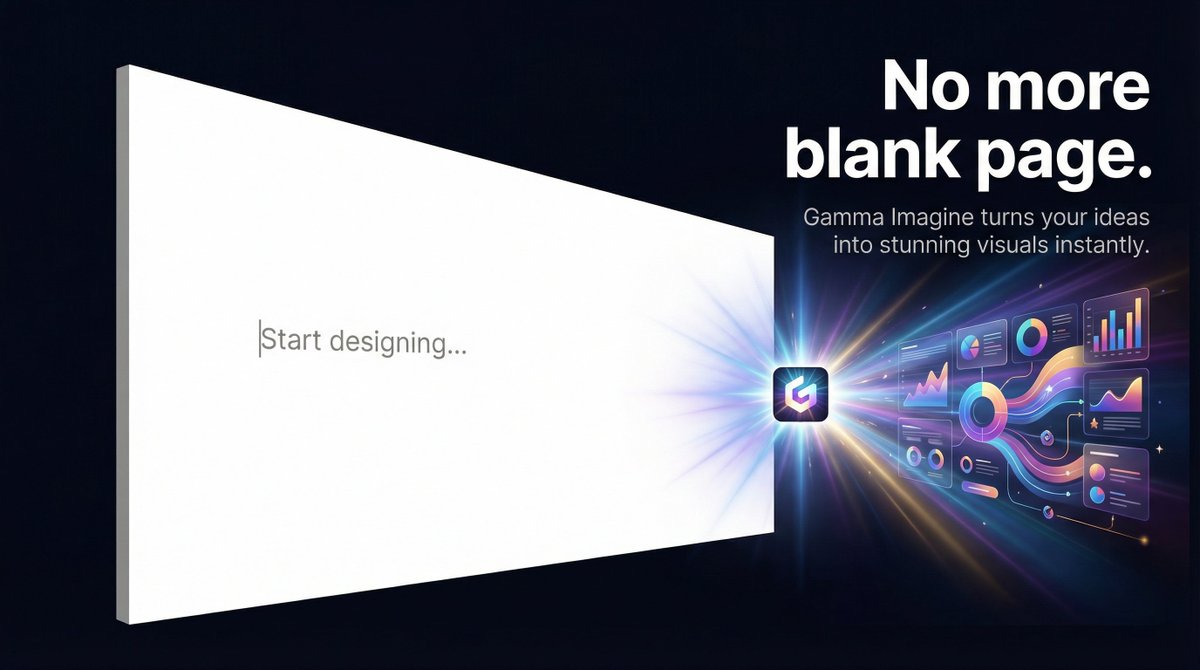
Every time I needed a graphic, I needed a designer. Brief them. Wait. Get something back that wasn't quite right. Repeat. Gamma Imagine just changed that for me. I've been a paying @GammaApp user for a while. When I heard about Gamma Imagine, I went straight to the details. You describe what you want. It generates multiple polished visual options instantly. Infographics, posters, social graphics, diagrams, logos. All inside Gamma. No design skills required. No tool switching. No briefing anyone. The best part isn't just the speed. It's that it generates creative directions you'd never come up with yourself. It's like having a design partner on demand. It officially went live today and it's free for all Gamma users for the next 30 days. Try it here: gamma.app/?utm_campaign=…
Chase Dimond | Email Marketing Nerd 📧 tweet media
English
15
27
128
117.1K
Piotr
Piotr@piotr_dev_·
@StudioMethodAI What input is usually the least “locked” in practice — goals, scope, or the actual content/assets?
English
0
0
0
1
Studio Method
Studio Method@StudioMethodAI·
Vague creative direction is expensive. Not metaphorically — literally. When the brief doesn't lock the inputs, every revision is a budget leak. Tech design studios treat briefs as optional. The ones at 30+ people can't afford to.
English
1
0
0
5
Piotr
Piotr@piotr_dev_·
@jasonnfonsecaa What was usually missing in that first month — a clear problem statement, stronger brief, or just one person owning the direction?
English
0
0
0
13
Jason Fonseca
Jason Fonseca@jasonnfonsecaa·
An early-stage investment startup spent almost a month going nowhere with their designer. The designs didn't match the product vision, and they had a demo coming up. I was brought in mid-project to take over. I started with one kickoff call with the client and a set of one-pager briefs to start working. Within 24 hours, I delivered the first draft. Their response: "This is killer work. I'm deeply impressed. Not sure how you were able to capture so much of what we wanted in a single conversation. This is extraordinary." That draft wasn't the final solution. But it set the direction, got the real conversation going, and led us to something much better. They were able to implement the solution. The founder demoed it to potential customers with confidence. A month of stalled progress, fixed in 24 hours. Not because we designed faster. Because we understood the problem first.
English
1
0
3
205
Piotr
Piotr@piotr_dev_·
@Arushi_OffLens Which of those is most often missing in practice — who it’s for, what makes them different, or what the site should make people do?
English
0
0
0
28
Arushi Gupta
Arushi Gupta@Arushi_OffLens·
After 3 years of running a design studio for service businesses, I’ve learned the difference between a project that goes smoothly and one that drags. It’s not budget. It’s not timeline. It’s not even scope. It’s whether the client has done the thinking before we start. Who are you for? What makes you different? What do you want people to do when they land on your site? When those answers exist, we move fast. When they don’t, we’re designing in circles. Now we build that thinking into the first week of every project. Before any design happens. Slows down the start. Speeds up everything after.
English
2
0
1
100
Piotr
Piotr@piotr_dev_·
@zazzygfx @drealstephen What change there reduced the chaos most for you — better questions, fewer options, or stricter revision limits?
English
0
0
0
5
Zazzy
Zazzy@zazzygfx·
@drealstephen prolly a communication problem. stop designing. ask better questions. present less options. add a revision limit to your contract.
English
2
0
1
133
D'realstephen🌟
D'realstephen🌟@drealstephen·
Omoo artists/designers what do you do if a client has rejected 13 of your logo idea?😕
English
165
8
282
19.6K
Piotr
Piotr@piotr_dev_·
@tabithaajayi12 @Joycalebbrown What part of the brief is usually missing most in practice — the goal, the audience, or the actual content needed?
English
1
0
1
5
Tabitha’s Studio 🫧| Framer Developer
@Joycalebbrown The tool is never the problem. It's always the missing brief. Canva can't save you from a client who doesn't know what they want but the right questions can. 🔥 Tell us more.
English
2
0
1
26
Jc Brown | The Canva Queen 👑
Jc Brown | The Canva Queen 👑@Joycalebbrown·
I used to dread client projects. Not because I couldn’t design but because there was no clarity. Me: “What do you want?” Client: “Something nice. Surprise me.” Endless revisions. No direction. Everything changed when I stopped opening Canva first and started with clarity.
Jc Brown | The Canva Queen 👑 tweet media
English
37
2
56
638
Piotr
Piotr@piotr_dev_·
@anushnxix @jdreeves When that happens, what’s usually missing first — positioning, audience, or what the brand/site is supposed to communicate?
English
1
0
0
22
Anush N
Anush N@anushnxix·
@jdreeves Seen this play out with some clients, they come in with references, but once we dig in, the real issue is they haven’t defined what they stand for yet. Design just exposes that gap.
English
1
0
1
56
J.D. Reeves
J.D. Reeves@jdreeves·
I think a conversation that might be largely missing in tech/design is brand strategy. A lot of people reference brands they love, I hear it all the time: ‘we want to look and feel like apple, ramp, linear, stripe’ etc etc Those brands are good because they found the brand qualities that are true to their ethos and amplified them through design. Too many brands try to reference others in the design process rather than take a step back and find the qualities that are true to them. People see something brilliant and say ‘I want something like that’ rather than ‘how do I make my thing brilliant?’ That’s how you build a brand that others will be referencing in the years to come.
English
18
25
257
14.5K
Piotr
Piotr@piotr_dev_·
@work_ayushUX @MichaelFilipiuk When clients send mixed references like that, what’s usually unclear underneath — the goal, the audience, or just the visual direction?
English
0
0
0
13
Michael · Design Partner
Michael · Design Partner@MichaelFilipiuk·
Designing a good product without a proper brief is nearly impossible. You'll find yourself creating the same product multiple times because there's no way to measure it against specific requirements. If your client doesn't have a brief: - Schedule an hourly call with them - Discuss priorities and requirements - Put your notes into ChatGPT and ask it to generate a brief - Great job, you can start designing now
English
7
0
29
2.9K
Piotr
Piotr@piotr_dev_·
@AdetayoMitchell When you see a site like that, what’s usually missing upstream — a clear goal, a clear client journey, or stronger content direction?
English
0
0
0
1
Michael Tewogbade
Michael Tewogbade@AdetayoMitchell·
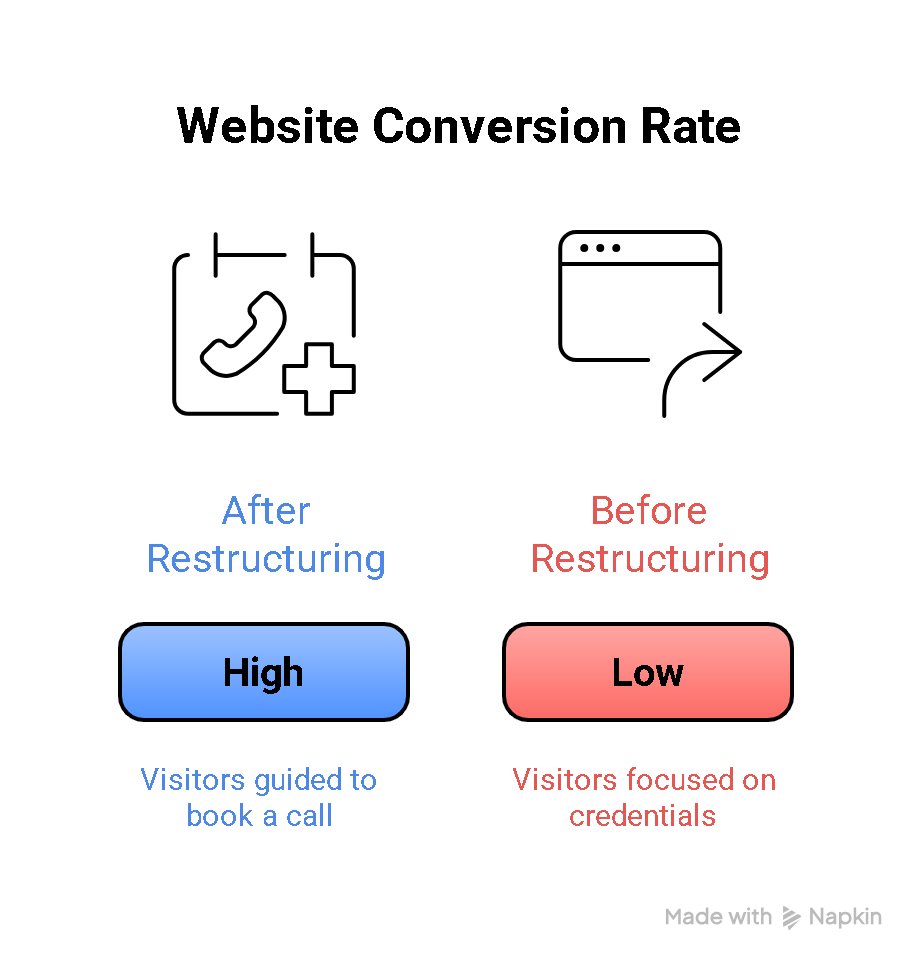
Recently, I audited a coaching website 😑 This coach was getting traffic… but almost no discovery calls booked. What we found: • homepage focused on credentials, not outcomes • no clear client journey • CTAs buried or missing
Michael Tewogbade tweet media
English
1
0
0
12
Piotr
Piotr@piotr_dev_·
@techsaviicodes @hiayoola Do you solve that with a checklist upfront, or do projects still stall while waiting on content?
English
0
0
0
9
Techsavii
Techsavii@techsaviicodes·
@hiayoola Going well. Waiting for the client to send the content of their website.
English
1
0
1
17
Ayoola Daniel✨👒
Ayoola Daniel✨👒@hiayoola·
I really dislike people that build rubbish with WordPress 😒
English
17
2
57
4K
Piotr
Piotr@piotr_dev_·
@vickydashiky Do you solve that mostly with a checklist upfront, or do you still end up chasing clients for the right files?
English
0
0
0
2
𝓦𝓪𝓻𝓲𝓷𝓰𝓪
𝓦𝓪𝓻𝓲𝓷𝓰𝓪@vickydashiky·
70% of my day as a graphic designer is asking clients to share their logo in pdf because they have shared a JPEG
English
21
47
350
18.9K
Piotr
Piotr@piotr_dev_·
@ImranWebsites When that happens, what’s usually missing first — one clear goal, one decision-maker, or clearer project constraints?
English
1
0
0
12
Imran Siddiq - YouTube | Websites | Web Squadron
The goal of a website can get lost surprisingly quickly, especially when everyone involved has slightly different ideas of what success looks like. One person wants leads. Another wants branding. Another wants to show everything at once. And all of those things can be valid, but if they are not aligned, the site ends up trying to do too much without doing any one thing properly. That is where a designer needs to step in and connect those dots. Not by forcing one direction, but by shaping them into something that actually works together. It's a bit like trying to follow three maps at once. You still move, but you do not really get anywhere. #wordpress #webdesign
English
1
0
1
59
Piotr
Piotr@piotr_dev_·
@pizzaboy What part of that process reduced revisions the most for you — the questionnaire, the kickoff call, or getting all decision-makers aligned early?
English
0
0
0
5
Dan
Dan@pizzaboy·
Designers have been asking for our full branding process breakdown. Here it is (breaking it day by day for ease): Day 0: We do the boring stuff We send a proposal, agreement, and invoice (I do this in 40 minutes using the templates we have). Day 1: Send questionnaire Our questionnaire has 45 questions with 9 sections covering ICP, personality, competitors etc. Day 2: Kickoff call (after they fill the questionnaire) We go through their questionnaire answers. Show them 3 logo directions (round, square, abstract). Guide them in the direction we think will work best. We also book the concept call 1-2 weeks out. This prevents client anxiety, they know something is coming up. Day 3-5: Send love/hate exploration We send 20-30 logos in their chosen direction only. We get ALL decision makers to fill it out. Hates are most important as they are a good boundary to have. Day 5-14: Design Client returns love/hate, we start concepting internally with the team. Then build out 3 concepts + semi-finished brand guidelines. We don't do check-ins or share sketches, the client doesn't hear a lot from us until the concept call. Day 14: Concept call Clients usually expect the bare minimum. But we present 3 concepts with type, colors, mockups and stuff like that. We show nearly complete guidelines which give them that 'wow' factor (well, not anymore, I've given away the sauce). Day 14-17: Final delivery Complete brand guidelines, nothing important to mention here. Found this process works for us as there are minimal revisions, no client anxiety, wasted work and quick. Not rocket science, but Happy Pizza science.
Dan tweet media
English
27
18
523
44.1K
Piotr
Piotr@piotr_dev_·
@sandixdesigns When feedback comes back like this, what was usually missing upfront — the goal, the style direction, or the audience?
English
0
0
0
4
Piotr
Piotr@piotr_dev_·
@The_Illustra When this happens, do you think the real problem usually starts earlier with a weak brief, or only once revisions begin?
English
0
0
0
3
Hussainah | Graphic Designer
Hussainah | Graphic Designer@The_Illustra·
Speaking from my POV: Designers don’t hate revisions. We hate revisions from people who don’t know what they want.
Hussainah | Graphic Designer tweet media
English
1
0
3
30
Piotr
Piotr@piotr_dev_·
@MakelyStudio What usually causes the most guessing before that point — unclear goals, vague audience, or weak references from the client?
English
0
0
0
13
Ali@Makely
Ali@Makely@MakelyStudio·
My process always starts the same way: ask the client for 1-2 reference sites they like the look of. Not to copy. Just to understand what they're actually drawn to. Saves weeks of back and forth when you know the aesthetic direction before touching Figma. Way easier than guessing and hoping you got it right.
English
2
0
6
114
Piotr
Piotr@piotr_dev_·
@0xCharlota Do you think that kind of client overwhelm usually starts earlier with a vague brief, or mostly from giving too many directions later?
English
0
0
0
10
charlota
charlota@0xCharlota·
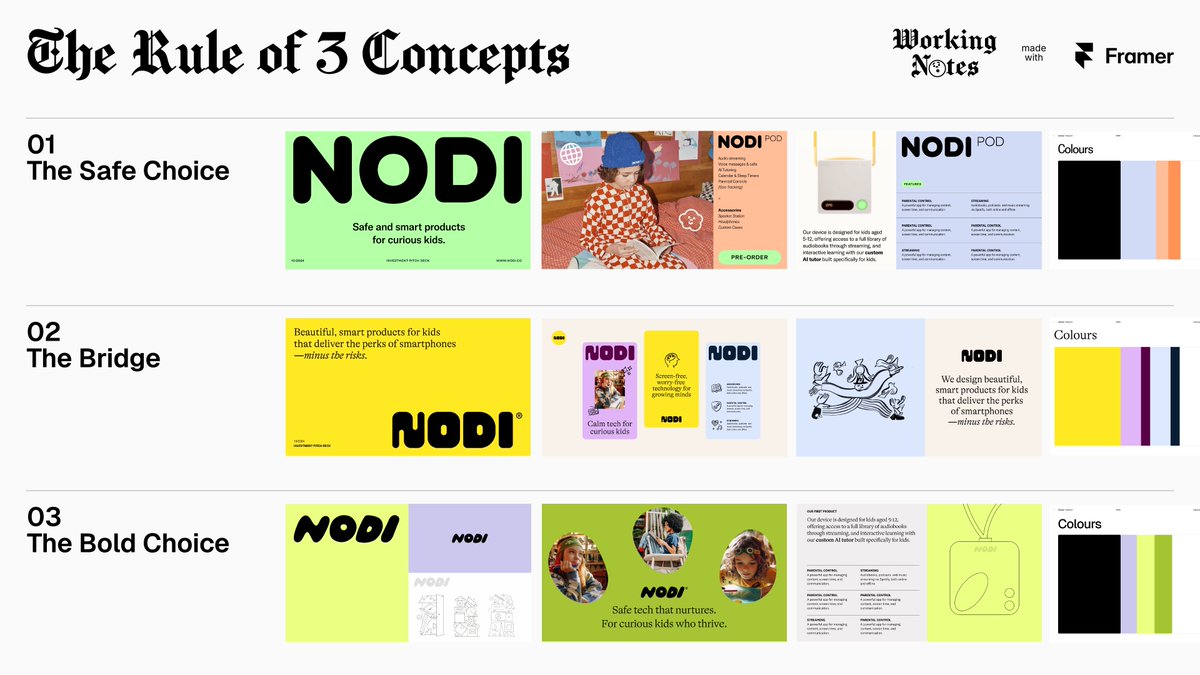
When you present brand concepts to a client, you're not asking "which idea do you like?" You're actually asking "how much risk are you willing to take?" Early in my freelance career, I used to present 4, 5, sometimes 6 concepts. I told myself it showed range. That I was giving the client "options." The truth is I was insecure. I didn't trust my own judgment enough to edit down, so I outsourced the decision to the client and called it collaboration. What actually happened every single time: the client got overwhelmed. They'd start cherry-picking "the color from concept 2, but the layout from concept 5, and can we try the font from concept 3?" Now I always try to present three concepts. Three options create a conversation about spectrum of risk: The Safe Choice. Close to what they briefed. It says "I heard you." This builds trust before I push anything. The Bold Choice. The one that challenges something. An assumption, a convention, a constraint they thought was fixed. This is the reason they hired a designer. The Bridge. Lives between the two. Has the ambition of the bold with the comfort of the safe. (honestly, this is the one that ships 70% of the time) When I frame it this way - "how adventurous do we want to be?" — the conversation shifts completely. But here's the thing, bold concepts still die when they stay abstract. now that tools like @Framer let you design full visual identity systems and push them easily as live pages, even a brand pitch becomes something the client can feel. that's the difference between "do you like this palette?" and "do you like being inside this brand world?" P.S. Rule I never break: I never present an option I'd be embarrassed to build. No sacrificial lambs designed to make my favorite look better.
charlota tweet media
English
20
35
669
21.3K
Piotr
Piotr@piotr_dev_·
@osehfavvy @voosiki When that back-and-forth gets endless, is the root problem usually vague direction from the start or too many changing references later?
English
0
0
0
11
Designer
Designer@osehfavvy·
The time spent tweaking, re-promoting, giving reference images, updating prompts again, endless iterations, style drifting e.t.c I’ll rather design it myself
English
9
4
53
1.5K
Piotr
Piotr@piotr_dev_·
@FredWanders @by__huy What’s usually missing most in that initial planning phase — the goal, the audience, or the real constraints?
English
1
0
0
28
Fred Wanders
Fred Wanders@FredWanders·
Agreed to a degree here. Some flexibility is good but seems to me that you are letting clients dictate your process. Your job is to know what works best and gets the best final result - not the client. I think you need to work on your initial planning phase to give clients more clarity as uncertainty after the client have seen your portfolio moodboards, heard your reasoning, seen wireframes, seen an early alignment draft (like a hero section for ex) should not be happening. I think you're conflating a process issue on your end with a perk for clients. it isn't. If you focused on one strong direction clients would get a better quality product in the end.
English
2
0
1
57
Huy Nguyen
Huy Nguyen@by__huy·
Most formal design education teaches you a process that no actual client will ever follow. They taught the creative process like it was a formula. Double diamond framework. Clear stages. Follow the steps, get results. Then I started working with real clients and none of it applied. Every project has the same structural bones: discovery, onboarding, strategy, design, development. But the approach within each stage changes completely depending on what problem you're solving and who you're solving it for. I've run three projects recently where the strategy stage looked entirely different each time. One client needed to see a full website concept with multiple directions before moving forward. They couldn't visualize the end result from a moodboard alone. Two other clients needed hi-fi design mockups based on the moodboard directions. They had to feel what their new brand or site would look like before approving anything or jumping into wireframes. Then there are clients who look at a moodboard and immediately get it. They trust the direction and we move straight into execution. Same milestone but three with completely different approaches. The frameworks they teach you in school give you structure, but real client work demands adaptation. You can't force every project through the same process and expect it to work. The best work happens when you understand the structure well enough to know when to break from it.
Huy Nguyen tweet media
English
5
2
39
1.1K
Piotr
Piotr@piotr_dev_·
@MimiTheDesigner What part usually creates the most back-and-forth before starting — unclear goals, vague audience, or missing content/assets?
English
0
0
0
41
Graphic Designer
Graphic Designer@MimiTheDesigner·
Freelancers if you struggle with asking the right questions before starting a project… I made a FREE client questionnaire for you. It helps you understand your client clearly so you stop going back and forth and start making confident decisions. Grab it in the comments 👇
English
10
4
71
1.4K