

Shaun Walker
1.6K posts
Shaun Walker
@sbwalker
Canadian, 23X Microsoft MVP, Entrepreneur & Open Source Advocate, Blazor Evangelist, Founder of Oqtane & DotNetNuke, Chair of .NET Foundation Project Committee
Jupiter, Florida, USA Beigetreten Ekim 2008
2.2K Folgt3.4K Follower

@milan_milanovic 100% The folks who declare they replaced an entire SaaS solution over a weekend have reached the peak of Mount Stupid linkedin.com/posts/shaunbru…
English

Someone builds a project management tool with Claude Code over a weekend. Ships it. Tweets "just replaced Jira."
The app works. One user, happy path, localhost. Then two people edit the same record simultaneously, and the data is silently corrupted. They don't know what an optimistic lock is. They never needed to before.
The prototype is maybe 1% of what makes software actually work. The other 99% is what you find after real users show up: race conditions, failed transactions, sessions expiring at the wrong moment, a payment webhook that fires twice and charges someone double. AI didn't cover any of that. It built exactly what you asked for.
And the confidence is the worst part. "Just need to adjust a few things before we go live." The few things you need to adjust are the product. That's like laying a foundation and telling people you basically built the house.
Vibe coding works. For personal tools, throwaway scripts, and prototypes you'll never put in front of paying users, it's genuinely fast and good enough. I use it. But there's a hard ceiling, and it shows up the moment the stakes get real.
Agentic engineering is a different discipline. You're not prompting for code. You're decomposing problems, designing system boundaries, writing specs precise enough that the agent doesn't go sideways. You review everything it builds, because it will make mistakes that only look wrong if you know what correct looks like. You guide it. You catch what it misses.
If you don't know what a distributed transaction is, the agent won't save you. It'll generate something broken with complete confidence, and you won't know until production.
The hard part of software was never writing the first 200 lines.
It never was.
English

@undrvalue You are describing Amara’s Law… linkedin.com/posts/shaunbru…
English

The current copyright laws may actually provide some poetic justice for the humans who lose their jobs to AI… as the companies which go all-in on machine-generated code will end up losing ownership of their products. linkedin.com/posts/shaunbru…
English
"AI is eating software"... but not how you think... it is effectively blurring the lines of who owns the intellectual property... linkedin.com/feed/update/ur… #ai #ip

English
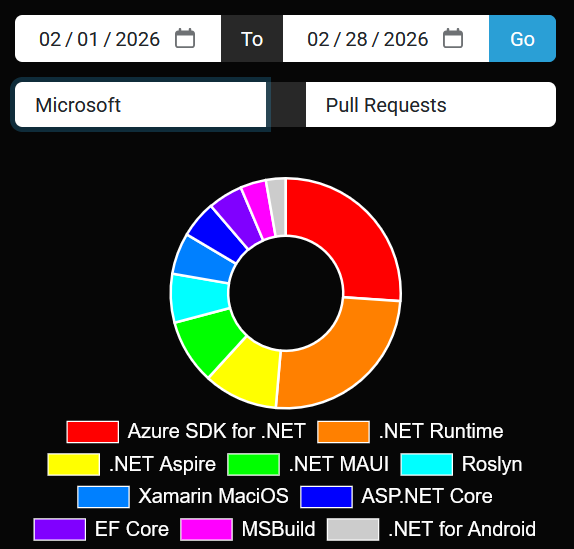
.NET Foundation most active Microsoft projects for February 2026... Azure SDK for .NET led the way in PRs (813), Commits (564) and New Contributors (13). Honorable mention to .NET Runtime and .NET Aspire. Full list: dnfprojects.org/!/Feb-01-2026/… @dotnetfdn
English
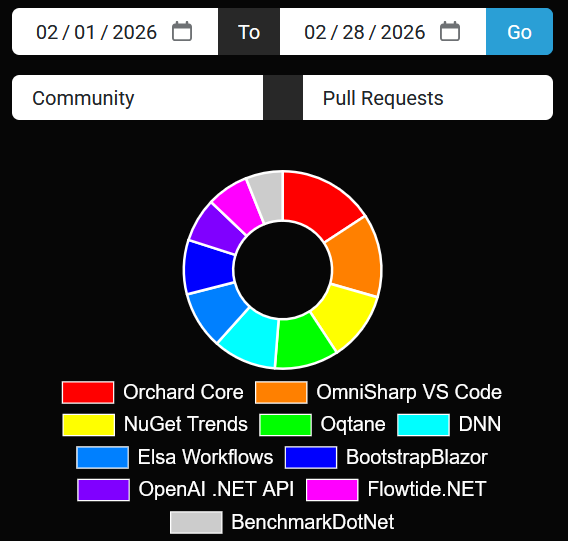
.NET Foundation most active Community projects for February 2026... Orchard Core led the way in PRs (99), OmniSharp VS Code in Commits (204) and Spectre.Console in New Contributors (6). Honorable mention to NuGet Trends, DNN, Oqtane. Full list: dnfprojects.org/!/Feb-01-2026/… @dotnetfdn
English
The essence of software development is not about writing code - it is about creating modern solutions through the use of technology.
linkedin.com/posts/shaunbru…
English
Shaun Walker retweetet

Learn how tech leaders can build a sustainable AI productivity strategy that improves delivery speed without increasing risk or technical debt.
🔗 Read the full article here: devessence.com/blog/!/75/how-…
#Devessence #AI #EnterpriseTech
English
New release of Oqtane, the open-source developer productivity platform that allows you to "Build Applications, Not Infrastructure"! This release targets .NET 10 and includes 74 pull requests by 6 contributors. oqtane.org/blog/!/140/oqt… #blazor #oqtane

English
@Ross__Hendricks But the view from the top of Mount Stupid is spectacular linkedin.com/posts/shaunbru…
English

This "AI disruption" panic will turn out to be one of the silliest overreactions and greatest mispricing events in recent history
Generational buying opportunities are being created from sheer ignorance
English
Shaun Walker retweetet
Join us for a deep dive with @sbwalker (creator of Oqtane & DotNetNuke) as he demonstrates a simple technique to integrate .NET Identity natively with Interactive Blazor.
👉 Register here: cutt.ly/qtQtXzGg
#Devessence #dotNETIdentity #InteractiveBlazor #techtalk
English
@mattshumer_ Amara’s Law…. same conclusion… but longer timeline… linkedin.com/posts/shaunbru…
English

@aakashgupta @aakashgupta 100% agree... you are describing "Amara's Law" linkedin.com/feed/update/ur…
English

90% of American businesses still don’t use AI in production. That single number reframes this entire post.
An AI startup CEO wrote 5,000 words comparing AI to Covid in February 2020. His argument: he describes what he wants built in plain English, walks away for four hours, comes back to finished software. He says every white-collar job faces the same experience within 1-5 years. Millions of people are sharing it as a wake-up call.
The capability trend he’s describing is real. METR, the independent research org measuring AI task completion, shows the length of tasks AI handles autonomously has been doubling roughly every seven months. The models released in early February represent a genuine step change for coding work specifically. If you build software, you’ve felt this.
Here’s what the post skips entirely. Anthropic’s own economic research, published with Census Bureau data, shows AI adoption among US firms went from 3.7% in fall 2023 to 9.7% by August 2025. Two years of the fastest capability improvement in computing history, and fewer than one in ten businesses use AI in production. ISG’s 2025 enterprise study found only 31% of AI use cases reached full production. Lucidworks surveyed 1,600 AI leaders and found 71% of organizations have introduced generative AI, but only 6% have implemented agentic AI, the autonomous agent capability this post describes.
This tells you everything about where the bottleneck actually sits. It moved from “can AI do this task” to “can our organization deploy it.” That second bottleneck runs on procurement cycles, compliance reviews, data infrastructure buildouts, change management, and institutional trust. None of those compress the way model capabilities do.
The pattern repeats throughout technology history. ATMs deployed widely starting in the 1970s. The number of US bank tellers increased until 2007, three full decades later, because ATMs made branches cheaper to operate, which expanded total branch count. Electricity took 30 years to reshape manufacturing after the first power plants went live. Factories had to be physically redesigned around electric motors instead of steam-driven belt systems. The resistance wasn’t technological. It was architectural.
What makes this interesting for your career: the deployment gap is the opportunity. The Deloitte 2026 AI report found only 34% of companies are reimagining their business around AI. 83% of AI leaders report major concerns about generative AI implementation, an eightfold increase in two years. The organizational machinery moves at a fraction of the capability speed.
The people who gain the most from AI over the next three years aren’t the ones panicking about replacement timelines. They’re the ones who understand that slow enterprise adoption creates a massive window to become the person who actually knows how to use these tools. That window is real and valuable. It exists precisely because adoption is slow, which is the opposite of the premise driving the panic.
The capability curve is exponential. The deployment curve is logarithmic. The distance between those two lines is where the actual opportunity lives.
Matt Shumer@mattshumer_
English
@NextBigTeng The number of times the word “could” is used in this article (as opposed to the word “is”) underscores the massive ignorance and fear-mongering which is rampant in the market lately.
English


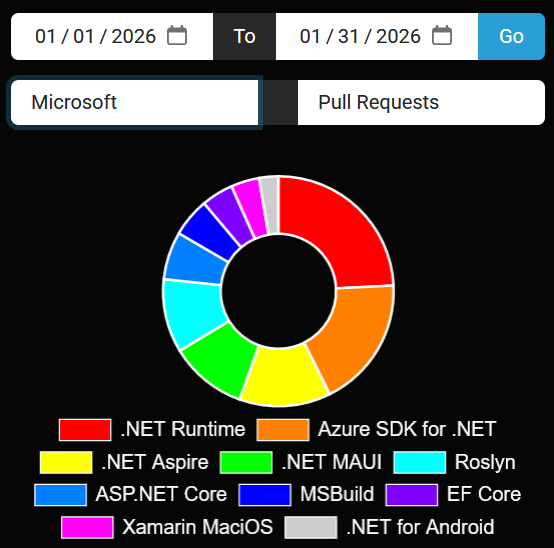
.NET Foundation most active Microsoft projects for January 2026... NET Runtime led the way in PRs (622) and New Contributors (16) and Roslyn led in Commits (698). Honorable mention to Azure SDK for .NET and .NET Aspire. Full list: dnfprojects.org/!/Jan-01-2026/… @dotnetfdn
English
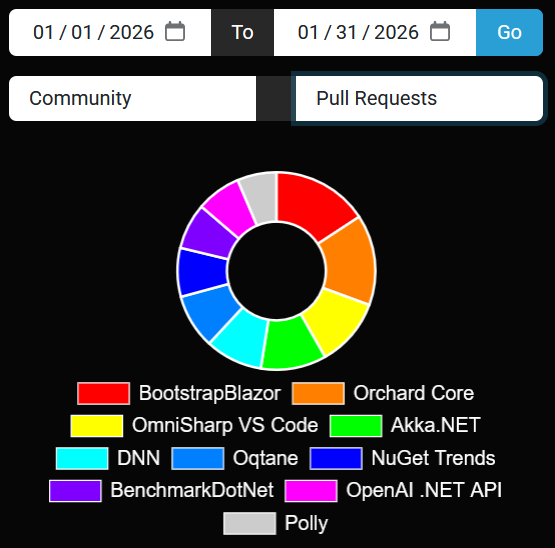
.NET Foundation most active Community projects for January 2026... Bootstrap Blazor led the way in PRs (69) and .NEXT led in in Commits (1349) and New Contributors (7). Honorable mention to Orchard Core, Stride. Full list: dnfprojects.org/!/Jan-01-2026/… @dotnetfdn
English
New release of Oqtane, the open-source developer productivity platform that allows you to "Build Applications, Not Infrastructure"! This release targets .NET 10 and includes 29 pull requests by 3 contributors. oqtane.org/blog/!/138/oqt… #blazor #oqtane

English