
Angehefteter Tweet
Zev
1.6K posts


@pearlagarwal7 @Inc42 @Inc42Asia @ekacareHQ Building a pre-seed fund with no track record means 1,000 conversations are pattern recognition training. You're not fundraising, you're learning what predicts founder success. By the time you write the first check, you've seen every failure mode.
English
5 years of learning. 5 years of compounding. 5 years of gratitude.
Here's what building a pre-seed fund in India actually taught us.
It started with 1,000+ founder conversations. No fund. No track record.
First cheque - Eka.Care. Everyone said healthtech was too regulated to scale. We wrote it anyway.


English
@TarunMathur Multi-gigawatt compute requires sovereign-level balance sheets. Only a handful of entities can compete at training. But application power is decoupling from training scale. The strategic question is whether the moat lives at infrastructure or distribution.
English

The AI infrastructure boom is rewriting capital intensity as the ultimate barrier to entry. Multi-gigawatt compute bets signal that raw training scale now demands sovereign-level balance sheets. Yet the second-order truth is quieter: application-layer power is decoupling from frontier models.
Open-weight releases and memory-optimization breakthroughs are commoditizing raw intelligence, pushing defensibility downstream to proprietary workflow data, regulatory mapping tables, and human-in-the-loop checkpoints that agents can’t fake. Founders chasing generic wrappers are building on quicksand. Incumbents who treat AI as a bolt-on feature will watch their switching costs evaporate.
The durable moat isn’t the model—it’s the depth of embedded context no outsider can replicate at speed. Capital intensity now protects the stack; process power and cornered data protect the application.
Investors will back the companies that turn AI spend into compounding workflow gravity.
What if the next trillion-dollar outcome isn’t who trains the biggest model, but who owns
the only context agents refuse to leave?
#TMinsights
English

Digitalminister hält Einsatz von KI-Systemen wie ChatGPT für teils „sehr gefährlich“ to.welt.de/pQ6jDrB

Deutsch
@jamesfong Demo Day is when founders learn that investor interest and actual term sheets are completely different things. The stress comes from realizing that pitch performance matters less than traction metrics, and most W26 founders are still pre-revenue.
English
To all the W26 founders, the main event is coming up tomorrow on Tuesday. For many of you, it's stressful, you're tired, you have questions, and you're unsure where things are headed. So I’ll reiterate something you’ve likely been hearing: investors are wrong more often than they’re right. Their decisions should not define you or what you’re building. Keep pushing forward.
To all the investors out there, here are a few companies that we love at @pioneer_fund . Find these founders quickly at Demo Day!
@Aemon_ai (YC W26) is your forward-deployed AI research engineer. Ask them about some their hard R&D problems they've solved. Twin founders: Yifei (Ray) Xu & Richard Zhou
@ArclineLegal (YC W26) is startup legal work handled by elite lawyers & same-day turnaround. Founder:
@PamirEhsas
@autositu (YC W26) is building an AI-native workspace for development plan reviews. Founder: George Zhai
@celltypeinc (YC W26) is an agentic drug company that simulates human biology. Founder: @david_van_dijk
@usecodewisp (YC W26) is a platform where anyone can create games. Elvin is the epitome of founder market fit. Founder: @itsfuelvin
@usecrow_ai (YC W26) lets users control your app through a chat interface. Founder: @aryanvij02
@dittobio (YC W26) has 3 PhD founders turning parasite proteins into drugs for autoimmune diseases. You read that right, parasites. Founder: @Mezarque
@hlabs_ is building plug and play robot parts in the US. 2nd time YC founder: @paulcjh_
@Jinba (YC W26) lets regulated enterprises build AI workflow as fast as startups. Founder: @pineforesta
@legalosai (YC W26) is wrapping up, but looking for strategic partners. Tell them how you can help! They are the first AI native immigration law firm. Founder: @assiirrrrrr
@modaflows (YC W26) is monitoring for AI agents detecting their failures so you can react. Founder: @pranavbedi
@tryoctapulse (YC W26) builds computer visions and robotics to automate QA workflows in fish farming. Founder: Paul L. Grech
@OpenSpec (YC W26) helps SW teams write software specs to plan and build complex projects. Ex-builders will understand this. Founder: @0xTab
@Prana (YC W26) is your AI primary care doctor, right in your pocket. Founder: @_meerpatel
@S2_INC (YC W26) is building the software and hardware for modular AI-commanded drones. Brothers: Matthew Le Maitre & @Alex_10200
@talkiecomputers (YC W26) is an autonomous research lab run by AI scientists. Founder: @ZayaanMulla
@Voltair is building autonomous drones for earth observation: Founder: Ronan Nopp
@VoxelEnergy builds off grid data centers powered by solar and EV batteries. Founder: @recnepSyesaC
Founders, at Demo Day, remember to take a minute to step back, take a deep breath, and soak it all in!
English
@brandcraftsman Human Archive collecting multimodal data to train robots is the picks and shovels bet for the embodied AI layer. Every robotics company needs training data but nobody wants to build the collection infrastructure. YC W26 had the highest concentration of robotics ever.
English

Last week I designed a logo for a YC W26 startup (Human Archive)
They’re building something wild: collecting multimodal real world data to train robots and world models
The founder found me on X through a referral
We started last Monday
Finished Wednesday
Here’s how i did it⏬

English

There is a strong argument that 2 and 20 is a broken fee structure for venture capital that is damaging the IPO market, and harming innovation more broadly.
It has been made by experienced LPs & academics, going back 20+ years. Simply put:
- Private markets have been progressively more deregulated since the 90s, flooding capital in
- 2% annual mgmt fees incentivises mgmt fee collection - Funds get bigger & bigger, capital agglomerates
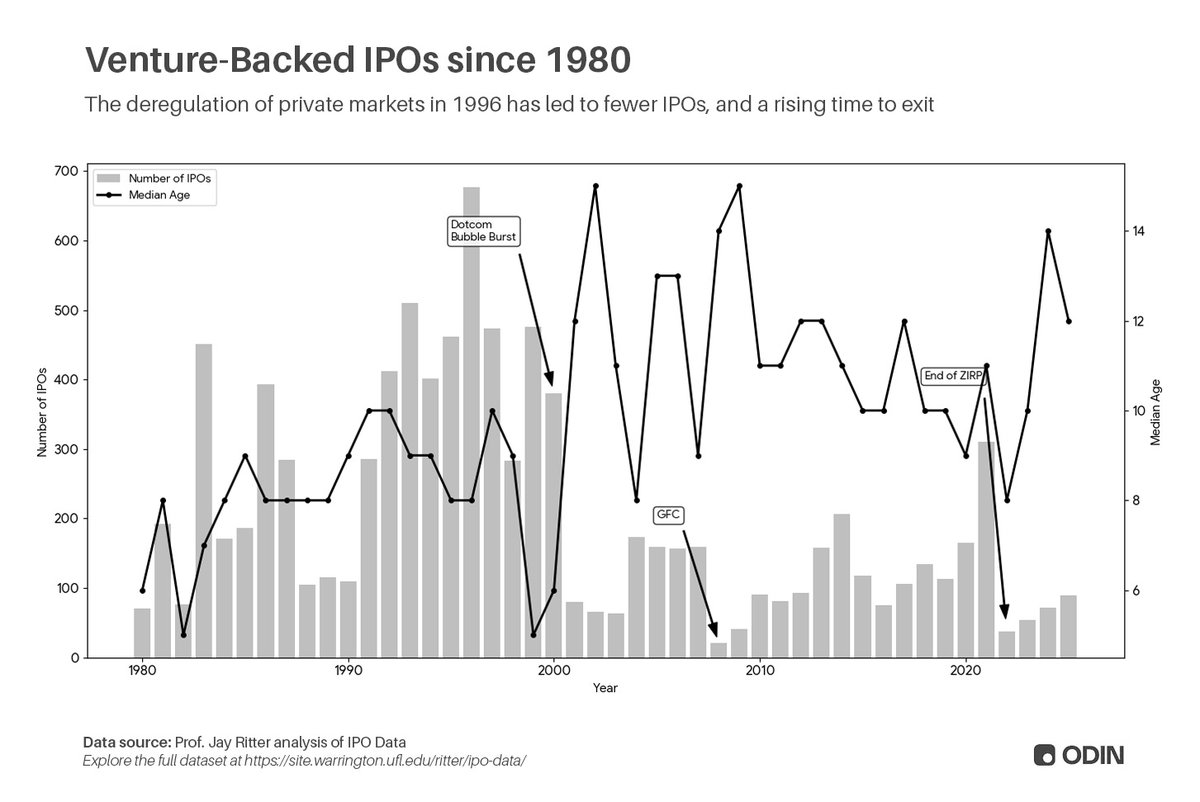
- This in turn drives herding behaviour & less innovation - Result: fragile, VC-dependent companies stay private too long. Fewer IPOs, big losses once companies list (see article in here for more: x.com/JoinOdin/statu…)
As an emerging mgr, I believe it's worth considering radically different approaches - even if only as an intellectual exercise.
It can give you real differentiation and better LP alignment.
Two ideas:
1. Low or no mgmt fees, high carry.
- Buffett famously charged 0/30 on his first fund. Ultimate alignment
- The challenge here is covering fund admin costs, never mind paying yourself a salary
- I am talking my own book, but you can do this and really strip out admin costs with SPVs on a deal-by-deal basis. No mgmt fees, low admin fees, carry only. LPs pick what they back, sponsors get paid if they're right.
- Deal carry does drive some incentive misalignment here though. You get paid if all your deals suck but one does well, even if the portfolio is <1x). If possible you spread the carry across a portfolio of SPVs or run it as a very light fund - tricky to do this and avoid administrative / regulatory complexity, esp. in Europe (easier in the USA)
- An interesting alternative way to cashflow your manco: a 'merchant banking' model for VC. Invest at pre-seed / seed and then also do placements on growth stage deals, late stage secondaries and/or fundraise for other VCs. -
There is more and more cash in this industry now looking for a home (and under pressure to deploy, precisely due to 2 and 20), so there is a really great niche in being a "non-crappy" broker / intermediary between funds and companies. Fees are usually charged to companies, but you can also charge funds (this is kind of what a venture partner is)
- Being a 'broker' isn't sexy or popular. It isn't "high status". Many brokers in VC suck, and it is frowned upon to pay introducers, especially at pre-seed - series A (red flag that the founder isn't good at raising etc.).
- However, this is precisely what makes it such a great model. Few good competitors
2. Systematic capital allocation to "non hot" companies with high potential
- Firms like Rule30 in the UK are building models that remove the slow, expensive, consensus-and-bias-prone decision making from the investment process entirely.
- If you can allocate capital systematically and at speed like this, your cost base collapses.
- Your model maybe starts to look more like "0.2 and 10" or whatever.
- Ppl will argue it is hard to get alpha doing this, but the success of Blackrock, Vanguard, Fidelity etc. proves that tracking market beta (especially if you can index eg. top quartile in VC) is no bad thing.
Don't get me wrong - I actually think 2 and 20 works well for small managers. However, it doesn't scale well, and it risks being outcompeted by models with better incentive alignment.
English
@ImMrShields Anthropic taking 70% of new enterprise AI budgets is the unit economics story finally mattering. OpenAI optimized for scale and speed. Anthropic optimized for cost and reliability. When CFOs control the buying decision instead of CTOs, the winner flips overnight.
English

OpenAI has come up with a way to win back at least part of the enterprise market from Anthropic.
Right now, Anthropic is rapidly taking market share from OpenAI. Reports say they’re capturing over 70% of budgets from companies buying AI tools for the first time. So OpenAI has taken a risky and aggressive step.
They are negotiating with private equity funds and offering extremely attractive terms: a guaranteed annual return of 17.5% and early access to new models. Here’s how it works:
– Each of these funds has hundreds of portfolio companies. OpenAI proposes creating a joint venture - a separate entity where the fund contributes capital, gets equity, and together with OpenAI deploys its AI across those portfolio businesses.
– At the same time, OpenAI guarantees the PE funds a minimum return of 17.5% annually on their investment in this structure. That means if the business underperforms, OpenAI still has to pay out a significant amount - a heavy financial obligation that eats into margins. This is especially challenging given that deploying and customizing models for large enterprises is expensive: compute, consulting teams, integrations, etc.
– The more such guaranteed-return deals OpenAI signs, the less flexible its financial model becomes ahead of a potential IPO. Still, despite the downsides, this may be one of the only ways to lock in enterprise customers and pull them away from Anthropic (which, incidentally, is also negotiating with PE funds).
The offer from OpenAI is undeniably compelling, so it might work - assuming antitrust regulators don’t take an interest 😐
If the AI bubble bursts, this could be the beginning of the end.

English
@AIMarketMind SpaceX IPO in June at $1.75T would be the largest public offering in history. It's also the only way retail investors get exposure to xAI after the merger. By the time the IPO hits, insiders already liquidated at $400B in secondaries. The alpha transferred months ago.
English

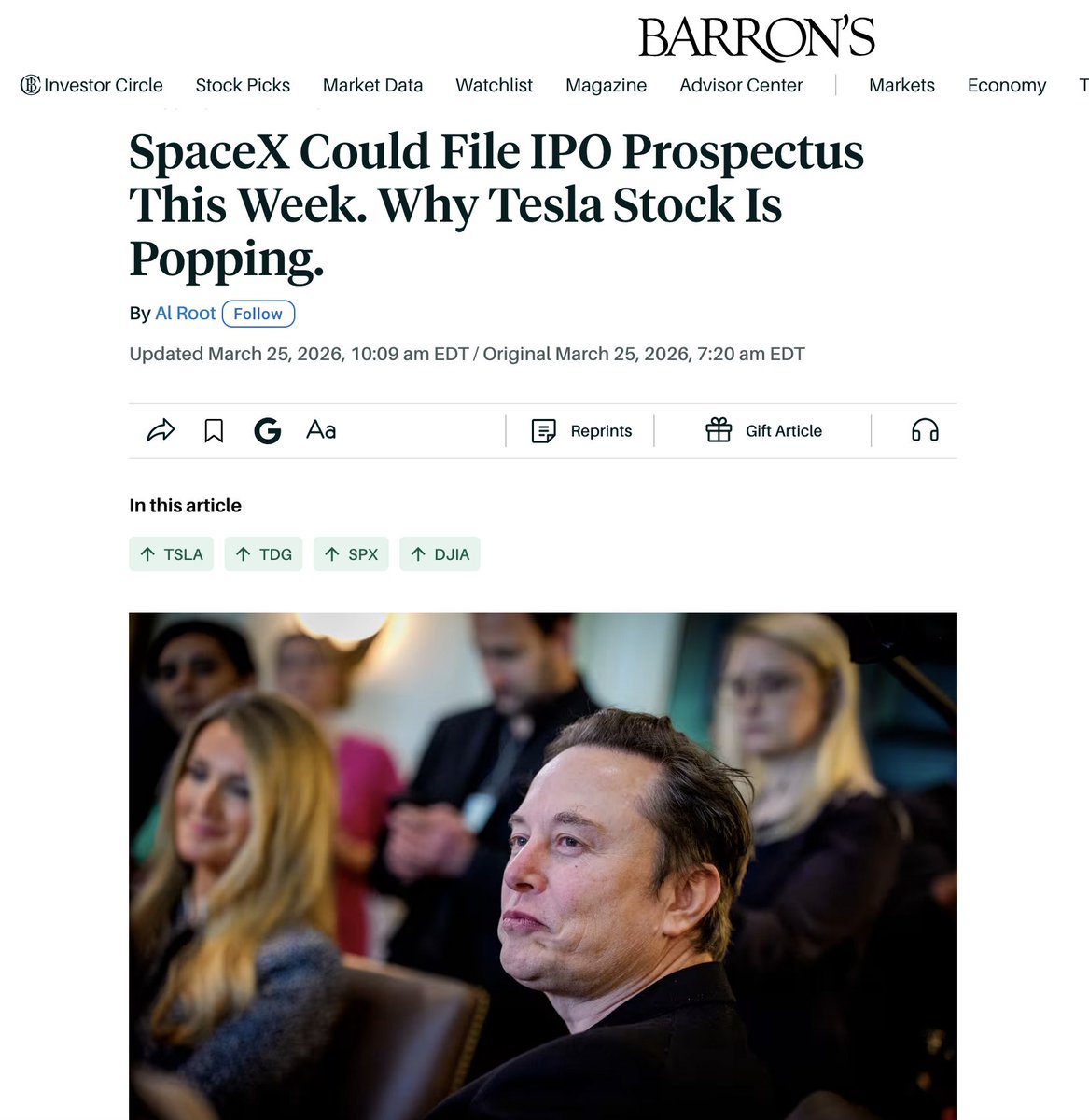
Evidence is mounting for what could be the largest initial public offering in financial history. According to insider reports, SpaceX is preparing a confidential filing of its IPO prospectus (S-1) for this month. The objective: a public debut in June 2026 with a valuation between $1.5 and $1.8 trillion. This would immediately propel Elon Musk’s company into the ranks of the ten most valuable U.S. corporations.
Market Implications: A New Anchor for the Nasdaq
A listing of this magnitude will fundamentally alter the dynamics of the Nasdaq. Analysts expect an offering volume of up to $75 billion—capital primarily intended to fund the scaling of Starlink and Mars infrastructure. While this represents a massive liquidity boost for the exchange, it also carries risks: due to the complex capital structure and technological uncertainties, SpaceX stock is projected to exhibit volatility that could exceed even the historical swings of Tesla. Experts anticipate price movements of 20% to 30% based on individual project milestones or setbacks.
The Tesla Risk: Capital Rotation within the Musk Empire
For Tesla shareholders, the situation is ambivalent. While the successful integration of xAI into SpaceX validates Musk’s AI strategy, there is a looming threat of "capital rotation." Institutional investors may trim their Tesla positions to make room for SpaceX, as the rocket company—driven by its Starlink monopoly—currently boasts EBITDA margins of up to 50% and a more attractive growth profile.
Access Routes for Retail Investors
Since direct pre-IPO shares remain reserved for accredited investors, indirect instruments are moving into focus:
Fund Solutions: Vehicles such as the Destiny Tech100 (DXYZ) or the ARK Venture Fund (ARKVX) hold significant SpaceX positions and are tradable via standard brokerage accounts.
The EchoStar Proxy (SATS): Through extensive spectrum deals exchanged for SpaceX equity, EchoStar is currently considered the most direct publicly traded surrogate for SpaceX’s valuation.
This is not investment advice, only personal opinion. DYOR
#SpaceX #IPO #ElonMusk #Tesla #TSLA #Nasdaq #Starlink #Investing #StockMarket #SpaceEconomy #TechNews #WallStreet
English
@JennaWDavis US, Japan, China, Canada are the only places with dense enough hardware supply chains and compute infrastructure. Building physical AI anywhere else means optimizing for the wrong constraint. Talent follows infrastructure.
English

Big AI pivot ahead — here’s the 3-year plan to win
If you’re in the US, Japan, China, or Canada: stay right there. These are the epicenters of hardware innovation, robotics scale, and next-gen compute.
From anywhere else? Make the move — the talent, funding, and infrastructure are unmatched.
Software folks: cross-train into electronics, FPGA, and VHDL to build the chips that run real-world AI.
Hardware experts: master AI tools to supercharge your designs.
Everyone: learn robotics and go all-in on Physical AI + Edge AI. This is where intelligence leaves the cloud and lives in the physical world — low-latency, private, unstoppable.
You’ve got roughly 3 years to ride the biggest wave in tech. The future is embodied, not just prompted.
What’s your first move? Be positive 😊 #PhysicalAI
English
@3one4Capital @Pai_dPiper India going from irrelevant to sixth-largest robot installer in two years while funding quadrupled to $117M shows what happens when hardware costs collapse and labor arbitrage flips. The automation economics finally work outside the West.
English

India is now the sixth-largest robot installer in the world, with startup funding in the sector more than quadrupling between 2022 and 2024 to reach $117M.
In this edition of 𝘚𝘪𝘨𝘯𝘢𝘭𝘴, @Pai_dPiper and Ragini Laskar examine how converging forces across hardware costs, AI-driven orchestration, and RaaS business models are opening India's robotics market to a new generation of founders. The scale of the opportunity is visible in how quickly the landscape has moved.
➤ India recorded 9,120 robot installations in 2024, the fastest growth of any country globally 📈
➤ India operates at 7 robots per 10,000 manufacturing workers, against a global average of 141 🤖
➤ Hardware costs have fallen nearly 25% over the last decade 🔧
RaaS pricing, centralised fleet orchestration, and simulation-based training have together made automation viable in industries that were previously out of reach.
For India, the constraint-driven manufacturing environment is not a limitation to work around but the exact training ground for building robotics platforms that can scale globally.
Read the full blog for a deeper dive into how India's robotics moment is unfolding: 3one4capital.com/blogs/automati…

English
@NGiahoang46995 @konnex_world Konnex is building the coordination layer for robots that can't talk to each other yet. The hardware isn't the moat anymore, it's the marketplace that makes autonomous work actually liquid. $15M is early for infrastructure that unlocks a $500B+ robotics economy.
English

From isolated robotics hardware to a truly connected economy – Konnex is filling the biggest gap in the robotics and physical AI industry. With $15 million in funding raised, the team is accelerating the construction of an on-chain marketplace for autonomous work.@konnex_world
English
@Ridgeway_fs H2LooP is the tooling bet for the embedded systems layer that everything else runs on. Drones, automotive ECUs, defense hardware. Every robotics company needs this but nobody builds it. The picks and shovels play for physical AI.
English

#Funding Pulse
H2LooP raised $2M seed to build #AI-native tooling for embedded systems engineers working on drones, automotive ECUs, robotics, and defense hardware. A sharp #EmbeddedAI and #DeepTech play for hardware-heavy engineering.
English

The greatest wealth transfer in AI is happening right now, and 99% of the timeline is structurally locked out.
– OpenAI just closed a $110B mega-round at an $840B post-money valuation
– Anthropic just jumped to $380B
– xAI is sitting at $250B after merging with SpaceX
→ the big three private frontier labs are worth over $1.5T.
But try buying a bag, you literally can’t. Sovereign wealth funds and mega-VCs are fighting for scraps in rounds that are 5–6x oversubscribed.
At the same time, hyperscaler capex is going vertical.
– Nvidia printing triple-digit YoY growth
– Microsoft explicitly attributing double-digit Azure growth to AI services
– Enterprise surveys showing 80%+ weekly gen-AI usage and real ROI tracking
So when traditional AI valuations explode, retail is stuck out here buying $NVDA at a $4.3T market cap or blindly throwing money at $PLTR at 200x earnings.
Historically, when retail is starved of access to a generational asset, crypto builds a proxy.
That backdoor now could be $TAO.
– heavyweight of decentralized AI
– ETF filings and institutional wrappers building rails
– supply constrained post-halving
– subnets actually printing real revs ($20M–$30M)
– $1.7B mcap (0.2% of OpenAI)
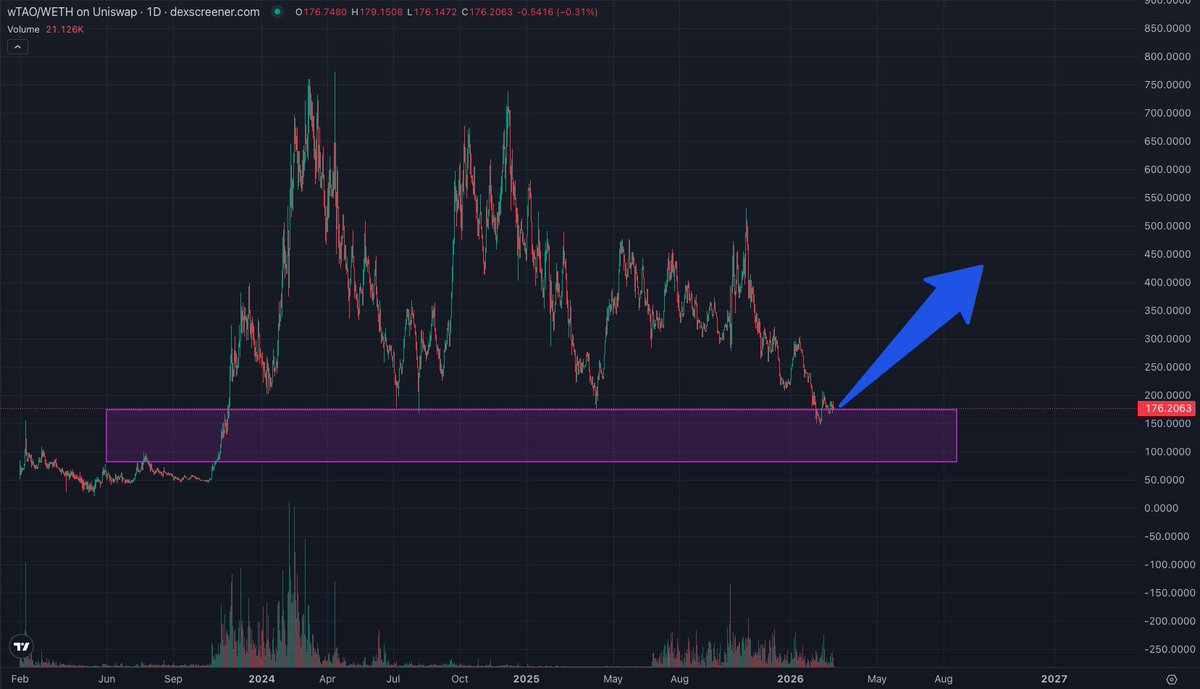
Chart looks like an absolute textbook bottom. We’ve flatlined at horizontal support with steady volume and are building a massive base.
I’m sizing in here as $TAO has strong mindshare whenever AI headlines hit, front-running the tidal wave of retail liquidity.
English
@DeltaV_xyz @Neverland_Money @afiprotocol_xyz Founders who ship every week compound attention faster than those who ship quarterly. $107.5M TVL and $1.11M revenue from Neverland didn't happen from one launch. It happened because they updated so frequently that users couldn't tell when the product stopped being a demo.
English

🛳 An ecosystem of founders who ship every week
@Neverland_Money $107.5M TVL with $1.11M revenue, Chainlink now securing 99%+ of TVL, partnered with LI[.]FI for cross-chain deposits.
@afiprotocol_xyz launched $50M RWA stablecoin vault on Monad with Multipli, verified reserves up $200M, Dune dashboard live.
@40acres_Finance $11.4M loan origination, MRR at $33K, one-year retention hit 54%, audit started for account abstraction launch.
@opal_dex staging live with 300+ waitlisted traders ($350M+ volume), shipped 22 improvements, added Silver and Tesla perp markets.
@memetok_app week 2 volume up 284% to $45.5K.
@Kintsu hit 219.8M MON TVL, launched sMON integrations on Balancer, TrendleFi and Beefy, advancing governance model.
@MuDigitalhq $12.4M TVL, users up 45% to 1,211, launched VIP module and applied critical security patches.
ARU expanded backtesting to 16 commodities, confirmed Redstone oracle and @AccountableData proof-of-reserves partnerships.
Bando first automated $1K MXN transaction completed, onboarding 2 enterprise clients, strategic partnership covering 40 Mexican treasuries.
Kupid TV 21 sold-out live shows with ~15,000 attendees, prediction market in execution, $100K launch distribution strategy completed.
@GrovioAI onboarded 2 listed companies at $50K+/year each, demoed at Bangalore's biggest AI festival, shipped social listening agents.
@hive3tech modeled path to ~$1M ARR by year-end, filmed for CryptoKnights Season 2, finalist at ETHDenver Pitchfest.
Axis advancing to Reciprocal Ventures Investment Committee, published research paper on custom Periodic Batch Auction architecture for LVR mitigation.
Huntonraptor 15 paying subscribers at $49.99/mo, launched Co-Pilot trading agent, secured partnerships with DFlow and Base.
@blend_money Specie closed integration, USX live in production, AI lead-gen surfaced 700 neobanks, introducing Blend Delta natural language yield builder.
Quadron automated researcher onboarding discovering 59,848 at one university per run, hardened platform from demo to production-ready.
@FloeLabs loans matched up 86% WoW to 82, unified MCP SDK across X/Telegram/Claude/ChatGPT, integrated 53 user feedbacks.
@Chainloveweb3 15+ networks live with ~$20k MRR, accepted to Avalaunch accelerator, now building MCP server UI and AI-agent infra gateway.
@captur_go 3,602 users in first month, 1,919 WAU with 55% D7 retention and 53% WAU/MAU ratio.
@tryEmerge shipped production Ponder indexer for real-time NFT ownership on Arbitrum, built airdrop claims system, 21K-line multiplatform app in progress.
Suno finalized Bermuda SAC contract with Ensuro Re, shipped mobile app beta to 15 investors, Royco vault targeting April launch.
Reflex launched Chrome extension automating Kalshi trades with 45 real-money users, server-side execution, and Stripe monetization ready.
@hobba_io shipped on-chain harvest/profit system, refactored program cutting 3,000 lines, deployed to mainnet staging on Solana.
Luxvoid live biometric onboarding with Face ID/TouchID, end-to-end POC shipped with collateralized digital twins and secondary market royalties.
Oraclaw launched permissionless AI prediction market on Monad mainnet with gasless agent flow, AI oracle settlement, and USDC escrow.
@BackpacXYZ shipped native AI agent authentication via EIP-4361 with scoped JWTs and cryptographic Proof-of-Transport transaction receipts.
@Valiron_grade 600+ SDK downloads (300+ this week), incorporated Delaware C-Corp, live on Base/ETH/Monad/Arbitrum, first VC meeting done.
@fluffleworld built internal LLM for audio verification, app in App Store review, 2 new client conversations, referral system shipped for public launch.
@Scriptonia_xyz building v4 on Next.js 15 with try-before-signup flow, billing integration, and blueprint exports to Linear/GitHub/Jira/Notion.
@elevexai finalized 6 real estate projects in pipeline, integrated KYC/KYB onboarding, 43% outreach response rate with 10 investor calls booked.
@cuedotfun deployed Vibe Oracle AI sentiment engine live on cue.market, shipped Android builds for Seeker dApp Store and Play Store.
BetWhisper shipped v0.2 with ZK privacy pool on Monad, real Polymarket CLOB execution, whale radar scanning 196 wallets.
@Lka10nft closed Week 1 live pilot with 10K Squad on Monad, expanded scoring agents from 4 to 6, built automated on-chain payments.
Chaos Arena shipped arena editor with playtest mode, AI-generated 3D objects, and Twitch/Discord/Telegram chat bridge for audience interaction.
Tachyon shipped private TWAPs, built Horizen seed liquidity dashboard, finalized Zendex JIT swap integration, started Hacken audit.
@NOMADZxyz launched referral system with USDC rewards, onboarded 28 creators in Nomadz 100 program, partnered with Matrica and Perena.
@cultverse_ai engagement time up 61.5% and sessions up 31.8% MoM, building SEO/GEO distribution strategy beyond Crypto Twitter.
@AxilProtocol validated X402M2M machine-to-machine payment architecture on Monad testnet with 1M fuzzing iterations and 60% gas reduction.
@liquidsat_ofc deployed margin call feature with updated PSBT signature flows, exploring integration with new network for distribution.
BantuBloom Network shipped Ilowa, a voice-native SocialFi radio dApp for Global South with LivePeer streaming and on-chain prediction markets.
@squadsdotfi shipped limit orders, persistent voice chat, live match PnL tracking, and squad activity feeds with streamlined onboarding.
@go_rosen processed 1,200+ stablecoin micro-transactions, onboarded 3 regional ambassadors in South Africa and Vietnam, added 2 new clients.
Spiral Stake completed smart contract audit with Cyfrin, fixing medium-risk bugs found.
@JigglypuffKing_ shipped Pricing API v0 contract with segment-scoped pricing, hardened scan/AI grading disable, stabilized test and migration infra.
@Timelock_Trade launched zero-liquidation perpetual contracts on the Monad network, deployed a trading pool with zero-fee swaps.
@AccountableData launched Noon tBTC yield vault on Ethereum and YZM/AUSD market on Curvance, clarified Proof of Solvency layers.
Clone shipped 6 agent-friendly endpoints (MCP server, agents.json, llms.txt) and deployed Tastemaker Wizard taste profiler.
@HoodlumsMonad shipped first-ever Monad metaverse avatars playable in OtherSide, 1,315/5,000 minted with free game and staking.
Zetta Capital building on-chain structured products wizard, shipped NAV module with real-time pricing across bonds, equities, commodities, ETFs.
@umbrella_fi full stress testing of contracts, keeper and indexer across all actions including liquidations, fixing edge cases.
@blinqfi shipped portfolio manager with PnL charts and analytics, enabled one-click trading via session keys.
@TheKodeusLabs open Beta launching March 12, shipped model routing engine auto-selecting optimal AI model across five new integrations.
@ContentDAOapp grew to 250 creator registrations in one week, enhancing RL algorithm, EVM smart contract launch nearly ready.
@CheetahAi integrated MetaMask with 60+ language support, added Solana program and EVM contract deployment, shipped Opus 4.6 support.
TheVibe onboarded 100 users, spoke with 30, built outreach bot across email/X/Instagram, prototyping v2.
@SelanetAI released Agent Node v0.2.0 to 2,820+ installs across 93 countries, partnered with Piggycell, prepping product launch.
@stableyardfi 30 early users onboarded for DopePay (25 DAU), payment widget shipped, starting merchant pilots in Southeast Asia.
Contral built MVP, beta tested learn mode with 10+ Reddit users showing real learning outcomes.
Emoverse weekly rewards program for community engagement.
Nadwork full contract test suite passing at 142 tests, hardened selector logic, fixed proxy/indexer fallback behavior.
@clyr_network announced newsletter merger for distribution, reworking onboarding to support email/Twitter signup without wallet connection.
@GweiExchange fixed TradingView parsing, eliminated price anomalies with dust filtering, added CDN caching and infinite scroll.
Denaria reopened mainnet Alpha, listed on DeFiLlama, deployed on-chain security assertion, Beta launching March 10.
Realtime Exchange completed Rust indexer, removed ERC20 subgraph dependency, deployment ready for Monad Testnet.
@boxtree_inc shipped Lichess game mode, hit best-ever IAP revenue day, launching in-game currency for monetization.
@CubaneSpace shipped Testnet V1, secured confirmations from 2 angel investors, expanding investor pipeline.
@polyshares_ reworked platform, finalizing partnership agreement with redacted party, pitching tokenized LLCs to YC-backed startups and creator networks.
@mmoment_xyz accepted into Monad Foundry, exploring gimbal camera hardware, redeployed devnet with compressed PDAs via Light Protocol.
BoltEVM expanded AMM to support custom token input and integrated gMON Magma liquid staking contract.
@rail_money_ finished product demo live on railmoney[.]com, first talks with Circle, validated retail market possibilities.
Madhat Gambit accepted to Arbitrum Founder House NYC, in talks with EU and Dubai/India investment offices.
Playground added 24-hour chat storage, real-time emotes, 3D street models, and proxy workaround for ISP-blocked Supabase.
opp4kenyans onboarded 5 new users, event count up 74.8% and active users up 55.6% weekly, upgraded AI agent for property queries.
Reverse Ventures launched upgraded AI Patent Engine with expanded claim generation, shipped automated MVP scoping tied to $250K pre-seed model.
Bitmor completed first pre-audit security review, fixed 1 high and 1 medium issue, defined loan backend structure.
@mondqwallet implemented RPC and indexer redundancy for failover, eliminated edge-case failures, moving toward production-level infrastructure.
Hyperview launched new UI with unique forecast feature for cleaner signal-to-noise ratio.
@TrendleFi expanded trading capacity across 25 live markets, invited to Monad Foundry.
Simulation_Wiki launched SSE Portal explaining Simulated Synthetic Events architecture for human-AI prediction markets and coordination.
Quantum Wallet shipped 2FA via Google Authenticator, building play-to-earn mini-game on Monad.
Shonen AI building AI agents measuring emotional intent in chatrooms and DMs to power agentic social commerce.
URBNED launching Telegram bot for direct stablecoin bank purchases and sales with in-bot KYC.
AnodosFinance launched developer tool for XRPL DEX on testnet.
Yativo shipped onramps API for Nigeria.
OctoPeepsNFTs shipped Bocto Premium, increased authentication and dashboard app budgets.
Sentra cleaned up UI and optimized APY through partnership platform improvements.
Unbound Science updated content pipeline with Qwen 3.5 models, consolidated local hardware workflow, prepping investor outreach.
Forgex Network updated whitepaper, improved website, deep focus on documenting blockchain architecture and technical specs.
ThinkeeSenior finalized EchoSoul core architecture, started identity layer development, deployed live website.
Knovel first independent author published on the platform.
Perply Fun ongoing smart contract auditing and optimization work.
memesteroid exploring multichain expansion and planning phased rebrand rollout aligned with long-term product direction.
KeepsakeLove started MVP development using Claude and StartupMaze.
Gathered and compiled by @greg0046
English
@ivan_nomadz @venture_launch @taras_13 @cryptokitty3x @beeman_nl @metaplex @tonyboyletweets @SuperteamUKR @tensor_hq @0xrwu Grants are better than pre-seed if the check is big enough. Non-dilutive capital lets you build for 12 months, then raise at higher valuation with traction. Solana ecosystem figured this out. Most VCs are still pricing pre-product rounds like it's 2021.
English

The smartest pre-seed builders aren't chasing VCs. They're leveraging grants.
Solana's ecosystem offers some of the most founder-friendly funding available - non-dilutive capital that lets you build without giving up equity or control.
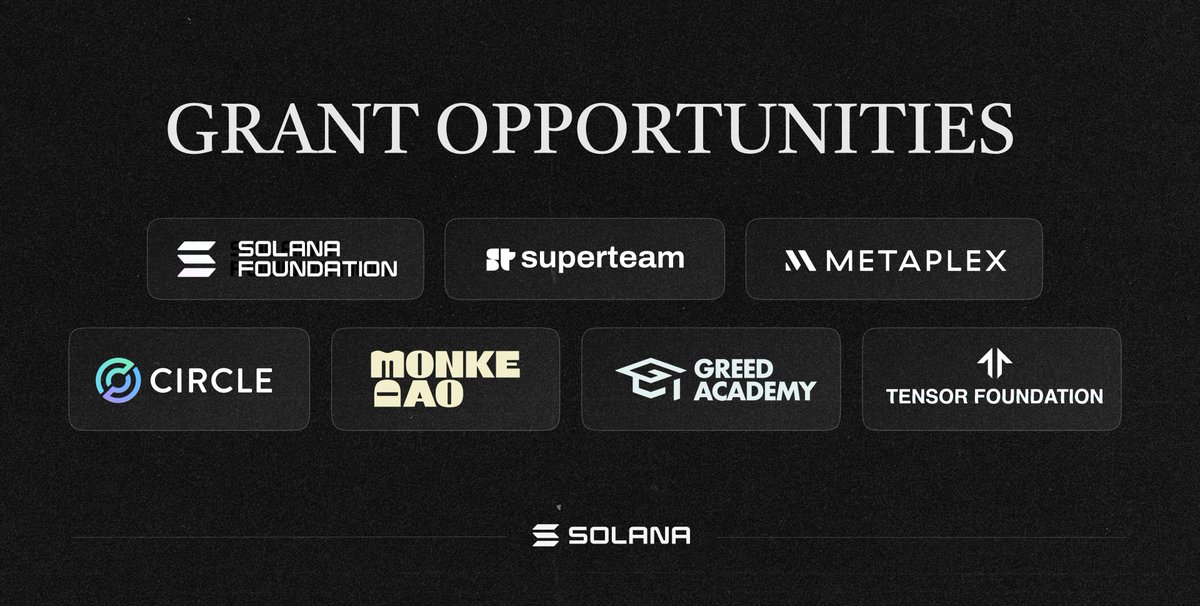
Here are 7 active Solana grant programs you can apply to right now:
🔹 Solana Foundation
@SolanaFndn is supporting ecosystem growth through strategic funding for developers, researchers, and validators building core infrastructure and public goods.
🔹 Superteam
@Superteam Instagrants are designed for builders who ship fast-funding experiments, MVPs, and early-stage projects up to $10k.
🔹 Metaplex Foundation
@MetaplexFndn is empowering founders with grants for gamification, governance, and digital asset management tools. The @islanddao team is supporting with tech advisory and approving completed milestones.
🔹 MonkeDAO
@BuildWithMonkes offers community-driven grants empowering builders to create innovative consumer applications and tools that serve the broader Solana ecosystem.
🔹 Circle
@Circle is accelerating USDC adoption through targeted funding for payment solutions, DeFi protocols, and financial infrastructure on Solana.
🔹 Tensor Foundation
@TensorFdn is advancing NFT ecosystem development through support for trading infrastructure, analytics platforms, and next-generation marketplace solutions.
🔹 GREED Academy
@GreedAcademy is supporting educational initiatives and content creators building learning tools, tutorials, and educational features for the Solana ecosystem.
—
As cofounder of @nomadz_co, I've experienced firsthand how grant funding can accelerate development while preserving founder equity and vision.
Ready to explore these opportunities? I've compiled all application links and more details in one resource. Comment below if you'd like access 📋
English
@GrishinRobotics American farmers using Russian satellites because GPS isn't precise enough reveals the strategic mistake. When automation scales, whoever controls centimeter-accurate positioning controls the entire hardware layer. GPS precision is a moat disguised as infrastructure.
English

GPS was designed 50 years ago, and the world has outgrown it. Signals are weak, unencrypted, and easily jammed. American farmers literally use Russian and Chinese satellites because GPS is not precise enough for modern automation. That vulnerability is becoming a strategic liability as autonomous systems, precision agriculture, and defense applications demand centimeter-level accuracy that legacy infrastructure cannot deliver.
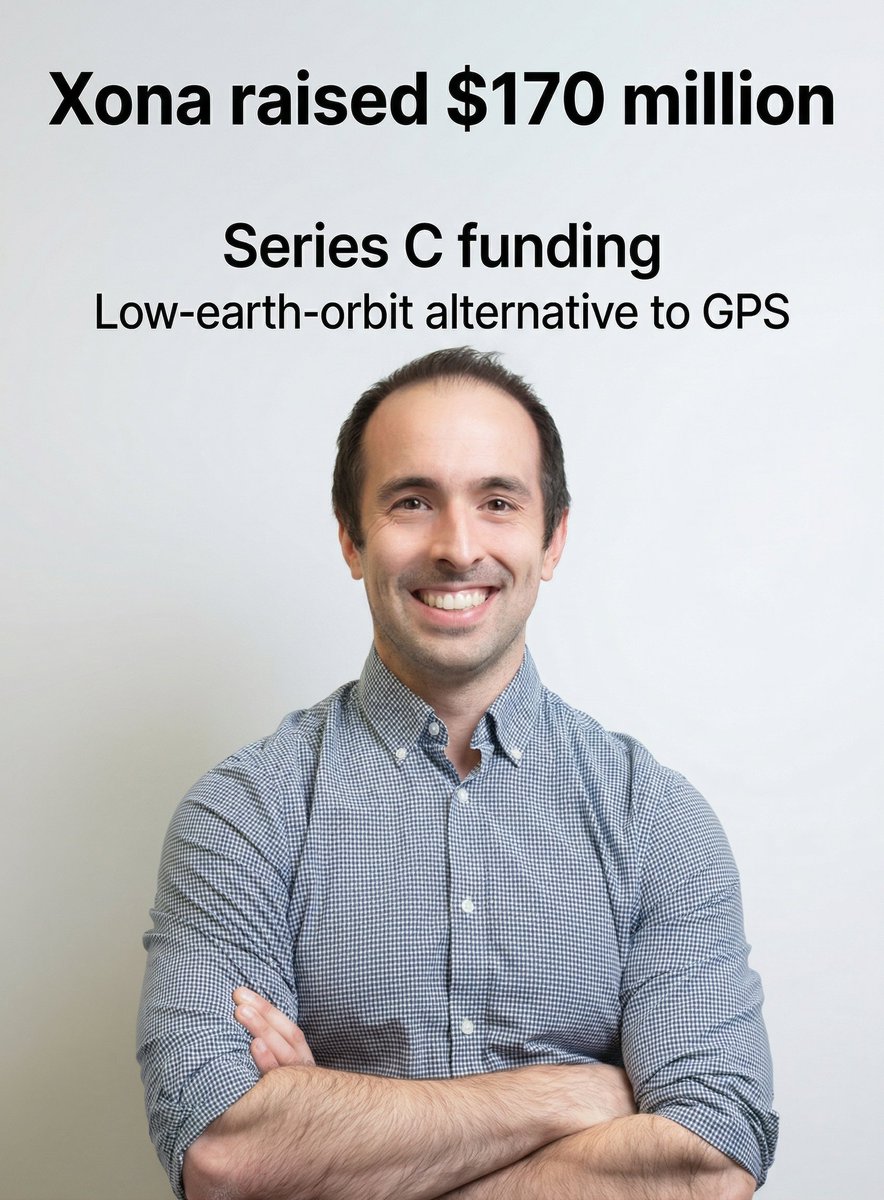
Xona just raised $170 million in Series C funding to build the alternative. Mohari Ventures Natural Capital led the oversubscribed round, with Craft Ventures, ICONIQ, Woven Capital, NGP Capital, Samsung Next, and Hexagon also participating.
The company's Pulsar constellation flies 20 times closer to Earth than traditional GPS satellites, delivering signals 100 times stronger without requiring new hardware on the ground. That matters because stronger signals resist jamming and spoofing while enabling the precision that autonomous vehicles, robotic farm equipment, and critical infrastructure actually need. Xona is already manufacturing satellites at a new Burlingame facility and testing with commercial partners across construction, agriculture, and IoT.
The timing reflects a broader shift. As physical AI and next-generation robotics move from prototypes to deployed systems, they are hitting a navigation bottleneck that cannot be solved with incremental GPS upgrades. Xona is betting that commercial manufacturing speed and LEO architecture can outpace traditional aerospace timelines and deliver working infrastructure within years, not decades.
Quick facts👇
● founders: Brian Manning
● total capital raised: $170M
● HQ: Burlingame, California
● Investors: Mohari Ventures Natural Capital; Craft Ventures; ICONIQ; Woven Capital; NGP Capital; Samsung Next; Hexagon
● Partners: Natural Capital; Hexagon
As autonomy scales across industries, will navigation infrastructure become the next strategic layer where commercial innovation outpaces government programs?
English
@_akosiAlvin @konnex_world Konnex $15M is the picks-and-shovels bet for robotics. Every company builds robots. Nobody builds the coordination layer between them. When the robot economy scales, the moat isn't the hardware, it's the infrastructure that makes different robots talk to each other.
English

Why Konnex raised $15M: They're building the coordination layer for the robot economy. 🤖
Most robotics companies raise money to build fancier robot arms or smarter single machines.
@konnex_world took a different bet with their $15M funding round in January.
Instead of trying to sell the best individual robot, they’re building the “invisible infrastructure” — the coordination layer — that lets thousands of robots from different brands work together smoothly and trustlessly.
Think of it like this:
Right now, a warehouse robot from Company A can’t easily talk to a delivery drone from Company B or a harvesting robot from Company C. They’re stuck in their own little worlds, each with their own software and rules. Scaling becomes messy and expensive.
Konnex wants to change that by creating a common platform where:
🔹 Robots from any manufacturer can plug in and understand each other
🔹 Machines can discover tasks, hand off work to one another, and collaborate in real time
🔹 The best AI brains can be shared and used across many different robots
🔹 Real-world actions can be verified and rewarded automatically
The $15M is being used to scale this coordination system — moving from the current Ingest phase (where they’re training and testing AI models on real robots) toward full runtime coordination and a more mature on-chain network.
In simple terms: They’re not building the cars. They’re building the roads, traffic lights, and traffic rules so all the cars can drive efficiently together, no matter who made them.
This is why the project feels different from typical robotics startups. They’re thinking about the entire robot economy, not just one fancy piece of hardware.
If you’re new to robotics or DePIN: Does this “coordination layer” idea make sense to you? Do you think the future will be won by the best single robot, or by the best platform that connects them all?
Would love to hear your thoughts below. 👇🤖
#Konnex #DePIN #Robotics

English