Both Earth and Mars have been shaped by volcanic activity, creating some similar geologic features on each planet.
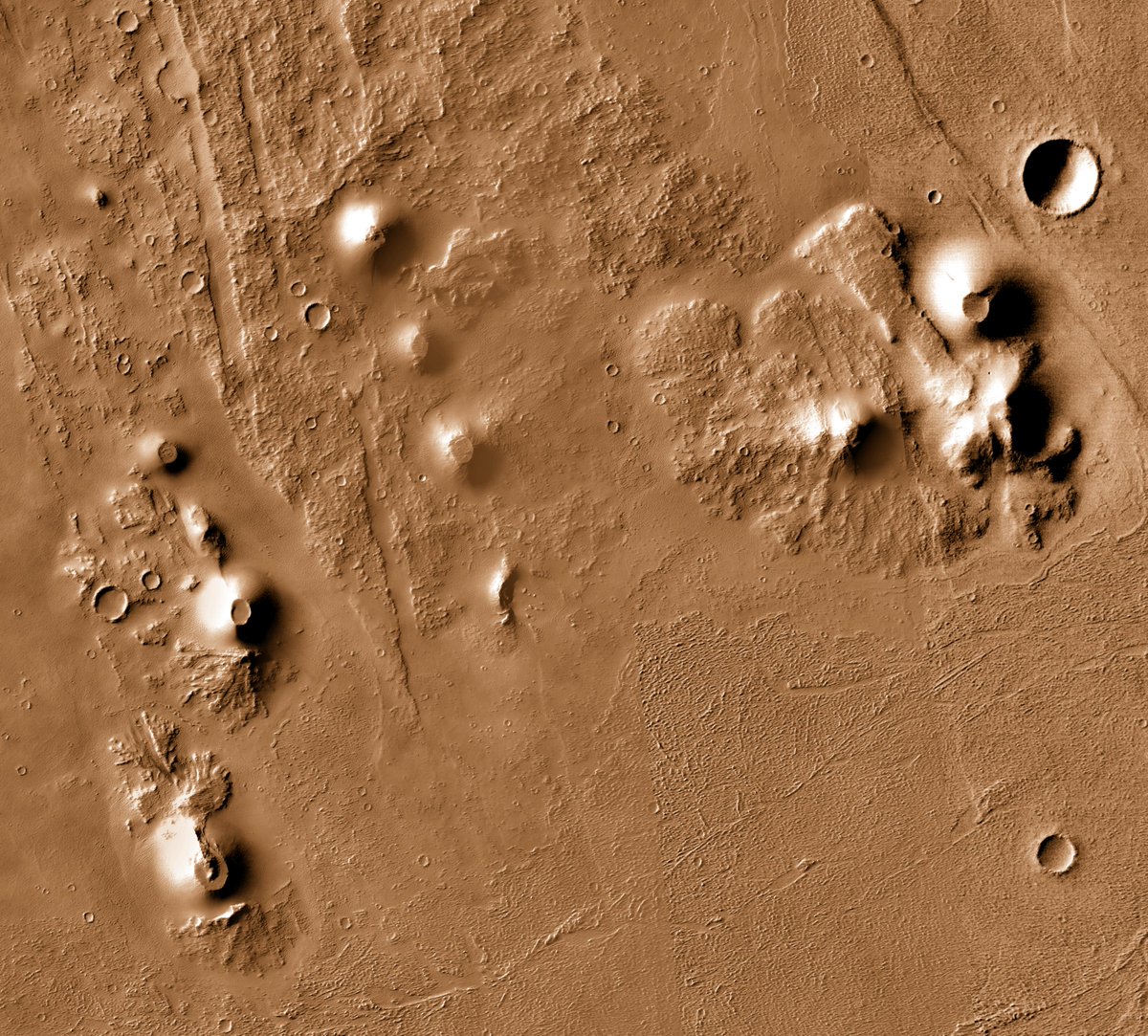
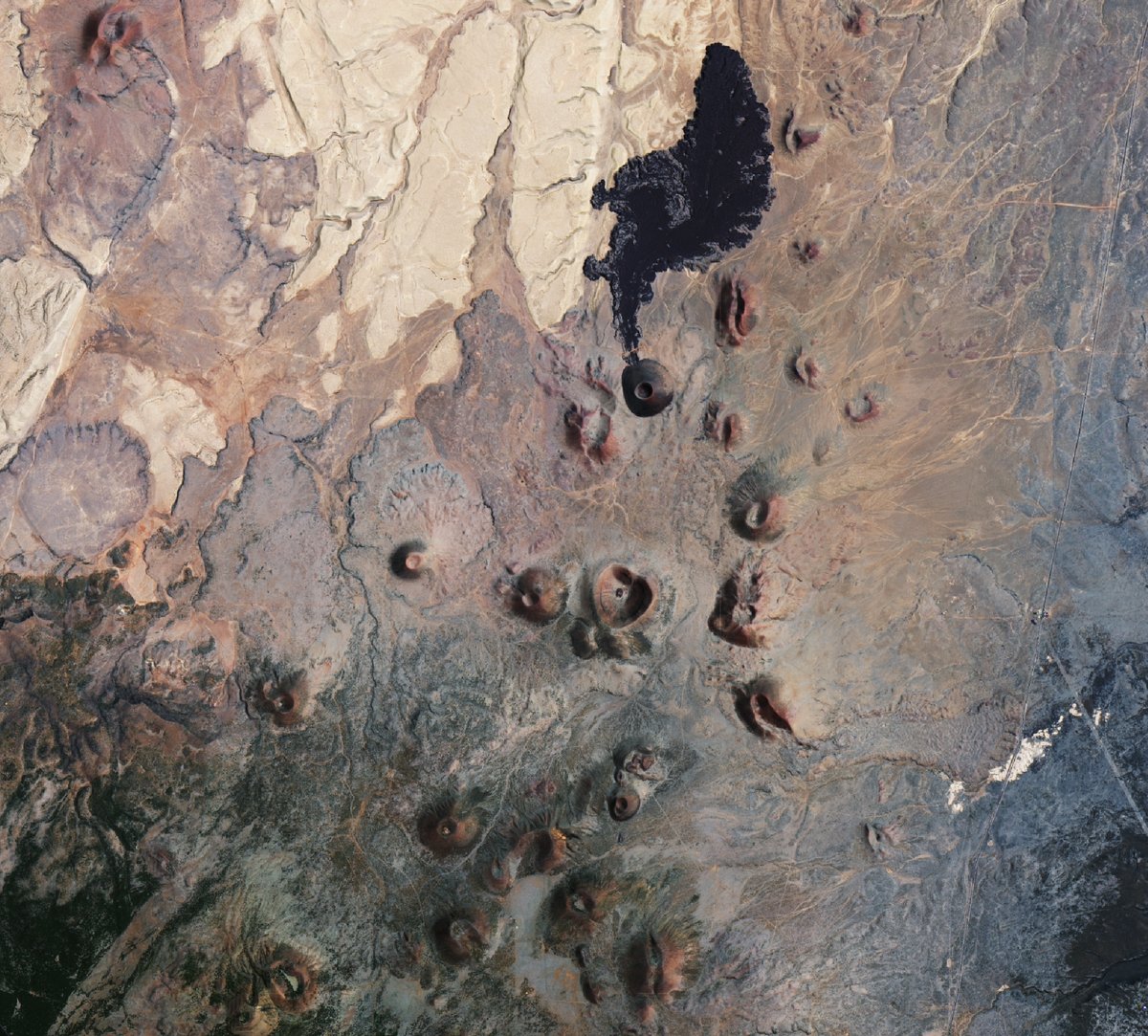
One of these images shows Earth and the other shows Mars. Can you tell which is which? 🤔
This is Earth!
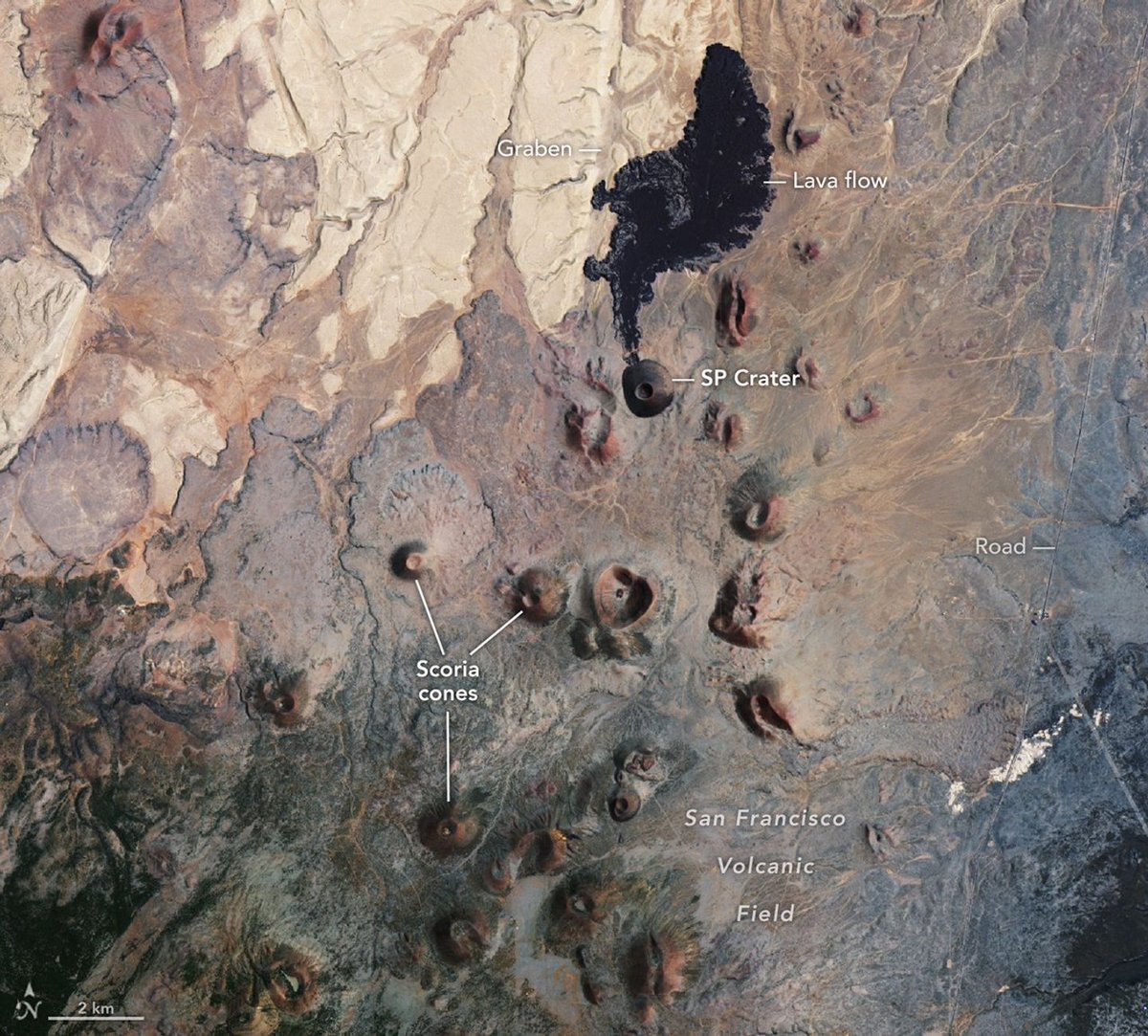
Landsat 8 captured this image of the San Francisco Volcanic Field in northern Arizona. This area has scoria cones, lava flows, and other features that are found on other worlds like Mars. @nasa has even used this area for astronaut geology training!
@NASAEarth First image shows the surface of Mars, specifically focusing on the Ulysses Colles region. Second image is SP Crater, located in Arizona. Olympus Mons, located on Mars, is the largest known volcano and highest mountain in our solar system. x.com/ARealRocketMan…
@NASAEarth Or Earth, Mars and our Moon have all been subject to the effects of electricity/plasma during a solar nova type event, and likely such events are cyclical and will occur again.
@NASAEarth This can't be a serious question.
It's pretty easy to tell the difference.
Mars (left pic) has lots of recent craters due to it's thinner atmosphere.
Wow, these places look super similar, right? 🌋🟠🌎
One photo is from Arizona's San Francisco Volcanic Field (Earth – taken by Landsat 8) and the other is Ulysses Colles on Mars (captured by Mars Reconnaissance Orbiter) . 🚀🛰️
Both show classic scoria cones – small, steep volcanic hills made from explosive eruptions that throw out cinders and lava fragments . 🔥
The shapes form in almost the same way on both planets, even though Mars has much lower gravity and almost no air pressure . 🌎→🟠
Fun fact: the Arizona site is so Mars-like that NASA uses it to train astronauts and test gear before real Red Planet missions! 🚀👨🚀
Cool how studying one world helps us understand another, isn't it? 🌌💫✨
@NASAEarth In first order, it's joke 🙂
I could say, the left image is "Mars", due (his color), and other "Earth". But when I analyse the right, where we can see it actually in earth 🤔
The question of time the capture image can be posed !!
Reason I say it's Joke 🙃.
@NASAEarth@NASASolarSystem You picked SP Crater here in Northern Arizona (on the right). SP is featured in introductory textbooks. Maybe go for something more obscure next time.
@NASAEarth I'm guessing that the left one is Mars, because it's red. Also the right one seems to have a big black outgassing, which wouldn't happen on Mars right now.
@NASAEarth Earth and Mars share the same volcanic past.
But while Earth let life take root, Mars froze in time.
Today, Mars is a natural archive — a silent witness to the chemistry that might have sparked the first cell. 🪨🔥
@NASAEarth Do you know how the "pyramids" were created just very next to some craters on Mars? It looks impossible that a pile of rocks is formed after the impact.