Pinned Tweet
George Kent Colbath
2.3K posts
George Kent Colbath
@gkcgeoscience
Retired college professor, currently science education consultant, tour leader, public speaker.

Flagstaff, AZ Joined Aralık 2013
152 Following124 Followers
George Kent Colbath retweeted

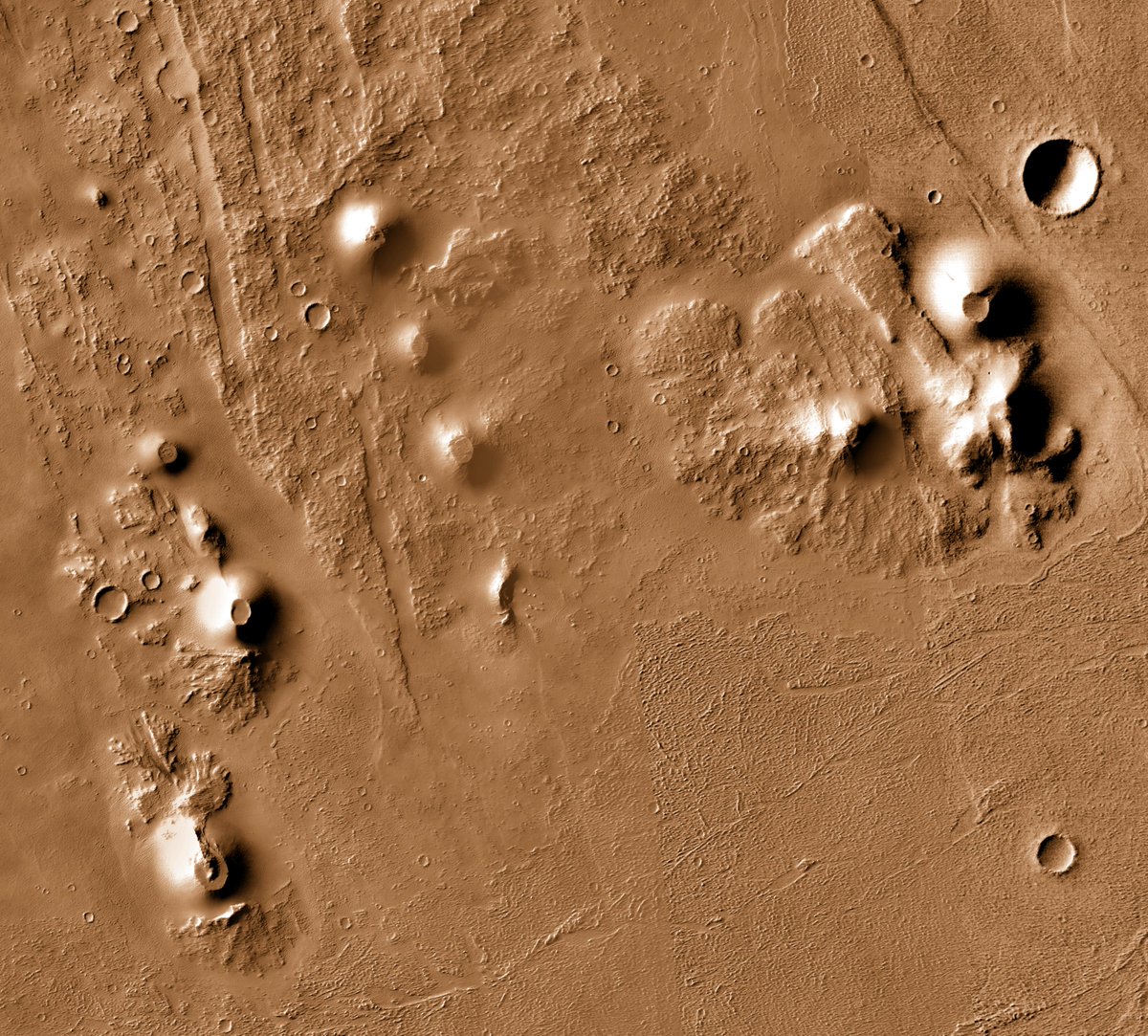
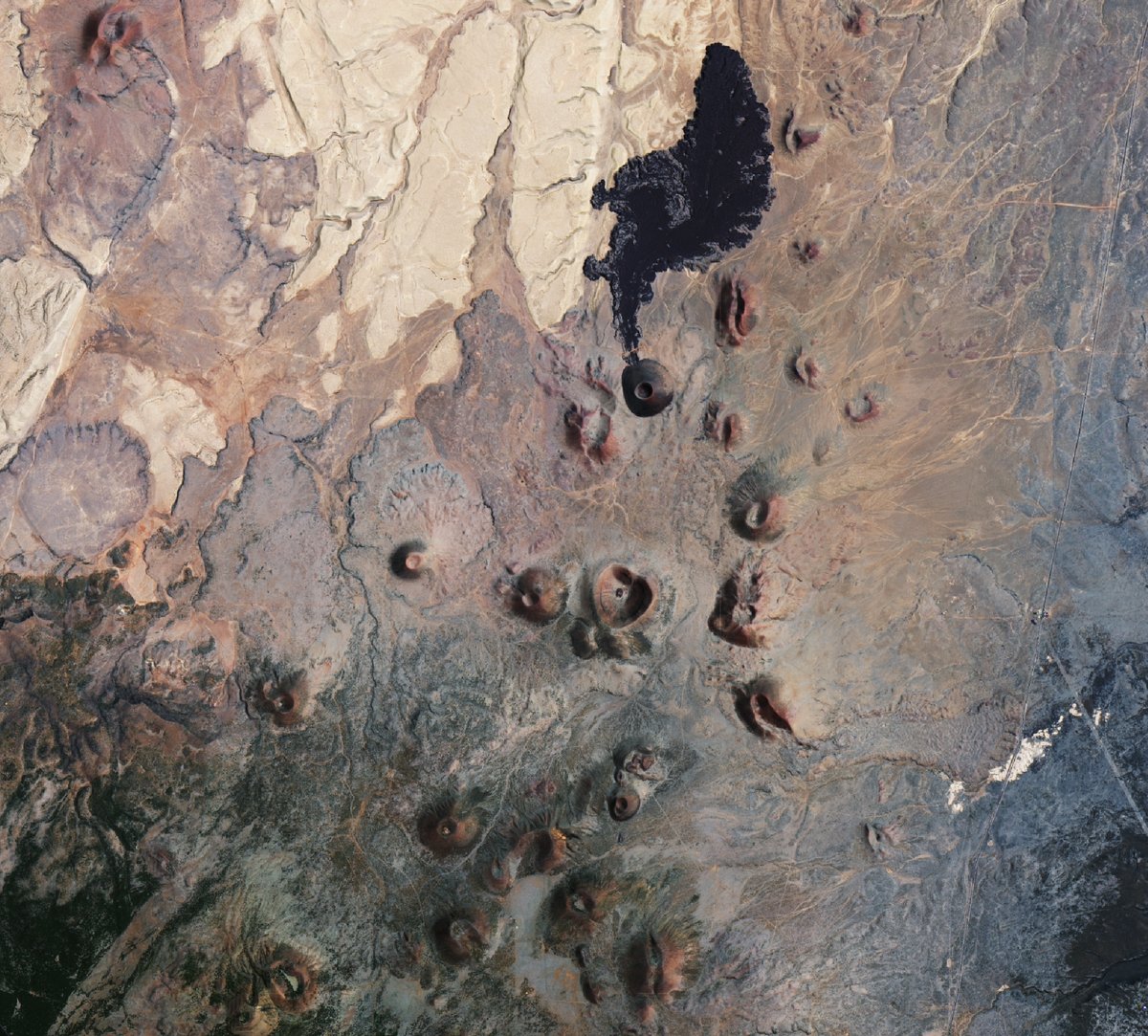
@NASAEarth @NASASolarSystem You picked SP Crater here in Northern Arizona (on the right). SP is featured in introductory textbooks. Maybe go for something more obscure next time.
English
George Kent Colbath retweeted

Tmrw, March 13th, is the anniversary of Percival Lowell's birth. Who was Lowell? The founder of @LowellObservatory and the force behind the search to find Pluto.
When Pluto was found in Feb 1930, it was decided to honor him by making the announcement on 13 March.

English
George Kent Colbath retweeted

NASA’s New Horizons spacecraft traveled nearly 3 billion miles over nine years to capture this moment on Pluto 🤯
About 15 minutes after its historic flyby, New Horizons turned back toward Pluto and recorded a breathtaking near-sunset view.
The images reveal vast icy plains, towering mountains rising up to 11,000 feet, and delicate layers of atmospheric haze glowing in the fading sunlight. Taken from roughly 11,000 miles away, it showcases just how complex, dynamic, and astonishing Pluto’s surface truly is.
Via: #NASA
English
George Kent Colbath retweeted

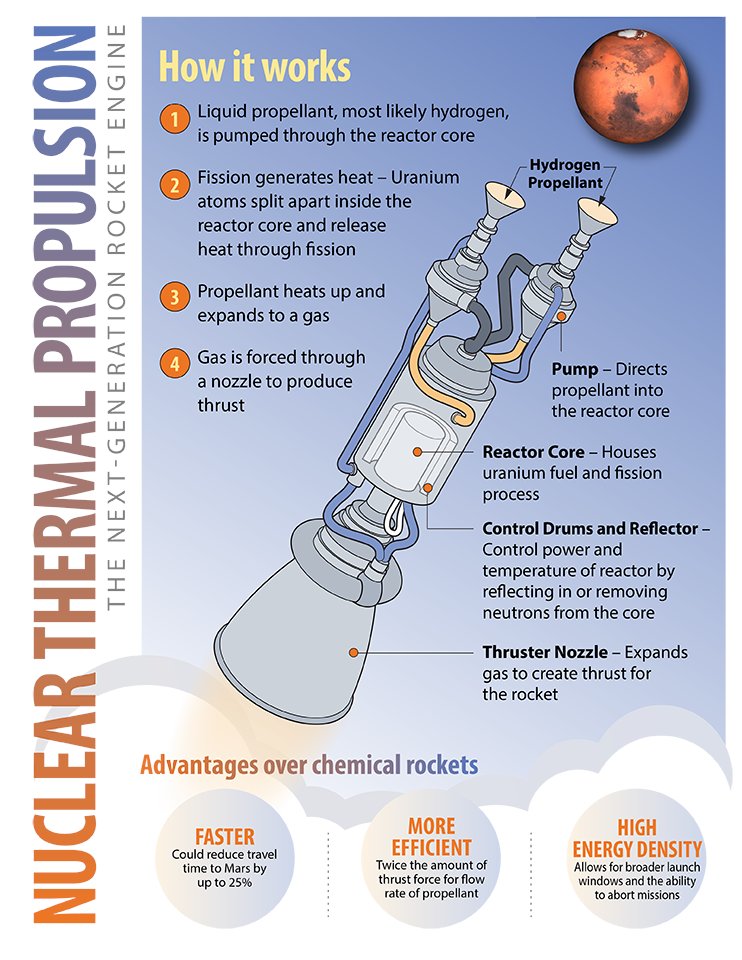
Nuclear thermal propulsion rockets can reduce travel times to Mars by up to 25%.
They can also limit a flight crew’s exposure to cosmic radiation. 🚀
energy.gov/ne/articles/6-…

English
George Kent Colbath retweeted

The #ArcticBlast that put much of Florida into a deep freeze also created these mesmerizing #CloudStreets caught by @NOAA's #GOESEast.
Learn more in our #SatelliteSnapshot: bit.ly/3NVBiT5
English
George Kent Colbath retweeted

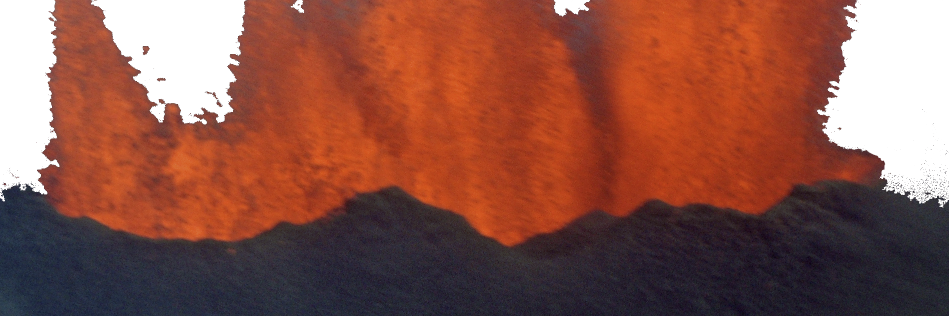
Weak winds during episode 41 lava fountaining at the summit of Kīlauea, which began just before noon today (January 24), have caused hazardous conditions in the areas of Hawai‘i Volcanoes National Park and neighboring communities.
Just after 12 pm, lava fountains from both the north and south vents were more than 500 m (1640 feet) tall. Near-surface winds are weakly from the south and may carry gas and solid material to the north. Upper-level winds are stronger and may carry lofted plume material to the east.
Tephrafall from the lava fountains has been reported at overlooks around the caldera, on Highway 11 near the National Park entrance, in Volcano Village and as far as Fern Acres. Tephra as large as one foot in diameter was reported on Highway 11 near the park entrance, and shatters upon impact. Please follow guidance provided by Hawai‘i Volcanoes National Park and Hawaii County Civil Defense Agency. civil Defense announced the closure of Highway 11 between mile markers 24.5 and 32 due to tephra falling.
English
George Kent Colbath retweeted

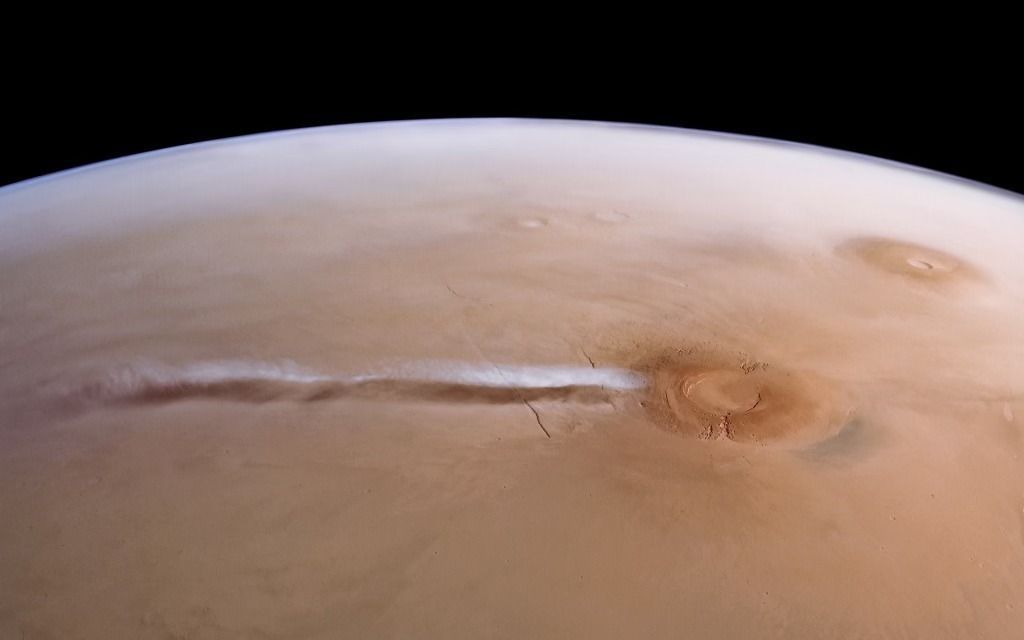
#PPOD: Arsia Mons Elongated Cloud ☁️
Every spring and summer in the southern part of #Mars, the Arsia Mons Elongated Cloud (AMEC) forms daily above the surface, as seen here by ESA's Mars Express orbiter. The cloud rapidly stretches out for hundreds of kilometers before fading away in a few hours. Strangely, Arsia Mons is the only volcano at low-latitudes to create such a cloud.
Credit: @esa / @DLR_en / @FU_Berlin / A. Cowart
#planetaryscience

English
George Kent Colbath retweeted

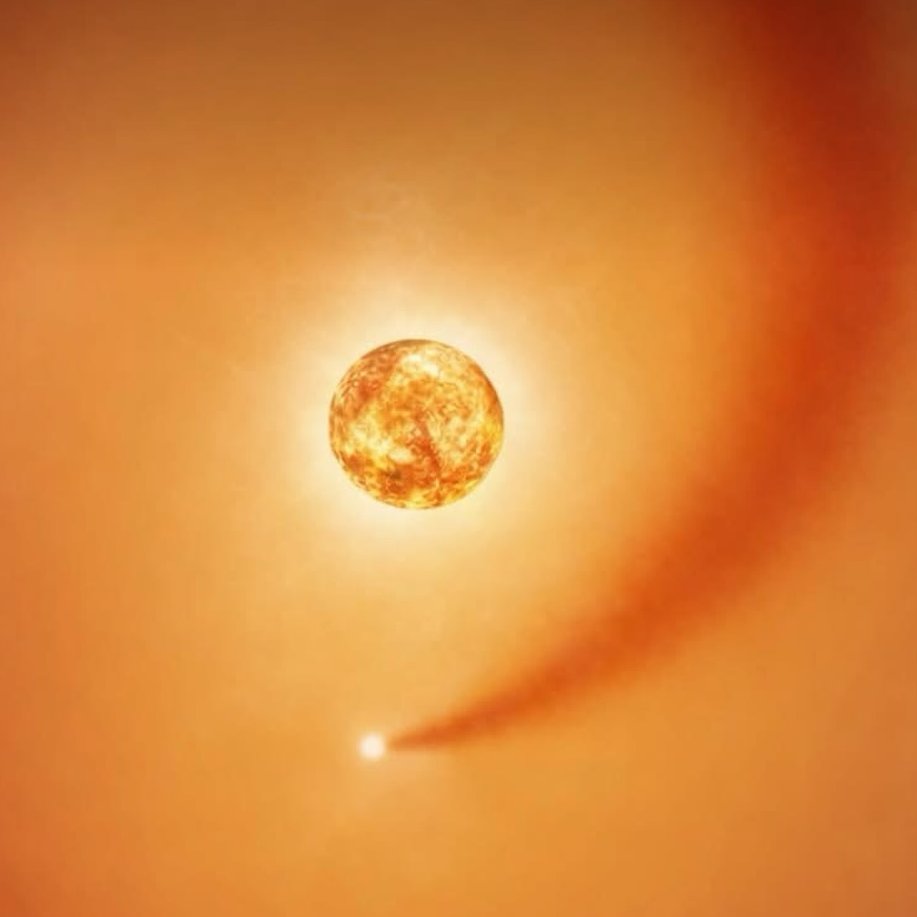
For years, Betelgeuse has been one of the most closely watched stars in the sky, not only because it’s a nearby red supergiant nearing the end of its life, but because it behaves in ways that didn’t fully add up. Astronomers have long known it pulsates with a regular brightness cycle of roughly 400 days, driven by the star’s own internal motions. But layered on top of that was a second, much slower rhythm: a mysterious variability repeating about every 2,100 days (around 5.7 years), with no clear physical cause.
Now that long-standing puzzle finally has a coherent explanation: Betelgeuse is not alone.
After nearly eight years of sustained monitoring, a team has confirmed that Betelgeuse hosts a close, hidden companion star. The key isn’t that the companion is easy to see directly, on the contrary, it’s buried inside the outer atmosphere of the supergiant, but that it leaves a detectable signature in the gas around it.
The companion, named Siwarha, orbits extremely close to Betelgeuse at roughly 2.3 stellar radii, deep within the star’s extended chromosphere. This is not a normal “binary star” setup where two stars cleanly orbit in empty space.
Betelgeuse has such a swollen, structured outer atmosphere that Siwarha is effectively moving through a tenuous but enormous envelope of gas. As it travels along its orbit, it generates a dense wake, a disturbed trail of material that expands and spreads, comparable to how a boat leaves a persistent pattern behind it on water.
What made this companion finally “visible” was spectroscopy rather than imaging. Using @NASAHubble, together with ground-based observations including facilities in Arizona and Spain Roque de los Muchachos Observatory @GTCtelescope, the researchers tracked subtle but repeating changes in Betelgeuse’s ultraviolet and optical spectra. The most diagnostic tracer was ultraviolet emission from ionized iron (Fe II).
Here’s the crucial pattern: when Siwarha passes in front of Betelgeuse from our point of view, the Fe II signal shows a strong blue-shifted component, indicating gas moving toward us. After the transit, the companion’s trailing wake, denser than the surrounding atmosphere, starts absorbing parts of that UV signal, producing a repeatable absorption signature. That cycle lines up beautifully with the long-period ~2,100-day variability that had resisted explanation for so long. In other words, the “mystery dimming” wasn’t just Betelgeuse being erratic; it was Betelgeuse being disturbed, periodically, by a close companion sculpting its outer atmosphere.
This matters for more than solving a curiosity. Betelgeuse is a benchmark object for understanding how massive stars shed mass in their final evolutionary stages. A companion moving through the atmosphere can change the local density, enhance outflows, and imprint structure into the circumstellar environment. And that environment is exactly what will shape the observable signals of the eventual supernova: how the shock interacts, how the early light curve behaves, and what kinds of circumstellar features appear in spectra.
The discovery of Siwarha turns Betelgeuse into something even more valuable than before: a nearby laboratory where we can watch mass-loss physics and atmospheric dynamics unfold in real time.
At the moment, Siwarha is hidden behind Betelgeuse’s disk from our line of sight, but the team expects it to become favorably observable again around August 2027, when targeted monitoring can test and refine the wake model even further.
👉 arxiv.org/pdf/2601.00470

English
George Kent Colbath retweeted

On this day in 1972, NASA astronauts Eugene Cernan and Harrison Schmitt lifted off from the surface of the Moon onboard Apollo lunar module Challenger's ascent stage, docking to Apollo command and service module America, piloted by Ronald Evans, approximately two hours later.
No humans have visited the Moon since then, 52 years ago. The Apollo 17 Command Module is on display at Space Center Houston.
The video was taken using a camera on the Lunar Roving Vehicle (LRV), and was remotely controlled from Earth.
English
George Kent Colbath retweeted

I was in the middle of shooting my narrowband data on this galaxy when the supernova happened so I was probably one of the first people to photograph it!
Andrew McCarthy@AJamesMcCarthy
PSA: When I post my photos in this format, it’s because I want you to save them and use them as phone wallpapers. Anyways, here’s my photo of the pinwheel galaxy featuring a supernova. More coming 🤓

English
George Kent Colbath retweeted

Video of a big lahar coming off Mt Semeru, Indonesia today, just a couple of days after its massive eruption.
You can see it flowing down a channel, exactly what these paths are designed for to protect villages. The lahar travelled 13 kilometres from the summit of Java's highest mountain
A lahar is a fast-moving mix of ash, rock, and water.
Indonesians call it “banjir lahar dingin,” often translated as “cold lava flood,” even though it’s not lava, just volcanic debris in motion.
It was caused by moderate-to-high rainfall around Mount Semeru.
English
George Kent Colbath retweeted

🌋 Taal had another two 'minor' phreatomagmatic eruptions today. This is a selection of videos from the biggest. Wow!!!
A little more about Taal in the Philippines...
Taal Volcano is one of the world’s most unique and unpredictable volcanoes. It sits on an island, inside a lake, inside a much larger volcanic caldera - a setup that makes it stunning but also volatile.
Because magma interacts directly with the lake water, eruptions can switch instantly from quiet steaming to violent phreatomagmatic explosions, throwing ash, steam, and toxic gases without warning.
Even small eruptions can be deadly because of base surges, fast-moving clouds of hot gas and debris that can sweep across the lake in seconds. Add in the risk of volcanic tsunamis, toxic sulphur dioxide, and sudden seismic activity, and you have one of the most closely watched volcanoes on Earth.
English
George Kent Colbath retweeted

Listening to Sir Demis is very diffrent from listening to Sam Altman or Dario.
vitrupo@vitrupo
Demis Hassabis: calling today's chatbots “PhD intelligences” is nonsense. They can dazzle at a PhD level one moment and fail high school math the next. True AGI won't make trivial mistakes. It will reason, adapt, and learn continuously. We're still 5–10 years away.
English