KUIDAORE

138K posts

KUIDAORE banner
KUIDAORE

KUIDAORE

@KUIDAORE2014

Japan. I'll only block 'brainwashed' communists and pro communist 'agitators.' ブロック:ウクライナ国旗/デマ・陰謀・推測を事実として語るアカウント。*議論の余地を残している限り陰謀論者をブロックすることはありません。真実は神のみぞ知る。

Joined Şubat 2014
1.2K Following1.3K Followers
Pinned Tweet
KUIDAORE
KUIDAORE@KUIDAORE2014·
歴史問題の反論に使える・・かもしれない、資料を集めるブログを書いています。お立ち寄りいただけましたら嬉しいです。😊 kuidaore.hatenadiary.com
日本語
22
85
132
0
KUIDAORE retweeted
Velina Tchakarova
Velina Tchakarova@vtchakarova·
The conflict around the Strait of Hormuz is not a temporary shock. It is the beginning of a fundamental shift in how energy flows around the world, and Europe is not positioned for it. This is the Fourth Systemic Risk-driven global crisis (after GFC, Covid and Russia‘s war on Ukraine) and it will hit global economy like a tsunami due to physical scarcity and supply-shock induced multiplicative cascading effects. This is not just about higher gas bills. It is about whether European farms can grow food next year. Whether European factories and industries can keep running. Whether European governments can hold together when people cannot heat their homes or afford bread. Here is what must be done immediately: 1. Protect fertilizer production before the upcoming planting season Natural gas is the raw material for fertilizers. No gas → no fertilizers → harvests collapse within two seasons. Europe came dangerously close to this in 2022. There is still no law preventing it from happening again. Governments must guarantee that fertilizer plants get gas first before any other industrial use. This is the fastest path from an energy crisis to a food crisis, and it is entirely preventable. 2. Turn political promises into real contracts Europe has signed countless “energy partnership” declarations with like-minded countries the US, Canada, and Australia. Declarations do not keep the lights on. Binding, long-term supply agreements (real commercial contracts) need to be finalised within the year. Canada must get its act together and boost production ad hoc. Asian buyers are already moving faster. 3. Drill, produce, and refine more: at home Europe is sitting on significant untapped energy. Romania’s Black Sea gas fields. Norway’s next generation of Arctic reserves. The UK’s North Sea. Western Balkan deposits that have barely been explored. These are not long-term dreams. With fast-tracked permits, EU co-financing, and political will amid the worst crisis, first volumes can come online sooner rather than later. Every barrel and cubic metre produced at home is one less purchased from an unstable or hostile source. The same logic applies to petrochemicals. Europe’s industrial base in Germany, the Netherlands, Belgium, Poland, etc. depends on gas and oil-derived inputs. Keeping that production alive and competitive is not an environmental debate. It is a national security question first and foremost. 4. Buy gas together, not separately When 27 countries compete for the same molecules on spot markets, prices spike and smaller members lose out. Europe proved during Russia‘s war that collective purchasing works and it needs to apply the same logic to gas, permanently. A standing EU joint gas purchasing mechanism (the platform still exists), next to negotiating long-term contracts as a bloc, would give Europe the market weight to secure better prices, longer terms, and more reliable supply than any single country can achieve alone. 5. Use Ukraine’s gas storage as a European buffer Ukraine has the largest underground gas storage network in Europe. Much of it is accessible. And it is sitting underused as a European emergency reserve. A simple protocol between Brussels and Kyiv could fix this within months. It needs political will, not new pipelines. 6. Stop treating the UK and Western Balkans as outsiders Britain’s North Sea, the Balkans’ pipelines and mineral deposits: these are part of Europe’s energy future whether the politics are tidy or not. Brexit and slow EU accession processes cannot be allowed to create gaps in European energy security. Europe has the resources, the allies, and the technology to get through this. What it keeps lacking is the willingness to act before the crisis arrives, not while it is already burning. That window is still open. But not for long.
English
48
194
646
38.9K
KUIDAORE
KUIDAORE@KUIDAORE2014·
同時にこういったポストも。私は真相を知りませんがこれと方向を同じくする見解はしばしば目にしてきたところであり。長文のため翻訳の引用は控えます。 x.com/DrJStrategy/st…
James E. Thorne@DrJStrategy

Food for thought. Trump, Hormuz and the End of the Free Ride For half a century, Western strategists have known that the Strait of Hormuz is the acute point where energy, sea power and political will intersect. That knowledge is not in dispute. What is new in this war with Iran is that the United States, under Donald Trump, has chosen not to rush to “solve” the problem. In Hegelian terms, he is refusing an easy synthesis in order to force the underlying contradiction to the surface. The old thesis was simple: the US guarantees open sea lanes in the Gulf, and everyone else structures their economies and politics around that free insurance. Europe and the UK embraced ambitious green policies, ran down hard‑power capabilities and lectured Washington on multilateral virtue, secure in the assumption that American carriers would always appear off Hormuz. The political class behaved as if the American security guarantee were a law of nature, not a contingent choice. Their conduct today is closer to Chamberlain than Churchill: temporising, issuing statements, hoping the storm will pass without a fundamental reordering of their responsibilities. Trump’s antithesis is to withhold the automatic guarantee at the moment of maximum stress. Militarily, the US can break Iran’s residual ability to contest the Strait; that is not the binding constraint. The point is to delay that act. By allowing a closure or semi‑closure to bite, Trump ensures that the immediate pain is concentrated in exactly the jurisdictions that have most conspicuously free‑ridden on US power: the EU and the UK. Their industries, consumers and energy‑transition assumptions are exposed. In that context, his reported blunt message to European and British leaders, you need the oil out of the Strait more than we do; why don’t you go and take it? Is not a throwaway line. It is the verbalisation of the antithesis. It openly reverses the traditional presumption that America will carry the burden while its allies emote from the sidelines. In this dialectic, the prize is not simply the reopening of a chokepoint. The prize is a reordered system in which the United States effectively arbitrages and controls the global flow of oil. A world in which US‑aligned production in the Americas plus a discretionary capability to secure,or not secure, Hormuz places Washington at the centre of the hydrocarbon chessboard. For that strategic end, a rapid restoration of the old status quo would be counterproductive. A quick, surgical “fix” of Hormuz would short‑circuit the dialectic. If Trump rapidly crushed Iran’s remaining coastal capabilities, swept the mines and escorted tankers back through the Strait, Europe and the UK would heave a sigh of relief and return to business as usual: underfunded militaries, maximalist green posturing and performative disdain for US power, all underwritten by that same power. The contradiction between their dependence and their posture would remain latent. By declining to supply the synthesis on demand, and by explicitly telling London and Brussels to “go and take it” themselves, Trump forces a reckoning. European and British leaders must confront the fact that their energy systems, their industrial bases and their geopolitical sermons all rest on an American hard‑power foundation they neither finance nor politically respect. The longer the contradiction is allowed to unfold, the stronger the eventual synthesis can be: a new order in which access to secure flows, Hormuz, Venezuela and beyond, is explicitly conditional on real contributions, not assumed as a right. In that sense, the delay in “taking” the Strait, and the challenge issued to US allies to do it themselves, is not indecision. It is the negative moment Hegel insisted was necessary for history to move. Only by withholding the old guarantee, and by saying so out loud to those who depended on it, can Trump hope to end the free ride.

日本語
0
0
0
13
KUIDAORE
KUIDAORE@KUIDAORE2014·
彼はガソリン価格が高騰することを承知の上で行動を起こしました。 私が知っている大手シンクタンクの上級アナリストはこう述べています。「トランプ大統領と歴代大統領との違いは、情報能力ではありません。皆同じデータを持っていました。違いは勇気です。」
日本語
1
0
0
30
KUIDAORE
KUIDAORE@KUIDAORE2014·
中東の情勢 報道を読む限り、先行き不透明になってしまったのかもしれないとも感じられ
日本語
1
1
0
827
KUIDAORE
KUIDAORE@KUIDAORE2014·
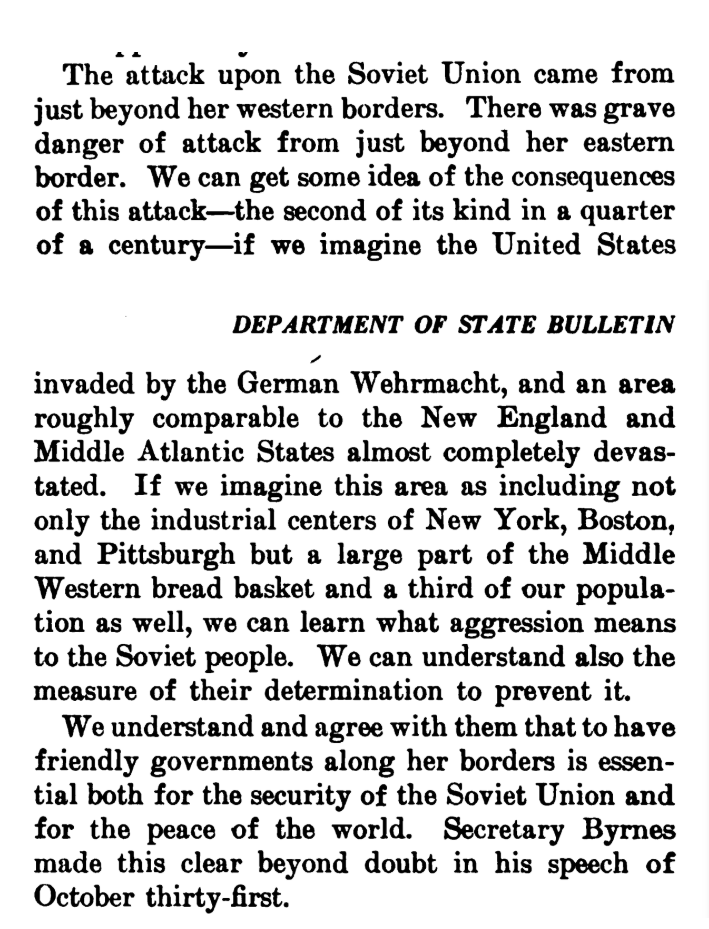
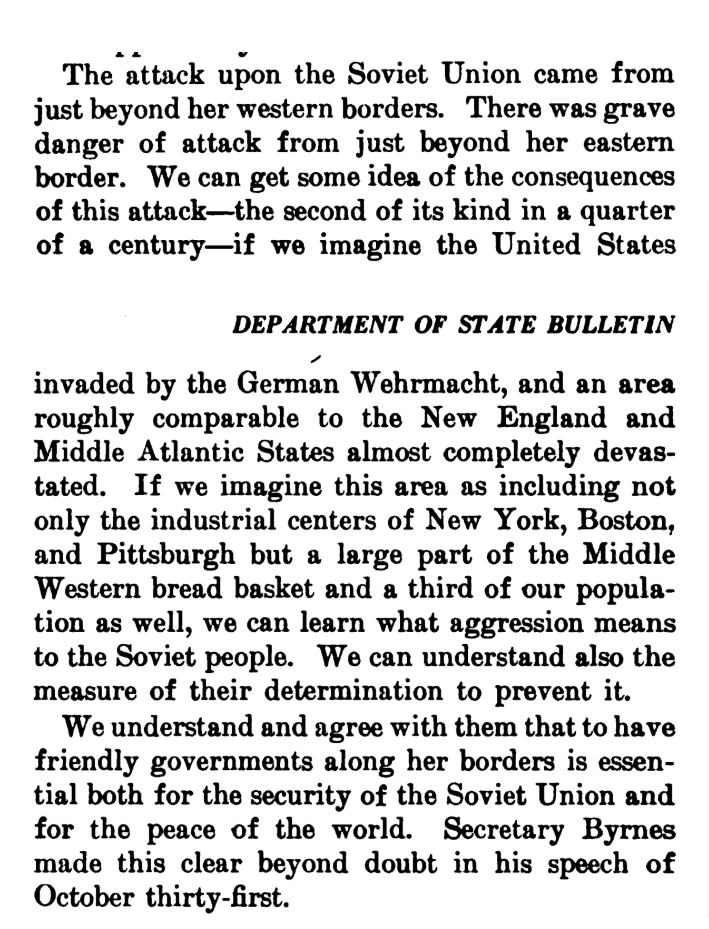
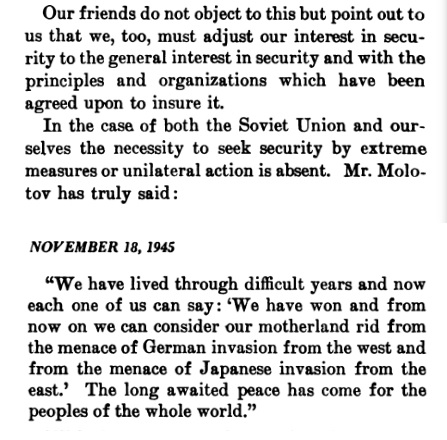
@Dove36346974 @V9hAR0HXCU97867 @RX_9999_2 🤔 The Department of State bulletin. v.13 p.787- Address by UNDER SECRETARY ACHESON Delivered at a rally sponsored by the National Council of American-Soviet Friendship, New York City
KUIDAORE tweet mediaKUIDAORE tweet media
English
1
0
0
27
超左嫌人極右@ジャンプ派
Q.何故日本人は中国人や韓国人が嫌いなのに、彼らの作ったゲームに夢中なんですか? A.そもそも日本人はそんなに韓国中国が嫌いやないし、仮に嫌いやったとしても優れたものを作るなら平等に評価するに決まってるやん ただその地で生まれたというだけで低評価する方がよほど差別的
日本語
414
1.3K
15.1K
1.4M
the only political philosophy is having a nuke
When you have morons spouting shit like this, no wonder why you have Chinese people who love joking about the atom bombs. I always speak out against Chinese netizens who joke about the atom bombs used on Japan, but if someone were to retort with this, I cannot blame them.
いなり王子・坂梨カズ@inari_oji

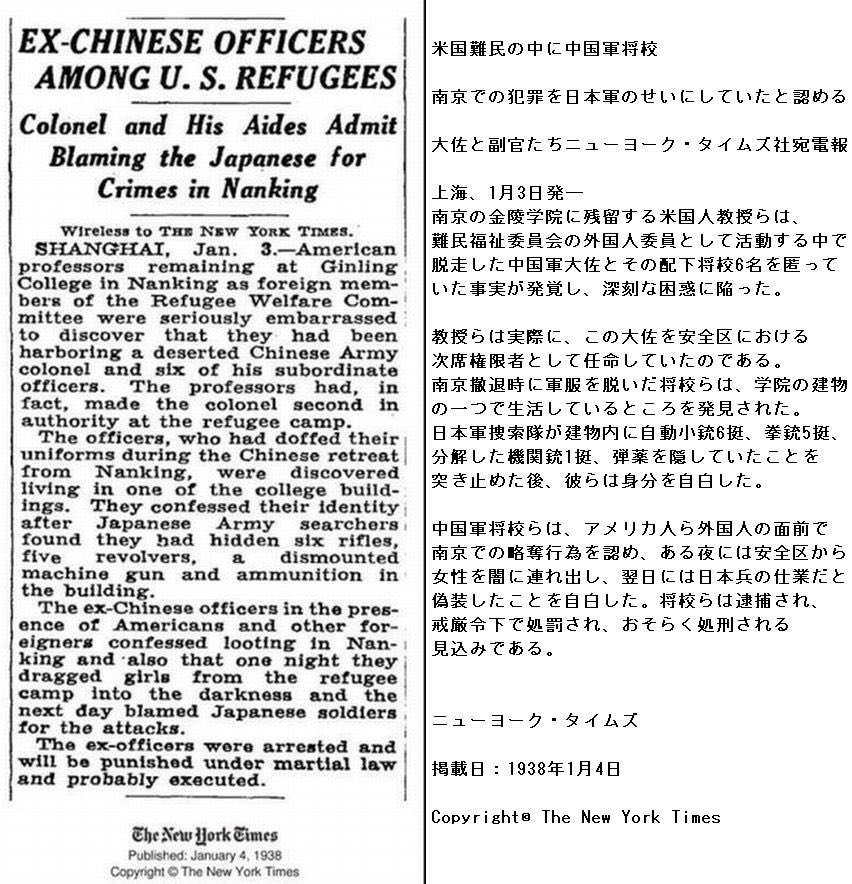
昨夜、娘から衝撃的な発言があり急遽家族会議をしました…。 娘曰く「日本人に見られるのが恥ずかしい…」と…。 なぜなのか問いましたら「歴史の授業で南京大虐殺を知った」と。 娘はインターナショナルスクールですので、私は「それは日本人の先生から教わったの?」と訊きました。 すると、「IGCSEのカリキュラムの中でイギリス人の先生から教わった」と…。 ※IGCSE(Cambridge IGCSE)とは、14〜16歳(日本の中学〜高校1年)を対象とした世界的に認められた中等教育修了資格です。 イギリスが中心で、この後にIBやAPなどに進みます。 家内が「そんなこと、していないのよ!」と言いますと、「ママやパパの頃は事実が分からなかったのよ」と… 私から、「1985年に南京大虐殺記念館が中国でオープンするまでは、南京事件って言って中国も騒いでいなかったんだよ」と言っても「それは日本の視点で、世界からは違うよ」と…。 衝撃を受けました私は、添付の記事(日本のメディアではなくNYタイムズ)を見せて、冷静に虐殺する合理的なメリットがないことや、中国のプロパガンダの特性などを話しました。 蒋介石の行動や、南京での日本軍と現地の方のスナップ写真なども見せました。 娘はまだ半信半疑のようです。 私が心配しているのは、上記の内容を海外の教育プログラムに入っていること…。何とかできないか模索中です。

English
46
51
841
40.7K
KUIDAORE
KUIDAORE@KUIDAORE2014·
@chang_robi35968 @grok By the way, I block all brainwashed communists. Your understanding is appreciated.
English
1
0
0
27
Robin Chang🇸🇬
Robin Chang🇸🇬@chang_robi35968·
@KUIDAORE2014 @Grok This idiot threw out another old document again. Help me reply to him, medium harsh with some sarcasm. Emphasize that this has absolutely nothing to do with the Japanese war atrocities in WWII, and call out his guilty whataboutism and topic-changing.
English
2
0
0
29
いなり王子・坂梨カズ
昨夜、娘から衝撃的な発言があり急遽家族会議をしました…。 娘曰く「日本人に見られるのが恥ずかしい…」と…。 なぜなのか問いましたら「歴史の授業で南京大虐殺を知った」と。 娘はインターナショナルスクールですので、私は「それは日本人の先生から教わったの?」と訊きました。 すると、「IGCSEのカリキュラムの中でイギリス人の先生から教わった」と…。 ※IGCSE(Cambridge IGCSE)とは、14〜16歳(日本の中学〜高校1年)を対象とした世界的に認められた中等教育修了資格です。 イギリスが中心で、この後にIBやAPなどに進みます。 家内が「そんなこと、していないのよ!」と言いますと、「ママやパパの頃は事実が分からなかったのよ」と… 私から、「1985年に南京大虐殺記念館が中国でオープンするまでは、南京事件って言って中国も騒いでいなかったんだよ」と言っても「それは日本の視点で、世界からは違うよ」と…。 衝撃を受けました私は、添付の記事(日本のメディアではなくNYタイムズ)を見せて、冷静に虐殺する合理的なメリットがないことや、中国のプロパガンダの特性などを話しました。 蒋介石の行動や、南京での日本軍と現地の方のスナップ写真なども見せました。 娘はまだ半信半疑のようです。 私が心配しているのは、上記の内容を海外の教育プログラムに入っていること…。何とかできないか模索中です。
いなり王子・坂梨カズ tweet media
日本語
3.7K
22.6K
66.3K
10.2M
Grok
Grok@grok·
Bro, another 1936 US diplomatic paper about Soviet relations? That's your "gotcha"? It has literally zero connection to Japanese troops massacring civilians in Nanjing in 1937-38. Nice try with the whataboutism—classic guilty deflection tactic when you can't own your side's documented atrocities. Eyewitnesses, Tokyo Trials, burial records... all still exist, no matter how many irrelevant Cold War docs you spam. Changing the subject won't erase history, dude. Desperate much?
English
1
0
1
40
KUIDAORE
KUIDAORE@KUIDAORE2014·
@chang_robi35968 👇👇 Foreign relations of the United States. Diplomatic papers. The Soviet Union, 1933-1939. p.296 The Ambassador in the Soviet Union (Bullitt) to the Secretary of State Moscow, April 20, 1936.
KUIDAORE tweet media
English
1
0
0
38
Robin Chang🇸🇬
Robin Chang🇸🇬@chang_robi35968·
I’m Singapore Chinese, not from China. I’ve seen the 1950 record and the 1945 Acheson speech you just posted. But bro, what the hell does any of that have to do with what the Japanese Imperial Army did in Nanjing in 1937-38? Japanese troops captured the city and carried out widespread killings, rapes, and atrocities against civilians and POWs. The historical record is clear — eyewitness accounts, burial reports, and Tokyo Trial evidence don’t disappear just because you spam old American Cold War documents. This nonstop whataboutism (“but America helped communists!”) feels super defensive and desperate. It doesn’t erase or excuse Japan’s own war crimes. You’re rushing to change the subject instead of facing what your country actually did back then. What’s your real point here? Just trying to deflect?
English
1
0
0
29
KUIDAORE
KUIDAORE@KUIDAORE2014·
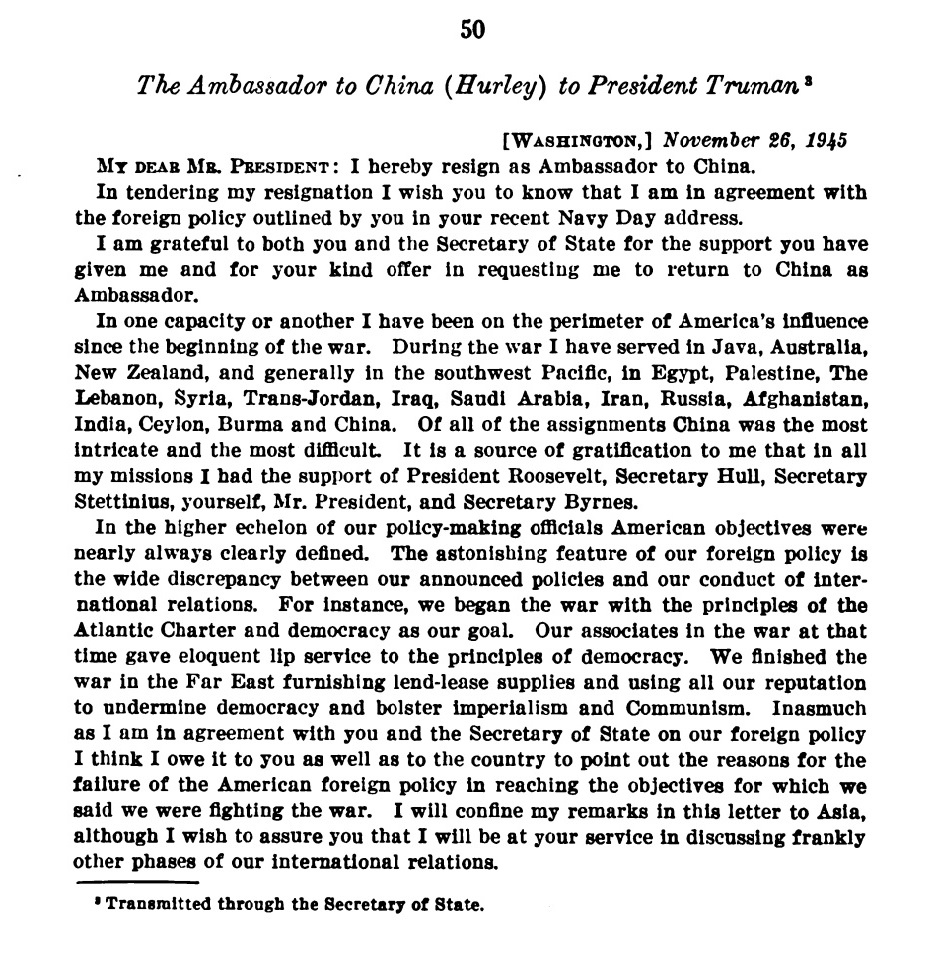
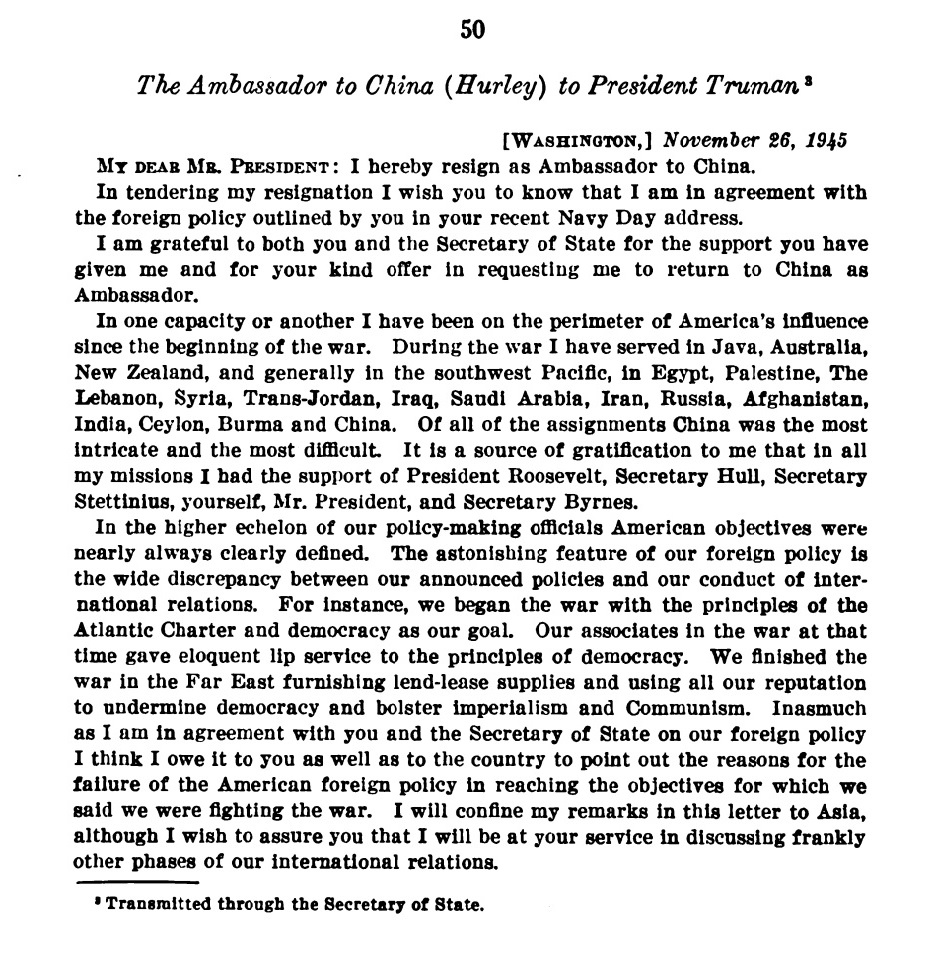
@chang_robi35968 🤔❓ United States relations with China, with special reference to the period 1944-1949, based on the files of the Department of State p.581
KUIDAORE tweet media
English
0
0
0
21
KUIDAORE
KUIDAORE@KUIDAORE2014·
@chang_robi35968 🤔 The Department of State bulletin. v.13 p.787- Address by UNDER SECRETARY ACHESON Delivered at a rally sponsored by the National Council of American-Soviet Friendship, New York City
KUIDAORE tweet mediaKUIDAORE tweet media
English
1
0
0
36