Offline Protocol

212 posts

Offline Protocol banner
Offline Protocol

Offline Protocol

@OfflineProtocol

Technology that works without Internet. We build foundational infrastructure and privacy-first apps for offline communication, payments, news, & identity.

Joined Aralık 2022
2 Following13.2K Followers
Pinned Tweet
Offline Protocol
Offline Protocol@OfflineProtocol·
Introducing Offline Protocol 2.0. Today, 4.6 billion people are affected by connectivity shutdowns: from state-sponsored internet blackouts across 54 countries to natural disasters that wipe out infrastructure overnight. When the network goes down, so does everything built on top of it: your identity, your money, your ability to communicate. We started Offline Protocol to fix that. Offline Protocol is a privacy-first mesh networking ecosystem that enables communication, identity verification, and payments without centralized infrastructure. No cell towers. No ISPs. No single point of failure. Our stack is built on one principle: the most critical digital infrastructure should always function. What we solve: We've built our entire digital lives on the assumption of persistent connectivity. But that assumption fails constantly: during hurricanes and earthquakes, in conflict zones and refugee camps, at overcrowded festivals and stadiums, in remote villages and maritime routes, and in countries where governments deliberately shut down the internet to silence their citizens. When connectivity fails, people lose access to their identity documents, their financial systems, and their ability to coordinate and communicate. How we solve it: After a year of concentrated efforts, our ecosystem spans seven core products, each designed to function independently or together as a complete offline-capable stack: 1. DORS (Dynamic Offline Relay Switch): The foundation. DORS is our mesh networking protocol that enables device-to-device communication without any centralized infrastructure. It dynamically routes data across ad-hoc networks formed by nearby devices, creating resilient communication channels that work in any environment. DORS has been downloaded and used hundreds of times by developers globally in just 2 months! 2. OfflineID: Decentralized identity that lives on your device, not on someone else's server. OfflineID enables cryptographic identity verification without an internet connection, meaning you can prove who you are even when the systems that issued your credentials are unreachable. Already held by over 300,000 users across 80+ countries. 3. Proof of Location: A novel verification mechanism that confirms a person's real-time presence and authenticity without biometric surveillance. PoL enables trust in offline environments without compromising privacy, no face scans, no fingerprint databases, no centralized biometric stores. 4. Fernweh V2: Our mesh-only messaging application is receiving a major upgrade, hybrid connectivity! Fernweh lets you send encrypted messages, share files, and coordinate with others through device-to-device mesh networks or internet. With over 35,000 downloads already, Fernweh is proving that private communication doesn't require infrastructure permission. V2 launches soon. 5. OfflinePay: The first offline stablecoin settlement network. OfflinePay enables cryptographically secured transactions between devices, and ensure that commerce doesn't stop when the internet does. 6. MINE: Offline-capable incentivized mining that allows participation in network validation and consensus without persistent connectivity. Mine extends the reach of decentralized networks into environments that traditional blockchain infrastructure can't touch. Launching soon. 7. Diffuse: Hyperlocal journalism combines with verifiable source aggregation to give you content you can trust. What we've achieved: 10,000+ mesh clusters operating across 80+ countries, 300,000+ OfflineID holders, and 35,000+ Fernweh downloads. From disaster response teams coordinating after infrastructure collapse to communities maintaining communication during government-imposed blackouts, Offline Protocol is already being used where it matters most. For developers: We've built Offline Protocol to be an open ecosystem. Our developer tools include SDKs for iOS, Android, and Web, comprehensive documentation, and full API references. We're building the infrastructure layer and we want developers everywhere to build on top of it. Our mesh networking specifications are on the path to being fully open-sourced, because we believe the technology that protects fundamental freedoms should belong to everyone. If you're interested in building with us, get in touch! Looking ahead: The world is becoming more connected and more fragile simultaneously. Climate disasters are increasing in frequency. Political instability is spreading. The demand for communication infrastructure that cannot be censored, cannot be surveilled, and cannot be revoked is not a niche but rather a fundamental need for billions of people. Offline Protocol is positioned at the intersection of privacy technology, mesh networking, and decentralized identity at a moment when all three are becoming essential rather than optional. We're not building for a hypothetical future. We're building for the 4.6 billion people who already know what it means to lose connectivity, and for everyone else who might need us one day. Thank you to all our investors for their strong belief in our mission @alliance, @PortalVentures, @seedclubvc, @galaxyhq, @TJ_Kawa, @glennonchain, @PaulTaylorVC, and to all our users, followers, and friends who've been rooting for us this whole time. Check out our brand new website at offlineprotocol.com to learn more.
English

42
95
631
35.8K
Offline Protocol retweeted
satvik
satvik@sxtvik·
Currently tinkering on the world’s smallest dynamic digital mesh node > will run an offline protocol node > provide localized data inference > offer bidirectional intelligence for other apps and hardware in the mesh > portable enough to always carry > host a services marketplace
satvik tweet media
satvik@sxtvik

I’m running localized intelligence inference completely offline on my new watch that I built myself and you’re somehow still not bullish on offline protocol? silly behavior

English
11
10
65
3.2K
Offline Protocol
Offline Protocol@OfflineProtocol·
@jtriley2p @brennuet Appreciate the feedback! We’re in the process of open sourcing our meshSDK and other components of our infrastructure stack. Offline Protocol will eventually be majority open sourced and fully decentralized to serve our users and developer communities.
English
0
0
1
20
jtriley2p
jtriley2p@jtriley2p·
meshtastic is txt only & insecure ham radio is vc only & doxxes bitchat is short range aprs doxxes wifi halow+mesh are 802.11 std's & justworks when the rest of the internet goes out, be it from a deteriorating climate or a deteriorating state build meshes w the community 💜
f4mi ‼️@f4micom

the more dystopian shit happens the more i think that to be truly free internet needs to become decentralized and 100% run by the same people that use it, and the fact that stuff like Wi-Fi HaLow tech is finally cheap means we might be actually able to do this sooner than later

English
20
19
418
20.9K
vitalik.eth
vitalik.eth@VitalikButerin·
@Fatalmeh Yes this is all important and we should support projects in that category more
English
11
4
37
1.6K
vitalik.eth
vitalik.eth@VitalikButerin·
Defi is a central part of the value that Ethereum provides. Financial empowerment is a central part of what it means to have agency and freedom in our current world. Finance is far from the only thing that Ethereum is good for, but it is an important thing. This post discusses how the Ethereum Foundation is approaching defi. Defi today makes the world's best savings, risk management and wealth-building opportunities permissionlessly available worldwide. We need to build on that. Ethereum's early defi era was great because it dared to dream and innovate and come up with totally new paradigms (eg. AMMs). Defi tomorrow will bring back that spirit. Don't just "make a better stablecoin", dig a layer deeper, and think about the underlying problem (risk management, hedging one's future expenses), and come up with an even better solution. But also, as the EF, we are not interested in supporting "onchain finance" or even "defi" indiscriminately. We have a specific vision of what we want to see out of defi: permissionless, open-source, private, security-first global finance that maximizes people's control over their own assets, minimizes centralized chokepoints and trusted third parties, and democratizes risk management and wealth building (the two key goals of finance according to modern portfolio theory) as well as payments. We want protocols that pass the walkaway test: that keep working even if the original team suddenly disappears without warning (or even: becomes hostile / compromised without warning). Bringing this vision to reality will inevitably take a lot of work. Defi is a complex toolchain, including various onchain components, user-side offchain components (ie. wallet, local agent...), other offchain components, etc. The things that we care about include areas like: * Improving security of defi through "traditional" means, eg. audits, standards, wallet-side safeguards * Improving security of defi through "new" means, eg. AI-assisted formal verification, user-side agents as safeguards * Oracle security and decentralization (there's A LOT of skeletons in the closet here, we as an ecosystem really need to point a big eye of sauron at it for a while) * Privacy. Both privacy-preserving payments, and privacy of more complex use cases (eg. what does it mean to have a maximally privacy-preserving CDP? there are clearly benefits in reducing liquidation-sniping risk, but it requires hard tech to get there) * Open source, and improving the licensing / forkability situation in defi Ethereum is a permissionless protocol, and nothing stops people from deploying insecure protocols, protocols that enshrine ultimately unneeded centralized trust in the name of convenience, or dopamine-maximizing gambleslop. However, we *are* interested in working with anyone aligned to make permissionless, open-source, intermediary-minimizing and security and user-agency-maximizing defi ecosystem as strong as possible, so that it can be not just individuals and institutions' first choice in Ethereum, but also a globally compelling way to manage funds for anyone who needs its properties.
charles (csl) ᛋ@CharlieStLouis

1/ Today the EF is sharing a bit more about how it's approaching DeFi going forward:

English
380
277
1.7K
380K
Offline Protocol
Offline Protocol@OfflineProtocol·
@dan_sickles Wait till you try Fernweh V2 next month… Hybrid connectivity for daily use, audio, video, groupchats, multimedia support and lots more 👀
English
0
0
2
106
Offline Protocol
Offline Protocol@OfflineProtocol·
“Reviewing Offline, it's hard not to notice the broader divergence happening at the application layer across crypto right now. On one side, a seemingly endless conveyor belt of speculation. On the other, a determined push toward something more difficult to build and easier to underestimate: sovereign technology.” Thanks for the feature, @Bankless! bankless.com/read/offline-p…
English
0
4
20
1.1K
satvik
satvik@sxtvik·
@VitalikButerin “Resilience is sovereignty.” This is why we created @OfflineProtocol and are scaling around the world - real world use cases in Gaza, Afghanistan, India, China, Bhutan, etc. EF has continued to sideline us over a year despite attempts to work together. Let’s chat @VitalikButerin
English
2
0
10
247
vitalik.eth
vitalik.eth@VitalikButerin·
“Ethereum was not created to make finance efficient or apps convenient. It was created to set people free” This was an important - and controversial - line from the Trustless Manifesto ( trustlessness.eth.limo ), and it is worth revisiting it and better understanding what it means. “efficient” and “convenient” have the connotation of improving the average case, in situations where it’s already pretty good. Efficiency is about telling the world's best engineers to put their souls into reducing latency from 473 ms to 368ms, or increasing yields from 4.5% APY to 5.3% APY. Convenience is about people making one click instead of three, and reducing signup times from 1 min to 20 sec. These things can be good to do. But we must do them under the understanding that we will never be as good at this game as the Silicon Valley corporate players. And so the primary underlying game that Ethereum plays must be a different game. What is the game? Resilience. Resilience is the game where it’s not about 4.5% APY vs 5.3% APY - rather, it’s about minimizing the chance that you get -100% APY. Resilience is the game where if you become politically unpopular and get deplatformed, or if a the developers of your application go bankrupt or disappear, or if Cloudflare goes down, or if an internet cyberwar breaks out, your 2000ms latency continues to be 2000ms. Resilience is the game where anyone, anywhere in the world will be able to access the network and be a first-class participant. Resilience is sovereignty. Not sovereignty in the sense of lobbying to become a UN member state and shaking hands at Davos in two weeks, but sovereignty in the sense that people talk about "digital sovereignty" or "food sovereignty" - aggressively reducing your vulnerabilities to external dependencies that can be taken away from you on a whim. This is the sense in which the world computer can be sovereign, and in doing so make its users also sovereign. This baseline is what enables interdependence as equals, and not as vassals of corporate overlords thousands of kilometers away. This is the game that Ethereum is suited to win, and it delivers a type of value that, in our increasingly unstable world, a lot of people are going to need. The fundamental DNA of web2 consumer tech is not suited to resilience. The fundamental DNA of _finance_ often spends considerable effort on resilience, but it is a very partial form of resilience, good at solving for some types of risks but not others. Blockspace is abundant. Decentralized, permissionless and resilient blockspace is not. Ethereum must first and foremost be decentralized, permissionless and resilient block space - and then make that abundant.
English
1.2K
1.3K
7.2K
1.1M
Offline Protocol retweeted
satvik
satvik@sxtvik·
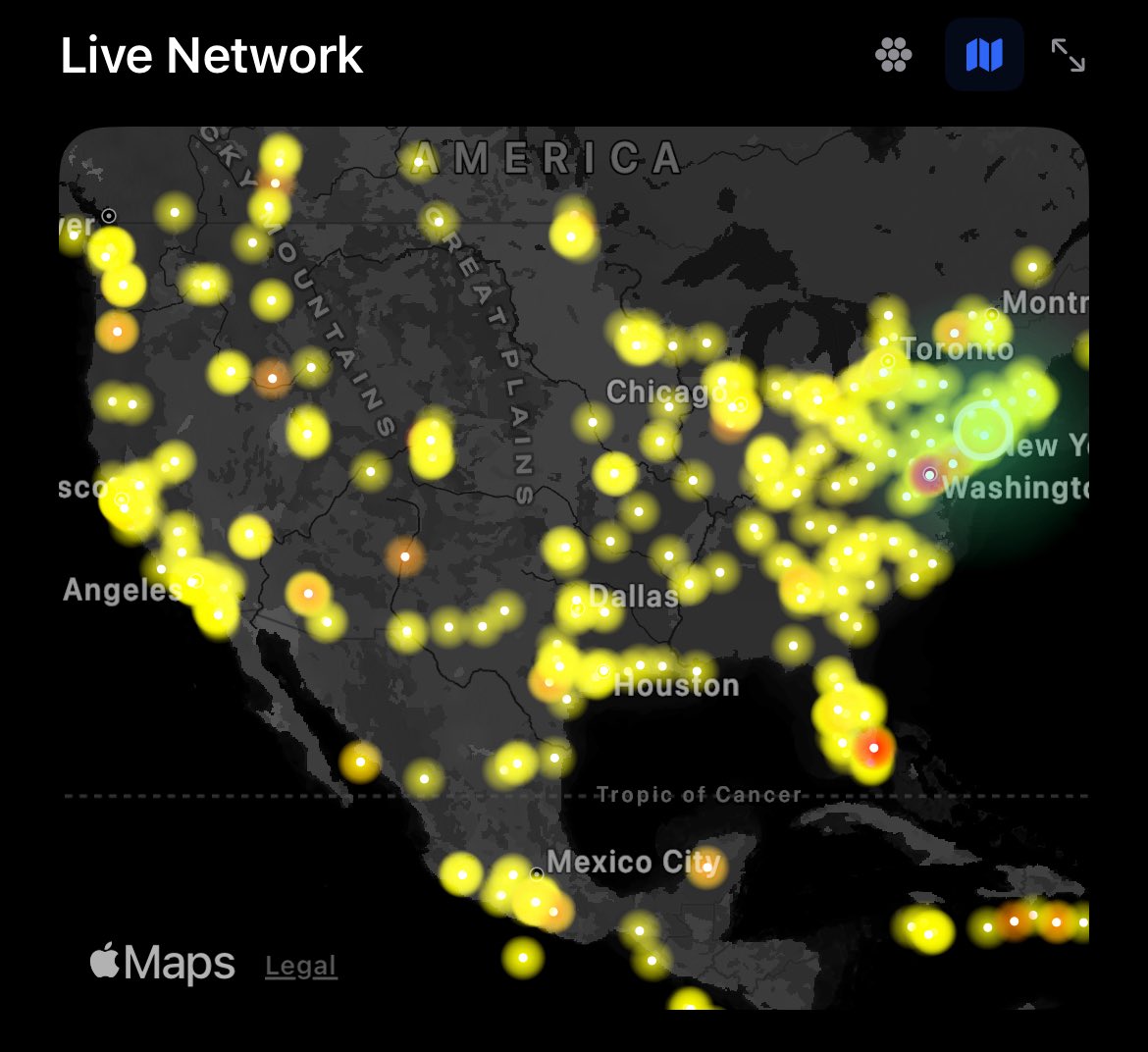
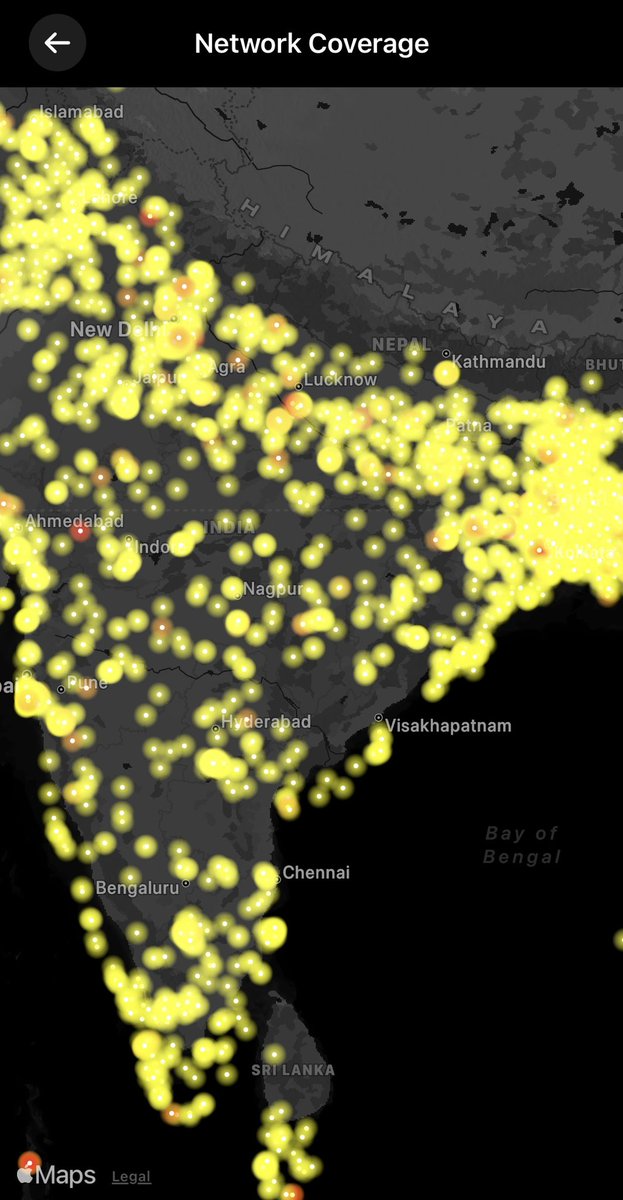
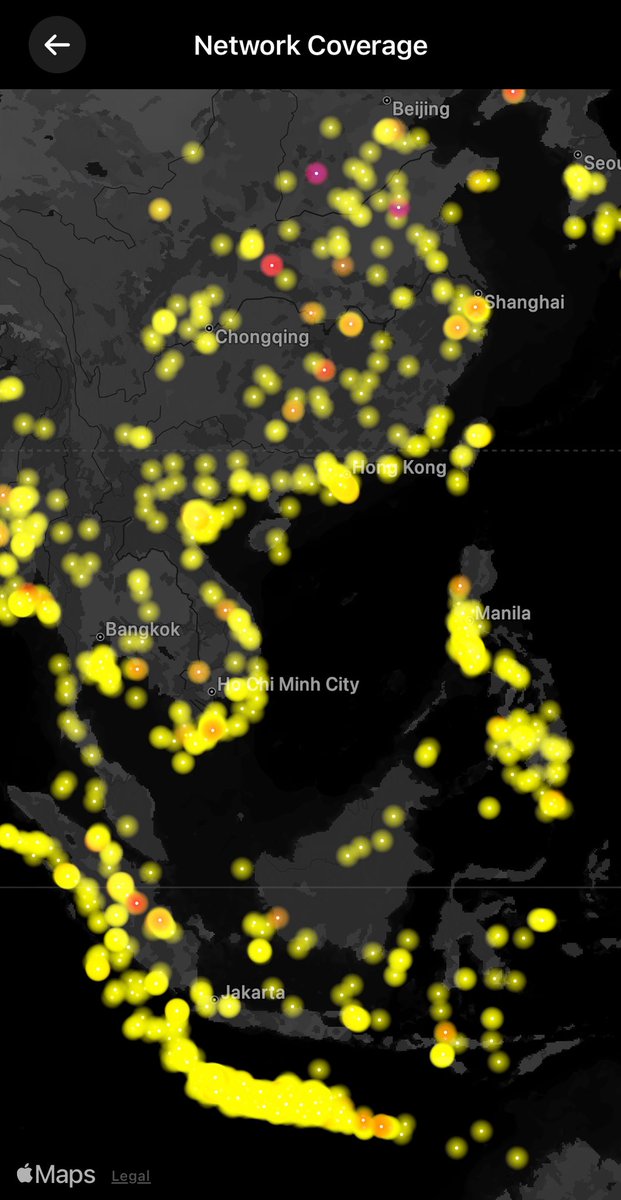
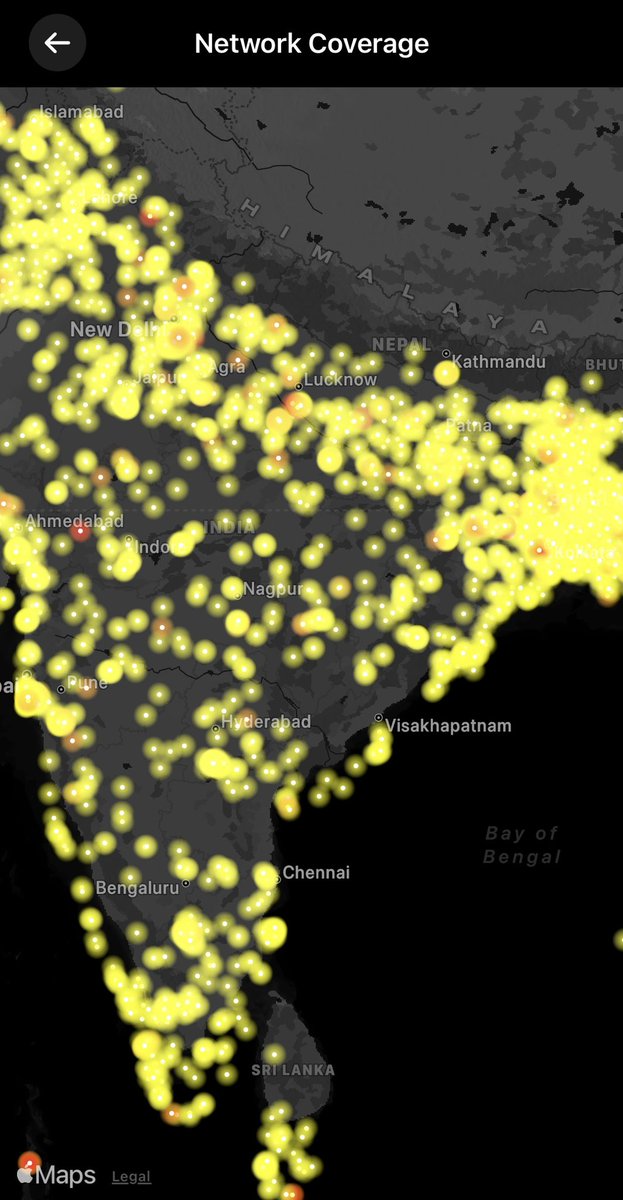
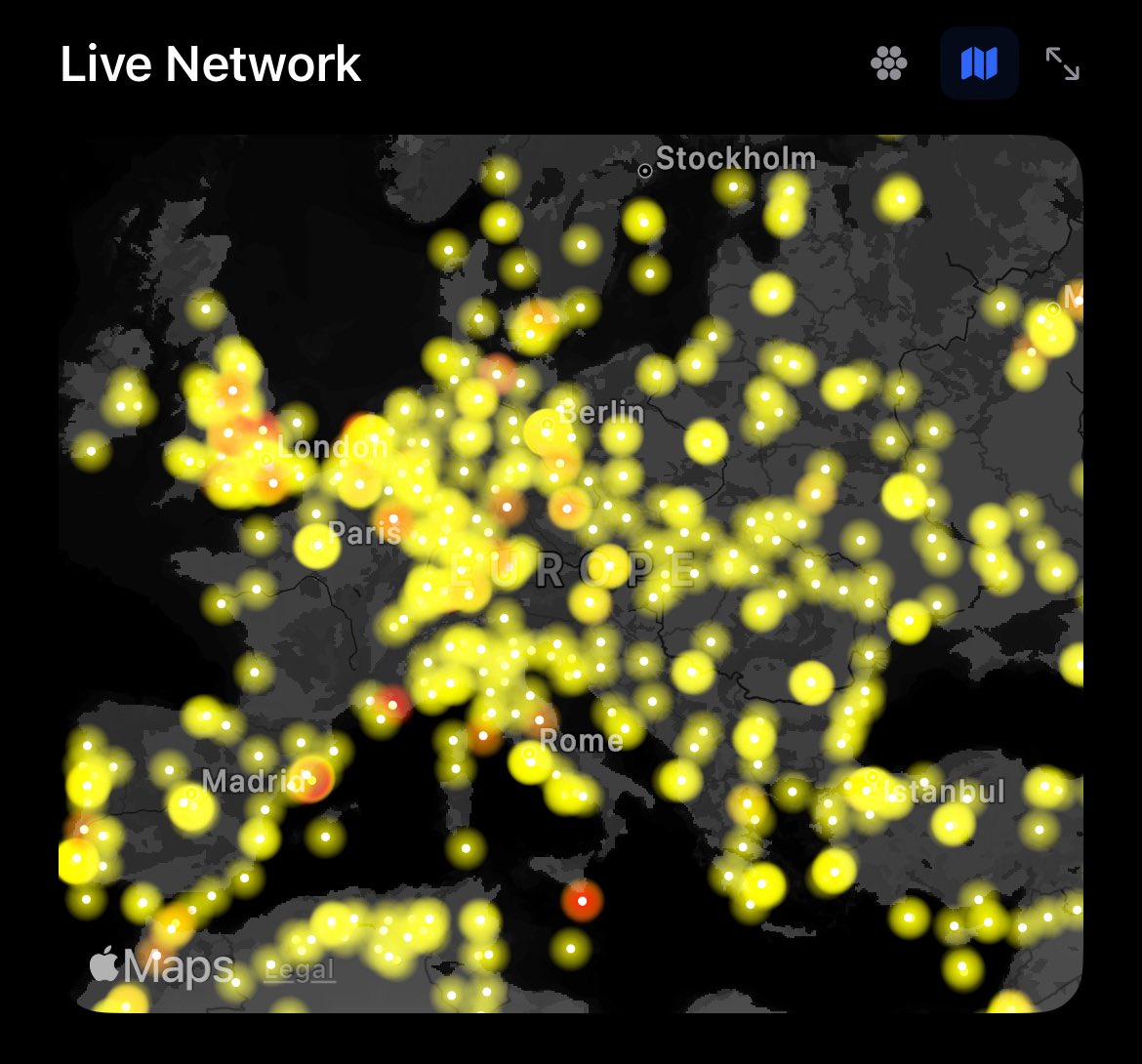
Live network visualizer for Offline Protocol We accomplished this with $0 marketing spend, no public events, and no sponsorships 2026 we have even larger goals
satvik tweet mediasatvik tweet mediasatvik tweet mediasatvik tweet media
English
20
8
109
9.4K
Offline Protocol retweeted
Jules Mossler
Jules Mossler@julie_mo·
It’s interesting to see how first world, homegrown biases still cloud the tech industry’s judgment when it comes to evaluating ‘global’ solutions. This month: - news that 87M Vietnamese lose their bank accounts because they won’t authorize w/biometrics - entire country of Afghanistan goes offline - US govt shuts down - grid attacks reported across major US cities -NYtimes runs a bizarre op-ed about how the future of finance “can’t be trusted in those crypto people’s hands,” also argues against regulation And somehow at crypto’s biggest conference my clients are still competing for panels that vaguely touch on stablecoins as ‘the killer app’ and review yield products for investors. We are missing the plot. While we gloss over the real power of stablecoins in an unstable world, and companies like @OfflineProtocol continue to hear from VCs that lack of internet access is a non-problem, millions of people are beginning to experience what it feels like to be uncomfortable: losing services that are just supposed to work when you’re a taxpayer. Ironically as tech moves forward, other parts of society break down. If crypto comes back to its roots it might discover that now offers the easiest runway yet for mass adoption. THAT is a conference I’d attend. That’s one I’d help build. Anyone else?
Proton VPN@ProtonVPN

The internet has been completely shut down in Afghanistan, according to our internal data. Our tools help to bypass censorship, but here access has been cut off. We stand against acts like this and believe that both privacy & freedom of speech are human rights. (Timezone CEST)

English
3
7
42
6K
Offline Protocol retweeted
Nym
Nym@nym·
For a free internet where everyone has access to information and communication. When you do have access to the internet then protect your data with NymVPN. Before the internet is simply turned off by the government then check out @OfflineProtocol and @BitchatMe_
TOLOnews@TOLOnews

#BREAKING Internet Services Resume in Afghanistan All telecommunication networks in the country have resumed internet and communication services. The activities of internet and telecommunication networks across Afghanistan had been cut off nearly 48 hours ago. So far, officials of the Islamic Emirate of Afghanistan have not made any official statement regarding this matter. #TOLOnwes_English

English
1
8
41
6.6K
Offline Protocol retweeted
satvik
satvik@sxtvik·
Every few weeks there’s an internet shutdown in some part of the world and the crypto and payments communities wake up to what I’ve been speaking about loudly for over a year. The internet is vulnerable. Natural disasters, wars, censorship, global mobility have made it so. The ONLY real solution to this connectivity crisis is Offline Protocol. It is the only smartphone-first digital solution with a holistic ecosystem for communication, payments, information, and identity which allows entire economies to function autonomously without any internet or traditional connectivity. Not Starlink, not Bitchat, not anything else can do what we do, how we do. We enable fully self-sustaining and sovereign communities that can function and survive completely independently forever. If you still don’t get it, start paying attention.
English
18
10
126
7.7K
Offline Protocol retweeted
Abbas Khan ⟠
Abbas Khan ⟠@KhanAbbas201·
I haven’t been able to reach my family since yesterday. The Taliban’s Ministry of Communications ordered ISPs to shut down internet across Afghanistan. Moments like this remind me why protocols like @OfflineProtocol and what @sxtvik pushes for matter. Access to communication should not be at the mercy of governments. I am deeply worried. Every time this happens, it precedes something terrible.
Proton VPN@ProtonVPN

The internet has been completely shut down in Afghanistan, according to our internal data. Our tools help to bypass censorship, but here access has been cut off. We stand against acts like this and believe that both privacy & freedom of speech are human rights. (Timezone CEST)

English
65
15
286
58.3K
Offline Protocol retweeted
Stable Institute
Stable Institute@stableinstitute·
Mobile money and alternative currencies are a diverse ecosystem, from regulated digital wallets and mobile platforms to grassroots community currencies that expand financial inclusion, particularly in regions where traditional banking is inaccessible. internet.beehiiv.com/p/leaping-over…
English
3
2
12
5.8K
Offline Protocol retweeted
11AM w/ Seed Club
11AM w/ Seed Club@11AMdotclub·
Satvik Sethi discusses alternative use cases where the Offline Protocol product stack can serve even the most hyperconnected users. “Even the most connected people find themselves in moments where they need an alternative. We’ve seen massive uptake at live events like Coachella, Burning Man, FWB Fest, sports events, and pride parades in Europe, places with the best internet until suddenly it’s gone. At the same time, we’re seeing adoption in refugee camps, rural agritech communities, small villages, and volunteer camps. We’re building an unopinionated product stack that can meet diverse needs depending on the situation.”
English
2
3
27
2.9K
Offline Protocol retweeted
11AM w/ Seed Club
11AM w/ Seed Club@11AMdotclub·
Satvik Sethi unpacks OfflinePay, the offline stablecoin settlement network, and the insights that led to building it. “Payments have been really exclusionary by default. The world has been talking about going cashless… and yet a lot of people still can’t access traditional banking rails. With OfflinePay, we can collateralize any stablecoins on any chain, give you a universal offline dollar, and let people transact fully offline for as long as they want.”
English
3
5
22
8.7K
Offline Protocol
Offline Protocol@OfflineProtocol·
New Features now live on Fernweh: 1. Guest Login - For users that find themselves unable to access their email, or want to opt-out of joining the OfflineID social graph, guest login let's you start using Fernweh instantly. 2. Discover Nearby - Fernweh home screen now shows you other users and compatible devices nearby to make discovery seamless. 3. Enhanced Sharing - Your Fernweh QR code can now be scanned with any QR code reader or camera app to simplify connecting with existing users, or automatically redirecting them to relevant app stores to download the app. Frictionless onboarding. Update your app on iOS and Android to see these new changes. Thank you to our users for all your feedback, ideas, and support!
Offline Protocol tweet media
English
4
4
19
2K
Offline Protocol retweeted
Stable Institute
Stable Institute@stableinstitute·
Stable Institute's first article explores how the evolution of money charts a course from barter and metallic coinage, to paper cash, digital networks, and most recently, programmable stablecoin rails. internet.beehiiv.com/p/r-evolution
English
3
3
15
3K
Offline Protocol
Offline Protocol@OfflineProtocol·
Announcing a new chapter in our journey. While we continue to build out new features for Fernweh, OfflineID, and Proof of Location AVS, we are very excited to introduce you to @OfflinePay — the world's first offline stablecoin settlement network. Mainstream cashless payment systems still exclude millions of unbanked and digitally disconnected people, especially in regions with poor infrastructure, limited internet, and frequent disaster impacts. By empowering true peer-to-peer, offline stablecoin payments, OfflinePay bridges this enormous gap with reliable, cash-like financial access on any smartphone, helping build a more inclusive digital economy for those traditionally left out. Why stablecoins? Stablecoins offer transformative benefits for the unbanked and underbanked: - Stablecoins can be sent, stored, and spent on basic smartphones, without needing a bank account. - Cheaper remittances: They drastically lower transaction fees, making it easier for migrants and those in remote areas to exchange value. - Security and transparency: Blockchain’s public ledger removes intermediaries and increases trust. - Empowerment: Enables entrepreneurs and individuals in excluded regions to participate in local and global markets, build savings, and pursue financial autonomy. This is why we are also announcing, @stableinstitute: The transformation of cash — from barter, coins, and notes to stablecoins and digital assets — is a recurring theme in monetary history, driven by technological and societal shifts. Today’s push towards digital money echoes previous transitions and exposes the need to critically examine: - Who gets included or excluded as money evolves? - What vulnerabilities arise when access depends on connectivity or institutional systems? - How can stablecoin rails be designed to foster real-world inclusion? The Stable Institute is needed to curate this conversation, research the changing nature of cash, and guide the stablecoin economy towards empathetic, accessible innovation for the disconnected and unbanked. It will add value by sharing diverse research, case studies, reading lists, and thought leadership on payments, exclusion, resilience, and policy. Welcome to a new era of Offline Protocol.
English
10
8
66
8.7K