The Secret Muslim Banker

3.5K posts

The Secret Muslim Banker banner
The Secret Muslim Banker

The Secret Muslim Banker

@SecMuslimBanker

Managing a $100m investment fund. Breaking down macroeconomics with Islamic finance. Sharing my journey and insights on creating a riba-free economy.

Subscribe to my newsletter: Joined Nisan 2023
832 Following3.8K Followers
The Secret Muslim Banker retweeted
Michael Hla
Michael Hla@hla_michael·
I trained an LLM from scratch on pre-1900 text to see if it could come up with quantum mechanics and relativity. While the model is too small to do meaningful reasoning, it has glimpses of intuition. When given observations from past landmark experiments, the model can declare that “light is made up of definite quantities of energy” and even suggest that gravity and acceleration are locally equivalent. I’m releasing the dataset + models and leave this as an open problem to the research community. I also include what this project has taught me about intelligence in a mini essay linked below. 🧵(1/n)
English
116
260
2K
304.7K
The Secret Muslim Banker
The Secret Muslim Banker@SecMuslimBanker·
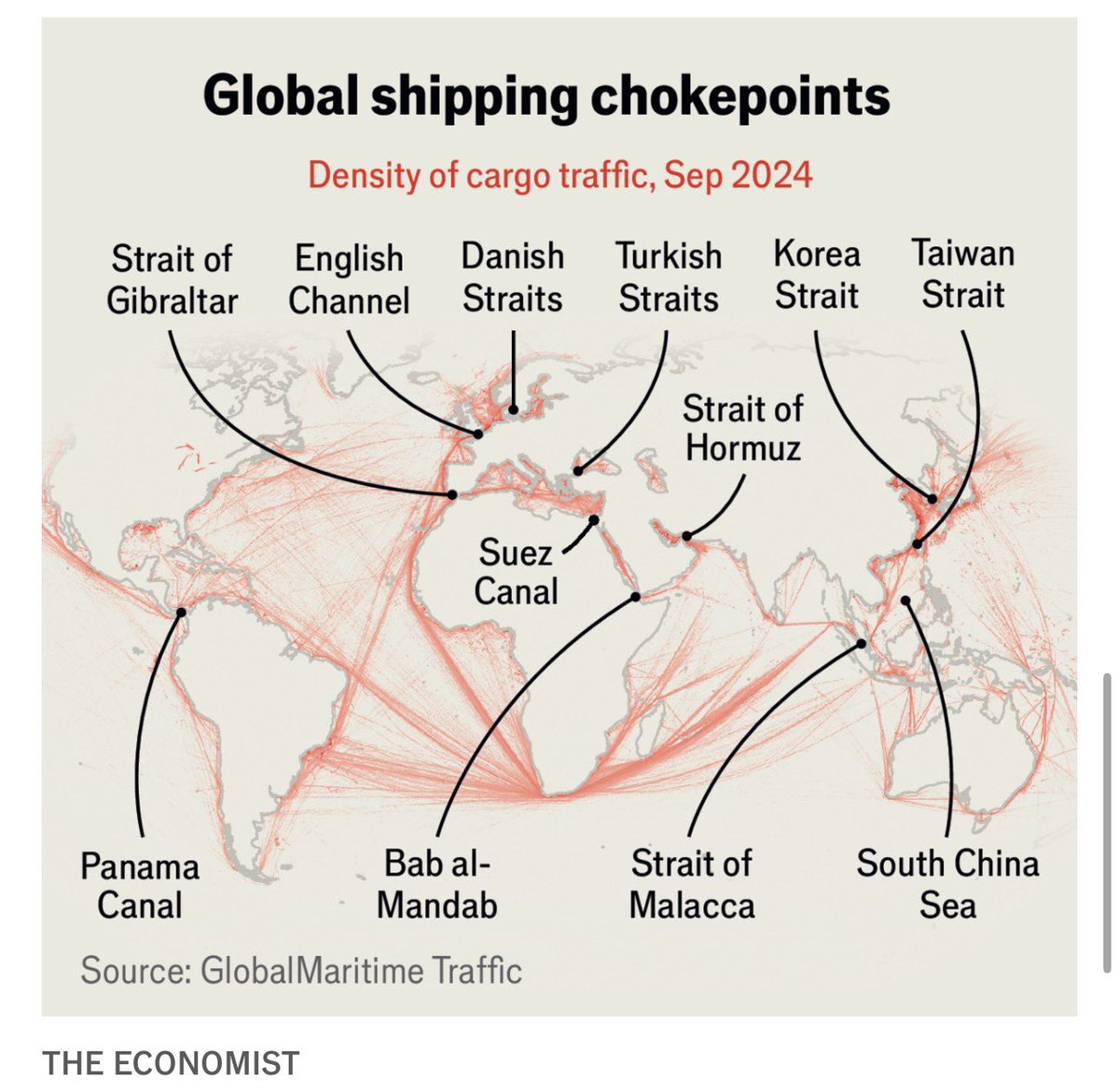
@alifnomad Erasure won’t happen. Iran still needs to sell oil so market will stabilise somehow, maybe at a higher price. And GCC can’t sit idle so eventually a deal will have to take place on how the strait of Hormuz is managed.
English
0
0
1
51
Alif
Alif@alifnomad·
@SecMuslimBanker This also means, US can erase Iranian oil industry and to some extent even if GCC is severely crippled, it benefits US
English
1
0
0
50
The Secret Muslim Banker
The Secret Muslim Banker@SecMuslimBanker·
Interesting sequence of events. If China’s trading partners run out of fuel then it greatly affects the Chinese economy. By now buying US oil and gas, and exporting it to them, China can keep the economy stable, for now. What’s worrying for them is having to rely on US for this new source of energy.
John Spencer@SpencerGuard

China imports US oil for Asian fuel markets amid Hormuz crisis @asiatimesonline asiatimes.com/2026/04/china-… China is moving to resume large-scale purchases of United States liquefied natural gas (LNG) and crude oil, as supply disruptions in the Middle East and tightening fuel markets across Asia force Beijing to recalibrate its energy strategy. In return, China will have sufficient fuel supply to resume gasoline exports to Asian countries, helping it maintain market share and increase political influence in the region amid tightening fuel supplies. On March 11, the National Development and Reform Commission (NDRC) ordered a halt to exports of gasoline, diesel and aviation fuel. The resumption of China's purchases of US crude oil and LNG appears to reflect limited strategic flexibility for Beijing, as disruptions to supplies from Venezuela and the Middle East constrain its options. He adds that China’s decision to resume large-scale energy purchases from the US comes ahead of a planned leaders’ meeting between Beijing and Washington in May, and that the deal helps create a more constructive atmosphere for high-level dialogue.

English
1
0
0
491
The Secret Muslim Banker retweeted
JH
JH@CRUDEOIL231·
I think way too many ppl are delusional about this idea of letting Iran control the SoH, having the US pull out, and just letting Iran set up a toll booth. Where does Saudi’s power actually come from? It’s not just because they’re rich. Their entire influence comes from being the world’s only swing Producer. We need oil, and Saudi controls that market. If Iran takes over the SoH, they become the most powerful, one of a kind Global Swing Producer in history. If they don’t like the oil price? They can just "adjust" the traffic in a strait that handles ~20mb/d to swing prices however they want. If the UAE gets on Iran’s bad side? "No passage for UAE tankers." If Kuwait tries to build a bypass? "Fine, the SoH is closed starting today. Let’s see if you can finish that bypass—which takes years—without making a single dime." By letting Iran control that flow, the US is effectively making Iran the ultimate energy gatekeeper. The entire regional hegemony shifts to Iran. Saudi and the UAE lose everything. Think about it—if you were MBS, would you let this happen? Let’s say the US pulls out this week. The US started this mess, and now the GCC has to just sit there and watch their power handed over to Iran? Let me give you a reality check for Americans: Imagine Mexico now controls the North American continent. "Want to fly to the UK? Get Mexico’s permission. Want to import jet fuel from Asia? Pay Mexico a toll and take the route they tell you to. Did you dare to criticize Mexico? Now, no container ships can enter your waters. You can’t say a word against the great President of Mexico." It sounds like a fantasy, but that’s the reality for the GCC. If the US tries to run away? If I were the GCC, I wouldn’t let them leave. I’d grab them by the hair and drag them back to clean up the mess they made. I’ve said before that this is an existential issue for Iran and Israel. Well, Iranian control of the SoH is an existential issue for every other GCC nation. And the GCC has leverage. They have massive wealth invested in the West, huge U.S. asset holdings, decades of lobbying networks, and they are the biggest donors for Trump’s terms. And of course they have oil. Do you really think Brent would stay below $100/bbl if the GCC teamed up and cut just 3mb/d for six months? Even the most optimistic guy knows the answer is zero chance. They don't even need a fancy excuse: "Oh, since the US gave up on us and Iran owns the SoH, it's not safe. We have to cut production. Sorry!" Within months, the US would be begging to come back. It’s just pushing the Middle East into an even bigger pit of fire. Thanks for listening to my TED Talk :) #oott #iran
English
439
671
5.3K
1.5M
The Secret Muslim Banker
The Secret Muslim Banker@SecMuslimBanker·
this is the best thing you will read today "Schopenhauer wrote that humans are not rational beings who occasionally feel emotions. we are emotional beings who occasionally think rationally. the rationality is the exception. the feeling is the baseline. every framework we build in finance and in business and in life is an attempt to impose order on a brain that is fundamentally running on fear and desire and the need to be seen as competent by other people who are also running on fear and desire"
moneyfetishist@moneyfetishist

spent the last few hours answering questions from strangers on the internet while sitting on a plane and the thing that keeps striking me is how similar every question sounds once you strip away the context the BB analyst making $200K wants to know if his life has meaning. the 20-year-old in a frat wants to know if he is on the right path. the guy running a $15M environmental services company cannot sleep because his leverage ratio scares him even though his covenants are fine. the first-year law student wants someone to tell him the career pivot will work out. the immigrant who got laid off wants to know he is not falling behind permanently the details are different. the feeling underneath is identical. am I going to be okay we pretend that money and status and titles fix this. they do not. I sit in rooms with people who control nine-figure portfolios and they are nervous about the same things as everyone else. they just have more expensive language for it. the fund manager calls it "risk management." the analyst calls it "career strategy." the 20-year-old calls it "figuring out my path." same anxiety wearing different suits I watched a grown man worth more than most people will earn in ten lifetimes throw a tantrum in a conference room because someone questioned his assumption in a model. not his competence. not his track record. an assumption in a spreadsheet. a cell in Excel. he turned red and raised his voice because for 15 seconds he felt like he might be wrong about something and his entire identity could not absorb that possibility that is not a professional disagreement. that is a kid on a playground who got told he is not the fastest runner Schopenhauer wrote that humans are not rational beings who occasionally feel emotions. we are emotional beings who occasionally think rationally. the rationality is the exception. the feeling is the baseline. every framework we build in finance and in business and in life is an attempt to impose order on a brain that is fundamentally running on fear and desire and the need to be seen as competent by other people who are also running on fear and desire the most dangerous version of this is the person who thinks they have outgrown it. the one who believes that enough success or enough money or enough status has made them rational. that person is not more rational. they are less accountable. nobody around them pushes back anymore so the irrational impulses go unchecked and get rebranded as conviction and vision and leadership the best operators I know are the ones who understand that they are still unreasonable kids underneath everything. they lose their temper over small things. they take criticism personally even when it is constructive. they make emotional decisions and reverse-engineer a logical justification after the fact. the difference is they know they do this. they have systems to catch it. they hire people who are allowed to tell them when they are being stupid. they build in a 24-hour delay before any decision made while angry the worst operators are the ones who think they have evolved past it. they confuse pattern recognition with wisdom. they confuse wealth with emotional maturity. they confuse the silence of the people around them with agreement when it is actually just fear Nietzsche said that the most common form of human stupidity is forgetting what one is trying to do. I think the more common form is forgetting what one is. which is a complicated animal that learned to use spreadsheets but never stopped being afraid of the dark none of us outgrow being unreasonable. the question is whether we build a life that accounts for it or one that pretends it does not exist thanks for the questions today. you are all going to be fine. even the ones who do not feel like it right now

English
1
0
5
388
The Secret Muslim Banker retweeted
De Prof™
De Prof™@rahmandeprof·
I was just revising my notes and I came across this profound concept Al-Imām Ibnul Qayyim wrote about that destroys the lazy fatalism people hide behind: you fight qadar (destiny) with qadar. Meaning, if something is decreed against you, you fight it with action that is also decreed (and is in your control). Sickness is destiny—so is medicine. Poverty is destiny—so is work. Failure is destiny—so is striving again. To sit back and say “if it's meant to happen, it'll happen” isn't the tawakkul we think it is. It is more negligence a lot of times than the tawakkul we try to label it. The Prophet SAW said: “Strive for what benefits you, ask for Allah's help (in attaining it), and do not give up.” Allah has written your provision, yes, but He's also written the means by which it reaches you—and often, you are the means. Your effort is part of the decree. And this is where people get it backwards. They think because the outcome is already known to Allah, the effort is pointless. But the effort was never separate from the outcome. It's woven into it. You were always going to try, and the result was always going to be what it is, but your striving is what activates the mercy, the growth, the reward embedded in the process. Even if it doesn't work out the way you hoped, it wasn't wasted. You became someone different through the attempt. You gained strength, resilience, knowledge and experience. And then you go again. That's the mentality. “and that each person will only have what they endeavoured towards, and that (the outcome of) their endeavours will be seen (in their record)”
English
12
317
878
25.8K
The Secret Muslim Banker retweeted
Felix Prehn 🐶
Felix Prehn 🐶@felixprehn·
Investors don’t realize gold ALWAYS crashes during an oil-driven crisis. It happened in all major oil shock in the last 50 years - 1973, 1979, 1991, 2001, and 2022. In this thread, I'll break down exactly why it happens and what institutions expect happens next:
English
71
527
3.6K
510.3K
The Secret Muslim Banker
The Secret Muslim Banker@SecMuslimBanker·
A comprehensive read to understand the status of the current dollar regime. I couldn’t have explained it better myself.
Bushels 🌾 Barrels 🛢 & Bullion 💰@BuBarrelBull

America Celebrates 250 years (and the end of Pax Americana) This note is about the US and the implications of another war in the Middle East, but first, some history: In 1956, Britain and France conspired with Israel to seize the Suez Canal from Egypt’s Nasser. It was a classic imperial move, the kind that had worked for a century. Except this time, Eisenhower said no. He threatened to dump U.S. holdings of sterling on the open market, which would have collapsed the pound overnight. Britain folded within days. France folded with it. That moment, more than any other, marks the true end of British imperial primacy. Not the World Wars, not the independence movements, not the Commonwealth. The moment a U.S. president made a phone call and the pound buckled. Reserve currency status doesn’t just reflect economic power. It is economic power, and when it goes, everything goes with it. It is also worth noting the bitter irony that in 1956 it was Israel’s adventurism that helped expose the limits of British power and accelerate the pound’s decline. History has a way of rhyming. The pound’s vulnerability at Suez didn’t emerge overnight. It had been building for decades, through two world wars that bled Britain fiscally dry, through the steady accumulation of the world’s gold by the United States, and through the slow recognition that the guarantor of global trade had changed addresses. Bretton Woods in 1944 formalized what was already true: the dollar was now the anchor of the global monetary system, convertible to gold at $35 an ounce, with every other currency pegged to it. It was an elegant system. It was also a system that required the United States to run perpetual trade surpluses and maintain fiscal discipline, neither of which proved politically sustainable. By the late 1960s the U.S. was spending heavily on Vietnam and the Great Society simultaneously, and foreign central banks, led by a deeply skeptical De Gaulle, began converting their dollar reserves into gold at an accelerating pace. France literally sent warships to New York to bring gold home. On August 15, 1971, Nixon closed the gold window. The dollar would no longer be convertible. Bretton Woods was dead. What replaced it was Kissinger’s deal: the petrodollar. The deal struck with Saudi Arabia in 1973 and 1974 was simple and profound. Oil would be priced exclusively in dollars. In exchange, the U.S. would provide security guarantees to the Gulf monarchies. You want energy, you need dollars. You need dollars, you hold Treasuries. You hold Treasuries, you finance American deficits. The gold standard was replaced not with nothing, but with oil and aircraft carriers. It worked because it rested on one non-negotiable guarantee: America would secure global trade routes, keep the sea lanes open, and ensure the free flow of energy to allies and adversaries alike. The Strait of Hormuz. The South China Sea. The Red Sea. These were never just geography. They were the load-bearing walls of the entire dollar architecture. And this is the thing people consistently fail to appreciate: commodities and geopolitics have always been linked. Most wars throughout history are, at their core, about securing access to resources. Energy. Grain. Metals. The players change. The underlying logic never does. Fast-forward to February 2022. Russia invades Ukraine. The U.S. and Europe respond by freezing $300 billion in Russian sovereign reserves. Swift expulsion and asset seizures. Just like that, we answered a question every central bank on earth had been too polite to ask out loud: what happens if America decides your dollar reserves are no longer yours? Biden gave them the answer. Loudly. This was not just a sanctions regime. This was a fundamental break in the trust architecture that underpins reserve currency status. The dollar’s value as a reserve asset was always partly about neutrality, the assumption that it was beyond politics. We torched that assumption. Every non-Western central bank quietly updated its threat model that week. If it can happen to Russia, it can happen to anyone who finds themselves on the wrong side of Washington. Subsequent uses of financial sanctions against various actors only compounded the damage, each one further eroding the perception that the dollar was a neutral settlement medium rather than a political weapon. The de-dollarization trend and the de-globalization trend are not separate stories. They are the same story. When the guarantee of free trade breaks down, countries retrench. When the reserve currency gets weaponized, countries diversify. When the hegemon’s will to enforce the rules-based order wavers, everyone starts making contingency plans. We are now deep inside that dynamic. The Houthis have been attacking commercial shipping in the Red Sea for over a year. Iranian proxies armed with Iranian-supplied missiles. The U.S. response has been airstrikes that changed nothing. Global shipping rerouted around the Cape of Good Hope, adding weeks and billions in costs. The Strait of Hormuz carries roughly 1/5 of the world’s petroleum liquids and it is now de facto under the control of the IRGC. When asked about it, the current U.S. administration has been explicit: that’s other countries’ problem. Let that sink in. The Strait of Hormuz, the single most important chokepoint in the entire petrodollar architecture, the physical artery through which the dollar’s claim to reserve status is literally pumped, and the position of the United States government is a shrug. If the U.S. cannot credibly guarantee the Strait stays open, the petrodollar system loses its central physical premise. You cannot price oil in dollars if you cannot guarantee the oil moves. At the same time, Trump has made clear he wants to withdraw from NATO commitments, remove troops from Germany, and generally signal that the American security umbrella is no longer a given but a transaction. NATO without credible U.S. commitment is just a bureaucracy. U.S. troops in Germany are not just a tripwire against Russian aggression, they are the physical embodiment of the guarantee that underwrites European confidence in dollar-denominated trade and finance. Remove them and you don’t just weaken European security. You weaken the entire signaling architecture that tells the world the American system is worth buying into. Meanwhile in the Pacific, the U.S. has drawn down defensive assets across Southeast Asia, leaving Taiwan and Japan increasingly exposed at precisely the moment China is conducting its most aggressive military posturing in decades. Every ally in the region is asking the same question Europe is asking: is the guarantee real? And they are all beginning to arrive at the same uncomfortable answer. Meanwhile we are signaling to Europe and to Ukraine that support has a political price and an expiration date. Every one of those signals is read by every finance ministry and central bank on the planet. The question they are all asking is whether the guarantee is real. The answer is becoming less clear by the month. Here is what makes this moment uniquely dangerous and what most mainstream commentary refuses to confront directly. The United States government has, to a degree without modern precedent, allowed its foreign policy in the Middle East to be effectively captured by a foreign government. The unconditional support for Israel, regardless of the conduct of its military operations, regardless of the cost in American credibility, regardless of the alienation of Arab partners whose cooperation the petrodollar system literally depends upon, has gutted America’s ability to act as a neutral and trusted arbiter of global order. And, to be clear, I am not arguing that American interventionism is the right path forward. But unconditional support of Israel, executed recklessly, is absolutely disastrous. Eisenhower could call Britain and France off Suez in 1956 because the world believed America was acting in the interest of global stability rather than a particular ally. That credibility is gone. When the U.S. vetoes ceasefire resolutions at the UN while simultaneously claiming to be the guarantor of a rules-based international order, the cognitive dissonance is not lost on the Global South, on Arab oil producers, or on the central banks quietly reducing their Treasury holdings. A hegemon that cannot be trusted to act with even a semblance of neutrality is not a hegemon. It is an Israeli puppet. And puppets do not get to set the terms of global finance. So what fills the void? Not the yuan. Not yet, anyways. China’s capital account is closed. There is no deep, liquid, freely convertible yuan bond market for the world to park reserves in. The yuan cannot replace the dollar for the same reasons the dollar couldn’t have replaced the pound in 1930, the institutional architecture doesn’t exist yet, and China is not trusted. You don’t replace a weaponized reserve currency with someone else’s weaponized reserve currency. But here is where it gets interesting: countries that want to transact with each other in oil, in commodities, in bilateral trade, don’t need a reserve currency. They need a settlement medium. And gold, the asset with no counterparty, no issuer, no sanctions risk, is reemerging as exactly that. Central bank gold demand has hit multi-decade highs three years running. Russia and China conduct the overwhelming majority of their bilateral trade in national currencies supplemented by gold reserves. The BRICS have advanced a hybrid digital settlement mechanism backed by physical gold, now in pilot phases for cross-border transactions. India, the Gulf states, and much of the Global South have followed suit in various degrees. This is not theoretical. It is happening. Gold makes structural sense in a fragmented world because it cannot be frozen, it cannot be sanctioned, and it has no political allegiance. It is the asset that sits outside the system, which is precisely why every nation building a parallel financial architecture is accumulating it. The 1970s swap of gold for oil as the dollar’s backing was always a political arrangement. We are watching its reversal in slow motion. Here is the strategic reality the West refuses to say out loud: Russia, China, and Iran understand supply chain vulnerabilities in ways that Western governments, captured by short-term political cycles and decades of globalization orthodoxy, have consistently failed to. China has spent 20 years building commodity self-sufficiency. Domestic rare earth processing. Long-term oil contracts with Russia, Iran, and Saudi Arabia priced outside the dollar. Port infrastructure from Djibouti to Pakistan to Sri Lanka. Control over the processing of the critical minerals, lithium, cobalt, rare earths, that every advanced weapons system and clean energy technology depends upon. The Belt and Road isn’t an aid program. It’s a parallel trade and settlement architecture being built in plain sight. Russia, despite sanctions, has reoriented its entire commodity export infrastructure eastward and built payment systems that bypass Swift entirely. Iran has spent decades developing asymmetric capabilities specifically designed to threaten the chokepoints the petrodollar depends on. These are not accidents. These are strategies. Coherent, long-horizon, supply-chain-aware strategies pursued by adversaries who understood that the real battlefield was always logistics and monetary architecture, not just military hardware. And here is the painful corollary: the United States’ ability to respond militarily or industrially to a major conflict is far more constrained than the public appreciates. Decades of offshoring have hollowed out the defense industrial base. Shipbuilding capacity is a fraction of what it was in World War II. Ammunition production, exposed dramatically by the Ukraine war, is running well below what sustained high-intensity conflict would require. And critically, the United States is dependent on China for the processing of the rare earth minerals and critical materials that go into precision munitions, electronics, and advanced weapons platforms. We have, with remarkable lack of foresight, handed our primary strategic adversary leverage over our ability to rearm. If a serious conflict erupts in the Taiwan Strait or the Persian Gulf, the supply chain constraints on the U.S. military response would become visible very quickly, and that visibility itself would be destabilizing in ways that are difficult to fully model. Now layer on the fiscal reality. The United States is running deficits in excess of $1.8 trillion annually, carrying over $36 trillion in total debt, with interest payments now exceeding the entire defense budget. The Iraq War cost an estimated $2 to $3 trillion over two decades. A serious military confrontation in the Persian Gulf or Taiwan Strait, against a near-peer adversary with the capability to sink carrier groups and disrupt satellite communications, would cost multiples of that, and would need to be financed at interest rates far above the near-zero environment that made the post-2008 debt accumulation painless. There is no fiscal headroom for another generational war. The bond market knows this. Foreign central banks know this. And adversaries who have studied American fiscal trajectories know this too. The drive toward de-globalization flows from the same source as de-dollarization, as countries unwilling to depend on American guarantees that seem less ironclad than before race to onshore supply chains, secure friendly energy sources, and develop parallel payment rails. China and its partners embraced this with characteristic foresight. The West, still deeply integrated into just-in-time global networks and politically unable to have honest conversations about strategic dependency, is playing catch-up. We are way behind. And we are distracted. 2026 is the 250th anniversary of the United States. This moment may well be remembered not as a celebration of enduring liberty but as the year the long arc of American hegemony reached its visible inflection point. Previous reserve currency transitions followed a consistent pattern: military overextension, fiscal deterioration, loss of trade route control, erosion of allied trust, and the emergence of a credible alternative architecture. Check, check, check, check, and check. The American empire was always an empire of systems, financial, military, institutional. Its genius was making those systems feel like global public goods rather than instruments of U.S. power. Free trade. Dollar liquidity. Security guarantees. For a long time they were both. When you start weaponizing the systems, when you subordinate them to the interests of a single foreign ally, when you shrug at the Strait of Hormuz and pull troops from Germany and leave Taiwan exposed, you reveal the seams. And once seen, they cannot be unseen. The Strait of Hormuz is not a shipping lane. The Red Sea is not a regional conflict. Taiwan is not a sovereignty dispute. NATO is not a relic. They are all load-bearing elements of the same structure. The world is watching whether the guarantees are real. The dollar’s premium, the “exorbitant privilege”, is priced on the assumption that they are. If they’re not, that premium disappears, and with it the ability to run deficits, export inflation, and fund ourselves at the expense of everyone else. Course correction remains possible. First, the US must start divorce itself from Israel. That will require a regime change here, not overseas. Next comes strategic investment in domestic industrial capacity and critical mineral independence, through a foreign policy that can again be trusted to reflect something broader than the interests of a single lobbying apparatus. But the momentum toward self-reliance and alternative arrangements gathers strength with each passing disruption. The commodities markets, ever pragmatic, are already casting their votes. 250 years in, the American century may be ending not with invasion or defeat, but with the quiet, devastating withdrawal of trust. That’s how empires end.

English
0
0
2
579
The Secret Muslim Banker
The Secret Muslim Banker@SecMuslimBanker·
This was an incredible read. How do you foresee the transition? We can’t extrapolate using the transition experienced after WW2 from British Pound to the US Dollar given no alternative architecture is ready to replace the dollar system. Is it as simple as gold being a bigger part of central bank reserves?
English
1
1
20
9.9K
Bushels 🌾 Barrels 🛢 & Bullion 💰
America Celebrates 250 years (and the end of Pax Americana) This note is about the US and the implications of another war in the Middle East, but first, some history: In 1956, Britain and France conspired with Israel to seize the Suez Canal from Egypt’s Nasser. It was a classic imperial move, the kind that had worked for a century. Except this time, Eisenhower said no. He threatened to dump U.S. holdings of sterling on the open market, which would have collapsed the pound overnight. Britain folded within days. France folded with it. That moment, more than any other, marks the true end of British imperial primacy. Not the World Wars, not the independence movements, not the Commonwealth. The moment a U.S. president made a phone call and the pound buckled. Reserve currency status doesn’t just reflect economic power. It is economic power, and when it goes, everything goes with it. It is also worth noting the bitter irony that in 1956 it was Israel’s adventurism that helped expose the limits of British power and accelerate the pound’s decline. History has a way of rhyming. The pound’s vulnerability at Suez didn’t emerge overnight. It had been building for decades, through two world wars that bled Britain fiscally dry, through the steady accumulation of the world’s gold by the United States, and through the slow recognition that the guarantor of global trade had changed addresses. Bretton Woods in 1944 formalized what was already true: the dollar was now the anchor of the global monetary system, convertible to gold at $35 an ounce, with every other currency pegged to it. It was an elegant system. It was also a system that required the United States to run perpetual trade surpluses and maintain fiscal discipline, neither of which proved politically sustainable. By the late 1960s the U.S. was spending heavily on Vietnam and the Great Society simultaneously, and foreign central banks, led by a deeply skeptical De Gaulle, began converting their dollar reserves into gold at an accelerating pace. France literally sent warships to New York to bring gold home. On August 15, 1971, Nixon closed the gold window. The dollar would no longer be convertible. Bretton Woods was dead. What replaced it was Kissinger’s deal: the petrodollar. The deal struck with Saudi Arabia in 1973 and 1974 was simple and profound. Oil would be priced exclusively in dollars. In exchange, the U.S. would provide security guarantees to the Gulf monarchies. You want energy, you need dollars. You need dollars, you hold Treasuries. You hold Treasuries, you finance American deficits. The gold standard was replaced not with nothing, but with oil and aircraft carriers. It worked because it rested on one non-negotiable guarantee: America would secure global trade routes, keep the sea lanes open, and ensure the free flow of energy to allies and adversaries alike. The Strait of Hormuz. The South China Sea. The Red Sea. These were never just geography. They were the load-bearing walls of the entire dollar architecture. And this is the thing people consistently fail to appreciate: commodities and geopolitics have always been linked. Most wars throughout history are, at their core, about securing access to resources. Energy. Grain. Metals. The players change. The underlying logic never does. Fast-forward to February 2022. Russia invades Ukraine. The U.S. and Europe respond by freezing $300 billion in Russian sovereign reserves. Swift expulsion and asset seizures. Just like that, we answered a question every central bank on earth had been too polite to ask out loud: what happens if America decides your dollar reserves are no longer yours? Biden gave them the answer. Loudly. This was not just a sanctions regime. This was a fundamental break in the trust architecture that underpins reserve currency status. The dollar’s value as a reserve asset was always partly about neutrality, the assumption that it was beyond politics. We torched that assumption. Every non-Western central bank quietly updated its threat model that week. If it can happen to Russia, it can happen to anyone who finds themselves on the wrong side of Washington. Subsequent uses of financial sanctions against various actors only compounded the damage, each one further eroding the perception that the dollar was a neutral settlement medium rather than a political weapon. The de-dollarization trend and the de-globalization trend are not separate stories. They are the same story. When the guarantee of free trade breaks down, countries retrench. When the reserve currency gets weaponized, countries diversify. When the hegemon’s will to enforce the rules-based order wavers, everyone starts making contingency plans. We are now deep inside that dynamic. The Houthis have been attacking commercial shipping in the Red Sea for over a year. Iranian proxies armed with Iranian-supplied missiles. The U.S. response has been airstrikes that changed nothing. Global shipping rerouted around the Cape of Good Hope, adding weeks and billions in costs. The Strait of Hormuz carries roughly 1/5 of the world’s petroleum liquids and it is now de facto under the control of the IRGC. When asked about it, the current U.S. administration has been explicit: that’s other countries’ problem. Let that sink in. The Strait of Hormuz, the single most important chokepoint in the entire petrodollar architecture, the physical artery through which the dollar’s claim to reserve status is literally pumped, and the position of the United States government is a shrug. If the U.S. cannot credibly guarantee the Strait stays open, the petrodollar system loses its central physical premise. You cannot price oil in dollars if you cannot guarantee the oil moves. At the same time, Trump has made clear he wants to withdraw from NATO commitments, remove troops from Germany, and generally signal that the American security umbrella is no longer a given but a transaction. NATO without credible U.S. commitment is just a bureaucracy. U.S. troops in Germany are not just a tripwire against Russian aggression, they are the physical embodiment of the guarantee that underwrites European confidence in dollar-denominated trade and finance. Remove them and you don’t just weaken European security. You weaken the entire signaling architecture that tells the world the American system is worth buying into. Meanwhile in the Pacific, the U.S. has drawn down defensive assets across Southeast Asia, leaving Taiwan and Japan increasingly exposed at precisely the moment China is conducting its most aggressive military posturing in decades. Every ally in the region is asking the same question Europe is asking: is the guarantee real? And they are all beginning to arrive at the same uncomfortable answer. Meanwhile we are signaling to Europe and to Ukraine that support has a political price and an expiration date. Every one of those signals is read by every finance ministry and central bank on the planet. The question they are all asking is whether the guarantee is real. The answer is becoming less clear by the month. Here is what makes this moment uniquely dangerous and what most mainstream commentary refuses to confront directly. The United States government has, to a degree without modern precedent, allowed its foreign policy in the Middle East to be effectively captured by a foreign government. The unconditional support for Israel, regardless of the conduct of its military operations, regardless of the cost in American credibility, regardless of the alienation of Arab partners whose cooperation the petrodollar system literally depends upon, has gutted America’s ability to act as a neutral and trusted arbiter of global order. And, to be clear, I am not arguing that American interventionism is the right path forward. But unconditional support of Israel, executed recklessly, is absolutely disastrous. Eisenhower could call Britain and France off Suez in 1956 because the world believed America was acting in the interest of global stability rather than a particular ally. That credibility is gone. When the U.S. vetoes ceasefire resolutions at the UN while simultaneously claiming to be the guarantor of a rules-based international order, the cognitive dissonance is not lost on the Global South, on Arab oil producers, or on the central banks quietly reducing their Treasury holdings. A hegemon that cannot be trusted to act with even a semblance of neutrality is not a hegemon. It is an Israeli puppet. And puppets do not get to set the terms of global finance. So what fills the void? Not the yuan. Not yet, anyways. China’s capital account is closed. There is no deep, liquid, freely convertible yuan bond market for the world to park reserves in. The yuan cannot replace the dollar for the same reasons the dollar couldn’t have replaced the pound in 1930, the institutional architecture doesn’t exist yet, and China is not trusted. You don’t replace a weaponized reserve currency with someone else’s weaponized reserve currency. But here is where it gets interesting: countries that want to transact with each other in oil, in commodities, in bilateral trade, don’t need a reserve currency. They need a settlement medium. And gold, the asset with no counterparty, no issuer, no sanctions risk, is reemerging as exactly that. Central bank gold demand has hit multi-decade highs three years running. Russia and China conduct the overwhelming majority of their bilateral trade in national currencies supplemented by gold reserves. The BRICS have advanced a hybrid digital settlement mechanism backed by physical gold, now in pilot phases for cross-border transactions. India, the Gulf states, and much of the Global South have followed suit in various degrees. This is not theoretical. It is happening. Gold makes structural sense in a fragmented world because it cannot be frozen, it cannot be sanctioned, and it has no political allegiance. It is the asset that sits outside the system, which is precisely why every nation building a parallel financial architecture is accumulating it. The 1970s swap of gold for oil as the dollar’s backing was always a political arrangement. We are watching its reversal in slow motion. Here is the strategic reality the West refuses to say out loud: Russia, China, and Iran understand supply chain vulnerabilities in ways that Western governments, captured by short-term political cycles and decades of globalization orthodoxy, have consistently failed to. China has spent 20 years building commodity self-sufficiency. Domestic rare earth processing. Long-term oil contracts with Russia, Iran, and Saudi Arabia priced outside the dollar. Port infrastructure from Djibouti to Pakistan to Sri Lanka. Control over the processing of the critical minerals, lithium, cobalt, rare earths, that every advanced weapons system and clean energy technology depends upon. The Belt and Road isn’t an aid program. It’s a parallel trade and settlement architecture being built in plain sight. Russia, despite sanctions, has reoriented its entire commodity export infrastructure eastward and built payment systems that bypass Swift entirely. Iran has spent decades developing asymmetric capabilities specifically designed to threaten the chokepoints the petrodollar depends on. These are not accidents. These are strategies. Coherent, long-horizon, supply-chain-aware strategies pursued by adversaries who understood that the real battlefield was always logistics and monetary architecture, not just military hardware. And here is the painful corollary: the United States’ ability to respond militarily or industrially to a major conflict is far more constrained than the public appreciates. Decades of offshoring have hollowed out the defense industrial base. Shipbuilding capacity is a fraction of what it was in World War II. Ammunition production, exposed dramatically by the Ukraine war, is running well below what sustained high-intensity conflict would require. And critically, the United States is dependent on China for the processing of the rare earth minerals and critical materials that go into precision munitions, electronics, and advanced weapons platforms. We have, with remarkable lack of foresight, handed our primary strategic adversary leverage over our ability to rearm. If a serious conflict erupts in the Taiwan Strait or the Persian Gulf, the supply chain constraints on the U.S. military response would become visible very quickly, and that visibility itself would be destabilizing in ways that are difficult to fully model. Now layer on the fiscal reality. The United States is running deficits in excess of $1.8 trillion annually, carrying over $36 trillion in total debt, with interest payments now exceeding the entire defense budget. The Iraq War cost an estimated $2 to $3 trillion over two decades. A serious military confrontation in the Persian Gulf or Taiwan Strait, against a near-peer adversary with the capability to sink carrier groups and disrupt satellite communications, would cost multiples of that, and would need to be financed at interest rates far above the near-zero environment that made the post-2008 debt accumulation painless. There is no fiscal headroom for another generational war. The bond market knows this. Foreign central banks know this. And adversaries who have studied American fiscal trajectories know this too. The drive toward de-globalization flows from the same source as de-dollarization, as countries unwilling to depend on American guarantees that seem less ironclad than before race to onshore supply chains, secure friendly energy sources, and develop parallel payment rails. China and its partners embraced this with characteristic foresight. The West, still deeply integrated into just-in-time global networks and politically unable to have honest conversations about strategic dependency, is playing catch-up. We are way behind. And we are distracted. 2026 is the 250th anniversary of the United States. This moment may well be remembered not as a celebration of enduring liberty but as the year the long arc of American hegemony reached its visible inflection point. Previous reserve currency transitions followed a consistent pattern: military overextension, fiscal deterioration, loss of trade route control, erosion of allied trust, and the emergence of a credible alternative architecture. Check, check, check, check, and check. The American empire was always an empire of systems, financial, military, institutional. Its genius was making those systems feel like global public goods rather than instruments of U.S. power. Free trade. Dollar liquidity. Security guarantees. For a long time they were both. When you start weaponizing the systems, when you subordinate them to the interests of a single foreign ally, when you shrug at the Strait of Hormuz and pull troops from Germany and leave Taiwan exposed, you reveal the seams. And once seen, they cannot be unseen. The Strait of Hormuz is not a shipping lane. The Red Sea is not a regional conflict. Taiwan is not a sovereignty dispute. NATO is not a relic. They are all load-bearing elements of the same structure. The world is watching whether the guarantees are real. The dollar’s premium, the “exorbitant privilege”, is priced on the assumption that they are. If they’re not, that premium disappears, and with it the ability to run deficits, export inflation, and fund ourselves at the expense of everyone else. Course correction remains possible. First, the US must start divorce itself from Israel. That will require a regime change here, not overseas. Next comes strategic investment in domestic industrial capacity and critical mineral independence, through a foreign policy that can again be trusted to reflect something broader than the interests of a single lobbying apparatus. But the momentum toward self-reliance and alternative arrangements gathers strength with each passing disruption. The commodities markets, ever pragmatic, are already casting their votes. 250 years in, the American century may be ending not with invasion or defeat, but with the quiet, devastating withdrawal of trust. That’s how empires end.
English
45
226
945
358.2K
The Secret Muslim Banker retweeted
لولوة الخاطر Lolwah Alkhater
#The_Psychology_of_Crises #Middle_East   🔹 “O Muhājirīn! O Anṣār! How do we extinguish the fire of discord?”   This may be the first in a series of reflections in which I attempt to offer a calm and reflective reading of the present moment. My hope is that it helps us better understand the psychology of crises and how we engage with the collective mind in times of hardship.   This becomes all the more pressing today. We are living through a unique moment in human history, where every individual has become a media machine (independent or otherwise), and where countless actors and institutions drive agendas that bring no good to this region, or to humanity as a whole.   I begin with an incident from the Prophetic era, an era Muslims unanimously agree was the best of times. I use it here to highlight a human phenomenon that has always existed. I present the narration as found in the books of Hadith, followed by my commentary.     Jabir bin Abdullah (may Allah be pleased with him) said: “A man from the Muhajirin kicked a man from the Ansar. The man from the Muhajirin said: ‘O Muhajirin!’ the man from the Ansar said: ‘O Ansar!’ The Prophet heard that and said: ‘What is this evil call of Jahliyyah?’ They said: ‘A man from the Muhajirin kicked a man from the Ansar.’ So the Prophet said: ‘Leave that, for it is offensive.’ Abdullah bin Ubayy bin Salul heard that and said: ‘Did they really do that? By Allah! If we return to        Al-Madinah indeed the more honorable will expel therefrom the meaner.’ Umar said: ‘Allow me to chop off the head of this hypocrite, O Messenger of Allah!’ The Prophet said: ‘Leave him, I do not want the people to say that Muhammad kills his Companions.’”  -End of Narration-   🔹Reflection: The incident could have unfolded in many possible ways. A trial could have been held to determine who was right and who was wrong. Wouldn’t reason, and even the apparent demands or justice, call for such a course? The Companions could have refused compliance, and conflict might have erupted. The Prophet could have ordered the execution of Abdullah bin Ubayy to silence the instigator of discord. But that’s not what happened. Prophetic wisdom took a completely different path. Why?   It recognized that discord (fitnah) is not born of reason, but of emotional reaction. It feeds on buried grievances, charged past, and accumulated psychological residue. It is not, in its essence, driven by intellect, though it may cloak itself in logic, dress itself in evidence, and —even in our time— be carried by highly educated voices. Thus, the Prophetic method was both precise and profound: Cut off the oxygen;“Leave it, for it is rotten.” Do not engage it. Do not rationalize it. Do not entertain the arguments and evidence of each side. But why?   Because once ignited, no party will ever fail to produce evidence of its victimhood and grievances, nor proof of its virtue and superiority over others. Reality tells us that every human society -indeed, every nation- possesses two memories, a memory of connection, and a memory of rupture. Which one is activated depends on need, context, sentiment, and the prevailing -or deliberately shaped- public mood.   Take Rwanda as an example. If you go there today, you won’t hear people talk about the crimes committed by each group (the Tutsi and the Hutu) during one of the most horrific genocides of modern time in the 1990s. Instead, you’ll hear a shared story, one about coexistence, national unity, and a common future. But if you had asked the same people thirty years ago, during the civil war, they would have unsheathed the sword of hostility and revenge against their fellow citizens (the very same nation they now celebrate as strong in its diversity). This isn’t unique to Rwanda. It applies to every society, regardless of the nature of their social fractures: religious, ethnic, tribal, geographical, or otherwise.   ( tbc )
English
37
179
704
395.6K
The Secret Muslim Banker
The Secret Muslim Banker@SecMuslimBanker·
Must read for anyone with a public equity portfolio. For most shariah-compliant investors, integration bonds was out of the question although some of you may have sukuks. You can do without them. You’d definitely want to be long energy: - refineries - coal - oil & gas (read the report to understand why owning them from markets like Canada and Brazil may be better than US/europe)
Louis-Vincent Gave@gave_vincent

The financial architecture of the post WW2 world rested on three assumptions: - US is a benevolent hegemon with an embedded interest in maintaining global trading order - US controls the world’s sea lanes - US treasuries could always be transformed into commodities at a moment’s notice These assumptions are melting away faster than morals at a bachelor party. So how do we now position portfolios? I wrote the following last weekend and a number of clients asked me to unlock it, so here is the paper research.gavekal.com/article/shatte…

English
0
0
4
410
The Secret Muslim Banker retweeted
Izabella Kaminska
Izabella Kaminska@izakaminska·
🧵Interesting stories that aren’t circulating enough 1) sovereign shadow debt is a thing 👇 By my former colleague Joseph Cotterill who notes that Senegal has covertly borrowed hundreds of millions of dollars from international institutions that it has not publicly disclosed. He adds that other countries have also used the strategy. ft.com/content/fbd695…
English
5
23
62
7.5K
The Secret Muslim Banker
The Secret Muslim Banker@SecMuslimBanker·
@UnicusResearch It’s not about them accepting it or not. They know there’s a market to sell into, make a fee and not be directionally exposed. IBs will sell whatever investors will buy.
English
0
0
0
173
The Secret Muslim Banker
The Secret Muslim Banker@SecMuslimBanker·
Your inability to mention the atrocities that Israel has committed and your double standards criticising the Sudanese army, but not the genocidal RSF, proves that your words are worthless and your position is laughable. The essence of your message is as vapid as the cultural capital of your country.
English
0
0
0
20
Abdulla M Alhamed
Abdulla M Alhamed@AMB_Alhamed·
The problem with some countries in the region is not that they fail to see the danger, but that they see it and then hesitate, understand it and then bargain over it, recognize its source and then choose to avoid naming it. For this reason, the region has not stumbled only because of its obvious enemies, but also because of the ambiguity of some who are presumed to stand on the side of stability, while in reality they open the door to chaos whenever they perceive a temporary interest or fleeting gain. Over the years, the same pattern has repeated itself: extremist forces, subversive projects, and transnational militias emerge-only for some to justify them, appease them, or recycle them politically and in the media, as though terrorism could become a respectable partner if circumstances change. Those who support the Sudanese army when weapons become entangled with chaos, who accommodate the Houthis despite their record of undermining the state, who allow Islamist groups to find a way back whenever memory fades, who normalize the Popular Mobilization Forces as if they were a natural reality, and who appease the Iranian regime despite its project of infiltration and destabilization—such actors have no right to speak of security and stability. Those who embrace the causes of destruction cannot later claim to be seeking construction. This is not political skill; it is political bankruptcy. A state that fails to clearly distinguish between those who build and those who destroy, between those who protect society and those who feed on its fragmentation, is merely postponing an explosion, not preventing it. Anyone who blurs the line between friend and foe, or attempts to stand in the grey zone between them, often ends up serving the enemy while believing they are maneuvering cleverly. In contrast, the United Arab Emirates has chosen a different path. It has not ridden the waves, nor shifted its positions with changing regional moods, nor traded in ambiguity. It set matters straight early on, clearly identifying who is a friend and who is an adversary. It has not confused pragmatism with concession, openness with naïveté, or dialogue with legitimizing the logic of chaos. This is why it has built a strong, modern, and cohesive state, while simultaneously forging partnerships and relations with the world-because it understands that genuine openness does not come at the expense of core principles, and that partnership does not mean leniency toward those who undermine stability. What is painful is that some who benefited from this approach-who benefited from the UAE’s positions, its support, and its commitment to stability-did not demonstrate the same stance when the UAE came under attack. In times of prosperity, words were abundant; in moments of testing, people disappeared. When clarity was required, there was silence, hesitation, or weak positions that neither honor relationships, repay goodwill, nor demonstrate loyalty. Here, the truth reveals itself plainly: not everyone who shakes your hand is a friend, and not everyone who praises you in calm will stand by you in the storm. More dangerous still, this failure does not merely confuse positions; it attempts to cloak itself in a media cover of falsehoods, distortion, and the inversion of facts. When some parties fail to justify their contradictions, they resort to demonizing the state that is clear-because its consistency exposes them. The UAE did not unsettle them by making mistakes, but by not falling into theirs. It did not trouble them by changing its compass, but by maintaining it while they faltered between one narrative and another, one ally and another, and between enemies who suddenly become friends when standards collapse. The result is before us: a grey path, a confused discourse, questionable relationships, and media falsehoods-followed by hollow talk of development and progress. The truth is that progress is not born from the womb of chaos, does not grow upon the justification of terrorism, and is not built by those who abandon their allies in times of hardship. Those who lack the courage to name the danger will lack the ability to confront it. Those who do not know their enemy will not know how to protect their homeland. And those who equate builders with destroyers have no place in any respectable vision for the future. This is why the UAE remains clearer in vision, firmer in stance, and more honest with itself and its surroundings than others-because it has not bargained over defining the enemy, has not compromised its security for the sake of appeasement, and has not allowed terrorism to return in a new guise. As for those who continue to oscillate between ambiguity, bargaining, and betrayal, they will not shape the region’s future; they will remain part of its crisis, no matter how much they invest in justification or amplify the noise.
English
85
87
203
241.6K
Abdulla M Alhamed
Abdulla M Alhamed@AMB_Alhamed·
ليست مشكلة بعض دول المنطقة أنها لا ترى الخطر، بل أنها تراه ثم تتردد، وتفهمه ثم تساوم عليه، وتعرف مصدره ثم تختار الهروب من تسميته. ولهذا لم تتعثر المنطقة فقط بسبب أعدائها الواضحين، بل أيضاً نتيجة ضبابية بعض من يفترض أنهم في صف الاستقرار، بينما هم في الحقيقة يفتحون الأبواب للفوضى كلما ظنوا أن في ذلك مصلحة مؤقتة أو مكسباً عابراً. على مدى سنوات، تكرر المشهد نفسه، قوى متطرفة ومشاريع تخريبية وميليشيات عابرة للدولة، ثم نجد من يبرر لها، أو يهادنها، أو يعيد تدويرها سياسياً وإعلامياً، وكأن الإرهاب يمكن أن يصبح شريكاً محترماً إذا تبدلت الظروف. من يدعم الجيش السوداني حين يختلط فيه السلاح بالفوضى، ومن يساير الحوثي رغم تاريخه في تقويض الدولة، ومن يترك للإخوانجية منفذاً يعودون منه كلما ضعفت الذاكرة، ومن يطبع مع الحشد الشعبي كأنه واقع طبيعي، ومن يجامل النظام الإيراني الإرهابي رغم مشروعه القائم على الاختراق والعبث، لا يملك حق الحديث عن الأمن والاستقرار، لأن من يحتضن أسباب الخراب لا يمكن أن يدعي لاحقاً أنه يبحث عن البناء. بالطبع كل هذا لا يمكن أن يكون براعة سياسية بل إفلاس سياسي، فالدولة التي لا تميز بوضوح بين من يبني ومن يهدم، ومن يحمي المجتمع ومن يتغذى على تفكيكه، هي دولة تؤجل الانفجار فقط، لا تمنعه. وكل من يخلط بين الصديق والعدو، أو يحاول أن يقف في المساحة الرمادية بينهما، ينتهي غالباً إلى خدمة العدو وهو يظن أنه يناور بذكاء. في المقابل، اختارت دولة الإمارات طريقاً مختلفاً، لم تركب موجة، ولم تبدل مواقفها مع تغير المزاج الإقليمي، ولم تتاجر بالضباب. وضعت النقاط على الحروف منذ وقت مبكر. عرفت من هو الصديق ومن هو العدو. لم تخلط بين الواقعية وبين التنازل، ولا بين الانفتاح وبين السذاجة، ولا بين الحوار وبين شرعنة منطق الفوضى. لهذا بنت دولة قوية وحديثة ومتماسكة، وفي الوقت نفسه بنت علاقات وشراكات مع العالم كله، لأنها فهمت أن الانفتاح الحقيقي لا يكون على حساب الثوابت، وأن الشراكة لا تعني التهاون مع من يهدم أسس الاستقرار. المؤلم أن بعض من استفادوا من هذا النهج، ومن مواقف الإمارات، ومن دعمها، ومن حرصها على الاستقرار، لم يظهروا الموقف نفسه عندما تعرضت الإمارات للهجوم. في أيام الرخاء كانت الكلمات كثيرة، وفي لحظة الاختبار اختفى الرجال. وحين احتاج الموقف إلى وضوح لا لبس فيه، سمعنا الصمت، أو شاهدنا التردد، أو رأينا مواقف باهتة لا تليق بعلاقة، ولا تحفظ جميلاً، ولا تثبت وفاءً. وهنا تنكشف الحقيقة كما هي. ليس كل من صافحك صديقاً، وليس كل من أثنى عليك في الهدوء سيقف معك في العاصفة. الأخطر أن هذا العجز لا يكتفي بإرباك المواقف، بل يحاول أن يصنع له غطاءً إعلامياً من الأكاذيب والتشويه وقلب الحقائق. وحين تعجز بعض الأطراف عن تبرير تناقضها، تلجأ إلى شيطنة الدولة الواضحة، لأنها تفضحهم بمجرد ثباتها. الإمارات لم تربكهم لأنها أخطأت، بل لأنها لم تتورط في أخطائهم. ولم تزعجهم لأنها غيرت بوصلتها، بل لأنها حافظت عليها بينما كانوا هم يتخبطون بين خطاب وآخر، وبين حليف وآخر، وبين عدو يتحول فجأة إلى صديق عندما تفلس المعايير. والنتيجة أمامنا. طريق رمادي، وخطاب مرتبك، وعلاقات مشبوهة، وأكاذيب إعلامية، ثم حديث فارغ عن التنمية والتقدم. والحقيقة أن التقدم لا يولد من حضن الفوضى، ولا ينمو فوق التبرير للإرهاب، ولا يُبنى بمن يخذلون أصدقاءهم ساعة الشدة. من لا يملك الشجاعة لتسمية الخطر، لن يملك القدرة على صده. ومن لا يعرف عدوه، لن يعرف كيف يحمي وطنه. ومن يساوي بين من يبني ومن يهدم، فلا مكان له في مشروع مستقبل محترم. لهذا بقيت الإمارات أوضح من غيرها رؤية، وأصلب من غيرها موقفاً، وأكثر صدقاً من غيرها مع نفسها ومع محيطها. لأنها لم تساوم على تعريف العدو، ولم تجامل على حساب أمنها، ولم تسمح للإرهاب أن يعود في ثوب جديد. أما الذين ما زالوا يتنقلون بين الغموض والمساومة والخذلان، فلن يصنعوا للمنطقة مستقبلاً، بل سيظلون جزءاً من أزمتها، مهما أنفقوا على التبرير، ومهما رفعوا من صوت الضجيج.
العربية
331
784
1.4K
623.5K
The Secret Muslim Banker
The Secret Muslim Banker@SecMuslimBanker·
@brethrenfpurity How do you reconcile this with what the Quran explicitly says about good deeds being worthless if one doesn’t have faith or if one associates partners with God?
English
1
0
4
489
Brethren of Purity
Brethren of Purity@brethrenfpurity·
Two Different Religions: For the Wahhabi orthodoxy and orthopraxy (i.e., right belief and practice) in their own nature are crystalized realities that determine salvation, with orthodoxy being the prerequisite (i.e., if your beliefs are wrong, your actions wouldn't help).
Brethren of Purity tweet mediaBrethren of Purity tweet media
English
9
17
154
10.4K