

@auer_trist24737 Why did you sell? No conviction that it can go higher?
English
Microcap Ideas
47 posts
@microcapideas
I post microcap ideas that I like. No investment advice here.



Do not buy $ALRIB Every analysis I've seen on X is more than half wrong

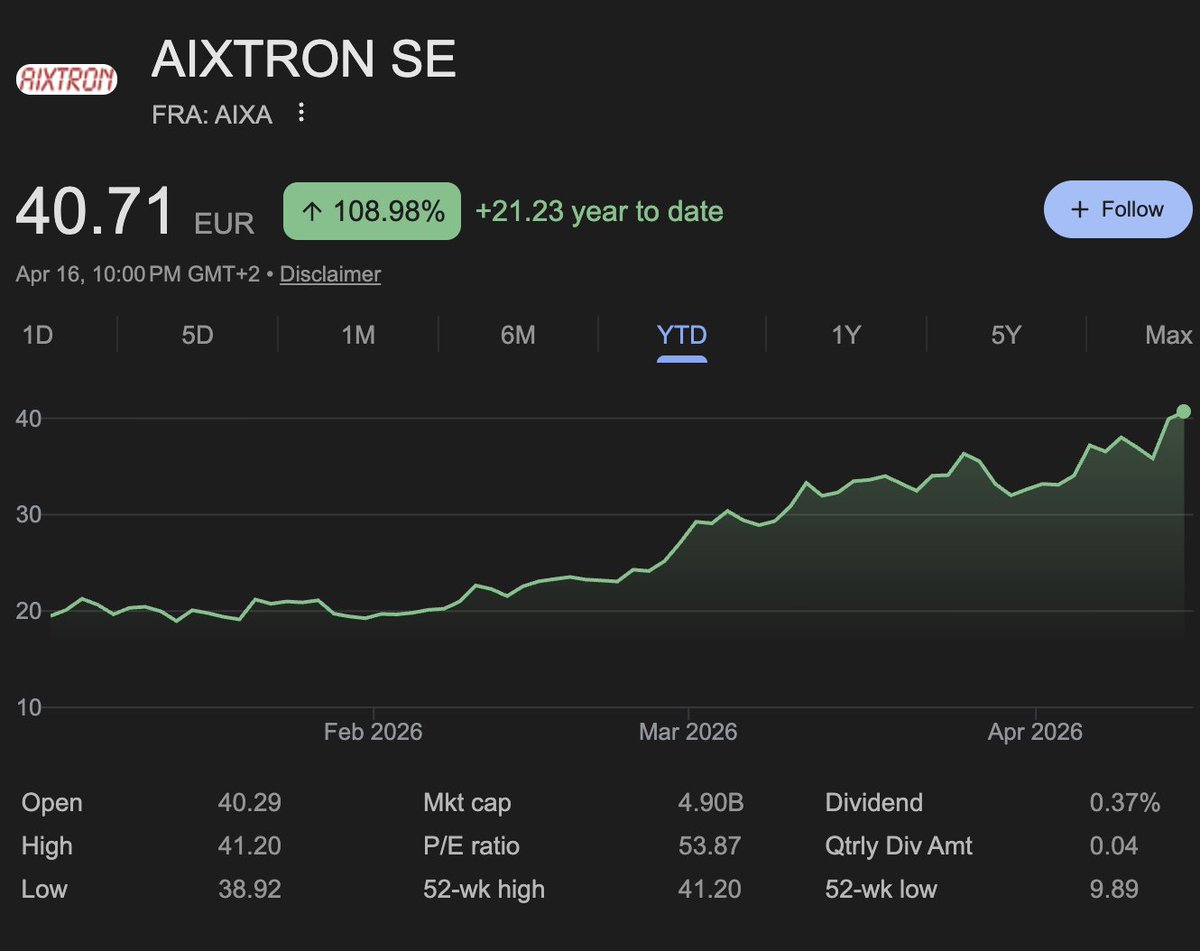
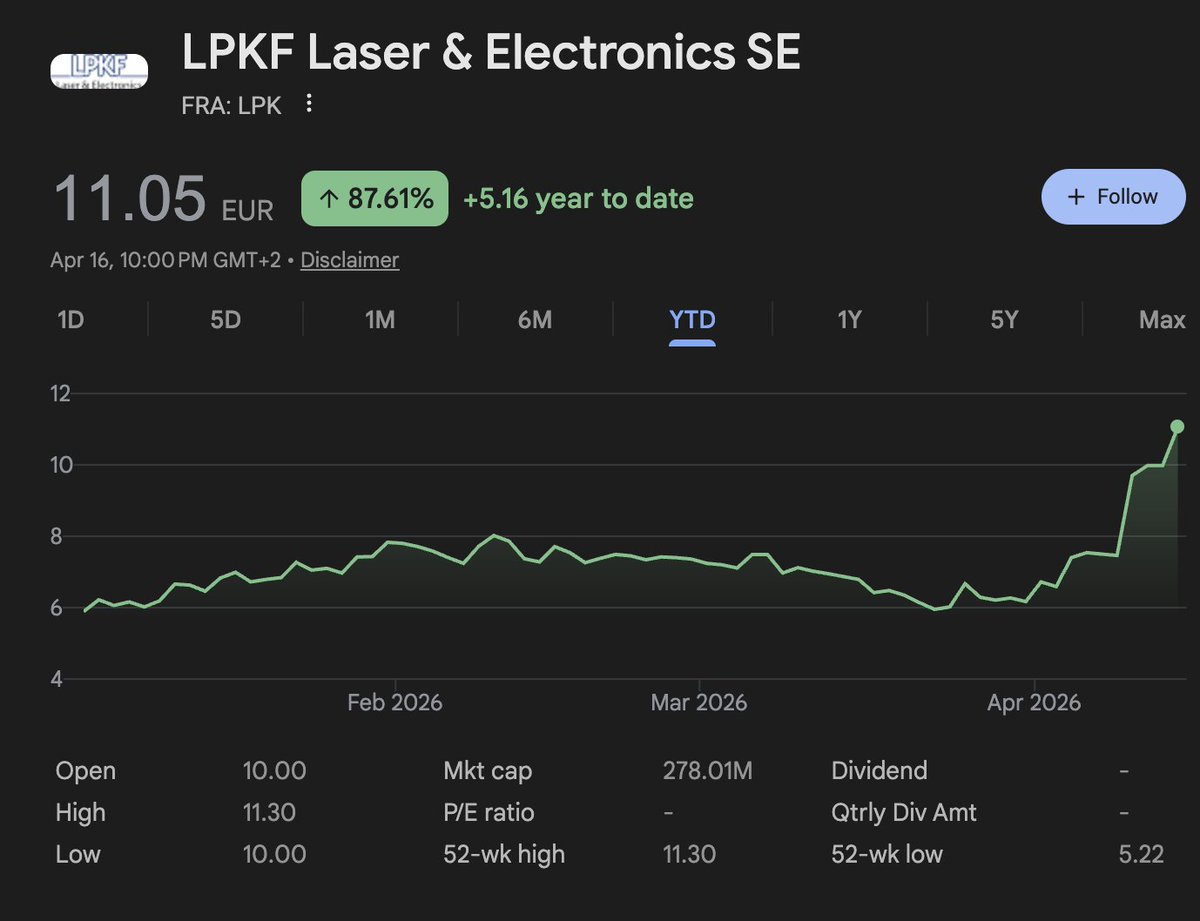


$BAMI.TO is a Special Sit. Complexity (RTO & M&A) hide its earnings power and overhang led to a sell-off of ~30%. BAMI trades <3x, while $FFH.TO values it at 6x / peers trade at 7x-9x. On April 14, BAMI will publish consolidated figures for the first time. Link in comments 👇
@aleabitoreddit Drop the unholy cpo and the 2 under 600 mc companies





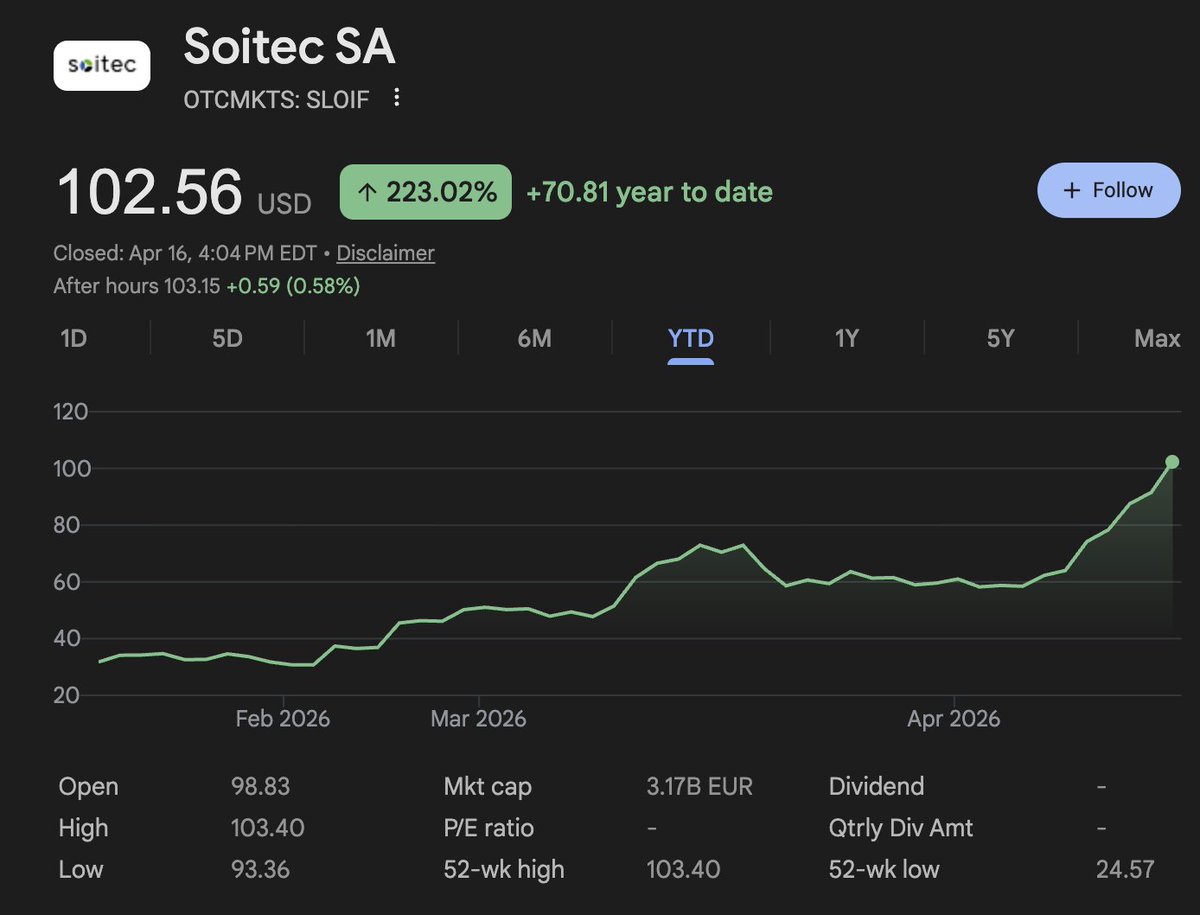
$SOI — Sharing the Short Case I’m Hearing, Help Me Stress-Test It Soitec’s stock has been marching to the beat of its own drum lately, and unfortunately, not in harmony with the rest of my photonics stock investment portfolio ($TSEM, $AAOI, $GLOFO, $AXTI, $LITE, $COHR, etc). After a few rounds of conversations with institutional fund contacts, I managed to stitch together the short case on $SOI that’s currently making the rounds. Most short theses I run into sound smart but don’t survive reality checks. This one felt more credible than most, though I’d love to pressure-test that view with others. Since X seems to be a main venue for $SOI and photonics discussion, I figured I’d start here. Curious to hear what the community thinks, especially where you agree, disagree, or see blind spots in the short case that seems to be pressuring the stock. $SOI Soitec short thesis: 1/ Smartphones: When Memory Gets Tight, RF SOI Gets Squeezed Historically, 60–80% of Soitec revenues have ridden on the smartphone train, while photonic SOI, the supposed future cavalry, still contributes only ~10–15% to revenues. Translation: when smartphones catch a cold, Soitec ends up on life support. The shorts are pointing to SemiAnalysis’s recent warning that “smartphone builds could fall as much as 50% YoY in 2027 due to memory shortages” (youtu.be/PLdT0lzf3Ks). OEMs locked in 2026 memory allocations back in 2025, but 2027 capacity remains frustratingly unsecured, forcing handset makers to trim builds and quietly push any real recovery further into the distance, likely 2028, maybe even 2029 (trendforce.com/news/2026/03/1…, eu.36kr.com/en/p/372552137…). Meanwhile, memory suppliers aren’t exactly offering reassurance. Hynix now suggests the shortage could stretch beyond 2030 (cnbc.com/amp/2026/03/20…). At that point, it stops looking like a temporary bottleneck and starts resembling a structural headache. No handset recovery means no RF SOI demand rebound, and that likely keeps mid-single-digit annual RF SOI price declines grinding away at margins, the slow, methodical erosion kind, not the dramatic cliff-drop kind. Even under generous assumptions, the math refuses to cooperate. Soitec is expected to be only marginally profitable in 2026, and even if smartphone volumes decline a milder 30% in 2027, offset by a heroic 50% photonics growth assumption, roughly 2x management’s own 20–30% guidance, the result still points to negative revenue, earnings, and profit growth. The shorts point to May 23rd earnings which could be the moment where reality meets expectations. A new management team eager to rebuild credibility may decide the fastest path forward is to reset mobile expectations downward, loudly, clearly, and all at once. 2/ Competition from Global Wafers confirmed, Soitec might not be a monopoly after all For years, the bull case quietly assumed Soitec had the SOI crown more or less locked down. The shorts, however, are now asking whether that crown was ever as secure as advertised. Enter GlobalWafers, one of the world’s heavyweight silicon wafer producers and a key supplier to TSMC, Tower, and GlobalFoundries, armed with a deep R&D wallet and, apparently, a willingness to go off-script. The company has terminated its Soitec license and plans to ramp 300mm photonic and RF SOI wafers from 2027 onward using its own IP. CEO Doris Hsu didn’t exactly whisper the message either. She stated last week that GlobalWafers can “make SOI wafers without Soitec IP” and is already moving through customer qualification (mins 1:09:09: finance.yahoo.com/quote/6488.TWO…). Adding fuel to the narrative, GlobalWafers has just completed a new U.S. SOI facility in Missouri, backed by government support (nist.gov/chips/globalwa…). In other words, this isn’t just a PowerPoint ambition, it’s bricks, mortar, and capex already sunk into the ground. If GlobalWafers successfully enters the market around 2027, after wrapping up customer qualifications this year, the implications stack quickly: pricing pressure, market share erosion, and royalty risk, arriving as a three-course meal, not separate appetizers. And perhaps the more uncomfortable question lurking beneath the surface: if GlobalWafers can walk away from licensing fees, what stops other Soitec licensees, like Shin-Etsu, from eventually asking the same question? Because once one player proves the exit door exists, others tend to check whether it’s unlocked. 3/ Silicon Photonics: Growth Story… With a Side of Inventory Hangover Silicon photonics is supposed to be the shiny new growth engine. The shorts, however, suspect the tank may already be half full, and not in a good way. According to their customer checks, Soitec may have spent the past year quietly pushing discounted photonic SOI wafers into the channel, arguably faster than customers actually needed them. The goal, they say, was simple: keep factory utilization looking healthy while waiting for the smartphone market to wake back up. That strategy works, until customers start sitting on more wafers than they can realistically use. If major SiPho customers like Tower Semiconductor (TSEM) and GlobalFoundries stocked up ahead of their own production ramps, the result could be an inventory glut now working its way through the system. And when inventory digestion replaces fresh orders, growth stories tend to lose a bit of their shine. This dynamic may also help explain a subtle but telling disconnect: Soitec management is guiding only 20–30% photonics SOI per year growth going forwards, even as the broader silicon photonics market is expanding north of 35% per year. In theory, a supplier tied to a booming end market should be keeping pace, or even outrunning it. When it isn’t, the natural question becomes: is demand slowing, or are customers simply working through stock they already bought? 4/ Better Yields, Worse News: When Customers Get Smarter, Suppliers Sell Less A classic semiconductor irony: when customers get better at their jobs, suppliers sometimes get paid less. Today, leading photonic SOI customers like Tower and STMicro are believed to be running at roughly ~50% yields on their SiPho chips manufactured on SOI wafers. In plain English, that means you need to make about two chips to sell one, with the other half quietly heading for the scrap pile. It’s inefficient, messy and, somewhat perversely, good for wafer demand. But that math doesn’t stay ugly forever. As silicon photonics processes mature, yields typically march toward the industry comfort zone of 80–90%. That’s great news for chipmakers, investors, and margins on the customer side. The catch? Higher yields mean fewer wafers needed per finished chip. So while customers celebrate fewer defects and better margins, Soitec faces the less festive reality that every incremental yield improvement quietly trims wafer demand at the margin. It’s the kind of headwind that doesn’t show up overnight, but compounds steadily as processes mature. Because in manufacturing, efficiency is wonderful, unless your business model depends on inefficiency. 5/ The CPO bull case may be running ahead of the physics Bulls are underwriting a huge SOI payoff from CPO (why I bought initially), but shorts think that thesis gets stress-tested at the 400G/lane jump around 2027. 200G/lane scale-out works on SiPho/SOI. At 400G/lane, modulators may need new substrates if SOI can’t keep up. Lab demos from vendors such as TSEM and COHR exist, but scaling to high-volume manufacturing is still TBD. Tellingly, Lumentum’s new 400G/lane production platform uses indium phosphide, not SiPho on SOI. TFLN gets floated as the fix, but substrate supply makes that feel more like a 2030s story. Meanwhile, VCSEL and EML alternative scale up CPO architectures (Broadcom, Coherent) don’t depend on SOI at all. At minimum, the CPO outlook for Soitec looks murkier than bulls suggest. 6/ Soitec still trades like it’s special, while its peers trade like they’ve seen reality Even at ~€51, Soitec sits at ~1.3x P/B, a noticeable premium to peers like Siltronic and Wolfspeed (normalized for asset write down due to recent bankruptcy) trading 0.5–0.9x P/B despite similarly weak profitability. Given the impending risk of mobile softness, potential SiPho digestion, a CPO story that may be less near-term than marketed, and rising competition from Global Wafers, Soitec’s premium valuation starts to look shaky. If Soitec were valued like its unprofitable peers of 0.5-0.8x P/B, the implied $SOI share price range lands around €25–€35/share, or roughly 30–50% downside.
I’m long $SIVE at $140M. I believe this is the next $LITE that markets and institutions missed. $SIVE makes InP CW DFB lasers. Closest comparison is $LITE in the current EML laser bottleneck. But instead of supplying to Innolight/Eoptolink for current optical transceivers cycles. They supply the lasers to $POET Starlight, Ayar SuperNova. And others for the future CPO/silicon photonics architectures spearheaded by $NVDA. Current valuations make 0 sense to me personally. $POET is advanced packaging for $SIVE type lasers… But $POET commands worth 11x+ more than the company making the laser itself? It’s feels like valuing a more advanced $FN (~$20B) packaging at $400B when $LITE is valued at $40B. So now at $130m: - - You have a likely mini $LITE like laser supplier to Marvell Celestial + hyperscalers through $POET. - Laser supplier to Ayar ( $NVDA, $INTC ), though they do multi source with $LITE, Sumitomo, $MTSI. And other potential up and coming suppliers potentially like Lightmatter that they’ve name dropped (eg. Q2 2023 earnings). This is unconfirmed but supply chain BOM is confidential. On top, for revenue, they expected $453M "pipeline next few years”. And, they have capacity expansion through WIN: “Win Semi foundry qualification in progress for volume production from Laser designs from Sivers." Sivers feels the silicon photonics/CPO version of $LITE, with actual rapidly growing customers like Celestial through $POET, Ayar, with more to come. I wouldn’t have liked it last year, but just 3 weeks ago, they refinanced all their debt successfully to $12M convertible loan (10.85%) and a $5M term loan (12%), which cleans up debt. It’s $17m total, which feels like nothing to US markets when $AAOI is doing a $500m ATMs every other week. Best of all, this is their pure play inp laser segment for silicon/photonics + cpo. Their Lidar segment is ramping up and they have $53-138M projected revenue coming in. Downside risk: - execution (as always) - dilution to scale up capacity to compete with $LITE and others. - $LITE, $COHR competition on scale after $NVDA just gave them $4B - CPO ramp gets delayed. I have no clue how, $LWLG, a pre-revenue science project with $TSEM, is valued at $1B+ MC. Or how $POET, is worth ~9-10x more than its laser supplier. When $SIVE, the mini $LITE equivalent for CPO/Silicon photonics, is valued at $140M. I do believe this is largely undiscovered by institutions, since this is some random company in OMX Nordic Exchange (similar to micro $AXTI before I started posting about the inp substrate bottleneck). But I do think it will get a lot of institutional attention as Celestial and Ayar scale up. Especially if $POET and $SIVE gets qualified with other customers. If CPO completely replaces pluggable transceivers in the next generation of hyperscaler architectures. Sivers, with possible WIN Semi qualifcation and if they become the multi-source lasers for NVIDIA, Marvell, Intel, and Broadcom architectures, can be strongly rerated. Just as how $LITE did today going from $16 -> $622. This is just my personal thesis I'm sharing, DYOR/NFI. TLDR: InP Lasers are the current bottleneck in photonics as seen with $LITE valuations. $SIVE looks like the mini $LITE for the upcoming CPO/Silicon Photonics ramp. I personally took long position in $SIVE, as I believe they’re a large beneficiary of the upcoming silicon photonic/CPO architectural changes by $NVDA (with GTC cataylst). The upside here just way too compelling for me personally as the next possible $LITE.

