
roflulz
2.9K posts




Scott Wiener, a 6'7" tall California state senator running to succeed Nancy Pelosi in the House, is out with a new ad called "The Giraffe" and, well, I just think you need to watch it for yourself...

Tom Steyer: I will abolish ICE! Also Tom Steyer: I invested $90 million in a company behind the state's largest immigration detention center.









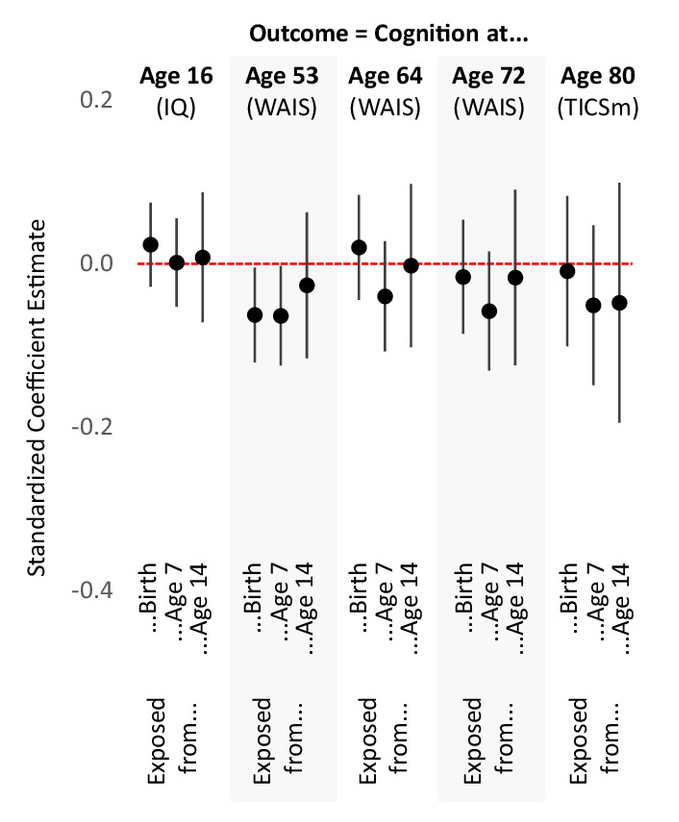
The National Toxicology Program released a report last year that claimed fluoride was massively reducing kids' IQs across the U.S. The report is not credible and needs to be retracted in the interest of public health. Those who worked on it should be sacked for incompetence. A new reanalysis of the NTP report provides a brilliant overview of its primary issues. Let's go over those before proceeding to further problems that render the report less than worthless. Firstly, the reanalysis notes that the studies included in the report are highly questionable. 21 of the 74 studies in the report's meta-analysis were published in the journal Fluoride. This journal is and has been staffed by editors who are public anti-fluoridation activists. Furthermore, it is unaffiliated with any professional groups or institutions, scientific publishers, or academic institutions. The studies in it are not indexed on MedLine, and they would typically be regarded as suspect because the journal lacks credibility-supporting oversight features. Consistent with the journal having issues, the meta-analytic effect of fluoride that the NTP estimated is reliant on the extremely strong effects published in Fluoride, whereas the publications cited from other journals are deliver a more mild conclusion. One could attempt to argue that Fluoride is more accurate than the rest of the literature due to it being an outlet that allows research suppressed elsewhere. But this is not a good argument for a few reasons. Firstly, the effect sizes published there are implausible. Secondly, we can see the studies and we know they're nonsensical for other reasons that I'll get to shortly. The next thing the reanalysis noted was that the cited studies were typically unsophisticated and causally uninformative: "Many of the included studies are no more detailed than the following: Area A has low fluoride water levels, Area B has high fluoride water levels, and Area A has a higher mean IQ." But Area A might have a higher mean IQ for many reasons, not just due to differences in fluoridation. For example, an area with higher fluoride levels might have those levels because its ability to remove fluoride is limited because it's poor. A poor place might have inadequate childhood nutrition, rampant disease, or exposures to other toxicants and those could be driving the result instead of or in addition to fluoride. Studies typically do not make an effort to account for this sort of confounding, and when they do, the effort is uniformly poor, leaving considerable room for residual confounding and rendering all of these studies more limited in their usefulness than the causal studies out there in the literature. It's worth noting here that the NTP did not cite the two causally-informative studies on fluoride effects on IQ; the authors evidently preferred causally uninformative work. Because these studies were causally uninformative, they do not actually speak to anything policy-relevant. The NTP report tells us about group differences between places with more or less fluoride, not about the effects of fluoride if ingested. Unfortunately, the NTP report also includes dubious measures of fluoride levels. When I noted that its meta-analysis had extremely low statistical power (which now seems like a trivial error compared to what's to come) back in January, I also noted that many of the studies used urinary fluoride measures. These are not reliable: x.com/cremieuxrecuei… Simply looking at actual water levels of fluoride, these are positively correlated with IQ across U.S. counties, although this too is not causally-informative: x.com/cremieuxrecuei… The NTP's report also includes a major problem of comparison. Because they used standardized mean differences (think Cohen's d, Hedge's g, Glass' delta, etc.), the estimates from different studies are simply wrong. The estimates are not comparable to one another, so standardizing and then comparing standardized coefficients makes no sense, because the scales are not the same. In fact, the definitions within studies of exposed groups, and the fluoride levels of exposed groups across studies, were arbitrary, so the effect size for the comparison is also arbitrary because there is no actual baseline to speak of from which to do a meta-analysis. To get an idea of what I mean, consider the fluoride levels for the "low" and "high" exposure groups in two of the cited studies, Zhao et al. and Zhang et al. In Zhao et al., the "low" exposure group has a fluoride exposure level of 0.91 mg/L, versus 0.58 mg/L in the Zhang et al. study. For their "high" exposure groups, the fluoride exposure levels are 4.12 mg/L and 0.8 mg/L, respectively. In Zhang et al. the "high" group is exposed less than Zhao et al.'s "low" group! This arbitrary division of groups and resulting arbitrariness of effect sizes was, unfortunately, a common issue throughout the meta-analysis: In addition, the NTP report exacerbated this issue by misusing the data from various studies. For example, they engaged in range enhancement by comparing only the highest and lowest exposure groups in studies, inflating their effect sizes as much as possible. This exaggerates the relationships with any other variable and makes their estimates less precise by limiting their sample size. With all of this under their belt, all a standardized mean difference in this context can do is "capture... the variability of the underlying data with no reference to the actual levels." This cannot, on its face, inform about the effects of any particular level of fluoridation! The arbitrariness of group identities in the NTP report was really something to behold. Sometimes groups were defined by author-selected thresholds that have no biological significance, like defining "low" as those exposed below 1.5mg/L and "high" as those exposed above. This is a guideline level provided by various groups like the WHO and some national health agencies, but it is not biologically-significant, and using it as a dividing line can lead to exaggerated or reduced mean differences in a few ways, including through creating redaction bias. In the NTP report, there's no need to wonder: methods tended to exaggerate differences. The use of arbitrary cut-offs also made it impossible for the report's dose-response analysis to make any sense. A dose-response analysis requires comparable baselines to produce estimates with respect to some range, but because our baselines are all over the place, this becomes impossible without a substantially different model. But even if the NTP report had used an appropriate model for their data and handled everything in a standard way, it would've been in error, because it cited numerous studies with impossible statistics. In some cases (like with the citation of Green et al., as I've noted here: x.com/cremieuxrecuei…), they even classified atrocious studies as having a "low risk-of-bias". In the cited study by Xu et al., there are reporting discrepancies amid implausible values. In a cited study by Zhang et al., the values for the standard deviation are literally impossible to be what they reported, and therefore the work must be disregarded. The study by Khan et al. produced an unlikely p-value for the mean difference of 0.0000000000000000000000000000000000027, which is something like your odds of spontaneously teleporting to the sun, and the reported effect size is not believable as it suggests IQs should drop 5.4 points per additional part per million fluoride, or multiple times worse than a brain injury. The study by Razdan et al. also produced an unlikely p-value (0.0000000000000000000000000000000000043) and suggested that each ppm of fluoride should drop IQs by 5.8 points. This cannot be believed or we would have much greater problems on our hands. I don't think I need to go on, but I will, briefly. As noted, the cited studies were rubbish, and they cannot inform us anyway. But the whole literature is not like this. This study from Sweden (x.com/cremieuxrecuei…) and this study from the U.S. (x.com/cremieuxrecuei…) are able to inform us, but they do not produce alarming results. Because of the consistency of the issues in the NTP report, I suspect that the reason the less alarming, but more reliable results were not cited is that they wanted to be alarmist. How else do you explain things like missing most of the literature that uses the methods they used? Did they just give up on being comprehensive? Or how can anyone explain why they described errant results as being at a "low risk-of-bias"? How could they have eschewed correct modeling--which was an available possibility, albeit not with the data they chose to use--in favor of what they did if they were competent enough to write a report that's supposed to have been authoritative? It does not matter what the reason really is. The plain fact is that this report must be retracted immediately, because it will cause health authorities to mistakenly believe the things it says. In fact, it already has. A few hours ago, the White House cited it in an official communication: whitehouse.gov/articles/2025/… What else is cited there is also very bad and should not have been cited for the purpose of attacking fluoride. Going down the White House's list of "facts": 1. There is no reason to care about the claim that fluoride is the only chemical added to drinking water that does not treat the water. 2a. That many European nations do not fluoride their water has no bearing on whether fluoridation is good. Other countries make mistakes all the time. We know, from other countries, that fluoridation can be good for dental health when introduced (cochranelibrary.com/cdsr/doi/10.10…), and we know that Israel banning community water fluoridation was associated with a large (~2x) increase in dental visits (ijhpr.biomedcentral.com/articles/10.11…). 2b. The citation for the claim that not doing fluoridation has "no discernible detriment on their [referring to European countries'] dental health" is an example of taking a cross-sectional estimate and assuming it represents something causal. The quantity in question is endogenous, and the conclusion is not one based on causally-informative work. In many European countries, we have excellent causally-informative data showing that the introduction helps with dental health, and the removal is harmful for it. The fact that cross-country comparisons cannot be done hastily, as the White House has done, should not be lost on anyone. 3. This claim is bafflingly worded and I do not believe the person who wrote it thinks this is how evidence works. Agencies do not "concede" to facts except about things like CIA involvement in black sites and torture facilities. The people staffing them make statements. These statements can be right or wrong. For example, during COVID, many statements from the CDC about vaccines were, I take it, considered wrong by the authors of this statement. Was that not a concession of scientific fact at the time? The treatment here is the sort that someone only makes about the things they dislike. You (bad) "concede"; I (good) "state". Who, whom? 4. The citation for this statement is the demonstrably non-credible NTP report. 5. The citations here all go to non-causally-informative works looking at correlations between often poorly-measured fluoride levels and various outcomes in the NHANES. This is worthless, but let's give them an overly fair shake. 5a. The study on sex hormones in boys and fluoride exposure is clearly confounded, as the contrast between Fig. 2 and Fig. 3 illustrates, and several of the results are clearly improperly-specified, as panels like Fig. 2D show. The supposedly harmful levels for estradiol and testosterone levels are outside of the normal range of exposure for almost everyone. This is not even relevant material! 5b. The inflammation study produces a handful of significant associations between plasma fluoride levels and some blood markers, including p = 0.014 for WBC, 0.028 for neutrophils, and 0.009 for monocytes. The primary significant results are therefore likely to be p-hacked, and all of them would be nonsignificant after correcting for multiple comparisons. Since the data is public, we know these results are not replicable across waves, so they are probably chance findings. More interestingly, the plasma fluoride measure is not a reliable indicator of water fluoride levels, as it is correlated, but not very much! This study is also not really relevant, since they used plasma fluoride rather than water fluoride, which is the thing being debated. 5c. There is no result here despite looking at many biomarkers. The only thing that is statistically significant here is that blood urea nitrogen is negatively related to fluoride levels. Why? Not robustly -- it's entirely due to outliers at levels almost no one is exposed to. But this... isn't bad! It's high BUN that you need to look out for. But anyway, the result doesn't hold up in other waves, consistent with it being due to those handfuls of outliers. 5d. The study mislabeled results and had some off values, but whatever, let's ignore that. The only results that survived correction for multiple comparisons were that 1. Fluoride was related to sleep apnea at least once per week (p = 0.02) 2. Fluoride was related to lower odds of snoring at least once per week (p = 0.03) 3. Fluoride was related to an earlier wake time (p = 0.04) This is p-hacked and unconvincing, with poorly-measured outcomes and it doesn't replicate in other waves. The attempt to look for sex-specific effects was laughable, because to get evidence for them, the authors had to forget to correct for multiple comparisons. Furthermore, the coefficients were misreported in their tables and their text, because otherwise, the post-interacted effects would not be identical to the non-interacted ones. To summarize: The attack on fluoridation is not scientifically sound. The support for removing fluoridation is not built on empirically meritorious work. Instead, it's based on what is, frankly, crap, and the empirical work that's good instead speaks to fluoridation being beneficial. This whole attempt to argue on scientific grounds is tiring. It doesn't need to happen! You do not need to support things because quality scientific work shows they're good, you can be against them because they're immoral, to you, to most, or anything else! You can actually just feel grossed out by fluoride and want to ban it for that reason. Feel free to! To argue against fluoride do not try to make your case scientific, because you will lose. Try to make the case that led to Sweden's ban, instead: make the case for at least restricting maximum levels (to what? Just go with something low, since that's safe), and that it is not OK to medicate people against their will. Or really, just do anything else, because the scientific evidence against fluoridation is and has always been rank nonsense. And in the interest of public health, the NTP's report must be retracted, because it is simply not credible and it will mislead the public into thinking fluoride is worse than it is. Reanalysis source: osf.io/preprints/osf/…




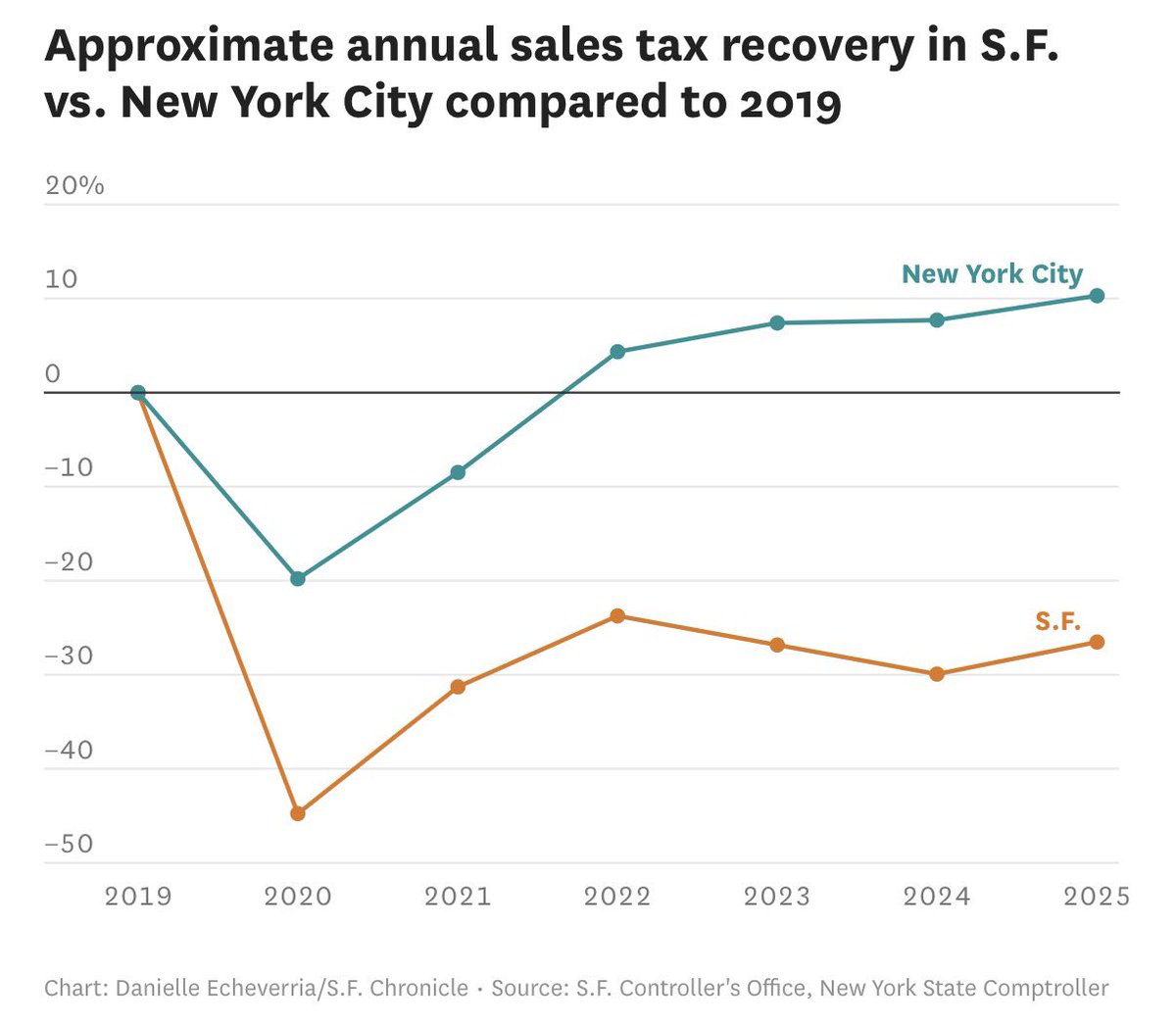

Not to jinx it but sf could actually become a major cultural hub. There’s a bubbling scene of folks who actually care about cultural production. If the spirit of execution that exists in the tech world gets channeled in the right way it could be really exciting.



Instead of a dying service that needs constant bailouts because it lets junkies and creeps ride for free, BART should install fare gates everywhere and be a thriving public transit system that working class people can use to get around without a car.

"I FEEL LIKE SHE'S DELUSIONAL" Daughter and son-in-law of Grandpa Vicha criticize San Francisco Judge Linda Colfax's decision to release the man who fatally assaulted the 84-year-old in 2021 on probation.


