
Mitopapi 🧬🕊️

6.9K posts

Mitopapi 🧬🕊️ banner
Mitopapi 🧬🕊️

Mitopapi 🧬🕊️

@Mitopapi

God First☦️ | All Things Health Optimization, Chronic Illness Help & Sovereign Enlightenment | DM to work 1:1

Live Long, Die Fast → Se unió Mart 2024
484 Siguiendo12.5K Seguidores
Tweet fijado
Mitopapi 🧬🕊️
Mitopapi 🧬🕊️@Mitopapi·
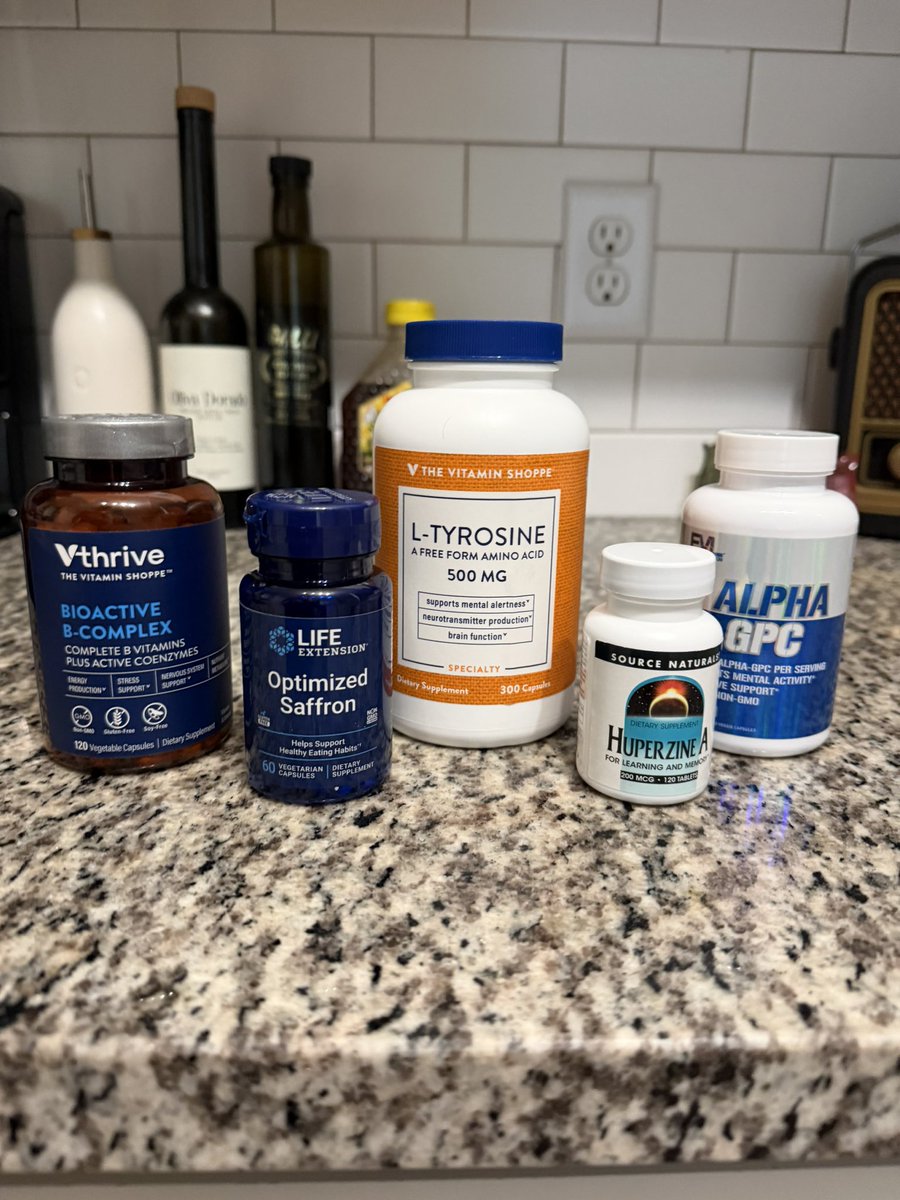
People with slow COMT are told they have "high dopamine" and should feel sharp, focused, and motivated. So why do so many of them feel the exact opposite? The answer has everything to do with WHERE your dopamine is elevated and what happens to it under stress. If you've run a genetic panel and seen that you carry the Met/Met variant of the COMT gene, you've probably read that this means you break down dopamine more slowly, which leads to higher dopamine levels in the brain. And on paper, that sounds like it should protect you from attention and focus issues. More dopamine, better executive function, right? For a lot of people, their lived experience tells a completely different story. They're dealing with brain fog, an inability to start tasks, scattered attention, emotional overwhelm, and what feels like textbook ADHD. And the confusion sets in because everything they've read about their genetics says they should have PLENTY of dopamine to go around. Here's where it gets interesting though... COMT is responsible for breaking down roughly 60% of dopamine in your prefrontal cortex (the part of your brain that handles working memory, focus, and executive function) (PFC). But in the striatum (the region that drives reward processing, motivation, and task initiation), COMT handles less than 15% of dopamine clearance. The striatum relies on an entirely different system called the dopamine transporter (DAT) to do that job. Think of it like a building with multiple floors, where each floor has its own thermostat controlled by a different system. COMT is the thermostat on the top floor (your prefrontal cortex). Slow COMT means that floor runs warm. But the other floors (your striatum and reward centers) have their own thermostats, and COMT has almost no say in how those are regulated. Having a warm top floor tells you absolutely nothing about whether the rest of the building is freezing. This is the first major reason why slow COMT and ADHD symptoms can absolutely coexist. The circuits most directly tied to the motivation problems, task initiation failures, and reward insensitivity that characterize ADHD are largely outside of COMT's jurisdiction. But there's another layer to this. Dopamine in the brain operates in two modes. There's tonic dopamine, which is your baseline ambient level that's always humming in the background. And there's phasic dopamine, which comes in quick, sharp bursts whenever something important happens (a reward, a salient stimulus, a moment where your brain needs to lock in and pay attention). These two modes have an inverse relationship. When tonic dopamine is high, it activates feedback receptors that dampen the amplitude of those phasic bursts. Think of it like trying to hear someone clap in a room where the background music is already loud. The clap still happens, but it doesn't cut through the noise the way it would in a quiet room. Slow COMT raises tonic dopamine in the PFC. That part is accurate. But by raising that baseline, it can reduce the contrast of the phasic signals your brain uses to flag what's important, drive learning, and motivate action. So "more dopamine" at baseline can paradoxically translate into LESS effective dopamine signaling when it actually counts. PET imaging studies in people with ADHD have found a very specific pattern: attenuated tonic dopamine release at rest combined with enhanced phasic release during tasks. This tonic/phasic imbalance in fronto-striatal circuits is one of the leading models for how ADHD actually works at the neurochemical level. And slow COMT, by raising tonic levels in the PFC, can contribute to a version of that same signal-to-noise problem from a different angle. Now layer stress on top of all of this. There's a well-established relationship between prefrontal dopamine and cognitive performance that follows an inverted U shape. Too little dopamine and your PFC underperforms. Too much and it gets overwhelmed. There's an optimal zone in the middle where everything clicks. A meta-analysis of 75 published studies confirmed this curve, showing that it explains a significant portion of the variance in working memory performance. For people with slow COMT, baseline PFC dopamine is already sitting closer to the peak of that curve under calm conditions. This means there is very little room before stress, cognitive load, or even mild social pressure pushes them PAST optimal and into territory where executive function starts falling apart. Think of it like a dimmer switch on a light that's already near the top of its range. Any additional input doesn't make it brighter in a useful way. It becomes blinding. A study by Zareyan et al. tested this directly. In a within-subject crossover design, 140 healthy adults carrying at least one Met allele or homozygous for Val/Val each completed executive function tasks in two separate sessions (one under calm conditions and one under mild social evaluative stress), with order counterbalanced across participants. Met carriers performed significantly worse under stress compared to when they were calm. Val/Val individuals showed the opposite pattern and actually performed BETTER under that same mild pressure. This was the first empirical confirmation of the double dissociation that researchers had predicted for years. It's worth noting that two prior studies (Buckert et al., 2012 and Qin et al., 2012) successfully showed that stress impaired Met carriers, but in both cases Val/Val individuals were essentially unaffected by stress, not improved by it. The full double dissociation (Mets worse AND Vals better) was only achieved in Zareyan et al. by using a much milder stressor. The bandwidth for stress to actually boost Val/Val performance is exceedingly narrow. What this means in practical terms is that even everyday stressors (a deadline, someone watching you work, a conversation where you feel evaluated) can crash prefrontal function in people with slow COMT. And when that crash happens, it looks EXACTLY like ADHD from the outside: task avoidance, inability to initiate, scattered attention, emotional dysregulation, etc. The behavioral output is essentially the same, even though the mechanism driving it is different. Research also shows that Met carriers are more environmentally sensitive across the board. A longitudinal study tracking children over time found that COMT Met genotype and early-life family adversity interactively predicted ADHD symptom trajectories, with Met carriers showing steeper increases in symptoms under high-adversity conditions. A separate study found the same interaction with socioeconomic status. This pattern is consistent with what researchers call "differential susceptibility," meaning slow COMT makes you more responsive to your environment in both directions. You benefit more from enriching, low-stress conditions. You're harmed more by adverse ones. So if you have slow COMT and you're experiencing symptoms that feel like ADHD, here's the practical picture. Your PFC may perform well under low-demand, self-paced, calm conditions but buckle under any significant stress or cognitive load. Reducing chronic stress is a neurochemical necessity for you, because even mild persistent pressure degrades your prefrontal function in a way it doesn't for people with fast COMT. Sleep and circadian regulation matter more than you might realize here, because dopamine tone volatility amplifies the PFC function collapses that slow COMT predisposes you to. If you're stimulant maxxxing, it's also worth understanding that Met/Met individuals may be more sensitive to being pushed past optimal PFC dopamine, which can show up as increased anxiety, cognitive rigidity, or paradoxically worse attention at doses that work fine for someone with fast COMT. This argues for careful, gradual titration rather than one-size-fits-all dosing. And if you carry both slow COMT AND a high genetic burden for ADHD (which is entirely possible since they operate through independent pathways), you're dealing with a layered situation. The ADHD component drives baseline fronto-striatal dysfunction, and the slow COMT component adds prefrontal cortex stress sensitivity on top of that. Understanding which piece is contributing what is valuable, because the strategies for managing each are different. The bottom line is this: "slow COMT = high dopamine = no focus problems" is a massive oversimplification that collapses the second you understand how regionally specific COMT's influence is, how tonic and phasic dopamine interact, and how dramatically stress changes the equation for Met carriers. Your COMT status is one piece of a much bigger and more nuanced puzzle. This is for educational purposes only, not medical advice.

Mitopapi 🧬🕊️ tweet media
English
1
2
13
2.4K
Mitopapi 🧬🕊️ retuiteado
@simpleorganix
@simpleorganix@simpleorganix·
People don’t like to hear that their emotional garbage is making them physically sick. They want a pill & easy fix. You didn’t just come here to pay taxes & die… You came to learn & fix patterns that have generationally stopped your blood line from being its best version. We miss this part.
English
3
9
91
2.9K
Milk 𖤓
Milk 𖤓@TheRawSol·
I love Florida 🤍
Milk 𖤓 tweet mediaMilk 𖤓 tweet mediaMilk 𖤓 tweet mediaMilk 𖤓 tweet media
English
4
3
89
2.4K
Mitopapi 🧬🕊️
@AppWoodHome 🙏🙏 I did: - 4-6 breathing - box breathing - 4-7-8 breathing - vortex breath - buteyko breathing - diaphragmatic breathing & a few other types that don’t come to mind currently
English
0
0
1
77
Alison | AlisonBob.eth
Alison | AlisonBob.eth@AlisonbobEth·
@Mitopapi Yes you are exactly right. We are systems of nested systems, within other systems. Trying to find a discrete thing/object to something that is part of processes, can work sometimes, but generally not for complex conditions and diseases. Same problem with cancer and long covid.
English
2
0
1
36
AntiDoc
AntiDoc@AntiDoc·
Any saffron enjoyers?
AntiDoc tweet media
English
33
2
147
20.9K
Mitopapi 🧬🕊️ retuiteado
Ryan Mitchel Brown 🥩🔥☀️
@Mitopapi and I started a private skool community, Holistic Dynasty, for this EXACT reason. Not to “heal you,” but empower you with the tools necessary TO HEAL YOURSELF We host weekly Q&As answering any and all of your questions. Bring your labs, we’ll look at them, need clarification on a protocol? We’ll give you the sauce On top of that we have HUNDREDS of resources from nervous system practices to how to read your blood work We believe you don’t help a person by helping a symptom, you help a person by meeting them AS A PERSON first ✅ If this sounds like the resources you need, consider joining here: skool.com/holisticdynast…
English
0
3
8
298
Mitopapi 🧬🕊️ retuiteado
Ryan Mitchel Brown 🥩🔥☀️
Life was hard enough already ⤵️ Then you got sick. And the hardest part? You did everything right You went to every appointment. You got the bloods done. You tried the supplements, the diets, the specialists. You came prepared with a list and left with nothing that actually helped That’s not a you problem. That’s a model problem 🧑‍⚕️ Conventional medicine is brilliant at emergencies (as long as your insurance covers the hospital you seek care in). It is not built for you. It’s built on reductionism: find the broken part, fix the broken part. But your body doesn’t work in parts. It works in systems. And when those systems are dysregulated, no single test, no single diagnosis, no single supplement will ever be enough 💊 Functional medicine gets closer. But even there, most practitioners are still chasing markers. Optimise this hormone. ✅Fix this pathway. ✅Address this deficiency. ❌It’s reductionism with different labs. What actually changes things is asking a different question entirely Not what is broken. But why is the system behaving this way ✅ Comment “HELP” and I’ll send you my free article detailing where I’d begin if I went through this again, without wasting time or money Your fatigue, your gut, your nervous system dysregulation, your immune reactivity, these aren’t separate problems. They’re one system under stress, expressing itself in multiple places at once. Treat them separately and you’ll manage symptoms forever. Understand the terrain and you start to actually recover Here’s where to start: 1. Stop asking what you have. Start asking what your body is responding to 2. Look at your nervous system first. Everything else: gut motility, immune regulation, hormone balance, is downstream of safety signals 3. Get a full picture, not a snapshot. Single markers mean nothing without context. Patterns across systems tell the real story 4. Ask your practitioner: are we managing this, or are we looking for the reason it started? That last question alone will tell you everything about whether you’re in the right room.
Ryan Mitchel Brown 🥩🔥☀️ tweet media
English
1
1
5
427
Ross 🧬🔬
Ross 🧬🔬@GutOptimized·
This tongue doesn't have coating thick enough to assume candida. What's more, a thick coating on the tongue isn't specific to candida. Could be due bacterial dysbiosis or immune activation. Chronic immune activation most underrated reason for coating on tongue.
Ross 🧬🔬 tweet media
hoeflator/滥交师傅 (Yishun Kampung mode)@hoeflatoor

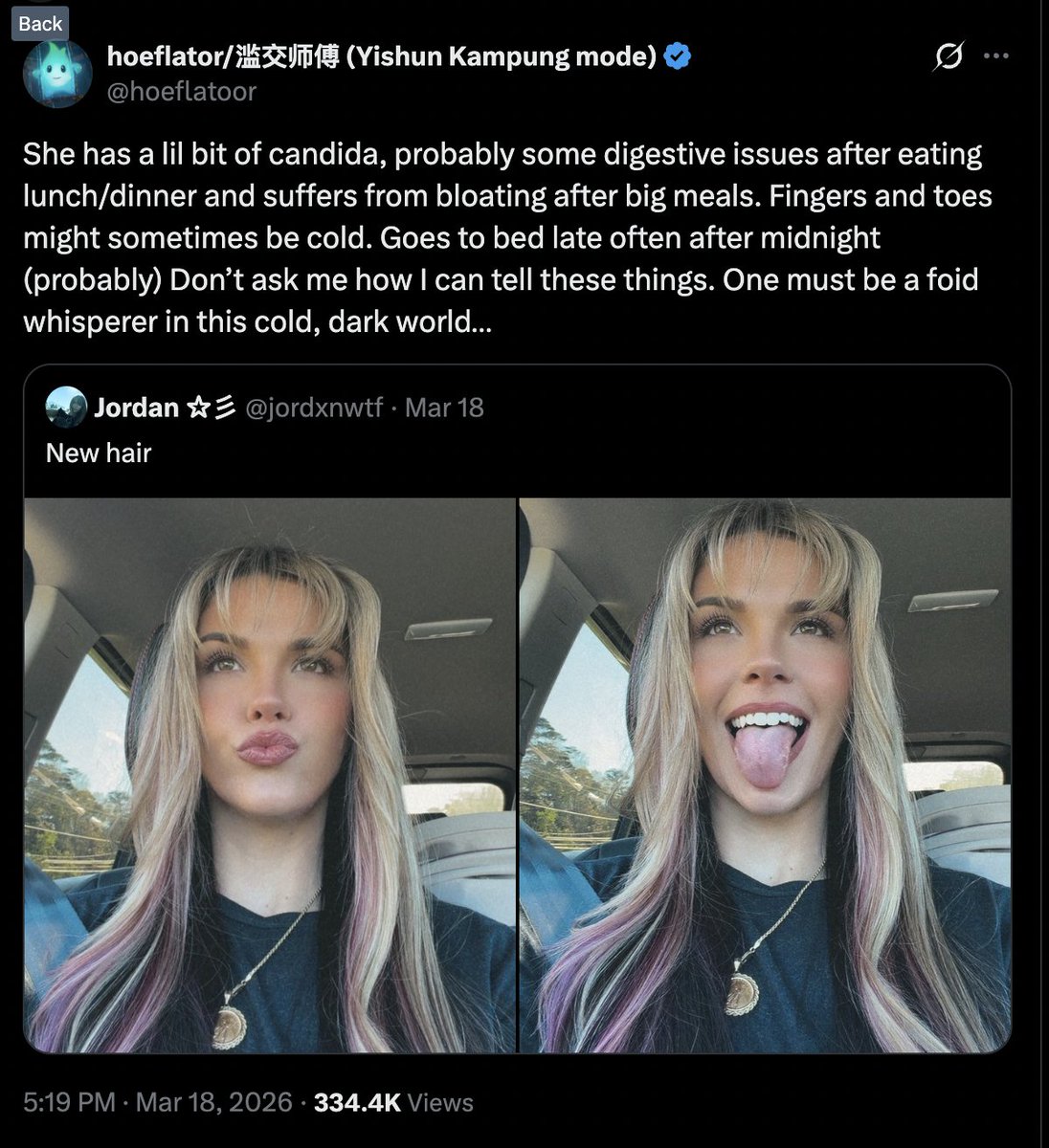
She has a lil bit of candida, probably some digestive issues after eating lunch/dinner and suffers from bloating after big meals. Fingers and toes might sometimes be cold. Goes to bed late often after midnight (probably) Don’t ask me how I can tell these things. One must be a foid whisperer in this cold, dark world…

English
8
1
114
16.7K
Mitopapi 🧬🕊️ retuiteado
Ryan Mitchel Brown 🥩🔥☀️
Ryan Mitchel Brown 🥩🔥☀️@Seasonal_Ryan·
The MCAS/Histamine conversation is foundationally flawed in most circles and I need to talk about it Everyone and their mother is looking for "the trigger" A singular input to blame... Gluten? Mold? Genetics? The fix? The new protocol?That new supplement? And yeah, triggers are real. But if your mast cells are firing constantly at everything, the trigger is no longer the problem - and i see too many chasing their own tails FOCUS ON THE TERRAIN (THREAD🧵) Here's what that actually means from a systems phyisiology point of view:
Ryan Mitchel Brown 🥩🔥☀️ tweet media
English
13
5
15
1.3K
Mitopapi 🧬🕊️
Mitopapi 🧬🕊️@Mitopapi·
The fact is that we are far removed from our own real self, and we have little desire to confront that self, choosing aimless trifles over the truth. Then we try to convince ourselves that we’d be more than glad to live the spiritual life and take up praying, but there’s never enough time for it, because all the cares and worries of our lives take up all our time. And yet, what is more important: the redemptive eternal life of the soul, or the short-lived life of the body, which we spend so much time attending to? - The Way of the Pilgrim (Fourth Narrative)
English
0
0
4
355
Mitopapi 🧬🕊️ retuiteado
Ryan Mitchel Brown 🥩🔥☀️
Ryan Mitchel Brown 🥩🔥☀️@Seasonal_Ryan·
The biggest challenge most people with a chronic illness face is making the decision to NOT continue spinning their wheels with endless allopathic doctors visits The definition of insanity is doing the same thing over and over again expecting a different result Maybe the problem isn’t finding the right doctor, but finding the right out of the box thinking that isn’t constrained by a isolated system’s point of view of human physiology Just saying
English
4
6
40
3.7K
Mitopapi 🧬🕊️ retuiteado
Ryan Mitchel Brown 🥩🔥☀️
Ryan Mitchel Brown 🥩🔥☀️@Seasonal_Ryan·
If the chronic disease crisis could be solved by JUST OWNING one more “wearable” device We’d all be healed Instead the more smart tech people accumulate - the sicker we all seem to become We don’t need more metrics, we need more connection to our body and the world around us
English
4
10
33
1.4K
Liz Marie
Liz Marie@thehealthyaunt·
@Mitopapi The Th17 angle is so underappreciated here. Most people hear 'reduce stress' and tune it out, but when you see the four parallel defense systems being degraded from one upstream source, the urgency of it becomes hard to ignore.
English
1
0
1
38
Mitopapi 🧬🕊️
Mitopapi 🧬🕊️@Mitopapi·
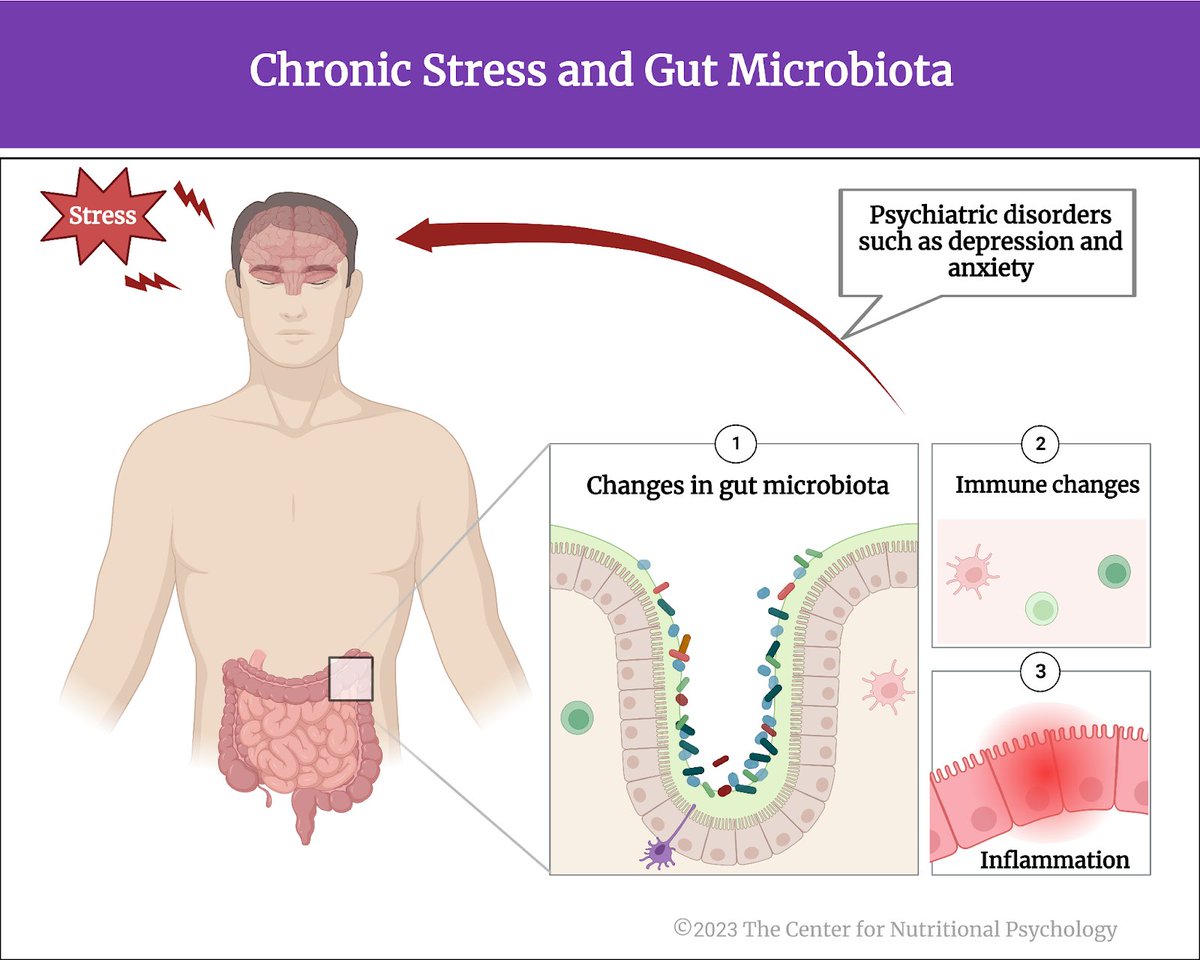
If you've been dealing with chronic Candida issues and you're under constant stress, there is a strong physiological basis for why your body may struggle to get ahead of it. Chronic HPA axis dysregulation (your body's central stress response system) can weaken your antifungal defenses through several parallel mechanisms at the same time. This is an underappreciated contributor to Candida permissiveness, and it influences many of the defense systems your body uses to keep this organism in check. The first hit is to your mucosal antibody production. Chronic psychological stress is associated with reduced secretory IgA (sIgA) over time, the antibody that coats your mucosal surfaces and helps limit microbes like Candida from adhering to your gut lining in the first place. Think of sIgA as a chemical coating on the walls that makes it harder for Candida to get a grip and start building colonies. Chronic stress gradually thins that coating. The second hit is to your gut barrier. Stress signaling, including CRH (corticotropin-releasing hormone), has been shown in human studies to disrupt epithelial tight junctions and increase intestinal permeability. When that barrier breaks down, microbial products (including Candida-derived toxins) can cross into systemic circulation and trigger inflammation that damages the barrier even further. That becomes its own inflammatory feedback loop. The third hit is to your immune polarization. Chronic glucocorticoid exposure tends to suppress Th1 and Th17‑type immune responses and can shift the balance away from the cell‑mediated programs that are most effective against fungi. Th1 and especially Th17 responses are among the most critical adaptive immune programs for controlling Candida at mucosal surfaces. Th17 in particular coordinates neutrophil recruitment and epithelial antimicrobial peptide production and contributes to maintaining and repairing mucosal barriers. Shifting away from Th17 is like pulling the plug on a central control hub of your mucosal antifungal defense. The fourth hit is to your mucosal immune function more broadly. Glucocorticoids reduce pro‑inflammatory cytokine production at mucosal surfaces, can impair neutrophil trafficking and function at sites of infection, and suppress macrophage activation. Your immune cells are still physically there, but their ability to respond effectively is blunted. Four key systems can be degraded from a single upstream source. Your mucosal antibodies, your gut barrier, your immune polarization, and your local immune cell function. This is why "reduce your stress" is such important advice for someone dealing with chronic Candida, even though it sounds frustratingly vague. The physiology behind it is anything but vague. Chronic stress is systematically dismantling your antifungal defense grid from the top down. Optimizing the balance of your autonomic nervous system remains one of the most CRUCIAL aspects of healing throughout so many different contexts.
Mitopapi 🧬🕊️ tweet media
English
3
6
53
2.1K
Mitopapi 🧬🕊️
Mitopapi 🧬🕊️@Mitopapi·
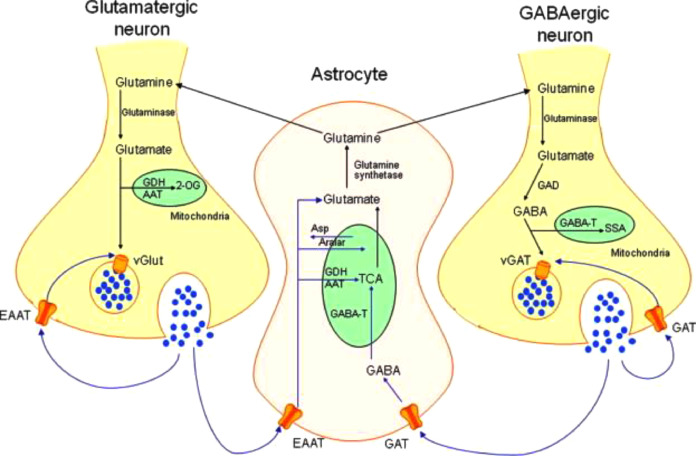
If you're anxious, your brain won't shut off at night, your muscles are constantly tight, and you feel wired but exhausted at the same time, there's a neurotransmitter imbalance driving a huge chunk of this. And modern life is making it worse every single day... Your brain depends on a balance between two major signals. Glutamate is your primary excitatory signal. It fires neurons and drives alertness. GABA is your primary inhibitory signal. It calms neural activity and helps you sleep. These two work like a seesaw. Glutamate pushes you into action, GABA pulls you back into rest. When glutamate dominates over GABA in key brain regions, your nervous system gets stuck in overdrive. Neurons are firing too much, too often, without the brake to bring them back down. For a lot of people, that's the anxiety, the racing thoughts, the insomnia, the muscle tension, and that wired-but-tired feeling where your body is exhausted but your brain won't let you rest. Now here's why modern life is stacking the deck against you. Chronic stress pushes your glutamate system into overdrive and wears down the support cells that usually help clear the excess, so your brain stays stuck in "on" mode. When your microbiome is off, you can lose some of the gut bacteria that naturally produce GABA from glutamate. Your sleep rhythm is supposed to shift your brain toward more GABA-driven calm at night, and when that rhythm gets wrecked by screens or inconsistent sleep, that calming signal doesn't kick in the way it should. And the enzyme that turns glutamate into GABA needs vitamin B6, so if you're chronically low on key nutrients, you literally make it harder for your brain to turn "stress" signals into "calm" signals. Every single one of these factors is amplifying the excitatory side while suppressing the inhibitory side at the same time. Every single one of these factors is amplifying the excitatory side while suppressing the inhibitory side at the same time. For a lot of people, that means the seesaw is basically stuck on "on" and they have no idea why.
Mitopapi 🧬🕊️ tweet media
English
3
6
57
2.8K