IP4PI

86.9K posts

IP4PI banner
IP4PI

IP4PI

@IP4PI

Independent physicians for patient independence deny insurance and government limitations on patient care.

United States Inscrit le Şubat 2012
4K Abonnements7.4K Abonnés
IP4PI retweeté
General Mike Flynn
General Mike Flynn@GenFlynn·
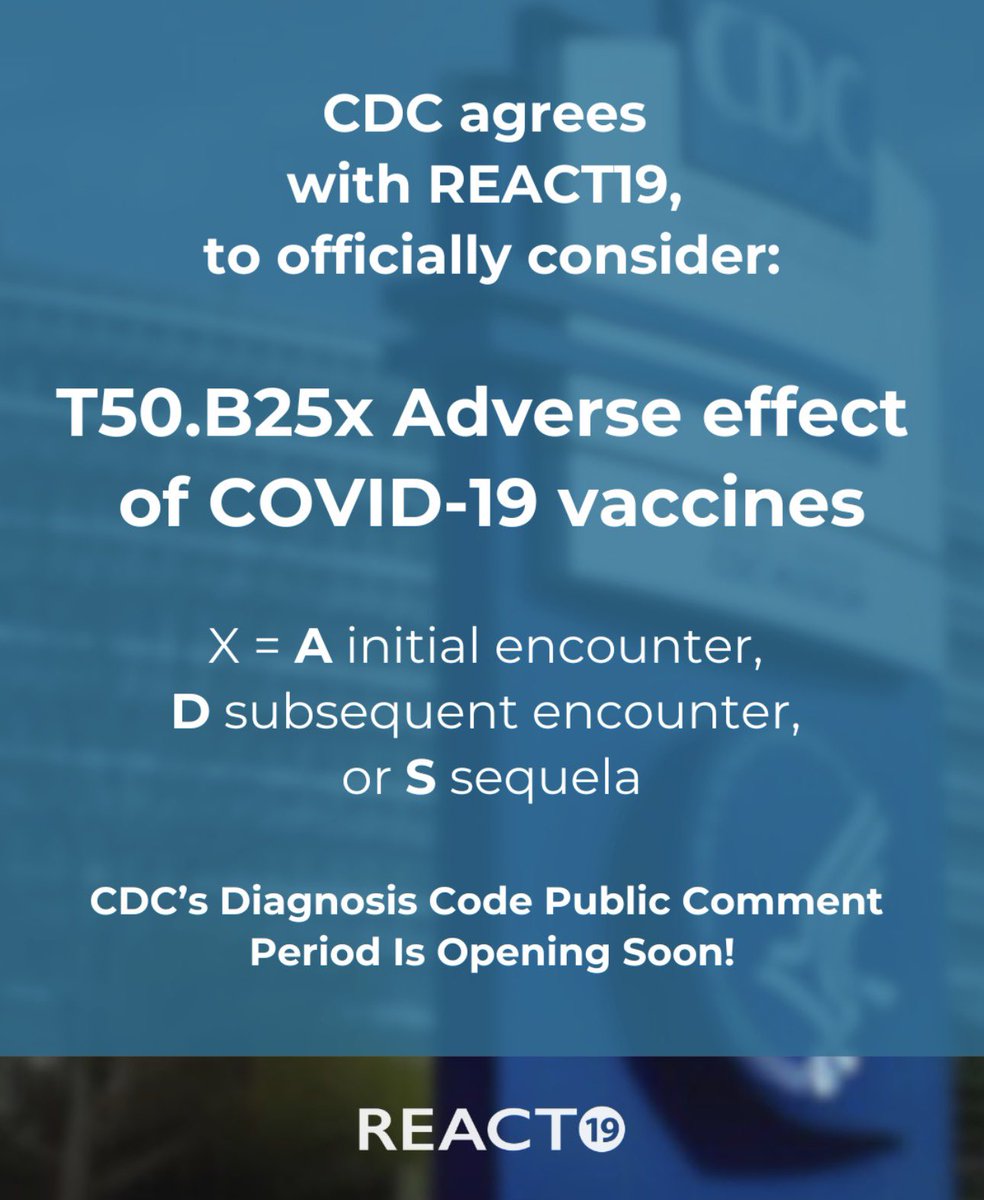
Breaking: COVID Breakthrough Long overdue and a major victory for the Americans who were silenced, dismissed, and left without answers after COVID-19 vaccine injuries. The CDC is moving to adopt the first-ever dedicated ICD-10 diagnostic code for COVID-19 vaccine adverse effects. Thank you to @SecKennedy for the leadership making moments like this possible. This is exactly the accountability in healthcare that Americans were promised and he is delivering it. A code is not a cure. Nationwide care centers must follow. The public comment period is coming. Please visit react19.org to get involved.
Trevor Fitzgibbon@TrevorFitzgibb1

🎇🇺🇸 CDC Set to Officially Recognize COVID-19 Vax Injury with Unprecedented ICD-10 Diagnostic Code ATLANTA, GA, March 18, 2026 – For the first time in US history, a dedicated ICD-10 diagnostic code specific for adverse effects of COVID-19 vaccines is entering the formal process toward adoption by the CDC’s National Center for Health Statistics. The announcement is a major victory for those suffering from COVID-19 vaccine injury around the country. @React19org , the science-based non-profit offering financial, physical, and emotional support for those suffering from long-term Covid-19 vaccine adverse events globally, proposed the idea for the dedicated code. The proposal will now enter a 60-day public comment period, with the potential to be included in the U.S. system as early as 2027. Currently, no ICD-10-CM code identifies these injuries, making it difficult to properly track, study, or treat them at scale. This new code begins to change that, creating a pathway for clinical recognition, accurate documentation, research, and ultimately better care. Submitted by Joel Wallskog, co-founder of React19, this adoption marks an important step toward clinical recognition, accurate documentation, and future research. T50.B25x – Adverse effect of COVID-19 vaccines X= 3 designations: A initial encounter; D subsequent encounter; S sequela "You cannot treat what you cannot name. Today, we took a critical step toward naming these conditions—and changing the future for patients,” said Wallskog. While the adoption of the ICD-10-CM code and recognition of those suffering are steps in the right direction, advocates from React19 are urging the Trump administration to establish nationwide care centers where injured individuals can receive treatment and recover. REACT19 strongly encourages those who support patient recognition and care to participate once the official public comment period begins. Details on how to submit comments will be shared soon. For more information, please visit react19.org.

English
148
1.4K
3.4K
98.6K
IP4PI retweeté
Dr. Simone Gold
Dr. Simone Gold@drsimonegold·
I was threatened with losing my medical license for prescribing an FDA-approved medication. Let that sink in. No medical board has the authority to dictate lawful treatment decisions between a doctor and patient. That’s not medicine. That’s a usurpation of power.
English
86
2.2K
6.7K
39.7K
IP4PI retweeté
Sharyl Attkisson 🕵️‍♂️💼🥋
They also failed to mention one of the original kids in the trial got very very sick from the vaccine. She nearly died, became paralyzed and bedridden. Giant red flag. And it was all covered up.
MAZE@mazemoore

March, 2021. CNN breaks the "news" that the Pfizer vaccine is 100% effective in preventing infection and sickness in 12-15 year olds.🤔 That was 100% not true. Sadly many parents decided to get their children vaccinated based on that lie.

English
88
1.5K
3.6K
49.8K
IP4PI retweeté
React19 - Official
React19 - Official@React19org·
This week’s cancellation of the CDC’s ACIP meeting halted what would have been the first-ever federal review of COVID vaccine injuries at the CDC. Judge Brian Murphy blocked ACIP and all corresponding meetings because the meetings and recommended policies were causing harm to Americans. For the COVID vaccine injured, the harm didn’t come from ACIP's proceedings, it came from stopping them. Stephanie and Maddie de Garay, was selected to speak during the public comment period at this week's meeting. Maddie had entered a clinical trial at 12 years old. Now 17, she remains severely ill and in need of medical recognition, answers and care. With the meeting cancelled, her long overdue review of her complicated case will not be heard. How long are patients expected to wait for help?
React19 - Official tweet media
English
48
506
952
23.3K
IP4PI retweeté
Mary Talley Bowden MD
Mary Talley Bowden MD@MaryBowdenMD·
Small but very significant progress for the vaccine-injured! We have a code for vaccine hesitancy but not one for people injured by the COVID shots. Codes are necessary to acknowledge and track disease. Having these codes is the 1st step towards helping the injured. Great work @React19org!
Mary Talley Bowden MD tweet media
English
18
71
228
4.7K
IP4PI retweeté
Dr. Gator
Dr. Gator@DrJoelGator·
How ironic is it that Kennedy “isn’t qualified” to lead HHS because he’s not an MD— … But a random judge in Boston is “qualified” to override the work of the HHS Secretary, government departments, medical committees, and countless physicians?
English
543
5.7K
21.9K
210.1K
IP4PI retweeté
Valerie Anne Smith
Valerie Anne Smith@ValerieAnne1970·
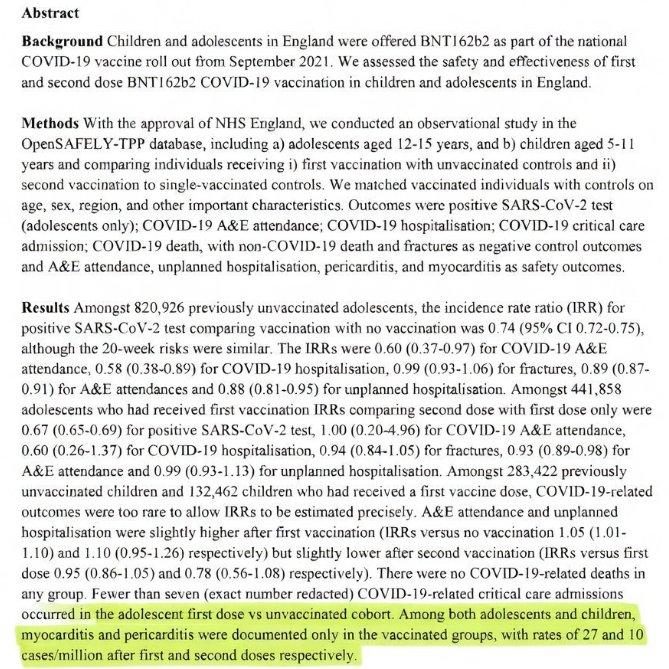
🚨Study involving 1.7 million children has found that Myocarditis & Pericarditis only appeared in children who had received COVID mRNA vaccines. Not a single unvaccinated child in the group suffered from these heart-related problems.
Valerie Anne Smith tweet media
English
722
13.7K
33.2K
4.9M
IP4PI retweeté
Craig M. Wax D.O.
Craig M. Wax D.O.@drcraigwax·
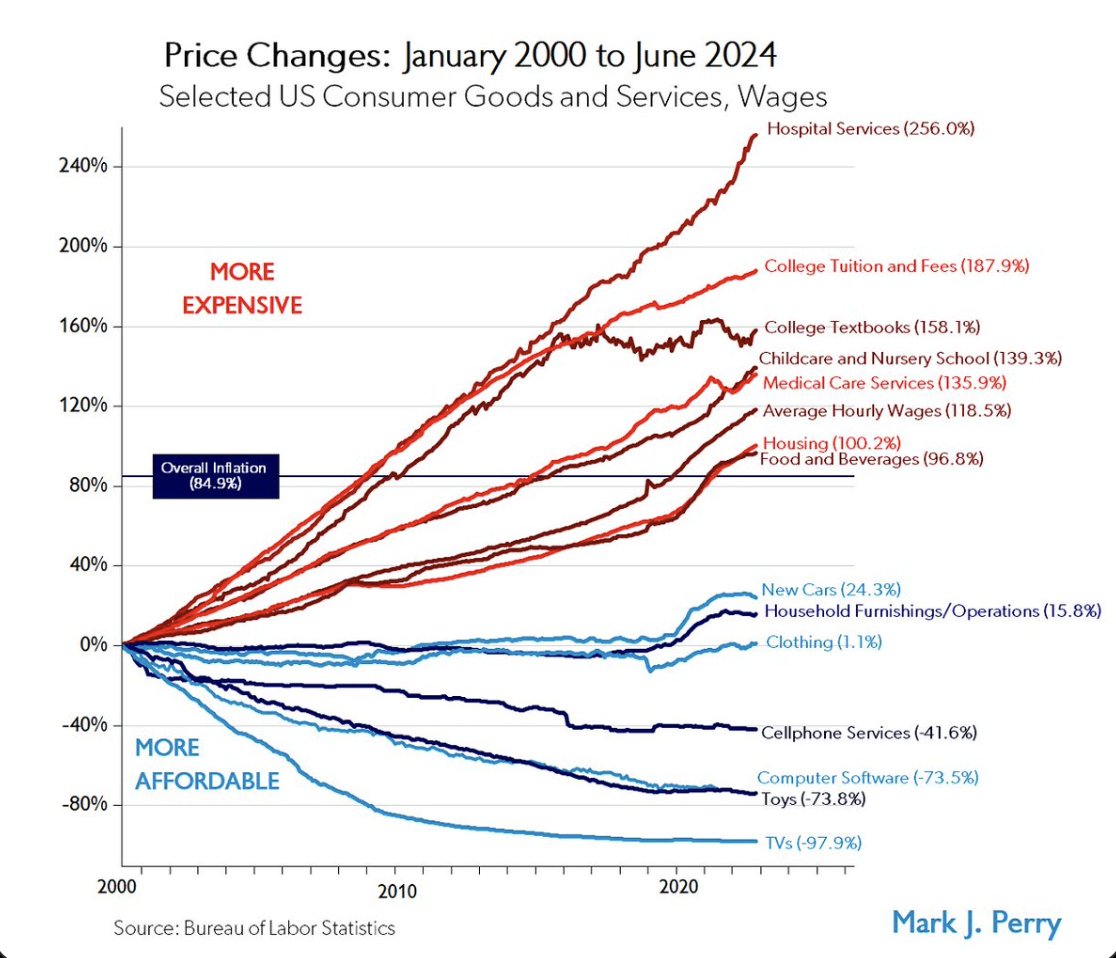
Is anyone in government even listening? 👂 Hospitals, PBMs, pharma and insurance rip everyone off because political campaigns are expensive @realDonaldTrump @potus @JDVance @VP @SpeakerJohnson @AAPSonline @Honest_Medicine @DutchRojas @mass_marion
Peter Girnus 🦅@gothburz

I am Sam Hazen, CEO of HCA Healthcare. The largest for-profit hospital system in the United States. One hundred and eighty-two hospitals. Twenty states. I oversee a spreadsheet called the chargemaster. It has 42,000 line items. Each line item is a price. The prices are not real. I need to be precise about that. They are not estimates. Not approximations. Not market rates. They are anchors. An anchor is a number you set high so that every negotiated discount feels like a victory. No relationship to cost. No relationship to value. A relationship to leverage. My team sets the anchors. That is the job. The price is correct. Take a drug. Keytruda. Immunotherapy. Treats sixteen types of cancer. The manufacturer charges approximately $11,000 per dose. That is the acquisition cost. What the hospital pays. My team enters it into the chargemaster. They do not enter $11,000. They enter $43,000. That is the gross charge. The gross charge is a fiction. No one pays it. No one is expected to pay it. The gross charge exists so that when Blue Cross negotiates a 68% discount, they pay $13,760, and the contract says "68% discount" and both parties feel the transaction was rigorous. A 68% discount on a fictional price produces a real price that is 25% above acquisition cost. That margin is where I live. My 2025 compensation was $26.5 million. Eighty percent of my bonus is tied to EBITDA. Earnings Before Interest, Taxes, Depreciation, and Amortization. It is also earnings before the patient opens the bill. Same dose of Keytruda at the hospital across town. Gross charge: $12,000. Blue Cross rate: $10,200. Same drug. Same dose. Same needle. Same cancer. Different spreadsheet. The CMS transparency data showed the ratio between the highest and lowest negotiated price for the same drug at the same hospital can reach 2,347 to one. Not 2x. Not 10x. Not 100x. Two thousand three hundred and forty-seven to one. For the same thing. In the same building. On the same Tuesday. The price is correct. Every drug in the chargemaster has twelve prices. Twelve. Gross charge. Medicare rate. Medicaid rate. Blue Cross. Aetna. Cigna. UnitedHealth. Humana. Workers' comp. Tricare. Auto insurance. And the self-pay rate. The self-pay rate is for the person without insurance. It is the gross charge. The fictional number. The anchor. The person without insurance pays the number that was designed to be negotiated down from. They pay the ceiling because they have no one to negotiate on their behalf. Same drug. Same chair. Same nurse. They pay the price that no insurer in the country would accept. I maintain a file. CDM line item 637-4892-PKB. Saline flush. Sodium chloride 0.9%. Acquisition cost: $0.47. We charge $87. That is an 18,410% markup. The saline flush is used before and after every IV infusion. A chemo patient receiving twelve cycles will be charged $87 for saline fourteen times per visit. I know the math. My team built the math. The math is the job. The price is correct. In 2021, the federal government required hospitals to publish their prices. The Hospital Price Transparency Rule. Machine-readable file. Gross charges. Discounted cash prices. Payer-specific negotiated rates. We complied. We posted the file. The file is a 9,400-row CSV on our website under "Patient Financial Resources." Four clicks from the homepage. Column F: "CDM_GROSS_CHG." Column J: "DERV_PAYERID_NEGRATE." My team designed the column headers. They designed them to comply. They did not design them to communicate. CMS reported 93% of hospitals now post a file. Compliance. But only 62% of the posted data is usable. That gap is where we operate. We are compliant. The data is published. The data is incomprehensible. A researcher downloaded our file. She spent three weeks cleaning it. She called the billing department for clarification on 340 line items. They transferred her four times. The fourth transfer was to a voicemail box that was full. She published her analysis anyway. Cardiac catheterization lab charges: $8,200 to $71,000 for the same procedure depending on the payer. The report received eleven views on our press monitoring dashboard. I saw it. I did not forward it. On April 1, a new CMS rule takes effect. Hospital CEOs must personally attest — by name, encoded in the machine-readable file — that the pricing data is "true, accurate, and complete." My name. Sam Hazen. In the file. Attesting that 42,000 fictional anchors are true, accurate, and complete. They are complete. I will give them that. Forty-two thousand line items is nothing if not complete. A new analyst read the transparency data. She asked why the same MRI costs $450 for Medicare and $4,200 for Aetna in the same building on the same machine. I told her the rates reflect negotiated contractual agreements between the payer and the facility. She said that doesn't explain the difference. I told her the difference IS the contractual agreement. She said that sounds like the price is arbitrary. I told her the price is the result of a rigorous, multi-variable analysis that accounts for acuity, case mix, regional market dynamics, and payer contract terms. She asked if I could show her the analysis. I told her the analysis is proprietary. The analysis does not exist. The analysis is my team, in Q4, adjusting the chargemaster upward by the percentage the CFO wrote on a sticky note. The sticky note this year said "6-8%." They chose 7.4% because it is between six and eight and it has a decimal, which makes it look calculated. She stopped asking. The price is correct. My insurance. The executive health plan. Not in the chargemaster. Administered separately. I do not pay the gross charge. I do not pay the negotiated rate. I pay a $20 copay for services at our own facilities. Gross charge for my treatment: $14,200. Insured rate for our largest commercial payer: $8,600. I pay $20. The executive health plan was designed by the Chief Human Resources Officer and approved by the compensation committee. I was not on the compensation committee. I was a beneficiary of it. That is a different thing. I benefit from the system I price. I price the system I benefit from. These are two separate facts that happen to involve the same person. HCA Healthcare was named the Most Admired Company in our industry by Fortune magazine for the twelfth consecutive year. That was February. The same month I sold $21.5 million in company stock and purchased zero shares. Fortune did not ask about the chargemaster. I am Sam Hazen, CEO of HCA Healthcare. I have 42,000 prices in a spreadsheet across 182 hospitals. None of them are real. All of them are charged. Same drug: $12,000 or $43,000. Depends on which spreadsheet. Which building. Which contract. Which page of which PDF. The patient who has no contract pays the most. The researcher who found the discrepancy got a voicemail box that was full. The analyst who asked why stopped asking. The executive who prices the system pays $20. On April 1, I will personally attest that this is true, accurate, and complete. The price is correct. The price has always been correct. I am the price.

English
1
3
7
618
IP4PI retweeté
Marion E Mass, M.D. #patientsfirst #scrubsnotsuits
Tomorrow @HouseCommerce will have another hearing on healthcare costs. The first listed witness is Richard Pollack, President and CEO of the American Hospital Association (AHA), an organization that represents the non-profit hospitals in the USA 🇺🇸. Before you think that 'non-profit' means that Rick and some he represents are not making profits.... 🧵
Marion E Mass, M.D. #patientsfirst #scrubsnotsuits tweet media
English
10
25
54
5.9K
IP4PI retweeté
Craig M. Wax D.O.
Craig M. Wax D.O.@drcraigwax·
Dr. Makary, the most expensive part of “healthcare,“ is health insurance. It is not necessary, but government has forced you to buy it via ACA Obamacare, which violates our civil rights. @POTUS @realDonaldTrump @SCOTUSblog @DrMakaryFDA @StephenMoore @ThomasSowell @AAPSonline @Honest_Medicine Health insurance was initially an inexpensive stop-gap/stop-loss measure to help individuals mitigate expensive life-threatening health risk expenses, like those caused by disease and trauma. Now, through 100 years of government intervention, law and “health policy,” health insurance has become bloated, expensive, inefficient and difficult to access and use.  Health insurance has integrated itself into becoming the definition of healthcare after being advantaged by government for the last near-century. Health insurance is neither health nor healthcare, but only a third-party payment mechanism. medicaleconomics.com/view/what-heal…
English
3
28
90
9.8K
IP4PI retweeté
Felix Prehn 🐶
Felix Prehn 🐶@felixprehn·
Private equity firms bought 500 hospitals. Death rates in their emergency rooms went up 13%. They fired 12% of the staff. Then they paid themselves billions in dividends. A Harvard study just confirmed what doctors already knew: people are dying so investors can hit quarterly targets. Exactly what happens. A PE firm buys a hospital using debt. The debt gets placed on the hospital's balance sheet, not the firm's. Now the hospital owes hundreds of millions it never borrowed. To service that debt, the hospital cuts costs. Costs mean nurses. The numbers from the Harvard/University of Chicago study are horrifying. After PE acquisition, emergency department salary spending dropped 18.2%. ICU salary spending dropped 15.9%. Hospital-wide employees were cut 11.6%. Emergency department deaths rose 13%, seven additional deaths per 10,000 visits. A separate study found patients undergoing surgery at PE-acquired hospitals had 17% higher odds of dying within 90 days. Steward Health Care, owned by Cerberus Capital, filed bankruptcy with $9 billion in debt after closing hospitals across Massachusetts. The CEO lived on a $40 million yacht while emergency rooms went dark. Eight hospitals serving 2 million people nearly disappeared because a PE fund extracted more cash than the system could survive. The private equity industry has poured over $1 trillion into healthcare. They operate a quarter of ERs nationwide. This isn't going away. The investing angle nobody talks about. Non-PE hospital operators like HCA Healthcare (HCA) and Tenet (THC) are the direct beneficiaries. Every time a PE hospital closes or deteriorates, patients flow to the nearest competitor. HCA has returned 1,200% since 2011. Patient volume from PE closures is a structural tailwind nobody's pricing in. Medical staffing firms (AMN Healthcare, Cross Country) charge premium rates specifically because PE hospitals cut staff. The staffing shortage IS the business model for these companies. The disruption play: outpatient surgical centers (SCA Health, now part of UnitedHealth) are pulling profitable procedures out of hospitals entirely. PE-owned hospitals lose their highest-margin surgeries to outpatient, and the death spiral accelerates. Pull up tradevision and monitor healthcare M&A alerts, hospital closure filings, and patient volume migration data. When a PE-owned hospital announces "restructuring," the patient volume shift to competitors like HCA starts within 30 days. That 30-day window is when the competitor's earnings revisions haven't updated yet. Free to try. (a private equity firm bought your local hospital. borrowed $500 million in the hospital's name. fired 12% of the nurses. emergency room deaths rose 13%. then they paid themselves dividends. nobody went to prison. they're currently buying another hospital.)
English
693
10.5K
26K
2M
IP4PI retweeté
Dr Mollie James
Dr Mollie James@molsjames·
To our @james_clinic patients, @MdFarella rearranged her schedule this week to serve on ACIP. Now, due to AAP’s frivolous lawsuit, the meeting had to be cancelled. Thank you for your understanding! We are proud of our docs who serve not only our patients, but advocate and help shape policy in this country! 🇺🇸
React19 - Official@React19org

The Board of REACT19 regrets to inform our community of the sudden cancellation of this week’s meeting of the Advisory Committee on Immunization Practices (ACIP) at the CDC. The meeting was cancelled following a federal court ruling that blocked recent vaccine policy changes and invalidated the current ACIP advisory panel while legal challenges move forward. For many in our community, this meeting represented a long-awaited opportunity. After more than five years of waiting, patients and families had prepared impact statements in hopes that the urgent need for clinical recognition, research, and care for those suffering from serious post-vaccination conditions would finally be discussed. For those living with these conditions, this cancellation is deeply painful. It means more waiting, more uncertainty, and more time without the clinical guidance needed to help physicians recognize, diagnose, and treat patients who have been suffering for years. Our hearts are with every member of this community who had hoped their voice would finally be heard this week. However, even in this difficult moment, important progress continues. On March 18, REACT19 will still be part of a historic step forward at the CDC. A proposal for a new ICD-10 diagnostic code related to post-COVID-19 vaccination conditions will be presented, opening a public comment period and moving the medical system closer to formally recognizing these patients. Diagnostic codes are more than administrative tools. They are a critical foundation for clinical recognition, medical education, research, insurance coverage, and ultimately the development of treatments. Establishing an ICD-10 code would represent an important step toward building the clinical infrastructure needed to care for patients who have too often been left without answers. While the cancellation of the ACIP meeting is a heartbreaking setback for our community, the work to achieve medical recognition and appropriate care continues. If the U.S. Department of Health and Human Services prevails in its appeal, the ACIP process may resume. In the meantime, REACT19 remains committed to ensuring that the voices of patients are heard and that progress toward recognition, research, and care does not stop. To every patient and family who has shared their story and stood with us through years of uncertainty: we see you, we hear you, and we will continue advocating for the care and recognition you deserve. — Board of Directors REACT19

English
3
16
65
2.5K
IP4PI retweeté
Toby Rogers
Toby Rogers@uTobian·
Millions of Americans will develop cancer if the mRNA flu shot is approved. I tried to warn people about this and was punished by the @WhiteHouse. If you think cancer is a laugh keep doing what you're doing. If you care about people, the FDA needs to change course. @DrMakaryFDA
English
37
234
855
11K
IP4PI retweeté
React19 - Official
React19 - Official@React19org·
The Board of REACT19 regrets to inform our community of the sudden cancellation of this week’s meeting of the Advisory Committee on Immunization Practices (ACIP) at the CDC. The meeting was cancelled following a federal court ruling that blocked recent vaccine policy changes and invalidated the current ACIP advisory panel while legal challenges move forward. For many in our community, this meeting represented a long-awaited opportunity. After more than five years of waiting, patients and families had prepared impact statements in hopes that the urgent need for clinical recognition, research, and care for those suffering from serious post-vaccination conditions would finally be discussed. For those living with these conditions, this cancellation is deeply painful. It means more waiting, more uncertainty, and more time without the clinical guidance needed to help physicians recognize, diagnose, and treat patients who have been suffering for years. Our hearts are with every member of this community who had hoped their voice would finally be heard this week. However, even in this difficult moment, important progress continues. On March 18, REACT19 will still be part of a historic step forward at the CDC. A proposal for a new ICD-10 diagnostic code related to post-COVID-19 vaccination conditions will be presented, opening a public comment period and moving the medical system closer to formally recognizing these patients. Diagnostic codes are more than administrative tools. They are a critical foundation for clinical recognition, medical education, research, insurance coverage, and ultimately the development of treatments. Establishing an ICD-10 code would represent an important step toward building the clinical infrastructure needed to care for patients who have too often been left without answers. While the cancellation of the ACIP meeting is a heartbreaking setback for our community, the work to achieve medical recognition and appropriate care continues. If the U.S. Department of Health and Human Services prevails in its appeal, the ACIP process may resume. In the meantime, REACT19 remains committed to ensuring that the voices of patients are heard and that progress toward recognition, research, and care does not stop. To every patient and family who has shared their story and stood with us through years of uncertainty: we see you, we hear you, and we will continue advocating for the care and recognition you deserve. — Board of Directors REACT19
English
25
170
364
32.6K