TAFFD's retweeté

As a lady, there is one "hormone" you must know beyond your glucose reading and that's your insulin.
Most routine medical checks focus on fasting glucose. If it is within range, you are told everything is fine.
But glucose is only part of the story.
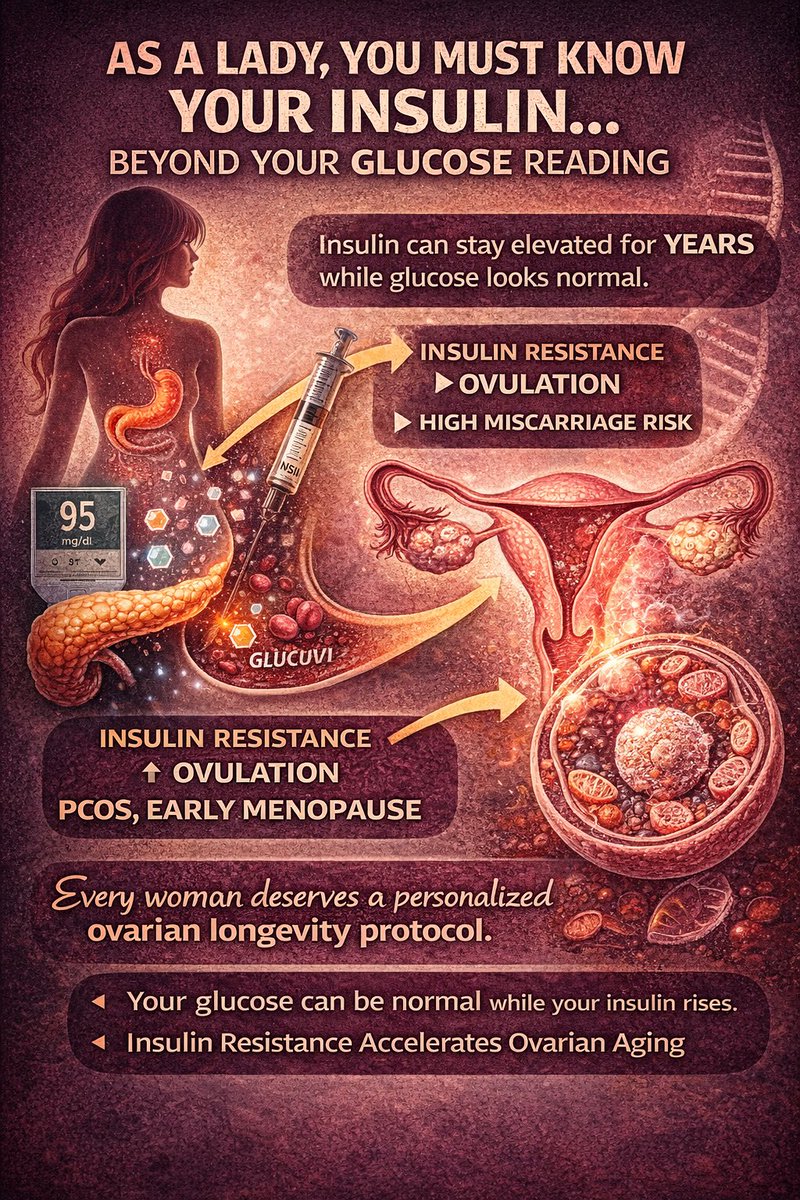
Insulin is the "hormone" that controls glucose. When insulin begins to rise abnormally, it can stay elevated for years while glucose still appears normal.
Insulin is produced by the pancreas. Its role is to move glucose from your bloodstream into your cells for energy.
When your cells become less responsive, a condition known as insulin resistance i.e when your pancreas compensates by releasing more insulin.
Your blood sugar may still look “normal,” but your system is already under metabolic strain.
Here is where it gets tricky...
The ovaries are not isolated from metabolism, this is because, they have insulin receptors.
When insulin remains chronically high, it stimulates the ovarian cells to produce excess androgens (male-pattern hormones such as testosterone).
Elevated androgens interfere with normal follicle maturation, that is, the process through which an egg develops and is released each cycle.
What follows?
Irregular ovulation.
Weak ovulation.
Sometimes complete absence of ovulation.
This is one of the core metabolic mechanisms behind PCOS.
But it does not stop there.
Egg cells (oocytes) depend heavily on healthy mitochondria which is the energy-producing structures inside your cells.
Chronic high insulin promotes inflammation, oxidative stress, and glycation (sugar-related damage to proteins). These processes impair mitochondrial function inside ovarian tissue.
When mitochondrial efficiency declines, egg quality declines. That is accelerated ovarian aging.
Ovarian aging is not just about your chronological age. It refers to declining egg quantity and quality, increased chromosomal instability, reduced implantation potential, and higher miscarriage risk.
Persistent insulin resistance can contribute to earlier reproductive decline and, in some women, earlier functional menopause.
By the time fasting glucose becomes abnormal, metabolic damage may have been ongoing for years.
That is why every woman should know her fasting insulin.
Your reproductive health is metabolic health. Your ovarian longevity is tied to how well your body handles glucose, stress, sleep, and inflammation.
If you are a lady and you want to understand your metabolic profile and build a personalized ovarian longevity protocol, you can send me a DM.
English