Silicon Sorcerer

4.1K posts

Silicon Sorcerer banner
Silicon Sorcerer

Silicon Sorcerer

@hackradios

Making chips

शामिल हुए Eylül 2017
222 फ़ॉलोइंग163 फ़ॉलोवर्स
Silicon Sorcerer
Silicon Sorcerer@hackradios·
@signulll Well we all saw what happened when Amazon insisted on using their own in-house AI to push updates to AWS...
English
0
0
0
62
tae kim
tae kim@firstadopter·
In a super quiet room, can you hear the fans of a Mac Studio 2-3 feet away? Serious question. Considering a Mac Studio versus Macbook Pro (which is silent). I need silence.
English
16
0
11
9.3K
Silicon Sorcerer
Silicon Sorcerer@hackradios·
Okay but if the absorption minimum in telecom glass fiber occurred at a different wavelength then we would have used a different atom from Erbium to dope the amplifiers (and these also currently exist). "Exactly" 1550nm is also an overstatement. Typical EDFAs have 30-40nm of gain-bandwidth that roughly overlaps with the minimum-loss point in telecom fibers.
English
1
0
71
4.1K
Gaurab Chakrabarti
The internet runs on a coincidence of atomic physics. Erbium emits light at exactly 1,550 nanometers. Silica glass fiber loses the least signal at exactly 1,550 nanometers. One is a quantum property of a rare earth element, the other is an optical property of melted sand. They have nothing to do with each other. It is pure luck. Before erbium-doped fiber amplifiers, every undersea signal had to be converted from light to electricity and back every 50 kilometers. Each conversion degraded the signal and capped bandwidth. Erbium removed that cap. An erbium amplifier sitting on the floor of the ocean boosts signals 1,000 times and runs for decades without maintenance. 99% of intercontinental data moves through glass strands no thicker than a human hair, amplified by a rare earth element that just so happens to emit at the right wavelength. And erbium isn't even the strangest one.
English
82
516
4.4K
189.1K
zach
zach@blip_tm·
have any of the people advocating for space-based datacenters ever worked in a datacenter and seen how often hardware fails and needs to be replaced?
English
183
38
789
106.7K
ᐱ ᑎ ᑐ ᒋ ᕮ ᒍ
UCLA professor of mathematics Terrence Tao and Olympic gold medalist figure skater Alysa Liu are reportedly dating.
ᐱ ᑎ ᑐ ᒋ ᕮ ᒍ tweet mediaᐱ ᑎ ᑐ ᒋ ᕮ ᒍ tweet media
English
350
204
7.3K
1.5M
Silicon Sorcerer रीट्वीट किया
Peter Schmidt-Nielsen
Peter Schmidt-Nielsen@ptrschmdtnlsn·
I just took a call with @lukebayes of eightamps.com; I had no idea what they're building is so cool. They're doing custom robotics to offer very fast-turn PCBA, aiming to eventually literally be cost competitive with China in the USA. The US needs a hundred more Lukes!
English
3
3
51
3.4K
Matt Tardio
Matt Tardio@angertab·
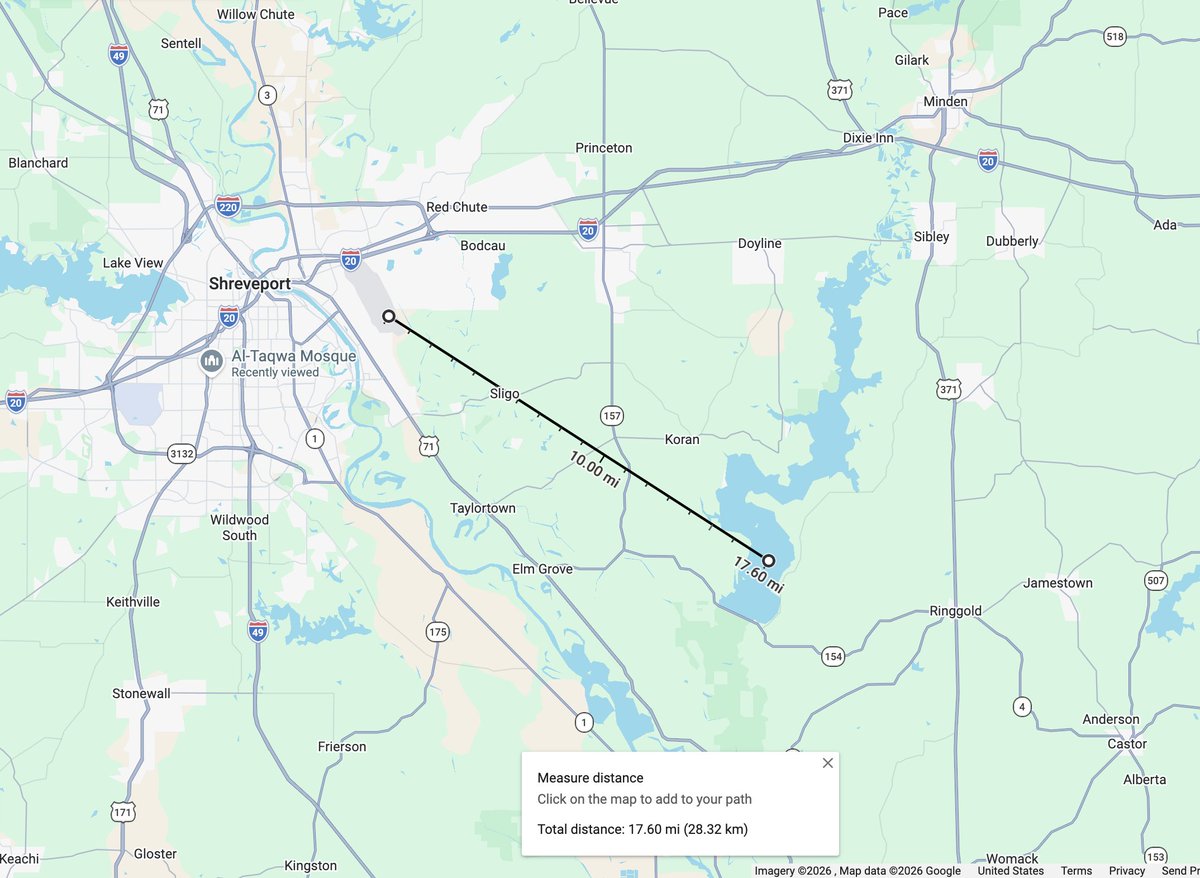
Barksdale Air Force Base - It's Worse Than You Think Monday, 03/09/2026 - Friday, 03/13/2026 A swarm of 12-15 drones penetrated BAFB for 5 consecutive days (4 hours loitering). They halted flight operations, and in one occasion, forced a shelter-in-place order. SIGNIFICANCE BAFB is the launchpad for B-52's that are and were flying combat operations over Iran. BAFB has jamming equipment that was unsuccessful in stopping the drone swarms. The 4-hour loiter time, coupled with the drone swarms ability to resist jamming attempts, is beyond troubling. Additionally, the drones were equipped with lights. Of note, no reports of drones flying over Shreveport were noted. This suggests the drones approached from the remote areas to the southeast of BAFB and turned their lights on once over BAFB. ANALYSIS It is unknown if the drones were fixed-wing or quadcopter. Given the 5 days of repeated intrusions, there is a higher probability that these drones were launched from a remote area. Operators would need to alternate between multiple launch and landing points to avoid detection. A fixed-wing style drone with a hybrid motor operating on liquid fuel and battery is a likely contender. This would place the wing span at about 4-5 meters, advanced cameras for guidance and terrain analysis, and a total 6-hour flight time. That would easily drive the cost of each drone above $60,000 USD each. On the low end, the drones would cost $900,000 in total and could push upwards of $1.5 million. That is not just a couple of kids playing around, that is a sophisticated operation. State actors or well funded terror networks become likely culprits. The drones would require about 50 meters of runway space, something that the remote areas of LA offer in abundance. They would also need a storage location, vehicles to move the drones, and plenty of operators. This suggests an intact, well-funded, and well-trained hostile network near one of America's most strategic Air Force Bases. There is a reason the military and our government have been silent, except for confirmation of the reports.
Matt Tardio tweet media
English
396
1.4K
3.7K
609.8K
Carlos Villuendas
Carlos Villuendas@carlosvillu·
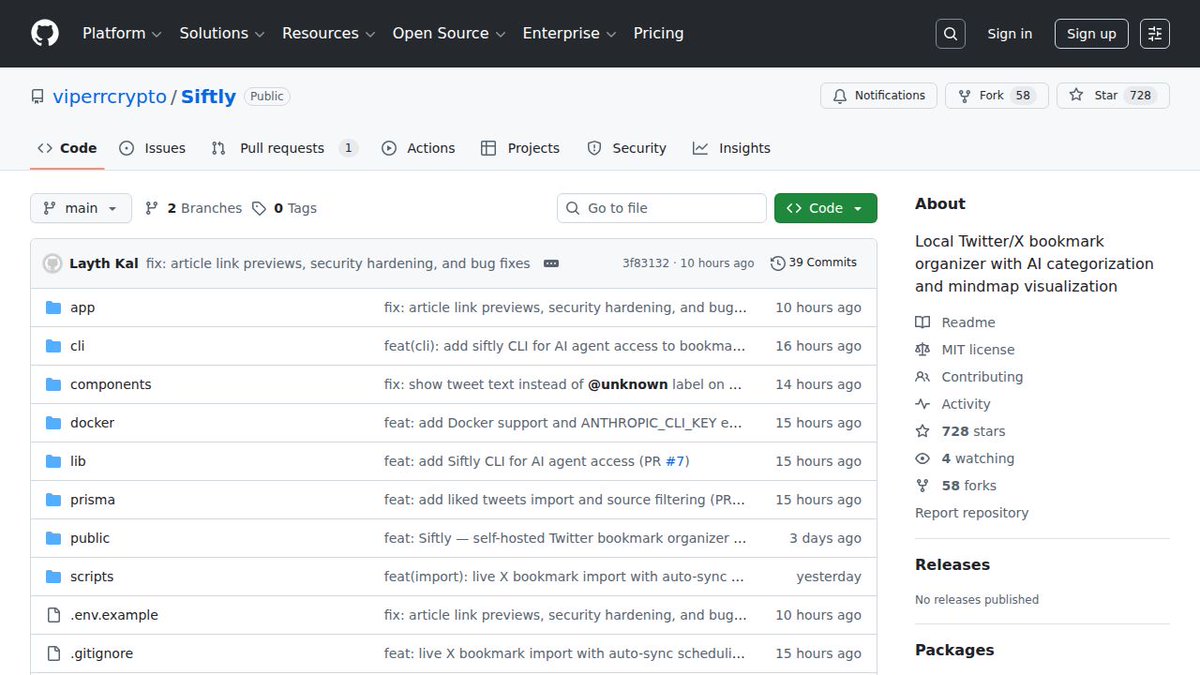
Tienes miles de bookmarks en Twitter/X que nunca vuelves a leer. Siftly los convierte en una base de conocimiento buscable con IA. Local, sin cloud, sin suscripciones. Solo conocimiento organizado. 🧵
Carlos Villuendas tweet media
Español
43
200
2.2K
85.9K
Silicon Sorcerer
Silicon Sorcerer@hackradios·
@raulizahi @parmita SPADs are helpful when you need timing information (e.g. time-resolved Raman spectroscopy to reject fluorescence), but EMCCDs can have lower noise (depends on integration time) and better fill factor (catch more photons).
English
0
0
3
22
Parmita Mishra
Parmita Mishra@parmita·
This is simply mindblowing. THIS IS INSANE: At Precigenetics, we build hardware to sense nature’s hardware - her cells. Nature beats us at building hardware every time. Evolution spent 500 million years optimizing something our best silicon still can’t match. We have EMCCDs in our platform. These are some of the most advanced detectors available in all of the planet. And even they struggle with detecting a *single* photon of light. A SINGLE PHOTON. Do you know how hard it is to detect 1 photon?! The quantum efficiency required? Today, I was catching up on some photonics papers. Turns out: Rod cells in mice and some other mammals can quite literally detect single photons of light. Rod cells genuinely outperform EMCCDs in quantum efficiency, noise floor, and single-photon discrimination. Fine now THIS IS WHERE IT GETS INTERESTING. the biology isn’t just matching our best detectors. It’s making engineering tradeoffs our detectors can’t. Rod cells in mice and some other mammals optimize for absolute sensitivity - detecting single photons in near-total darkness. Primate retinas evolved differently, it appears. they gave up that raw single-photon detection to gain better contrast resolution. Different species, different optimization targets, yet the same underlying architecture. This is hardware more advanced than I can make. I can merely spend the time measuring it and digitizing the information and running GPUs that can explain life to me.
Parmita Mishra tweet media
English
10
26
171
10.3K
Silicon Sorcerer रीट्वीट किया
Simon Sarris
Simon Sarris@simonsarris·
Every man has an Apollonian impulse that's so innate and so powerful that 1 year old boys practically have a seizure the first time they see a tractor or a dump truck. Just completely intoxicating. The impulse takes many of forms but never goes away.
Simon Sarris tweet mediaSimon Sarris tweet media
Mads@madsf88

why is every man's dream to build a factory

English
39
400
7.3K
191.1K
Silicon Sorcerer रीट्वीट किया
🌿 lithos
🌿 lithos@lithos_graphein·
Terafab's decision to bring the mask shop inside the fab is not a game changer and it certainly doesn't exponentially speed up the development process. The "iterative loop" with the lithography masks that Elon was talking about last night is the design-for-manufacturing (DFM) loop. In short, this is using the mask to pattern a particular chip layer, for example, metal-1, then inspecting the outcome in various ways to identify repeating issues in the mask design. Then the software used to make the mask can be updated to fix the issue. This process loop repeats over and over again to remove yield-impacting defects from the pareto charts for each module. DFM is the most common form of fab change control because the many FMEA pieces are automated and not subjective like a physical process change would be—as in new failure modes are not up to the process engineers' imagination. With DFM, the likelihood that a mask change will create some new type of defect is very low, but this comes at the price of doing extensive verification by software means. The benefit a fab gets from bringing the mask shop in-house is minimal, only affected by the shipment of the mask itself, which is typically 1 day. This is but a small part of the DFM loop that typically takes a month or more. I put some back-of-envelope numbers for each step, and in the best case, this could be shrunk down to something like 10 days, but that would be a very rare occurrence in the chip development cycle. Keep in mind advanced lithography masks can cost $100-200k so there is also a big cost penalty to making a mask that would be DOA. My flowchart here is a very simplified depiction of this process, but it gives you an idea of how complex the loop can get for DFM.
🌿 lithos tweet media
English
23
31
233
30K
Silicon Sorcerer
Silicon Sorcerer@hackradios·
Do they present some quantitative performance metrics in conference slides? I'm used to having the PDKs and pricing/lead time info under NDA, so haven't looked at what's publicly available. Either way the PDK devices are usually junk and you have to design your own to be competitive (unlike traditional CMOS), but basic physical parameters will still tell you something. You can only get so far without knowing the layer thicknesses, material properties, and DRC rules though...
English
0
0
1
28
Vikram Sekar
Vikram Sekar@vikramskr·
@hackradios @insane_analyst Great explanation! Thanks. I’ve been trying to understand why Tower great, GF crap for a long time, but I’ve never seen anything concrete in terms of numbers ever
English
1
0
2
47
Silicon Sorcerer
Silicon Sorcerer@hackradios·
The problems are (1) there is no high-speed modulation mechanism in SiN, (2) the optical confinement is much lower than Si so your bending radius is limited and therefore your practical free spectral range is much lower with SiN MRRs, and (3) the photon lifetime in a MRR limits your modulation bandwidth so you want to engineer the loaded Q-factor to be pretty low anyway (10k and below) so the intrinsic Q of an undoped waveguide doesn't matter that much anyway.
English
0
0
1
39
Irrational Analysis
Irrational Analysis@insane_analyst·
@hackradios SiN generally much lower loss so any ring modulator system would benifit. Like forget rings. Waveguide losses alone are huge.
English
1
0
1
336
Silicon Sorcerer
Silicon Sorcerer@hackradios·
In transceivers SiN is just used for moving things around and will typically be the IO waveguide for the chip because it doesn't have two-photon absorption so it can handle much higher optical power. You can't build a high-speed modulator out of SiN so you always need Si with carrier depletion or injection (or a chi-2 EO material) for the transmitter. For receivers the optical powers are low and it's better to keep as much as possible in Si because the thermal tubing efficiency is much higher. SiN also has much weaker confinement (less index contrast vs oxide) so you can't bend it as sharply and therefore can't make DWDM microring systems with as high free-spectral range as Si rings for a given loss budget. I'm not sure there are any applications for SiN microrings in CPO other than soliton microcomb sources, and so far people have done OK with traditional DFB arrays.
English
1
0
1
53
Silicon Sorcerer
Silicon Sorcerer@hackradios·
@insane_analyst Are there any mainstream CPO products that would require SiN microrings (i.e. apart from Xscape's microcomb source for DWDM)?
English
1
0
0
257
Silicon Sorcerer
Silicon Sorcerer@hackradios·
@MantisT0boggan @TrentTelenko Alert dispersal isn't going to help against a coordinated drone swarm attack that may come as a first strike leading up to a Taiwan invasion.
English
0
0
0
89
Mantis Toboggan M.D.
Mantis Toboggan M.D.@MantisT0boggan·
@TrentTelenko RAND did studies on HAS for B-47s and B-52s but they were not very practical for CONUS, alert dispersal was seen as a more practical and cheaper solution.
English
3
0
1
2.6K
Trent Telenko
Trent Telenko@TrentTelenko·
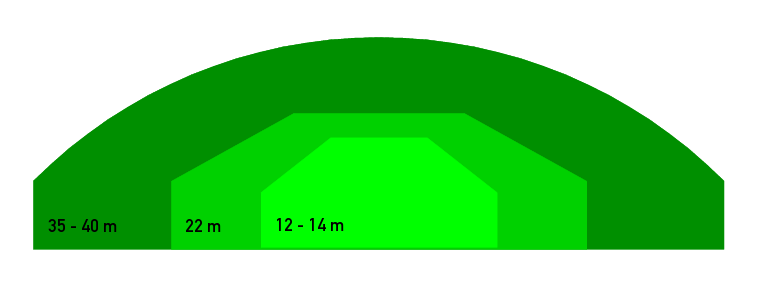
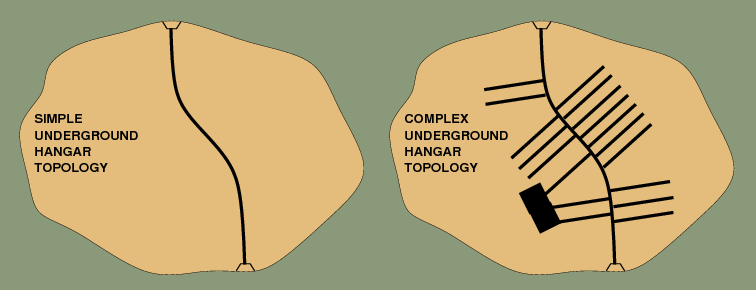
Some people really don't want to realize the size of Chinese hardened aircraft shelters.⬇️ Where these is a political will. There are hardened aircraft shelters big enough for heavy bombers like the B-52. 1/
Trent Telenko tweet mediaTrent Telenko tweet mediaTrent Telenko tweet mediaTrent Telenko tweet media
Gary@mirthiest

@TrentTelenko Hardened hangers for buffs? lol. Imagine the hangers… you could fly a drone right into them blindfolded

English
14
28
404
64.3K
Silicon Sorcerer
Silicon Sorcerer@hackradios·
Yes, insisting on monolithic integration with transistors means they are forced to use shitty PECVD nitride and make other process tradeoffs that harm photonics performance. The 45nm monolithic stuff has been going on since the days that was a leading-edge node owned by IBM, and they couldn't get it to market fast enough (nor did the market demand CPO at that time). Why do you say microring Q-factor is bad? For intrinsic silicon it's at least a few hundred k in GF, so for modulators it's almost entirely determined by the doping density and profile and the design of the coupler, which are all things you (as a customer) optimize to suit your needs.
English
1
0
1
200
Irrational Analysis
Irrational Analysis@insane_analyst·
@hackradios Their SiN very bad. Ring Q facgor bad. Monolithic EIC+PIC node bad. Yes, TJ makes dumb mistakes but the PIC process so much better. Hybrid bonding offering way better.
English
1
0
2
280
Silicon Sorcerer
Silicon Sorcerer@hackradios·
@quantian1 How are you getting 100kW in and out of a closet in an ordinary commercial space? All of that power ends up as heat.
English
3
0
14
2.9K
Quantіan
Quantіan@quantian1·
Note that 1 kW is how much my home PC draws at peak, so all this mass is getting launched into space to provide the equivalent compute of one or two server racks in an office building closet that requires 0 data center permitting and maybe fifty grand of annual electricity cost.
Sawyer Merritt@SawyerMerritt

Here's roughly how big @SpaceX's mini AI satellites will be. "SpaceX knows how to do heat rejection in space; That's the mini sat since it's 100kW, we expect future sats to go to the megawatt range." - Elon Musk

English
20
12
419
48.8K
Silicon Sorcerer
Silicon Sorcerer@hackradios·
My experience has been GF has a more solid process with better performance but they're waaaay too expensive for what you get, and slow. TJ is cheaper but they have much less professionalism and mess things up. They can get stuck at a single mask step for weeks unless you're a top-3 customer. Their DRC and OPC is a joke compared to a real CMOS foundry, but maybe that's not so important for PICs. Why do you think GF is garbage?
English
2
0
1
218