Alex Leaf

13.4K posts

Alex Leaf banner
Alex Leaf

Alex Leaf

@Alexleaf

MS Nutrition | Researcher 10+ Years | Scientific Communicator

Scottsdale, AZ 参加日 Aralık 2018
278 フォロー中4.6K フォロワー
固定されたツイート
Alex Leaf
Alex Leaf@Alexleaf·
The cure for most cases of type 2 diabetes (T2DM) requires fat loss. This thread will discuss research showing restoration of carbohydrate tolerance in those with T2DM through addressing the underlying pathology (ectopic fat) rather than just focusing on symptom management.
English
30
39
258
77.1K
Alex Leaf
Alex Leaf@Alexleaf·
I appreciate your clarifications and don’t disagree with you that anecdotes have value, but we need to be precise about how they’re used. In pharma, adverse event reporting isn’t treated as evidence of causation. It’s treated as a signal generator (e.g., something might be happening here, so let’s investigate). That’s very different from using anecdotes as evidence that something is happening, which is the distinction Im making. If people say they feel better on a carnivore diet, I believe them. That’s a real observation. But that observation alone doesn’t tell us what specifically changed, what mechanism is responsible, whether there are tradeoffs, or whether it holds long-term. You could just as easily find anecdotes of people thriving on completely different diets. Without controls, you can support almost any conclusion you want. I'm sure I can find plenty of vegans who don't supplement who say they feel great and healthy, and the carnivore crowd would ironically tear them down for the exact reasons I'm making here. Anyway, where we probably agree is that if you’re going to claim that a diet fundamentally changes human nutrient requirements, that’s not something anecdotes can establish. That requires actual evidence showing what changes, in what direction, and to what degree.
English
0
0
2
12
David Svendsen
David Svendsen@DavidSvendsen·
Thanks Alex I'd like to clarify my point about anecdotes. I'm not saying that we only need anecdotes or that they alone render study data irrelevant. I'm saying that we ignore anecdotes at our peril. Study data and anecdotes alike should be given consideration in decision making. And I can offer some support for this. I worked in the biotech industry for over 10 years. Was literally married into it. My ex-wife is an MD researcher who designs clinical trials. Eventually became the CMO of a publicly traded biotech company. In my IT work I designed and built validated GxP lab and manufacturing systems and networks. Participated in regulatory audits. The works. This is all to say: I'm not just parroting contrarian social media takes. I was a long term active participant & front row passenger and I know how the sausage is made. In bio/pharma there is a process called adverse event reporting. Patients reporting something that was different from what the trials said should happen. Another word for this would be: anecdotes. They're an important and legally required aspect of the industry. Each report is given consideration against all available data. The reason for adverse event reporting is because even the most comprehensive and well designed trials cannot account for all variables or be assumed useful & safe for all people. Even after Phase 3 and FDA approval. The results of these anecdotes can range from no actions, to label changes, or all the way to a drug being pulled from the market. Then there's the flip side of that. After a Phase 3 trial showing little to no statistically relevant improvement from a compound, it didn't mean nobody saw improvement. We had patients travel to DC and beg the FDA for approval because it was the first time in their lives they experienced relief for their debilitating conditions. For some people, being the outlier or a part of the cohort that was dismissed as not statistically relevant winds up being critically important at an individual level. Billions of dollars and years of research are spent on these trials. And yet they're still incomplete without real world reporting. So I can't just accept RDA guidance at face value without some level of real world reporting to consider along with it.
English
1
0
1
16
Alex Leaf
Alex Leaf@Alexleaf·
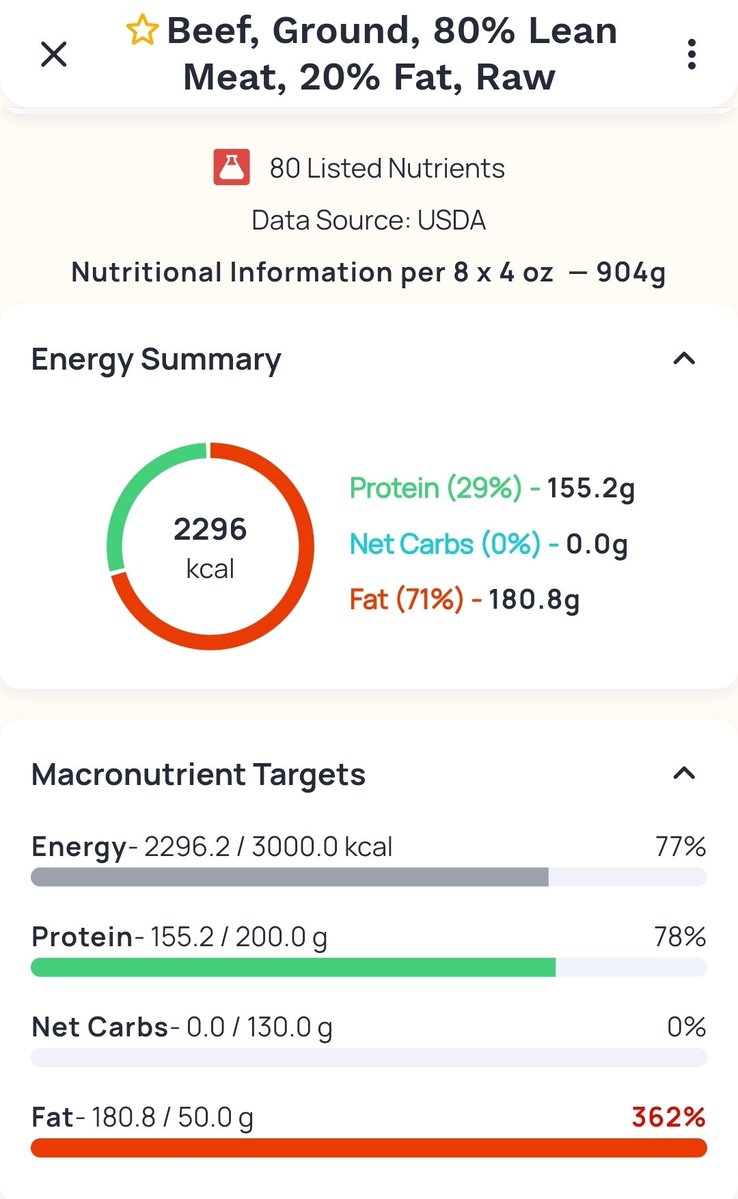
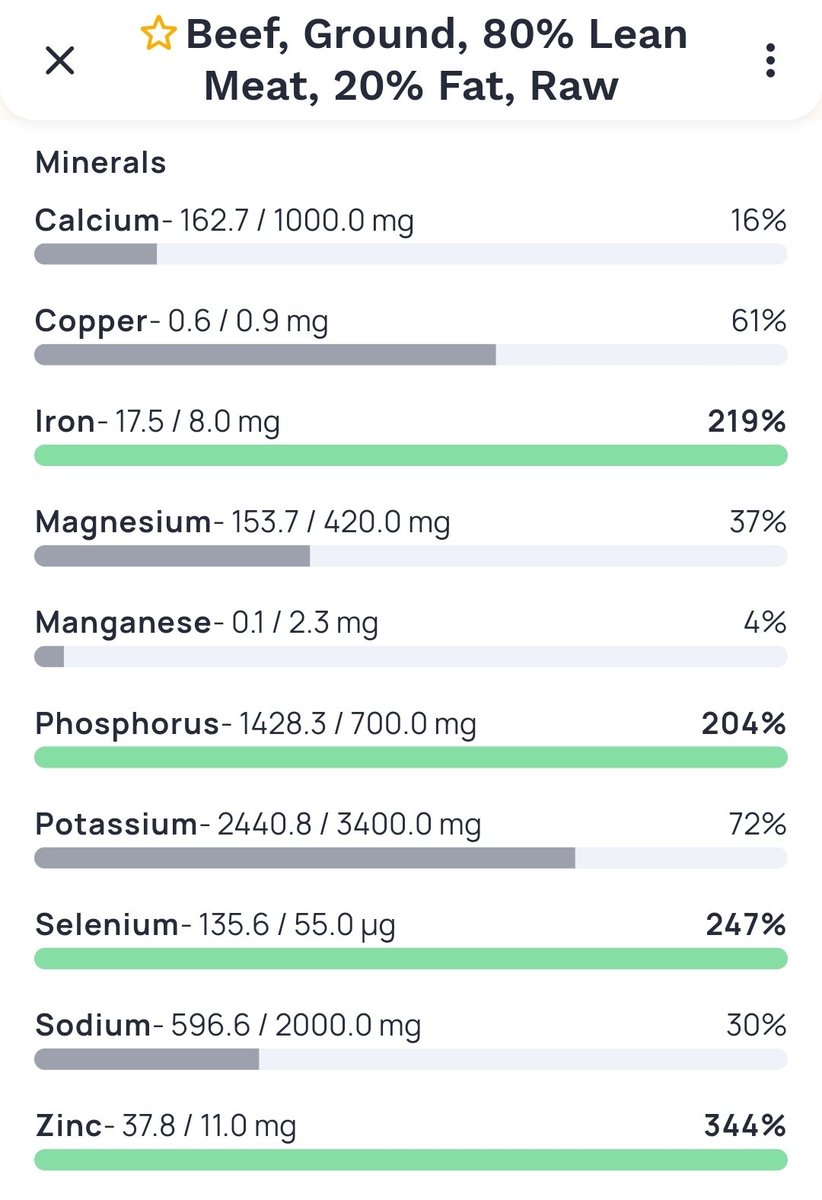
My last post about the nutrient inadequacy of ground beef received some interesting comments from the carnivore crowd claiming that the RDA is irrelevant for them. It's common enough that I thought it deserves a post on its own, because it seems that many of these people simply don't understand what the RDAs represent and are engaging in motivated and other fallacious reasoning. First, the RDA is a statistical estimate derived from the average requirement (EAR), set high enough to cover ~97–98% of the population and prevent deficiency. They’re not perfect. They’re not individualized. And they’re definitely not optimal. They are simply safe intake levels to prevent deficiency in nearly everyone. They definitely shouldn't be seen as the goal, so to speak. Protein is a great example of this, where the RDA (0.8 g/kg) consistently underperforms for improving muscle mass, metabolic health, and healthy aging compared with higher intakes. It's absolutely true that many people require less than the RDA value for a given nutrient. That's built into the statistics of the RDA. But again, the RDAs should be seen as a floor, not a ceiling. And yes, nutrient requirements can shift depending on countless variables. Higher protein intake increases demand for cofactors like B6. Lower PUFA intake reduces the need for vitamin E. Being athletic increases the requirements for certain minerals. The issue with the carnivore crowd, in general, is that they seem to just assume that their diet reduces requirements for nutrients. If metabolism is truly changing, requirements should plausibly shift in both directions, not just conveniently downward. It's entirely plausible that a carnivore or ketogenic diet influences nutrient requirements. It's a completely different metabolic state than the general population that was studied for determining the RDAs. But which nutrients, to what extent (magnitude), and in which direction remain unknown because that research hasn't been conducted (as far as I'm aware). So, if you want to claim that nutrient requirements on carnivore meaningfully change in a certain direction, the burden of proof is on you to show a clear biological mechanism, controlled data demonstrating altered requirements, and/or long-term outcomes showing no deficiency or functional decline. Without any of that, you aren't making a scientific argument, you are just trying to rationalize your preferred way of eating. It's ideologically motivated and intellectually dishonest. And you can point to people who claim to eat carnivore for long periods of time, but anecdotes aren’t data. Not only do we have no way of determining what these people are actually eating or supplementing, but there's no controlled investigation of health outcomes. Just saying "they are doing fine" is ridiculous, especially because short-term tolerance isn’t long-term sufficiency and the absence of overt disease does not equal optimal nutrient status. I strongly recommend reading about Bruce Ames' Triage Theory which discusses how, during conditions of nutrient shortfall, the body prioritizes processes needed for survival over those needed for long-term health. You can run suboptimal levels for years before anything obvious shows up. So, if you want to argue that a carnivore diet meaningfully changes human nutrient requirements, go for it. But do it properly. Show the mechanism. Show the data. Show the outcomes.
English
6
3
31
2.9K
Alex Leaf
Alex Leaf@Alexleaf·
You’re misrepresenting what I said. There’s no contradiction in calling the RDA a floor while also acknowledging it wasn’t derived from a carnivore population. The reason it’s a floor is simple: Below the RDA, risk of deficiency increases, while above the RDA, risk generally decreases up to a much higher threshold where toxicity becomes relevant. So the safe zone exists above the RDA, not below it. I’ve already acknowledged that nutrient requirements can shift with diet. But you don’t get to assume they shift downward just because it’s convenient. If requirements truly change on a carnivore diet, then which nutrients change, in what direction, and by how much? That requires evidence, not assumptions or anecdotes. Also, anecdotes are, by definition, the most confounded form of evidence we have. You don’t know what someone is actually eating, supplementing, or doing lifestyle-wise, and you have zero control over variables. That’s exactly why the scientific method exists to filter signal from noise. Saying anecdotes should carry equal weight to controlled data is just abandoning any attempt to reliably understand the world. And to be clear, I never said carnivores are deficient or “killing themselves.” That’s a strawman. My point is simply that if you’re going to claim that a diet fundamentally changes human nutrient requirements, then you need to demonstrate that rather than vaguely gesturing that its the case to justify your preferred way of eating.
English
1
0
4
37
David Svendsen
David Svendsen@DavidSvendsen·
It seems like you're trying to have it both ways here. On the one hand, you cite RDA as being a floor not a ceiling. But at the same time you acknowledge that RDA was not calculated based this style of eating. So how can you conclude if it's a floor or a ceiling? And on which specific nutrients? With regard to studies, I don't think they should carry any more relevance to a person's decision making than anecdotes. In even the most carefully controlled and rigorous studies, there is never an absolute 100% result. Some percentage of the cohort responds counter to the rest - or to a statistically insignificant degree that is unexplainable in the data. So unless a person was actually one of the study participants, the results are just a signal. They're not a foregone conclusion about what *will* happen to every person. This is where anecdotes can make all the difference. Taking cues and evidence from the world and people around us is as human as anything else we do. Dismissing it as unscientific is just modern semantics. Testimony, judging people's credibility, ad hoc experiments, and personal trial & error are how people stayed alive and evolved long before journals were elevated to the status Holy Scripture. Where I agree with you: Carnivore deserves more academic level study. I think the combination of personal experiences with controlled data will make for better guidance on how people approach the diet. Until then, the critics of carnivore are guilty of the same charge they levy against those on the diet. They're drawing conclusions in the absence of the very kind of evidence they insist is needed before reaching a conclusion. And their conclusions are always negative. The critics ought to be the ones proving something if they're so sure about it. Finally, suggesting that carnivores are all nutrient deficient and killing themselves, when nearly everyone on the diet looks and feels better than they did on omnivore diets, is peak gaslighting. Trying to convince the people that they're not actually healthier than they used to be. That kind of criticism diminishes the credibility of those who render it.
English
1
0
0
38
Alex Leaf
Alex Leaf@Alexleaf·
@popeyecubs68 The RDA is an estimation based on averages that would cover the requirements of 95% of the population. People need different amounts of each, so this attempts to cover all the bases since you have no way of knowing how much you actually require.
English
3
0
1
210
Roberto Vallarino
Roberto Vallarino@popeyecubs68·
@Alexleaf Aren't RDAs an average? Wouldn't those smaller people need less than the average?
English
1
0
1
245
Tellit Likeitis
Tellit Likeitis@Tellit007·
@bigfatsurprise @dramerling @SamaHoole You congratulated someone for calling Keys "fraudulent junk science." The accusation is itself based on a misreading of the primary sources. One that your book helped popularize.
English
2
0
5
116
Alex Leaf
Alex Leaf@Alexleaf·
Editor's note: there's no empirical evidence suggesting that "dysfunctional hormones trap fat in storage". In fact, those with obesity and insulin resistance often have leakage from their fat stores into circulation because insulin can't keep it locked away. Maybe there is some wonky condition out there where this is genuinely the case, but that would be an overwhelmingly rare exception to the rule and unapplicable to most people.
Elie Jarrouge, MD@ElieJarrougeMD

Body fat storage is hormonally regulated. Body fat breakdown is hormonally regulated. Yes, the law of thermodynamics still applies. But the calorie model assumes your body can freely access stored energy. In metabolic dysfunction, that’s NOT the case. If your dysfunctional hormones trap fat in storage, your body increases hunger and lowers energy long before it burns that fat even while carrying 100+ pounds of stored energy. That’s not a willpower problem. That’s physiology. But we still tell people to “just eat less and exercise more.” 🤦🏻‍♂️

English
2
2
14
2.9K
Chris V MD
Chris V MD@ChrisVMDHealth·
@AntiDoc Depends on your device's wattage and your distance from it and the goal (skin/injury recovery/etc). Ari Whitten (who I believe works with @Alexleaf ) wrote a guide linked below. He wrote a book as well that was a quick airplane read for me. theenergyblueprint.com/wp-content/upl…
English
1
0
6
506
AntiDoc
AntiDoc@AntiDoc·
Who’s the best with red light here? This massive emr tek panel is staring me down, and it looks easy enough that I could sit in it for an otherwise unreasonable amount of time and talk about what actually happens. Is the UV light one better? Will this allow me to finally stop bone smashing? Can it give me anything other than power bill gains? Seems like a solid experiment
English
23
1
58
16.4K
Alex Leaf
Alex Leaf@Alexleaf·
Lux found a juvenile Gopher snake. So cute. I'd keep it as a pet if I could. Great pest control to have in the area.
Alex Leaf tweet mediaAlex Leaf tweet mediaAlex Leaf tweet media
English
0
1
3
386
Alex Leaf
Alex Leaf@Alexleaf·
@JustinMihaly You made a dumb post but your ego is apparently too big for you to accept that, so you came here instead to make a passively sarcastic comment that doesn't engage with anything I said and has no relevance to our conversation at all.
English
1
0
1
39
Justin Mihaly
Justin Mihaly@JustinMihaly·
@Alexleaf thanks for teaching me about bodybuilding preps you seem like quite the tier one expert here. hopefully next you’ll teach me about your expertise in division one athletes and their hydration status too 💀
English
1
0
0
36
Justin Mihaly
Justin Mihaly@JustinMihaly·
This is false information Dr Berg isn’t someone I often agree with yet he is right here As seen ALL THE TIME in bodybuilding competitions: drinking water without appropriate potassium and sodium levels, namely; does in fact dehydrate you
Alex Leaf@Alexleaf

Editor's note: Drinking water does not dehydrate you, ever. If you have deficiency problems with certain electrolytes, then its never ever going to be a problem with the type of water you drink. You get minerals from food.

English
4
1
4
3.1K
Alex Leaf
Alex Leaf@Alexleaf·
@r2d22026 Yes, but that is over-hydration not dehydration. And "excessive" is the key word. The kidney can excrete about 20-28 liters of water a day to control water load.
English
0
0
2
35
no
no@r2d22026·
@Alexleaf Doesn’t excessive water dilute your electrolytes?
English
1
0
0
18
Alex Leaf
Alex Leaf@Alexleaf·
Editor's note: Drinking water does not dehydrate you, ever. If you have deficiency problems with certain electrolytes, then its never ever going to be a problem with the type of water you drink. You get minerals from food.
Dr. Eric Berg@dr_ericberg

Drinking just water in the morning, when blood volume is lowest, may dilute electrolytes and increase dehydration. Adding a pinch of sea salt can help retain water in the bloodstream and improve how you feel.

English
28
9
147
15.9K
Roxana Soetebeer, MPHC NNP MHP PFC
Craig Emmerich on stage at CoSci, Las Vegas: Lipotoxicity and glucotoxicity are not separate problems. They are two sides of the same coin: energy toxicity. When glycogen and fat storage are full, excess fuel spills into the liver, pancreas, muscle, and bloodstream. That overflow drives insulin resistance, rising triglycerides, and chronically elevated fasting insulin, often long before glucose rises. The key concept: the personal fat threshold. Metabolic disease is not just about body weight, but where excess energy ends up. @emmerich_craig @realCSF
Roxana Soetebeer, MPHC NNP MHP PFC tweet media
English
2
3
29
983
Alex Leaf
Alex Leaf@Alexleaf·
@emmerich_craig @REV_Insulin_Res A much needed reminder at conferences like this where many still subscribe to illogical causes of type 2 diabetes (e.g., carbohydrates). Great job.
English
2
0
3
63
Alex Leaf
Alex Leaf@Alexleaf·
@LelandMass52513 That's the opposite: overhydration. Also completely irrelevant to my point.
English
1
0
1
59
Leland Massaro
Leland Massaro@LelandMass52513·
@Alexleaf I beg to differ. You ever drink 2-3 gallons of water everyday? Straight dehydration
English
1
0
0
65
Alex Leaf
Alex Leaf@Alexleaf·
Hyponatremia from excessive water intake is a completely different issue and totally irrelevant here. It also doesn’t mean that drinking plain water causes dehydration. It means that any substance can become harmful at extreme doses, including water. The claim being discussed here is that normal water intake somehow worsens hydration by diluting electrolytes. That’s not how human physiology works.
English
2
0
6
149
Mike 🇨🇦 🇬🇧 🏴󠁧󠁢󠁷󠁬󠁳󠁿🇺🇦
@Alexleaf A high intake of water combined with certain activities or a multitude of acute or chronic illness may cause water intoxication. Symptoms of hyponatremia must be treated as a medical emergency. Drinking 3 l of water while running a marathon is sufficient to induce hyponatremia.
English
2
0
2
179
Alex Leaf
Alex Leaf@Alexleaf·
Oh geez. The claim I’m pushing back on is that drinking plain water increases dehydration. That’s physiologically backwards. Electrolytes can absolutely be useful in specific contexts like prolonged sweating, endurance events, extreme heat, etc. I've never claimed otherwise. And that’s very different from suggesting that drinking water in the morning somehow worsens hydration unless you add salt. The body regulates plasma osmolality and electrolytes very tightly. For the average person eating a normal diet, hydration status is overwhelmingly determined by total fluid intake, not whether the water contains minerals.
English
1
0
6
114
David P -
David P -@dPeeri·
@Alexleaf The claim that you should get minerals from food and not from water is the one that is problematic and/or vague. Your other implied claim is that topping up with electrolytes for the average person has no benefit and cannot contribute to rehydration.
English
1
0
0
100
Joanie J. 🇺🇸
Joanie J. 🇺🇸@joaniej0243·
@Alexleaf @redwhitebluejj No one is saying any of that. You're either an idiot or just willfully ignorant. One thing you might ask yourself is why you're so intimidated by Dr. Berg?
English
1
0
0
16