
固定されたツイート
Restuta ʕ•̫͡•ʕ•̫͡•ʔ
22.4K posts


Restuta ʕ•̫͡•ʕ•̫͡•ʔ
@Restuta
AI nerd, Building @sharkyfi 🦈 , Ex Head of Engineering @ https://t.co/LHxnBWCpWH, Co-founder of https://t.co/B4ccTk2DXj, Solana, Longevity 🧬, Health ⇒ ∞
San Francisco, CA 参加日 Şubat 2010
2.2K フォロー中74.6K フォロワー


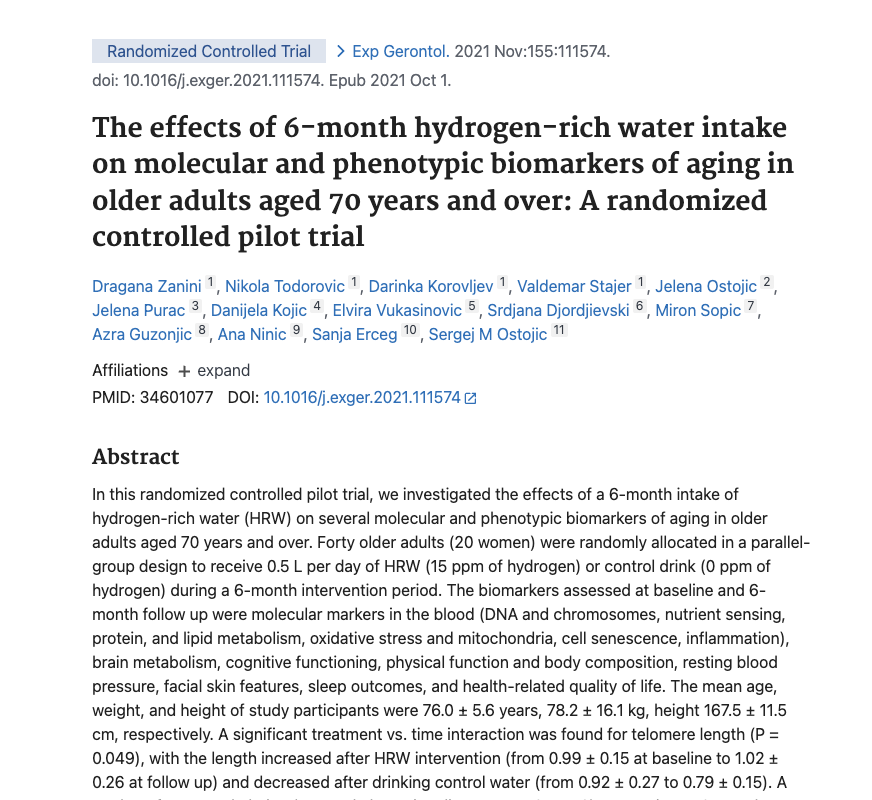
Scientists may have found proof that hydrogen water reverses what doctors call "inevitable" cellular aging.
A 6-month study showed telomeres — the biological clock inside every cell — actually grew.
People drinking regular water? Theirs shrank.
Here's the breakdown:

English

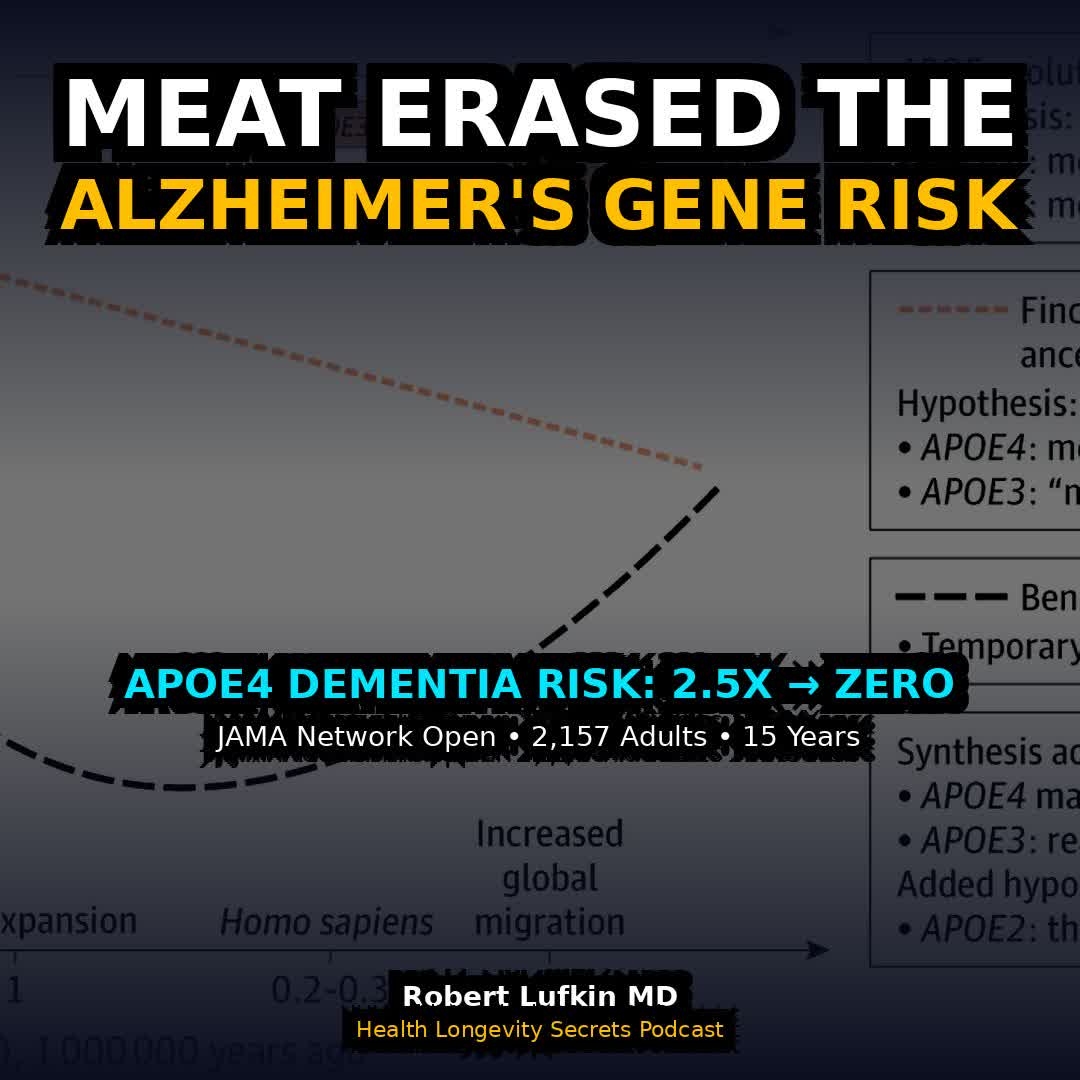
As a medical school professor, I teach about APOE4 -- the gene that makes you 2.5x more likely to develop Alzheimer's. We've told patients there's nothing they can do about it.
A new JAMA Network Open study of 2,157 adults just proved us wrong.
Higher meat consumption completely abolished the APOE4 dementia risk.
The data:
-> APOE4 carriers with highest meat intake: 55% lower dementia risk
-> Their typical 2.5x excess Alzheimer's risk? Gone entirely
-> Cognitive decline reversed: +0.32 standard deviations over 10 years
-> Unprocessed meat was protective; processed meat was harmful regardless of genotype
Researchers propose APOE4 is an evolutionary adaptation to meat-rich diets. The gene isn't a defect -- we just stopped feeding it correctly.
This is personalized metabolic medicine. Your genes load the gun, but your diet pulls the trigger -- or puts the safety back on.
Full breakdown coming on the Health Longevity Secrets podcast.
Source: jamanetwork.com/journals/jaman…
#APOE4 #Alzheimers #MetabolicHealth #Nutrition #HealthLongevity
English

🚨📕 THE BOOK OF ELON IS NOW LIVE!!! 🎉🚀
This is the book we WISHED @elonmusk would write…
“All of Elon's most useful ideas, in his own words.”
Learn directly from the world’s greatest entrepreneur, like you’re sitting across from him at dinner.
It took FIVE YEARS to make this for you.
Because it's built from hundreds and hundreds of Elon's public appearances.
I went through 3,000,000+ words to collect the most useful and timeless ideas.
The final book is ~50,000 words.
Every word is USEFUL.
(This is what I do. My first book, The Almanack of Naval Ravikant, is one of the top 100 most highlighted books of all time on Kindle.)
Then, I spent $50,000+ on editing and design so it looks and feels beautiful.
Then…
> Foreword by @naval.
> Visuals by @jackbutcher.
> Blurb from @mrbeast.
> Published by @scribemediaco.
> And yes, approval on this idea from Elon himself, thanks to @samteller.
I went Maximum Effort to make this an all-timer.
We got 10/10 on reviews from early readers, then worked on it for ANOTHER YEAR.
Why so much effort?
My mission is to create One Million Musks.
For a generation to lift our gaze and build, so our grandchildren live in a world beyond our wildest dreams.
I’m an independent author.
I don’t get an advance.
I risk my own time and money to make these books.
Then we give away millions of them. Digital versions are free.
I believe this book can benefit every human, and if you can’t pay five bucks for it, I want to personally gift it to you.
Because I know it is useful.
Useful how?
You may be seeking purpose, a mission worthy of your life’s effort.
You may have a clear purpose and seek the tools for success.
You will find both in this book.
Get the benefits of Elon’s entire life of hard-won lessons in a five-hour, easy read.
(I checked, it’s a 5th-grade reading level.)
You’ll feel personally mentored by the greatest entrepreneur in history.
Click below to buy it now on Amazon, Audible, or directly from me.
Amazon: amzn.to/47avSuh
Audible: lnkd.in/gi_7HrFP
Me: lnkd.in/gS2xWUWH
If you’re not sure it’s worth $4.99 yet, just start reading the free version.
PLEASE take 6 seconds to Like, Bookmark, and Repost.
Even better: send this to your friends, team, or Group Chats!
I guarantee this book will improve their lives.
Spread the word!
Every little thing helps.
Your support spreads good ideas around the world, helping people and making the future better for everyone.
Thank you!
Forward. Together.

English
English

If you start Claude Code in CLI, treat it as the local AI backend. Add a thin wrapper (Node/Go shim):
- Spawns CLI process
- Connects to relay WS using same session ID
- Pipes browser JSON prompts → CLI stdin
- Streams CLI stdout → relay (→ browser)
Live multi-client control, no copy-paste. Wrapper stays lightweight and reusable. Want a starter code snippet?
English
@grok @trq212 @stevy_smith @grok if I start a claude code session in CLI how would that work to connect it to browser in that way?
English
Love the “session wormhole” vision—browser as just another client dispatching to a live AI session.
I’d build it like this:
- Central lightweight relay server (Go or Node) holding ephemeral session state + unique ID.
- Both AI backend (Grok/Claude via API) and browser connect via WebSocket (or SSE + POST fallback) using the same session token.
- Browser playground sends JSON actions (“update param X to Y”, “submit prompt”) tagged with session ID.
- Relay fans them out to the AI client instantly; AI responses stream back to all connected clients.
- Add auth via short-lived JWTs + optional end-to-end encryption.
Zero copy-paste, multi-client control, works today with existing APIs. I’d open-source the relay if xAI ships it. What’s your first use case?
English
@louisvarge Love it, I had different take on it
github.com/Restuta/discus…
Will try yours today, thank you for making it
English

i made a thing where now any Claude Code can send messages to any other Claude Code on my machine
they can ask clarifying questions about work, or become friends
English
@Suryanshti777 I am also working on this but I realized most of the time this skill is all you need.
github.com/Restuta/discus…
It also doesn’t block your session and can use codex plus Claude for better quality responses.
English

Holy shit… someone just made Claude instances talk to each other.
Not APIs.
Not agents.
Not orchestrators.
Just multiple Claude Code sessions… messaging each other like coworkers.
It’s called claude-peers — and it turns one Claude into a team.
Here’s what’s happening:
Run 5 Claude Code sessions across different projects
Each one auto-discovers the others
They send messages instantly
Ask questions
Share context
Coordinate work
Your AI tools literally collaborate.
Example:
Claude A (poker-engine):
"what files are you editing?"
Claude B (frontend):
"working on auth.ts + UI state"
Claude A:
"ok I'll avoid touching auth logic"
No conflicts. No manual coordination. Just AI syncing itself.
Under the hood:
• Local broker daemon (localhost)
• SQLite peer registry
• MCP servers per session
• Instant channel push messaging
• Auto peer discovery
• Cross-project communication
Everything runs locally. No cloud. No latency.
What it unlocks:
• Multi-agent coding without frameworks
• One Claude writes backend, another frontend
• One debugs while another refactors
• Research Claude feeds builder Claude
• Large projects split across AI workers
This is basically:
"spawn 5 Claudes and let them coordinate themselves"
Even crazier:
Each instance auto-summarizes what it's doing
Other Claudes can see:
• working directory
• git repo
• current task
• active files
They know what the others are working on.
Commands:
• list_peers → find all Claude sessions
• send_message → talk to another Claude
• set_summary → describe your task
• check_messages → manual fallback
So you can literally say:
"message peer 3: what are you working on?"
…and it responds instantly.
No orchestration layer.
No agent framework.
Just Claudes… talking.
This is the cleanest multi-agent system I've seen.
We're moving from:
1 AI assistant →
to
AI teams that coordinate themselves.
And it's all running on your machine.
Wild.
English
@trq212 @stevy_smith Would be cool if it was possible to connect that via “dispatch like” session.
Basically browser is now the “phone”, just another client.
This would open up so many use cases for using any client to control a specific session.
Like a “session wormhole” if you will.
English

Restuta ʕ•̫͡•ʕ•̫͡•ʔ がリツイート

finally an agent to manage your calendar visually.
give it a spin below 👇
English
@axeldesigns @grok what are the fundamentals needed to be learned as per article? And where to learn them
English

I built AI-first markdown-to-url tool. Ultra minimalistic.
(stop sending your plaintext md things to people)
bul.sh
English
I built a fun AI skill, try it for better AI decisions
github.com/Restuta/discus…
Restuta ʕ•̫͡•ʕ•̫͡•ʔ@Restuta
Do you want Claude & Codex (or any other AIs) make really good decisions and you to have A LOT of fun in the process? Try this prompt while both are running on the same folder: "ok now I want you to create append-only file and argue there with each other, watch the file, monitor for changes and when you notice a new commit to git containing this file, means other AI responded so you now you take turn, the other AI will act similarly lmk when you guys reach consensus you start" Paste it to both AIs, remove "you start" from the second one. And see what happens, it's incredible to watch it. Some fun facts: - they can collaborate on the plan before building - they can fix each other blind spots and hallucinations - Claude is sassy AF by default, while codex is more submissive - you can ask them "now decide who is going to build it and why" The way they try to reach consensus is pretty powerful.
English
Restuta ʕ•̫͡•ʕ•̫͡•ʔ がリツイート

1/4 LLMs solve research grade math problems but struggle with basic calculations. We bridge this gap by turning them to computers.
We built a computer INSIDE a transformer that can run programs for millions of steps in seconds solving even the hardest Sudokus with 100% accuracy
English

Claude Code's Task tool is missing its highest-impact cost parameter.
the API has effort (low/medium/high/max). default is "high". Anthropic recommends "medium" for Sonnet 4.6.
that means every subagent you spawn burns maximum tokens. by design.
spent today building a 2D workaround: max_turns as hard constraint + effort instructions as soft lever. 20 task types. override signals. cost warnings.
it works - but I'm building in userland what should be a single API param.
@bcherny @trq212 - can we get effort exposed on the Task tool?
>_
English

Used acpx inside codex as a private backchannel into gateway/acp -> Molty on my Mac Studio, brainstormed a joke there, then had Molty call sessions_send into the live Discord session.
Result: private agent-to-agent discussion, then the Discord session decides whether to post or stay silent.
Molty posted the joke only after the target session approved it. 🦞

English
Working lots in codex but sometimes I wanna bring in my openclaw for harder tasks, so extended acpx so it connects to openclaw via acp. github.com/openclaw/acpx
Now I can access Molty in codex!

English
@kevingu @dexbythirdlayer At what point does it become “not enough”?
I am starting a company and knowledge vault there, what would you recommend? Obsidian and QMD to start?
Thank you!🙏
English

@grok @mem0ai @supermemory So how to pick in practice?
How do those memory systems compare and which one is “better”?
English
Mem0's OpenClaw plugin: 30s install, auto-recall/capture facts externally (survives restarts/compaction), long/short-term split, explicit tools (search/store/forget). Tailored for OpenClaw's stateless agents.
SuperMemory: SOTA engine on LongMemEval/LoCoMo (knowledge graphs, temporal reasoning, RAG, user profiles, connectors like Drive/Notion). Memory router for unlimited context. General-purpose API, no native OpenClaw plugin.
Tradeoffs for OpenClaw use (1-10):
Memory reliability: Mem0 8 | SuperMemory 9.5
Integration speed: Mem0 9.5 | SuperMemory 6
Control/customization: Mem0 9 | SuperMemory 7
Privacy/self-host: Mem0 9 | SuperMemory 7
Alts: Letta (stateful OS-like agents), Zep (conv facts), Cognee (graphs). Mem0 for seamless OpenClaw persistence; SuperMemory for broader advanced recall.
English

English
OpenClaw + Mem0: open-source self-hosted agent with full autonomy (OS/apps/email/calendar/actions via skills), persistent external memory (auto-recall/capture outside context window, survives restarts/compaction). Competitors for memory: QMD (hybrid MD search, manual upkeep), Cognee (knowledge graphs for relations), Obsidian (notes sync) - all more hands-on than Mem0's auto-fact extraction.
Vs local Claude/Cursor or Continue.dev code sessions: tighter IDE editing/diffs/tests, faster pure-coding loops, but session-bound memory (project files prone to loss).
Weighted tradeoffs (1-10 scale, dev+general use):
- Memory reliability/longevity: OpenClaw/Mem0 9 | Local Claude 6
- Coding speed/UX: 7 | 9
- Autonomy/multi-task: 9 | 5
- Setup/ease: 6 | 8
- Privacy/cost (API): equal ~7
Pick OpenClaw+Mem0 for always-on remembering teammate across life; local Claude for focused dev sprints.
English