

Timo Mulder - eu/acc 🇪🇺🇳🇱
9.4K posts

@TimoMulder
(interim) Transformations | Product Management | Agile Coaching | Venture Building | Angel Investing


I had one of the legends of angel and seed investing on Uncapped, @RonConway. He's the founder of SV Angel been an early backer of companies like Google, Facebook, Airbnb, and many more. We talked about the evolution of tech, being an actively involved investor, the power of being a relationship broker, fighting hard for founders, and some of his stronger feeling in politics. It was a pleasure to sit down with him. (Also fun to record a podcast episode at a live event, thank you TrueBridge) (0:00) Intro (1:50) From semiconductors to AI (8:39) Two investments that changed everything (11:46) Non-passive angel investing (14:57) Becoming a relationship broker (18:00) Building authentic relationships (24:48) Going deep with OpenAI and Airbnb (29:19) Fighting for founders (31:39) Remarkable returns at seed (33:20) The state wealth tax (37:17) Tech and politics

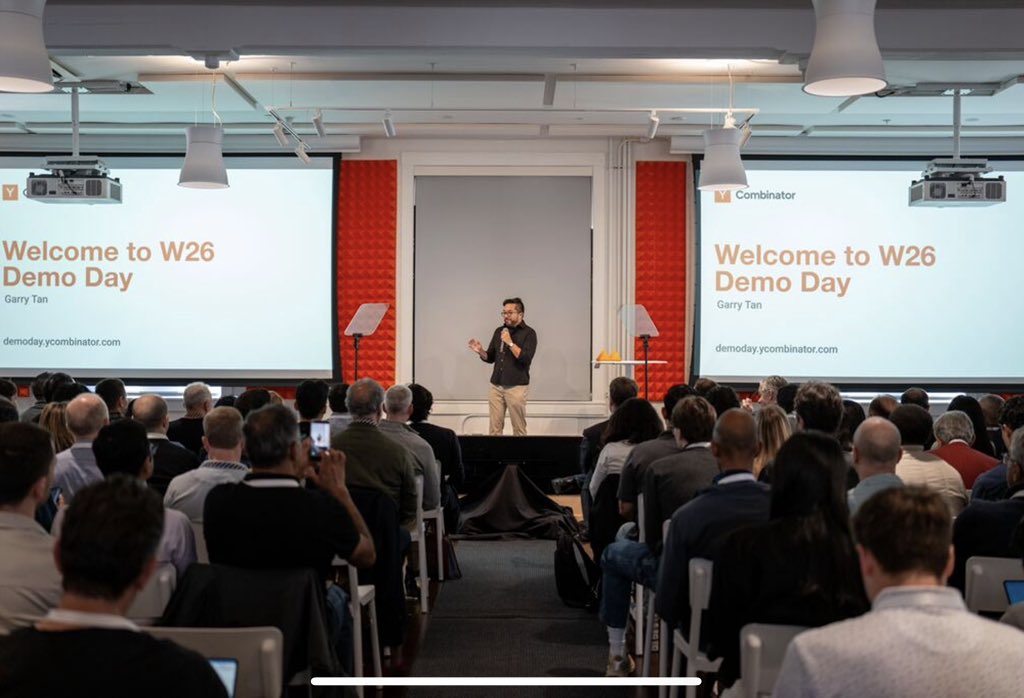
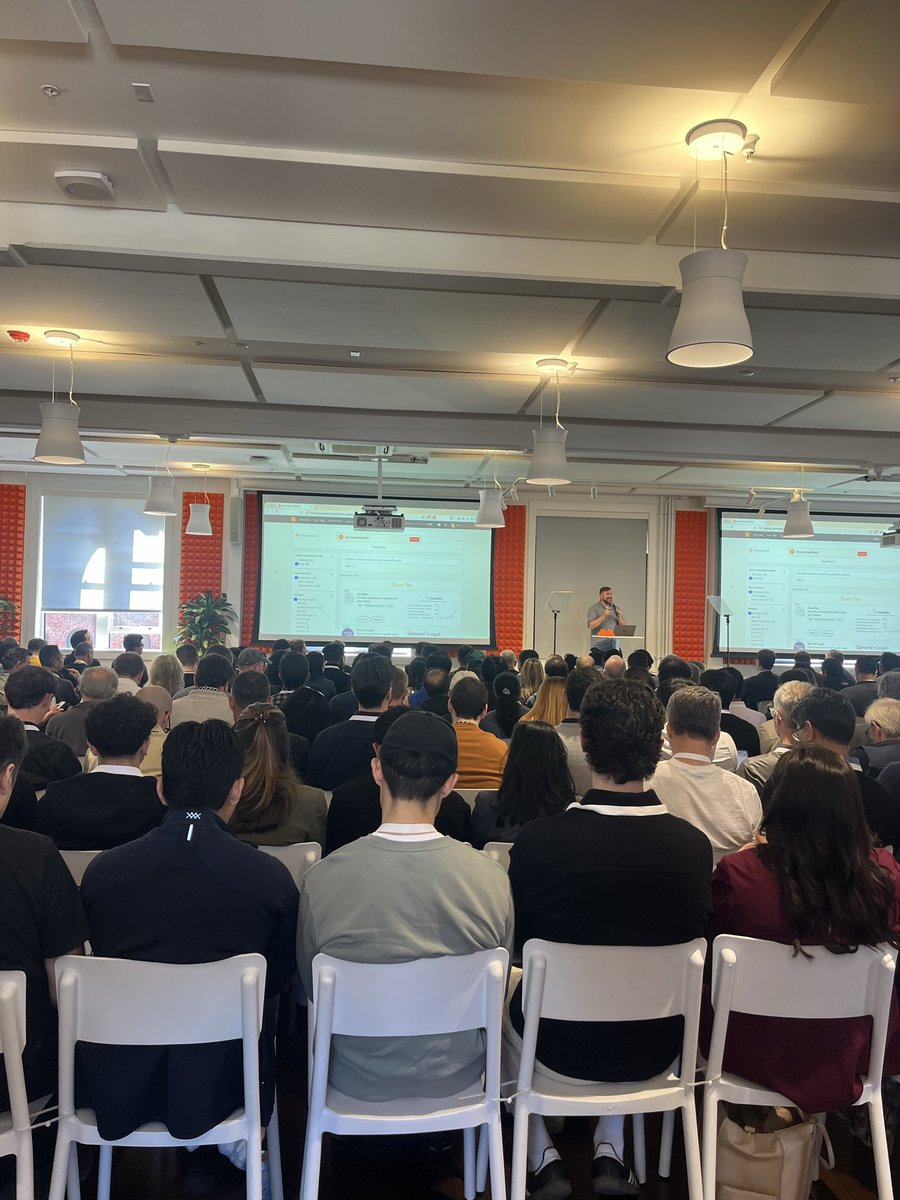
Spent the day at @ycombinator's W26 Demo Day in San Francisco, and a few things stood out from @garrytan's opening remarks: • ~90% of the batch is AI • Solo founders can now build faster than entire teams could just a few years ago • Garry said he's built more software this year than in all of 2013 when he founded @posthaven and expects 20× that output over the rest of 2026 • Companies in the batch are averaging ~14% weekly revenue growth • 14 companies are already at $1M+ ARR • 23,000 applications were received, with <1% accepted • ~70% of the batch applied with zero revenue My big takeaway: AI isn’t just another category in this batch; it’s foundational for building today. Also, fun seeing prolific YC startup investor @JoeMontana join one company’s pitch on stage. And great to see so many fellow @pioneer_fund investors, including @rhs and @taro_f, as well. The pace founders can move at right now is mind blowing, and the future is bright.


David Sinclair said: "You can reverse aging by 75% in 6 weeks… by reinstalling the "software" of the body so that it's young again." This idea sprouted when he proved in his first experiment that you can accelerate aging in mice: "We took two mice born on the same day—same age, same genetics. We 'scratched the CD' of one mouse, corrupting its software and accelerating its aging. The result was dramatic. One looked far older than its brother." He believed if you can give aging, you can also take it away. Tomorrow, I'll share his experiment on how he reversed aging in mice (and then Monkeys). — @davidasinclair

The first human age-reversal trial is officially happening. But before the FDA cleared it, Harvard professor David Sinclair had to pull off a mice experiment most scientists thought was impossible: "These mice had their optic nerve regenerated. We were able to show that using [the information theory of aging] method we could cure blindness in animal for the first time." Since then, he also discovered you could treat and reverse diseases like Alzheimer's, multiple sclerosis, ALS, kidney disease and liver disease in mice too: “It's not just the eye that can get reversed and cured of diseases. It's seemingly every part of the body.” It's what he calls "a universal reset of the body." He confirmed his method also worked in monkeys. Now humans are next. The FDA just cleared the first age-reversal trial. Life Biosciences raised $80 million to make it happen. As he put it: "The eye is just the beginning. We believe we can treat every tissue—a whole body reset."

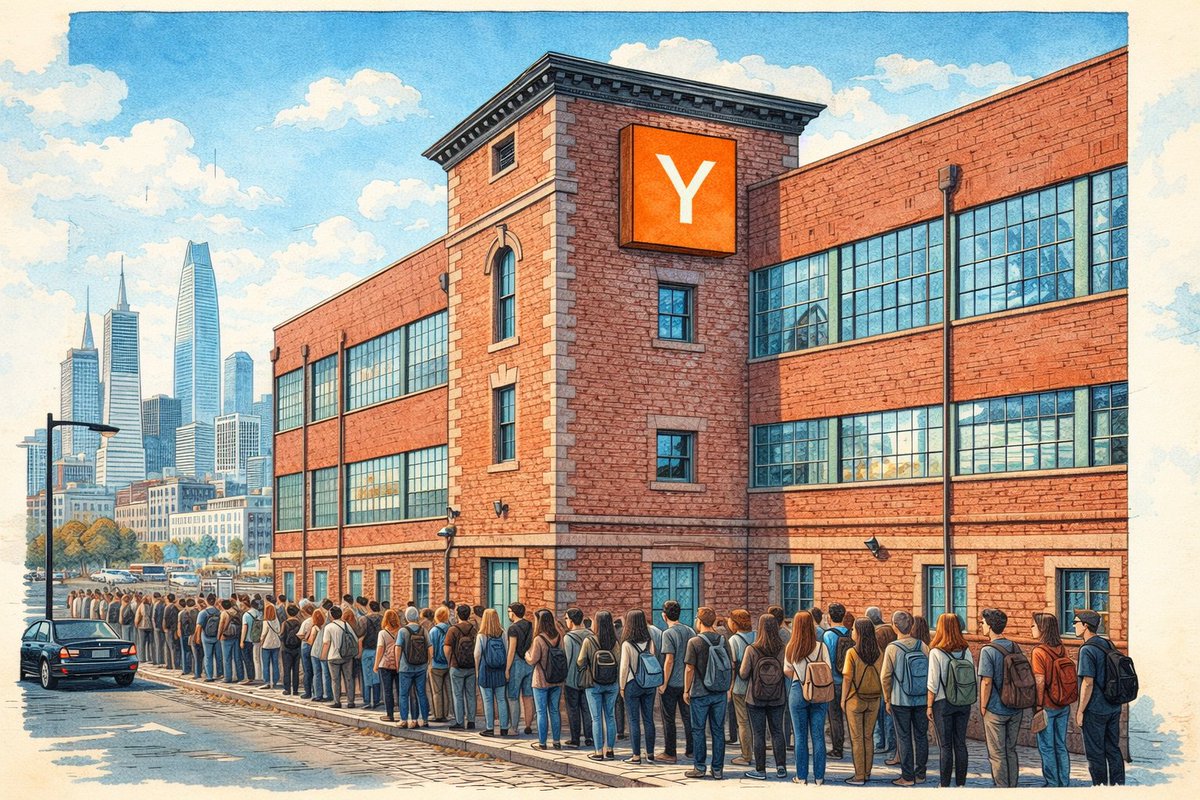
Garry Tan @garrytan just ran the sharpest VC marketing play I've seen in years. And most people watching missed the architecture of it entirely. Here's what happened: Garry Tan — president of Y Combinator — built and open-sourced GStack: 15 Claude Code skills for founders building with AI agents. The repo hit 37,000 stars and 4,600 forks. Then, buried at the end of the final output — after the tool had already designed your architecture, killed your over-engineered vector pipeline, reviewed your schema, and told you what to build next — came this: "What you just experienced is about 10% of the value you'd get working with a YC partner." "The other 90% is the network of founders who've done it before you, the batch pressure that makes you ship faster than you thought possible, weekly dinners where people who built billion-dollar companies tell you exactly what to do next." "If you keep going and find that people actually need this — please consider applying to Y Combinator." Then a link. Why this is a masterclass — not just in marketing, but in trust architecture: Most VC content follows the same sequence: Brand → claim → ask. "We're the best. Here's why. Apply to us." Garry reversed it entirely: Tool → proof → ask. "Here's something genuinely useful. Use it. Experience the value. Now imagine 10x of this, with humans." The ask doesn't come until after you've already felt the gap. That's not a pitch. That's a demonstration that creates its own desire. The specific line that makes it work: "The engineering barrier is gone. What remains is taste — and you just demonstrated that." That one sentence does three things simultaneously: Validates the founder reading it — you have taste Reframes what YC is selling — not funding, not resources, taste refinement at scale Makes the application feel like a natural next step rather than a cold ask Most accelerator pitches sell access to capital and networks. Garry is selling something more seductive: confirmation that you're the kind of person who belongs in the room. In a world where anyone can build with Claude Code over a weekend, the differentiation isn't technical capability. It's judgment. Taste. Knowing when to kill the vector pipeline. YC has always understood this. GStack just made the argument viscerally, experientially, in 15 skills worth of free value — before asking for anything in return. #YCombinator #GarryTan #GStack #ClaudeCode #StartupMarketing #TrustArchitecture #Founders #VentureCapital #AITools #ContentStrategy

David Sinclair said: "You can reverse aging by 75% in 6 weeks… by reinstalling the "software" of the body so that it's young again." This idea sprouted when he proved in his first experiment that you can accelerate aging in mice: "We took two mice born on the same day—same age, same genetics. We 'scratched the CD' of one mouse, corrupting its software and accelerating its aging. The result was dramatic. One looked far older than its brother." He believed if you can give aging, you can also take it away. Tomorrow, I'll share his experiment on how he reversed aging in mice (and then Monkeys). — @davidasinclair