

Rebecca Tiger
1K posts

Rebecca Tiger
@rtigernyc
professional observer, aspiring flâneur, persistent storyteller: @cowboyjamboree @ghostparachute @trampset @PitheadChapel Flash Fiction Editor @Blood_Honey_Lit
NYC & Athens 参加日 Nisan 2023
1.2K フォロー中700 フォロワー

Did a second open mic comedy night which means that my favourite hobby of talking shit in dive bars can officially be considered “working on my craft.”
English
@ForestMaven @amandafortini Yes, because emissions are countable so let’s judge the Google programmers for their bad grammar.
English
@amandafortini Wouldn’t it be “fewer emissions”? That always confuses me.
English

It annoys me that Google suggested this when I just searched a flight on my phone. Nudgy judgy little search engine, I’ll do it what I want!

English

It is with the heaviest of hearts that Cowboy Jamboree has learned of the passing of Sheldon Lee Compton last night. We know how many of you knew him & loved his work. He was a talent like no other. We're heartbroken for Sheldon and his kin. He was a giant. He will be missed.

English
@CowboyJamboree I just read a story is his last night. I am heartbroken too. What a loss.
English

just putting it out there that i will gush
Jeremiah moriarty@horse_updates
Making writers gush on camera about how grateful they are for institutional recognition and prize money… very darksided to me
English
This is so freaking good!!
Mythic Picnic@MythicPicnic
MASTHEAD v2 Mythic Micros from @GergleySteve @RelphJp @EricScotTryon @emilyrinkema @Christopher_All @moranpress @obaer @DelGeo14 @TommyDeanWriter @iaminfoian @gritvanwinkle & @AuthorJmcm Curated by @NathanBorn2010 / Nathan Pettigrew #MythicPicnicTweetStory === === We wanted to do a MASTHEAD series to celebrate the magazines and small presses — and the great people behind them — helping to create literature with little or no hope of compensation beyond the love of words and magazines and books. Because of them we’ve found new writers. And new friends. In this issue of MASTHEAD we have some of the people behind @scaffoldlitmag @TrashCatLit @flashfroglitmag @SmokeLong @moranpress Cthulhu Sex Magazine @rawlitmag @FracturedLit @uncharted_mag_ @fffict @CowboyJamboree & @frazzledlitmag — thank you all for what you do. === === Insomnia by Steve Gergley / @GergleySteve . For six-hundred days I couldn’t sleep, so I passed each night in my father’s armchair in the attic. There I listened to the rain clatter against the gambrel roof of the house. I watched the fuzzy dust motes tumble and twirl in the moonlight. I sunk into the slabs of soft leather and smelled the muddy musk of my sweat. Months later, on the hottest morning of the summer, as a glacier towered over the tops of the oaks and slowly carved a path through the cul-de-sac, I set up a camcorder on a tripod, returned to my father’s armchair, and beckoned my wife to the attic with a text. For the next year we sat sandwiched on the armchair together, grooming each other like cats, and watching the glacier through the tiny screen of the camcorder. Our clothes only survived six months. Our skin fused to the leather after eight. We invented a new language through touch and discovered staggering frontiers of bodily intimacy. I didn’t sleep. The glacier scratched closer to the house. The summer seemed to last forever. . Steve Gergley is the author of a bunch of books and a lot of weird writings of an indeterminate nature. His most recent book, There Are Some Floors Missing, was published by Bullshit Lit on February 20th, 2026. His fiction can be found at: stevegergleyauthor . wordpress . com. He's also the editor of scaffold literary magazine / @scaffoldlitmag === === My Daddy Became a Demonologist After Seeing Jesus in a Coffee Stain on His First Sobriety Chip by JP Relph / @RelphJp . He said it was God’s call. Started collecting fusty, leatherbound books with tanned pages. Learned to speak Latin. Hunkered in the den; reading, reciting. He didn’t have a bottle, didn’t stink up the place like a cheap bar – yet he still missed meals and baths, stayed up ‘til dawn. Little changed for us but blocking out rants in a foreign tongue. Daddy built an exorcist’s kit in a thrift store briefcase, wore black, collected water from churchyard puddles. He took me on his Godfearing missions: folks revered a small pigtailed child, whispering emphatically over a coiled rosary, didn’t question the veracity of the service Daddy purported to provide. We attended mansions, brownstones, farmhouses, trailer parks. Daddy said the devil’s acolytes disregarded status, sought weakness anywhere. Everywhere. With each exorcism, he become stubbled and strained in washed-grey, his voice growing heavy as rain-soaked earth, eyes dulling. I never believed anyone was possessed by anything unholy. Nobody burned when the puddle water splashed them. Folks growled, spat, vomited, cursed, but I only saw anguish. Desperation. For someone to see their pain. Hold their hand, kiss their forehead. Still, Daddy sent their demons somewhere. Left them weeping, hugging, promising change. Even as his own clawed him apart. Even as God let it. A cold, clear evil ever sloshed, bedeviled from liquor store doorways. Daddy never got the second chip. He emptied himself with his thirty-eight, spilling infernal red into the bathtub. The case was heavy at first, the Latin tongue-twisting. I don’t see God anywhere – not in mansions or trailers in weed-filled lots. I do see Daddy. In every washed-grey face, every dulled eye. I scream at demons with a little girl’s rage, fighting one that tears at my heart – because I saw, but didn’t how to exorcise. . JP Relph is a writer from Northwest England and editor of Trash Cat Lit (@TrashCatLit), a magazine dedicated to short fiction. She is hindered in all things by two cats and a thrifting addiction. Tea helps, milk first. JP has three short fiction collections and a co-authored novella in the wild. Her stories have been on the Wigleaf longlist and recommended in Ellen Datlow's Best Horror list. Best not to ask about The Novel, her eyes will roll right out her head. === === What I Want to Tell You the First Time You Mention Divorce in Front of Our Children by Eric Scot Tryon / @EricScotTryon . Tell me what you know about dismemberment. The tearing apart. The pull until something gives. Ligaments like piano wire. Tendons like the first memory of your father. Things that snap and break. And once detached there is no mending. No coming back together. Not like how clouds pull apart like taffy then reunite with shifting winds. Not like how water poured into water is water. The permanence of dismemberment doesn’t leave scars, it leaves large gaping cavities. Sink holes that swallow trees and houses and people like after-dinner mints. It is so much more than the mere separation of flesh. . Eric Scot Tryon is the Editor-in-Chief of Flash Frog (@flashfroglitmag). His debut novel I’m the Undertow drops this May. === === The Great Butter Baby Championship by Emily Rinkema / @emilyrinkema . She sits in a room full of women turning blocks of butter into babies. She works carefully, molding, dipping, kneading, wrapping until there is a baby-ish shape; cutting, squeezing, pinching, pressing until there is one fat little thigh, and then another; scraping, cupping, pushing, adding until the soft shoulders dip just right and the chin rests, barely, on the chest; brushing, smoothing, tweezing, etching until the tiny nose tips up at the end and the eyelashes separate into impossibly pale hairs. And then she loses, just like they said she would. Like they had told her from the start, like she had so many times before. They say stop crying, it’s okay, there’s always next year. They say, it just isn’t your time. She says, yeah, no, it’s fine, don’t worry, I’m fine, really, I’m fine, and she leaves her butter baby on the table like they tell her to. She climbs the stairs of the cold basement, so tired, counting each step, each one a foot taller than the one before until she’s crawling over the last step, pulling herself over the edge into the heat, way too hot for a butter baby, and I’m fine, fine, she says, leave me alone, she says to someone, maybe them, as she crawls across the parking lot, butter on her palms, under her fingernails, on her breasts where she had wiped her hands. . Emily Rinkema lives in Vermont. She is the assistant editor at Flash Frog (@flashfroglitmag), and her stories have been selected for Wigleaf Top 50, Best Small Fictions, and Best American Nonrequired. === === Falling Man by Christopher Allen / @Christopher_All . In the voice of your husband looking down from the cliff: I could have saved you if we’d both had Velcro hands. In the voice of James Earl Jones: If only you’d been a different man on a different path with a different husband. In the voice of a thousand crickets slowed and remixed to sound like a Lutheran choir lulling you, just one more falling man, into a delusive sense of drifting: Impact’s just a bump at the end of a light and lengthy phrase. In the voice of the countless stars: A Gemini and a Leo? Did you really think he’d save you? You should have married an Aries. In the voice of your stocky physics professor raging at the sky: An 18-wheeler passing the hospital during this man’s birth pulled more on him than any of you ever did! In the voice of Sally Field playing Sybil playing Sid: Everyone has their cliff to fall from, everyone their rock below. In the voice of a Veteran’s Day parade reechoing the angry cries of your father: If I’d known you were on that cliff, I’d have rushed there to unweight the world. In the voice of your mother cramming the wrong breast into your mouth, in the voice of Reason, in the voice of a doctor’s stinging hand, in the voice of ambiguity, in the voice of dynamite, in the voice of Ah-hah! In your own stilly words, even if you’ve found them a second too late: I’m sorry, Father, that I didn’t call. But you couldn’t have wrested me from this world. . Christopher Allen is the author of the flash collection Other Household Toxins and the satire Conversations with S. Teri O'Type. Allen, a nomad, is the owner and editor-in-chief of SmokeLong Quarterly / @SmokeLong === === DARKNESS by Stephen Moran / @moranpress . George woke later than usual, the morning sun pouring through the windows into his eyes. Rolling off the bed, he hurriedly pulled on pants before walking on stiff legs into the living room. He began his morning routine with practiced movements, one hand clutching the television remote, the other running water for coffee. George made breakfast as a newsman intoned reports of a looming global war. America declares war on Iran and several former allies… but George was no longer listening and clicked off the television, his attention drawn to the windows overlooking the street. Moving closer for a better view, his mouth dropped open, the sky was filled with fluttering black objects. Opening the front door, he bound down the steps and saw piles of black rose petals. He picked one off the ground, feeling the softness against his palm as he traced a finger over it. The neighbors stood chatting on porches and pedestrians walked unconcerned on the sidewalks, not one of whom gave a sign of noticing the phenomenon. At a café across the street, a man stood in a doorway smoking a pipe. “Do you not see the rose petals?” George asked the man. “I don’t know what you’re talking about. You’re crazy.” Dark ominous clouds suddenly filled the sky, petals falling in greater numbers and intensity. George watched the man with pipe pointing at the sky, finally aware something important was happening, his cries bringing several café employees onto the sidewalk. George lifted a hand above his head to shield himself, the pile of rose petals at his feet growing, the light of early afternoon a faded memory. A great darkness descended from the heavens, covering the entire sky with terrible speed. He heard, first singular and then with greater frequency, screams piercing the air, moments before a blinding flash of light and deafening roar shattered the horizon. . Stephen Moran is an author, publisher, and bookbinder. === === DARK TOUCH by Oliver Baer / @obaer . I was called to a sight today that gave me pause. A pause that sends chills up one’s spines (not sure why I believe I once had multiple spines) and makes one wish for another line of work. There was a report of a disturbance at the corner of Houston Street and 2nd Avenue. As I approached the site, there was a large explosion followed by an unearthly scream and a loud thump as something hit my windshield. It was a head. I cursed, hit the brakes and called for backup. Upon arriving on the scene, I saw only rubble and among it pieces of what I thought were twisted metal. I tried to question people in the area as to the source of the explosion. No one seemed to know as they saw no one go into the structure and no one come out. As I started to pick my way through the rubble, I saw that what I thought were pieces of twisted metal were not metal at all. They were pieces of human beings shaped into supporting structures and strengthened in much the same way as carbonized steel. There was a shift in the rubble near me and a shadow stretched forth towards me. As it touched me, I felt a clamminess and a fell whispering in my mind. I jerked myself away and stumbled over the rubble towards my car as fast as I could. I cannot tell you what horrors it related to me in that moment. But I swear it is still around looking for a way to make itself whole. Looking for something that will complete it. Looking for a place that it can hole up until it can enact its terrible revenge. Perhaps I should warn my informant his fears are true. . Oliver Baer was the editor for Cthulhu Sex Magazine and Two Backed Books. Now, he edits roleplaying game manuals for gaming companies. He writes dark poetry and horror stories. He has two books out, Letters to the Editor of Cthulhu Sex Magazine and Baer Soul. His website: https:// tentacularity . wordpress . com === === Ava’s Nine Lives by Delphine Gauthier-Georgakopoulos / @DelGeo14 . She lost the first to the umbilical cord wrapped around her neck as she turned blue and voiceless and no amount of butt-slapping could have saved her had the doctor not reacted fast enough and cut off the snake strangling her. She lost the second to a pond. A stupid pond that turned out to be deeper than her toddler’s brain. Her screams drowned underwater until a stranger’s hand reached for her sleeve and pulled her out. She lost the third being young and finally free to be loud and happy and an idiot. She lost the fourth to faulty brakes, tired tires, and Sahara sand covering a muddy-rained on road. She screamed when she regained control just short of hitting the pavement and a couple of passers-by. She lost the fifth during her third surgery that almost went wrong but then didn’t and she’d signed all the waivers and her waking up might have been a dream or might not and she had no idea so she chose to forget the whole thing. She lost the sixth to bacteria. And she will never forget how much mayhem those tiny non-creatures created, or the silent pain that made her groan. She lost the seventh somewhere along with her heart, when her ‘broken’ got so hurtful she started eating and drinking her feelings to keep them quiet. She lost the eighth to polyps invading her insides and throwing a bloody party all around. She got to take a look at them once they were out, and swore never to eat chicken liver again—just the thought makes her gag. She gets worried about the ninth, so she quits smoking, coffee, binging, and starts exercising. But while she squats and pushes up, she hears her grandmother’s clock ticking and knows no amount of ‘healthy’ will stop it from chirping. Cuckoo. . Delphine Gauthier-Georgakopoulos is the founder & EIC of Raw Lit @rawlitmag & co-founder of The Pride Roars @PrideRoars94731. Her debut historical novel, Laundry Day, was a Novel Fair runner-up. She lives in Athens, Greece. https:// delphinegg . weebly . com/ === === In High Places, We Tremble by Tommy Dean / @TommyDeanWriter . Repairing the roof was a nightmare. Each piece of shingling a cost he couldn’t compute. His wife suggested he do it by himself. How hard could it be? He had never told her about his fear of heights, of being dangled off a hotel balcony, his feet kicking in the air. He owed money, gambling as a teenager and as a man. Their finances in ruins. He ordered the shingles. A ladder. A nail gun. All on credit. She left for the weekend. A trip to her parents. Leaving him with the ghosts of his mistakes. On the roof, shadowed. . Tommy Dean Literary Agent, Rosecliff Literary EIC, Fractured Lit & Uncharted / @FracturedLit / @uncharted_mag_ === === Regime Change by Ryan Deysher . The first mayor of the village had no head, limbs, or body. It was just a pile of hair. The village was peaceful and prosperous during the pile of hair’s reign, so the mayor was considered judicious. This all changed on a night many years ago. A swift wind blew from the mountainside and shifted the pile of hair slightly off-kilter, thus creating a new hairstyle. Almost immediately, the village’s luck turned. At the very least, the villagers noticed a vague sense of cultural erosion, alongside a feeling of unease. The villagers spoke privately in hushed tones about their struggles. They came to the conclusion that their woes were the result of a tyrannical turn the pile of hair had recently taken, coinciding with the swift wind that blew its follicles slightly askew. A new era of unrest had begun. One day, in the throes of the village’s unrestful period, a farmer’s pig escaped from its pen. For days, the pig wantonly rooted around the village, symbolic of the chaos. Eventually, the pig made its way to the residence of the mayor. The animal promptly gobbled up the pile of hair, in an event remembered for its violence. It was a revolution—a time of great change. The villagers were overjoyed at the demise of the dictatorial mayor, but were at a loss with what to do with the pig and the farmer that owned him. The laws of the village dictated that the murder of the mayor was the highest possible treason. It was an unprecedented case—one that required the guidance of experts. As such, the villagers brought the case to the Hall of Adjudicators, located atop the same mountain where the dark wind that had blown the mayor to evil originated. The Adjudicators were locked in deliberation for what seemed like an eon. Eventually, they descended the mountain to give their orders. It was determined that the pig would be given leniency, on account of the mayor’s unwitting evil. In a sense, the pig’s act was one of heroism, made all the more heroic by the fact that the pig was completely unaware of itself. One of the two cardinal truths as laid out by the Adjudicators was that the truest form of heroism is unwitting heroism. The caveat was that the pig’s owner had to be executed. His pig’s escape was a minor mistake and ultimately beneficial, but was brought on by unwittingness. The second of the two cardinals truths as laid out by the Adjudicators was that the truest form of evil is unwitting evil. This marked the end of the period of unrest. The villagers were satisfied with the clean conclusion of the case. The pig was elected mayor. It ruled peacefully for years, until a sudden cascade of water descended the mountainside, drowning the village. In an instant, the whole of history was erased. Years later, a new village was erected atop the remnants of the old village. The story about the pig developed alongside the new village, until the tale became a local legend. If asked, the villagers will recite it by heart with poetic gusto. It is quite the cultural experience. However, I implore you to leave it at that. Don’t you dare ask the locals for the meaning of the pig story. They don’t know and they don’t want to know. Neither do I. And why would you? Previously published in Free Flash Fiction / @fffict Selected and edited by Ian Rushton of Free Flash Fiction / @iaminfoian . Ryan Deysher is a writer living in Wilmington, DE. His work can be found in Beaver Magazine, Misery Tourism, and The Oakland Arts Review. @ hollywood . deysh === === Hobo Postcard by Adam Van Winkle / @gritvanwinkle . Seasick Steve loves Boxcar Bertha, but Boxcar Bertha loves Mississippi Bones and his caboose. They all love Joe Hill and his hardknocks. None know Utah Phillips but got all his problems and passions. No one seen where Woody went. Round the yard ain’t none of ‘em will batter, buzz, bum, cage, mooch, pan, panhandle, sell pencils, or touch hearts. Most just lookin’ to twist a dream at the end of something that looks like a work day. Some may head to the peanut farm, the pogey, but then that ain’t trampin’, ramblin’, vagabondin’ or wanderin’. You need train smoke and sweat with your cigarette and a bindle to tramp. Dinner gets cooked in a banjo and then comes the bull rush. Bulls from the Dope. Bulls from Foul Water & Dirty Cars. Bulls from the Horned Toad. Bulls from The Bum’s Own. Bulls bustin’ freeriders with All Tramps Sent Free. Bulls with buzzers from the buzzard’s roost. Bulls bust even mud chickens with yard jobs. Bulls bust even Mr. Block, no matter how good he thinks he is. Bulls got saps. Bulls is dicks and pussyfooters. Mushfakers. Jackrollers. Hashers. Lakers. Organ Grinders. Mop Marys. Jacks and Molls all. All on the hog. All on the hummer. No, no, not yet. A hobo’s work is never done. . Adam Van Winkle was born and raised in Texoma and named for the oldest Cartwright son on Bonanza. He now lives with his wife and two sons in South Carolina. He is the founder and editor of Cowboy Jamboree Press and Magazine / @CowboyJamboree In addition to publishing his fiction, poetry and creative nonfiction online and in print at places like Revolution John, Pithead Chapel, Cheap Pop!, BULL, The Dead Mule School of Southern Literature, Roi Faineant, and Red Dirt Forum, he has published several novels and plays with Red Dirt Press, Cowboy Jamboree Press, and LEFTOVER Books. His most recent book, Count the Dust, a radio play novel, was published by LEFTOVER in December 2025. === === The Greatest Short Story Ever Written by Jennifer McMahon / @AuthorJmcm / @frazzledlitmag . The greatest short story ever written was squeezed from the fertile imagination of Private Simon Durant, US Army Rangers, in Germany in late December 1944. He wrote it with a blunt pencil, in the tiniest of writing, on the cardboard of a torn-open pack of cigarettes, before bedding down for the night with his platoon in the ruins of a church. The next morning, in a brief skirmish with a crack Waffen SS unit, Private Durant was killed by a stray enemy bullet that struck him in the heart, passing through the breast pocket of his tunic, wherein he had placed the story. His blood obliterated all but the closing paragraph: ‘As the bullet cut through flesh and bone, as it shredded Dawson’s aorta, his final thought, in the very brief moment before he expired, was not of his fiancé back home in Maryland who’d prayed for his safe return. He thought only of the greatest short story ever written, and how no one would ever get to read it.’ Years later, the blood-stained slip of cardboard was sold at auction in Baltimore for one hundred thousand dollars, to a wealthy stockbroker named John Reynolds. Stopping at a liquor store to buy a celebratory bottle of champagne, John was shot in the chest by a stray bullet, a bystander in a robbery of the store. John’s final thoughts, in the moment before he expired, were not of his wife and two small children. He thought only of the greatest short story ever written, and how he would never get the opportunity to decipher its true meaning. The young man arrested and charged at the scene had this to say: ‘Bullets don’t discriminate. Sometimes you find them, and sometimes they find you. All that really matters, when the smoke clears away, is that your story is over and no one’s ever going to hear it.’ It might have given Reynolds some comfort had he known that these were precisely the words Private Durant had used in the opening lines of the greatest short story ever written. . Jennifer McMahon won the 2024 AIS Creative Writing Award, the Irish Writers Centre Novel Fair in 2023, has been shortlisted for Short Story of the Year at the Irish Book Awards (2023), the Bridport Short Story Prize and many other notable awards. She was also a second-place winner of the Oxford Prize (winter 2023), and was twice longlisted for the Bath Short Story Award. Her work appears in Crannog (2023 and 2025), HOWL, The Irish Independent, The Galway Review, and many other places. === end ===
English
English

Happy to be included in @MythicPicnic. I wrote HOBO POSTCARD based on my wife's mishearing of a @robertearlkeen lyric. Hope y'all dig it.
Mythic Picnic@MythicPicnic
MASTHEAD v2 Mythic Micros from @GergleySteve @RelphJp @EricScotTryon @emilyrinkema @Christopher_All @moranpress @obaer @DelGeo14 @TommyDeanWriter @iaminfoian @gritvanwinkle & @AuthorJmcm Curated by @NathanBorn2010 / Nathan Pettigrew #MythicPicnicTweetStory === === We wanted to do a MASTHEAD series to celebrate the magazines and small presses — and the great people behind them — helping to create literature with little or no hope of compensation beyond the love of words and magazines and books. Because of them we’ve found new writers. And new friends. In this issue of MASTHEAD we have some of the people behind @scaffoldlitmag @TrashCatLit @flashfroglitmag @SmokeLong @moranpress Cthulhu Sex Magazine @rawlitmag @FracturedLit @uncharted_mag_ @fffict @CowboyJamboree & @frazzledlitmag — thank you all for what you do. === === Insomnia by Steve Gergley / @GergleySteve . For six-hundred days I couldn’t sleep, so I passed each night in my father’s armchair in the attic. There I listened to the rain clatter against the gambrel roof of the house. I watched the fuzzy dust motes tumble and twirl in the moonlight. I sunk into the slabs of soft leather and smelled the muddy musk of my sweat. Months later, on the hottest morning of the summer, as a glacier towered over the tops of the oaks and slowly carved a path through the cul-de-sac, I set up a camcorder on a tripod, returned to my father’s armchair, and beckoned my wife to the attic with a text. For the next year we sat sandwiched on the armchair together, grooming each other like cats, and watching the glacier through the tiny screen of the camcorder. Our clothes only survived six months. Our skin fused to the leather after eight. We invented a new language through touch and discovered staggering frontiers of bodily intimacy. I didn’t sleep. The glacier scratched closer to the house. The summer seemed to last forever. . Steve Gergley is the author of a bunch of books and a lot of weird writings of an indeterminate nature. His most recent book, There Are Some Floors Missing, was published by Bullshit Lit on February 20th, 2026. His fiction can be found at: stevegergleyauthor . wordpress . com. He's also the editor of scaffold literary magazine / @scaffoldlitmag === === My Daddy Became a Demonologist After Seeing Jesus in a Coffee Stain on His First Sobriety Chip by JP Relph / @RelphJp . He said it was God’s call. Started collecting fusty, leatherbound books with tanned pages. Learned to speak Latin. Hunkered in the den; reading, reciting. He didn’t have a bottle, didn’t stink up the place like a cheap bar – yet he still missed meals and baths, stayed up ‘til dawn. Little changed for us but blocking out rants in a foreign tongue. Daddy built an exorcist’s kit in a thrift store briefcase, wore black, collected water from churchyard puddles. He took me on his Godfearing missions: folks revered a small pigtailed child, whispering emphatically over a coiled rosary, didn’t question the veracity of the service Daddy purported to provide. We attended mansions, brownstones, farmhouses, trailer parks. Daddy said the devil’s acolytes disregarded status, sought weakness anywhere. Everywhere. With each exorcism, he become stubbled and strained in washed-grey, his voice growing heavy as rain-soaked earth, eyes dulling. I never believed anyone was possessed by anything unholy. Nobody burned when the puddle water splashed them. Folks growled, spat, vomited, cursed, but I only saw anguish. Desperation. For someone to see their pain. Hold their hand, kiss their forehead. Still, Daddy sent their demons somewhere. Left them weeping, hugging, promising change. Even as his own clawed him apart. Even as God let it. A cold, clear evil ever sloshed, bedeviled from liquor store doorways. Daddy never got the second chip. He emptied himself with his thirty-eight, spilling infernal red into the bathtub. The case was heavy at first, the Latin tongue-twisting. I don’t see God anywhere – not in mansions or trailers in weed-filled lots. I do see Daddy. In every washed-grey face, every dulled eye. I scream at demons with a little girl’s rage, fighting one that tears at my heart – because I saw, but didn’t how to exorcise. . JP Relph is a writer from Northwest England and editor of Trash Cat Lit (@TrashCatLit), a magazine dedicated to short fiction. She is hindered in all things by two cats and a thrifting addiction. Tea helps, milk first. JP has three short fiction collections and a co-authored novella in the wild. Her stories have been on the Wigleaf longlist and recommended in Ellen Datlow's Best Horror list. Best not to ask about The Novel, her eyes will roll right out her head. === === What I Want to Tell You the First Time You Mention Divorce in Front of Our Children by Eric Scot Tryon / @EricScotTryon . Tell me what you know about dismemberment. The tearing apart. The pull until something gives. Ligaments like piano wire. Tendons like the first memory of your father. Things that snap and break. And once detached there is no mending. No coming back together. Not like how clouds pull apart like taffy then reunite with shifting winds. Not like how water poured into water is water. The permanence of dismemberment doesn’t leave scars, it leaves large gaping cavities. Sink holes that swallow trees and houses and people like after-dinner mints. It is so much more than the mere separation of flesh. . Eric Scot Tryon is the Editor-in-Chief of Flash Frog (@flashfroglitmag). His debut novel I’m the Undertow drops this May. === === The Great Butter Baby Championship by Emily Rinkema / @emilyrinkema . She sits in a room full of women turning blocks of butter into babies. She works carefully, molding, dipping, kneading, wrapping until there is a baby-ish shape; cutting, squeezing, pinching, pressing until there is one fat little thigh, and then another; scraping, cupping, pushing, adding until the soft shoulders dip just right and the chin rests, barely, on the chest; brushing, smoothing, tweezing, etching until the tiny nose tips up at the end and the eyelashes separate into impossibly pale hairs. And then she loses, just like they said she would. Like they had told her from the start, like she had so many times before. They say stop crying, it’s okay, there’s always next year. They say, it just isn’t your time. She says, yeah, no, it’s fine, don’t worry, I’m fine, really, I’m fine, and she leaves her butter baby on the table like they tell her to. She climbs the stairs of the cold basement, so tired, counting each step, each one a foot taller than the one before until she’s crawling over the last step, pulling herself over the edge into the heat, way too hot for a butter baby, and I’m fine, fine, she says, leave me alone, she says to someone, maybe them, as she crawls across the parking lot, butter on her palms, under her fingernails, on her breasts where she had wiped her hands. . Emily Rinkema lives in Vermont. She is the assistant editor at Flash Frog (@flashfroglitmag), and her stories have been selected for Wigleaf Top 50, Best Small Fictions, and Best American Nonrequired. === === Falling Man by Christopher Allen / @Christopher_All . In the voice of your husband looking down from the cliff: I could have saved you if we’d both had Velcro hands. In the voice of James Earl Jones: If only you’d been a different man on a different path with a different husband. In the voice of a thousand crickets slowed and remixed to sound like a Lutheran choir lulling you, just one more falling man, into a delusive sense of drifting: Impact’s just a bump at the end of a light and lengthy phrase. In the voice of the countless stars: A Gemini and a Leo? Did you really think he’d save you? You should have married an Aries. In the voice of your stocky physics professor raging at the sky: An 18-wheeler passing the hospital during this man’s birth pulled more on him than any of you ever did! In the voice of Sally Field playing Sybil playing Sid: Everyone has their cliff to fall from, everyone their rock below. In the voice of a Veteran’s Day parade reechoing the angry cries of your father: If I’d known you were on that cliff, I’d have rushed there to unweight the world. In the voice of your mother cramming the wrong breast into your mouth, in the voice of Reason, in the voice of a doctor’s stinging hand, in the voice of ambiguity, in the voice of dynamite, in the voice of Ah-hah! In your own stilly words, even if you’ve found them a second too late: I’m sorry, Father, that I didn’t call. But you couldn’t have wrested me from this world. . Christopher Allen is the author of the flash collection Other Household Toxins and the satire Conversations with S. Teri O'Type. Allen, a nomad, is the owner and editor-in-chief of SmokeLong Quarterly / @SmokeLong === === DARKNESS by Stephen Moran / @moranpress . George woke later than usual, the morning sun pouring through the windows into his eyes. Rolling off the bed, he hurriedly pulled on pants before walking on stiff legs into the living room. He began his morning routine with practiced movements, one hand clutching the television remote, the other running water for coffee. George made breakfast as a newsman intoned reports of a looming global war. America declares war on Iran and several former allies… but George was no longer listening and clicked off the television, his attention drawn to the windows overlooking the street. Moving closer for a better view, his mouth dropped open, the sky was filled with fluttering black objects. Opening the front door, he bound down the steps and saw piles of black rose petals. He picked one off the ground, feeling the softness against his palm as he traced a finger over it. The neighbors stood chatting on porches and pedestrians walked unconcerned on the sidewalks, not one of whom gave a sign of noticing the phenomenon. At a café across the street, a man stood in a doorway smoking a pipe. “Do you not see the rose petals?” George asked the man. “I don’t know what you’re talking about. You’re crazy.” Dark ominous clouds suddenly filled the sky, petals falling in greater numbers and intensity. George watched the man with pipe pointing at the sky, finally aware something important was happening, his cries bringing several café employees onto the sidewalk. George lifted a hand above his head to shield himself, the pile of rose petals at his feet growing, the light of early afternoon a faded memory. A great darkness descended from the heavens, covering the entire sky with terrible speed. He heard, first singular and then with greater frequency, screams piercing the air, moments before a blinding flash of light and deafening roar shattered the horizon. . Stephen Moran is an author, publisher, and bookbinder. === === DARK TOUCH by Oliver Baer / @obaer . I was called to a sight today that gave me pause. A pause that sends chills up one’s spines (not sure why I believe I once had multiple spines) and makes one wish for another line of work. There was a report of a disturbance at the corner of Houston Street and 2nd Avenue. As I approached the site, there was a large explosion followed by an unearthly scream and a loud thump as something hit my windshield. It was a head. I cursed, hit the brakes and called for backup. Upon arriving on the scene, I saw only rubble and among it pieces of what I thought were twisted metal. I tried to question people in the area as to the source of the explosion. No one seemed to know as they saw no one go into the structure and no one come out. As I started to pick my way through the rubble, I saw that what I thought were pieces of twisted metal were not metal at all. They were pieces of human beings shaped into supporting structures and strengthened in much the same way as carbonized steel. There was a shift in the rubble near me and a shadow stretched forth towards me. As it touched me, I felt a clamminess and a fell whispering in my mind. I jerked myself away and stumbled over the rubble towards my car as fast as I could. I cannot tell you what horrors it related to me in that moment. But I swear it is still around looking for a way to make itself whole. Looking for something that will complete it. Looking for a place that it can hole up until it can enact its terrible revenge. Perhaps I should warn my informant his fears are true. . Oliver Baer was the editor for Cthulhu Sex Magazine and Two Backed Books. Now, he edits roleplaying game manuals for gaming companies. He writes dark poetry and horror stories. He has two books out, Letters to the Editor of Cthulhu Sex Magazine and Baer Soul. His website: https:// tentacularity . wordpress . com === === Ava’s Nine Lives by Delphine Gauthier-Georgakopoulos / @DelGeo14 . She lost the first to the umbilical cord wrapped around her neck as she turned blue and voiceless and no amount of butt-slapping could have saved her had the doctor not reacted fast enough and cut off the snake strangling her. She lost the second to a pond. A stupid pond that turned out to be deeper than her toddler’s brain. Her screams drowned underwater until a stranger’s hand reached for her sleeve and pulled her out. She lost the third being young and finally free to be loud and happy and an idiot. She lost the fourth to faulty brakes, tired tires, and Sahara sand covering a muddy-rained on road. She screamed when she regained control just short of hitting the pavement and a couple of passers-by. She lost the fifth during her third surgery that almost went wrong but then didn’t and she’d signed all the waivers and her waking up might have been a dream or might not and she had no idea so she chose to forget the whole thing. She lost the sixth to bacteria. And she will never forget how much mayhem those tiny non-creatures created, or the silent pain that made her groan. She lost the seventh somewhere along with her heart, when her ‘broken’ got so hurtful she started eating and drinking her feelings to keep them quiet. She lost the eighth to polyps invading her insides and throwing a bloody party all around. She got to take a look at them once they were out, and swore never to eat chicken liver again—just the thought makes her gag. She gets worried about the ninth, so she quits smoking, coffee, binging, and starts exercising. But while she squats and pushes up, she hears her grandmother’s clock ticking and knows no amount of ‘healthy’ will stop it from chirping. Cuckoo. . Delphine Gauthier-Georgakopoulos is the founder & EIC of Raw Lit @rawlitmag & co-founder of The Pride Roars @PrideRoars94731. Her debut historical novel, Laundry Day, was a Novel Fair runner-up. She lives in Athens, Greece. https:// delphinegg . weebly . com/ === === In High Places, We Tremble by Tommy Dean / @TommyDeanWriter . Repairing the roof was a nightmare. Each piece of shingling a cost he couldn’t compute. His wife suggested he do it by himself. How hard could it be? He had never told her about his fear of heights, of being dangled off a hotel balcony, his feet kicking in the air. He owed money, gambling as a teenager and as a man. Their finances in ruins. He ordered the shingles. A ladder. A nail gun. All on credit. She left for the weekend. A trip to her parents. Leaving him with the ghosts of his mistakes. On the roof, shadowed. . Tommy Dean Literary Agent, Rosecliff Literary EIC, Fractured Lit & Uncharted / @FracturedLit / @uncharted_mag_ === === Regime Change by Ryan Deysher . The first mayor of the village had no head, limbs, or body. It was just a pile of hair. The village was peaceful and prosperous during the pile of hair’s reign, so the mayor was considered judicious. This all changed on a night many years ago. A swift wind blew from the mountainside and shifted the pile of hair slightly off-kilter, thus creating a new hairstyle. Almost immediately, the village’s luck turned. At the very least, the villagers noticed a vague sense of cultural erosion, alongside a feeling of unease. The villagers spoke privately in hushed tones about their struggles. They came to the conclusion that their woes were the result of a tyrannical turn the pile of hair had recently taken, coinciding with the swift wind that blew its follicles slightly askew. A new era of unrest had begun. One day, in the throes of the village’s unrestful period, a farmer’s pig escaped from its pen. For days, the pig wantonly rooted around the village, symbolic of the chaos. Eventually, the pig made its way to the residence of the mayor. The animal promptly gobbled up the pile of hair, in an event remembered for its violence. It was a revolution—a time of great change. The villagers were overjoyed at the demise of the dictatorial mayor, but were at a loss with what to do with the pig and the farmer that owned him. The laws of the village dictated that the murder of the mayor was the highest possible treason. It was an unprecedented case—one that required the guidance of experts. As such, the villagers brought the case to the Hall of Adjudicators, located atop the same mountain where the dark wind that had blown the mayor to evil originated. The Adjudicators were locked in deliberation for what seemed like an eon. Eventually, they descended the mountain to give their orders. It was determined that the pig would be given leniency, on account of the mayor’s unwitting evil. In a sense, the pig’s act was one of heroism, made all the more heroic by the fact that the pig was completely unaware of itself. One of the two cardinal truths as laid out by the Adjudicators was that the truest form of heroism is unwitting heroism. The caveat was that the pig’s owner had to be executed. His pig’s escape was a minor mistake and ultimately beneficial, but was brought on by unwittingness. The second of the two cardinals truths as laid out by the Adjudicators was that the truest form of evil is unwitting evil. This marked the end of the period of unrest. The villagers were satisfied with the clean conclusion of the case. The pig was elected mayor. It ruled peacefully for years, until a sudden cascade of water descended the mountainside, drowning the village. In an instant, the whole of history was erased. Years later, a new village was erected atop the remnants of the old village. The story about the pig developed alongside the new village, until the tale became a local legend. If asked, the villagers will recite it by heart with poetic gusto. It is quite the cultural experience. However, I implore you to leave it at that. Don’t you dare ask the locals for the meaning of the pig story. They don’t know and they don’t want to know. Neither do I. And why would you? Previously published in Free Flash Fiction / @fffict Selected and edited by Ian Rushton of Free Flash Fiction / @iaminfoian . Ryan Deysher is a writer living in Wilmington, DE. His work can be found in Beaver Magazine, Misery Tourism, and The Oakland Arts Review. @ hollywood . deysh === === Hobo Postcard by Adam Van Winkle / @gritvanwinkle . Seasick Steve loves Boxcar Bertha, but Boxcar Bertha loves Mississippi Bones and his caboose. They all love Joe Hill and his hardknocks. None know Utah Phillips but got all his problems and passions. No one seen where Woody went. Round the yard ain’t none of ‘em will batter, buzz, bum, cage, mooch, pan, panhandle, sell pencils, or touch hearts. Most just lookin’ to twist a dream at the end of something that looks like a work day. Some may head to the peanut farm, the pogey, but then that ain’t trampin’, ramblin’, vagabondin’ or wanderin’. You need train smoke and sweat with your cigarette and a bindle to tramp. Dinner gets cooked in a banjo and then comes the bull rush. Bulls from the Dope. Bulls from Foul Water & Dirty Cars. Bulls from the Horned Toad. Bulls from The Bum’s Own. Bulls bustin’ freeriders with All Tramps Sent Free. Bulls with buzzers from the buzzard’s roost. Bulls bust even mud chickens with yard jobs. Bulls bust even Mr. Block, no matter how good he thinks he is. Bulls got saps. Bulls is dicks and pussyfooters. Mushfakers. Jackrollers. Hashers. Lakers. Organ Grinders. Mop Marys. Jacks and Molls all. All on the hog. All on the hummer. No, no, not yet. A hobo’s work is never done. . Adam Van Winkle was born and raised in Texoma and named for the oldest Cartwright son on Bonanza. He now lives with his wife and two sons in South Carolina. He is the founder and editor of Cowboy Jamboree Press and Magazine / @CowboyJamboree In addition to publishing his fiction, poetry and creative nonfiction online and in print at places like Revolution John, Pithead Chapel, Cheap Pop!, BULL, The Dead Mule School of Southern Literature, Roi Faineant, and Red Dirt Forum, he has published several novels and plays with Red Dirt Press, Cowboy Jamboree Press, and LEFTOVER Books. His most recent book, Count the Dust, a radio play novel, was published by LEFTOVER in December 2025. === === The Greatest Short Story Ever Written by Jennifer McMahon / @AuthorJmcm / @frazzledlitmag . The greatest short story ever written was squeezed from the fertile imagination of Private Simon Durant, US Army Rangers, in Germany in late December 1944. He wrote it with a blunt pencil, in the tiniest of writing, on the cardboard of a torn-open pack of cigarettes, before bedding down for the night with his platoon in the ruins of a church. The next morning, in a brief skirmish with a crack Waffen SS unit, Private Durant was killed by a stray enemy bullet that struck him in the heart, passing through the breast pocket of his tunic, wherein he had placed the story. His blood obliterated all but the closing paragraph: ‘As the bullet cut through flesh and bone, as it shredded Dawson’s aorta, his final thought, in the very brief moment before he expired, was not of his fiancé back home in Maryland who’d prayed for his safe return. He thought only of the greatest short story ever written, and how no one would ever get to read it.’ Years later, the blood-stained slip of cardboard was sold at auction in Baltimore for one hundred thousand dollars, to a wealthy stockbroker named John Reynolds. Stopping at a liquor store to buy a celebratory bottle of champagne, John was shot in the chest by a stray bullet, a bystander in a robbery of the store. John’s final thoughts, in the moment before he expired, were not of his wife and two small children. He thought only of the greatest short story ever written, and how he would never get the opportunity to decipher its true meaning. The young man arrested and charged at the scene had this to say: ‘Bullets don’t discriminate. Sometimes you find them, and sometimes they find you. All that really matters, when the smoke clears away, is that your story is over and no one’s ever going to hear it.’ It might have given Reynolds some comfort had he known that these were precisely the words Private Durant had used in the opening lines of the greatest short story ever written. . Jennifer McMahon won the 2024 AIS Creative Writing Award, the Irish Writers Centre Novel Fair in 2023, has been shortlisted for Short Story of the Year at the Irish Book Awards (2023), the Bridport Short Story Prize and many other notable awards. She was also a second-place winner of the Oxford Prize (winter 2023), and was twice longlisted for the Bath Short Story Award. Her work appears in Crannog (2023 and 2025), HOWL, The Irish Independent, The Galway Review, and many other places. === end ===
English

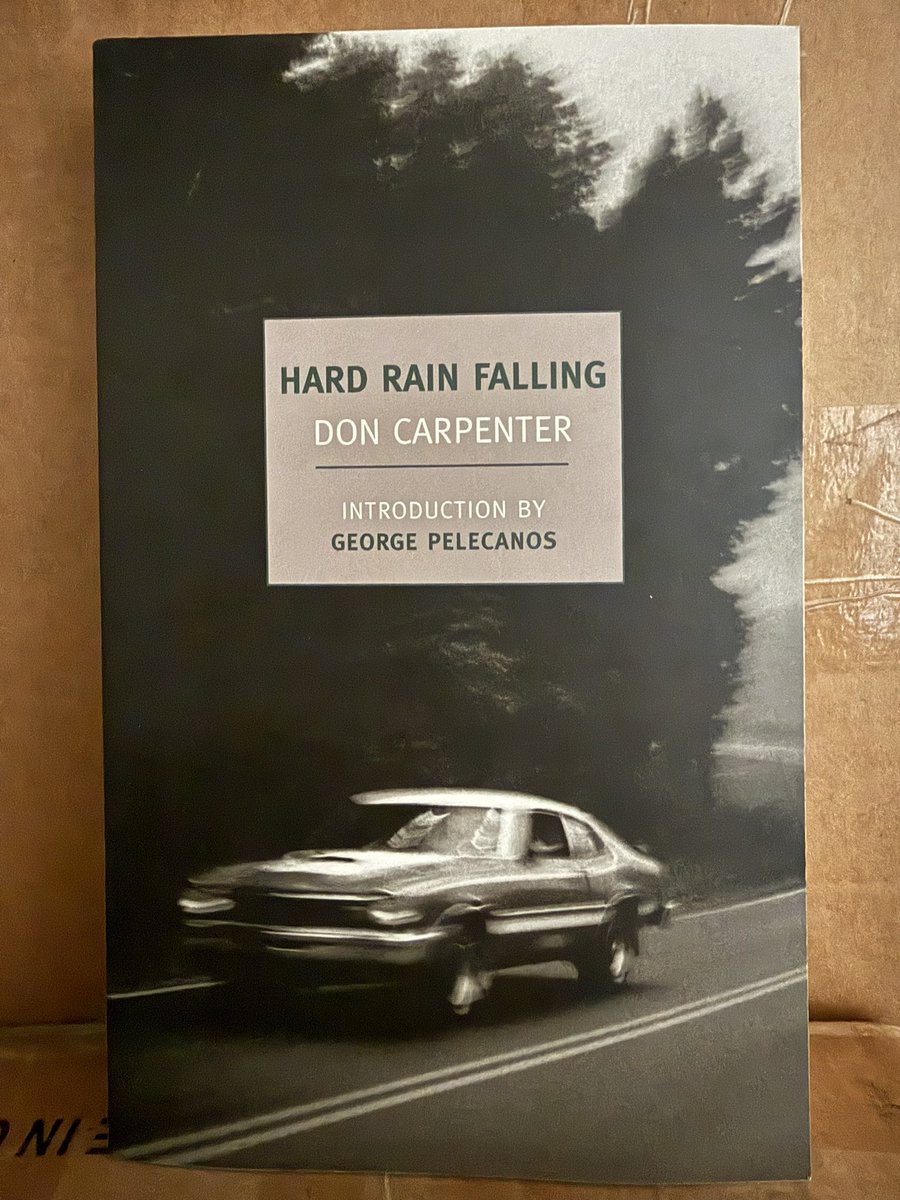

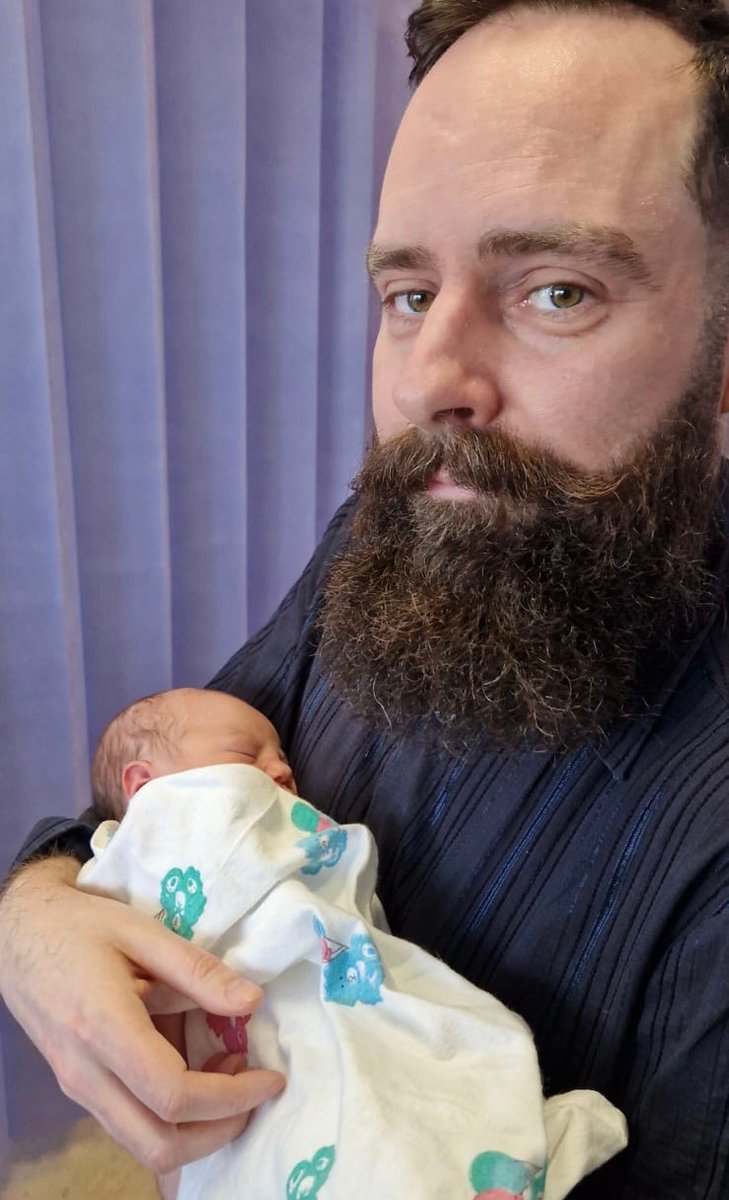
New perfect little baby in the family for Easter. I am a great-uncle!

English
@ThatOlAngela I'm in awe. Not to sound cheesy but this sounds very brave. I would probably crap myself if I did that.
English
I did my first open mic comedy performance tonight. Multiple somewhat biased people say I did quite well.
English
I used to feel terrible when I got lit mag rejections. Now I view them as a current, pushing me towards the places where my stories belong and in the right company. I get them all the time: I mostly appreciate the clarity they give me (after the initial "fuck you" they provoke).
English

What a thrill to have my CNF "Beast of Burden" in Pithead Chapel today. Thank you to @kimmagowan and her wonderful team of editors for including me in this gorgeous issue.
"I didn’t go to the funeral because it wouldn’t have changed anything. He was already gone—a mangled corpse catapulted through splintered glass and twisted metal into a ditch. No hymn or handshake could alter the blunt fact of it. What haunted me wasn’t the crash but the quiet on our drives home, the way the tape would end, and we would sit in the afterheat, windows fogged, saying nothing."
Beast of Burden pitheadchapel.com/beast-of-burde…
English
@1funnyfarmAdams @charliekkendo This piece is fantastic and I really like reading about someone dealing with the space between religions.
English
This whole issue is 🔥
I invite you to sit with this important piece by @charliekkendo as his MC explores his faith, being urged by a friend “just don’t take it too far”… ⭐️⭐️⭐️⭐️⭐️
Charlie Kondek@charliekkendo
“It’s all Jesus and sausages.” You guys. The Lucia Berlin-inspired issue of @CowboyJamboree is out and not only do I have a piece in it but the lineup looks amazing. If anyone needs me I'll be in a dark corner with this. cowboyjamboreemagazine.com/disciple.html
English
This story is so good - the pacing, the sensory details. "Sly pulling it from under his bed. Showing me the dark chrome like it was comic book or something. Lets me hold it but it’s just for a second. I feel like I’m breaking some type of rule. Gone too far, too fast.."
Jesse Binger@jessebinger
Thrilled for this one to drop today. Man, always love @CowboyJamboree issues. I got a piece called "Fresh Fades": cowboyjamboreemagazine.com/fresh-fades.ht… - a manual for that aching kind of love you only feel once, when you're young and stupid enough to believe bad decisions are destiny. #noir
English
@andrewcareaga @CowboyJamboree Thank you so much!! I adore your story.
English

@CowboyJamboree Digging into this issue over lunch and read the opening salvo, “Mug Shot,” by @rtigernyc, and it is such a devastatingly wonderful story, a perfect way to kick off this issue. Read it: cowboyjamboreemagazine.com/mug-shot.html
English
Cowboy Jamboree's spring issue, volume 11.2, "A MANUAL FOR..." incited by the life and writing and incomparable style of Lucia Berlin is live y'all. Dig it: cowboyjamboreemagazine.com/112-a-manual-f…

English
@fern_breath Maybe you can apprentice with Anthony? Thanks for reading and sharing.
English

You will want to read Mug Shot by @rtigernyc Another friendship story in this issue. I love it. I also want a job repairing umbrellas.
cowboyjamboreemagazine.com/mug-shot.html
English

@rtigernyc @CowboyJamboree Congratulations, Rebecca! A moment to savor.
English
Lucia Berlin is the reason I started writing creatively. I am so incredibly honored to be in the @CowboyJamboree issue inspired by her work. This is my serious "pinch me" moment. I am so excited to dig into these stories and hope you love them all.
Cowboy Jamboree Press@CowboyJamboree
Cowboy Jamboree's spring issue, volume 11.2, "A MANUAL FOR..." incited by the life and writing and incomparable style of Lucia Berlin is live y'all. Dig it: cowboyjamboreemagazine.com/112-a-manual-f…
English

@rtigernyc "...but everyone pretends that she is a docile old lady."
The cotton candy line.
The ending.
Masterful, visual, sublime by @rtigernyc.
English
I have a new little flash story out in Hot Flash Literary (whose name seems even more apt given my recent surgery). Anyway, please give it and the other stories a read! The theme: Fire and Ice. Oh yeah.
hotflashliterary.com/anosmia/
English
This story by @andrewcareaga has one of the best opening paragraphs I've ever read. The layers and details in it - and throughout the story - are just so good.
Andrew Careaga@andrewcareaga
Taking a break from reading and promoting l other writers’ fine pieces in this issue to do a bit of self-promotion. Please read my story from this issue, “How to Fish”: cowboyjamboreemagazine.com/how-to-fish.ht…
English