

Deb Lawrence
1.6K posts
Deb Lawrence
@DebLawrence5556
Texan, 5th generation, historian of Texas history. Mother,grandmother,wife.Citizen of the Kingdom of God.
Texas, USA 가입일 Ocak 2024
93 팔로잉194 팔로워
@RepChipRoy I voted for you I hope you dont dissapoint ...AMERICA FIRST!
English
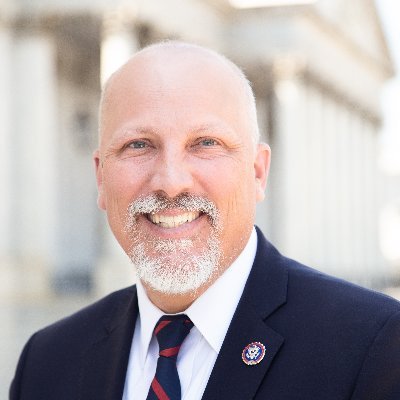
Rep. Roy: "I've introduced legislation on multiple fronts to freeze immigration, to ban people from coming in who are adherent to Sharia law, to ensure that we can denaturalize and remove people who are spreading the Islamification of Texas."
English

🚨 NOW: The 911 call for now-deceased NASCAR legend Kyle Busch has been released, showing he was "overheating, coughing up blood" on the bathroom floor of a training facility
Truly devastating and tragic 🙏🏻
"I've got an individual with shortness of breath, very hot. Thinks he's going to pass out, and is producing a little bit of blood, coughing up some blood."
"He's on the bathroom floor right now." 💔
English
@todd20006 @DonaldJTrumpJr Thats a big smoking pile of bull shit!
English

@DonaldJTrumpJr What about the fraud of your dad removing and destroying over 45,000 Epstein files
English
Deb Lawrence 리트윗함
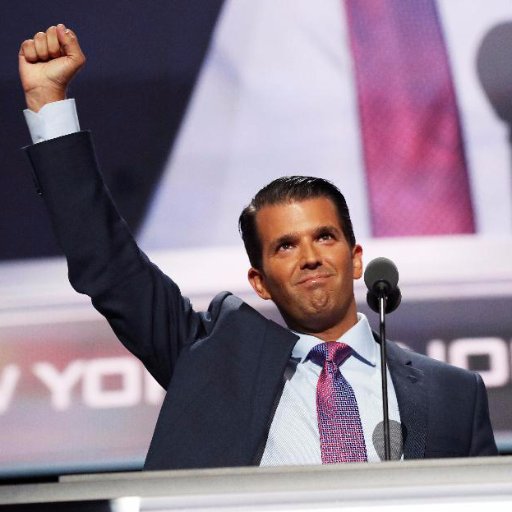
LFG!!! This is what happens when we have a Vice President who is actually competent and committed to ending the fraud industrial complex!
Daily Caller: JD Vance Is Finally Crushing The Fraudsters
dailycaller.com/2026/05/18/jd-…
English
@MarkleResists @DonaldJTrumpJr They would have "racked in" more if he wasnt President! They are billionaires dumbass.
English

@DonaldJTrumpJr #smokefléét would like to know more about ending the Fraud Industrial Complex too. 🤔
#TrumpCorruption

English

@elonmusk I knew it would be "pay back whitey time" when blacks took control of S.A.
English

South Africa won’t allow Starlink to be licensed, even though I was BORN THERE, simply because I am not Black!
We were offered many times the opportunity to bribe our way to a license by pretending that a Black guy runs Starlink SA, but I have refused to do so on principle.
Racism should not be rewarded no matter to which race it is applied.
Shame on the racist politicians in South Africa. They should be shown no respect whatsoever anywhere in the world and shunned for being unashamedly RACISTS!
DogeDesigner@cb_doge
Why Elon Musk is RIGHT to fight South Africa’s racist rules blocking Starlink? Imagine this: Long ago, South Africa had very unfair laws called apartheid. They treated Black people badly and kept them from good jobs and money. When those bad laws ended, the country made new rules (called B-BBEE) to help Black people get a fair share of business. The idea was good – like a big helping hand. But now? For companies like Starlink to sell fast internet, they MUST give away 30% of their business to Black partners. Just because of skin color. Elon Musk was born in South Africa. He left as a teen to chase big dreams. Today, his company SpaceX wants to bring Starlink – super fast satellite internet – to South Africa. But the rules say no unless they give up part of the company. Elon said it right: “Starlink is not allowed because I’m not Black.” SpaceX promised to spend about $30 million (that’s 500 million rand!) to give FREE high-speed internet to 5,000 rural schools. That helps over 2.4 MILLION kids every year learn better, get jobs later, and have a brighter future. Real help for the people who need it most! Starlink already works in about 24 other African countries. Villages there now have internet for school, doctors, and business. South Africa’s villages are missing out because of these racist rules. Elon isn’t asking for special favors. He just wants fair play so Starlink can connect everyone fast. Internet = education, jobs, hope. Why hold back millions of kids over rules that pick by race and color?
English


The people saying they love horseback riding today are like the ones who’ll say they love manually driving in the autonomous era.
Sure, a passionate few will always exist.
But they’ll be as rare as seeing a horse on the freeway.
English
@TomFitton @realDonaldTrump I'm thinking positive and I believe enough of them will decide right.Of course the Marxist judges probably will not.
English
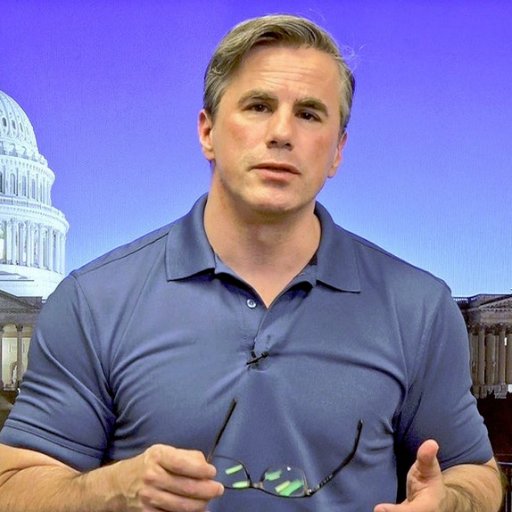
I am of the opinion that the Supreme Court will side with @RealDonaldTrump and common sense on birthright citizenship. WDYT?
Tom Fitton@TomFitton
I think President @RealDonaldTrump's view on "birthright" citizenship is consistent with the Constitution, federal law, legal precedent, and history: The Fourteenth Amendment has always excluded from birthright citizenship persons who were born in the United States but not “subject to the jurisdiction thereof.” Consistent with this understanding, the Congress has further specified through legislation that “a person born in the United States, and subject to the jurisdiction thereof” is a national and citizen of the United States at birth, 8 U.S.C. 1401, generally mirroring the Fourteenth Amendment’s text. Among the categories of individuals born in the United States and not subject to the jurisdiction thereof, the privilege of United States citizenship does not automatically extend to persons born in the United States: (1) when that person’s mother was unlawfully present in the United States and the father was not a United States citizen or lawful permanent resident at the time of said person’s birth, or (2) when that person’s mother’s presence in the United States at the time of said person’s birth was lawful but temporary (such as, but not limited to, visiting the United States under the auspices of the Visa Waiver Program or visiting on a student, work, or tourist visa) and the father was not a United States citizen or lawful permanent resident at the time of said person’s birth.
English
English


🚨 BREAKING: President Trump just ended the Cabinet meeting with a VERY bad warning for useless American "allies"
"I've done a great favor for the world. The world has not been, it has not been reciprocal because when I told NATO where we give billions and billions of dollars, trillions over the years, I said, do you mind coming up and giving us a little hand with the Straits, send up some, they didn't want to get involved!"
"And I believe that's going to cost them dearly. Thank you very much everybody."
Trump never forgets.
English
Deb Lawrence 리트윗함

@KenPaxtonTX @molmccann It’s my understanding this was a heater/furnace explosion. However this fella posted this earlier today. @GregAbbott_TX @DHSgov

English
Deb Lawrence 리트윗함
Deb Lawrence 리트윗함


@EpochTimes Dear God these people are worse than any dark ages barbarians!
English
Deb Lawrence 리트윗함

🚨 𝐅𝐨𝐫𝐜𝐞𝐝 𝐎𝐫𝐠𝐚𝐧 𝐇𝐚𝐫𝐯𝐞𝐬𝐭𝐢𝐧𝐠 𝐈𝐬𝐬𝐮𝐞 𝐊𝐞𝐲 𝐭𝐨 𝐒𝐡𝐢𝐟𝐭𝐢𝐧𝐠 𝐔𝐒 𝐔𝐧𝐝𝐞𝐫𝐬𝐭𝐚𝐧𝐝𝐢𝐧𝐠 𝐨𝐟 𝐂𝐂𝐏, 𝐒𝐚𝐲𝐬 ‘𝐊𝐢𝐥𝐥𝐞𝐝 𝐭𝐨 𝐎𝐫𝐝𝐞𝐫’ 𝐀𝐮𝐭𝐡𝐨𝐫
The United States continues to support and cooperate with the Chinese transplant industry, which is perpetrating forced organ harvesting of prisoners of faith.
Read more:
theepochtim.es/2rm017
English
@flashpointarmy @OfficialJosephZ They operate on DEMONIC intities shouting in their hateful heads.
English

“This is a common-sense bill, and the democrats don't operate on common sense. They operate on whatever it takes to win, and that's what this is about.” - @OfficialJosephZ
English